Unknown's avatar

About 4 Star Films

I am a film critic and historian preserving a love of good movies. Check out my blog, 4 Star Films, and follow me on Twitter @FourStarFilmFan or Letterboxd. Thank you for reading!

Gaslight (1944)

eb609-gaslight-1944Directed by George Cukor and starring Ingrid Bergman, Charles Boyer, and Josesph Cotten, with Angela Lansbury, this film begins rather abruptly with a young girl in England who witnessed the aftermath of her aunt’s murder. Then in a whirl wind she has become married to a nice young pianist and they move back to her old home in England to settle down to together. From that point on everything begins to change gradually. Gregory has a violent outburst over a letter, Paula loses her brooch mysteriously, a picture is misplaced, there are seemingly footsteps from above, and the gaslights change for no apparent reason. Gregory continues to manipulate and isolate his wife telling her it is for her own girl. A traumatic night at the opera and the new maid only worsen Paula’s mental state. She soon believes she is sinking deeper and deeper into hysteria thanks to Gregory. However, a former admirer of her aunt becomes curious of Paula and tries in earnest to meet her as he reopens her aunt’s case. Finally, they meet and together they piece together what is really going on. In the final climatic moments the inspector comes to Paula’s aid and she turns the tables on her husband. All the main players do a wonderful job, especially Bergman, and this film was built up nicely. My only qualms would have to be Joseph Cotten playing an Englishman and I found it hard to follow in the very beginning.

4.5/5 Stars

The Day the Earth Stood Still (1951)

911a0-day_the_earth_stood_still_1951Starring Patricia Neal and Michael Rennie with direction by Robert Wise, this sci-fi film begins with the landing of a mysterious alien space craft in Washington D. C. At first nothing seems to happen and the whole country is tense. Then an extra-terrestrial named Klaatu gets off followed by his giant cohort Gort. He comes in peace but he is wounded by a frightened gun. From that point he is taken to a hospital but his only mission is to warn the world that they must change their ways. 

Klaatu gets away from the hospital and he takes up the identity of one Carpenter in order to integrate himself so he can give the people his message. He ends up befriending a widowed lady and her small boy with his quiet kindness.  

His goal is still to deliver a message to the leaders of the world and the man he wants to speak to is Professor Jacob Barnhardt (Sam Jaffe). When he finally is able to talk, he warns against the use of atomic power, because other planets have become apprehensive and will surely neutralize the earth if they do not stop.

He is followed by Bobby and Klaatu finally reveals his true identity to Helen. Soon he shuts down all the non-essential power across the country, and when the chaos dies down, the manhunt for the culprit intensifies.

In his final entreaty before leaving earth Klaatu pleads with the people:

“It is no concern of ours how you run your own planet, but if you threaten to extend your violence, this Earth of yours will be reduced to a burned-out cinder. Your choice is simple: join us and live in peace, or pursue your present course and face obliteration. We shall be waiting for your answer. The decision rest on you.”

So ends a film that was not just another sci-fi flying saucer movie of the 1950s. It was a representation of the atomic age and an indictment of the Cold War sentiment at the time. Klaatu in many ways becomes a Christ-like figure who calls for peace, takes the name “Carpenter,” and even rises from the dead. In many ways he saved humanity too, on the day the earth stood still.

4/5 Stars

Marty (1955)

ae98e-marty_film_posterStarring Ernest Borgnine and Betsy Blair, this heart warming story is about an Italian butcher in New York. He is nice enough but he is the oldest in his family and the only one not married. Soon with the concerned questioning of his mom and the droll of his social life, Marty gets discouraged. However, after reluctantly going to a ballroom he meets a girl. She is shy and not beautiful but she and Marty immediately hit it off. Marty’s mom does not really like her and Marty’s friend Ange thinks she’s ugly. He is initially deeply affected by this but then he realizes his happiness is what really matters. Soon enough he is on the phone with his girl. This is one of those film good films and it seems to go against the usual Hollywood mold.

4.5/5 Stars

Three Colors: Red (1994)

 3a286-threecolorsred3Kieslowski’s films are mostly character driven and yet he often uses high drama to create a far more complex lens to observe his subjects. In Blue, the inciting incident was a deadly car accident. It seems only fitting that he would end this story with the catastrophic sinking of a ferry. He takes the same bleak, no-nonsense approach with little fanfare that he used before. It’s his way.

In fact Three Colors: Red as a whole is another simplistic film in plot, and yet the irony is that the film is chock full of complexity because its major point of interest is interpersonal relationships (as suggested by the intertwining phone lines shown early on). There is nothing more tangled and intricate about humanity than our relationships.

As such, this final installment is in many ways a story about love, romance, and friendship, and yet Kieslowski does not find it necessary to preach to us. He is better and more thoughtful than that, laying out the story for us to ponder and mull over. This is the story or better yet the parable he created.

Valentine (Irene Jacob) is a young student and model who is constantly an innocent and sympathetic figure with a pair of doe eyes. She is often shown in profile which continually reveals her youthful and even sullen beauty. She is even the somber poster girl of a gum campaign plastered around town. There’s a boyfriend in her life who she desires the affection of, and then there’s a brother who is hooked on drugs. In other words, life is far from rosy and secure.

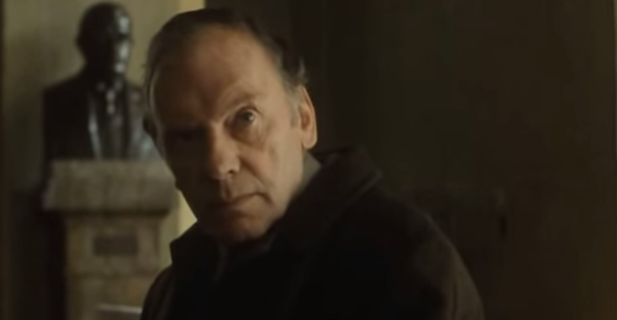
One day she accidentally runs over a dog that she takes to the owner (Jean-Louis Trintignant,) who seems surprisingly unconcerned by the event. She does the only thing she can do with a clear conscious which is taking the dog to the vet and then taking care of it herself. Soon after, Valentine finds herself walking the dog by the old man’s house once more and she discovers what he does all day. It turns out he is a retired judge, and he spends his solitary existence eavesdropping on the conversations of others (including Valentine’s neighbor Auguste).

Later, through the grapevine, she finds out that a retired judge had a suit filed against him, and she rushes to his house to assure him she had no part. He already knows because he was the one who turned himself in.

Over the next days, Valentine begins to empathize more and more with Mr. Kern’s existence. As a former judge, he was forced to make decisions far more difficult than most. In fact, why do people follow laws? Is it out of goodness or purely self-serving? Is morality all relative? What really is good and bad, because how would we act in the other man’s shoes? By this point, we see Kern’s struggle a little better.

Finally, Valentine invites her new found friend to her last fashion show before she heads to England for a few weeks. It’s a touching moment when he pays her a visit after the show, but it also reveals the pain in the old man’s past. It may be a lucky guess but all we know is that Valentine figures him out. It just shows that you cannot judge others by first impressions.

So as it goes, Auguste’s life practically mirrors that of a younger Kern, and thus, so many parallels become evident. Aside from the obvious, I only figured it out after the film was done, but they are both judges, struggle in love and the like. At the end of the film when Kern sees the news about the ferry with Valentine and Auguste aboard, the only thing we know for sure is that there were seven survivors (guess who!). In a somewhat subtle way, the trilogy is connected and Kieslowski ends his tale on a fitting note. It freezes and just like that the career of one man was done for good. A couple years later he would already be gone. But he went out on top and Three Colors cemented his legacy. I always loved the color red the best. Here’s yet another reason why.

4.5/5 Stars

The Best Films of Al Pacino (1940-)

1. The Godfather Part II
2. The Godfather
3. Serpico
4. Dog Day Afternoon
5. Scarface
6. Glengarry Glen Ross
7. Heat
8. The Insider
9. Donnie Brasco
10. Insomnia
11. Carlito’s Way
12. Scent of a Woman
13. The Godfather Part III

It’s easy to fool the eye but it’s hard to fool the heart.

We’re Stuck on Planet Hollywood: There’s a Whole Galaxy to Explore (2014)

Juliette Binoche in Three Colors: Blue (1993)

Recently I have found myself more often then not deciding what film to watch and somewhat randomly choosing to watch a foreign language film. However, if I actually think about it, maybe this inclination is not so random at all.

In the year 2014 we waited the first 6 months for the summer blockbusters to come out (aka X-Men and Guardians of the Galaxy) and now we are waiting for the award caliber, Oscar fair. I only recently began keeping up on the latest trends and releases (since 2012), but already I’m beginning to see the obvious patterns. I am not one of those people who is anti-Hollywood or anti-Blockbuster. I like a good Marvel movie almost as much as the next guy. I too am excited to know the big winners during the award season, because I want to see the next best picture like all the other movie lovers out there.

Cinema Paradiso (1988)

Sometimes, however, I want a change of pace and I want something different. The reality is blockbusters, Oscar noms and even indie films can get repetitive at one time or another. There is such a thing as too much of a good thing after all. It seems like your average moviegoer does not care a whole lot and is fine just taking in the same films they always did.

But I will assume that not all people are like that. For those people who want a different feel get off of Planet Hollywood. Change your perspective and take a journey into a different genre or to a director off the beaten path.

I am being vague for good reason, because each person can discover whatever they want it just takes a bit of curiosity and a little looking. For me I went the foreign route. I dug into The Three Colors Trilogy, The Dardenne Brothers and Cinema Paradiso. Really I ended up all over the place but the important thing I was no longer stuck in the Hollywood bubble. Kieslowski gave me films to really make me think about suffering and love. The Kid with a Bike tugged at my heartstrings because of its humanity and Cinema Paradiso caused me to get sentimental all of the sudden. They mirror life more closely and better than a superhero movie ever could. Sometimes there is immense power in that since it gives us a new lens to see ourselves. At least I certainly think so. And pound for pound it seems like they could hold their own against any Hollywood flick as far as quality goes. However, it would still be a David vs. Goliath struggle, because the box office says otherwise and it is a cruel dictator. Someone like Kieslowski will undoubtedly never get as much time in the limelight as a Michael Bay or Adam Sandler. That is a rather odd comparison but it is also very painful. I digress.

Without getting too much into the makeup of the foreign film or “art house cinema,” it is often a refreshing detour from our typical popcorn fare. I would love to see these foreign films, with an often negative connotation, not just being the subject of stuffy film critics and scholars, but the general public as well. The avenues of expression, as well as discussion, would be blown wide open because more people would be interested in exploring the greater film world.

My challenge to anyone listening is to get unstuck from Planet Hollywood whatever that means for you. It would probably do everyone some good and we might just find ourselves more appreciative of film as entertainment, art and a personal reflection of our humanity. Lets all things shake things up a bit. I need to take my own advice too. Let’s do it together. One film at a time.

Bad Day at Black Rock (1955)

8435a-bad_day_at_black_rockStarring Spencer Tracy and Robert Ryan with Lee Marvin, Ernest Borgnine, Dean Jagger, and Anne Francis, the whole story takes place in an isolated desert town. Tracy as the one-armed man Macready comes to the town and soon is face to face with many cold, detached, and suspicious folks. He has his own reasons for being there so that he can find the father of a Japanese-American war buddy of his. He asks around and no one is willing to talk. Macready soon realizes their secret and understands how much danger he is in. However, with the help of a couple of townspeople he is able to resolve everything. Then, he leaves town aboard the train just as calmly as before. This film intrigued me for a number of reasons but especially since a central topic was racism towards Japanese-Americans.

4/5 Stars

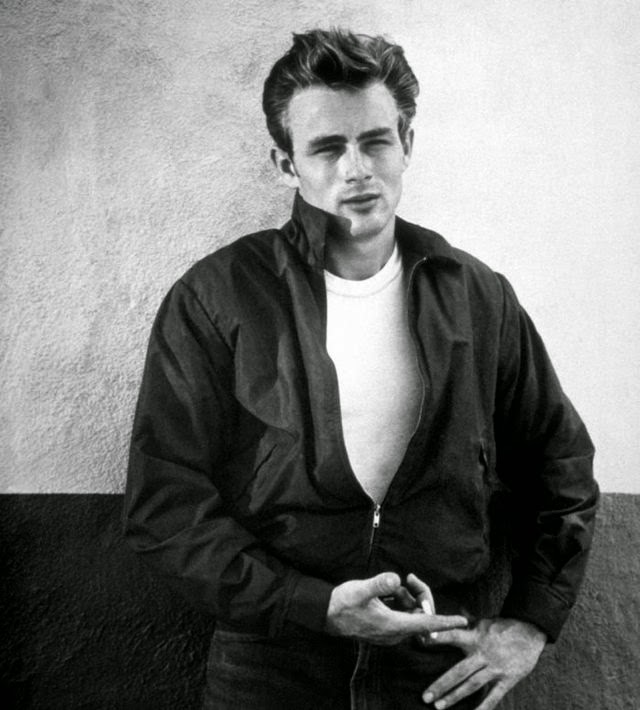
The Best Films of James Dean (1931-1955)

To grasp the full significance of life is the actor’s duty; to interpret it his problem; and to express it his dedication.  


1. Rebel Without a Cause
2. Giant
3. East of Eden

Other appearances:
Has Anybody Seen My Gal
Fixed Bayonets
Trouble Along the Way
Sailor Beware

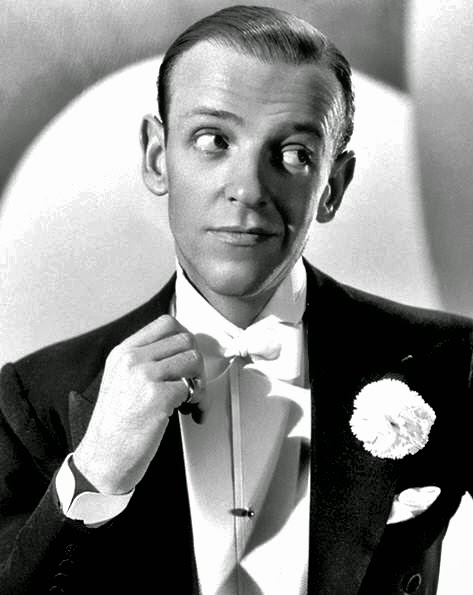
The Best Films of Fred Astaire (1899-1987)

1. Swing Time
2. Top Hat
3, The Band Wagon
4, The Gay Divorcee
5, Funny Face
6. Easter Parade
7. You Were Never Lovelier
8. Shall We Dance
9. Holiday Inn
10. Flying Down to Rio
11. Royal Wedding
12. Three Little Words
13. Carefree
14. Broadway Melody of 1940
15. The Towering Inferno

I have no desire to prove anything by dancing. I have never used it as an outlet or a means of expressing myself. I just dance. I just put my feet in the air and move them around.

Pickpocket (1959)

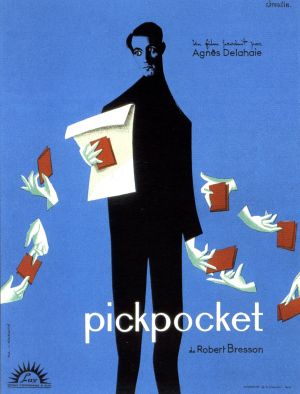
6593f-pickpocketposterThis French film directed by Robert Bresson, begins with voice-over narration of a man recalling his past. Michel is a nondescript person who was down on his luck. Then, one day he ineptly tried his hand at pick pocketing and was caught. He got off and over time he sharpened his skills and teamed up with two other men. They successfully bring in a great deal and it becomes Michel’s livelihood. At the same time Michel’s mother is becoming ill and he meets a young neighbor named Jeanne. Michel’s best friend is falling for this girl while Michel himself is continually tempted to steal. This leads to a little trouble from a police inspector and yet he stays out of jail.

However, after further discussion with the chief and Jeanne, Michel leaves Paris. He returns later still impoverished, to find Jeanne with a child but unmarried. He resolves to support her and yet after trying to work, he reverts back to his past vice. This time his guard is down and he winds up in jail. Jeanne comes to visit him a great deal and through this devotion he realizes they both are in love with each other.

This film has simple but intriguing topic. Sometimes the pick pocketing scenes are shown almost as a choreographed dance which is done so fluidly. Overall Pickpocket has a striking resemblance to Doestoevsky’s Crime and Punishment but it reflects the wonderful simplicity of Robert Bresson’s realistic style. Is it just me or does Marika Green look like Natalie Portman in black and white. I certainly think so.

4.5/5 Stars