1. The French Connection
2. The Conversation
3. Hoosiers
4. Superman
5. Bonnie and Clyde
6. Unforgiven
7. The Royal Tenenbaums
8. I Never Sang for my Father
9. Superman II
10. Get Shorty
11. Crimson Tide
12. Night Moves
13. No Way Out
14. Mississippi Burning
15. Young Frankenstein
Author Archives: 4 Star Films
Serpico (1973)
“Come on Frank. Let’s face it. Who can trust a cop who don’t take money?”
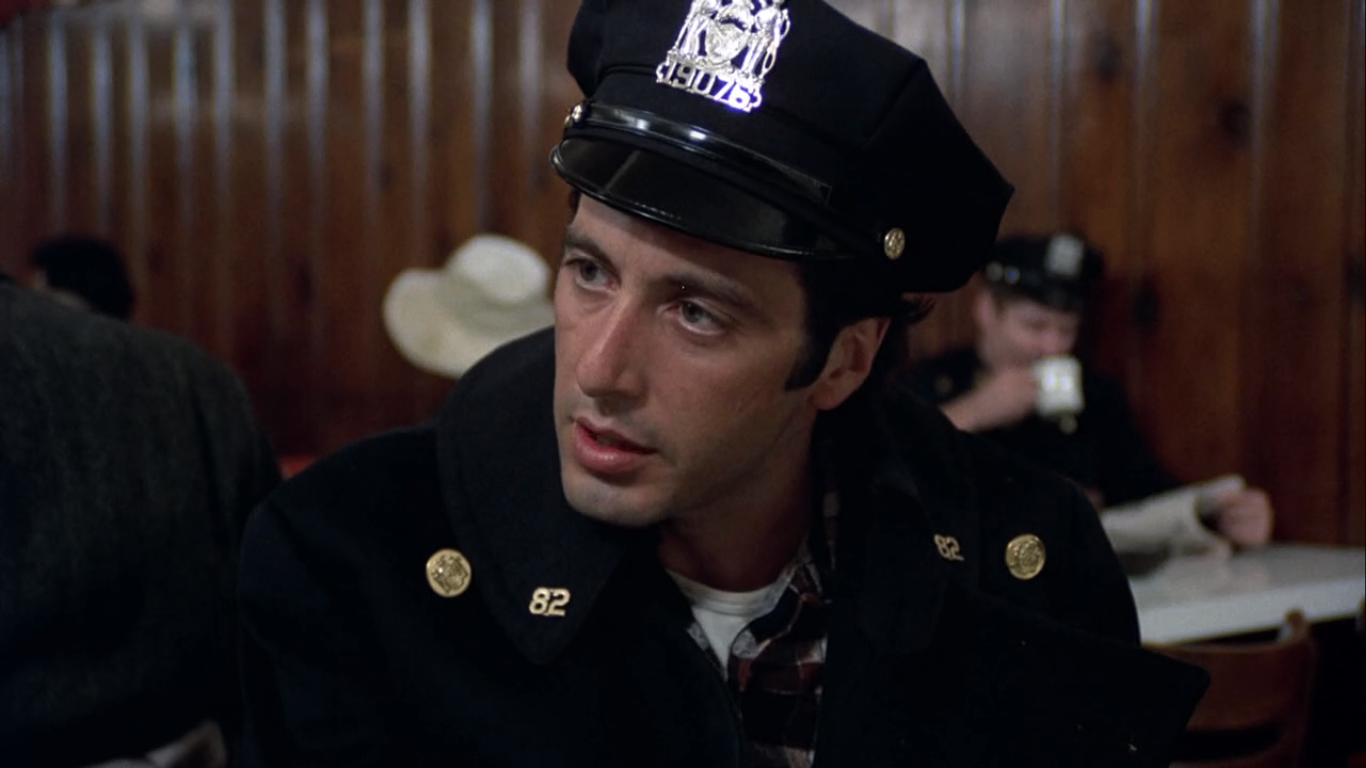
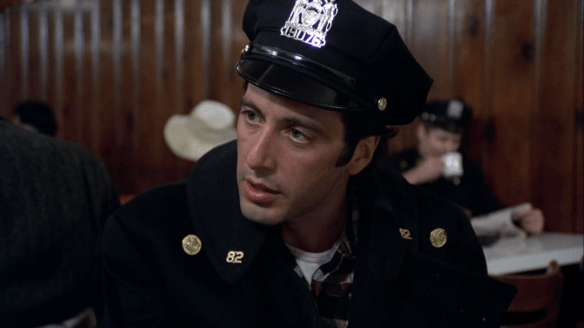
This is the state of affairs in the police department that green police academy grad Frank Serpico (Al Pacino) finds himself thrown into. At first, he is unaware of it all as he moves up the ranks as a young uniformed cop. In fact, he looks exactly like a post-war Michael Corleone at this point. His new role seems like an honorable life of camaraderie, duty, and public service. The corrupt is obvious and distinct from the good. Soon his brash, forthright style creates waves, but it soon becomes apparent that he is not one to care about hurting egos.

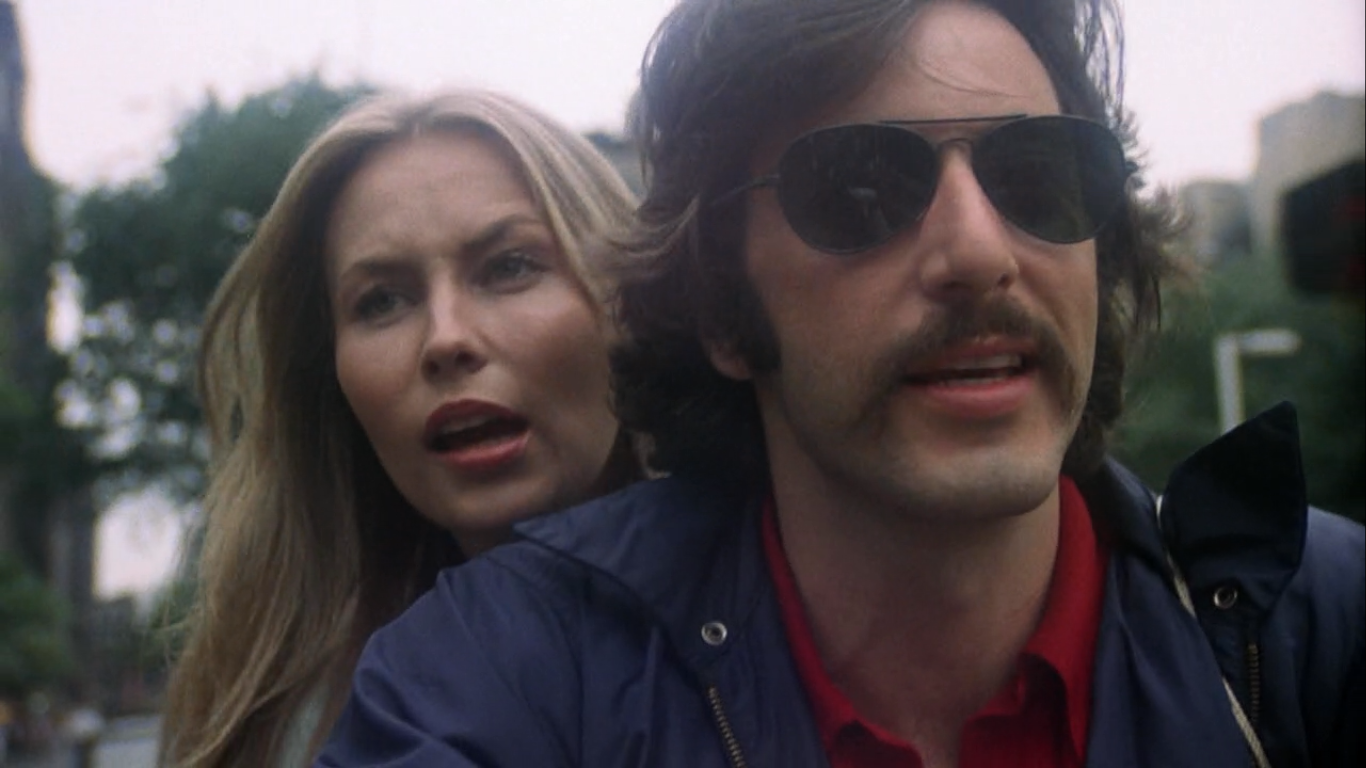
He moves on with his career working in plainclothes and getting a new apartment followed by a new dog. His appearance begins to change as well as he starts wearing a thick bushy beard and wearing hippy garb. It suits him fine in his work and outside he meets a pretty girl named Leslie Lane, but it’s not meant to be.
Serpico corroborates with colleague Bob Blair (Tony Roberts) trying to figure out how to bring attention to the bribes he has

been offered. But honest help is hard to find especially from someone who makes it stick. The higher ups care more about the reputation of the department over corruption, making progress difficult to come by. He continually bounces around from division to division and nobody seems to want him, or trust him for that matter. There are only a few honest Joes around and they are few and far between. Serpico gets transferred this time to the “upright” 7th division and begins seeing his next door neighbor named Laurie. Too soon he learns that one of his acquaintances is instrumental in the extortion that takes place department-wide. By now Frank is feared, hated, and despised because he will not take money under any circumstances. It takes its toll to be all alone in the force, and he lashes out at Laurie who leaves him for good. Now he truly is alone.
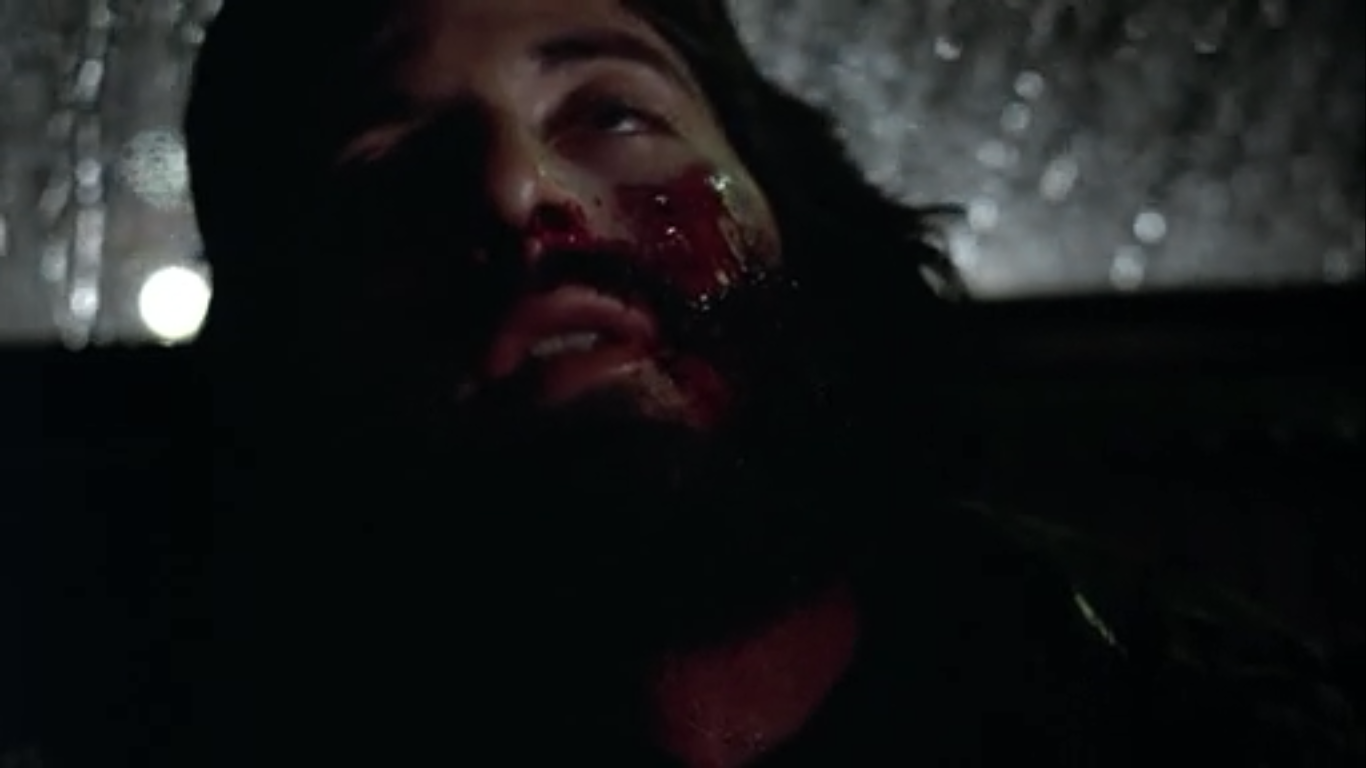
He becomes increasingly combative and paranoid as he gets ready to testify before the grand jury. Another case of bribes comes out and when Serpico and his upright partner try and report it nothing is done. As a last resort, Frank goes to The New York Times and they blow the cover right off. He soon receives an ominous death threat and gets shot when trying to bust someone.

He lays in the hospital recuperating asking for his guards to be relieved and watching the hate mail pile up. His badge is returned to him, but he rejects it in disgust, soon resigning from the police and waiting for a slow boat to Switzerland. That’s as far from New York as he could get.
It seems like there are so very many close-ups of Frank Serpico, and thus, over the course of the film we get the opportunity to truly study his face, or rather the face of Pacino as he embodies this character. His cold, aloof eyes, his facial hair that goes under several transformations, but that is only the outward appearance. It is his inner transformation that is most important because that is where his conscience lies, to guide him each and everyday on the beat.
My New York geography leaves something to be desired but that’s not the problem of native New Yorker Sidney Lumet. This is a story that takes place in New York, made for New York, and fit perfectly with its director. It seems like he knew the streets of the New York like the back of his hand, really creating an authentic atmosphere for this police biopic. It has a touch of The French Connection and yet it is a far more personal look at the life of Serpico himself.

This is also extraordinary because the story of Serpico was so fresh, still only a year or two old at most. Furthermore, the film has the same disillusioning and depressing tone of other dramas that came out of the 1970s. Back in the 1950s films like 12 Angry Men (Lumet’s debut) still had an air of idealism. That had mostly dissipated in the New Hollywood period, because the good guys aren’t black and white. Serpico is not the greatest guy around, but the one thing he has going for him is that he is not crooked and that’s saying a lot in the corrupt world he exists in. This is his story told with all the blemishes, personal troubles, and drama that went with it. The greatest service to him is that his story got told and hopefully truthfully enough.
4.5/5 Stars

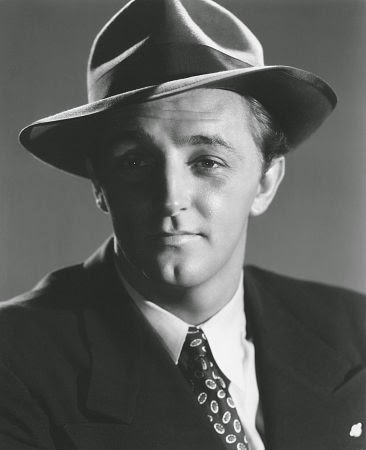
The Best Films of Robert Mitchum
1. Night of the Hunter
2. Out of the Past
3. Cape Fear
4. Friend of Eddie Coyle
5. The Lusty Men
6. Home From the Hill
7. El Dorado
8. The Longest Day
9. Farewell, My Lovely
10. Angel Face
11. Pursued
12. Thirty Seconds over Tokyo
13. Crossfire
14. Heaven Knows, Mr. Allison
15. Story of G.I. Joe
16. Tombstone
17. Scrooged
18. Dead Man
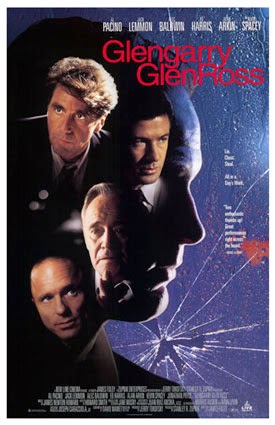
Glengarry Glen Ross (1992)
It’s a film about a despicable world which promotes despicable people and despicable behavior. That’s the world of the real estate salesmen in Glengarry Glen Ross. Here are men who use any mode necessary to close deals as they say. They finagle, lie, cheat and even steal because those are just tricks of the trade. Those who get the good leads are able to close more deals and make more bank. Those who get the leftovers struggle to swing something out of nothing. Shelley “The Machine” Levene (Jack Lemmon) is one of those struggling after many years of success in the business or racket, whichever you prefer. He has a lovely personality, rather like a hissing snake trying to seduce you before going in for the kill. On the flip side, he can be a real jerk and he is unscrupulous as all get out.
But that’s enough on Shelley. The office is run by rigid John Williamson (Kevin Spacey) who just follows his orders and does not budge an inch. Then there is Ricky Roma (Al Pacino), the top closer who is especially cynical but also a great admirer of Shelley’s skill. Dave Moss (Ed Harris) is a man with a big mouth and fiery temper not ready to sit by while other men outperform him. Finally, there’s George Aaronow (Alan Arkin) a man who humors Moss and is also fed up with his situation.
The wheels start turning when the Big Whigs send in a man named Blake (Alec Baldwin) to motivate the salesmen. It’s the survival of the fittest after all and they know what it takes to sell real estate so he encourages them to go and do likewise. His main tactics include berating, insults, and threats against their careers (They either get a car, a set of knives or the boot). Verbal attacks are sometimes more pernicious than physical beatings and that’s the truth here. They never relent even after Blake leaves because that’s the type of choice words that this environment fosters. One minute a salesman uses a polished voice to coerce a client then turns right around to bad mouth a colleague.
Moss on his part tries to pull Aaronow into his plan to steal the good leads from Williamson’s office. A desperate Levene tries to get better leads from an unrelenting Williamson as the veteran man struggles to convince clients and deal with his ill daughter. Roma, on his part, is at top form playing his client (Jonathan Pryce) and getting him to stay with a deal until it gets messed up. In the process we see all the pettiness, desperateness and corruption unleashed. The burglary goes down and it does not necessarily involve who you would think. Maybe it does. That’s not the point, though. The point is these men will do anything given the position they are in, but it’s not that simple because each one has their complexities. For instance, Levene and Roma are on very good terms and Moss and Aaronow seem very buddy, buddy. But ultimately it seems they look out for number one and that takes its toll on any human being.
The film is a biting drama brought to us through a fiery and sometimes brutal script from David Mamet, based on his play. Furthermore, the story is aided by an all-star cast of big names. Each one plays an equally despicable character. I knew Pacino, Spacey, Harris, and Arkin were up to the task because I had seen them before in tough or villainous roles. However, to his credit Jack Lemmon shows his versatility here since I absolutely despised him for once. That’s no easy task and he proved it to be possible. This film may be a black comedy, but there really should not be much to laugh at.
3.5/5 Stars
Cinema Paradiso (1988)
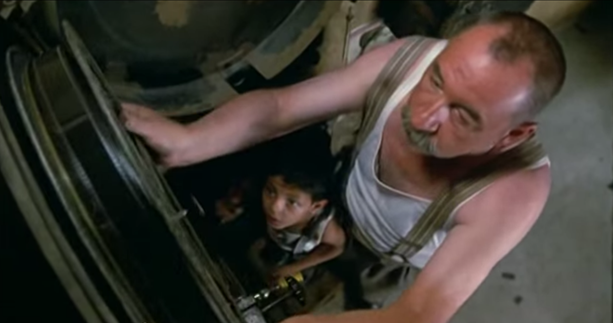
To the casual viewer, Cinema Paradiso can seem like a plodding film, but this pacing is almost necessary since it reflects the passing of the years for one individual. It has been 30 years since Toto left his hometown as a young man never to return. Now he gets a call from the mother he never talks to, with the message that Alfredo has passed away.
The memories become coming back from when he was a young boy in the post-war years. He had a knack for getting into trouble, falling asleep as an altar boy, and getting scolded by his mother. She was especially displeased with his obsession with the movies played at the local theater called Cinema Paradiso. It is there where Toto has his first encounters with the great legends of film, but also perhaps more importantly, the projectionist Alfredo. Initially, the middle-aged man finds the boy a nuisance but slowly a close bond forms between the two. Alfredo teaches little Toto the tricks of the trade and the movie hall flourishes with packed houses all the time. You see, it was the age when movies were a family affair, and the whole town showed up to be entertained. They were the perfect escape from disillusioned post-war years. However, there still is a local priest who censors all kissing in film because after all, that’s highly objectionable. Very racy indeed.
One such night a near fatal accident occurs when the projector overheats then burns the film setting the whole projection room ablaze. Toto barely pulls out Alfredo alive and he is permanently left without sight. From that day on his young prodigy takes over the job but never forgets his mentor and friend. The boy is soon turning into a man and it means young love and a stint in the army, and still Alfredo is around for him. He is always ready to give a bit of homespun wisdom from a movie or do a simple favor. However, finally on the advice of his old friend Toto left town and never returned in order to make something of his life.
Now he finally returns to pay his respects and the old has passed away. Some familiar faces still inhabit the town but the Cinema Paradiso is about to be demolished and the end of an era has arrived. The days of cinema halls are waning as videos and the like grow bigger. As a gift to his friend Alfredo left Toto (now Salvatore Di Vita) one last reel of film containing a montage of big screen kisses. It is less a lesson in Italian and American classics and more of a lesson in life. Our relationships matter. More on that later.
Cinema Paradiso made me crave watching films with a big audience because that is something modern moviegoers often do not experience. Movies were initially meant for the masses (ie. Sullivan’s Travels) and they were meant to be enjoyed in community with one another. That’s part of their magic I suppose.
This is also a highly sentimental, highly nostalgic look at film, but as I alluded to before, it is less about film and more about the people. I tried to recognize actors and films while I saw bits and pieces of old black and white footage, but then I realized it was arbitrary because the audience members are what really mattered. As Alfredo points out in one of his last chats with Toto, “Life isn’t like in the movies. Life…is much harder.” However, the reward of living life is great despite the risk involved, and so it is necessary to leave the movie theater, television, or your laptop behind at times. Life and the relationships that fill it are the most paramount of all and although nostalgia is wonderful there is something to be said for living in the present. That is some of what Cinema Paradiso teaches us and it is a message to take to heart.
4.5/5 Stars
The Best Films of Sean Connery
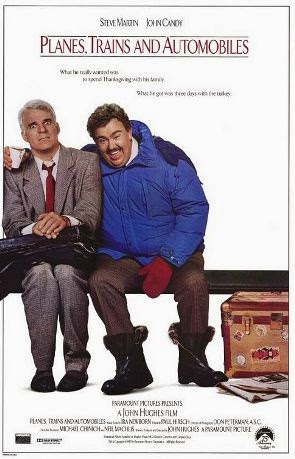
Planes, Trains and Automobiles (1987)
This film should really be called Planes, Train, Automobiles, buses, trucks, burnt-out cars and …well you get the idea. This John Hughes comedy is set during the Thanksgiving holiday and it has a plot foretelling, Home Alone, although acted out in reverse. Let me explain.
Instead of being stuck at home, home is, instead, the unreachable destination that Neal Page struggles to get to on a return trip from work in New York. As with many Americans, he is excited for time with his wife and kids over a thanksgiving dinner in Chicago. But Chicago is very far away and from the beginning everything goes wrong. He struggles to hail a cab, his flight gets delayed, and he must share a hotel room with a friendly but annoying shower curtain ring salesman named Del Griffith.
Their relationship is strained from the start as Del is the man who unknowingly takes Neal’s cab. They get fed up with each other, accuse each other of stealing, and in general take a strong disliking for each other at one point or another. Del’s genial nature is initially a major turn off for the reserved Neal who just wants to be home.
There comes a point where so much has gone wrong it does not matter anymore and, despite all the grief, they must either go crazy or laugh it off and become friends. Ultimately, they choose the latter and it ends up working out. Neal heads home thankful that Del was able to finagle his passage across country and then in a moment of charity he goes back for his new found friend. The truth comes out and Neal brings one more guest to his Thanksgiving dinner. Once more they carry Del’s hulking case together, this time up the front steps. He may have combated freezing snow, fire, and much more general discomfort, but most importantly Neal learns a little bit about himself. So it’s a travel comedy with a moral at the end.
Although my travel experiences certainly have not been this outrageous, I did relate to bits and pieces which made the film that much better. Furthermore, Steve Martin and John Candy are wonderfully cast alongside each other as complete polar opposites. There is a lot of fun slapstick and yet the characters never lose their humanity and so to the end we can still appreciate them, despite their flaws. However, I sincerely hope my thanksgiving is better than theirs. No promises, though.
3.5/5 Stars
City of God (2002)
The slash of a sharpened knife grabs our attention and from that point on there is no turning away from City of God. The story is fed to us by Rocket, a character we initially know very little about except he will help us make sense of all that follows. The setting of the story is the slums of Brazil during the 60s and 70s. People are poor, crime is rampant, and adolescents wave guns around like they were toys.
Rocket’s older brother Goose was a part of The Tender Trio along with teenagers Shaggy and Clipper. They have a lucrative revenue stream robbing businesses and gasoline trucks and they share the profits with the people of the town in return for protection. Then a little twerp named Li’l Dice convinces them to rob a hotel and the job pays off big. But soon after begin the police raids and the trio is split up for good. Clipper joins the church, Shaggy is shot by the cops, and Li’l Dice knocks off Rocket’s brother. From that point, the drug trade slowly grew, and ultimately was left in the hands of a young thug named Carrot.
Now it’s the 1970s and Rocket cultivates a love for photography while hanging out with his hippie friends. Meanwhile, Li’l Dice now known as Li’l Z has taken over the drug trade and pushed almost everyone out except Carrot. He is obsessed with being the boss and ironically under his rule, the City of God remains in relative peace. Z’s childhood friend Benny is a relaxed guy who keeps his buddy at bay and earns the admiration of everyone even Rocket.
But the “good times” must come to an end as Benny decides to skip out on the slums with his girlfriend because he does not want the life of a drug lord anymore. At a giant bash tragedy strikes, and Li’l Z is looking for blood. His target is Knockout Ned and the man’s girlfriend. After a night of turmoil, Li’l Z is never at peace again, because there is now a man with a personal vendetta bent on making him pay.
Carrot uses this new ally to his advantage and thus begins the drug war to end all drug wars. Carrot and Ned vs. Li’l Z. Both sides bring anyone and everyone into the fray and load up on guns, guns, ammunition, and more guns. It’s at this time that Rocket’s dreams become realized. He gets a job as a lowly paper boy and ultimately snags some photos of Z and his thugs making it big with the local paper. Soon his photography is in high demand and he’s even on Li’l Z’s good side.
Thus begins the beginning of the end as the rival forces meet in one last skirmish. In the aftermath Ned is shot by a vengeful boy, Li’l Z is jailed then shot, and Carrot is fodder for the papers. The little Runts now plan to run the streets and Rocket becomes famous for his photography. The film holds onto one last secret until the end before it is revealed. As we guessed this film is based on a real story and his name is not Rocket but Wilson Rodrigues.
City of God is an ironic name for such a godless place and likewise, I haven’t felt so squeamish in a film recently and perhaps ever. There is so much violence and crime in this film but we do not seem to get numb to it. It feels like we become more aware of the reality and the vicious cycle that continues its cyclical path. These young thugs are products of their environment and so how they end up is truly saddening. Even such a despicable, sadistic man such as Li’l Z knows what friendship is (ie. Benny), but ultimately even Benny cannot help him. That’s what makes the success of Rocket so extraordinary. In many ways, he is the perfect narrator, first because he survived, but also because he has a view into everything from varying angles and different perspectives.
As far as the film goes, the non-linear story line and multiple points of view made for an engaging story. This piece of storytelling keeps us begging for more crumbs as we attempt to connect the pieces as they are fed to us. Maybe it is a bit of morbid curiosity that keeps us interested or a desire to know if justice is dealt. The quick editing can be disconcerting at times and the often bobbing camera can sometimes get annoying but it fits the style of the whole film. It is part On the Waterfront, part The Godfather, but set in Brazil and a whole lot grittier. City of God reflects the hierarchy of the drug trade that permeates all areas of life and governs an entire community. Rocket was one of the lucky ones.
4.5/5 Stars
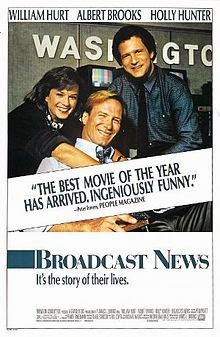
Broadcast News (1987)
I didn’t laugh at James L. Brook’s Broadcast News like I would your typical comedy (This is no Anchorman). However, I did find myself chuckling, in spite of myself, because these characters are humans and as humans, they are screw ups, petty people, and have errors in judgment. The humor comes in the everyday occurrences of working with a news station. There is constant chaos paired with egos butting heads and somehow the news still gets reported.
We come back to the three individuals a few years down the road and they have all moved on with their careers and their personal lives. Not everything is patched up and they hardly have much in common anymore, but they can still talk and continue living their lives as before.
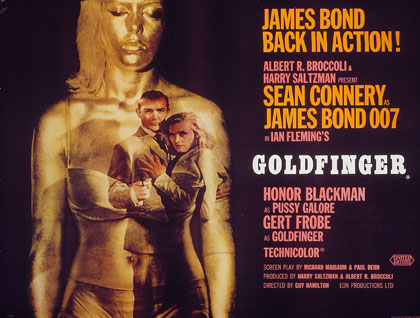
Goldfinger (1964)
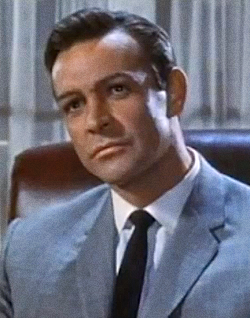
Starring Sean Connery as Ian Fleming’s character James Bond, Agent 007, this installment has him facing off with Goldfinger. After an entertaining opening sequence, Bond is given the assignment of keeping an eye on Auric Goldfinger, a powerful man with a insatiable desire for gold. Along the way he crosses paths with beautiful women, Goldfinger’s deadly chauffeur Odd Job, the highly trained pilot Pussy Galore, and of course the criminal mastermind himself. Bond and Goldfinger battle back and forth, first with wits and then everything becomes much more sinister. Bond is taken captive as Goldfinger tries to implement his dastardly plan revolving around a vault full of gold. Needless to say, in the end 007 is victorious and he gets the girl. With Bond’s modified Ashton Martin, great action, good characters, and a memorable theme, this film is “shocking, positively shocking.”
4.5/5 Stars