
1. White Heat
2. Angels With Dirty Faces
3. Yankee Doodle Dandy
4. The Public Enemy
5. The Roaring Twenties
6. Footlight Parade
7. One, Two, Three
8. Strawberry Blonde
9. Mister Roberts
10. Ragtime
11. G-Men
12. City For Conquest


1. White Heat
2. Angels With Dirty Faces
3. Yankee Doodle Dandy
4. The Public Enemy
5. The Roaring Twenties
6. Footlight Parade
7. One, Two, Three
8. Strawberry Blonde
9. Mister Roberts
10. Ragtime
11. G-Men
12. City For Conquest
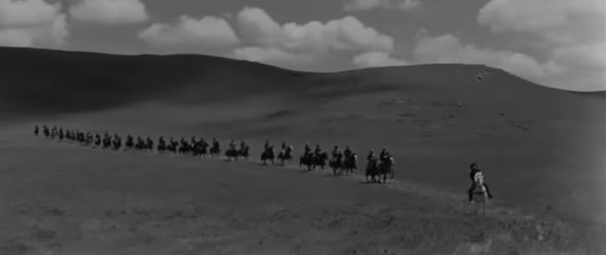 Samuel Fuller has got an eye for style, cinematic scope, and at times, subversive mayhem. It’s no coincidence that Forty Guns was shot in Cinemascope, and it is one of the enjoyments of watching this film, which constantly bounces back and forth between long shots and close-ups. To start things off, Barbara Stanwyck is Jessica Drummond, the “High Ridin’ Woman with a Whip,” and she is the heiress of a self-made frontier empire.
It helps to tote forty guns around with her, but she is not as unethical as she would appear at first glance. On the other side are the Bonnell brothers, former gunslinger Griff (Barry Sullivan), number two man Wes (Gene Barry) and then the baby Chico. After they arrive in town, on behalf of the Attorney General, the nearsighted sheriff (Hank Worden) is gunned down by a drunken troublemaker who just happens to be Drummond’s kid brother. Then his buddies proceed to trash the town all in the name of good fun.
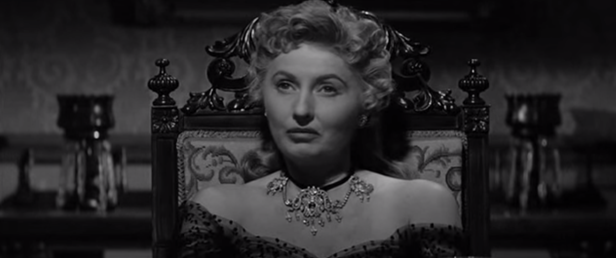
Soon Griff straightens Brockie out and Jessica comes into town to retrieve him. Next, Griff comes with a warrant to Jessica’s ranch and in a memorable scene, literally made for Cinemascope, the warrant gets passed down the table. Jessica wants no trouble but soon a crooked sheriff named Logan (Dean Jagger) want to finish off Griff. It doesn’t go so well and he gets more and more jealous of Jessica’s increasing love for the oldest Bonnell brother.
Ultimately, Brockie ends up in the clink, but he uses his sister as a shield in an attempt to escape. For once Griff loses his cool and sprays him with bullets and that’s not all. For good measure, Fuller has Griff ride solemnly off in his buckboard only to have Jessica scamper after him. The power dynamic see-sawing once again.
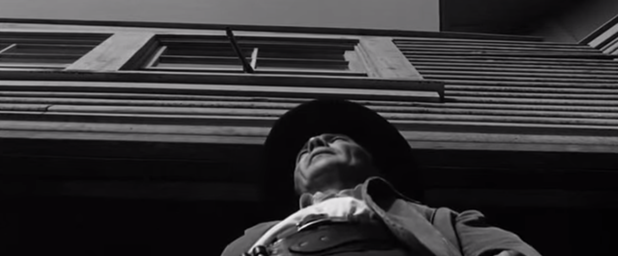
Yet again, Fuller never seems to do anything conventionally or demure. His film has a reformed gunfighter who calls his former profession that of a freak. The leading female character dominates most everyone else and has a ballad written about her. There are tornadoes that envelop the screen. Then, only Fuller would have the audacity to kill someone during their wedding ceremony, and he does it without skipping a beat.
Among other things, it is a film about guns, brothers and sisters, and love. Griff packs a gun on him. Jessica always has guns behind her. Griff has a younger brother who has much to learn. Jessica’s brother will never learn. That being said, the inventive visuals, typical brutality, and the memorable casting of Stanwyck were all in a day’s work for Samuel Fuller.
4/5 Stars
 The place is Austria. The time around 1900. This tearful romance is framed by a lovely plot device in the form of a circular narrative. As the title suggests a woman writes a letter to the man who she has always loved. As she relates their story, he slowly pieces it all together.
Thus, begins their enchanted time together. He does not quite understand the gravity of the situation, but she is content in just being with him. That is enough. No explanations need to be made. Their evenings are spent eating lobster, walking through the streets, taking a train ride all over the world, and munching on caramel apples. Top it off with a passionate embrace followed by a kiss and the fairy tale ending seems to be imminent. But as we already suspected, it is not that easy, and a train rapidly takes him out of her life.
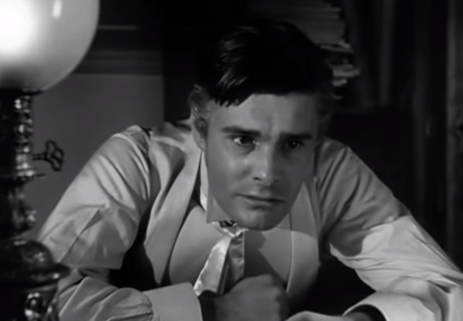 All that’s left for him to do is hit his head in despair. He let her slip through his fingers, if only he had known. If only his servant had not been mute, because he knew who the girl was. Brand has new resolve, however, and instead of running away he faces an unpleasant fate with honor.
 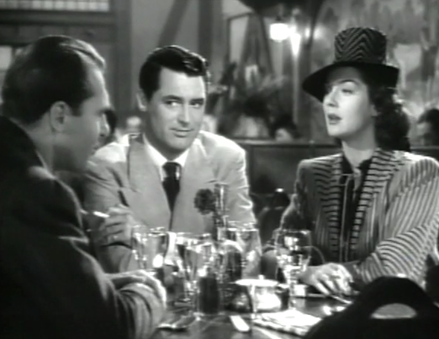 It all happened in the “Dark Ages” of the newspaper game — When to a reporter “Getting that story” justified anything short of murder. Incidentally you will see in this picture no resemblance to the men and women of the press of today.”
Hildy Johnson (aka His Girl Friday) is making her return to the Morning Post but not to get her old job back. She came to pay a visit to her former husband (and paper editor) who she divorced because she is newly engaged and wants to break everything off for good. It means she can go off into the sunset with her new beau, but it also means no more paper. She drops the news and it turns out the wedding is set for the next day so Walter has very little time to go to work. He soon begins a sly barrage of subtle and not so subtle jabs, ridicules, and put downs aimed at the easy target Bruce Baldwin (Ralph Bellamy). Walter cuts him off, plays dumb, and is in general condescending and conniving. Hildy sees it all unfolding and half watches with bemusement, while also trying to stop Walter from causing any major trouble.
You see he’s a wonderful fellow in a loathsome sort of way, but you cannot help but like him. Because as Hildy notes he comes by charm naturally since “his grandfather was a snake.” These are the kinds of barbs and witty put downs we deal with the entire film. Besides being good fun, it also is quite extraordinary, since they never stop coming. It’s also fascinating to simply watch the many expressions of Cary Grant, whether it is a smirk or straight face, it always has a tinge of mischief which suits his character just fine. He seems more like a little boy at times, trying to win back his girl, and in many ways, that’s what he’s trying to do. But back to the action.
Hildy unwittingly falls into Walter’s trap, and from that point on there’s no stopping her, or Walter’s scheme for that matter. When the wheels of journalism start turning there’s no stopping someone like Hildy with newsprint in her blood. Walter lets her catch wind of a man who pleads innocence though he is to be hung for shooting a black policeman. Hildy puts up a fight, but she doesn’t last very long.
Soon she’s gotten into talk to the nervous prisoner Earl and gets his point of view on the whole messy ordeal. The other newsboys are callous to the world, and as the gallows goes up outside their window, all they can do is play cards and think about the best scoop. Hildy is a little different but she’s still leaving…or is she?
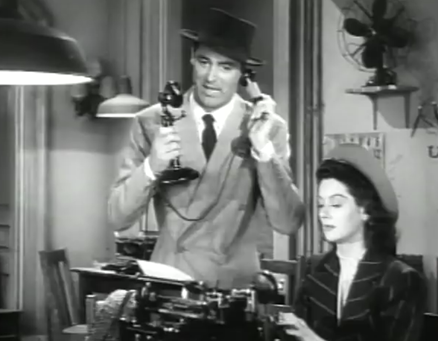
Next, Williams escapes and the mad search for the fugitive is on as the newsroom goes into an uproar. The mayor and sheriff are in a tizzy and then a reprieve for Williams comes, but they ignore it because they need this hanging in order to get re-elected. By a stroke of luck, Hildy finds Williams and stashes him away in a desk. Now she is hooked, and when Walter hears about her stroke of luck, everything begins again like old times. Bruce and his mother are soon disregarded as Hildy types feverishly, and Walter wheels and deals on the telephone. Then, the sheriff and mayor burst in with the rest of the boys. Williams’ hiding place is uncovered and the two reconciled lovebirds look like they might wind up with a jail sentence. But the honorable air-head Mr. Pettibone saves the day. All that’s left to do is depart on a two-week honeymoon to Niagara Falls or maybe a workers riot in Albany. All is right with the world again. Walter’s got His Girl Friday, and she’s got her lovable wiseguy husband back.
I’m not quite sure why I am so often drawn to this movie because it is more than it being readily available in the public domain. The dynamic of Grant and Russell is certainly superb. Walter can be an absolute cad, but Grant’s charm makes him bearable to the end. Russell is the true star of this film and she deals the punches with the rest of the boys. It really is the perfect role for her. The film is blessed with the great supporting cast including Porter Hall, Roscoe Karns, Gene Lockhart, Billy Gilbert and a host of others who populate the film with colorful faces and voices.
After seeing Nothing Sacred (1937) it was also interesting to see another script from Ben Hecht about journalism. Again, it might be a screwball comedy but there are also political undertones. Most blatantly about journalism itself, but also about corrupt leaders (like the mayor and sheriff), the Red Scare, gender roles, capital punishment, and even WWII.
Of course, it must also be noted that this is a film directed by the great Howard Hawks. I have always had difficulty pinpointing his trademarks, because the reality is, he was so versatile, trying his hand at so many different genres. All I know is that I more often than not enjoy his work behind the camera because it is seamless and it feels quintessentially American. His Girl Friday is no different. Although, this one is just a tad faster than most. It’s sure to raise your blood pressure so be warned.
5/5 Stars
 Based on the life of Christian activist and British parliament member William Wilberforce, Amazing Grace is a very important and powerful film. Wilberforce is a unique and remarkably extraordinary man, to say the least.
The story opens as a dreadfully sick Wilberforce (Ioan Gruffud) takes a holiday at the home of some close friends. They introduce him to his future wife Barbara Spooner (Romola Garai), however, to begin with, they resist any romantic involvement and remain friends. He relates his story to her about how he became an Evangelical Christian while also a popular member of the British Parliament.
He had considered leaving politics for theological studies, however, he is persuaded by friends, including William Pitt (Benedict Cumberbatch), to continue in parliament. He is asked to tackle the highly unpopular issue of slavery, and after a visit to his aging mentor John Newton (Albert Finney), Wilberforce’ fervor increases. Due to his own regrets about formerly being a slave trader, Newton is hounded by guilt and urges Wilberforce to end the trade.
Soon William Pitt becomes prime minister, and Wilberforce gets ready to bring a bill outlawing slavery to the house. He gets some unexpected support, but his popularity dwindles, and he is strongly opposed by a coalition with a large stake in the trade. His bill is ultimately beaten outright, but William continues the cause for numerous years still to no avail.
Now back in the present, Wilberforce is sickly and dejected, but Barbara encourages him to push on. They get married soon after and the fight continues without much progress. However, finally William devises a clever plan to cripple the slave trade, and he gains some new allies. His colleague and friend Pitt is slowly dying, but he supports Wilberforce. After many years of tireless struggle, a bill is passed in parliament that effectively ends the slave trade in 1807.
Wilberforce is one of those often unsung heroes who truly did something amazing. Pun intended. With the release of Lincoln more recently, there are definite connections that could be made between the films. Like Lincoln, Wilberforce worked for more than political clout, because he knew what was good and right, and so he fought for those principles. That is the sign of a truly great man just like Abraham Lincoln. Much like Wilberforce himself, this film is less heralded than Lincoln, but I would wager that it is no less important as a historical drama.
4/5 Stars
 Before His Girl Friday (1940) came, there was another screwball comedy about journalism, the perfect scoop, and deception. After getting on the bad side of his boss, newsman Wally Cook (Frederic March) is demoted from the living and forced to write obituaries. It’s quite the awful setup and Cook desperately looks for another story to get him in the good graces of the Morning Star’s editor.
The perfect news flash has just come up in the form of a woman who is soon going to die of radium poisoning, and so Wally Cook goes to meet her. Heading up from New York, he ends in the one horse town in Vermont. He meets a lot of unobliging people whose vocabulary is limited to “Yup” and “Nope.” He finally comes across the crying girl who has just left an appointment with a doctor. He comforts the girl cheering her up by promising a trip to the big city where she will be treated like royalty (And he’ll get his story). So Hazel Flagg soon becomes the sweetheart of New York with public appearances at Madison Square Garden, parades, poems, articles and special honors. It’s all going according to Cook’s plan, the only thing is that Hazel is not actually ill.
That’s a wrench in the plan and soon it becomes evident that Cook will look like a cad. To make matters worse, he’s falling for her and his editor Oliver Stone is all over him. Now he must take part in Hazel’s charade, despite his annoyance. She too is annoyed and ends the game so the two lovebirds can elope. Still, the story of Hazel is given a romanticized ending that the public deserves.
Frederic March is decent as the desperate and long-suffering journalist. Carole Lombard is her typical light-headed, whimsy, high-strung, scatterbrained, sniveling self. It proves to be a volatile combination partnered with Ben Hecht’s script. The news industry loses a lot of its self-respect for the sake of laughs because nothing’s sacred. Some might be interested to know that it was shot in glorious technicolor and it was the only time Lombard would appear in a technicolor film. She would, of course, die in a tragic plane crash in 1942.
This film was quite short so the story moved quickly and there were definitely some screwy moments. I am however partial to His Girl Friday and some of the other more well-known screwballs.
3.5/5 Stars

“Yes, this is Sunset Boulevard, Los Angeles, California. It’s about five o’clock in the morning. That’s the Homicide Squad – complete with detectives and newspapermen. A murder has been reported from one of those great big houses in the ten thousand block. You’ll read about it in the late editions, I’m sure. You’ll get it over your radio and see it on television because an old-time star is involved – one of the biggest. But before you hear it all distorted and blown out of proportion, before those Hollywood columnists get their hands on it, maybe you’d like to hear the facts, the whole truth.”
So begins one of the most caustic dramas ever constructed in Hollywood, or about Hollywood, and it was gifted to us by screenwriter-director extraordinaire Billy Wilder. His previous hard-edged film noir Double Indemnity had its own cynical narrator with a memorable voice-over of his own. However, Walter Neff was only on the verge of dying. When we hear the voice of Joe Gillis he is already speaking from the grave. It is a fantastic angle in which to look at this seemingly perfect Hollywood construction, and Gillis never ceases to tell his story until we wind up at the pool as the story comes to a close.
For now, we learn that six months back Joe (William Holden) is a writer who is having difficulties being published, and some men want to repossess his car. Desperate, he pays a visit to a friend at Paramount named Mandrake to pitch an idea, but the script is of little merit according to a pretty young script reader. That’s a dead end so Joe leaves, but the men are waiting for him and he zooms away. A flat tire leads him to drive away into an empty garage connected to a dilapidated old mansion on Sunset Boulevard.
There he is mistakenly introduced to drama queen Norma Desmond (Gloria Swanson) who used to be big on the silent screen, back in the day. Now all she has is money, fan letters, and old memories to rehash, while her butler Max (Erich von Stroheim) watches over her. The theatrical actress believes her big comeback is soon at hand, and when she learns Joe is a writer, she takes an interest. He needs the money so he takes a look at the rough script meant to be a vehicle for her. A small commitment turns into a life-consuming undertaking. Desmond constantly hovers and dotes over Joe, going so far as having his things moved into her home and buying him new clothes and trinkets. He reluctantly accepts the first class treatment, not minding the cushy lifestyle. But to Norma, it’s more.
He is her closest companion. Her love. Joe cannot bear to tell her that she is washed up and that there will never be anything between them. He ditches her intimate New Years party for a more friendly affair where he crosses path with his old bud Artie (Jack Webb) and his girl, the previously critical script girl Betty Schaeffer (Nancy Olson). She takes an interest in a few of his past ideas, but he does not, and after getting shocking news from Max he is pulled back to his lavish prison.
Eventually, Norma is prepared to drop off her script with her former collaborator the great Cecil B. DeMille. However, it becomes all too clear that her story will amount to nothing, but her friend cannot bear to break her heart. She is sent off again with the strong conviction that her day is coming. Makeover’s, diets, and facials follow in preparation. Joe is indifferent to it all and secretly begins working at nights with Betty on a new screenplay.
Desmond finds the script and jealousy takes over, causing her to call Betty to ruin the romance that is rapidly budding there. Joe hears it all and angrily tells the disbelieving Betty to come see his set-up on Sunset Boulevard. He acts as if he likes the life, and Betty leaves broken-hearted. Soon after, a fed-up Joe packs his bags to head back to Ohio. Thus, begins the systematic breakdown that we had expected for so long. Norma Desmond completely falls apart and does the one thing she knows to hold on.
Back in the present the crowds and journalists have turned out to see the has-been movie star who is stark raving mad, and one last time Norma does not disappoint. She glides seamlessly down the stairs with a serenely ethereal look on her face before preparing for her closeup. So ends the career of one Norma Desmond and the life of Joe Gillis. We can only hope that Betty got together again with Artie, otherwise this would remain one of the bleakest tales of all time.
However, that is part of the power of this film. It is strangely dark and ominous. Franz Waxman’s score is fit for a Gothic melodrama and Desmond’s mansion is a creaky old foreboding castle that hardly sees the light of day. Max is a solemn figure who we learn brought Norma stardom, married her, got divorced, and then could not live without her. Joe Gillis gets caught in a cycle he cannot get out of, and in the middle of the whole mess is Desmond herself. She is so preoccupied with herself, so obsessed with her own former glory, and yet she is a lonely, insecure aging actress. In many ways, she is Citizen Kane’s female counterpoint. A person with so much money, prestige, and power who slowly drifts away into oblivion without anyone caring except ravenous journalists. Much in the same way, although Norma is so petty and vain in so many ways, I cannot help but feel sympathy for her sorry existence. She is an utterly pitiful person in the end. No one deserves her fate.
In this way, Sunset Boulevard seems to critique Hollywood, a place that makes stars like Norma Desmond and spits them back out just as easily. It is not easily figured out or understood it just does at is pleases. For instance, Billy Wilder became an immigrant writer and director of great repute. Cecil B. Demille was a longtime respected director. Erich von Stroheim had early success with silent films then had to turn to acting. Gloria Swanson was a silent star then struggled in the 1930s. William Holden broke out in the 30s, hit his peak in the 1950s and continued to act into the 70s. Nancy Olson went on to make a few classic Disney movies and Jack Webb, of course, went on to create the TV Show Dragnet. Each Hollywood career starkly different from the others.
There is also such an authenticity in this film so much so that sometimes the line between fiction and reality is blurred. First, Wilder cast Gloria Swanson to play former silent star Norma Desmond in the film, so it seems like she is playing herself (Complete with old promotional photos and silent footage). He also had appearances by both von Stroheim and Demille, who had each directed Swanson in her silent days. Some of Desmond’s bridge friends include other real silent stars including Anna Q. Nilsson, H.B. Warner, and the legendary Buster Keaton (His career had also crumbled). Even gossip columnist Hedda Hopper gets into the mix to tell the tragic story of Desmond, and it all works.
So whether you watch Sunset Boulevard for the Hollywood angle, or as a film-noir, or a love story, or a tragic drama, the beauty of it, is that it functions as all of those things simultaneously. Gloria Swanson is absolutely loopy, William Holden is as cynical as ever with his smoked-out gravelly voice. Von Stroheim is haunting as the faithful Max, and Nancy Olson is the one young friendly face in juxtaposition with Swanson. Billy Wilder’s script with Charles Brackett is inspired a multitude of times, but instead of telling you I will give you a taste:
“There once was a time in this business when I had the eyes of the whole world! But that wasn’t good enough for them, oh no! They had to have the ears of the whole world too. So they opened their big mouths and out came talk. Talk! TALK!”
That’s Norma Desmond in a nutshell for you. That’s Sunset Blvd.
5/5 Stars
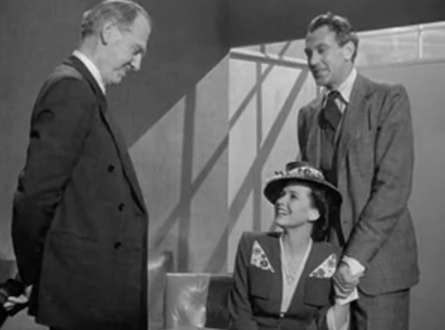 Before superheroes headlined any Marvel or DC blockbuster, it was real life heroes that audiences wanted to see. No pastime was quite as popular as baseball and in that era Lou Gehrig was one of the titans along with Babe Ruth and the rest of the Yankees. You see this film is less of a biography (It certainly is not completely accurate), and more of a visual eulogy to a contemporary hero. The prologue explains as much:
“This is the story of a hero of the peaceful paths of everyday life. It is the story of a gentle young man who, in the full flower of his great fame, was a lesson in simplicity and modesty to the youth of America. He faced death with that same valor and fortitude that has been displayed by thousands of young Americans on the far-flung fields of battle. He left behind him a memory of courage and devotion that will ever be an inspiration to all men. This is the story of Lou Gehrig” ~ Damon Runyon
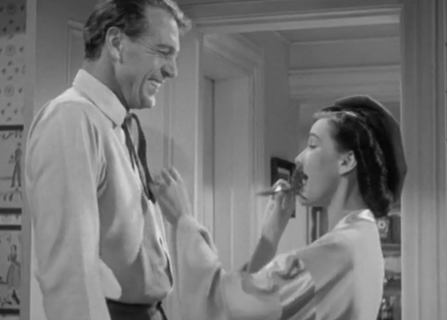 But all fairy tales must come to an end, and Lou Gehrig’s is especially tragic. He plays an, at that time, unheard of 2,000 consecutive games, but he also falls into a rapid decline. Eleanor looks on helplessly as her husband begins to deteriorate in front of her eyes, and the fans know something is not right. Gehrig gets examined and learns he has ALS, but very little is known about it. Much less can be done to treat it.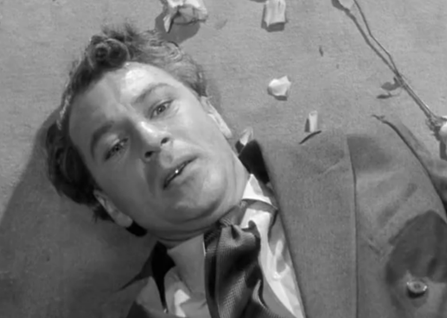
 “I would never want to belong to any club that would have someone like me for a member. That’s the key joke of my adult life, in terms of my relationships with women.”
So begins Annie Hall a film that Woody Allen, also known as Alvy Singer, begins with an opening monologue borrowing a quip from Groucho Marx. It acts as a lead into his life story, romantic and otherwise.
He had a childhood characterized as being morose, depressed, and so on, because as he noted early on “the universe is expanding.” He grew up living under a roller coaster and having fun with the local bumper cars. He grew up to be a comic with the same despondent outlook on life. In one memorable long shot of a sidewalk, we listen to Alvy talking to his friend about people making jokes about him being a Jew and his assertions seem uncalled for.

When Alvy was dating Annie, they went to Ingmar Bergman films and The Sorrow and the Pity was a personal favorite of Alvy. A favorite film with a perfect title and subject for the pessimistic fellow. However, what really vexes him are puffed up know-it-alls who pontificate on and on like they are God’s gift to the universe. It seems necessary at this point to break the fourth wall.
As Alvy recalls his early childhood and first relationship which began at an Adlai Stevenson rally, it is rather funny that he remains unchanged the whole time. Physically Woody Allen is playing Alvy as a young man and an old man without any change.
Then there is the fiasco with the lobsters and the memories of his first meeting with Annie over tennis. That was when he met the girl who came out of the Norman Rockwell painting. Seemingly the antithesis of Alvy himself.
Their relationship is examined with all its quirks from a trivial conversation about art, with underlying subtitles that reflect their real thoughts, to Annie’s stint as a nightclub singer. They have a comical time people watching, and Alvy recalls his second wife and the one who was a Rolling Stone reporter. His relationship with Annie also has its share of arguments, over spiders at 3 in the morning and adult education. Through it all Alvy still views Annie as a cartoon version of the Wicked Queen from “Snow White,” who he secretly loves.
 It is during a famous split screen sequence (actually a split room) where the stark differences, not only between the pair, but the genders are pointed out. Things are changing. They take a trip out to sunny California and Alvy cannot help but hate it compared to pleasantly gray New York. They have laugh tracks, wheat germ killers, and trash which is subsequently made into T.V. shows. Annie loves it all.
The inevitable comes and Annie breaks up only to have Alvy soon revisit California to propose marriage. Needless to say, it does not happen. He returns to New York and makes his first play about their last conversation verbatim, with one small revision. Alvy sees Annie one last time when she returns to New York, and they share some laughs while highlights role across the screen.
Allen’s stand-in Alvy sums it all up with one final joke about a guy who has a brother who thinks he a chicken, but he fails to do anything about it because he needs the eggs. That’s how he feels about relationships. “They’re totally irrational, and crazy, and absurd,” but you keep on because you need the eggs. Another philosophical gem from Alvy Singer.
The irony of Annie Hall is that many a person has gone on to pontificate on and on about it, but if we actually pulled an Alvy Singer and dragged Woody Allen from out behind a movie poster, I’m sure he could set us straight. Annie Hall is chock full of humor, a far from typical type of romance, and people trying to find their way in life. Take away discussion about psychoanalysis, modernism, antisemitism, and what you are left with are people just talking. Some of what they say is about such philosophical topics, but sometimes it’s not. It’s about memories, simple observations of life, and the little things that happen along the way.
There are clashing worldviews that come up against each other like New York and California (brought to us by the cinematography of Gordon Willis). There are different sorts of people like Alvy Singer and Annie Hall. Yet we still go through relationships “because we need the eggs” so to speak. We are searching for that type of intimacy and closeness, and very often we keep looking and looking. It is painful, seemingly necessary, and all the same, it can feel pointless. It’s part of being human I suppose.
Annie Hall works for me because of the quirks that give a fresh face to the typical romantic comedy and it will be the measuring stick for other such films that are being released for years to come. I am not usually a major fan of Woody Allen films, but this one is his undisputed masterpiece. It exemplifies his general philosophy and approach to comedy. Not to mention his typical players in Diane Keaton and Tony Roberts.
4.5/5 Stars
 My first thought about this film without any prior knowledge was, “How can they have a superhero movie with a talking raccoon and a walking tree? That’s so stupid!” Well, they proved me wrong or maybe they proved me right in a sense.
 4 Star Films