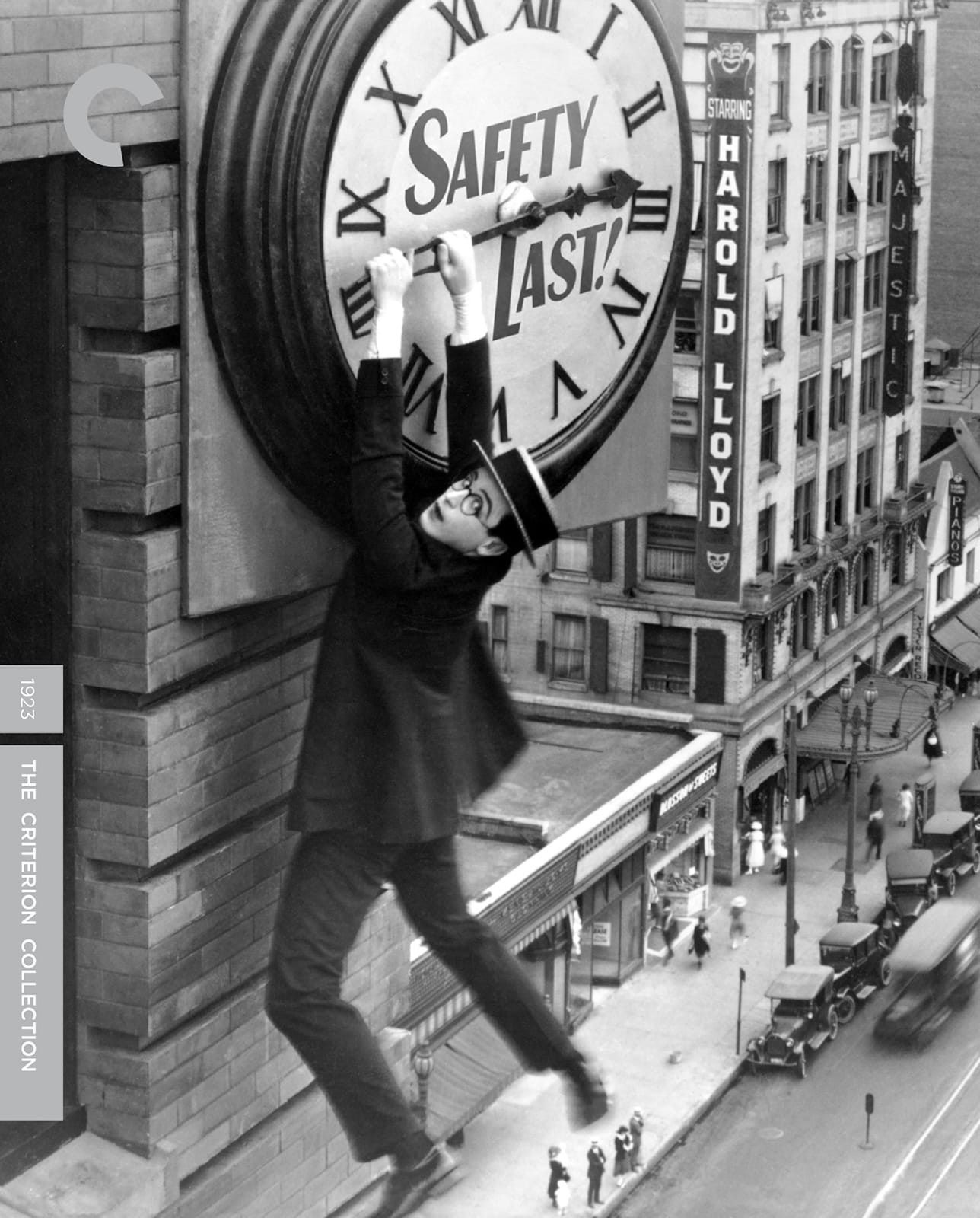
Safety Last! (1923)

The great thing about The Big Three — Chaplin, Keaton, Lloyd — and all the great silent clowns, is how they engender a kind of audience identification with profoundly comic results. Because each had their own unique persona that remained constant throughout all the trials and tribulations they went through.

The enduring charm of the Harold Lloyd character is his nebbish yet indefatigable spirit. He’s bespectacled, always smiling, and there’s a bit of a hapless daredevil in him. He doesn’t always do so purposefully, but he’s accustomed to ticking clocks — racing against time against the odds — and of course Safety Last famously put him in contact with another literal ticking clock. More on that later.

At only 73 minutes, it’s easy to place a silent comedy like Safety Last with other rudimentary forms of movies from the nascent film industry. The two reelers and other silent fare which might seem like a dime a dozen and disposable. We might mistakenly think we have nothing to learn from them because they are over a century old and we’ve already grown beyond what they have to offer.

And yet the very first shot belies any erroneous impressions. There’s the shadow of what looks to be a hangman’s noose. Our hero, Harold, looks to be behind bars saying a last adieu to the love of his life. Then, the perspective shifts and we realize not a man shuffling off to jail but one waiting at the train station to head to the city to make good. Eventually, his girl Mildred can come out to him and they can get married!

There’s not a specific utility to the gag and if you’re not thrown off by it tonally, it shows a sense of visual invention that easily transfers from early shorts and reel comedies. It shows these early movies were not made by a bunch of hacks but technicians with a great deal of ingenuity and knowhow. The proof is in what they left us.

The first half of the picture is most defined by its bits. There’s a gag to avoid the rent collector where Harold and his roomie hide under their hanging coats with their legs pulled up.

In another vignette Lloyd is stuck in the back of a laundry truck baking like a sauna with a driver who is deaf; it leads into his extended attempt to get back to his work in time by any means necessary so he can clock in. It’s to no avail so he sneaks in under the guise of a mannequin, as one does. No one can say he’s not plucky.

We can all commiserate with him as he deals with time wasters on the department store floor and then the hordes of blue-blooded ladies who come for a sale prepared to pull the clothes off his back; some things haven’t changed. There’s another scene where he combs his hair in the shine of a bald man’s pate. Again, it’s yet another whimsical example of ways to stretch the form for the sake of a visual gag.

Then, Harold tries to put on airs for his girl masquerading as the general manager, though he’s only a mere grunt who’s easily discarded. Like us all he wants to be important and appreciated; he doesn’t want to let his loved ones down or be seen as a failure.

The final act of climbing all 12 floors of the department store feels like the birth of the high-wire thriller genre before our eyes. After all, he’s as much of a free climber as you or me. Still, he has that smiling girl in the back of his mind and the prize money if he reaches the top.

There’s some visual trickery but the cutaways and overhead shots give us a sense of scale all in service of the movie. The fact we can’t make out all the fault lines and there is still this harrowing sense of unassailable danger is a credit to the picture a century on. Both as a physical feat and a technical marvel of early Hollywood.

Harold’s conspiring with his acrobatic friend to get up the building devolves into a charade with cops and a drunk, a bit like a Keystone Kop reel with chases and “Kick Me” signs. It might be the lowest common denominator of comedy, but that’s hardly a bad word.

Lloyd has a myriad of gags at his disposal as he begins his ascent. They are play things that complicate what already feels like a daunting task: pigeons, scurrying mice, rope, a spring, and of course that famed clock face.

Lloyd clinging for his life has become one of the most iconic images in cinema history, and that’s across the board regardless if people have ever seen the movie or not. His exploits live on in the ubiquity of the public consciousness.

My final observation is noting how the movie ends with a gag just as it came in. His shoes get stuck in the tar on the rooftop as he walks off with his girl, the always and forever irrepressible hero Harold Lloyd.

There’s an added layer to the silent movie romance when you realize Lloyd would actually marry his leading lady Mildred and they would be together for the rest of their lives. It’s a stretch but it’s hard not to see how this big smash of a movie was to the actor Harold as climbing the department store was to his alter ego. They came out on the other side larger than life and beloved by the public. Most importantly, they got the girl. It’s the stuff of Hollywood.

4.5/5 Stars
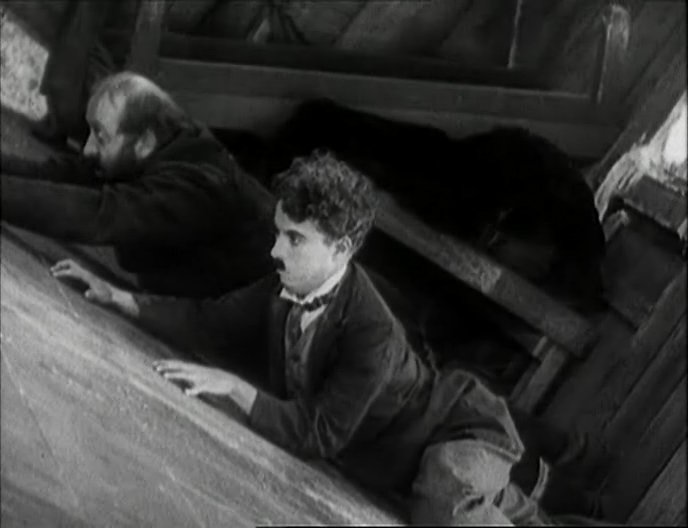
The Gold Rush (1925) at 100

It feels necessary to begin with a prelude to The Gold Rush. I came to a realization I’ve only ever seen Charlie Chaplin’s updated version from 1942 with a new sound introduction and soundtrack. In some ways, watching the original feels like seeing a new film.

It was the first Chaplin feature I watched, and I’m pretty sure I liked every subsequent one more. I’m recognizing now, perhaps it was the Tramp character who grew on me. Because so much of his appeal is not only the audience identification, but also this sense of continuity over all his shorts and features. The more and more you watch, the more you love him.

Chaplin understood how powerful this could be, and it’s made his alter ego the most visible figure the cinema has ever known. Out of Chaplin’s films of the ’20s and ’30s, I think I still like his other ones more, but why does this matter? It’s all a collective body of work centered on the Little Tramp who could.

The movie itself opens during The Great Gold Rush of Alaska. The opening shot showcases a line of miners snaking their way through the desolate mountain landscape, and there’s a scope to it that has a definitive cinematic eye. Chaplin, as both actor and director, is on full display as he sets the stage for his protagonist.

The first act feels like a traditional Chaplin two-reeler. It’s scenario-based. The characters are larger than life, with a wanted fugitive (Tom Murray) and Big Jim McLain (Mack Swain), who strikes it rich only to be stricken with memory loss.

It’s also a comedy of errors involving snow flurries, gales of wind that would make Keaton proud, and surreal gags with an overgrown Chaplin chicken. They also go through the bizarre ordeal of systematically eating one of the Tramp’s shoes. Hunger will do that to you.

At the end of it all, the killer’s gone and the gold’s still hidden away; it’s sitting there for the rest of the movie just waiting to be dug up. We know intuitively we will return to the spot.

The Gold Rush truly hits its stride when introducing a romantic element, and it’s because of what it means to our lead character. There’s something transcendent in it that I can’t help but express. He’s so pure and honest in love. It’s comprehensible to anyone who’s admired, even loved, someone from afar.

Maybe a crush in high school, a Juliet who runs in different social circles than you, or a long shot who has someone else already that you could never compare to. It’s a tale as old as time, though so is The Gold Rush. The Tramp makes it universal.

The girl in question, Georgia (Georgia Hale), is a vivacious woman who frequents the local dance hall. She seems to wave to him, except there’s another man just behind him. In a subsequent moment, he thinks they might strike up a conversation as she comes near, only to look right through him. It discourages him, but he’s not daunted.

Later, he finds a discarded picture of her and picks it up, looking sheepishly at the old man standing nearby. He’s seen what the Tramp has done, and our bedraggled hero tries to play it off like he’ll throw it away. But of course he doesn’t.

We eventually find out that he keeps it under his pillow with his most prized possessions. The reason we find out is that Georgia pays him a visit with some of her friends; they think it will be a lark to see him. It’s nothing to them, and it’s everything to him just to speak with her and be in her presence.

At the hall, he finally gets the opportunity to dance with her, and it has nothing to do with him. It’s part of her scorning of another man, but in his little universe, it means something — it means the world to him — and our hearts beam and simultaneously break. She’s not going to want him, and yet in the same breath, we want the fairy tale for him, or at the very least, someone who would love him for who he is.

Chaplin’s character reaps the benefit of her coquettish game only to have his pants come loose, and he ties them back on with the leash of a nearby dog. It’s The Tramp’s inadvertent comedy on full display — comedy that just kind of happens to him out of his own wealth of eccentricity.

He rides the wave of the evening, however, with the elation at the prospects of guests for New Year’s. It’s so earnest watching him positively trashing his cabin with feathers out of pure jubilation, only to be left heartbroken.

The communal singing of “Auld Lang Syne” cross-cut with the Tramp all alone is an implicit reminder: every year, there are the lonely people who must make a go at life by themselves, forgotten again. The despondency spawns fitful dreams, including Chaplin’s iconic gag with dancing bread feet. If it sounds mystifying, then watch it for yourself.

For the final act, the Tramp is reunited with the prospector, who promises him a piece of his stake if they can track down the cabin. Instantly, the Little Man’s outlook changes, and he scales the balcony of the dance hall just to profess his love to Georgia and let her know he will come back a millionaire…

The best bit follows the two men as they hunker down for the night, only for the blizzard to displace their cabin to the cliffside so they’re jutting out on a perilous cantilever. “Flight of the Bumble Bee” perfectly captures the frantic nature of the moment without totally counteracting the comedy of it all as they slide this way and that, trying to escape to safety.

The two hapless prospectors succeed in their quest to get rich. The Tramp gets a lavish makeover so he looks like a Saks Fifth Avenue multimillionaire, catching an ocean liner home. Some photographers want some shots in his mining clothes, and somehow, all is right in the movie again when he’s back to looking like The Tramp. What would we call him otherwise? By this point, it feels like his proper uniform.

And yet there’s also a poetic reason for this development. It’s easy to read what will happen and what the film is building to. He must see Georgia again. Circumstances have changed, but for all intents and purposes, he looks like the same down-and-out Tramp, at least to her. It’s the exquisite irony underpinning their glorious reunion. Dreams really do come true.

In a cinematic sense, Chaplin effectively took a character who could easily be a bit part or a stereotype in any type of picture and proceeded to give him the level of depth and feeling that enraptured the world over.

I never said this out loud because I’m only formulating it now. Percolating under the surface, there is some dissonance within the Tramp persona because here you have this impoverished, chaste character played by a man who at least had the reputation of a womanizer and was wealthy the world over. This is only a perception. And yet I settled on this: The Tramp is a romantic and personal ideal for Chaplin and for all of us.

He bears all the difficulties of the world with heart, unassuming grace, and a healthy dose of laughter. As long as there is hardship, poverty, and romance in the world, The Tramp will be relevant because he makes us laugh, but most importantly, he makes us love him.

Because he is one of us, or maybe we are him as we traverse our own journeys. That’s what we’d like to believe anyway, and Chaplin allows us to. He also gives us a hopeful ending. It’s what makes him, even to this day, the fitting archetype of Classical Hollywood storytelling. He is the standard by which all others are judged.

4.5/5 Stars

Hallelujah (1929): Daniel L. Haynes and Nina Mae McKinney

Hallelujah (1929) is one of those films that takes some leg work in order to grapple with what it fully represents. But like some of King Vidor’s broadest, most humane portraits, it has moments pregnant with all sorts of residual meaning.

We begin with iconography that feels troublesome even as it feigns authenticity. Happy-go-lucky Blacks sing a joyful chorus of “Swanee River” as they labor in the cotton fields. We are still on the cusp of the sharecropping generation — Blacks who lived resolutely poor — where Jim Crow regulations prolonged the Antebellum-era oppression.

Zeke (Daniel L. Haynes) is a stout-hearted man with broad shoulders, who exudes a jovial spirit. Life is hard, but his family is close-knit, and they find ways to glean contentment out of every day. This is Vidor’s glorified nostalgia for the cotton fields and spirituals from his childhood.

It brings to mind an excerpt from Frederick Douglass’s autobiography that frames these images quite differently. He says the following:

“I have often been utterly astonished since coming to the north, to find persons who could speak of the singing among slaves as evidence of their contentment and happiness. It is impossible to conceive of a greater mistake. Slaves sing most when they are unhappy. The songs of the slaves represent the sorrows of his heart, and he is relieved by them only as an aching heart is relieved by its tears.”

Later, Zeke is confronted with human urges; in one solitary moment, he’s overtaken by the devil, kissing a young Black woman as she plays the wedding march for the ceremony right outside. Far from simply being a warning peal of drama, it suggests an inherent predilection toward lust in the man’s heart. It has nothing to do with race, but the insinuations are clear.

Now it’s easy to cast King Vidor as another southern boy in the mold of D.W. Griffith and though Hallelujah feels a fair bit more palatable and life-giving than Birth of a Nation (that’s not too difficult), there’s no doubt it still caters to an archaic and paternalistic view of Black culture.

There is a Mammy character, and she sings the children to sleep, rocking away, after a long, hard day in the fields. Then, she gives her oldest grandchild a playful smack on the rear. He’s too big to be cradled in her arms.

The world is saturated, even inculcated by prayer and song because these are the sinews that keep families together in a harsh life of daily toil and systemic oppression. And yet the movie remains as an almost one-of-a-kind relic chock full of the kind of recorded history we can imbibe no other way. At the very least, Vidor’s intentions seem sincere.

However, we must also acknowledge Nina Mae McKinney, who became one of the pioneering Black film stars of the 1920s no matter how brief her time in the spotlight was. Her Chick is frisky and full of joy in the dance hall, but she’s also in cahoots with a gangster, duping drunks out of their hard-earned cash.

McKinney, a mere teenager during filming, lights up the screen in a way that feels incandescent, acting as a precursor to other musical talents like Lena Horne and Dorothy Dandridge — women who were only allowed a small amount of cultural currency in Hollywood’s landscape.

As she seduces Zeke, we come to realize, that it is from her role we get other saucy street tramps like Georgia Brown and Carmen Jones. Again, we must reckon with archetypes being propagated in front of us that were simultaneously groundbreaking and injurious.

With Zeke caught in a war over his soul and the casting off of his lusts, he gravitates back toward the church, devoting his life to becoming a preacher, and we are reminded of what a seminal force the Black Church and gospel music was and still remain.

When Zeke rides a donkey into a town for a religious revival, only to be accosted by two very familiar figures, the biblical imagery is not lost. No matter how besmirched he was in the past, his zealous transformation sculpts him into a Christ-like figure mocked by the sinners in his stead.

The latter half of the picture is enveloped by these scenes of euphoric, clamoring, overwhelming spiritual revival. What’s striking about them is how they don’t feel done up in a Hollywood fashion. They feel raw and real, where the music is organic and not merely a musical aside to spruce up a broader narrative. Otherwise, Hallelujah finds itself wallowing in morally inflected melodrama punctuated with quite the surprising chase scene through the muck and mire of a swamp.

Of course, it must settle back into its contented status quo brought about through the continued power of song and the lasting stability of the family. It is a happy ending, although for Blacks living and working in 1929, on the eve of the depression, you wonder if such a thing was even possible.

It’s not meant to be a judgment on anyone, but I do find it intriguing that for all the lasting stereotypes and any of the elements that might ruffle modern sensibilities, there’s something stirring about seeing these performers burgeoning with joy and emotion.

Mind you, it’s not something found in the construction of the plot. These are the made-up faux realities that stink with the stereotypes of the time. But when we’re able to get away from that, even momentarily, it feels like there’s still something lasting about Hallelujah because suddenly it becomes about irrepressible humanity — people, resolute and proud — and it’s not something foisted upon them for the sake of an audience.

There are moments in Vidor’s picture where his performers get to be vessels of dignity before sinking back into the dated rhythms of the narrative. For better and for worse, this film would beget many progeny and be one of the foremost purveyors of Black representation moving forward.

For that, it is a landmark and that’s not an entirely auspicious distinction. Movies like Green Pastures (1936) and Cabin in the Sky (1943) are built right out of this tradition making Black culture a sometimes overly simplistic amalgamation of religiosity and fervent song.

There seems no better place to end than with the words of the film’s mostly-forgotten star Daniel L. Haynes: “I cannot say what our race owes King Vidor and Metro-Goldwyn-Mayer — there are not words forceful enough for that. Hallelujah will, as Moses led his people from the wilderness, lead ours from the wilderness of misunderstanding and apathy.”

These words feel simultaneously deeply optimistic and effusive in their praise while underlining some of the lasting issues endemic to the film and the historical moment. We must deal with it all in kind.

3.5/5 Stars

Show People (1928): Marion Davies Laughs

Some might recall one of the reasons given for Citizen Kane not actually being based on William Randolph Hearst is Welles’s assertion that Marion Davies was no washed-up actress being propped up by her influential husband.

In fact, it’s easy to imagine Hearst being more like a Howard Hughes, hindering careers with his meddling more than he helped them. However, up until this point, I had no way of knowing, aside from hearsay passed down through generations. Thankfully, with the medium of the movies, as long as there are artifacts left over, we’re able to draw our own conclusions.

King Vidor’s Show People is such a film for Marion Davies and now that I’ve seen it, there’s an opportunity to put the Kane myth to rest of my own accord. While I don’t know if I could quite call Davies a luminescent talent, what becomes even more evident is her sense of humor. She’s able to laugh at herself and do a send-up, but far from subjecting her to criticism, it allows her to gain more of the audience’s good graces.

Perhaps I only have a burr in my sandal — holding a rather jaundiced view of Hearst — however, it seems to me, he could not understand the movies with the good-humor of his mistress. He was afraid that she would be betrayed by comedy. It makes her look all the better over 90 years later.

The world is quickly introduced as one might expect with your prototypical portrait of Hollywood: the names emblazoned on all the billboards and everyone is looking to make it big at one of the studios. Southern gal Peggy Pepper (Marion Davies) comes out west with her father, bright-eyed and bushy-tailed. They don’t know any better, driving up to the studio gate as nice as you please, ready to get into pictures.

From the studio lot to the casting office, it’s an eye-opening experience to see the world as it was in 1928, fabricated for the movie mills of Hollywood or not. There’s a factory-like industry about it, but also the kind of bustling excitement we attribute to the movies when the industry was still in its infancy and the landscape was still wide-open enough that it feels like a Peggy Pepper can still make it.

Of course, even back then, it wasn’t a cakewalk, and she needs a way in. In the commissary, she and her father meet the madcap commoner Billy (William Haines) with a giant grin on his face and a friendly boast to help her crash the movies.

She shows up at Comet Studios where Billy’s talents are enlisted as a clown, and she gets a bit of a rude awakening if she hasn’t already been partially disillusioned by Hollywood. It’s not exactly becoming to find yourself sprayed in the face with seltzer water. Hearst probably wasn’t too keen on it, but Davies wears it well, and her audience behind the camera breaks out in belly laughs.

It’s fascinating to see Show People playing with this very concrete dialectic between the merits of drama vs comedy, which no doubt has been up for contention since the dawn of theatrical performance.

There’s often this unfair dichotomy between real art as opposed to content that makes people laugh and makes them happy. In this man’s opinion, comedy is one of the most underappreciated of the arts; it’s hard to be funny on cue. Penny and Billy sit in on a movie preview in front of Mr. and Mrs. Audience, and it’s in this environment — even frequented by their director — where they see the honest reactions of the general public. There’s nothing quite like it.

As Show People progresses, the well-worn archetypes feel like cliches because we’ve witnessed them for generations. It’s certainly familiar in one of the most persistent stories in Hollywood lore: A Star is Born. How many times have we seen it?

It’s inevitable that our two youthful talents — now deeply fond of one another — will be forced to traverse divergent paths laid out before them. Penny finds herself a highly sought-after starlet, and she doesn’t want to leave her man, but there’s no place for him. He takes it on the chin good-naturedly.

But time has certain effects. It changes Penny. Not only is she under contract at a studio known for high drama even taking on a more elegant moniker: Patricia Pepoire. More importantly, she’s become an incorrigible prima donna with an insipid sense of entitlement and self-importance. She’s not about to accept vulgarity or producers disturbing her equilibrium. All the life and vivacity Billy found in her seems to be gone. At the very least dormant.

He may still only be a clown doing stunts and she a highbrow moneymaking talent, but in the end, the audience is fickle. They are quick to turn on you. Who can you count on if not your friends? Show People‘s ending is too pat, but it’s probably a necessary conclusion. Penny skips out on a tasteless marriage for seltzer and custard pies in the face. Take your pick.

From a historical point of view, Vidor’s picture is crammed full of timely cameos — the most obvious to spot might be an autograph-seeking Charlie Chaplin (“Who Is That Little Guy?”). For that matter, silent heartthrob John Gilbert shows up multiple times on screen and in the flesh. It’s a definitive reminder that the celebrity cameo has been alive and well for a long time, particularly those involving Hollywood stars.

Because the laundry list of contemporary talents is quite long, which makes sense given Show People’s total engagement with Hollywood moviemaking and movie stars. One of its most prominent shots involves a track across a table during lunch as all sorts of personalities sit in one space. It might take some detective work for the modern viewer, but featured before us are the likes of Douglas Fairbanks, Norma Talmadge, and western star William S. Hart.

Similarly, Vidor gets an in-movie cameo playing against his leading lady — the real Marion Davies — and her alter ego catches them in action. Later, the director is shooting a war picture that might be a nod to the Big Parade, if only a fictitious rendition.

But we must return to that great monument of high comedy: Citizen Kane. Even if Hearst was convinced comedy would tank his mistress’s career, Davies shows a poise and confidence of spirit to give herself over to the laughs. The film’s dichotomy of comedy and drama plays out for us in real life. It ultimately paid heavy dividends at the box office, and Show People was one of the lingering successes of the silent cinema even as talkies were swarming the studios.

Although this was probably the pinnacle of her career, Davies also was not one of those trumped-up casualties of the revolutionized movie industry. Catch her in Going Hollywood across from a baby-faced Bing Crosby to find her talking (and alive and well). The same might not be said of William Randolph Hearst.

3.5/5 Stars

Note: The cut I viewed included a synchronized soundtrack similar to Sunrise: A Song of Two Humans.

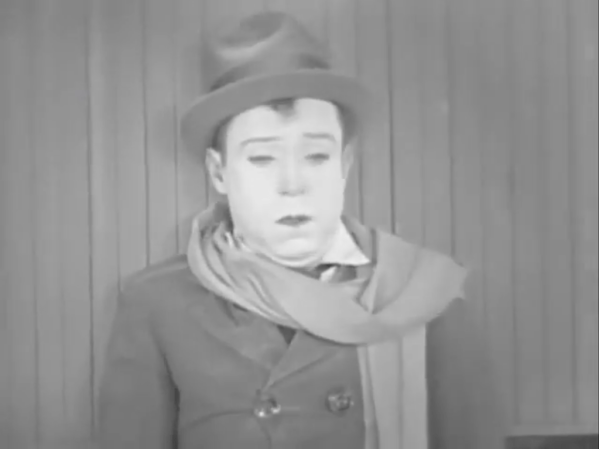
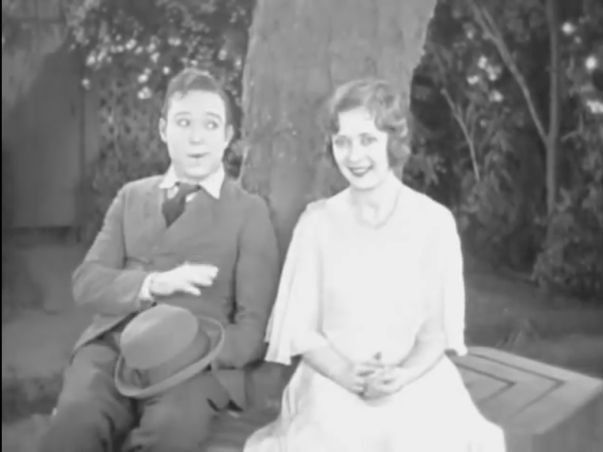
The Strong Man (1926): Starring Harry Langdon

Screenshot 2020-07-09 at 8.01.22 PM

My knowledge of silent cinema is admittedly littered with blindspots. Some of this must be attributed to the sheer number of shorts the era engendered and also the number of extant films which will remain lost if not for some secret cache hidden away in someone’s perfectly insulated basement. The rest falls on pure ignorance.

If you’re like me, you might know Chaplin, then you turn to Keaton, and finally Lloyd. It was famed writer James Agee who might have well propagated this lineage to later viewers when it came to the silent clowns who formed the bedrock for the forthcoming film industry. And it’s true everyone seems to be indebted to these fellows on some account. But the one who rarely gets a mention in the same breath is Harry Langdon and I’ve done this as much as anyone else.

At last, I have rectified the situation and gotten to know the man who developed his own distinct persona from the others, “a Little Elf” built solely out of his meek even child-like affability in all situations.

The Strong Man is arguably his most prominent picture then and now. Worth noting is Frank Capra who made his directorial debut and right from the outset you can see some of his imprint on the story. Harry Langdon is staked out behind a Gatling gun in Europe as a meek Belgium soldier fighting against the enemy. However, he’d much rather use his slingshot, and he’s quite effective in tormenting his burly enemy in the trench only meters away.

This is merely an opening gambit. Soon it becomes an unmistakable immigrant tale with all the iconography most Americans will be familiar with. An ocean linter. That majestic beacon of hope: Lady Liberty. And of course, Ellis Island, that customary weigh station where people stopped off to begin a new life.

By some strange development, the Belgian has joined forces with his former enemy playing sidekick to the severe-looking strong man. However, the big city brings with it a lot of distractions for someone just off the boat and easily targeted.

Standing at a street corner, Paul gets mixed up with an archetypal city woman who only pretends to seduce him so she can retrieve the money she hid on his person. All manner of taxi rides and rendezvous in her apartment leave him quivering with fear. He’s much too timorous and naive to know what to do with himself in such a position.

This is, after all, the source of his charms. It suggests the image of Harry Langdon quite candidly. Not only is he a meek and unassuming hero, there’s this prevailing innocence about him. We could say the Tramp has some of the same, but Harry feels even more forbearing. He could never raise The Kid. He is the kid. In fact, he’s almost manhandled by the city woman as she locks the door and looks to retrieve what’s hers. It plays as a fairly comical power dynamic. This is only one bit.

The latter half of the picture feels much more Capraesque considering themes of graft and corruption in the face of common decency. There are precursors to his Miracle Woman where a barn becomes a clearinghouse for the local town’s vices, whether it be gambling, carousing, showgirls, beer, or pugilism.

The lines are drawn fairly clearly when Cloverfield’s corrupt kingpin sits down with the local parson trying to literally buy him out. He tells the old saint to name his price, and he’s absolutely indignant at the offer. We read his retort: “The House of God is founded on rock. For the miseries you have caused, the Master will destroy you!”

It’s not quite fire and brimstone, but it is very close. His congregation piles onto the lawn in front of his house as he rallies them with the story of Jericho and the exploits of Joshua where the God of Israel caused the walls of the great city to come tumbling down in His divine timing.

What I can only imagine is a rousing round of “Onward Christian Soldiers” leads them into battle as they begin their crusade around the Palace. This might be the time to insert that the looped scoring is a bit nauseating and as with many such silent pictures, it doesn’t seem to do the movie justice.

But we’ve failed to talk about the Belgian. Rest assured, he’s still relevant as he was once pen pals with the preacher’s daughter: Mary Brown, and of course, to make her all the more sympathetic, she’s blind. He doesn’t actually know she’s in town. He’s there as a part of a show on the lascivious stage. And he’s thrown to the wolves when his boss gets drunk.

He becomes the strong man. It’s another pitiful setup. But it’s the heart of the movie and a Capra moment of David vs. Goliath exploits. The little guy standing up against the masses in this case, literally holding them off with a makeshift cannon as their temple of sin topples all around them, and they flee into the streets.

If he’s partially David, then he’s part Samson crossed with a flying trapeze artist. Far from being a piece of irony, if we are to recall the preacher’s scriptures, “When I am weak, then I am strong” never sounded more pertinent.

His final stand is ample enough to save the town and bring about a newfound tranquility where he is a beacon of law & order while still taking a helping hand from Mary Brown. Per convention, they walk off into the sunset together a very happy couple and all is right with the world.

Screenshot 2020-07-09 at 8.07.35 PM

Harry Langdon is not talked about that often amid conversations of silent cinema. Part of the reason might be because he doesn’t have a row of feature-length films that are easy enough to lay claim to as his personal masterpieces. The Strong Man is as close as he came and with the fledgling name of Frank Capra — directing his first feature, no less — it has the benefit of some added name recognition.

Langdon is a relentlessly amicable hero, but that might be part of the issue. What you see is what you get, and it doesn’t add up to anything more. His understated persona is highly palatable but rather blase even in comparison to a few of his contemporaries. At the end of the day, The Strong Man can be viewed as a stepping stone in Capra’s own illustrious career — a step forward in his maturation of a filmmaker. It might be for someone else to make the case for Harry Langdon and resurrect him for the modern generations.

3.5/5 Stars

Go West (1925): Keaton & His Cow

320px-Keaton_Go_West_1925“Go West Young Man. Go West.” – Horace Greeley
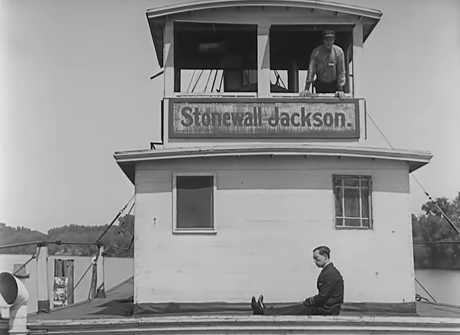
I had to refresh my memory on Horace Greeley because he’s as much a mythic figure — supreme champion of manifest destiny — as he is a mere historical figure. During the mid-19th century, he was a sometime political statesman and most famous as the founder of The New York Tribune, a purveyor of public consciousness in its day.

Thus, it’s not too big of a hop, skip, and jump into Buster Keaton’s latest feature indebted to Greeley, if only for these very few words. Because the opening image gives a summation of our hero’s lot in life, tugging his heap of personal belongings into The General Store in order to hock them for all they’re worth.

A hunk of bread and a stick of salami are all he has to show for his possessions and armed with such measly goods, he hitches aboard a train to seek his fortune. The Big City isn’t much good to him, where he’s literally trampled by the sheer mass of humanity or almost being run over by automobiles.

So he pulls himself back into his train car with his meager morsel of bread, this time buried in barrels of potatoes all but taunting his cravings for further sustenance. But the cinema fates take control and send him flying down the hillside so he might come face-to-face with The West, no doubt fashioned more by nascent Hollywood than any orations of Horace Greeley.

The juxtaposition of the typically diminutive Keaton as a cowhand is a hilarious image in itself, both mentally and in the flesh. He takes the most hands-off approach to milking a cow, waiting for the gal to do her business only to sit idly by, perplexed by the lack of results.

I couldn’t help thinking of Keaton as the first city slicker, and yet what sets him apart is the fact he’s not quite adjusted in the city either. He’s just universally out of place because every place has new obstacles to handily trip him up. And he makes sure to play them up so we comprehend exactly how inadequate and outmatched he seems compared to his contemporaries.

The greatest piece of inspiration found within the usual western tropes is Buster’s dearest friend, “Brown Eyes,” the lady cow. In actuality, the actor trained with the bovine extensively to build an authentic rapport, and it’s true his love has easily attributed anthropomorphic qualities. After all, as human beings, we are able to do it with almost anything.

She waits outside for him like a trained puppy dog and even wanders into the bunkhouse to look around. The film might even be prefaced as a love story between a man and his cow. Still, it’s not merely a comic point of departure. Is it corny to admit Keaton does honestly and resolutely love that cow? I think not.

He’s dwarfed by everyone, be it man or beast, but he’s got his typical fortitude and surprisingly plucky ingenuity. The little pipsqueak with a pea shooter, perpetually tripping over his chaps, brings his unorthodox form to all facets of livestock and farming. Meanwhile Go West gladly takes on all manner of tropes. You have elements of The Virginian (originally a book from 1902 and a film in 1929), The Great Train Robbery, and undoubtedly a host of other passable references I’m unaware of.

Likewise, the trail of cattle following him into the town’s center predates the brides from Seven Chances. It turns out he’s more of a cow whisperer than a cow wrangler, and the little man takes it upon himself to herd the stock to get them to his boss’s appointment on the other side of town.

The crowning moment occurs when he dresses up in a devil’s suit, even forsaking his beloved pork pie hat, knowing the red will lead the cattle away from the terrified humanity toward their final destination. It’s his final act of sacrificial bravery for his best gal. Staying true to its own internal logic as opposed to genre convention, Buster winds up with his true love — two peas in a pod, driving off into the sunset, as it were.

It’s common to consider the big three of silent comedy in tandem because it provides some litmus for differentiating their individual personalities. Chaplin makes us sympathetic to his poverty, Lloyd to his nerdish looks, but Keaton just might be the most fundamental in many ways. He’s always the slightly-built, mess-up, and outsider. He gains our sympathy by always being physically (and visually) outmatched. To evoke a biblical allusion, he is carved out of the small-but-mighty David archetype.

I won’t say the film is totally without its visual innovations — as per usual — but it probably dips more into the pathos trough than we are accustomed to with “The Great Stone Face.” There’s no confusing Robert Bresson and Buster. Still, I couldn’t help but be reminded of Au Hasard Balthazar. For those who recollect, it’s about the life of a donkey in the French countryside, who almost becomes a Christ-like sacrificial lamb even as he strikes up a meaningful human friendship.

In fact, I’m inclined to think in this case that Buster Keaton never had a better costar. With Chaplin, it’s easy to recall the likes of Paulette Goddard, Edna Purviance, even Eric Campbell, but Keaton always strikes me as a solitary figure. Certainly, there are girls and female companionship (take Our Hospitality or Seven Chances, etc.), but he never feels tied to someone else. Even in these aforementioned offerings, the romance feels more like a function of the plot than actual bona fide romantic drama. Because that is his lot in life.

Thus, when he gets to ride off happily with someone who might intuitively understand him better than any human companion, it’s a surprisingly resonate happy ending, going beyond perceived comic value. Somehow, with Buster Keaton’s conception of comedic narrative space, it makes perfect sense that Greeley’s entreaty to “go west” would manifest itself in a romance with a cow, but in the most sincere manner. This is the key.

4/5 Stars

Steamboat Bill Jr. (1928): Buster Keaton The Human Tumbleweed

steamboat bill jr.

Whatever your thoughts on silent movies, be it based on misinformation, overt loathing, or verging on utter veneration, one has to admit there’s something to the simplicity of these films. And by simplicity, I’m referring to the construction of their stories. They rarely seem to get bogged down by detail. In fact, one could argue they’re at their best on this relatively basic plane. If you’re skeptical, you can call them tropes, maybe archetypes. Regardless, they tap into something universal, even primal.

Steamboat Bill Jr. is a prime case study for what I’m considering. It’s a riverboat tale setting up a conflict between two families overlaid by a Romeo & Juliet romance and spiced up all together by its secret weapon and the main attraction: Buster Keaton.

The shoddy but well-loved Stonewall Jackson is another relic of the Confederacy, not unlike Keaton’s prized train in The General. In this case, it’s run by a grizzled veteran of the waters who is about to be pushed out by steep competition. His rival, too, is symbolic as the industrial-era magnate taking over the waterways to go with his hotels and other ancillary attractions. There’s also nothing subtle about his name: King.

The next development is about as absurd as you can get. The steamboat’s captain gets word his son is arriving from boarding school to assist him. He hasn’t seen the lad since infancy and expects a big strapping fellow — not unlike himself. Set up by a prolonged “white carnation gag” full of misidentification, he winds up with timid, squat Buster Keaton to call son. This shrinking schoolboy is a far cry from what he hoped for, and he’s a bit begrudging.

Their ensuing trip to a hat store not only records the contemporary culture’s affinity for a different brand of headwear but also manages to sneak in a nod to Keaton’s ubiquitous pork pie. He slips it off quickly as if afraid someone might recognize him and cause him to break character.

The paces to follow are not surprising. His beautiful and vivacious school chum is the daughter of King. They hold a puppy-like love for one another even as their fathers continue to feud. Just to make ourselves clear, none of this matters all that much.

steamboat bill jr. 2

The secret to Keaton is his innate understanding of the visual gag that could make his brand of comedy funny and, as a result, his stoic everyman too. Stretched out on a plank between two boats — trying to cloak himself in darkness — there’s a shot of King’s boat, and we know they will be lurching forward as they tug at the ropes. He’s going to end up in the drink.

But of course, that doesn’t happen. At least not immediately — his weight perfectly balanced so he juts out on the board like a cantilever, seemingly oblivious of how close he came. So unaware in fact, he tumbles in seconds later. It plays with our perceptions in the most fundamental ways. With irony at his disposal, he milks the laugh and makes it something more compelling and lasting, even to the point of its foregone conclusion.

Later, he raids the rival riverboat in pursuit of his love as his father’s own pride and joy is subsequently decommissioned. His feud with King is exacerbated, and he gets slammed with time in the clink for defying the law.

All these beats are again mundane. They don’t tell us much nor surprise our expectations. Fortuitously, inclement weather comes and Keaton is once more provided a whirling dervish of natural disasters to carry him away in the throes of comedy. Again, this all continues functioning in spite of the story.

Because I’ve dealt with typhoons before first hand — umbrellas upturned in an instant — but this is ridiculous. It defies logic, mass, and normal feats of human ingenuity, but those are the riches of the moviemaking industry and Keaton’s comedy, as facades of entire buildings topple around the human tumbleweed.

He’s whisked away on hovering beds, which might as well be a transplanted flying carpet from Arabian Nights, leading into one of his most iconic and death-defying setups. Again, the visual has primacy, and it works on principles as old as time. We crave security. We fear harm and dismemberment. In all his pluckiness, Keaton takes them on and somehow prevails.

There are a couple moments where it’s like he’s literally suspended in air, fighting against the wind to stand upright, until he’s forced to split the difference. Also, true to form, he uses what feels like a few vaudevillian sleights of hand, supplied by curtains, trapped doors, and a nack for all things physical.

What I admire about Keaton is how he manages to do things that still take the breath away even if only for an instant. He is a bit of a magician and yet he lets us in on the tricks, and he lets the audience take part in them with him — to think we know more than him — and then he proceeds to still pull one over on us.

Even if his character is unwitting, somehow his body and he, as an entity, always seem to know just the right step or movement; it’s just idiosyncratic enough to work in the scenario so he comes out on the other side all in one piece.

When he finally takes command of the ship hopping to and fro, scurrying there, yanking this cord here, it feels like Buster Keaton at the height of his powers, and it shows how this scrawny little guy could be so resourceful on his feet.

Mind you, it’s not just a matter of our story’s hero coming into his own, but it’s a practical expression of the actor’s own prowess — he is an unswerving force of nature packed into what might seem to be a slight frame. He really and truly is a marvel. Because “The Great (Wet) Stone Face” transcends Steamboat Bill Jr. In fact, he is Steamboat Bill Jr. The movie as well as the man.

4.5/5 Stars

Our Dancing Daughters (1928): Joan Crawford Ascending

Our Dancing Daughters is an inflection point of silent film for the very fact it stands out for setting Joan Crawford up to be in incandescent star for generations to come. She calls upon her flapper talents and bouncy effervescence fully embodying the jazz age through the character of “Dangerous” Diana Medford.

Between glitzy wardrobing and the Charleston, she exerts herself as a first-rate girl about town. Because she, like everyone else of her age demographic, is out to have a good time, dance with boys, and partake of everything else youth affords. Although it is still a silent, the added benefit of a synchronized soundtrack imbues the party scenes with life to go along with Crawford’s infectious hoofing as the balloons fall all around them. 

Di’s doting friend Bea (Dorothy Sebastian) is having her own romantic tribulations, based on the searing baggage of a past love affair, now impinging on her present. Meanwhile, her greatest rival, Ann (Anita Page), a conniving opportunistic with a mother cut out of the same cloth, continues to jockey for the most advantageous romantic partner. Page is an unholy riot giving the part her all as the duplicitous gold digger who turns into a raucous and rebellious drunk. She more than holds her own as a foil and the film’s primary villain.

This is great, but we still have to contend with all the various trysts and dalliances taking place; what do they matter? All the talk of merrymaking and marrying rich gets kind of monotonous. The picture’s premise feels quite flat and it may be an added effect of antiquity.

Another complaint is how so many of the male co-stars blend together aside from John Mack Brown. They’re a generally innocuous bunch of ne’er do wells. Why are we supposed to be drawn to any of them? However, even as other elements feel staid and pat to go with the passage of time — the ending included — Crawford still manages to draw the eye. 

This prevailing curiosity feels genuine and not simply an academic appreciation from a historical distance. She engages when the movie doesn’t always manage to do so. It’s not merely about looks or fashion. These are only cursory traits. But can we all agree that those great big expressive of hers were made to be in movies?

Thank heavens we have Joan Crawford and her heroine to bolster Our Dancing Daughters. It begins with garnering a certain reputation. The charm drips off of her, or better yet, it flies, landing like pixie dust on all her beaus and the audiences out in the theater seats. Crawford as a persona is coming to the fore and becoming fully apparent. She might not be the proverbial Clara Bow “It Girl,” but there’s a similar infectious magnetism even sensuality to her, bursting off the screen.

Thus, when she catches the eye of a Mr. Blaine (Brown), an eligible, very rich, young bachelor, people take note; they snicker. Diana the Dangerous is at work. But for all her reputation, Di is really a very sympathetic, vulnerable girl. It’s like Hollywood (or maybe the entire country) had not yet been burdened with the cynical inclinations of the Great Depression.

They have yet to see utter destitution or debauchery a la Baby Face or Red-Headed Woman. In 1928, women in the movies still dream of the right man, they marry for love, and the heroic ones are bound to get their hearts broken. This is so crucial to Diana. She’s hardly as superficial as we would assume.

She falls more and more for Ben only for him to make a major faux pas by going for Annikins and her false showing of pious propriety. She’s anything but. Whereas Di’s totally out there and inherently honest. And what does it get her? Heartbreak. Because Crawford has youthful good intentions, open to being wounded, and she’s more than susceptible to it.

She begins her career on this surprisingly sympathetic note, heartbroken by a man, and forced to come to terms with it. But she plays it sincerely, where all the frivolity evaporates when it really matters, and when it begins to hurt the most. This is the key to the movie. It starts to mean something. We realize why we are watching. 

As her sceen life merged with her personal legacy, I’m not sure I always considered or ever imagined Joan Crawford to be a terribly sympathetic figure. She was larger-than-life, yes, but I rarely felt connected with her. At this early juncture in her career, she more than proved her mettle as a “good girl,” and when it’s done well, there’s nothing wrong with being good. In a world that’s unfair and harsh, it gives us stories fraught with genuine weight. There would still be time enough for Joan to grow scales. She was a resilient one to be sure. She had to be.

3.5/5 Stars

The Unknown (1927): Silent Cinema Out on The Big Top

As someone always trying to steep myself in more and more silent cinema, I still have much to contend with when it comes to the careers of Tod Browning and Lon Chaney. However, from everything I can gather, The Unknown is a wonderful melding of their talents, Browning drawing on his penchant for the outcasts of humanity and his own past on the carnival circuit.

Meanwhile, though he would die in 1930, up until that point, Chaney really was a standout in the fledgling movie industry for how he approached the acting profession. He was the “Man of a Thousand Faces” because he went against the prevailing current — the desire to promote an image — and he succeeded by promoting many. He was the era’s beloved chameleon. The Unknown is little different.

It’s a story of old Madrid. The tale is set in a gypsy circus and involves an armless knife thrower (Chaney) and the love of his life: his boss’s daughter Nanon (Joan Crawford). At first, it seems like an immediate oxymoron. Sure enough, we see Alonzo the Armless doing his art with the dexterity of his feet. It’s the marvel of the movies watching it play out in front of us as the ringmaster’s daughter plays his daring assistant.

But once the crowds are gone and after hours we come to understand some of the other dynamics behind the Big Top. Nanon is a young woman with an almost obsessive fear of men. She trembles when the male performers in the company try to lay their hands on her. She’s left with this lingering fear and an aversion to their very touch.

It goes beyond a mere sense of harassment, verging on an elemental level at the very core of her being. It becomes the film’s primary metaphor and sadly this metaphor maintains its relevance almost a full century later. In one summative line, she cries out: “Men. The beasts! God would show wisdom if he took the hands of all of them.” Her distaste is stated quite plainly.  

That’s part of the reason she has a special place in her heart for Alonzo, being vulnerable and kind to him because, with his physical disability, he cannot take advantage of her.

Chaney does so much to make the reality of his character’s disability supremely evident. There’s actually some sense of the suspension of disbelief. It’s a habit of movie magic and the subsequently projected illusions, we want to see how they do it.

Is it possible to see true signs of Lon Chaney’s able body? And yet The Unknown shocks us by stripping away everything. Behind closed doors, he loses his normal attire and gains a pair of arms because you see, he’s not actually armless. 

It’s not just part of his act. He’s pulling it over on everyone in the troupe aside from his closest confidante Cojo (John George). He discloses to him, There’s is nothing I will not do to own her!” Because he too secretly has his sights on Nanon, wanting to have her for his own through this act of sophistry. 

Like the best silent cinema, The Unknown feels so emphatically poetic, where the characters represent more than themselves. They shed the mere realms of reality to speak to something far more, at times, both terrifying and tender. Suddenly, the movie morphs, building into a wicked tale of irony. I wouldn’t think of divulging all of it here, although such sordid things like murder, amputation, and blackmail abound.

Also, be prepared for the finale. The world is literally being ripped apart at the seams, and it becomes the film’s gloriously chaotic crescendo back out on the circus Big Top. The carnival strong man, Malabar the Mighty ( Norman Kerry), Nanon’s suitor, looks to show off his feats of strength; they are rapturously in love. Joan Crawford snaps a whip from the platform up above as she rallies the horses galloping on their giant treadmills. Alonzo looks on poised for revenge against his romantic rival. 

It conjures up indelible images of performed chaos leaving a starling impression even after all these years. If nothing else, it proves silent cinema is far from rote, often brimming with all sorts of memorable even perverse bits of storytelling. The Unknown’s overall impact is not to be taken lightly. 

Viewers would do well to seek it out if only as an act of appreciation of Browning, Chaney, or Crawford. The picture, in its current form, is missing some of its original exposition, but what a fantastic relic it is. However, it’s far from a museum piece. It feels fiercely alive even after all these years. I did take some issue with the cut I’ve seen if only because of the typically off-putting soundtrack that feels too modern and incongruous to make me truly appreciate what is on-screen. 

But the title cards have a pleasant lyricism to them accentuating the story’s dramatic situation so we can fully appreciate its implications. Likewise, Joan Crawford, as a recognizable entity, isn’t fully flourished into her full-bodied image of stardom even as glimpses of her emerging persona flash upon the screen. However, it’s absolutely a testament to why Lon Chaney was a revered talent of the silent generation right up until the end of his life. 

4/5 Stars

The Virginian (1929)

220px-Poster_-_Virginian,_The_(1929)_01.jpgThough the image quality of the print I saw hardly stands the test of time, there’s something almost modern about The Virginian’s characterizations or at least what it deems interesting to show.

There’s actually a layering of tones and a fluctuation in the moral dilemma at its core that feel a great deal more nuanced than a cut-and-dry shoot ’em up western beholden to the stereotypes that the genre was founded on.

In Victor Fleming’s hands, The Virginian was not only a western but an early talkie extending the possibilities of the medium. It’s true that at this point there was a lot of pioneering still to do in film as there had been in the West.

One aspect this picture took advantage of in particular was exterior shooting which gives the West an almost palpable nature because we see the dust swirling up from the feet of the cattle, we hear the constant chorus of animal sounds, and the expanse of the prairie is daunting but also starkly majestic.

Beyond genre conventions, it’s indubitably a seminal picture since we get the overwhelming sense that we are seeing a persona coming into his own — the crystallized image of stalwart Americana — Gary Cooper. Although he was a minor star and this was not only his first starring role in a western but also his first talkie, soon enough he would be one of the most beloved actors of his day.

True, he also made many pictures outside the genre of considerable repute in their own right, and yet there’s no underselling how important the western was in further instilling Cooper’s legacy for generations of faithful fans. His eponymous character in The Virginian is an early marker of the mythology of western masculinity that would stretch all the way to High Noon (1952) and Man of the West (1958). In fact, at times this picture, featuring an imminent showdown, looks eerily similar to its future brethren from two decades later.

His cattle foreman character is a man’s man. He’s a plain-speaking, straight-talking man of few words (Yes ma’am, No ma’am), who nevertheless cares deeply about honor and personal integrity. Yet he still gives off the homely qualities of a man of the West. And it’s true that much of this film adaptation of Owen Wister’s novel and subsequent play is concerned with the butting of heads that comes with the clashing cultures between West and East.

On one side you have the Virginian and the rest of the townsfolk and on the other is the new schoolmarm, Molly Stark Wood (Mary Brian), who causes quite a stir among the men in town and is a welcomed bit of civility to everyone else.

There is a sense that she can help tame this uncivilized world that lacks manners, education, and law and order. The themes would crop again and again most notably in Ford’s own moody rumination The Man Who Shot Liberty Valance (1962). But here there’s an oddly good-natured comedy streak. It’s not all horse opera.

The Virginian and his old pal Steve have a fine time switching the babies about to be christened by the parson which causes quite the hubbub. But the two men also jockey for the new gal’s affection in all matter of things. Looking to carry her bags or get a dance with her at the community gathering.

The Virginian and Molly even conduct a discourse on Romeo and Juliet which proves to be an enlightening distillation of their two differing perspectives. All of this is fine and dandy. Even the swapping of infants like a pair of regular cow rustlers feels innocent enough. But there’s another side of this world as well.

The main antagonist named Trampas (Walter Huston) wears black and yet he’s more of a cunning thief than an ornery devil, all guns a blazing. He’s more apt to shoot a man in the back when he’s not looking like a coward than actually face him man to man.

He also happens to be a cattle rustler himself and he’s pulled Steve in with him because it’s a pretty easy business. Lots of reward for little risk. Except if and when you get caught there are no two ways about it. The law of the land says you’ll be strung up even if you’re a friend.

And so The Virginian doesn’t shy away from the harsher realities of this lifestyle whether it be hangings or the prevalence of gun duels. It’s a part of the life but also so at odds with what is considered respectable in other parts of the world. Thus, not only the schoolmarm, but the audience, and really everyone else involved must grapple with what is right and what is wrong and how we reconcile those perceived differences.

4/5 Stars

“When you call me that, smile!” – The Virginian