
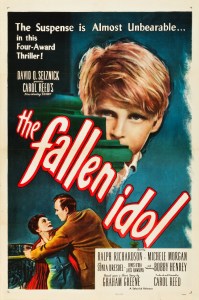
Fallen Idol (1948)

fallen-idol-poster-1948Fallen Idol is a fascinating film for how it develops inner turmoil. It’s earnestly interested in the point of view of a child and as such, it functions on multiple levels –that of both kids and adults. Philippe’s (Bobby Henrey) home is the embassy as his father is a French ambassador who is always away on the job. So Phil’s a little boy who is perpetually in the care of servants. Namely the authoritarian Mrs. Baines (Sonia Dresdel) and her good-natured husband (Ralph Richardson).

It seems like he has a fairly cushy life, able to have his run of the embassy, play all the time, and eat three square meals a day. He diverts himself with numerous trifles like any good little boy would, including an affinity for his pet snake McGregor. Meanwhile, Mrs. Baines is constantly pestering and prodding him to behave. Simultaneously Mr. Baines continually affirms his boyish nature. It’s no secret which one Philippe likes better.

This triangular relationship is vital to the film but it’s only the beginning. Because Mr. Baines, rather understandably, is unhappy in his marriage. It’s not working out for him and he has met another woman (Michele Morgan) who he dearly loves and who loves him. Of course, the one moment he goes off to meet her in confidence, the mischievous, prying eyes of Phillip find them, but he does not fully comprehend what he is seeing — what they are talking about in hushed voices — as he nibbles away at tea cakes and pastries.

The nuances of the events at hand are earnest between two deeply concerned adults who fear never being able to be together. But again, as a young boy, Philippe doesn’t quite understand the subtext of all that is going on. How could he? And Carol Reed does a wonderful job of conveying this through some simple camerawork throughout the story. It always seems like Philippe’s point of view is either from the distant staircase looking down at the figures below or he is looking up at the adults who stand above him. There’s always a pronounced distance, a gap that must be forged. And all of this suggests just how far removed he is from the events swirling around him.

At this juncture, Mr. Baines asks him to keep their secret and they go on an escapade to the zoo together. Philippe is happy with the reptile house and other animals, while Mr. Baines is soaking up his final moments with Julie before she goes away. She can’t bear to not be with him. Still, Phil is uninterested in the whole business.

But later, when some words slip out, Mrs. Baines puts two and two together. Now she is asking Phillip to keep their own little secret. He’s been asked to hold onto two conflicting secrets now and he doesn’t quite know how to respond. His mind’s convictions about lying and truth-telling are tied up in knots and they remain that way for the entire film.

The final act is even tenser as Baines must cope with the tragic aftermath of his wife’s death. She was confronting him about his love but that’s hardly the most interesting part. At this point, Phil thinks he knows what he saw and he doesn’t want to tell on Baines. In his eyes, Baines killed someone, but he likes Baines. There’s this troubling moral dichotomy that’s created in his little head. When the police inspector comes in digging around for the truth, the boy’s no help and Baines’ story is highly suspect at best.

Everything young Philippe does in an attempt to help only serves a hindrance for the man he idolizes. His allegiances were manipulated and by the end, his cries to be listened to are all but disregarded. When all is done he scampers down to his returning mother joyously. Completely ignorant of the bullet that Baines has dodged. It’s the perfect ending, summing up a film about a child embroiled in something far above what he can even fathom.

He doesn’t quite understand that Julie is not Mr. Baines niece. He doesn’t know what Mr. Baines meant when he was bickering with his wife about his freedom. Or even that the lady that he clings so closely to in the police station is a woman of the street. That’s what makes the performance that Reed teases out of his actor that much more impressive because it gets that obliviousness and confusion across perfectly.

In truth, Reed’s film brings to mind two other classics of the 1940s from British masters.   The first is Rebecca with Mrs. Baines asserting her domestic dominance rather like the unnerving Mrs. Danvers played by Judith Anderson. Furthermore, the heartbreaking nature of infidelity in this film also calls to mind David Lean’s heart-wrenching work with Brief Encounter. However, again, what sets Fallen Idol apart is the perspective of a child. It’s an innocent way of trying to make sense of the world. A world that is so often confused, ambiguous, and complex.  The beauty of being young is that same naivete. So much has gone on and Phil has seen and done so much. Yet when his mother is home, he cannot help but be happy to see her. All else fades away. That innocence remains to the end.

4.5/5 Stars

The Bicycle Thief (1948)

Enzo_Staiola_in_Bicycle_ThievesThe original title in Italian is Ladri di biclette and I’ve seen it translated different ways namely Bicycle Thieves or The Bicycle Thief. Personally, the latter seems more powerful because it develops the ambiguity of the film right in the title. It’s only until later when all the implications truly sink in.
Vittorio De Sica’s film is unequivocally emblematic of the neorealist movement.The most notable traits are the images taken straight off the streets of Rome, depressed and forlorn as they are. The setting truly does act as another character, adding a depth to the film that cannot be fabricated. You can’t fake some of these scenes either whether it’s Antonio scavenging for his bike in the pouring rain or the sheer mass of humanity that is found in places like the Piazza Vittorio.

It’s all there out in the open, with an apparent authenticity. In its simplicity, it feels like a real story with real people. This too is aided by De Sica casting non-actors in the main roles. In fact, Lamberto Maggiorani’s gaunt face is somewhat unremarkable (sharing some resemblance to Robert Duvall). Put him next to a poster of Rita Hayworth and it becomes even more evident. Still, he too feels human in a way that Hollywood stars just cannot quite pull off. It’s easy to believe him and invest in his story.

The same goes for his young son Bruno. He’s one of the cutest precocious kids you’ve ever seen, reminiscent of Jackie Coogan in Chaplin’s The Kid. But it’s also his point of view that makes this film even more tragic later on. This father-son relationship has weight to it.

And that makes Antonio’s dilemma that much more perturbing and ultimately so traumatic for the audience. De Sica’s film is so humble and yet its depths are ripe with so many universal truths and moments of sincerity.

Here is a man trying to provide for his family. His wife, his son, and his baby. Work is hard to come by in the post-war years. Any opportunity is a good one and Antonio gets that. But he needs a bike. His wife sacrifices her sheets so he can get his bike — so he can maintain their whole livelihood as a family.

That’s why it’s so crushing. Everything hangs in the balance of this unfortunate but seemingly mundane event. When Antonio’s bike is stolen it truly means tragedy because there is no lifeline, no direction to turn.

And he does his best to recover his stolen property. Going to the authorities, rounding up his friends to search for it, even tracking down the boy who undoubtedly nicked his bike, but none of it leads to a successful conclusion.

Another day finished with no hope for tomorrow, no money to bring home to his family so they can eat and live. He’s got nothing — a reality that’s made painfully obvious when he and Bruno sit down for dinner at a restaurant. They eat a meager meal as those just behind them gorge on a full buffet of courses. Bruno eyes them longingly and his father tries to lift his spirits, secretly knowing that he can never offer that to his boy.

It puts his lot into a jarring perspective, suggesting the state of the affairs in Italy. But what makes the Bicycle Thief truly timeless is not its scope or what it says on a grand, majestic scale. It’s an intimate film and perhaps the most personal story ever put to film. In a matter of a few moments, it says more with the moral dilemma of Antonio than many lesser films conjure up in a couple hours.

And because this is not a Classical Hollywood film, it does not sell out to its audience. There is no obligation to the viewer to keep them from being downtrodden — because that might rub them the wrong way and actually evoke a searing response. But there can be beauty in that and De Sica’s film is certainly beautiful for precisely those reasons.

It feels real, it feels honest, and rather than sugar coating the world, it draws up a reality that is almost as old as the world itself. So yes, this film is so-called “Neorealist” and yes, it most certainly makes good use of its contemporary setting of Rome in the 1940s. But if any film can claim timelessness Bicycle Thief might just be the best bet because at its core are the type of issues that are not unique to time, space, language, or any other man-made barrier. Every person knows what it means to steal — to battle with their conscience — upending the moral framework that guides their lives. That hasn’t changed even if the context has and that makes The Bicycle Thief continually relevant.

It ambushes us with the same emotional wallop each and every time. I mentioned Chaplin before briefly, but it didn’t occur to me until some time later that we leave our characters walking off into the sunset rather like Chaplin’s Little Tramp, except it’s a very sad sunset indeed.

5/5 Stars

Penny Serenade (1941)

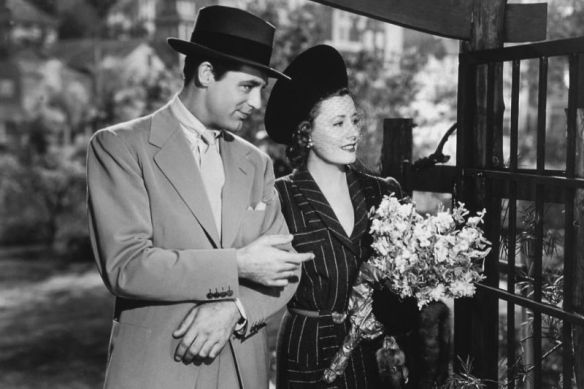
cary_grant-irene_dunne_in_penny_serenade

Irene Dunne still remains one of the most underrated actresses of the 20th century. She was both a lively comedienne, an impressive singer, and performed in melodrama better than most. Pair her with Cary Grant and director George Stevens and you have an impressive bulwark to build a film out of.

I disdain the rather condescending term “Woman’s Picture,” but if Mildred Pierce was one of the darkest exemplars of the genre than Penny Serenade might be one of the most heartfelt. It finds its inspiration in the revolving melodies of records on a Victrola. It’s true that music is so very powerful in evoking emotion and it is precisely these songs that lend themselves to Julie Gardiner’s myriad memories. They began when she initially met the love of her life, a budding journalist who was not too keen on getting hitched or the future prospect of having kids. But Roger’s career took him to Asia and he tied the knot with Julie because he was not about to let another man take her away from him.

The rest of the film can best be described as a marital drama concerned with the many moments that make up a marriage. The thrill of the honeymoon period. The little marital tiffs. The tough times when your fledgling self-run paper is not doing the best. The struggles of trying to have kids or wanting to adopt and realizing the process is far more arduous than you first expected. All of these moments can be found in Penny Serenade. But it is one of the sweetest that also becomes the most heartbreaking.

Julie and Roger get the child that they so desire and it’s hard and trying and oh so scary, but they make a go of it and truly revel in being parents. But even that joy is taken away from them. It’s that same pain that shakes the foundations of their marriage just like the deadly earthquake they experienced in Japan. Once more amidst the heartbreaking tremors, there are wonderful revelations and an ultimate resolution that is good.

It’s true that Penny Serenade is overlong, lacking a great deal of substantial conflict or direction but it certainly plays to its strengths. The third time around Grant and Dunne continue their impeccable chemistry that carries the film alongside the direction of George Stevens who always seems to know how to helm both drama and comedy with ease. And the secondary roles are filled out marvelously by the always venerable Beulah Bondi and a noticeably younger Edgar Buchannan playing his usual old softie with a gravelly voice.

So if you’re in a sentimental mood tune into Penny Serenade a film that is less of a classic than a film that rides on the laurels of its main players who elevate the storyline above the normal fray through sheer charisma and ingenuity. While Grant is always remembered as a comedic actor, there are several notable heart-wrenching sequences where he taps into a different side of his persona.  In the end, having Cary Grant and Irene Dunne together again is worth it in itself.

3.5/5 Stars

The Snake Pit (1948)

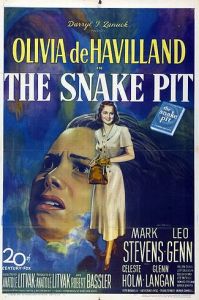
Snakepit1948_62862nThere is a lineage of psychological dramas most notably including the likes of Shock Corridor and One Flew Over the Cuckoos Nest. But one of their primary predecessors was The Snake Pit which is a haunting, inscrutable and thought-provoking film in its own right.

But rather than trying to sum it up with words, it’s necessary to look deeper at what makes this such a potent film and it begins most obviously with Olivia De Havilland. She undoubtedly gives the best performance of her career — in so many ways drifting so effortlessly across the emotional spectrum. She’s either sane or “crazy” with fits of paranoia and inner turmoil, voices sounding off in her head and the like. But the most beautiful things are the moments when all the drama derives from the look on her face, a furrowed brow or a panic-stricken reaction we cannot fully understand.

That’s why it takes us the entire film to comprehend what is actually happening and it’s wonderful that we enter her story while she is in a sanitarium. Why and how she got there we don’t know right away, so as an audience there’s a similar sense of disorientation. Several reliable points of reference exist early on. Those being the genial Dr. Kik (Leo Genn)and Virginia’s concerned husband Robert (Mark Stevens) who visits her during every possible hour.

The film does intermittently feel disjointed but that hardly seems due to faulty storytelling and more a convention of Virginia’s narrative. It all comes to us in incoherent bits. In reality, months have passed but her memory is poor, causing her to lose track of the days. She drifts in and out of different wards and soon forgets the people and places that have been there all along. Furthermore, her progress waxes and wanes, with special visits from her husband and the faint chance of being released. Then in her darkest moments come electroshock therapy and even a straight jacket confining her in the depths of the sanitarium.

Anatole Litvak would hardly be considered an auteur but he still finds a way to heighten the tension with whip pans and nightmarish imagery when necessary. A pounding score adds yet another layer of anxiety reverberating with a vengeance, most memorably to simulate the jolts of electroshock therapy. But the greatest compliment that I have for his film is that it knows when to simply sit back and watch, like many of the great Classical Hollywood films. It lets its story, actors, and script all work and, in this case, they develop something with lasting depth.

Earlier I alluded to  The Snake Pit being part of a lineage including Shock Corridor and One Flew Over the Cuckoo’s Nest. It contains similarly shocking revelations about the reality behind sanitarium walls except they feel more realistic than the former film. Furthermore, De Havilland is surrounded by a wide array of odd bodies and patients with all sorts of psychoses rather like Randle McMurphy. But although there are some antagonistic people, her problems stem partially from the system around her and mostly from the pain buried deep within her own past.

It’s Dr. Kik who is able to dredge up the truth hidden inside of her over time. His calming, reassuring voice balanced with his psychoanalytic practices are able to work on Virginia’s psyche systematically. But in the same instance, it’s easy for her to get lost among the masses. Nurses do their jobs, doctors pass verdicts but they’re woefully understaffed and overworked.

The film’s resolution is actually hidden within its title. Because like the madmen of old, Virginia was thrown into a snake pit of her own that, far from driving her crazy, revealed to her that she must, in fact, be sane — at least compared to many of those around her. It’s up to the viewer to decide, aside from the happy denouement, if this is a troubling conclusion that the film comes to or not.

However, it’s paramount to note The Snake Pit’s conclusion on personal trauma and mental illness, based on childhood experiences. A lot of Virginia’s struggles came out of guilt and dysfunctional relationships with her parents. Yes, this is the punchline of the movie, but I only say this to point out how frightening or more precisely, how universal that revelation make this movie. Virginia’s parents weren’t altogether bad people and the reality is that all of us will face personal tragedy. We will have our share of guilty consciences too.

It’s how we cope with those things that matter most because it’s going to happen. We can hide it but we can’t escape it. All of us are broken in one way or another — even if we don’t want to admit it. That’s part of what The Snake Pit begins to bring to light.

4/5 Stars

The Strange Affair of Uncle Harry (1945)

the strange affair of uncle harry 1It’s a B-picture title to be sure but with Robert Siodmak and such an ensemble, this is an enticing noir all the same. The well-to-do Quincy family of small-town America are an odd bunch, still holding onto their surname with pride as they slowly drift further and further into obscurity within the walls of their old mansion.
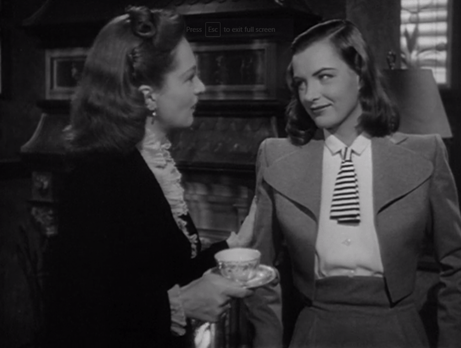
George Sanders is always a perennial favorite due to his dry wit and often snooty manner but here as Harry, we see him as all those things yet also trapped by his circumstances. Ella Raines, unfortunately, one of the often forgotten starlets of the 1940s, plays his savior in a sense and when she comes into his life there’s a chance to shake up all that is monotonous and stuffy about his existence.

Because he is constrained by his family name and a pair of sisters who rely on him continually for moral and emotional support. The eccentric Hester is always carrying an accusatory tone towards the housekeeper and getting bent out of shape about small trifles.

the strange affair of uncle harry 2The dominating sister Letty, played by Geraldine Fitzgerald, is more aloof in her ways, veiling everything with a conviction that what she does, she does for the good of her brother. But it’s all really due to the fact that she cannot bear to let him go. In this way, she’s constantly controlling his life and undermining his happiness. She’s hardly your typical femme fatale, more cultured and refined than most, but there’s still something exacting about her.

It’s when the tempered exterior and well-mannered formalities begin to crumble that her ulterior motives become more evident. Feigning illness just to keep him on a string and buying poison for some nefarious purpose. This unnerving dynamic between siblings becomes more tenuous for Harry,  accentuated by the fact that Letty, as played by Geraldine Fitzgerald, is quite attractive.

As far as the ending, there could have been five different outcomes and the one chosen fits the expectations of the contemporary audiences and the censorship board. Frankly, the affability of Ella Raines makes me want to enjoy this denouement, but my appreciation for film-noir makes me realize that this story deserved a dark turn to hammer home a genuinely twisted little picture. Still, Robert Siodmak is time after time one of the most interesting craftsmen of film-noir big and small. So it is with this morsel. Above all, I gained a newfound appreciation for the noteworthy work of Fitzgerald in particular.

3.5/5 Stars

La Belle et la Bete (1946)

La_Belle_et_la_Bête_film.jpgChildren believe what we tell them. They have complete faith in us. They believe that a rose plucked from a garden can plunge a family into conflict. They believe that the hands of a human beast will smoke when he slays a victim, and that this will cause him shame when a young maiden takes up residence in his home. They believe a thousand other simple things. – Jean Cocteau 

From the outset director Jean Cocteau entreats his audience to have a “childlike sympathy” and as a viewer, you do well to heed his advice. Because, that posture is exactly what becomes the guiding force behind this entire fairy tale that he has developed, in some ways so planted in reality and in others very much the purest of fantasy stories.

Though simple, the film’s special effects are surprisingly mesmerizing with magically opening doors, mirrors and human columns spewing smoke. You half expect to see strings or some other obvious cue to signal that this is all a facade, all hokey tricks, but a moment like that is never obvious. The film maintains much of its magic even after 70 years.

The Beast’s castle shines with the opulence of goblets and jewel, while the farmhouse of Belle and her family is humble, characterized after the artistic works of the great Flemish master Jan Vermeer.The atmosphere is equally gripping and Cocteau stages some of his shots in invariably interesting ways interrupting the plane of view with candles, smoke and anything else that suits his fancy. And that’s the beautiful things about fairy tales. You are not tied down to any sort of logic or narrative convention. His film is free-flowing, pacing itself as it sees fit. Even it’s ending is enduringly perplexing, hardly as straightforward as a Disney adaptation, but there is still immense power in that.

There are also an equal number of familiar reference points like evil sisters, who are blinded by their own avarice and then, of course, their humble sister, Belle, played so exquisitely pure by Josette Day. Her face beams with a radiance not often equaled and whether clothed in rags or the finest robes, it’s her humble elegance that shines through.

But it’s Jean Marais’s performance that is perhaps even more noteworthy if that were possible as he takes on a dual role. The first is more obvious, as Avenot, the man that Belle secretly loves, but it looks like it will never be due to their circumstances. However, Marais also takes on the monumental role of the beast and hidden behind tireless amounts of makeup and fur, it’s easy to lose him in the role. What would have been lost if he was animated or computer-generated, is betrayed in how he carries himself and even how he talks at points. Certainly, he is a creature prone to barbarism and violence, but innate in a performance such as this are those human characteristics. Thus, the perfect fairy-tale ending that we all know by now — probably thanks to Disney — is also a striking reminder. Yes, the fate of the prince of becoming a beast was due to spells and incantations, but we can just as easily be beasts now.

Without trying to go too far with the idea, it’s easy to recognize moments when we act almost inhuman. In fact, that’s the constant struggle of mankind, fighting against our more animalistic desires to do what we actually perceive to be upright. So you see, the Beast is not just a fairy story or the Beast is not simply someone else acting out in a horrid way, but the Beast can just as easily be you and me. In Cocteau’s film, a lot is made of the mystical mirror. Belle looks absolutely divine under its gaze but her sisters show up as an old woman and then a cackling monkey. If each one of us was to peer into that same mirror what would we show up as? What characterizes our lives? Beauty or bestiality? If this story is any indication, at least there is a chance at redemption. But that’s enough of that. La Belle et la Bete is a sublime fantasy deserving airtime alongside Disney’s more well-known adaptation.

4.5/5 Stars

It Happened on Fifth Avenue (1947)

220px-happened5avenueThe fact that Miracle on 34th Street and this film came out the same year seems to suggest that there was something special in the air of New York City that year. It was a magical place, specifically during the Christmas season with Santa Claus going on trial and winning, while tramps helped reform millionaires. Admittedly, It Happened on Fifth Avenue is one of those films that could easily come under fire for its implausible plot, its unabashed sentiment, and any number of other things.
But if you have any amount of Christmas cheer at all, it’s overwhelmingly difficult not to enjoy this cheering story for what it offers up in the areas of heartwarming comedy and holiday spirit. There’s even a bit of misty-eyed sentimentality that’s sure to weaken the callous heart that’s ready to be melted.

And the story finds its roots in some very real issues. One is the housing crisis following the end of World War II with GIs flooding back into the country with families to raise and no jobs and no homes to be had. The situation further aggravated by the wage gap. The rich just seem to get richer, buying up all the land and resources in town,  namely the notorious John O’Connor — the second richest man in the world by latest figures shouted by passing tour guides on sightseeing buses. Ironically, in such an environment the panhandling community is especially strong and foremost among their ranks is sophisticated tramp Aloyisius McKeever (Victor Moore).

He migrates as the crow flies to Winter palaces and Summer getaways belonging to those in the affluent sectors of society. He has set up a bit of a revolving timeshare but you could say it only goes one way. None of his benefactors seem to know they are being so charitable and Mr. MeKeever does his best not to draw attention to himself. Letting himself in through fence boards, sneaking down through manhole covers, and setting up an elaborate trigger system to turn off all lights at the moments notice. In this way, he manages to live a rather comfortable life undetected in the boarded up estate of the aforementioned magnate John O’Connor.

Although he’s a rather peculiar character, a conniver and a bit of an opportunist, it should not go unsaid that he does have a conscience — a moral code if you will — that makes him increasingly compelling. Aside from his quirky ways, Aloysius McKeever is quite generous even if it involves someone else’s capital. Soon his great home that he is “borrowing” is filled with a few GIs and families including the drifting Jim Bullock (Don DeFore) who was thrown out of his apartment after Mr. O’Connor bought the land. Now with a place to gather himself, Jim has the seed of an idea — retrofitting old army barracks into track housing for returning GIs. The only problem is they need real estate, real estate being snapped up by the one in the same John O’Connor. You’ve probably gotten tired of hearing his name by now.

All of this would be unrelated if it weren’t for a girl who ran away from finishing school, Trudy O’Connor (Gale Storm). Her last name says it all already, and when she flees to seek asylum at her father’s  winter estate, she’s surprised to find it occupied. It makes for a funny scenario but rapidly she settles into the community and simultaneously falls in love with Jim.

At this juncture, Trudy asks her father for perhaps the biggest favor of her life — that he would play it her way — masquerading as another vagrant so that he can meet her love and not sway him to marry Trudy with the imminent promise of great wealth. And that’s the next enjoyment of the film, watching stuffy old Mr. O’Connor forced to be a guest in his own home, bossed around by Aloysius. But he’s not the only one out of sorts, Trudy’s mother (Ann Harding) also comes to live with them as a cook and this creates yet another complicating layer of wistful romance.

In the process, everyone learns something. There is a newfound appreciation for people and life. What it means to make an honest day’s wages. What it means to live for more than money. What it means to truly love someone so much that you don’t want to live a day without them. Even what it means to live in a caring community that looks to bless each other and share resources in such a way that no one is in need. I would even wager a bet that this is less socialism and more of what the early Christians talked about in Acts.

The film is blessed by some lovable, wonderfully comic performances from a couple great Hollywood actors, most notably Victor Moore and Charles Ruggles who highlight the storyline’s oddities. Meanwhile, some of the younger stars have winning charm that would translate into several solid careers in the growing medium of television. For some ready made feel-good Christmas magic, look no further than 5th Avenue.

3.5/5 Stars

Remember the Night (1940)

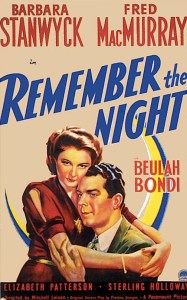
remember_the_night_posterI find that many of the best Christmas movies aren’t really about Christmas at all — at least not in the conventional sense that we’re so used to. Not trees or presents or lights or even holiday sentiment although those might all be there.

The films that start to tease out the true meaning and impact of the Christmas season start by looking at people and their relationships with one another. Because, truth be told, we so often get distracted by the bright colors and shiny objects that get in our way.

That’s actually part of what Remember the Night is about. Lee Leander (Barbara Stanwyck) is a woman who has a penchant for stealing jewelry. She’s not a kleptomaniac or wrong in the head, she’s just a poor, unspectacular woman with nothing to show for in life. She lives in a hotel. And so the minute she’s apprehended and prosecuted in the courtroom you would assume that it’s nothing out of the ordinary.

Except this is a romantic film starring the likes of Fred MacMurray and Barbara Stanwyck working from a script from Preston Sturges and under the guidance of Mitchel Leisen. So obviously that tips us off that love is in the air. Especially during the Christmas season, love is all around us — peace on earth and goodwill towards men.

Except when Lee’s trial is postponed by the astute district attorney on the other side of the table, it looks like she’s in for an abysmal holiday. She has no money, no place to go, and she’ll be spending her time behind bars (with a Christmas dinner of course). But John Sargent goes through a change of heart and his heart is fairly big when you get to know him. He ends up getting Lee out of jail for Christmas dinner as recompense and goes a step further still by inviting to take her back to her family home. They both hail from rural Indiana.

In this leg of the film, on the road, they begin to warm to each other. A certain amount of empathy sets in as they must flee pell-mell from some small town law enforcement after unlawfully milking a cow on private property. However, John also stands by his new companion when she returns to her childhood home — a place she ran away from at an early age — she’s not welcomed back.

And while it doesn’t tell the story of Christmas overtly, it’s at this point that Remeber the Night begins to make sense. Hence the title. At least in my mind. Because what night would you remember? The logical progression of thought would be the first Christmas — the moment where the biblical narrative notes that there was no room for the child in the inn and so he was forced to be housed in a lowly manger on that silent night.

If you look at John’s mother and aunt played so lovingly and nurturing by Beulah Bondi and Elizabeth Patterson, you get the sense that they were probably aware of that event. However, how they act is also a natural outpouring of their hospitable natures. They welcome Lee into their home, they welcome her like family, they go so far out of their way to make her comfortable. Certainly, this is only a backdrop for the broader more sentimental focal point of the film which we were expecting. The accused and the prosecutor begin falling in love, but they still have to return to the courtroom when their holiday is over.

But that’s what wonderful films do. They work above and beyond their plotline being displayed at face value. Sturges was always a spectacular screenwriter even before becoming a director and here he develops a tale that comes off less frenetic than many of his later works, but it’s also imbued with a great amount of feeling. But credit also goes to Leisen for tailoring the script to his leads.

And as it’s set during the holidays, that makes it into a timely movie for the Christmas season (and New Years). Because the bottom line is that it’s about love, but not just in the romantic sense. Love of family. Love of your fellow man (and woman). Love of other people so much so that you are willing to sacrifice and take on the penalty for your actions, deserved or not. If we strip down the impact of Christmas to its core elements that’s essentially what it is about as well. So remember this movie during the holidays and remember that night if you’re so inclined.

Merry Christmas to all, and to all a good night!

4/5 Stars

Keys of the Kingdom (1944)

TheKeysoftheKingdomvideocover.jpg“Heathens are not always low just as Christians are not always high.” – Gregory Peck as Father Chilsum
Tales of humble priests are more fit for the likes of a Bresson or Rossellini, but Hollywood proves it too can offer up a film with resonance along similar lines. It’s a more melodramatic tale, a  historical and religious epic of sorts, carved out of the studio era mold, but its facets are auspicious and abundant. The script comes from veterans Nunnally Johnson and Joseph L. Mankiewicz.

It’s also hard to believe that it was this role as Father Chilsum that truly galvanized Gregory Peck’s career early on. Because if you look at him, he’s an imposing figure, kind-faced and calm. Still, there’s an unwritten maturity that seems to dwell beyond those eyes of his like he’s been doing this for a long, long time. It makes his playing an old man not all that unbelievable, in spite of any amount of makeup.

Keys of the Kingdom is also blessed by the studio system with the likes of Thomas Mitchell, Edmund Gwen, Vincent Price and a surprisingly adequate array of Asian performers including Philip Ahn, Richard Loo, and Benson Fong in an especially notable turn as the Father’s faithful right-hand man Joseph.

Despite having a loving family, Francis came from humble roots and tough beginnings illustrated by the long-held divide between Catholics and Protestants. Even as he resolved to join the clergy, his heart struggles with love and assignments that feel unfulfilling to his heart.

That is until he asks to be assigned as a missionary in a province of China. In the ensuing decades, he works to leave his mark of goodwill on a community, and he’s an upright man not looking for so-called “Rice Christians,” believing such bartering is a forgery for God. As his track record reflects, he’s a rather unorthodox as far as priests go, but he makes up for it with sincerity. His best friend is an atheist, a doctor from back home, and he’s not just concerned about the spiritual well-being his flock but their physical health too–all too soon becoming a trusted healer of the town, despite having little to no official medical training.

And although his gains are humble, he garners the respect of most everyone he meets. His fellow helper Joseph, the initially curt Reverend Mother (Rose Stradner) and even a republic soldier Major Shen (Richard Loo), who is amazed by the religious man’s resolve. True, his congregation is hardly a boon of religious conversions, but he begins an orphanage, taking in discarded children and nurturing them on the mission grounds. Many years later the Father Chilsum is to be sent back home for the sake of his health. It’s a bittersweet goodbye to this place he called home for so many years.

However, there’s a peaceful contentment to his character that Peck reflects so seamlessly. This was a man who came here to this foreign land with a vision that went beyond conversion rates. First and foremost, he cared about loving people well, and everything else was added to him.

3.5/5 Stars

Review: The Maltese Falcon (1941)

maltesefalcon1Dashiell Hammet’s “blonde satan” Sam Spade is an icon of not only 20th-century literature but also 20th-century cinema, thanks in part to Humphrey  Bogart and John Huston. He’s the cynical, hard-nosed, unsentimental P.I. whose general unpredictability sometimes leads to angry outbursts and other times gleeful amusement. He’s a straight talker and not about to be pushed around. If this sounds familiar at all, it’s because it lays the prototypical foundation for any film noir gumshoe ever. Except Bogart’s Spade receives the credit as the archetype. All other portrayals whether homage or parody stem from his performance. And it is quite the performance, but he has some worthy adversaries attempting to upstage him.
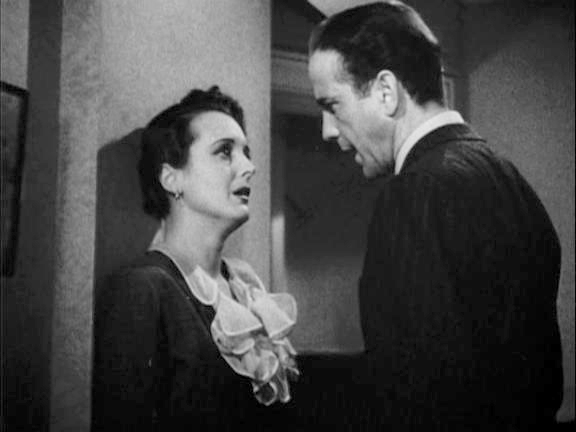
Brigid O’Shaughnessy  (Mary Astor) is the conniving, beguiling, lying little stagy siren who comes into his office in need. She sets a precedent with a string of lies and that never ceases. However, there are half-truths and bits of genuineness backed by her quivering voice and pleading eyes. It took another round to realize what a femme fatale she actually is because she is in fact so good at it. You almost don’t realize how deadly she could be. And in the pantheon of femme fatales, I admittedly forget her in deference to the likes of Phyllis Dietrichson, Gilda, or Kitty Collins. Perhaps Spade’s a little stronger than most protagonists, a little more resilient, not allowing himself to be completely duped. But from the get-go, Brigid has him reeling and guessing. The difference is that he knows it. It’s not until the very end however, that’s he’s finally able to get an actual line on her.

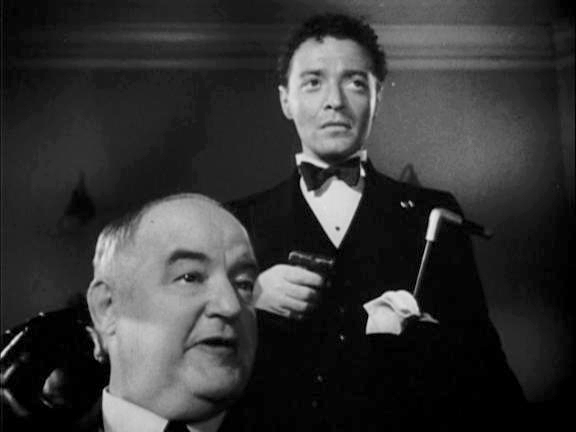
maltesefalcon2Then there’s Joel Cairo played so cunningly by the always wily and beady-eyed Peter Lorre and Kaspar Gutman portrayed so assertively and pointedly by the perennially memorable Sidney Greenstreet. These two men would come back in Casablanca and numerous other Warner Bros. Pictures, but they are the epitome of iconic characters actors who make any narrative that much more interesting. They have mugs and physiques really made for the dark recesses of the noir world, and when you put these four together it does spell trouble. Add a quietly seething Elisha Cook Jr. as Wilmer, the always personable Ward Bond as a Police Detective, and Lee Patrick as Spade’s doll of a secretary and you have a true winner.

With the eponymous blackbird to drive the plot all you really need are these characters and their inherent greed to pull them along. The beauty is that we do not know the details, but following Spade we slowly have piece after piece revealed, character after character make their entrance until everyone’s together and things get interesting

The story has loads of substance built-in and Huston was absolutely meticulous with his preparation for the film script and otherwise, which paid heavy dividends in the end. Hardly anything seems throw away and all the dialogue and scenes flow in a wonderfully seamless way that continues to carry us along in anticipation. It’s so engaging in fact that it becomes quite easy to disregard the film’s astute cinematography utilizing low-key lighting, which would become a norm for noir and then low angles that are reminiscent of another film that came out that same year, Citizen Kane.

Modern viewers might well accuse this film of being overly talkie, but amidst its iconic characterizations and bewildering plot, there are immeasurable pleasures to be mined. Few people would contest that the Maltese Falcon really is a major benchmark in film, as not only the early beginnings of German-influenced American melodramas (aka film-noir) but also a major career boost for the up and coming Huston, not to mention the veteran character actor Bogart. For film-noir lovers or cinephiles in general, this truly is the stuff that dreams are made of. John Huston and Bogart would both come back with success, after success, after success, but there’s something to be said for where it all began. The Maltese Falcon is a treasure indeed.

5/5 Stars