
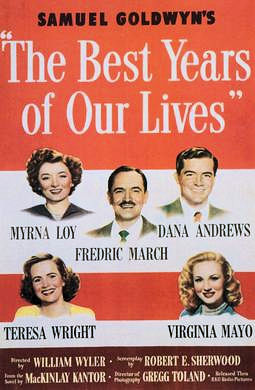
 Inherent in a film with this title, much like It’s a Wonderful Life, is the assumption that it is a generally joyous tale full of family, life, liberty, and the general pursuit of happiness. With both films you would be partially correct with such an unsolicited presumption, except for all those things to be true, there must be a counterpoint to that.
Upon watching both these films on subsequent days, that became markedly evident. George Bailey (James Stewart), of course, must go through a perturbing alternate reality where he never existed, and the consequences are catastrophic to all those he knows and loves in his community. But such a paradigm shift or new perspective, does truly revitalize his entire existence. It’s as if he sees the whole world through an unfaltering lens of hopefulness thereafter.
Although it lacks the dark fantasy that engulfs the latter half of It’s a Wonderful Life, Best Years has its own heavy dose of foreboding, that while more realistic, is no less disconcerting. All the boys have returned from the theaters of Europe and the Pacific, including our three protagonists Fred (Dana Andrews), Homer (Harold Russell), and Al (Fredric March). Upon getting back to their old abode of Boone City, sons talk about nuclear fallout in Hiroshima and men at drug store counters warn of the imminent threat of “The Reds.” Some soldiers like Fred have trouble landing work. Others struggle with getting the necessary loans from banks like the one Al works at, or they come back to far less glamorous lifestyles. Homer copes with being a double amputee and simultaneously closes himself off to all those who love him, including his longtime sweetheart Velma (Cathy O’Donnell). He must learn not so much how to love, but the equally difficult life skill of allowing others to love him.
Derry also struggles in a loveless marriage with his superficial wife Marie (Virginia Mayo), while also battling with PTSD symptoms like recurrent nightmares. Even the subtle reality that the only African-Americans in the film work behind soda fountain counters or in nightclub jazz bands has greater implications. Theirs is a relegated status, even in a country of liberty like America. Unlike the former film, we do not see any ghoulish human cemeteries, but we do see plane graveyards like ghost towns where metal is slowly rusting just waiting to get demolished and re-purposed. At this point, it is only a sobering reminder of all those who fought and died in the war years.
Many of these topics are only mentioned for a brief moment or we can only infer them from visual cues, but still, they lurk there under the surface or better yet, right in plain view. These real-life unsettling concerns are worse than It’s a Wonderful Life because they fall so close to home even today.
Wounded veterans are still coming home to a country that doesn’t know what to do with them, or a country that seems ungrateful for their service. Married folks still struggle through marriage and divorce. Single people still struggle with figuring out if they should get married and so on.
I think part of the reason I admire The Best Years of Our Lives so much, despite its nearly 3 hour running time, is its ability to captivate my attention rather like a day in the life of someone I would meet on the street. Although Virginia Mayo and Mryna Loy seem the most Hollywood, most everyone feels rather ordinary. Certainly, Dana Andrews is handsome and Teresa Wright, as well as Cathy O’Donnell, are wonderful as multidimensional girls-next-door, but I feel like I could potentially know people like them. And of course, Harold Russell was unusual since he wasn’t a trained actor. That casting choice pays off beautifully in moments such as the final wedding scenes where in a dyslexic moment he switches up his vows. But it works wonderfully as an authentic addition.
Although Gregg Toland worked on revolutionary fare like Citizen Kane, and William Wyler dabbled in all sorts of genres from westerns to period dramas, they have all the necessary sensibilities for a perfect presentation given the subject matter. The visuals are crisp and beautiful, but never flashy or overly conspicuous. The use of deep focus concerns itself with the overall composition of the frame -never attempting to focus our attention on any singular action. It all becomes equally important. Meanwhile, Wyler directs with a sure hand that makes the actions flow organically and at the same time his ensemble is given the space and the time to grow and evolve before our very eyes.
It’s a timeless film for what it brings to the forefront and also because of what it evokes out of the audience members themselves. There is an underlying somberness to it at times, but most importantly it rings loudly with the high unequivocal notes of hope. In the post-war years, it was a pertinent film, and it still has something to offer even now. More people need to know about The Best Years of our Lives.
5/5 Stars
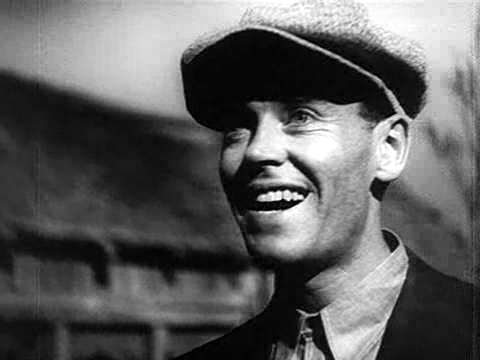
 “You have the darndest way of bouncing a fellow down and bumping him up again” ~ Henry Fonda as Charles Pike
 In fact, we have a brilliant introduction to her as she narrates the scene unfolding in front of her with the aid of her compact mirror. She trips up the bumbling bachelor and their introduction is the first exclamation point in a bumpy relationship. She’s ready to play him and marry rich and famous, because he’s a pretty naive fellow, and stiff around the ladies. Fonda’s nervous charm proves the perfect recipe for success as he is constantly being overwhelmed by Stanwyck’s frenetic barrage. His defenses are down and he hasn’t the foggiest what has hit him. Either he was really that uncomfortable or otherwise, he does a superb job of faking it since there’s never another moment where he’s not being fondled or manipulated.
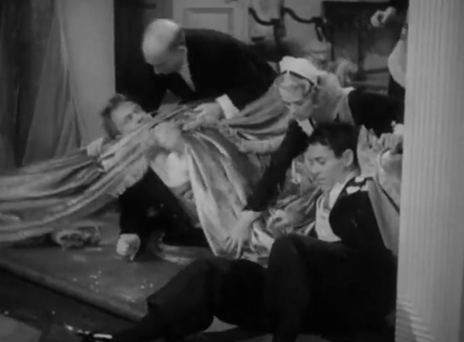 The story could end there, but Sturges has set his story up perfectly for a killer second act. Jean plans a perfectly sneaky revenge plan to get back at “Hopsy” by posing as the British niece of another con man (Eric Blore). He uses his own wily charm and influence to get them an invitation to the Pike household for dinner. There we see several other great character actors in action including Horace Pike (Eugene Pallette), and the perennial sourpuss Muggsy (William Demarest). Jean shows up now as the Lady Eve and successfully convinces her “Hopsy” that she is a completely different individual. The film works wonderfully on this axle of ludicrousness because young Pike is completely befuddled and awestruck again. He goes thudding, clanking, and crashing all evening long, a true victim of love. Pike thought he lost one girl for good and here’s another even better prospect. A whirlwind romance follows and everything is falling into place beautifully. There’s a frantic montage in preparation for the big day and then it happens. They get hitched. Afterwards, it’s all done and the two lovebirds are on a train barreling down the tracks interspersed with the long laundry list of all Eve’s beaus from Angus, to Herman, and Cecil and so on. It’s Charles’ worst nightmare, and he hopes to get out of it as quickly as possible.
 What makes Sturges’ film so wonderful is all the parts making up the whole. His script is perfectly contrived mayhem. He sprinkles it with his typical slapstick, his loudmouthed stock company lends an added layer, and his typically lightning-quick repartee is brought to life by his leads. Stanwyck was the quintessential leading lady of the 1940s and in 1941 she was in fine form (Balls of Fire and Meet John Doe). She can dance so effortlessly between dynamic comedy to heartfelt drama that is positively palpable. She overshadows Fonda in a sense, but they still work together, because he is her perfect foil, the precise innocent fool to fall into her web of feminine wiles. She can muss up his hair, manhandle him, and completely manipulate his feelings. Yet we still like both of them in spite of it. They are a hilarious match, and there’s space for some passionate canoodling as well. It’s probably one of the most perfectly wonderful, utterly dysfunctional relationships we could ever hope to see put on screen. By continually whipping out punch line after punch line to the very last quip, Sturges makes this comedy look positively effortless.
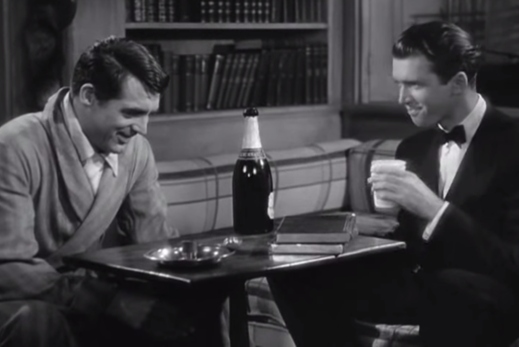
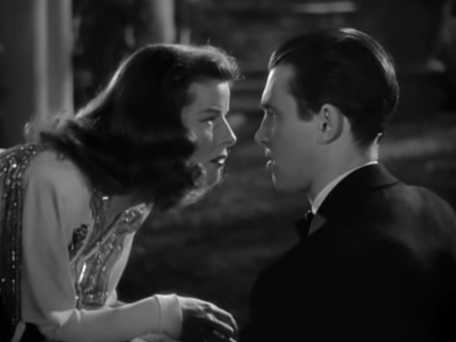
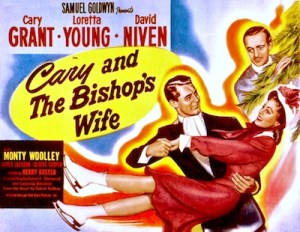 Although its theology probably isn’t sound, rather like It’s a Wonderful Life, The Bishop’s Wife nevertheless utilizes its central plotting device wonderfully.


 4 Star Films