
 Juzo Itami’s so-called ramen western Tampopo is unequivocably original in its hilarity, opening with what could best be called a public service announcement. A suave gangster is getting ready for the movie screening only to be disrupted by a noisy bag of curry potato chips. He threatens the foodie and sits back down to enjoy the entertainment, concluding the film within a film.
What follows in the actual movie is an unabashed love letter to food with some oddly sensual elements. It has off-beat scatterbrained touches of humor that send it in all sorts of odd directions, picking up momentary storylines and varying vignettes focused on different people all over Japan with the one unifying element being the food that they eat and enjoy.
There are the businessmen going out for a meal together who all order the same thing in deference to their leader only to be put off by their youngest associate who turns out to be well-versed in French cuisine and champagne. Then a society of women gets a lesson in how to eat Spaghetti like a true westerner which apparently means shoveling noodles into your face and making as much noise as you possibly can. They`re not wrong per se. Even the aforementioned debonair gangster and his lover turn up several more times romancing each other over their favorite dishes.
But the main attraction and the one that takes up most of the runtime has to do with the art of the perfect ramen shop with touches of what can best be termed a ramen western (an oriental rendition of Italy’s own affectionate spinoff, Spaghetti Westerns).
Goro (Tsutomu Yamazaki) and his sidekick Gun (Ken Watanabe) ride into town in their big rig and happen on a ramen shop that’s not doing so well. Its proprietor is a single mother who lives with her young son and looks to maintain the establishment after the death of her husband.
Unfortunately, she’s not much of a chief or a businesswoman and the shop has been suffering as a result. Thus, the newcomers main objective becomes turning the humble Lai Lai into a 3 star ramen operation. They are the hired hands who swoop in to save the helpless villagers, metaphorically speaking.
Recall Seven Samurai, The Magnificent Seven, or Shane and you`ll probably be on the right track. In this particular rendition, the first order of business is a name change to Tampopo Ramen. A regiment of further fortifications follows thereafter.
Goro takes his new benefactor to scout out the major competition in the area, gleaning from their success and also their failures. A good ramen shop has no wasted movement and provides a quiet atmosphere for the customers to savor.
Next, Tampopo trains with the foremost masters who know how to make a truly delectable bowl of ramen in every dimension. Finally, Goro and his compatriots help build a team to ensure her little shop will have the best of everything from food, to decor, and, of course, noodles. They are ready to face the inevitable onslaught headed their way: The lunch rush.
In her final test, Tampopo succeeds with flying colors. Goro`s work here is done so he can drift on further down the road a spell until another ramen shop catches his interest.
To its very core, Tampopo is a meandering film that ambles along forcing no clear agenda nor does it seem intent on getting to a certain destination. Instead, as it roams it slowly causes us to become attuned to the simple pleasures of food while wrapping us further still in the idiosyncrasies of humanity. This is the holy grail for ramen-lovers everywhere. It will make their mouth’s water in frame after frame and leave them raising an eyebrow on more than one occasion.
It’s possible to guarantee that you’ve probably never seen a film quite like Tampopo. While it revels in Japan’s rich culture of food it may not be for everyone. The same might be said of Japanese cuisine. I for one am more partial to the noodles but the film no doubt has a few savory moments.
4/5 Stars

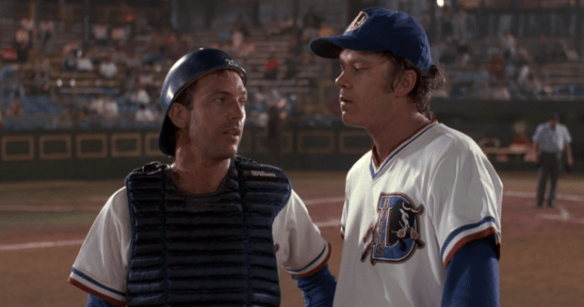
 In the 1970s political paranoia involved issues in the realm of Watergate. Government conspiracy and that type of thing perfectly embodied by some of Alan Pakula’s best films. But it’s important to realize in order to better understand this particular thriller, the 1980s were a decade fraught with fears of Soviet infiltration compromising our national security. The Cold War was still a part of the public consciousness even after being a part of life for such a long time already. So No Way Out has a bit of Pakula’s apprehension in government and maybe even a bit of the showmanship of Psycho with some truly jarring twists.
 The last time I saw Hoosiers it was on VHS and I was only a boy and I hardly remember anything. Gene Hackman yelling. Dennis Hopper as a drunk. Jimmy the boy wonder, “The Picket Fence”, and of course Indiana basketball at its finest. But in those opening moments, as he drives into town and walks through the halls of his new home, I realized just how much I miss Gene Hackman. Yes, he’s still with us but the moment he decided to step out of the limelight and retire from his illustrious career as an actor, films got a little less exciting. His passionate often fiery charisma is dearly missed.
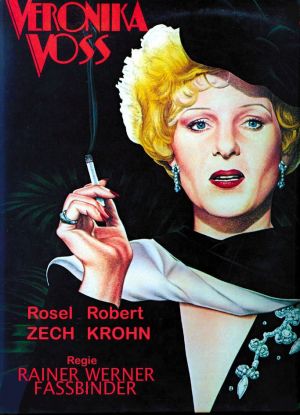 You get a sense that if they had ever met, Norma Desmond and Veronika Voss might have been good friends. Either that or they would have hated each other’s guts. And the reason for that is quite clear. They share so many similarities. Both are fading stars, prima donnas, who used to be big shots and now not so much and that seems to scare them so much so that they try and cover their insecurities with delusions of grandeur. Having to look at your near reflection would be utterly unnerving.
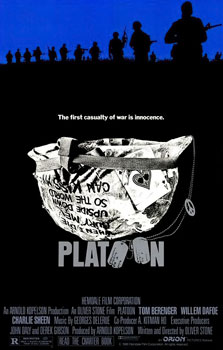 It’s a rather interesting parallel that Charlie Sheen is playing much the same role his father did in Apocalypse Now. At least in the sense that they become our entry point into the mire of war, specifically in Vietnam. But where Apocalypse seemed to belong more so to Brando or even Duvall, Platoon is really Willem Dafoe’s film. At least he’s the one who makes it what it is. His final moment is emblematic of the entire narrative.

