
Because of his meteoric ascension in Breathless, patterning his insouciant hoodlum on the Hollywood image of Bogart, Jean-Paul Belmondo is easily identified with his predecessor. He was a tough guy — gladly so — and he offered up a long line of memorable performances over a stellar career.
Pierrot Le Fou (Godard) and Le Doulos (Melville) quickly spring to mind, but then you only have to look at something like Leon Morin, Priest, where he plays the eponymous clergyman, to recognize the range he was capable of.
In honor of his career, we wanted to highlight three of his later action films. They are not his most acclaimed pictures, but they are defined by his legacy so it seems fitting to acknowledge them.

Up To His Ears (1965)
Up to His Ears is cut out of the same cloth as Philippe de Broca’s prior film with Belmondo from the year before: That Man from Rio. It’s a globetrotting picture all across the orient with madcap chase sequences and quite a few attempts at Bond-like intrigue.
Overall, it bends more toward dated gags and goofy antics than out-and-out thrills, and it seems mostly content with this. When they flee an onslaught of Chinese gangsters, Belmondo and company sneak down into a pillbox, down to an underground tunnel, and on and on. There always seems to be a fortuitous out for them.
If their good fortune and the fact they aren’t completely annihilated seems farfetched, then you don’t understand the ambitions of the film. It’s all sendup. Belmondo seems to be enjoying himself, and his adventures lead to a desert island with Ursula Andress. He can’t believe his luck.
Obviously, the movie cannot quite muster the same glory as That Man from Rio, but Belmondo is still a great action hero able to play the crazy comedic moments and still move through space with vim and vigor. It ain’t Godard, and that’s not necessarily a bad thing.
3/5 Stars

Le Magnifique (1973)
Also known as Our Man in Acapulco, and its dashing hero, Bob Saint-Clar (Jean-Paul Belmondo) feels like an amalgamation of ’70s era Bond (Moore and Connery) with a lot of Get Smart thrown in for taste.
Philippe de Broca’s at the helm again offering up some of the most self-reflexive parodies of the hypermasculine, suave international spy genre. It pulls out all the comic book scenarios — with dastardly villains et al. — and the resolutions, seeing our hero always prevail. He must live to fight another day.
Broca himself readily contributed to this spy phenomenon during the ’60s with Belmondo to boot. However, it’s so over-the-top to the point of being offputting. Then, we realize our secret agent is being dreamed up by a hack writer, named Francois (also Belmondo) on a strict deadline!
Suddenly it breathes new life into the premise with a renewed perspective, and these long-trod pulp-bound conventions become only part of the gimmick and, hence, only part of its appeal. Not to be outdone, he’s taken the English sociology student (Jacqueline Bisset), who lives across the way and dreamt her into his story as the beautiful Tatiana. His supervillain is none other than his own pompous editor (Vittorio Caprioli).
We’ve followed his story umpteen times before. Although he writes pulp trash for a rapt audience of many, his active imagination all but compensates for a fairly nondescript private life. He’s got a bit of Walter Mitty in him. In the most fated of meet-cutes, Christine (Bisset) accidentally picks up one of his works and finds herself instantly inspired for her college thesis.
Soon she’s dropping by to blow through whole shelves of his novels. And then the idealized man dreamed up on the page, must take a stand in his own life. For what it is — plagued by many of the shortcomings of its genre and the era — I can’t help but appreciate Le Magnifique.
It mostly comes down to Belmondo’s dual role and his rapport with Bisset. Again, they’re having palpable fun taking it over the top, and like any great screen icon, Belmondo gets the girl — twice.
3.5/5 Stars

The Professional (1981)
It feels like your prototypical dated ’80s blockbuster replete with gratuitous violence, a rogue’s gallery of heavies with all the other corny ingredients mixed in together. Belmondo is an agent, undercover in an African country, prepared to assassinate their leader only to be drugged and sent to a labor camp.
He escapes and ultimately returns to France as a kind of rogue operative on the lam. His former superiors want to do away with him, but he’s always one step ahead. He’s not going to be eliminated that easily.
Although it’s not a Bond movie, there are pretty girls, and he seems to know them all intimately all while slinking around to preserve his own skin and complete his objective. Belmondo is undeniable, handling everything from fisticuffs, stunts, and seduction with his usual roguish charisma. He never takes himself too seriously. It’s as if he’s in on the joke of it all and enjoying himself in each individual moment.
The final car chase changes my whole verdict of the picture because it really does take my breath away. It’s yet another showcase for Belmondo the consummate action hero, effectively taking the film by the horns and really living and breathing the part.
While the score isn’t prototypical Ennio Morricone, it gained a new life and legacy in The Professional. He receives what might be termed the briefest of homages as the film’s main leitmotif comes to life between crosscut closeups of its hero and villain a la Leone. It’s like a mini showdown transposed to the world of French secret agents.
There is so much of Bourne here beyond the car chase, and it comes down to the inexplicable predicament of the protagonist. He is thrown into a world that is not right-side-up, and his only choice is holding fast to what he knows. He’s smart and cunning, making a real go of it.
But sometimes the world in all its order and pragmatism doesn’t make a shred of sense. At least, to the very last minute, Belmondo looks cool doing his job. In a movie like this, surely that’s all that matters. Adieu, Jean-Paul. Thank you for what you gave us.
3.5/5 Stars
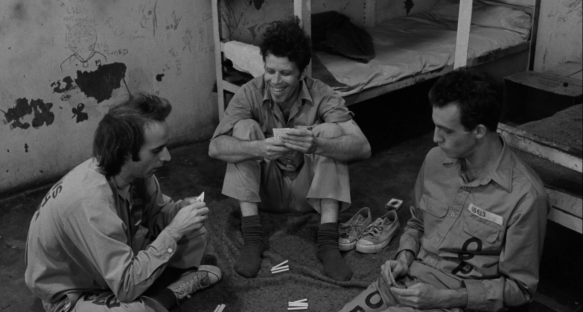
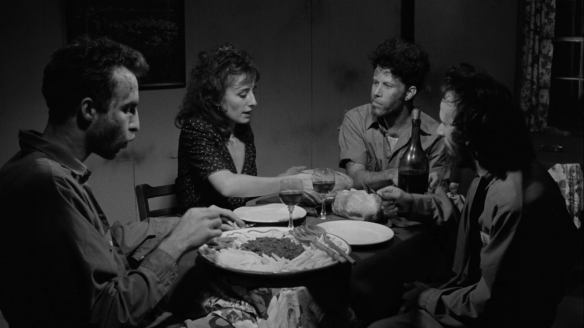
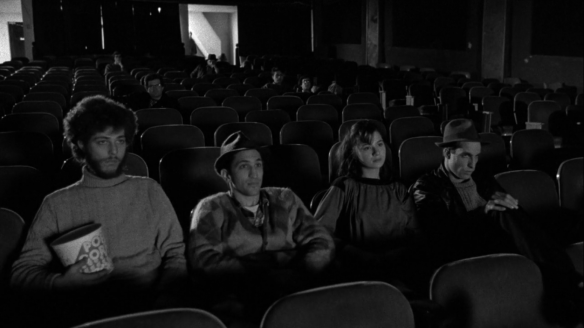
 I never thought I’d be saying this about a Woody Allen film, but it feels more like a technical marvel than purely a testament to story or dialogue. Although

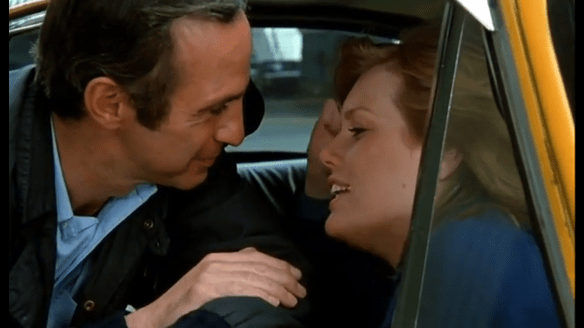


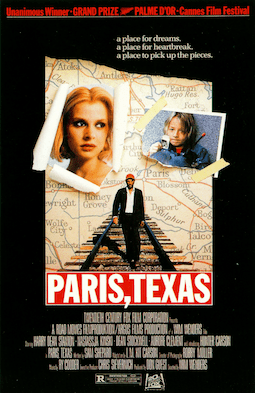 It occurs to me only someone with an outsider’s perspective would choose to make this movie, which is void of any typical Hollywood flair. No American would have thought in a million years to cast Harry Dean Stanton (a lifelong character actor) and Dean Stockwell (an all but forgotten child star) while capturing such a cross-section of America. Therein lies a moderate amount of the allure in Paris, Texas.
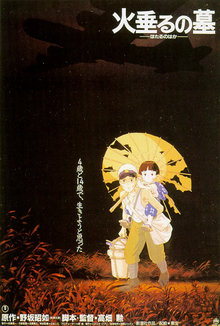 Anime is very much a Japanese art form denoted by its style, the visuals, and even the depiction of its characters with wide eyes all the better to convey emotions. Oftentimes the images onscreen are a great deal more stagnant than the real-time action that American animators try and replicate with a greater frame rate.
