Linda, Linda, Linda (2005)

“Like a rat, I want to be beautiful. Because you have a beauty that can’t be reflected in pictures” -sung by Linda, Linda, Linda

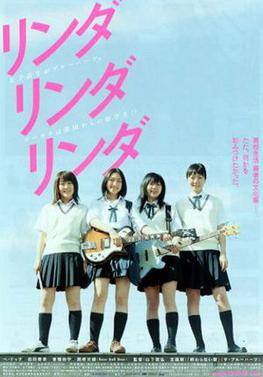
During the grainy opening scene of Linda, Linda, Linda there’s some time spent figuring out how these characters relate to our story as two AV nerds look to video a high school girl who is introducing a school’s forthcoming cultural festival.

It’s not so important to get to know who they are as to realize they will become the bookend for the movie and the parameters of its world. Because when you are a Japanese student, “Bunkasai” really is your chance to shine in front of your peers.

Linda, Linda, Linda captures this environment better than any other film I’ve seen thus far, and it’s because there’s really an ecosystem built out. Each class has their own task, game, or food vendor that they’re preparing for. Sports teams will have exhibitions. Clubs will have booths. Bands put on performances on the big stage for everyone.

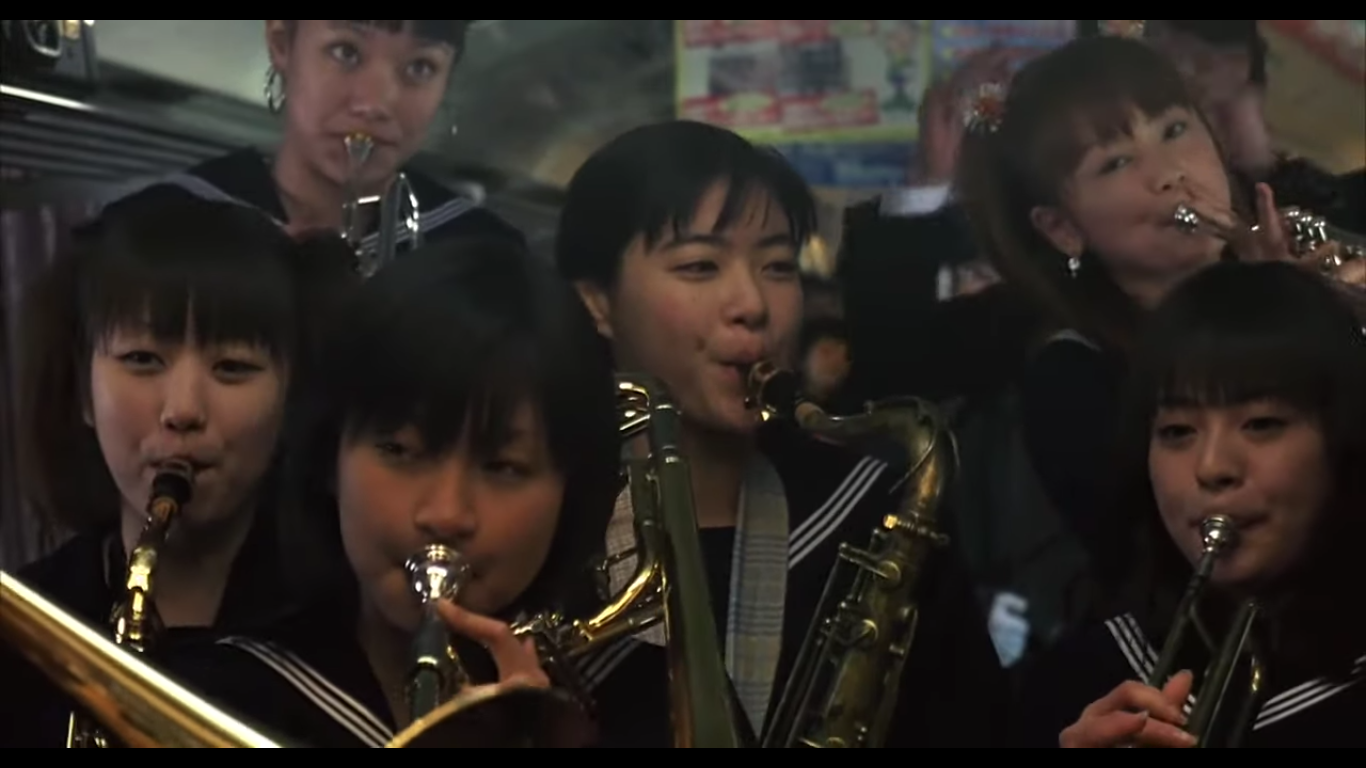
However, this canvas wouldn’t work without the human drama we come to expect with high school. One girl hurts her hand and petty disagreements lead to the dissolution of an all-girl rock band. Three of its members, Kei, Kyoko, and Nozomi, decide to form a new quartet without their lead singer. Son (Bae Doona), the unblinking Korean exchange student is quickly found as her replacement.

Some western audiences might not recognize what an odd choice Son is to be their lead singer. Japanese is not her first language. They often have trouble communicating with her (A stunted bus stop interaction brought back all sorts of personal memories from my time overseas). She has to learn all the lyrics to their setlist and she’s a bit kooky. Still, it fosters a beautiful kind of relationship.

There’s something leisurely and unhurried about the pacing of the movie. Characters are put in front of us, and yet we don’t feel like there’s some objective to be obtained. It’s about getting to know them and observing their situations.

My primary avenue to consider this film is through the filter of my own experience. I went to a cultural festival like this. There was giant Jenga and classrooms turned into rollercoasters and carnival games. We had boba, sweet potatoes, and frankfurters (while supplies last). But the best part was the music. I saw many of my students come into their own, witnessing sides of them you never see in the classroom. Raging fuzz-filled guitar solos, singers coming out of their shells, and girl guitar gods rocking out.

In fact, I was up on that stage too. Rather like Son I was an outsider. I got asked to sing a song in English and so without any musical training or a voice to speak of I agreed spending several weeks learning a One Direction tune. It’s not quite The Blue Hearts, but I’m not much of a singer. Son spends her time training at a karaoke drink bar.

If that experience was hardly a highlight of my life, I fall back on the experiences I got to witness. Linda Linda Linda has that same raucous joie de vivre we rarely attribute to Japanese culture. That’s what made it so joyous watching my students rock out to One OK Rock and Green Day.

It’s the same energy making Linda, Linda, Linda buzz with a pervasive joy. The audience imbibes the energy, cheers it on, and the musicians feed off of it. Nerves die away. They give themselves over to the music and enjoy themselves. If it’s like my school, these kids will probably never be professional musicians, but that’s hardly the point. Music has joys going beyond fame and monetary gain.

I was once taken by the idea of James Carse with his infinite games. Finite games have winners and losers. In infinite games, the players seem to be cooperative feeding into something bigger than themselves and utilizing a different, intrinsic rubric for success.

Although Linda…deviates mostly from the similar-sounding Swing Girls, what they share beyond a frantic slap-dash finale, is this performative exhilaration found most often in music. Soon enough, the festival is over and that’s the end of it.

But for a couple shining moments in the middle of the setlist, they were at the center of something spectacular. It’s easy to be a sucker for these kinds of stories when they feel so closely tied to my own fond memories. Long live Linda, Linda, Linda.

4/5 Stars
Swing Girls (2004)

“There are two kind of people in the world. Those who swing and those who don’t.”

I’ve already talked about this phenomenon ad nauseam, but having lived abroad in Japan, worked at a school, and interacted with many Japanese people, it fascinates me to learn about their cultural proclivities.

I hesitate to call much of what the Japanese do musically cultural appropriation because they seem to totally recontextualize the artifacts we know. One prime example is “Take Me Home Country Roads” by John Denver being featured so whimsically in Ghibli’s Whisper of The Heart. They somehow take cultural touchstones we know and pluck them out of a moment in a kind of reverent homage (One peculiar counterexample might be the animatronic JFK featured in Sans Soleil).

Writer-Director Shinobu Yaguchi’s Swing Girls is a film positively swimming in teen culture. Like a School of Rock, it feels like a movie looking for a wide audience, and it will easily repay those desiring a crowd-pleaser.

It introduces its world by gladly playing into high school tropes and stereotypes. Tomoko is our primary conduit in a clique of girls who seem generally bored with school and crazy about cute boys, fashion, and the like. They’ll do anything to get out of a summer make-up class and reclaim their adolescent freedom.

When the school’s band regrettably forgets their order of bentos for their gig miles away, the girls volunteer to hand-deliver them by train. It begins the madcap craziness as they miss stops, take to walking on foot, and unintentionally bake the food into oblivion. When all the band comes down with deadly food poisoning, their failed charade is up.

It’s a bit ridiculous. Where can a movie like this go? There’s only one answer and Yaguchi does his best work leaning into the big-hearted absurdity of it all. Having single-handedly wiped out the band, Tomoko and her compatriots consider joining the one male member not sidelined. It’s yet another convenient way to get out of summer school.

As an audience, we are able to laugh at the incongruity as all these girls who have never handled a musical instrument in their lives try their hand at forming a Big Band. They’re of the assumption that Jazz is for fuddy-duddies and intellectual types swirling brandy snifters. I can’t fault them because I was of a similar persuasion until I saw the light.

Takuo (Yuta Hiraoka) sets them up with a training regimen conditioning like athletes and introducing them to the likes of “Take The A Train” by Duke Ellington and Billy Strayhorn, a song that was integral to my own jazz appreciation. It feels like this mixture of oil and water, but then that’s the entire novelty of the premise. Whether or not it’s realistic, they do get better and more ambitious.

The girls take up part-time jobs to try and cobble together some second-hand instruments. They take part in all manner of good-natured fun and games like fleeing a wild boar and engaging in a euphoric snowball fight. Still, they still have a goal to realize, preparing their audition tape for the big high school competition.

Swing Girls is a film that keeps on building on itself until the height and width of its sizable heart overwhelms us with warmth and laughter. It grows to a crescendo as they frantically try to make it to their big day, first serenading their tour bus, and then performing the real thing.

They pad their performance with renditions of Glenn Miller and then Benny Goodman’s “Sing, Sing, Sing.” This second song is noteworthy to me because the band at the high school I worked at performed this same song. I have no inclination if this choice was inspired by the film or the fact Goodman was one of the swing era’s heavyweights. The particulars don’t really matter.

Swing Girls is best in its goofiness, giving us a story easily transferable into the Hollywood arena with feel-good moments and cheering acts of redemption. There’s actually not too much romance which is actually a nice surprise. However, in it, a closeted jazz enthusiast can come out of the woodwork to fulfill his dreams, and a classroom full of dead-end girls can come together to create something quite spectacular.

It provides a new context for Japan’s long-lasting love affair with jazz music, and I was pleasantly taken with it. Wonders never cease. All I can say is I want to be one of those people that swings. I can see it bringing the utmost joy into my life.

4/5 Stars

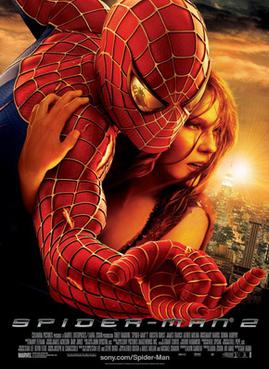
Spider-Man 2 (2004)

A version of this article was published in Film Inquiry

If Spider-Man was the template for what the modern superhero movie would become, its sequel feels like the standard bearer all future successors were asked to eclipse. I had never seen the movie before as I was young during its initial run, but the aura of Spider-Man was always around.

Sitting in a packed theater there was a sense of buzzing anticipation when the opening credits rolled, backed by Danny Elfman’s almost otherworldly score that hints at more eccentric inclinations. The Marvel monolith had yet to be fully consolidated and turned into a factory. For the time being, it feels like director Sam Raimi had free reign for fun.

Because we already have some context for the character carrying over from the first movie, the film’s instincts are correct in reintroducing us to Peter Parker (Tobey Maguire) with an opening gambit laced with levity.

We watch him racing to keep his job as a pizza delivery boy only to switch into the spider suit to beat mid-day traffic. There’s an extended bit with a closet full of mops that had the audience in stiches as he drops off the order sheepishly with the front desk.

I’m so oblivious but it does seem like Tobey Maguire has become a walking meme and a lasting internet celebrity based mostly on his Spider-Man persona. There’s something about his delivery that’s so awkward — maybe something about his quivering upper lip — or how he almost lisps out his lines of dialogue. But it’s also endearing.

And for every time the audience laughed, it was never out and out derision. They love this guy. He is their hero and they hold him aloft so when he goes slinging webs and rises again across the skyline, people ring out in audible cheers.

The same goes with the dialogue. Some of it might be inadvertently funny and yet so much of it is in on the joke. Raimi is wonderful in allowing for these incubated moments of a visual gag or an insert with a cameo part that has a reaction or a bit that’s good for a laugh. It can be about a stolen pizza in the opening minutes or even a terribly ordinary Peter stumbling away from a crash scene after he can’t catch his fall and proceeds to set off a car alarm.

This hints at part of the dramatic question at the center of this film. What makes Spider-Man mythology so popular is the nature of his superherodom as initially conceived by Stan Lee and Steve Ditko.

His story arc is grounded in relationships on all sides however rudimentary they might be. An aunt and uncle, his crush, and the alienation that forms between he and his best friend. What’s more, Peter is faced with the universal conundrum of what he wants versus what is sacrificial in the name of his city. With great power, comes great responsibility. But the words get muddier when it comes to specifics.

And the villainy is equally relatable. Albert Molina is sympathetic but also carries a gravitas with his physique and stage presence that wears the role of Dr. Octavius well. He becomes first a mentor and then an adversary for Peter — a perfect foil for what he represents.

His life’s work — creating a fusion power source for Oscorps — gets out of control during a public showcase.  In the aftermath, his mental faculties get overridden by his new mechanical arms driven by AI. He knows not what he does and becomes a public menace who wants to rebuild his reputation, and avenge the loss of his beloved wife.

Due to the strains of his Spider-Man mantle, Peter’s grades are suffering in college and he’s absent in the lives of the people he cares about most. Aunt May is about to go through an eviction and MJ’s been making a name for herself as a theater actress and model. She feels like Peter has rebuffed her and it hurts.

Peter decides to relinquish his Spider-Man suit because he doesn’t want to keep secrets from anyone; he doesn’t want to break his promises anymore. He steps back into he shadows and lives a normal life even as the crime rate begins to rise in the city

There is the real sense that there is no longer a protective hedge against crime and other antagonistic forces. He must make a decision, and at the same time his powers begin to atrophy for inexplicable reasons.

I never thought I’d get T.S. Eliot or Joel McHale in this movie, but sure enough both are featured. Peter pulls out Eliot in a NYC laundromat as he tries to wash his Spidey suit and find new ways to woo MJ. Girls supposedly dig poetry. It feels like a small Easter egg that one of my favorite high school bands had a song featured on the U.K. soundtrack inspired by Eliot’s poem “The Hollow Men.”

Meanwhile, McHale shows up as a teller in the bank who sheepishly tells Aunt May she’s not eligible for a loan. It’s one of any number of injustices that make Peter feel powerless to help the ones he loves.

From a dramatic standpoint, the gala where he’s called upon to take pictures feels like the nadir of his story so far. An inebriated (James Franco) smacks him around in a very public setting, and then Peter learns MJ is getting married to someone else; she’s not waiting on him any longer.

These are only the personal stakes, but so many subsequent superheroes have lost this reality and gotten muddled because they dealt in expositions and nebulous things that we have little to no concern for. Here it’s simple yet effective.

The action is wonderful and the visual representation of Doc Ock with his mechanical arms has a real menace that rarely takes a false step in disrupting our suspension of disbelief. In fact, the whole film holds ups though there are a few obligatory final shots that feel like gratuitous eye candy

Aside from this, each confrontation between Peter and Octavius plays like an extraordinary piece of narrative drama that goes beyond surface level pyrotechnics. It’s meant for Saturday matinees as they duel it out inside the bank, scaling sides of buildings with Aunt May in the balance, or even battling over a railcar in a chase that evokes The French Connection while still applying a Spidey twist.

What a wonderful and mysterious thing is it for Spider-Man to lose his mask, and far from castigating him or just wanting a piece of his celebrity, the people he has just saved acknowledge his youth, and vow to keep his secret. There is a neighborliness and a desire for the communal good that feels like wind under our sails.

Because while other installments about superheroes explore characters’ isolation, anonymity, and identity as vigilantes, there is a sense that this Peter Parker does not have to worry. These people are protective of him, grateful for what he has done, and he deserves their care. He deserves grace. After all, he’s only a teenager.

What’s more he has a girl who will stick by him as he looks after the city. There is a precise moment of truth where Peter is able to allow his girl know his true, full self. It’s a supreme gift for the character.

Looking back now 20 years on, Spider-Man 2 is an early 21st century depiction about the dangers of AI, but at its core it’s about the choice. Every great hero must decide what to do in the name of self-satisfaction or personal sacrifice.

The movie would also maintain the more dubious tradition of franchises outstaying their welcome. I’ve been told Spider-Man 3 jumped the shark, and yet I imagine even now there is a nostalgic patina hanging over this trilogy.

Spider Man 2 is a wonderful delight, and it’s a pleasure to see it with an audience who care about the movie so profoundly. It means something to them even after all these years. They may be older, but they come to this movie with the same reservoir’s of affection. It’s the effulgent joy of any little kid who’s ever had dreams of being a superhero.

I’ve never been into ardent superhero fandom, but now finally getting around to Spider-Man 2 after the fact gives me a newfound appreciation for my peers. I see the hype. I’m still hoping the Marvel fad has finally begun to abate for more eclectic forms of entertainment, but that doesn’t mean we can’t celebrate where these films came from.

4/5 Stars

Spider-Man (2002)

The modern superhero genre as we know it began with Richard Donner’s Superman (1978) starring Christopher Reeve. Then, there were subsequent releases like Tim Burton’s Batman (1989) with Michael Keaton or even Wesley Snipes’s Blade (1998). Also, the first X-Men in 2000 has seen many subsequent additions throughout the 21st century.

I’m no superhero cinema historian so there is plenty of room to quibble, but Sam Raimi’s Spider-Man feels like a portent of what was to come for a whole generation of superhero movies from Marvel and DC that have dominated the cineplexes since.

What I appreciate about the movie is how it’s not just a superhero movie, but a comic book movie. I mean this by how it conceives of itself. We have drama, but it’s not overly dark and oppressive; there’s room for humor and an acknowledgement that this is meant to be light and a genuine good time.

There’s an energy reminiscent of the teen movies of the 90s-2000s like Can’t Hardly Wait or She’s All That. Peter Parker’s in high school. He’s a bit of a dweeb with his nerd glasses and a nebbish persona, harboring a crush on Mary Jane Watson (red-headed Kirsten Dunst), the literal girl-next-door who doesn’t even know he exists.

Whatever people’s opinions of Tobey Maguire, I think all the ardent faithful hold him close to their hearts because of what he represents at the center of this film. He’s really the first Spider-Man in the modern era in a franchise that has now spawned so many progeny. And perhaps this is a gross generalization of the audience, but those who rally around him probably see Peter Parker as one of their own. They see themselves in him. Even if Tobey was a little old be playing a high schooler. 

The movie willfully pulls out all these dorky bits of contrivance: Peter living next to MJ, though they’ve never seemed to talk before. Likewise, his best friend (a brooding James Franco) just happens to be the son of the man who effectively becomes Peter’s arch nemesis. But we forgive these things because aside from being bitten by a radioactive spider, Peter feels like a grounded human being in all other departments.

Willem Dafoe’s turn as The Green Goblin has a Gollumesque duality to it. It escapes me which film came first, but we see both his sympathetic father figure and the cunning conscience that comes alive in him as he hopes to make Oscorps into a success. He wants to prove all the corporate suits and military officials wrong. Even 20 years on, Dafoe’s always the kind of actor who gives the material its due and people admire and respect him for it. There’s no distinction between high and low art, whatever that even means. 

Meanwhile, J.K. Simmons dives into the cartoonish nature of newspaperman J. Jonah Jameson without any hesitancy whatsoever. From his hair to his over-the-top demeanor and constant vilification of Spider-Man, he’s good for a few laughs.

But we want this broader larger-than-life quality because it fits with a world that in some ways mimics ours. Simultaneously, it’s meant to be fanciful and push us into a narrative of heightened imagination, romance, heroes, and villains.

What’s most refreshing about the film is how the drama has not yet been stricken with bathos — something that seems so en vogue now. It’s as if contemporary films need everyone to know they’re in on the joke and having a sardonic laugh at the expense of the stories and tropes themselves. We must undercut any genuine moment for fear of something being too soppy.

In Spider-Man the moments of sincerity are still there. The most evident are carried by Cliff Robertson, a revered stage actor and personality from the bygone era of Classic Hollywood. He utters the famed line “With great power comes great responsibility.” Sure we’ve heard these words so many times, they can feel like a cliché, but as he sits across from Tobey Maguire, the candor and simpatico between them is unmistakable.

I was also pleasantly surprised by the special effects of the film; they’re not always pristine and still they never pull us out of the movie completely. Raimi does a wonderful job giving us at least a few images to grab hold of. The most telling has to be the upside-down kiss between Spider-Man and MJ.

It’s the kind of visual iconography that by now feels emblematic of the film itself even as it gave a fresh face to movie romance. The key is how all involved do not scorn the moment; they still believe in the magic of the movies.

From the running time to the scope of the story, it feels almost quaint watching Spider-Man, and while there were no doubt sequels in the pipeline, it feels like it can function as a standalone movie. There’s not a lot of added dross either, but we still get a gripping story to take in and enjoy.

My final thought is only this. Principal photography for the film officially began in January 2001, and 9/11 not only changed New York’s skyline over the course of filming, it changed the film. But Spider-Man feels like one of those startling post-9/11 films. 

We often think of stories where the material is inexplicably tied to those horrible events that stay with anyone who ever lived through them. However, I can’t help seeing movies like Spider-Man or even Elf, from the following year, in light of those events. Because their themes and heart unwittingly gave the audience laughter, thrills, and soaring spectacle in the face of terror.

These are not spoken sentiments, and yet they are baked into the very fabric of what these films are. They are wish-fulfillment and fantastical fairy tales in a world that often feels so harsh and foreboding. That’s why we still flock to stories like these even today. That’s part of why people still turn out to see Spider-Man. We like to look for the heroes.

4/5 Stars

Summer Hours (2008)

A few years ago my mother helped sell my grandparents’ home, and it was a home they had resided in for well nigh 50 years. They were not affluent French folk with a fine arts collection; what they did have was a connection to that space.

And it wasn’t just my grandparents but my mother and her siblings, and then all the grandchildren and great-grandchildren, who had varying attachments. It’s a strange sensation when a space that has been an element of your life for many years, or in my case, as long as I can remember, is boarded up or renovated and the cycle of life continues there. It’s these kinds of ideas Oliver Assayas’ Summer Hours bring to the fore, and I’m sure many can easily relate.

The movie opens with the 75th birthday of the family’s matriarch (Edith Scob). It has remained her lifelong mission to the maintain the legacy of the famed artist, and her uncle, Paul Berthier. But she’s also pragmatic and realizes the reality, resigned to the facts. “A lot of things will be leaving with me. Memories, secrets, stories that interest no one anymore,” she says. The same might be said of the Corot paintings and a broken plaster that belonged to Degas. They are impressive relics but relics nonetheless.

They are an imperfect family — what one isn’t — but even if you compare this film to something like A Christmas Tale, the story is not so much borne out of dysfunction, but what the passing of generations and time means to us all. Things cannot mean the same or remain the same for all of us. We are bound to see them in a different light.

The seeds are sown early on: one son (Jérémie Renier ) is based abroad in China and a daughter (Juliette Binoche) lives in New York for work in the design industry. It’s quite a long trek for them to get back to France and see their mother. Only the eldest, Frederick (Charles Berling), lives nearby with his family. This doesn’t feel altogether unusual, in fact, many of the people I know in the fast pace world I live in, are not close to relatives. This is a luxury. Eventually, the presents are opened, small talk is had, kisses are shared, and the family must leave.

Once again, the mother is left alone. It’s not callous; it’s reality. I’ve noticed Assayas employs long fade-outs in his films. It could have several uses, but it also suggests the passage of time. Their mother Helene is gone quite abruptly, and they must contend with her affairs.

If you wanted to be crass, you could pattern the movie after Citizen Kane, instead focusing on a French lady who left behind a lot of artifacts for her family to quibble over. It’s all very tasteful and orderly but still, there’s something so unnatural about going through the possessions of the departed.

The one son who still lives in France has a romanticism about him, assuring his mother all her work will not be dissolved, and they will hold onto her country home for the grandchildren. He doesn’t want to believe what she’s already accepted. Sure enough, things begin to progress just as she foresaw. And although I didn’t want to believe it, I also realized I was blinded because life gets in the way.

It doesn’t really make sense to hold onto the place. It’s not practical and with most of the family out of the country anyway and the money needing to be split three ways, how do you do that without causing rancor to build up? No, it makes the most sense to sell, donate, and auction off as much as possible. And so they do just that.

They work through the arrangements and make sure their mother’s faithful housekeeper is well taken care of or at least as best as they can manage. It still feels like an unceremonious end.

Pretty soon beloved family heirlooms are in a museum where they can benefit more people. It’s history for them to appreciate. But it also feels austere and unenchanted. There’s a distance between it and the people who are meant to enjoy it. Now they are quite literally museum pieces.

I had a friend I met overseas. She was not French but she loved Nice dearly. It was the home of Auguste Renoir, one of the country’s most beloved painters. I bring it up only because she is from a different generation and somehow it feels like they have a greater appreciation for the natural arts. It’s not that they have a monopoly or that none of us care, but we’ve come of age in a different time of modern art, technology, and globalization.

Summer Hours made me grapple with these emerging realities all the more pervasive in an era well after the film’s release in 2008. The past can never quite hold the same sort of import for us because they are not our personal experience and never can be. My parents have memories I will never know or just as easily forget if they tell me. Grandparents lived in generations I will never fully comprehend nor appreciate.

But it’s not like we can sit around taking stock of everything they ever did. It’s not a game we can ever hope to win against the inevitable march of time or unexpected human tragedy. It would be totally futile and hopeless otherwise.

It’s what makes the organic moments we get, a stray memory or a long-hidden away anecdote, all the more special. And yet it seems we would do well to know their stories and their history as best as we can.

I’m still not sold on the importance of leading a lasting legacy. That’s perhaps something only affluent French people and film critics dither about. I’m not sure. But there is something to respecting history and where we’ve come from while still continuing to navigate our everyday lives. We must strike a balance.

In Summer Hours we see the dissolution of years of work right in front of us, not out of malevolence but due to life and necessity  — choosing the path of least resistance. It’s hard to admit, but these are the things we all strive for and so it’s hard to blame these characters for any of their actions. Even if it doesn’t seem entirely right, it’s also a part of life.

One of my primary qualms with the picture is how it seemed to pick up ancillary characters only to drop them. We meet Binoche’s boyfriend in one scene, Eloise’s nephew is a kindly cab driver, and we meet Frederic’s kids.

His daughter was a character I was skeptical of and yet she becomes one of the most crucial as a kind of bridge between generations. The mother’s home is about to be sold at the end of the summer, and so they have a short amount of time to enjoy it. Rather than being prudish about it, they let their kids hold a party. I was half wondering if they expected the kids to trash the place and turn it into a kind of funeral pyre. With all the youth flooding in it feels like the place is about to be met with desecration.

Instead, something else happens. They hold their party. The grounds are full of exuberant young teens and adolescents hanging out and having a good time. It’s somehow a recontextualization and a new life for the space. We almost forget all the old antiquities and works of art and now only see it with all this youthfulness dancing around and enjoying one another’s company.

The daughter sneaks off with her young beau no doubt like her grandmother before her, and we feel a certain amount of catharsis in a situation that is left relatively open-ended. We didn’t have a party in my grandparent’s backyard to send it out — I kind of wish we had — but I’d like to think that like Summer Hours a young family or some kids are enjoying that space like we did a couple of decades before.

4/5 Stars

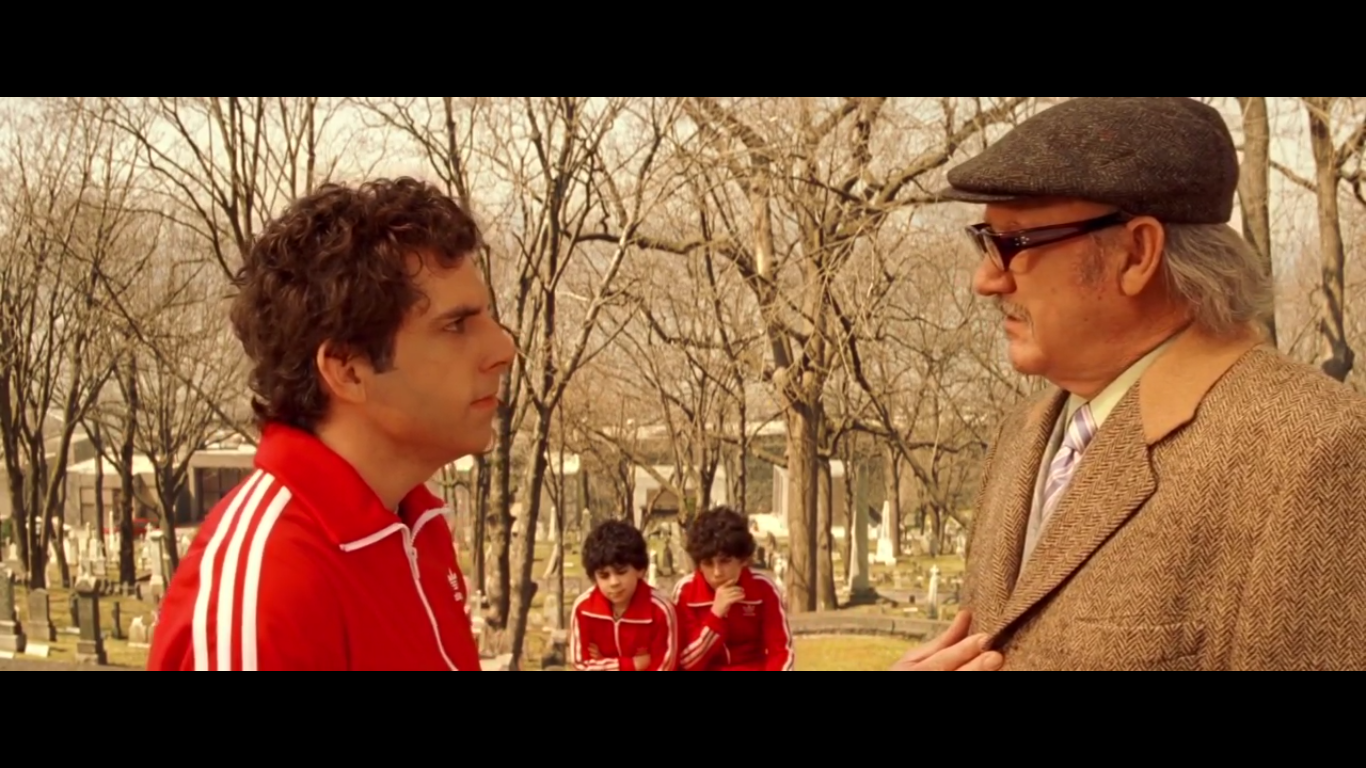
The Royal Tenenbaums (2001)

The Royal Tenenbaums maintains Anderson’s very literary style with narrative sensibilities that would crop up again in many of his movies including Moonrise Kingdom and Grand Budapest Hotel. It gives us a storybook reality firmly planted in the real world. Though he’s never seen onscreen, Alec Baldwin becomes an integral part of the story providing the voice of our narrator.

Gene Hackman is perfect for the role of Royal Tenenbaum, and it’s not surprising Anderson had him earmarked for the part. There’s an irascibility, even a callousness, to him that cannot totally quell his unquestionable charisma. By all accounts, Hackman was tough to deal with on set, but surely I’m not the only one who can think of countless movies where the actor was blustering or difficult; still, I could not stop watching him. It feels the same here. Because there is something genuine about his abrasiveness and his lying; we know people to be this way.

By now we are spoiled (or Anderson is spoiled) by amazing casts every time he makes a movie. However, this is the first time where it feels like he has assembled something special, from start to finish, and it really does feel like a cinematic family put together.

Although they spend most of their time in front of us as adults, the Tenenbaum children have core wounds and facades that prove easily identifiable. Anderson utilizes the voiceover as well as insert shots to reveal character early on. Most of their savant-like triumphs of childhood have given way to the mediocrity of adulthood. 

Richie (Luke Wilson) is still licking his wounds after a failed tennis career and looking to sort out complicated romantic feelings as he traipses around doing his best brown-haired Bjorn Borg impersonation. Margot’s (Gwyneth Paltrow) dark eyeliner and secret smoking habit feel like outcroppings of her own personal angst. She’s now married to a much older man (Bill Murray), one of many romantic partners in her fairly short life as a playwright of minor acclaim. 

Ben Stiller gives what initially feels like an uncharacteristic performance simply for the fact it’s not very charitable. He’s dealing with the death of his wife, the raising of two young sons, and bitterness toward a father who was always absent. Anjelica Huston and Danny Glover seem the most contented. She is the matriarch of the Tenenbaum household and he is her faithful accountant though they must both deal with the old bear, Royal himself after Henry proposes marriage.  It’s not an easy road to navigate for anyone. 

To say Anderson has watched The Gathering and constructed his plot is too dismissive. It’s true it follows this similar arc — a father reconciling with his children over his terminal cancer — but what’s important is how he’s able to express it in his own cinematic terms. Because it blends the sprawling family drama of something like The Magnificent Ambersons (1942) with the haunting depression of The Fire Within (1963) alongside countless other references. Still, there’s a specificity to his style and vision allowing it to grow and false start until it’s something else entirely.

There’s also always a matter-of-fact idiosyncrasy to his characters and, therefore, his plot developments. It’s what makes them interesting, mining these bits and pieces that at one time seem like one-note, throwaway gags and exposition, and yet they color his characters so distinctly.

There are BBs lodged in hands, lost fingers, people get shivved on the street corner, and we meet pet mice and a falcon named Mordecai. Even some characters like Eli Cash (Owen Wilson), Pagoda (Kumar Pallada), and Dudley (Stephen Lea Sheppard) feel like sidebars and afterthoughts who still manage to add something palpably absurd to the ensemble.

Although Anderson could not get the rights to some Beatles tunes, it would be remiss not to mention some of the impressive needle drops throughout from Charlie Brown and Nico to The Stones and Van Morrison. He uses the raucous fun of Paul Simon’s “Me and Julio Down by the Schoolyard” to encapsulate Hackman’s finest set of interactions with his grandsons. He lets them run wild, goof off, and really experience life like little boys are meant to.

However, the one choice that will remain the most impactful comes when Margot steps off The Green Line Bus to the sounds of “These Days.” It’s like a moment captured for us as Ritchie watches her come towards him, her hair perfectly fluttering in the breeze. Time all but stands still, and then we realize his feelings. He’s in love with her. It was an instant revelation for me. Because we see her through his eyes. 

There’s this immediate dissonance playing out in the background. She’s his adopted sister, right? This isn’t what’s normally supposed to happen between siblings, but that doesn’t stop his feelings from being genuine. It says so much in a single moment about both of them. We don’t need more. This one interaction informs the entire film going forward. 

For the rest of the movie, they must toil with these confusing pangs of love complicated by Margot’s uninhibited past and one of the most gutting suicide attempts ever captured on film. Despite this turmoil and even as Royal is outed and then castigated as a fraud, we are shown some form of restoration. It’s in the face of recurring and in some cases pent-up trauma leftover from an entire life thus far.

I won’t say everything is resolved. That wouldn’t be true. Royal is broke and becomes a doorman at a nearby hotel; there’s a car crash, and later a funeral. But there’s also a wedding and the family feels tighter and more together than they have been in years past. It’s not perfection and yet they have a newfound stasis, and since this is like a storybook, it only makes sense. We require an ending befitting the Tenenbaums. Thankfully we get it.

4/5 Stars

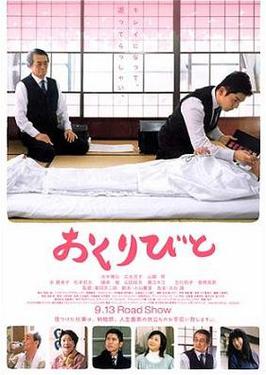
Departures (2008): Agents for The Dead

Okuribito_(2008)One could choose any number of labels to attempt categorizing Departures. It’s a film indebted to the rapturous compositions of the past. It shares elements akin to any police procedural ever made or for that matter, the veterinary antics from a British gem like All Creatures Great and Small.
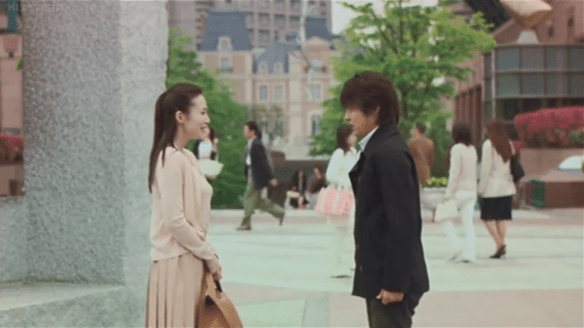
They are admittedly disparate reference points, but they seem fitting given Departures subject matter. No, not a travel agency as our main character Daigo Kobayashi (Masahiro Motoki) supposes.

The job title of NK Agent, picked out of the local ad section, relates to something entirely different. They take care of the dear departed — that is — they work with dead bodies.  There’s the aloof veteran trained in all facets of the trade and the young newcomer aching to prove himself.

Each case brings with it, its own unique complications. It’s not a common art nor one that is held in much regard. But as the film explores over time, it plays a crucial role in a society that must grapple with death and bid adieu to loved ones like everyone else.

In his former life, Kobayashi had a position of repute. The Greeks might have liked him. He didn’t denigrate himself with toil and sweat as much as the common man. He was an artist; a cellist to be exact, and he brings joy to the masses and swelling pride to his devoted wife Mika (Ryōko Hirosue). The only problem is no one is showing up to their concerts and so the orchestra is unceremoniously dissolved.

In keeping with spousal protocol, Mika stays supportive and suggests they move to his old family home in the country where they might live for free as he figures his affairs out. But as one who is even only minorly familiar with Japanese culture, there is an inkling something else dwells hidden from view — just waiting to reveal itself.

Daigo answers a job description on a whim and finds himself greeted by the quizzical secretary (Kimiko Yo) and a boss (Tsutomu Yamazaki) who has an unorthodox manner of doing business, especially in such a highly methodical, procedure-heavy culture like Japan.

Needless to say, the new hopeful sits down for about two seconds and comes home with the job and his first bonus. It’s a hilarious initial interaction setting their relationship in stark relief. We like his workplace for how very unique it is. Because these people feel like they might easily be punchlines and nothing more, and yet we grow to appreciate them even as Kobayashi remains our protagonist.

This is what Departures is able to manage. It’s drama but never squeamish about utilizing comedy. Take, for instance, the moment he’s called on to play a cadaver in his senpai’s sponsor spot or when he throws up in the presence of a particularly grizzly undertaking. In the aftermath, some schoolgirls comment on the rancid smell on the bus leading him to take an expedient trip to the local bathhouse to clean up.

But in contrast, Departures is full of all kinds of emotion and soft strings of pathos, whether hyper-realized or not. In between the lines are complications and relationships wrought with both warmth and the tension of lives shaped by regret. The best moments are unspoken, reflected by totems or actions. The handling of a weathered stone, the heart-rending notes of a cello, and certainly the ceremonial burying of bodies.

Even the moment where Daigo must fess up and tell his wife what he’s really been up to, it tears her apart; she’s so very ashamed that he would take part in something so defiling. It bores into the heart of this narrative.

Because to its very essence, the movie not only puts words to a very archaic Japanese art no one wants to acknowledge, it also supplies a space in which to grapple with death and how we grieve — how we let our loved ones go into the great beyond.

Since the dawn of man, it has been a prevalent theme throughout the ballads and religious convictions of mankind, whatever the background. Even a basic deist like Ben Franklin noted that the only things we may count on are “death and taxes.”

Egyptians were embalmed for a future afterlife with relics now found in the British Museum for us all to fawn over. Norse heroes dreamed of Vahala, a place to glory over their valorous feats with their countrymen.

Christians believe in not simply an afterlife but a new heaven and new earth where this current world, with all its flaws, will pass away. On a cursory level, varying strains of Buddhism and Hinduism often delve into issues of rebirth in further pursuit of nirvana or enlightenment.

For Japan, in particular, death is so closely tied to family. Rather like Latin culture, there is this extension of the family unit reaching out into the great unknown where saying goodbye and keeping constant communications with dead ancestors is a part of culture, albeit a dying art.

Taking stock of these themes, it makes sense many have decried the film for its sentimentalities. Yes, there are touches of the saccharine, but what resonated with me most was something else. When it counted most, Departures managed to be a delicate drama in a manner suited to Japanese society where quiet strength is prized and benign tranquility highly sought.

And if you guess the plot points — not an altogether difficult task — it means very little to me. Because for many meaningful movies, these narrative elements are only employed to hang your hat on. What really matters are the characters, the emotions they exude, and whether or not they can reach out to the audience and induce a reaction.

Departures was such a film for me. One of the miracles of life is finding some semblance of humor in the darkest, saddest parts. Death is undoubtedly one of these. However, it begins with coming to peace with the future. Knowing that we were made for something more than this world of ours. We are not destined to be creatures of death, but creatures of life. Of course, that’s only one man’s opinion. We all deal with departures differently.

4/5 Stars

Densha Otoko (2005)

densha otoko.png

In English, it means Train Man and it finds its origins in a media franchise that now includes Manga, a book, a television show, and of course this movie. But the events of the story are purportedly based on real life when a young otaku (Japanese tech nerd) in Akihabara came to the defense of a woman on a train who was being accosted by a drunken businessman.

This isolated, geeky 22-year old male was her knight in shining armor and probably had never talked to a girl before in his life. Every syllable comes out of his mouth jumbled, rushed, and breathless. If they were American we would say that she’s out of his league — the head cheerleader or what have you.

But the film is blessed because it is set in Japan. Densha Otoko proves to be part dorky rom-com while also giving us a view into a unique subculture. While it deals in stereotypes somewhat, we see his constant communications taking place over online chat and although it’s dated by today’s standards the Akihabara vibe is unquestionable as is the integration of technology into modern day romance.

At the time we were on the cusp of where we’re at now and you see the signs of it. Flip phones and laptops on the train. People at their computers at work and home. Such luxuries have become increasingly more invasive and some might say they have come at the detriment of human relationship.

What this film does well is to consider both rather implicitly with online friends on one side acting as his constant peanut gallery offering conflicting pieces of advice, constant pep talks, and further considerations as they all analyze his prospects as a body.

Then, of course, we have this demure woman he stood up for on the train. She might be the Japanese iteration of a manic pixie dreamgirl — granted I’m not sure what that means exactly — no matter she’s considerate and sweet. Their interactions continue with a present sent as a Thank You, then a dinner where they split the bill, and several other affable encounters.

The film’s aesthetic might be off-putting to some as it reflects a world constantly interfacing with their screens. Further suggesting the interweb of relationships that are created where people only know each other online, denoted by a continuously split screen and yet their lives spill outside of that and we get a small taste of not just Densha Otoko but all of his fan club. These characters too could have used more definition but they serve their purpose.

Train Man pushes onward and enters territory that none of them could have ever dreamed of. And he does it by being as nervous and frantic and considerate as ever. He gets a haircut (thank goodness), buys some new duds, and tries a few other techniques. Researching dinner conversations and testing the food beforehand. It’s actually quite sweet if he weren’t so uncomfortable to watch. But then again, who am I to judge?

Still, what matters is the time they spend together. It’s pleasant and kind not interrupted by awkward kisses or embarrassing hijinks with best friends. It just the two of them and he tries to discern how to move forward with this girl on that ever perilous tightrope of male-female relationships. They’ll at least have men befuddled for eternity. I can’t speak for the ladies.

That’s not to say there aren’t throw away moments or wacky and slightly peculiar ones that we probably could have done without. I won’t bother listing them because most importantly the film remains in our good graces for what it’s mainly set out to do. Allowing a socially awkward underdog a chance to shine. Through all his tripping and falling, sniveling and awkwardness, he gets some amount of satisfaction.

Consolidate it down to its best themes and scenes and you have a rewarding picture of just that. Because after all, it’s fairly easy to forgive a heartfelt movie like this for its gaffs since even in those very things it’s staying true to its core hero: Densha Otoko.

Likewise, I’m going to stick by my guns and enjoy this film perhaps more than I should have and yet in its innocence and jubilation, I found something that is so often lacking in American films trying to work within the same genre. Tighter editing would have been a major benefit but I’ll always hold that sincerity covers a multitude of faults. Call me an old softie if you will but maybe it’s the fact that I’m probably an otaku at heart. Whether he gets the girl or not, he has my sympathy.

3.5/5 Stars

Review: Lost in Translation (2003)

lost in translation 1.png

30 minutes into Lost in Translation our two traveling misanthropes finally meet in the hotel lobby at the bar sharing a friendly exchange. They are two people who share one striking similarity — they are Americans in a foreign land — and they’re looking for a friend.

It’s a very pertinent film for places I’ve gone as an American who has traveled to Japan of my own volition but still as a bit of an outsider. Not because I am rejected or an outcast but for the very fact that there are obvious cultural and linguistic barriers in my way. I resonate with this film not so much because it takes on the point of view of the Japanese and empathizes with them but on the contrary, it focuses on those on the outside looking in. Like Bob & Charlotte and you and me in our manifold cultural illiteracies.

Bob is a big shot movie star. Probably not unlike Bill Murray. Big in the 70s and 80s but now his popularity is slowly waning as the years begin to catch up with him and he’s demoted to cameos. In fact, maybe Murray has fared better. Bob’s in Tokyo promoting Suntory Whiskey in their latest ad campaign. It’s good money but certainly not what he wants to be doing with his career.

He’s Suntory Time’s latest spokesperson. It’s the epitome of culture becoming completely muddled along language lines. My Japanese admittedly leaves much to be desired, but the Japanese director’s stage directions are full of passionate vision of what this scene will be, a shot out of Casablanca, full of emotion and heartache. The translation Bob gets is simply “He wants you to turn and look to the camera.” He feels like he’s missing something. Just as each reference that’s tossed haphazardly his way is never fully understood.

The Rat Pack, Bogart, Sinatra, Roger Moore, even Johnny Carson. Each of these names comes with so much more. But the context has been ripped away from them and appropriated and transplanted to different settings. It’s nothing to be up in arms about it’s simply the reality of our internationalized culture and it’s utterly befuddling to Bob. He can’t navigate it at all.

Charlotte (Scarlett Johannson) is a recently married philosophy graduate who looks hardly a day over 20. Friends back home seem too preoccupied to listen as she calls them up over the phone. Meanwhile, her dweeby husband with a particularly whiny voice (sorry Giovani Ribisi) is consumed with his own career as a photographer and distracted by old acquaintances ( namely Anna Faris). He says he loves his wife but he certainly doesn’t spend much time with Charlotte. Her loneliness shows. She’s even hit the bottom of the barrel listening to CDs to discover the purpose of her soul.

Bill Murray’s characteristic deadpan cheekiness feels entirely at odds with the culture that he is thrown into where you’re forced to cook your own food (Shabu Shabu) and he dwarfs the national average in terms of height. Bob is the prototypical American movie star making his press junket of Tokyo but at the same time, he’s also oblivious that he forgot his son’s birthday again until he receives a reminder.

In fact, Murray never feels like he could be anyone’s best friend because he’d either be a flake or he’d never open up to you because he’s too busy making jokes in lieu of actual conversation. Still, maybe there’s a grain of hope.

Bob and Charlotte are totally adrift in the city. Lost in the sea of Tokyo and it’s really no fault of the city despite its astronomical population and unfamiliar customs. It only serves to magnify the real problem — a small-scale parallel to what is going on in their lives. Their problem doesn’t start with Tokyo. It starts with the person who looks back at them in the mirror. Though they come from two very different stations of life, their current state of affairs is all but analogous. Bob and Charlotte are in the midst of personal crises — the biggest ones imaginable — what’s life really about?

That’s why when they break out in conversation it means something. Of course, he leads with an extended joke, “I‘m trying to organize a prison break. I’m looking for, like, an accomplice. We have to first get out of this bar, then the hotel, then the city, and then the country. Are you in or you out?”

Their meeting in the hotel lobby is a lifeline that they both willingly grab hold of and it leads them out into the world around them. They frequent the video game parlors, traverse Shibuya crosswalks, perform in late night Karaoke joints, and sit up talking with Japanese surfers as Tokyo’s bright lights illuminate the night air. Coppola even drops a nod to her significant other with Phoenix’s “Too Young” exemplifying the vibe around town.

The film hints at infidelity at times and Bob’s marriage is a flimsy one at best but the beauty of his relationship with Charlotte is that first and foremost it is a friendship and by the time they must part ways it’s heartbreaking. They’ve grown so close. But a hug can be as meaningful as any sexual relationship might have been. They genuinely care about each other. It turns out Bill Murray can be a good friend and one with wisdom and grace no less.

In its fleeting moments, Lost in Translation, captures just how horrible goodbyes can be. There’s so much you want to be able to say and nothing you can begin to say. In fact, Bob cannot leave it there and so he goes after her, tracks her down, and shares one final embrace and one last word. Both of them go their separate ways but there’s no doubt that Bob and Charlotte have grown and helped each other to a better place. It’s still a work in progress but that’s part of what life is about right? Living and growing alongside other people.

We can scour YouTube to come up with the latest and greatest, definitive enhanced audio video to tell us exactly what Bob leaves her with, although each one undoubtedly claims something different, or we can bask in that ambiguity which while so maddening in some way feels satisfying for the very same reason. Floating through Tokyo has never been so wistfully affecting.

4.5/5 Stars

lost in translation 1.png

My Sassy Girl (2001)

my sassy girl 1.png

We meet a college-aged Korean guy (Cha Tae-hyun) as he relates his first encounter with the girl (Jun ji-hyun) who would ultimately become his girlfriend. In the throes of a drunken stupor, she flails perilously near the railway as an incoming train comes on so he steps in to pull her back to safety. They board minutes later — he’s still watching her warily — only for her to puke all over a commuter.

Assuming he is the boyfriend, Gyeon-woo is chastized to do something about his girlfriend and so reluctantly he takes her still intoxicated by piggyback to the nearest hotel. This whole complicated scenario happens to him twice and it lands him in jail.  It doesn’t sound like the pitch-perfect moment to start off a romance but then again My Sassy Girl never has perfect pitch and that’s where it succeeds.

The film opens with these exaggerated comically cringe-worthy interactions and yet it settles into something far more fulfilling than its attention-grabbing gross-out antics. While Gyeon-woo gets all but pulled into the scenario you realize that there was a single decision. He cared enough to intervene on this girl’s behalf. Maybe he regretted it but it’s doubtful.

What was his life beforehand? Fairly inane and nondescript. He hangs out with his buddies as they grunt about inconsequential things. His face is prone to glazed over expressions. He’s constantly whining to his mother over the phone after forgetting to visit his Aunt — the Aunt who always pinches his cheeks and tries to set him up with an eligible girl. When he’s not getting swatted at by his mother at home, his father gives him a going over for not getting better grades. He’s a rudderless young man with no true conviction or sense of purpose. He’s in need of some kind of shakeup.

my sassy girl 3.png

The Girl (who is never given a name) is actually the one who dictates the sheer unpredictability and consequently, the hilarity of the picture. Jun Ji-hyun pulls off a remarkable part that brims with a feistiness, playful whimsy, and utter solemnity as it cycles between scenes. She smacks him around and bosses him to do this and that based on a momentary fancy. Also, her facial expressions are on point.There’s so much sassafras as we used to say in high school. She willingly calls out people for their behavior in public places as well as their wardrobe choices. The filter is all but lacking. She’s a creature of caprice.

Anything that Geon-woo does to her disapproval prompts her threatening catchphrase, “Wanna Die?” Partially as a veiled threat and partially as a rhetorical assertion. It works in many circumstances. Most importantly she has fun because that is her antidote to try and forget something — to get past some prior hurt — and to reclaim her life as her own.

Like the Japanese film Shall We Dance (1996), My Sassy Girl also garnered an American remake due to its popularity. But the remakes in both accounts cannot measure up to the originals for a very simple reason. These stories are meant for the cultures they came out of or at least they are given greater import in their respective countries of origin. The first film was about freedom of expression in a society that values a certain amount of conformity. My Sassy Girl highlights a character who all but goes against the norms of how people are supposed to act as she carries herself with a certain amount of unpredictable vigor.

There are some clunky seemingly superfluous scenes but our leads have a disarming even unorthodox chemistry about them that weathers it all. One scene, in particular, stops up the film’s middle where they sneak into the theme park on The Girl’s birthday only to be held hostage by an AWOL soldier. It’s ultimately another expression of romantic sentiment but it disrupts the hilarity for an extended period of time. Because those are the moments when the story is at its best.

The direction can also be a bit distracting as the camera swirls around and does this and that with POV shots inserted and lines of voiceover narration but we can attribute that merely to the film’s jarring intentions. They help personify this volatile, idiosyncratic character at its core.

The original slap bet is born on the Subway. Squash games inevitably wind up with the ball nailing Geon-woo in the face. He’s also inept at swordplay and he can’t swim. Meanwhile, she holds aspirations for writing screenplays and forces him to read her work. He notes there’s always a hero coming from the future infused with action-packed terminator or samurai vibes.

All of this movie’s finest moments of romantic hilarity can be summed up in the list of 10 points Gyeon-woo recites by heart relaying how to treat his girl:

  • First, don’t ask her to be feminine.
  • Second, don’t let her drink over three glasses, she’ll beat someone.
  • At a cafe, drink coffee instead of coke or juice.
  • If she hits you, act like it hurts. If it hurts, act like it doesn’t.
  • On your 100th day together, give her a rose during her class. She’ll like it a lot.
  • Make sure you learn fencing and squash.
  • Also, be prepared to go to prison sometimes.
  • If she says she’ll kill you, don’t take it lightly. You’ll feel better.
  • If her feet hurt, exchange shoes with her.
  • Finally, she likes to write. Encourage her.

The latter half dips more deeply into the well of sincerity and though it might seem difficult to buy this sentimental side of the characters, we’ll gladly make allowances because we’ve been through so much with them. It turns out The Sassy Girl has more to her as we always suspected.

In an excursion to one of her favorite spots that is shaded by a solitary tree, they bury a time capsule with letters written to each other. On her behest, they will come back in two years to read them but for now, she must go away and figure things out. It seems a dismal and confusing point of departure for Geon-woo and the audience. But he resigns himself to it and moves forward.

However, the film very much wants to drill into our heads that fate means building a bridge of chance for your love. It gives romance this edge of grand design where all things fall into place for those who are truly meant to be together. Fittingly, circumstance brings them back full circle. Surely, some will need to take this with a grain of salt but no matter, when it’s all said and done, there’s no question that My Sassy Girl is a satisfying rom-com moment after moment. The leads are just too memorable to pass up.

3.5/5 Stars