The Mark of Zorro (1940)

markofzorro1Madrid–when the Spanish Empire encompassed the globe and young blades were taught the fine and fashionable art of killing…

The mythology of Zorro most certainly starts with the swashbuckling silents of Douglas Fairbanks, but the character’s legacy would be carried forward into the 1940s. So much so that it even gave some inspiration to a young Bruce Wayne, along with numerous boys picking up comic books in his generation.

In all fairness, I don’t know a whole lot about director Rouben Mamoulian. I assumed his forte was costume dramas and stage production as he did do a lot on Broadway. And if that is true, The Mark of Zorro, while not seemingly the work of some creative mastermind, is invariably enjoyable. That is also to the credit of 1940s matinee idol and dashing leading man Tyrone Power. Although over his career and even in this film, he proves to be more than a handsome face. He seemed to hold his own up against Basil Rathbone when it came to swordplay and he danced between the superficial and heroic personas with relative ease. It brings to mind other such roles as Christopher Reeves in Superman (1978) for instance. That of course, brings up the need for an origin story.
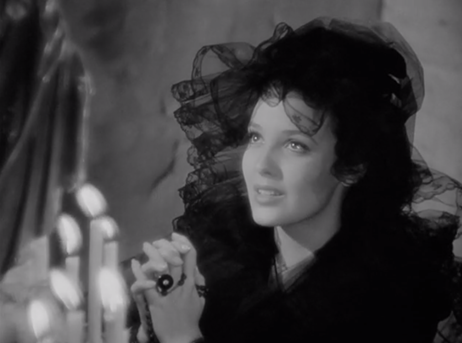
markofzorro2In many ways, it feels anachronistic that Don Diego Vega makes the long voyage from Spain to Los Angeles California, but then in the 1800s Spain still had some presence on the West Coast. It’s there were Vega gives up his sword, rendezvous with his father and mother, while slowly taking on a second life. Zorro certainly has a wonderful double life going. By day a stuffy, foppish playboy fascinated with magic tricks and given to fatigue. Then, by night he dons the black mask and saber as “the fox” wholly prepared to rob from the oppressors and bring hope to the common man. He’s the Robin Hood of the Spanish settlements marking his territory with his iconic “Z” and simultaneously getting a bounty stuck on his head.
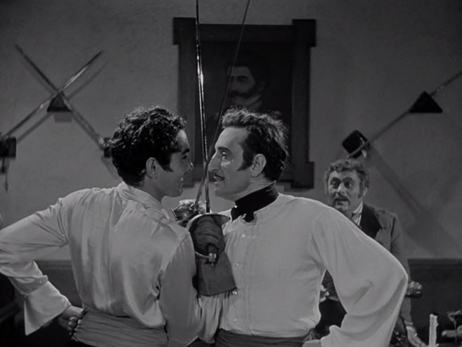
markofzorro3The corrupt tub of lard Luis Quintero pushed Vega’s father out of office with the help of his menacing right-hand man Captain Pasquale (Basil Rathbone). On the surface, Don Diego plays into the older man’s hand, while at night he fools everyone including the local priest (Eugene Palette) with his masquerade.

Perhaps most importantly of all Zorro is able to romance the young ingenue Lolita Quintero by eventually letting her in on his little secret and taking down her nefarious uncle. But of course, everything must come down to some epic swordplay and heroics. Zorro and Pasquale eventually face on in an office sword fight that made me absolutely giddy with excitement. As he leads the revolt against the powers that be there is an obvious energy pulsing through the storyline. This is a pure cinematic action-adventure that glories in the age of swashbucklers.

True, we have a pair of tragic stars in Tyrone Power and Linda Darnell. He died of a heart attack at the age of 44 and she died only a few years later at 41 years of age after a house fire. But, for the time being, they are young, vibrant, and full of life. Perfect protagonists in a film where love and justice reign supreme and heroes always conquer evil.

4/5 Stars

The Three Musketeers (1973)

threemusk6In the beginning, this Dumas adaptation was to be the next zany live-action vehicle for the Beatles following the success of A Hard Day’s Night and Help. In fact, they even were ready to work with the same director. Well, Richard Lester stayed and the Beatles were disbanded for several years before this film even got going. In this incarnation, it was set to be a three-hour star-studded epic. Instead, it was thought better of, and this became the first installment with a second film coming out a year later.

Thus, The Three Musketeers has impressive star power, but the direction of Lester also supplies action with a constant barrage of gags for good measure. To top it off the film actually does follow the general story arc of the novel, but invigorates it was bits and pieces of humor that lighten up the tone. So perhaps it’s a light and fluffy piece of entertainment, but it’s still easy to enjoy what Lester’s been able to do here. It’s a great deal of fun.

threemusk4Our audacious d’Artagnon is a strapping Michael York, who has picked up plenty of swashbuckling skills from his father. So he heads out on his own to seek out adventure and uphold his family honor. In a matter of minutes he already a succession of duels lined up, and of course who are they with? The Three Musketeers: Athos (Oliver Reed), Porthos (Frank Finlay), and Aramis (Richard Chamberlain). He sides with his new comrades against the corrupt Cardinal Richelieu (Charlton Heston), and attempt to help the Queen (Geraldine Chaplin) get out of a tight jam.

What follows is a rambunctious array of treachery, romance, and royalty that involves Anne’s lover the Duke of Buckingham, a sly chambermaid (Faye Dunaway), the King, and of course the Cardinal. Peace stands in the balance not to mention the Queen’s self-respect, and so d’Artagnon and the boys do the honorable thing and bail her out. I said before that this film has it’s fair share of sword fights which are fun in themselves, but the laughs really accent the story nicely.

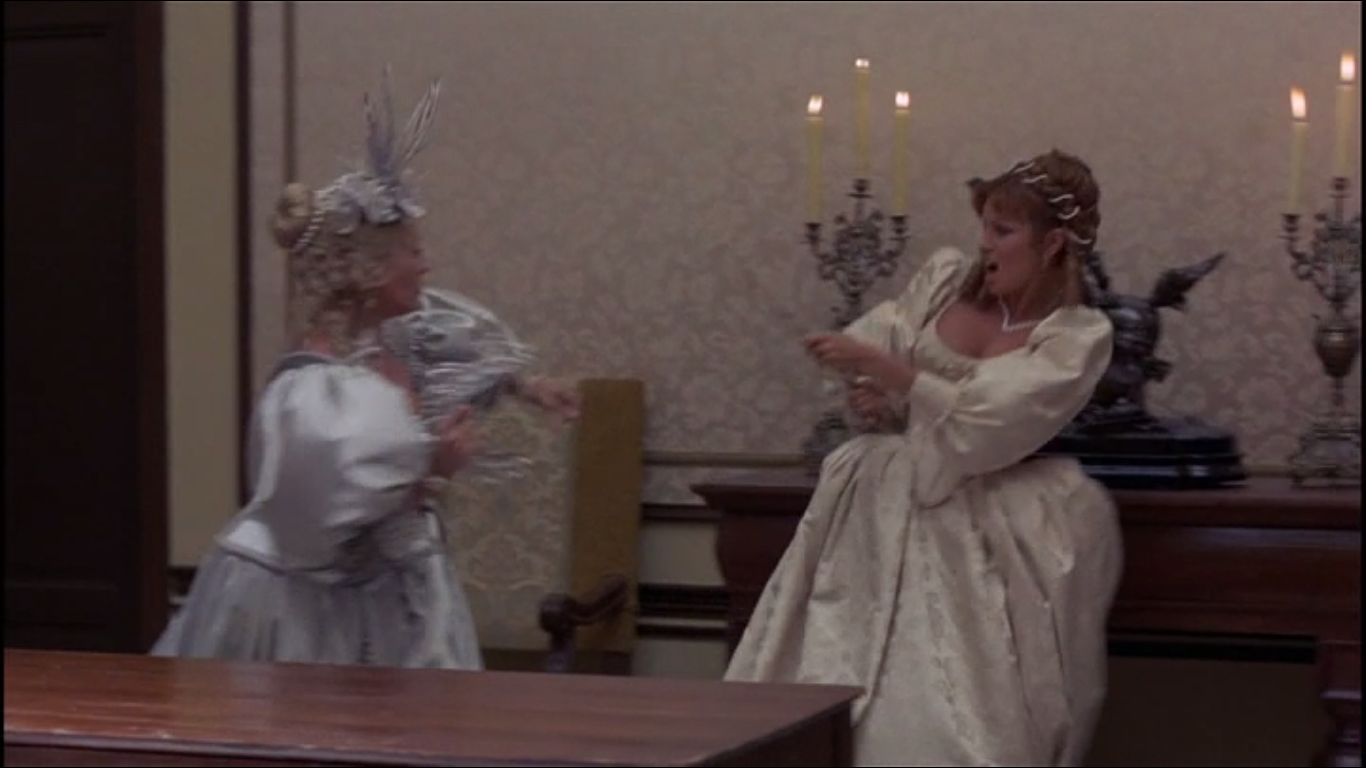
threemusk5The plot is there and we can appreciate the work of Alexandre Dumas, but it is not necessarily the focal point. Charlton Heston gives a seemingly uncharacteristic turn as Cardinal Richelieu, the corrupted man of the cloth, who cares more about politics and social unrest than he does about his faith. He’s no Moses or Ben-Hur for that matter. Furthermore, we are treated to a little tooth and nail type action courtesy of Raquel Welch and Faye Dunaway. It turns out to be yet another rewarding scene because these two ladies were two of the defining icons of the 1970s, and here we get to see them face off.

I’m already revving up for part two because I wouldn’t mind returning to these characters. There’s a lot of good old-fashioned fun to be had here.

3.5/5 Stars

Mad Max 2: The Road Warrior (1981)

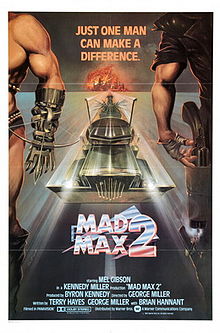
Mad_max_two_the_road_warriorNow that I’ve seen Road Warrior, the film that is the hallmark of the Mad Max trilogy, I have a little better understanding of how George Miller arrived at Fury Road. It was a brilliant, exhilarating, wild ride that fully grasped what makes an immersive action film. But to get there we have to look back. In Mad Max (1979) Miller and his crew were simply feeling around, testing the waters, and getting acclimated to their apocalyptic world. It’s interesting, but not fully realized.

With Road Warrior there is still more exploring of the Mad Max character (Mel Gibson), however, more crucially, we get the type of action that propels the franchise from being another run-of-the-mill action saga. Do you think it would carry any clout in the U.S. if there was not something dynamic about it? It stems from Max, who although a main character, seems content being in the background. He’s a man of few words, who only takes on the role of hero when necessary. He’s self-assured and confident when the need is there. Otherwise, he’s fine cruising around looking for gasoline through the wasteland with his faithful canine pal. That dog is great, by the way.

However, during one such excursion, he crosses paths with a clan trying to fend off a band of marauders. Max initially begins as a prisoner only to become an ally that the locals are wary of, because, after all, he’s not trying to be their friend. But nevertheless, after helping defend their Australian Alamo, he ultimately decides to take on the task of guiding their shipment of fuel to safety. In one of the most memorable chase sequences (a predecessor to Fury Road), Mad Max guides his load with settlers guarding the tanker while the biker gang follows from behind. Their leader Humungus offered up a ceasefire only in an attempt to double-cross, and he’s not looking to leave any survivors.

In the ensuing chaotic cross-country race, machinery gets totaled, lives get lost, and Mad Max takes a brutal beating. He gets help from the wolf child, who will end up growing up to be the leader of his people. Now he helps Max in the struggle to fend off Humungus and his psychotic crony Wez. As it turns out, it was all a ploy and the settlers continue their exodus with their precious fuel. But of course, Mad Max does not go with him and in the mind of the boy, he becomes a sort of mythos. He’s not to be fully known, only talked about and spoken of like Greek heroes of old, who have long become more fiction than fact. The eponymous character of Mad Max is deliciously enigmatic, and it certainly doesn’t hurt having a few wonderful set pieces that will make most action fans lick their lips with delight. It’s sure to taste better than a tin of dog food, and dog food was fine dining for Max.

4/5 Stars

Mad Max (1979)

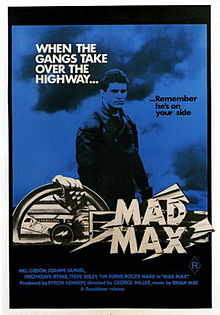
MadMazAusThis is where it all began and honestly, I knew so little about it. You have Mel Gibson and about everyone else is unknown to me. But that’s fun because they are a population that’s made up of clean slates. I have no expectations for them so they’re constantly engaging me and altering my expectations. Australia’s Outback is not quite apocalyptic yet, but we’re on the road there soon enough, with bleak roads and gasoline shortages. Likewise, Max Rackatansky has not quite taken his name to heart. He needs to go through hell first, and that’s where this film leads.

Max and his best bud Goose are Main Force Patrol officers who work for the highway patrol. They soon are chasing after the crazed gang member “Nightrider,” who is looking to outrun his pursuers in a stolen vehicle. But Max waits patiently for his prey and then strikes after his colleagues are knocked out. But despite the demise of “Nightrider,” his motorcycle gang lead by Toecutter continue to ravage the roads. They commit rape, partake in all kinds of destruction, and raise fear in anyone who gets in their way, because of their sheer unpredictability.

The fiery Goose becomes an easy target for their mayhem, and he’s left a sitting duck. Not even his good friend Max can save him and with his friend gone our hero seems content to get away with his family. He doesn’t want to deal with the madness so he picks up and leaves on a vacation. Max takes his beautiful wife Jesse and their little baby, but of course, the gang crosses path with him once more, and yet again there’s nothing he can do. He’s too late. Max has a choice now: either do nothing or go on a mad rampage of vengeance. He chooses the latter.

George Miller shows his audience these events without holding our hands, simply placing them in front of us and allowing us to observe as if this is in fact cold hard reality. Despite what we might think, there is nothing strange or out of the ordinary about it. This is the way society works and once you buy into the adventure, it’s easy to get enraptured in the action. Although there are jumps in narrative most definitely, it is made engaging by a dystopian world and characters who have so many odd ticks and mannerisms. Perhaps more importantly, stunts, car chases, and crashes never feel like pointless eye candy, but they are executed with precision and impact that is impressive. There’s nothing cheesy about it. This is all grit and a lot of road rage.

3.5/5 Stars

Captain America: Civil War (2016)

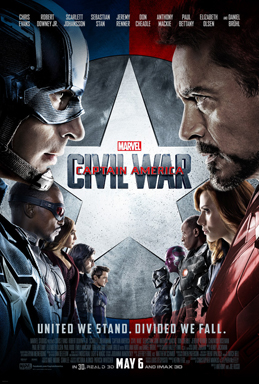
Captain_America_Civil_War_posterIn spite of being a jaded viewer at this point, the Russo Brothers (Arrested Development and Community) and the screenwriting duo of Christopher Markus and Stephen McFeely (The Narnia Franchise) proved still capable when it comes to keeping the Marvel Franchise afloat and, nay, helping it to flourish like few franchises ever have.  The pair of directing and writing duos who brought us Captain America: Winter Solider were able to add another link in the armor, and Marvel has remained stalwart. There are moments of misguided drama, times when the fight sequences become monotonous rather than momentous, but Marvel always does well to keep their funny bone intact.

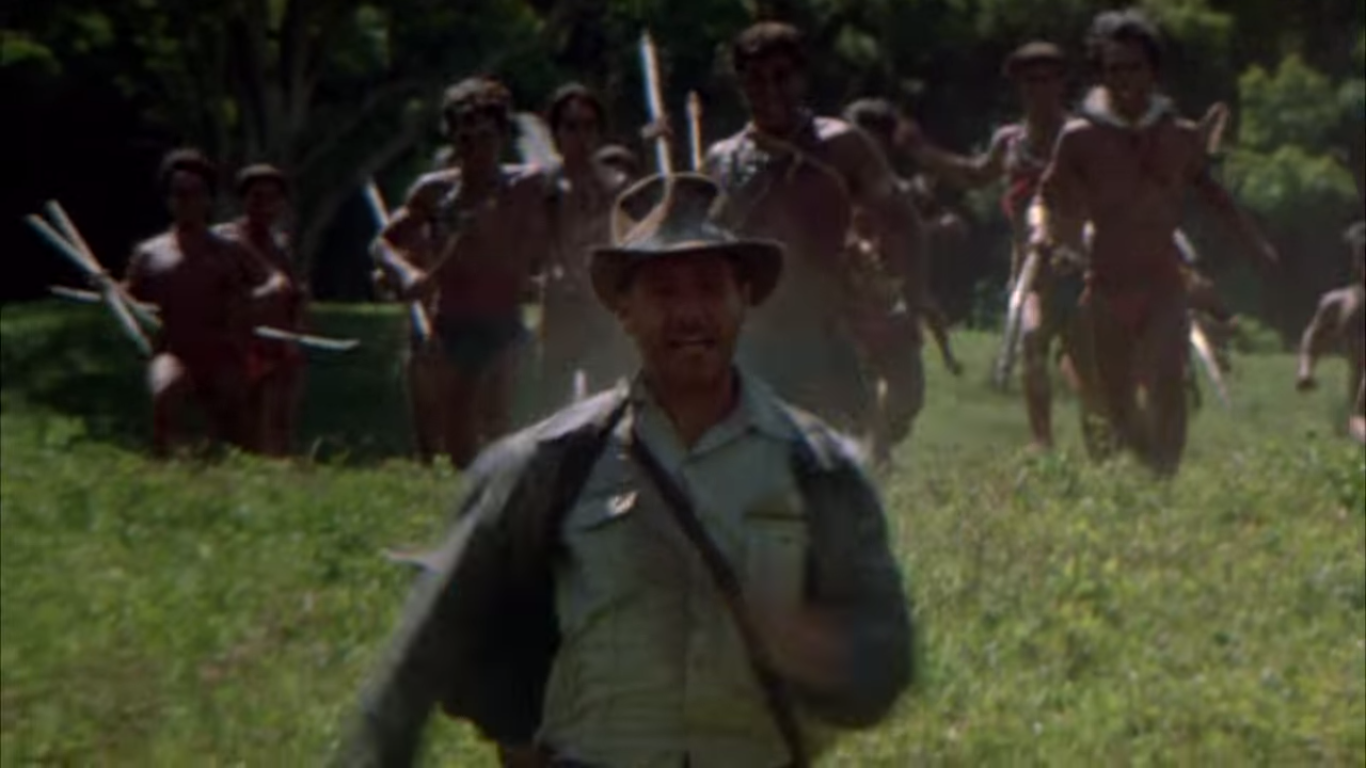
As with any superhero movie Civil War calls for a suspension of disbelief, but it also becomes a balancing act, because for any movie to truly resonate with a mass audience its characters must feel human in some way shape or form. Where their powers and superhuman abilities must be on display for all those awaiting a popcorn thriller, but still restrained enough to keep them relatable.

In this case, Captain America (Chris Evans) is swayed by the love of a friend he’s known for over 70 years. Bucky Barnes is once more in the middle of a manhunt, and yet Cap has faith in his old friend. But it’s exactly that kind of loyalty that lands him on the wrong side of the law. Meanwhile, our other force of nature Tony Stark (Robert Downey Jr.) rehashes the tragic death of his parents and tough times with Pepper Potts leave him conflicted. He’s ready to concede to the United Nation’s demands to put the Avengers in check and that’s where he breaks with his former ally. When the two undisputed leaders of the Avengers become polarized that forms the dividing line between factions and the whole film becomes fascinating as the sides are slowly drawn up. As an audience, we are forced to make a choice. It’s either the true blue Steve Rogers or the wonderfully snarky Tony Stark or perhaps we watch as an impartial observer. But, nevertheless, a mental decision must be made.

And it’s not only a balancing act of super versus human qualities, but the sheer size and scope of the cast could easily be a hindrance. Equality of screen time or at least moments in the spotlight for everyone are key, and the film generally does that capably enough. Marvel revels in the callbacks and Civil War is no different. In this installment alone we have the pleasure of seeing numerous returning players sans Hulk. In fact, the most entertaining fight sequence involves everyone duking it out, and the fact that it feels almost like play fighting rather than full-fledged combat is of little consequence.

But the new additions are also noteworthy including the likes of  Black Panther (Chadwick Boseman) and yet another Spiderman. Credit due to Tom Holland for in some ways making Peter Parker into an invariably entertaining persona, who feels different than his predecessors. There are a few others in smaller roles of note including the likes of William Hurt, Martin Freeman, and even Jim Rash.

By this point, we have long grown tired of villains rising up from outer space harnessing some unfathomable amount of power. The antagonists that are truly compelling are those who are closer to home, more realistic, and sometimes even within our own ranks. Built into this film’s title is that type of conflict, between former friends, between people who used to be close or would be on the same side given any other circumstances. But Civil War ups the ante not by getting bigger and grander necessarily. It’s the fact that it gets more personal that makes it work surprisingly well.

Daniel Bruhl is a delightful actor, and he does well to play what some might call a villain and others might simply label a pained, vengeful man. That’s oftentimes far more interesting.

It’s overstuffed with players, many who are admittedly wonderful acting talents. Its editing and cinematography is at times overly frenetic and mind-numbing. While Civil War is the expected superhero extravaganza, there are dour, more mature interludes that are difficult not to appreciate. If Marvel has not completely kept me enraptured, due to so many subsequent films, they still have me coming back and if I’m any indication, there will be many far more ardent fans than me who will truly enjoy what this film has to offer.

4/5 Stars

Raiders of the Lost Ark (1981)

raidersof1I’m not one to rewatch movies too often — it’s simply not in my nature and I am still relatively young in my film affinity. That means there are still so many great titles to see and discover. But Raiders is one of the special films that I would gladly make room for every year at a couple times. Most of it has probably been said before, but to put it simply Spielberg’s collaboration with George Lucas is one of the greatest adventures put to film pure and simple. It takes inspiration from old action serials and there is something inherently classic about Indiana Jones and the world he inhabits. It is 1936, after all, and the perfect evil force in the Nazis is on the rise.

Raiders begins with an opening gambit that could standalone by itself with its introduction of Indy (Harrison Ford) as he tries to recover an ancient artifact. He dodges traps and outruns a boulder only to be thwarted by his old nemesis Belloq (Paul Freeman). That’s followed by one of the great cinematic panoramas as he makes a mad dance to his getaway plane where Jacques and his friendly pet snake Reggie are waiting. We don’t need much explanation because it just works.

raiderof2From then on we get a little more about Dr. Jones’s background as a professor in archaeology who is enlisted by two government men to impede the Nazis. Their goal is to recover the Ark of the Covenant because its supposed power would make their military might unstoppable. But most of us undoubtedly know that. Indy ends up tracking down the daughter of an old mentor who also happens to be his former flame, Marion Ravenwood (Karen Allen). They’ve got something still burning because although it is extremely volatile, you can see they still secretly care for each other. After they are paid a visit by the Nazis, Sallah (John Rhys-Davies) acts as their host and loyal guide in Cairo. That doesn’t stop Marion from getting kidnapped or Indy almost getting killed more than once. One of these times involved an iconic duel between a sword and a revolver (certainly not a fair fight).

raidersof3In fact, Raiders is made up of many of these memorable sequences that add up to something greater than their parts. It’s a full story surely, but it is built up from these varying vignettes. Indy gets thrown into a pit of snakes with Marion by his side. He nearly gets his head taken off by a chopper blade (you should have seen the other guy), and finally, he begins a high-speed chase for the ark on the back of a noble white steed. It gives him time to pull a few stunts on a truck as he whittles down the opposition single-handedly. The audience even gets an obligatory Wilhelm Scream once or twice.

What it all comes down to is tracking the Nazis to their island lair where they hope to test the great powers of the Ark. I’m not sure how biblical it all is, but it seems more like a Pandora’s box because far more trouble than good comes out of it when opened. But in his infinite wisdom Indy and Marion don’t do anything except keep their eyes shut. They’re tied up after all. And that’s how the raiders were stopped and Indy completed his treasure hunt. The Ark is in the hands of the government and they file it away with numerous other very important and highly secret artifacts. The perfect ending to a film that has humor, melodrama, supernatural power, and a good old-fashioned tale of good vs. evil.

It’s crazy to think that Tom Sellick was almost Indy if it were not for his commitment to  Magnum P.I. Because Harrison Ford, despite his many iconic roles, will forever be Indiana Jones, thanks to that hat, that whip, and that revolver. He’s an awesome adventurer-professor type. You don’t see that every day.

5/5 Stars

The Revenant (2015)

The_Revenant_2015_film_poster (1)By definition, a revenant is someone who returns, but there is often a connotation that they are returning from the dead like a specter. The term gives major insight into Alejandro González Iñárritu’s latest undertaking with Leonardo DiCaprio. It’s a fully immersive, grimy, gory, grisly, grizzly-filled piece of cinema caked in blood, sweat, and tears in every sense of the word.

Its production took the cast and crew to Canada and Argentina to shoot sequences that were probably just as desolate in person as they looked onscreen. In that way, Iñárritu did not fudge or cheat with the use of excessive computer-generated imagery. Even if his production was overlong and undoubtedly volatile, you could say he was rewarded with vast expanses of engulfing cinematic visuals. Emmanuelle Lubezki yet again probably becomes one of the film’s biggest assets and his use of natural lighting is superb. In truth, it’s a painful exhibition in acting by DiCaprio and this icy frostbitten wilderness becomes the backdrop for a gargantuan feat of survival.

What would inspire such a film? I think many people were asking that, and it does find some of its story from the true circumstances of Hugh Glass, a 19th-century explorer, trapper, and guide who was part of a fur trapping expedition out west. After enduring an onslaught from a group of belligerent Pawnee, Glass can hardly recover from a bear mauling that essentially leaves him a lifeless carcass of a man.

His scared and scattered band is just hoping to get to their outpost to regroup, but their leader (Domhnall Gleeson capping off a phenomenal year) is intent on holding onto Glass because he’s the only one who knows the way back. His main insubordinate is the grubby, paranoid, scumbag John Fitzgerald, played so invariably corrupt by Tom Hardy. Glasses Pawnee-born son, the young trapper Bridger (Will Poulter) and a reluctant Fitzgerald agree to stay behind with the feeble man, while the others push forward. But being the backstabber that he is, Fitzgerald looks to bury Glass alive or finish him off for good with his musket. It doesn’t make much difference to him, but Hawk doesn’t want to see his father dead. Fitzgerald could care less. After all, what is he supposed to do? Keep this man alive only so he might die too?

Bridger naively follows Fitzgerald’s lead and they leave Glass behind for dead. There is no man who could survive, half-frozen, half-dead and still find a way to live another day. That’s where the story goes into stage two of survival.

The images that follow are ceaselessly gripping with majestic landscapes that are raw and brutal in the same breath. DiCaprio forges through streams, makes fires by some miracle, and keeps warm any way humanly possible. To don such a role you almost have to give up any human sensibilities and allow yourself to simply exist. He crawls and claws painfully, eats raw meat torn from a dead bison carcass, and sleeps inside the hide of his dead horse. It should repulse us in our modern lifestyles of comfort and excess, but in the same sense, it is a fascinating portrait of realism taken to the extreme.

The final chapter follows Glass as he returns to the fort, gets in contact with Captain Henry, only to chase after the fleeing Fitzgerald one last time. When he caught news of the ghost man’s return from the dead he knew the implications. Dead men tell no tales, but it’s a different story if they don’t die.

Unfortunately, The Revenant is rather laborious in the end and it’s a fatalistic revenge tale certainly but it’s not altogether satisfying. True, the perpetrator of evil is brought to justice, but that doesn’t mean a great deal. Perhaps because we admire Glasses gumption, but we never really build a connection with him. He truly is a solitary figure looking to avenge the death of his boy. There’s not more to grab hold of with this dynamic, maybe due to the fact that he is really a ghost. He’s so gaunt, battered, and spent that there is little space for emotions to fill all the nooks and crannies. Only a constant, pulsing desire for vengeance.

Still, we can always go back and be contented in Lubezki’s gorgeously stark visuals. The frontier look of this film brought to mind Malick’s film (also with Lubezki) The New World for a brief instant, and it makes me want to give it another look. Otherwise, The Revenant stands as an impressive feat, but it does not quite have the emotional wallop that it had the potential to wield. Although, the performances are thoroughly impressive, even if it’s more for their singular commitment than anything else.

4/5 Stars

Star Wars: The Force Awakens (2015)

Star_Wars_The_Force_Awakens_Theatrical_PosterAnyone who is at least a little bit familiar with ring theory knows that the Star Wars saga has often folded back on itself, with near-mirror images, similar plot devices, and obvious parallelism. It gives any fan a new found appreciation for the films, and with that mentality, The Force Awakens can be thoroughly appreciated.
Without a doubt, it is positively exploding with entertainment value, up and coming talent, as well as the old friends that we were looking to catch up with after 30 long years. However, this is not simply another installment, reimagining, or remaking of Star Wars (although Abrams does succeed in rebooting the franchise). This chapter is yet another refrain in the epic intergalactic ballad that is Star Wars. As such, it points to the future and recalls the past much like many ancient texts, fairy tales, and pieces of mythology.

In this film, we do see many things that hearken back to the earlier films, which makes sense due to the return of screenwriter Lawrence Kasdan as well as legendary characters like Han, Chewie, and Leia (now known as General Organa).

The Force Awakens also introduces a lowly scavenger girl (Daisy Ridley), who is reminiscent of Luke Skywalker in her hero’s journey. A new evil has risen up in the form of The First Order, and the Rebellion has been replaced by the more progressive Resistance. They still have many of the same problems, however, like defying a menacing dark lord who is very strong in the force. There is also a giant battle station dubiously named “Starkiller” which dwarfs any previous Death Star. Young Rey must sneak around the colossal fortress much like her predecessors, and a meager fleet led by crack pilot Poe Dameron looks to find the one weakness to bring the menacing giant to its knees. We’ve seen variations of it all before, but whereas remakes get old all too quickly, our contemporary culture revels in the remix. That’s part of the magic behind what J.J. Abrams has done.

He’s left the framework: We have our obligatory opening introduction, there are the glorious orchestrations of living legend John Williams and numerous other familiar touchstones. In fact, it’s frighteningly familiar. We see the rubble of star destroyers and AT-ATs. Stormtroopers have a facelift, the Millennium Falcon is still kicking, and some of the planets strikingly resemble the likes of Tatooine, Yavin IV, and Hoth. A lightsaber in the snow brings back images of a Wampa’s cave from The Empire Strikes Back. Nightmarish hallucinations feel reminiscent to the caves of Dagobah, and plucky little BB-8’s secret map makes us think of all those years ago when R2 first took that message from Princess Leia. It all falls wonderfully into place.

But there is also so much that this film does that inches away from the original trilogy, without cutting ties completely. It brings in a new batch of capable stars: Daisy Ridley, John Boyega, and Oscar Isaac. It gives us new pieces of backstory, more definition to this galaxy, while simultaneously creating characters, weaponry, and settings that little boys, and now girls, all across the galaxy will be emulating.

However, perhaps one of most profound aspects of the latest continuation of the saga is its diversity on so many levels. There is a strong female lead in Ridley, an ethnically diverse cast, and there are actually some juicy roles for actors over the age of 45. Aside from the newcomers and the vets, we are also treated to the likes of Adam Driver, Domhnall Gleeson, Lupita Nyong’o, Andy Serkis, Gwendoline Christie, and even Max von Sydow. Most of them by now are well established, but each one explored different avenues with their characters allowing for greater definition and depth.

In fact, Mark Hamill has arguably the most enjoyable role, because he is the main driving force behind this whole tale (He also gets top billing to boot). Everyone is looking for him, and in this way, he’s rather like the Third Man, Harry Lime, a character who makes the most of a brief climatic cameo, due to the vast shrouded mystery that has been developed around his character. In this case, we are itching to know where he is and what he’s been up to. Why? Because he is Luke Skywalker! The last Jedi in the galaxy. Do you need a better reason?

Thus, The Force Awakens has some dour notes, but it most certainly is a narrative of beginnings, awakenings, and rebirth. We do not quite know actually where they will lead because evil still exists in the shadows and the light side has yet to bring absolute peace to the galaxy.

Star Wars VII is most everything that any hardcore fan or casual viewer could desire in a saga that bursts at the seams with cultural clout. The exciting part is the titillating prospect that there’s still so much room to grow and a lot more galaxy to be revealed. Perhaps it’s best that Abrams hands over the reins to someone else so they can try their hand at expanding the galaxy. But for now, he did a stellar job at bringing balance back to the force, at least for a couple years. We had a bad feeling about this, but we can all let out a collective sigh of relief. All is right in the Star Wars universe.

4.5/5 Stars

The Incredibles (2004)


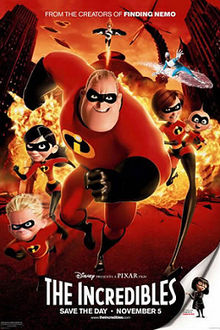
The_IncrediblesCertain superhero storylines are beginning to overstay their welcome. Spiderman, The Fantastic Four, and even The Avengers spring to mind. The remarkable thing is the fact that this wildly popular genre headlined by numerous wildly popular franchises does not appear to be leaving us anytime soon. And when the prospects of monotonous superhero film after monotonous superhero film get a little too much, it’s rather comforting to return to The Incredibles. Yet again Pixar proved they knew how to craft animated films with great storytelling, but also a depth of character.
Over a decade ago now Brad Bird helmed a project that would introduce us to a very different batch of superheroes. Yes, they began as individuals named Elastigirl and Mr. Incredible, but soon enough they ceased being that. But these weren’t a ragtag alliance like the Avengers or the Guardians of the Galaxy. They were something perhaps more broken and complicated – a family.

Back in the glory days, the superheroes were civil servants held in high regard – one of the foremost of those being Mr. Incredible (voiced by Crag T Nelson), but they soon fell out of favor due to scandal and public controversy. Thus, they drifted into obscurity and their aliases quickly became their real life.

This is where this story gets interesting, as Bob and Ellen Parr, as they are known now, are living life with three kids. Ellen (voiced by Holly Hunter) is happy to give it a go and live the normal everyday existence, but Bob yearns for something more than rush hour traffic and a cramped cubicle in a thankless job. And when he gets a mysterious message with mission impossible-like implications. He is indubitably intrigued.

He begins moonlighting again, sneaking around behind Ellen’s back not wanting to needlessly worry her. He touches bases with his old friend and colleague Edna Mode (Bird himself), who supplies him with a new super suit sans cape. It’s just like old times with the super getting the respect he once garnered from everyone, and his family is happy and healthy. Everything is looking up.

But of course, behind these missions of his is something a little more sinister than he could have ever imagined. Of course, when his wife catches wind of it she expects something completely different – their marriage must be failing. That’s the only possible reason for him sneaking around.

Thus, mother and two stowaways head to a volcanic island smoldering with destructive peril. Mr. Incredible meets his match and is brought low as his past mistakes finally catch up to him. He realizes his weakness and more importantly how much his wife means to him. He could not go on without her. However, his wife and kids do not wallow in their predicament as they try and save the world from the dastardly deeds of the begrudging supervillain Syndrome. It’s in this final showdown that Mr. and Mrs. Incredible are back in their element with their compadre Frozone (Voiced by Samuel L. Jackson). Except now they are joined by their speedy son Dash and their invisible, force-field wielding daughter Violet, who both feel confident in their skin.  A giant mechanical robot is no match for such a crew, especially when they’re a family.

True, these characters have superpowers and special abilities, but then don’t we all in some way, shape, or form? This is a story about the nuclear family when that dynamic is blowing up, and a story about being comfortable in your own skin, in a society that often makes that difficult. So Pixar does the seemingly superhuman yet again by delivering up a popcorn-action-adventure-family film, that still somehow holds up to multiple viewings. It’s retro cool, quotable, and gives its voice actors space to gel. They breathe life into this story, while their contours come alive on screen. It’s a childhood favorite and for a very good reason.

4.5/5 Stars

The Treasure of the Sierra Madre (1948)

treasureofsierra2“If you was to make a real strike, you couldn’t be dragged away.  Not even the threat of miserable death would keep you from trying to add ten thousand more.  Ten you’d want to get twenty-five, twenty-five you’d want to get fifty, fifty a hundred.  Like roulette. One more turn, you know.  Always one more.”

If there’s anything to take away from The Treasure of the Sierra Madre it’s that wealth never satisfies, it only serves to compound our anxieties. John Huston’s film is without question an American classic pure and simple, and it maintains that distinction because it has lost very little of its power to this day. Huston returned from shooting WWII documentaries with this project waiting for him back home. He partnered once more with Humphrey Bogart, and he even cast his father in a role that proved to be the standout in the film. Also, he shot most of Sierra Madre actually on location in Mexico, while also hiring locals as extras. It adds to the gritty realism and it was a trend that was slowly becoming more popular.

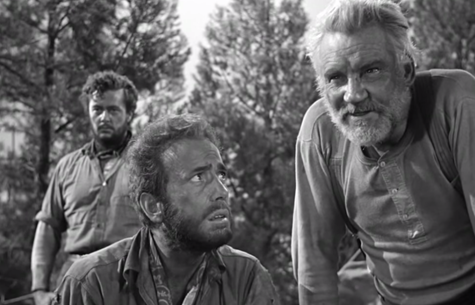
His prospecting adventure film with shades of western or even noir follows three men who join forces to prospect for gold in the mountains. They first cross paths in the town of Tampico where they’re strapped for cash and barely scraping even. Fred Dobbs meets Bob Curtin (Tim Holt), who shares a similar predicament and they stick together. Upon hearing the tempting tales of gold and riches from a loquacious old prospector (Walter Huston), he plants an idea in their mind. And with nothing to lose the three partners embark on this grand undertaking.

Humphrey Bogart is undoubtedly our main protagonist. In fact, he had been playing them ever since dropping the supporting roles and donning the fedora of Sam Spade in The Maltese Falcon (his first collaboration with John Huston). But down-on-his-luck, scraggly-faced Fred C. Dobbs is probably one of Bogey’s greatest performances. He’s a sourpuss and a bum, who’s begging for money and telling the local kids pestering him to beat it. These early sequences include a cameo from the director and young Robert Blake. I can also debunk a myth by confirming that Ann Sheridan is not the eye-catching woman walking down the street early on, at least not in this cut of the film.

These early moments set Bogart up in such a way that we feel pity for him, even if we are not completely sold on his moral character. Tim Holt’s Curtin likewise is a sorry fellow, and he’s far more understated which makes us want him to see success. Walter Huston steals his scenes because he fits his part so beautifully. He talks and talks and talks. Laughs, gives sage advice every once in awhile, and does a jig if he feels like it. He’s a completely free-spirit, comfortable in his years, and perhaps a little less invested than the other two. He’s in for the gold, but he realizes the transience of life.

treasureofsierra4

Their journey is plagued by harsh terrain, heat, banditos, and even a nosy fortune hunter from Texas named Cody. But Howard’s premonitions were right and they begin raking in a mother lode. It’s hard work, but it’s coming slowly but surely. This is the key turning point in the film and the keystone to Bogart’s whole performance.

The early warnings of Howard seem all too pertinent now, “Murder’s always lurkin’ about. Partners accusin’ each other of all sorts of crimes. Aw, as long as there’s no find, the noble brotherhood will last, but when the piles of gold begin to grow, that’s when the trouble starts.”

And so it does. Dobbs is the perfect embodiment of what avarice does to a man. The paranoia builds up. Friends become foes, everyone is out to get him, and Reason no longer has any presence in his life. First, he wants to turn on Cody, who by all accounts wasn’t a bad fellow. Next, it’s Howard and then Curtin, who once was his closest companion. By the end of the film, “Dobbsie” has been so totally wrecked by greed, he no longer is the same person. In fact, Bogart has a similar trajectory to Gollum except he is not redeemed. The implications here are not simply some conclusion on wealth and gold, but more importantly what it does to the hearts and minds of men.

treasureofsierra3

However, with all the darkness and corruption pulsing through Sierra Madre, there also are some comedic undertones mostly delivered by Walter Huston. In a sense he was the mediator between Curtin and Dobbs, keeping things civil and so when he left them, they were left to their own devices. He also is the one who is able to look at the cruel hand that they are ultimately dealt and laugh it off. Thus, Bogart gave a wholly aberrant performance, Tim Holt was more morally steadfast, and Huston was the standout with his lively turn. Humor and treachery make strange, but thoroughly entertaining bedfellows indeed.

5/5 Stars