Review: Rebel Without a Cause (1955)

_Rebel_Without_a_Cause_James Dean

You can wake up now, the universe has ended.” – Jim Stark to Plato in Griffith Observatory

James Dean’s “The Rebel Without a Cause.” It’s his image as much as it is a film for many people. But if we actually take the time to examine him,  Dean subverts expectations. There’s this aura built around him as that iconic rebel–cigarette in hand–a glint in his eyes. However, the beauty of his performance as Jim Stark is how broken and even gentle it is. Certainly, we remember the moments where he screams at parents, bashes in desks and kicks paintings, but really most of his screen time is made of quiet nuances. He has no friends. He’s lonely and reserved. He just wants respect.

He wants someone to listen to him–someone to stand up for what’s right. And he feels like a pendulum swinging madly between his bickering parents, constantly making him go this way and that, moving from town to town, time and time again. It sickens him and he reacts in the only way he knows.

Rebel is just as much a subversive film, being so daring as to suggest that juvenile delinquency is a sort of created social construct. Kids do bad things, sure, teens are no good, but if you dig around a bit and look in the closets, the skeletons reveal themselves in due time. We now conveniently call them “family of origin issues,” but that puts everything in a nice box when the reality is actually very messy.

That’s why the crucial scene in Rebel is when our three solitary teens go to Plato’s (Sal Mineo) abandoned mansion getaway in the dead of night.  Alone it would be a house of horrors, but in community, they make it a pleasant affair–even playing a game of “house” complete with stuffy honeymooners, who don’t want kids unless they never have to see or talk to them again and a realtor who is is willing to give them the place for $3 million a month (Thankfully the newlyweds have a budget!). In essence, amidst their jests, they’ve become one happy family, finding a bit of solace from the asphyxiation of the world around them. The world accentuated by not only their parents but their peers too. However, it cannot last.

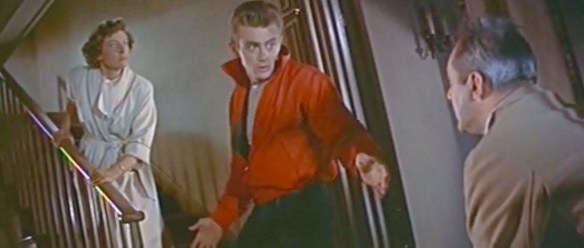
It’s these moments that feel so light and carefree and that’s the key. Blink and you’ll miss them. Look away and the bubble is popped. Focus on the drama and you’ll get it all wrong. Because the moments of drama are exactly the moments that you expect to get some deeper understanding of their psyches. You look at Jim in the now iconic scene on the staircase, quarreling with his parents or Plato running off like a frightened rabbit packing a gun. We can shake our heads and ask “why?” but if we only sit back and listen, it becomes all too obvious.

If Mr. and Mrs. Stark just listened, if Judy’s parent’s paid heed to her, if Plato actually had parents present in his life, maybe they could see what was “tearing them apart.” The suffocating hopelessness of the world that seems magnified tenfold in your adolescent years, as things are changing so rapidly. You’re getting pressured beyond belief and to top it off, it seems like no one understands you–not in the least.

Thanks be to Nicholas Ray for bringing such an intimate study of youth to light, because it’s certainly melodrama, elevated by the unpredictable magic that is James Dean. That’s often the spotlight of this film and quite understandably so, given the lore around his legendary career and tragic death.

But cull its depths and there’s even more if we look at how everything is initially foreshadowed at the Observatory, where the man in a droll tone nonchalantly summarizes the insignificant end of earth–only an infinitesimal speck in the patchwork of the universe (“In all the immensity of our universe and the galaxies beyond, the earth will not be missed. Through the infinite reaches of space, the problems of man seem trivial and naive indeed, and man existing alone seems himself an episode of little consequence”).

Buzz tells Jim before their “Chickie Run” that he actually kind of likes the guy now, but still, “You gotta do something. Don’t you?” It’s the despondency of their existence. Buzz soon dies and people hardly bat an eye.

Never before had I considered how this entire story unfolds in the course of one tragic day. It’s not realism by any means, but instead, it’s bursting with the passion and pain as reflected by Ray’s camera and impeccable use of color.  It’s as if the teenage experience is being wholly magnified and consolidated into a single moment. That’s what Rebel Without a Cause embodies.

5/5 Stars

Liberal Arts (2012)

liberalarts1Where to start with Liberal Arts? It’s one of those deep blue funk movies. Zach Braff tackled this issue in Garden State, and Josh Radnor does a similar thing here. Because the reality is that we live in a generation of early onset midlife crises. In the opening moments, 35-year-old Jesse Fisher (Radnor) has nearly every article of clothing he has aside from the shirt off his back stolen from a local laundromat when his back is turned. We can easily surmise that this single event epitomizes his life right now, and this is hammered home rather obviously when his unnamed girlfriend clears her belongings out of his flat. There’s no better symbol of isolation and alienation than a break-up.
That’s when Jesse’s former professor the personable and witty Professor Peter Hoberg (Richard Jenkins) pays him a call that doesn’t so much change his life as it alters his course. The professor is preparing for his retirement and as is usually customary a dinner is being held in his honor. Jesse is one of the people he looks to invite and the former liberal arts major takes him up on it gladly as the nostalgia begins to waft over him. It’s excruciatingly corny at times even painfully awkward.

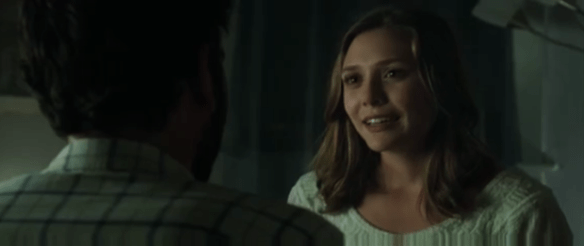
However, it’s no small coincidence that it was filmed at Radnor’s real-life alma mater Kenyon College in Ohio–a beautifully tranquil campus that reflects an idolized Middle America–a perfect place to rediscover youth and ruminate pensively on past endeavors. Jesse does all of the above, but while staying with the professor he also meets Libby (Elizabeth Olsen), a current college sophomore whose father and mother had ties with Peter as well.

Zibby has a self-assurance–the way she carries herself is completely disarming but in a good way. In fact, it intrigues Jesse (Radnor) sweeping him off his feet before he even knows it. But that’s not the only thing that affects him. Nostalgia is a powerful thing. I can feel it now as I close the books on my own college career, and I can only imagine this character who is looking back at those idyllic glory days when he was an optimistic, naive young man.This peaceful campus is completely different feel than the bustling public institution I became accustomed to, but the important things are not all that dissimilar.

liberalarts2It’s crucial to note that at this juncture nothing substantive builds between these two acquaintances romantically, but they do foster an immense connection. While Jesse is taken by Zibby’s personality, she, in turn, is discontent with a contemporary culture where no one dates–everybody’s casual about relationships. She feels unequivocally millennial and yet she readily admits these areas of old-fashionedness.
As she and Jesse part ways, Zibby burns a CD of classical music for her new confidante and entreats him to write her correspondence with pen and paper–like gentlemen and ladies in days of old. It feels very much like a Jane Austen novel, perhaps a little pretentious, but it’s hardly a criticism of these characters. What it creates within the both of them is not only a deeper connection going beyond sexual attraction but an awareness or realization of being — what people these days often call mindfulness.

As they traverse this road together there are some obvious digressions that we could easily foresee, and yet the film takes a mature and altogether realistic path. It considers the relationship between various points in time, passing of the years,  looking backward and forwards. In one direction with nostalgia and the other with anxiety and maybe even expectancy. All these are the backdrop for this complicated friendship between a 35-year-old and a college student.

The conclusions of Liberal Arts perhaps feels a bit muddled, but that’s only indicative of life. We’re all set adrift in a world that we don’t know all the answers to. As Zibby so rightfully ascertains life is basically improvised. We’ve just got to step out and live it to the best of our capabilities. Pick ourselves up when we fall and do our best to make the most of what we have. A lot of that comes when we learn how to connect with the people around us in such a way that leaves us content with who we are. I think it can be said that we leave both Jesse and Zibby better off than they began.

3.5/5 Stars

This is the only time you get to do this. Read books all day. Have really great conversations about ideas. – Jesse Fisher

Sing Street (2016)

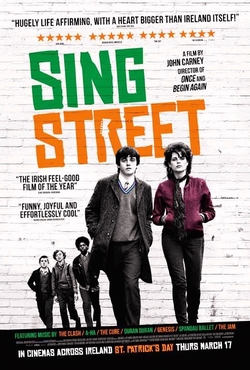
Sing_Street_posterA famed philosopher of the MTV age once sang “video killed the radio star,” and John Carney’s Sing Street is a tribute to that unequivocal truth. Certainly, it’s what some might call a return to form for the director, landing closer to his previous work in Once, and staging the way for some wonderfully organic musical numbers set against the backdrop of Dublin circa 1985. In this respect, it’s another highly personal entry, and Carney does well to grab hold of the coming-of-age narrative.
Our main point of interest is Conor, a lad thrown into a new school of hellish proportions and of course, there’s a girl, and he wants to get to know said girl. What follows soon thereafter is the inception of an entire band, the eponymous Sing Street. So in essence, the band forms so he can get the girl. It’s that simple and it works…sort of.

By all accounts, she’s an untouchable goddess, a year older than him, with a mature boyfriend and aspirations of modeling in England. And yet Raphina deigns to stoop to their level and take part in their first foray into music video-making. It’s in such moments that the film unabashedly hoists up its 80s sensibilities, suggesting Carney’s own personal affection for that day and age. Because amidst all the god-awful make-up, outrageous costumes and mimicry of the new wave scene, there’s a sense of amusement. Since every boy, at one time or another, has gone through these different phases and stages, like a sponge soaking up all conceivable inspirations. In this case, Conor’s older brother Brendan becomes his pontificating Buddha of rock n’ roll. His influences run the gamut from Duran Duran to the Cure and most definitely a little David Bowie.

But his band also develops into a wonderfully liberating beast to combat the furies of the world. Conor is consumed by grand dreams of Back to the Future themed prom nights at an American-style high school. Meanwhile, his parents are continually squabbling at home and his dream girl leaves for London without a word of goodbye. But he uses his newfound outlet paired with the guidance of his brother to turn his stray thoughts and accumulating angst into something of true substance. Namely, Conor and the versatile Eamon, have a bit of a Lennon-McCartney partnership going, as far as creative genius goes, proceeding to run with each spark of an idea that strikes. In fact, with all the boys, there’s a matter-of-fact gravity to it all, because forming a band is a serious business — it’s a concerted effort not to succumb to the grisly fate of yet another gutted cover band.

Like any formative tale about young men and women, Sing Street suggests the vital importance of personal identity and chasing after dreams in particular. You see it with Conor as he constantly dons new facades, not simply in a search for greater artistic expression, but personal freedom.

But where he breaks with his big brother, is what he actually does with the inspiration that has been passed down to him from the rock gods. He uses its whole potential as a gateway to the way of life that he desires — making the most of the opportunities that are afforded him — even if they are a long shot. As the movie progresses Raphina looks younger and younger, and it hardly seems by accident. Over time, she sheds layer after layer of makeup and manicuring to reveal a bit more of herself, until the tipping point where all her dreams come cascading down, and she has nowhere to hide. In fact, in these more fragile moments, Lucy Boynton is reminiscent of a young Felicity Jones.

Admittedly “Sing Street” has a ludicrous ending and there are moments that it tilts towards the plastic production values of  “Begin Again” rather than the sincerity of Once, but that’s a lot of what the 80s feels like. It’s fake. It’s this construction projected up on a screen. And that’s precisely what this film is saluting and celebrating, but that’s only the half of it. Raphina rightfully points out you can never do art half way. That’s what rock n’ roll is in a sense. It’s audacious exploration, risk-taking and a bit of foolishness in the name of chasing your dreams, usually involving a girl. Thus, the film is not wholly original, even for Carney, who has drawn from the same well three times over, but like any artist, he’s able to discover fresh inspiration from old cisterns. After all, every member of humanity is in one way another a broken work of art, beautifully complicated, and that’s worth returning to again and again.

4/5 Stars

Copenhagen (2014)

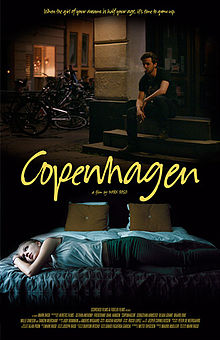
Copenhagen_film.jpegSometimes you attempt to make a mental pros and cons list to try and convince yourself in one direction or the other after watching something. Copenhagen was such a film for me. Bike rides through the city. Pro. At times this film loses its steam and flounders a bit. Con.

In truth, the narrative does feel pretty thin when it comes to the main character William trying to track down his grandfather in Copenhagen. William for that matter is a foul-mouthed and generally annoying jerk of an American for most of the film. Also, the weird romantic tension that builds between him and Effy is obviously uncomfortable, but the will-they-won’t-they component is key to the entire narrative. Because essentially this is a film about a grown man finally coming to age, with the help of a very mature 14-year-old girl, who acts as his guide through Denmark.

That being said, the scenery in and around Copenhagen is obviously a lot of fun to partake of, and it truly is the perfect place to ride a bike around, day or dusk. Furthermore, with her husky voice, feisty nature, and winning charm Frederikke Dahl Hansen makes this film with her turn as Effy. True, she’s playing a character quite a bit younger than herself, and yet she succeeds wonderfully and really thrives as the winning force in this film. Because, if we don’t like her this film has little hope of rising above its narrative foibles and the utterly annoying nature of its other main players. Effy makes us like William at least a little tiny bit by the end of this story. And that’s a major compliment to her. To his credit, Gethin Anthony is easy to dislike, but that undoubtedly can be credited to his acting. His character does come around in the end too, not so much because of the quest for his grandpa, but he learns what it is to be a man and to treat others with the respect they are due. Namely in this case a 14-year old girl, and also is his best bud, Jeremy.

So is this a film I would recommend… Yes, but I tried to lay all the cards on the table because you could easily enjoy this film or just as easily find it disconcerting and tiresome. I fell into both categories at different times, but there were some truly entrancing moments that are hard to forget. Effy is almost hypnotic during her singing session in the bar. And traipsing through an art museum becomes a fascinatingly intimate study of the human form. Perhaps now more than ever Denmark will be on my travel radar since it looked like an absolutely brilliant place to spend a summer.

3.5/5 Stars

The Graduate (1967)

thegraduate1“You’re living at home. Is that right?
Yes. 
Do you know what you’re going to do?
No.
Are you going to graduate school?
No.” ~ Elaine Robinson to Benjamin Braddock

As a recently graduated person, I thought it was only pertinent to return to this landmark film to see if I could glean any new insight. In many ways, the main premise of The Graduate always repulsed me. I couldn’t get behind the comedy because it seemed so at odds with what is going on onscreen.

But now I think I more fully understand Mike Nichols’ style as he leads us through Buck Henry’s script. There certainly is a wicked wit dwelling there, but there’s also more to it. He’s trying to undermine social mores and say something by switching tones on us. In this case, it seems like he’s talking to all those listless souls just set adrift after college. He was their elder, but in the characters of Benjamin Braddock (Dustin Hoffman) and some respects Elaine Robinson (Katherine Ross), young people found their equals.  People they could relate to in their own anxiety and at times apathy about the future. And it’s as much Elaine’s story as it is Ben’s since they both are riding off into the great unknown of their future together.

Thus, this isn’t just about an affair, though that did help to shatter the Production Codes. There is so much more that actually causes Benjamin to get involved with Mrs. Robinson (Anne Bancroft). The implications extend far beyond.While The Graduate‘s main hook seems rather curious, the rest isn’t all that crazy. In fact, it’s quite relatable.

We get our first view of Ben, sullen and anxious as he rides the moving walkway in the airport terminal. The haunting vocals of Simon & Garfunkel’s “Sound of Silence” ring in our ears, but there’s also that almost comical voice reminding travelers to use the handrails.

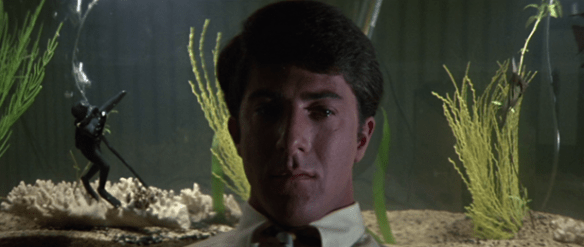
It’s when he touches down and gets home that things become all too real. He’s entering back into his parent’s world which is reinforced by this general theme of suffocation and in some sense alienation, fawned over by parent’s friends and encased in a scuba suit. Ironically, he’s no hippie or counter-cultural revolutionary, but he still feels at odds with the community he finds himself in. There’s a generational gap, and even Hoffman’s own portrayal is so contrary to this WASP society. In casting Hoffman, not a particularly handsome young man, an atypical example,  Nichols is ratcheting up the irony.

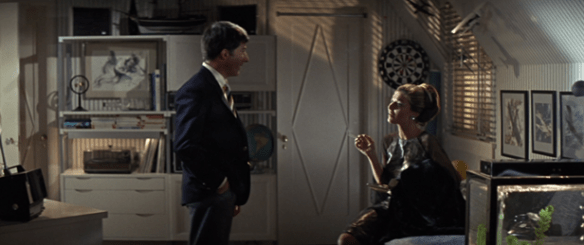
thegraduate2Then Mrs. Robinson coolly enters his life. It’s perhaps best signified when she tosses him the keys. They end up in the fish tank almost as if on purpose and after that she has him reeling for good. Soon he’s walking into the lion’s den (or lioness’s) as she expertly manipulates and elicits the precise response from him. In these moments the film is elevated by the awkward, huffing and puffing, and nervous chattering of Hoffman. We often forget the second part of his famed line, “Mrs. Robinson you’re trying to seduce me. Aren’t you?” His general naivete and hesitancy say it all.
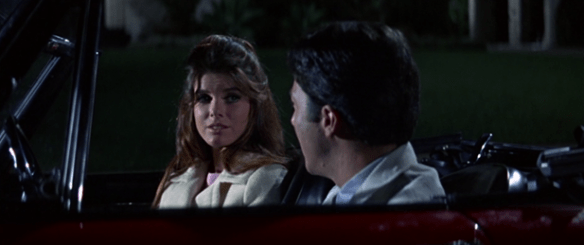
I also made a startling discovery. Ben doesn’t have any friends! Or else, where are they? The inference perhaps being that he spent so much time being a track star, being on the debate team, and being editor of the paper that he never stopped to do the other things that college is all about. Building relationships with other human beings your own age. When he gets out and realizes his directionless anxiety, he tries to remedy it in other ways. The most obvious way is sleeping with Mrs. Robinson.

thegraduatesBut when he meets Elaine Robinson and finally begins to connect with her on a peer-to-peer level, it’s something so profound to him. Having someone his own age that he can relate to, who feels the same unnamed apprehension and angst that strains on him. It’s what makes Ben become so mixed up. He has true feelings for her, while his affair with Mrs. Robinson only serves to poison all that could be good. And his illogical, unhealthy pursuit of Elaine continues to Berkeley where she is attending school. Still, Mrs. Robinson and her now estranged husband look to send their precious daughter far away from Benjamin Braddock.
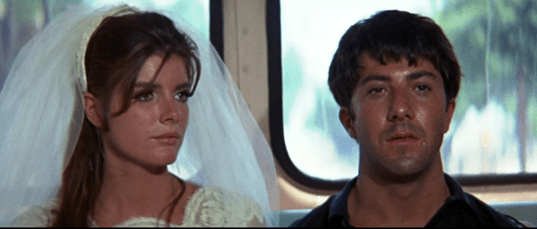
thegraduateThat’s what makes his final Herculean effort all the more climactic. He bursts in on her marriage to another man and whisks her off to another life altogether. A life that seems exciting at first, because, oh how great it is to be young and in love. But once they climb aboard that bus in their tattered garments, have a chance to sit down and really think about what they are embarking on, you see something else in their eyes. The laughter slowly dissipates and as they look around nervously, they begin to somber up. True, Ben is no longer alone in an airport terminal, he has a fellow traveler, but that does not make the future any less unpredictable or scary for that matter.

That is the life of a graduate. In so many ways feeling like an outsider, a foreigner in a land that you used to know. You’re living at home. You don’t know what you’re going to do and you’re not going to put off the decision by going to grad school. We’ve all been in a similar place one time or another and that’s why this film resonates, not only with the generations of the 1960s but even to this day.

What truly elevates The Graduate above Nichols’ other films, aside from this universal quality, is the stellar soundtrack courtesy of fellow New York natives Simon & Garfunkel, who became icons of the folk scene during the 60s and 70s. Their album Bookends is still a classic, featuring the fully polished version of “Mrs. Robinson.” While not all the lyrics are here in the film, it became an anthem, reflecting the gap created between the older generations and their kin. While the likes of “Sound of Silence,” “April Come She Will,” and “Scarborough Fair” lend themselves to the more introspective moments of the film like no score ever could. It’s part of what makes The Graduate a cinematic watershed of the 1960s.

4.5/5 Stars

Man in the Moon (1991)

maninthe1Robert Mulligan is an unassuming film director. Man in the Moon would be his last film in a career that was not so much illustrious as it was respectable. In truth, I’ve only had the pleasure of seeing one of his other films — his crowning achievement To Kill a Mockingbird.

There are in fact some similar threads running through these two films, starting with the Deep South nostalgia and close analysis of adolescence. Both these films take the point of view of a young girl. Their narratives hope to shed at least a little bit of light on that intricate stage of life. This time a 14-year-old Reese Witherspoon is our lead, playing the Elvis-loving, gum-chewing, spunky dynamo named Dani. She and Scout share a lot in common because as young people there’s an inherent tendency to mope, question, and disregard. They have not quite grabbed a hold of the mature world of their parents. After all, they still have a great deal to experience. That’s what makes these film arcs necessary.

Man in the Moon starts with Dani, but there’s a whole family unit around her. A father (Sam Waterson) who is a decent, down-to-earth-man, and he would rather commune with nature in his fishing boat than go to typical church. A mother (Tess Harper) who loves her husband and daughters dearly, knowing when to trade tough love for hugs. Maureen (Emily Warfield) is Dani’s oldest sister and her idol, along with the object of every local boy’s desire. She’s beautiful and yet what’s more extraordinary is her good nature. She doesn’t deserve the creepy father and son duo eyeing her in the local town.

maninthe2Arguably, the next most important character in Dani’s story is Court (Jason London). They have your typical terse meet-cute that signifies only one thing. They must fall in love. It turns out he’s the eldest son of an old friend of Mrs. Trant. Soon things change for young Dani because she’s never known someone like Court, much less liked a boy.

Their relationship is one of those complicated entanglements. He’s a few years older and is the man of the house. He has to grow up quickly and views Dani as a child. But their friendship blossoms with frolicking afternoon swims. Dani is ready for something more. She thinks she’s in love. Now if Court was one of the other boys, he could easily take advantage of the situation — this fawning girl who is madly in love with him. But he’s not like that. Dani can’t quite get that through her head. It just doesn’t make sense. They enter friend territory and Dani’s heart is still aflutter, but she’s happy again.

maninthe3The second half of the film enters melodramatic territory that first hits the Trant’s with familial turmoil, and then Court. Dani for the first time in her life is faced with the full brunt of tribulation. What makes matter worse is her feelings are all mixed up. She loves her sister. She hates her sister. She cannot bear to see Court. She cannot bear the suffering. It’s in these moments that uncomfortable feeling well up in the pit of your stomach.

Man in the Moon like many of the great coming-of-age movies is really about adolescents coming out of their innocence and being inundated with the often frightening realities of life. It reminds even the youngest of us that more often than not life is unmerciful. It’s how we pick ourselves up out of that fatality that matters. It’s hard but that pain is often how we grow and mature — learning how to cope with the way things are. That’s what makes the people around us so integral to existence. They can be our lifeline that keeps us afloat. Thus, Dani’s friendship with Court matters so much. That’s why Dani’s relationship with Marie matters too.

Perhaps the drama is laid on rather thick, but nevertheless, it’s difficult not to get behind this film. Reese Witherspoon’s perkiness is wonderfully disarming, and Jason London plays a decent young man. These are characters I want to watch and emulate. Not quite Scout and Atticus, but they are still definitely worth the time.

4/5 Stars

You’ve got a right to grieve, Dani. You got a right to be hurt. But if you get so wrapped up in your own pain that you can’t see anyone else’s, then you might just as well dig yourself a hole and pull the dirt in on top of you, because you’re never going to be much use to yourself or anyone else. ~ Mr. Trant 

Note: This review previously said Marie (Gail Strickland) instead of Maureen (Emily Warfield)

Garden State (2004)

gardenstate1Garden State was written and directed by Scrubs star Zach Braff before he made it big, while he was still struggling to get into the business. It’s one of those deep blue funk movies where a person has to find themselves in the giant mass of humanity. Andrew Largeman’s mom just died from drowning in a bathtub. He hasn’t seen his dad (Ian Holm) for about a decade because they haven’t really been on speaking terms. Now he lives in L.A. across the vast expanses from his native New Jersey. He works in a very zen Vietnamese restaurant and surreal daydreams clutter his apathetic mind.

The question is what will shake him out of his despondency because the death of his mom is only the inciting incident. As it is with a small town community, he’s constantly meeting all the old acquaintances from his high school days. Most are impressed by his foray in acting even though he hasn’t made much a career of it yet. The people he reconnects with include his old friend Mark (Peter Sarsgaard), who works at the cemetery and doesn’t have much of a life except smoking weed. Then there’s Jesse who made a killing off Silent Velcro and now has all the time in the world for parties in his huge mansion.

That’s not what does it though. It’s when Andrew is sitting in the doctor’s office, hoping to get checked, because he’s been having headaches after being off the meds he’s been prescribed all his life. There he meets Sam (Natalie Portman) for the first time, and he’s never the same. She’s a scatterbrained, off-the-wall personality with a lot of energetic pizzazz. That about covers it except she also has epilepsy and is a compulsive white-lier. But in her Andrew finds a genuine spirit, who can revitalize his life, by giving him sympathy in his pain, while also brightening up his everyday reality.

gardenstate2On his last day in New Jersey, Andrew obviously wants to spend the time with Sam, but it ends up turning into a daylong treasure hunt as Mark tries to track something down. It isn’t much, however, it’s the thought that counts, and on their odyssey, Andrew is finally able to let go of a lot of the hurt and pain he’s been harboring. He’s ready and willing to forgive his father.

Then, there he is in the airport terminal getting ready to leave Sam for L.A. He has to get back and he promises to call her, but he seems to remember he’s a different person now. It’s a delightfully sweet ending to the film and we absolutely want it.

gardenstate3Braff’s wistfully apathetic demeanor is so wonderfully personified by a memorable soundtrack including alternative rock groups like Coldplay and especially The Shins. His brand of acting is really just playing a wet noodle, but he does it well. Those beady eyes of his constantly scanning back and forth nervously around the space he inhabits. And the film certainly has some dirtiness around the edges, but our main couple is so endearingly sweet. I respect a film that respects its characters such as not needing to show them having sex all the time, but it can paint their romance in more playful, soft, even intimate shades. Andrew takes drugs and curses, but only to dull the pain or express his bitter frustrations. Sam’s the kind of girl who states that she’s not innocent, confirming our suspicions of just the opposite. We appreciate both of them exactly for those reasons. He rides an army issued motorcycle with a sidecar for goodness sakes, and she gets teary-eyed over a deceased hamster. They’re quite the pair.

3.5/5 Stars

Starter for 10 (2006)

215px-Starter_for_tenOftentimes I get my greatest excitement not simply from the masterpieces I get to discover, but also hidden gems that get unearthed along the way. This one just happens to have some of Britain’s best talent. Starter for 10 is a coming-of-age film which immediately sets off a number of ideas in one’s head, and it has most of what you expect in that department. However, it also has an astounding plethora of young British talent. The list of names is as follows: James McAvoy, Alice Eve, Rebecca Hall, Benedict Cumberbatch, Dominic Cooper, and even James Corden.

The heart of this film is Brian Jackson a college-aged kid, who grows up wanting to be clever and he has a passion for trivia because he always wants to learn more and he spent some formative moments in front of the telly with his now deceased dad. Now in 1985, he gets ready to leave his mother (Catherine Tate) and head off for new experiences at Bristol University. But she’s not the only one he leaves behind. His friends Tone and Spencer are not as ambitious as him, but he promises not to forget them.

Still, when he gets to college, he’s excited for the new challenges ahead and although his first acquaintances are rather odd, he does meet the winsome girl Rebecca Epstein (Rebecca Hall), who has an affinity for political protests. Soon he’s quick to join the University Challenge quiz team anchored by a very stuffy post-grad (Benedict Cumberbatch) but that’s not all. He also gets his first encounter with the posh girl with a gorgeous figure (Alice Eve). He’s immediately smitten with this new quiz kid and for good reason.

But what follows is all the drama that one would expect. The pitter-patter of his beating fragile heart as he dreams of days with the beautiful Alice. It even manifests itself in a dinner date and a rather awkward New Years with her parents. But then there’s Rebecca too. She’s brilliant as well and he has to figure out what he’s doing. Mixing up names on New Year’s Eve is not the best plan, but of course, that’s what happens.

His best friend Spencer (Dominic Cooper) comes to visit and that fosters more turmoil than Bri would like with the old world intersecting with the new. He’s confused and apathetic about the University Challenge by now. Everything goes wrong before the big day of the final competition and to top it all off Brian messes things up in a big way that leaves him dejected. He cannot even face his team now. Early on Brian latched onto the idea that knowledge is the key to being happy, not a job that you might hate. Although that can be true, it seems he slowly realizes that there’s even more to happiness than knowledge. If that’s all you have, you’re probably not going to be all that content. You see, he’s certainly clever, but that doesn’t mean he doesn’t do some stupid things and make some big mistakes. Don’t we all, and otherwise, this could not be a coming-of-age story full of discovery, confusion, and love.

It’s a bad metaphor, I know, but do you want the Marilyn Monroe blond bombshell or the sweet Audrey Hepburn brunette? Everyone has their proclivity, but Brian seems to make the right choice because he doesn’t go with the outward appearance, he goes with the one with a depth of character and the ability to forgive. That’s big.

There’s a formula being followed certainly, but it’s easy to look past that and enjoy Starters for 10 for its heartfelt performances and simply the good fun it brings to the table. The names attached to the picture were slowly on the rise and it’s impressive to see how far their careers have taken them.

3.5/5 Stars

Me & Earl and the Dying Girl: Depth and Dying (2015)

meandearlandthedyinggirl1What struck me about Me & Earl this time around was not just the cinematic homage or the quirky indieness, but the fluid movement of the camera matched with the ever-evolving score of Brian Eno. It made me appreciate this film yet again because some people might say it’s weighed down by over-trod tropes, but it leaves those in the dust. Others might criticize it for playing up to all the cinephiles out there in order to garner respect. Which might be true.

But in essence, this film resonates on such a greater level. All the side characters are fun and interesting and I’m sure all the various parodies will open the floodgates for some enthusiastic young moviegoers to discover film’s roots. Those are all wonderful perks of this story. And yet again, Greg Gaines feels so relatable it’s almost scary at times. He’s so insecure on so many levels, drifting in and out of the school corridors, awkward around dying girls, and awkward around girls in general. Most of this I pointed to already in my initial review.

However, it’s the work of director Alfonso Gomez-Rejon along with cinematographer Chung-hoon Chung that contribute an added layer of depth to this film. The gracefully spiraling camera is at times reminiscent of Ophuls ascending a staircase. There are perfectly symmetrical shots popping with colors that Wes Anderson would most certainly approve of. But like the great minimalists out there, the camera is still when necessary. In poignant moments when Greg and Rachael have real, heartfelt, even hurtful conversations, there’s no need for flashiness. It’s in these moments where those behind the camera prove their skill because we can see them having fun with their artistic vision, but we also notice the great deal of care they have for these characters.

meandearl2It never feels flashy or superficial in these crucial moments. Any slick plot device or cinematic allusion falls away to get at the heart and soul of this film. It’s about coping with death and finding closure in that terrible event in life. Specifically for this one young man, but it is universally applicable to most every one of us. Especially when you’re young because as young, naive individuals, death can feel like such a foreign adversary. It’s so far removed from our sensibilities, and that’s what makes it so painfully unnatural when it strikes. In many ways, Greg is our surrogate. For all those who struggled to find themselves in high school, or college, or even life in general. And for all of those, who took risks on friendship in a world full of death and dying. Once more Me & Earl and the Dying Girl proved its worth, not by being a perfect film, but by being a heartfelt one.

4.5/5 Stars

The Virgin Suicides (1999)

VirginSuicidesPosterIn her debut, Sofia Coppola fashions the 1970s with a washed out wistfulness that feels like a distant memory — lingering for a time — leaving a few far away remembrances to be eulogized and reminisced about.

Her film is really about two groups. There are the Lisbon girls who live with their militantly authoritarian parents and then the neighborhood boys who look on with awe. These girls are the unattainable prize that all of these young men are entranced by. They are not besmirched or dirtied by the ways of the world, stuck in the ivory tower of their parent’s home. It’s almost as if they come out of a dream, so pure and in the same way so provocative.

However, things get shaken up when the youngest daughter attempt to commit suicide and then in a free moment she jumps out of the window and meets death by the metal fence posts below. Red flags should be going up everywhere, but stubborn Mrs. Lisbon only becomes more stringent in her moralistic ways. She should be trusting her daughters, allowing them certain freedoms, but she only takes away more. And reluctant Mr. Lisbon does nothing to stop her. He just lets it be.

Only allowed to socialize at one dance under strict guidelines, the girls relish this opportunity and so do the boys. They finally get their chance with a different class of girl. But after the smitten Lux breaks curfew, all the sisters lose all contact with the outside world. The iron gates go down, and she never gets another moment with high school heartthrob Trip. On top of that, their mother makes her burn all her records in another strict turn.

Lux defies her passively in any way possible as she and her sisters try and maintain contact with the boys on the outside. But there is a point for any person where this type of confinement, this type of prison, gets to be too much. The girls reach the end of their rope and take the only way out they can see.

Oddly enough, most of the boys have little personality, but the focus is the Lisbons and specifically their daughters. The Virgin Suicides was partly intriguing because it never seemed to take on some dramatic tone and it never felt all that personal. I felt so far away. As Carol King mournfully sang, “Doesn’t anybody stay in one place anymore. It would be so fine to see your face at my door. Doesn’t help to know you’re so far away.” That’s exactly what this film does. It doesn’t allow us to get close and that aloofness lent itself to the intrigue we have in these girls. We’re pulled into their story along with all these young boys.

3.5/5 Stars