Review: Vivre sa Vie (1962)

vivre-sa-vieThe opening credits of Vivre sa Vie commence with the opening note “dedicated to B-movies” and indeed many of Jean-Luc Godard’s best films could make the same claim. They’re smalltime stories about little people living rather pathetic lives if you wish to be brutally honest. This isn’t Hollywood.

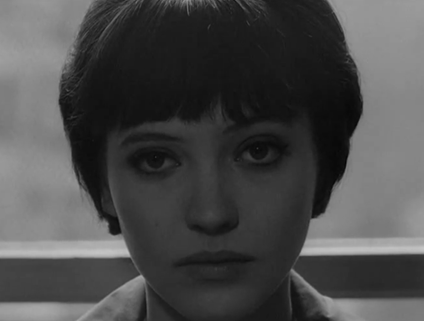
Opening titles aside, we meet our main characters from behind, their backs to the camera in the throes of a minor spat. It acts as the subject for the first of the director’s 12 tableaux that make up the film rather like chapters in a book following the life of our heroine Nana (Anna Karina). Next, comes pinball games, Nana’s occupation as a Record Shop attendant and other mundane moments.

The passage of time caused me to forget that Nana goes to a screening of The Passion of Joan of Arc. Her own life witnessed in the eyes of Joan–a heroine that she easily empathizes with for her own amount of suffering and pain. It’s difficult to decipher who Nana feels more connected to, Joan of Arc or the actress Maria Falconetti herself. Because the truth is, Nana too was trying to make it as an actress, even being featured in a film or a play or something or other. It didn’t work out.

As the story evolves, we gradually begin to see her plight more clearly. It comes slowly at first before fully establishing itself. She goes down the rabbit whole quite by chance, taking on a very different occupation. It’s pitiful really, she looks more like a frightened rabbit than a woman of the street.

Her aspirations of catching the eye of some director are instead channeled towards Raoul, the pimp who gets her started and shows her the ropes of the trade. In some ways, it feels like he owns her, and yet Nana still strives to lead her own life. One of the moments she gives the illusion of happiness is in all places a pool hall as the jukebox grooves away and she shimmies with it. But in this moment as with so many others, it seems as if she’s constantly under the gaze of men. She’s constantly trying to earn their affection and in some sense earn her own worth. Whether or not they give it is another matter and that’s the great tragedy of Nana’s life.

In some of the film’s final interludes, she finds time to wax philosophical with an old thinker on a number of topics from personal responsibility to issues of free will. He further asserts that the more one talks, the less the words mean. Perhaps Godard took that to mean form over dialogue.

At times it’s as if Godard’s camera is constantly on a swiveling axis or even a pendulum, focusing on a figure and swinging back and forth between it’s two subjects. No cuts are necessary and it’s oddly compelling.

Look at his work hastily here and it could be misinterpreted as shoddy and that could be but more likely is the fact that Godard was always thumbing his nose at convention. He was never beholden to classical Hollywood but he did have heroes. The likes of Sam Fuller, Fritz Lang, and Nicholas Ray. Men with their own aesthetics and Godard was forging his own path. Only someone like Godard would have the audacity of having us watch the entire transcription of a letter. Why? Because he wanted to.

Vivre sa Vie did not ignite the Nouvelle Vague but in many ways, it stoked the flames and Godard perhaps unwittingly gave nod to another landmark film from his compatriot Francois Truffaut, Jules et Jim, which finds its way up on a movie marquee.

Perhaps what’s easiest to take away from Godard’s work here with longtime collaborator Raoul Coutard is that he’s constantly messing with our classical cinematic sensibilities. The way he cuts (or doesn’t), the way he interrupts sound, the way he moves between intertitles and so on. It’s still his and it still disrupts the status quo that we are used to even as seasoned viewers of visual content.

For some, it can come off as tiresome, even pretentious but it’s undoubtedly Godard and highlighting the entire narrative is the quietly yet still evocative performance of Anna Karina. Her doe eyes speak volumes by themselves.  They truly were the power couple of the French New Wave. He being the audacious artist, she his inspired muse. However, it begs the question, if there is any stock in the parallelism between film and reality. Nana/Anna being controlled by the men in her life or was it truly her life to live?

4.5/5 Stars
White Heat (1949)

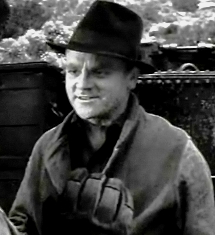
james_cagney_in_white_heat_trailer_cropWhite Heat burns like hot coals even today as the epitome of incendiary cinema. It’s a gangster picture from master Warner Bros. craftsman Raoul Walsh that’s volatile and intriguing, highlighted by the always fiery James Cagney as a crazed man-child with a mom complex.

Cagney had stayed away from gangster pictures that made him a star for nearly a decade and it’s true that now it’s easy to label this a film-noir given the sweeping tide of the times including other pictures like The Killers, Brute Force, and so on.

Still, everything that is truly inspired from this film stems from Cagney’s performance because we have seen gangsters before, bank jobs, inside men, gun molls, and the like but Cody Jarrett is one for the ages. He throws a twisted wrench into what is already a quality thriller by going absolutely ballistic and simultaneously jolting it in the most peculiar ways.

Before Norman Bates was even whispered on the lips of audiences Cagney burst onto the scene with his demonic characterization, very plainly evil personified as the psychotic Cody Jarrett. He smacks policemen, guns down the worthless, and schemes incessantly. However, he also has a strange sense of family and friendship. He’s prone to crippling migraines like his insane father and still parks himself on his mother’s lap. He even befriends a copper, except he doesn’t know it. He gets duped like a two-bit stooge.

Edmond O’Brien was on the rise at this point following such films as The Killers and The Web. He still owns a supporting role in the sometimes thankless job as the decent heartbeat of law and order. But he has so much more character than all the other stiffs with their fine looks and chiseled jawlines who simultaneously faded into the annals of history.

Although he’s playing support to Cagney, there are a lot worse gigs and the pair works well with each other. At one time strangers, confidantes, and finally bitter enemies in the constantly seesawing dynamic that comes when an undercover agent looks to get buddy-buddy with a certifiable psychopath. Not surprisingly it makes for a thoroughly engaging crime film because the characters actually have something to them.

The iconic Mess Hall sequence brimming with Cagney’s explosive bravado is representative of his flair throughout the entire picture. It just won’t let up. It never lets up. A line of “telephone” takes a message down the row of inmates (including sports icon Jim Thorpe) before reaching the waiting ears of the hardened criminal. Like a stick of dynamite, he goes off and becomes possessed by some unnamed force. It represents the manic, off the wall style of Cagney that still compels audiences today. It’s no longer a simple performance. This is not acting (or it doesn’t seem like it). This is feeling, hate, anger, rebellion, and violence all channeled into a transcendent moment where the man has completely lost himself in a role. No one can touch him. It’s fantastic.

Virginia Mayo finds herself portraying her particular sultry siren accustomed to mink and bubblegum. While Steve Cochran stands tall as the main crony with big ideas, the aptly name Big Ed who is looking to worm himself in on Jarret’s territory (and female company), while he’s incarcerated. Meanwhile, Margaret Wycherly who was previously known as the angelic mother of Alvin York takes on a maternal role on the complete opposite spectrum and she does a fine job as a woman modeled after the notorious Ma Barker.

Any great crime story needs a final set piece where everything can culminate in one ultimate crescendo. White Heat does not disappoint in this regard as Agent Hank Fallon looks to tip off his colleagues following the inception of a big heist of a chemical plant in Long Beach. What follows is a tense dragnet and shootout and it’s a fitting place for Jarrett to meet his maker or in his case his mother. He literally goes into the inferno, blowing up and entering the conflagrations of hell in the most startling of fashions — still clinging doggedly to his mom–his twisted guardian angel of death. It’s a curtain call worthy of such a performance and knowing it can do no better, the film ends there, no fanfare just a grimy picture where criminals aren’t as cut and dry as Hollywood once supposed.

5/5 Stars

Angels with Dirty Faces (1938)

angelswithdirtyfaces-theatricalposterWhaddya hear, whaddya say ~ Jimmy Cagney as Rocky Sullivan

If he hadn’t been on the stage and screen, it’s easy to get the sense that James Cagney, born and bred on the streets of the Lower East Side of Manhattan could have easily been a gangster. And it’s true that in films like Public Enemy and White Heat he embodied gangsters for ensuing generations solidifying his own legend.

Angles with Dirty Faces features another stellar performance as Rocky Sullivan, but what makes it truly unique are the intertwining worlds of faith and crime that meet and ultimately provide the major conflict in the narrative. It’s at these crosswords — the moral fabric of the film — where things get fascinating and to understand those things it’s necessary to see where Angel with Dirty Faces opens.

Two young hoodlums get caught in the act of snitching from a train car and in the ensuing chase one gets nabbed by the cops while the other slips away from their clutches to live another day. This succinct scene is a fitting reflection of all that happens thereafter. The one fellow will grow up to be the notorious gangster extraordinaire Rocky Sullivan who will be at odds with the authorities from his first moments in juvie to his final days.

Meanwhile, Jerry (Pat O’Brien) becomes a local priest who makes it his life’s work to reform the young men in the community who are more than likely destined for the life of Rocky and his fellow gangsters. Through a certain amount of kindness and quiet strength, he attempts to mold the boys through constructive activities like basketball, choir, and other extracurriculars. However, the bad boys (the real life Dead End Kids ensemble, less actors than personified hellraisers) are not quite swayed by his regimen, more content rough-housing, causing mayhem, and idolizing their rebellious hero the great Rocky Sullivan.

When he finally gets out of his stint in prison, Rocky has some choice words for his crooked lawyer (Humphrey Bogart) who hands over a load of cash to save his neck although he’s not looking to be swindled. But although he continues to have his hand in the local corruption and crime scenes, Rocky still maintains his ties with his old friend while renting a room from the girl he used to rib, the now stunning Laury Martin (Ann Sheridan). Here the core relationship between Rocky and Jerry becomes paramount as Jerry vows to tackle corruption in the city with the help of a local paper, even if his old buddy gets in the way.

So Jerry begins his full-fledged crusade against vice because he sees it as a threat to his parish — made up of the impressionable boys in his stead. But just as crucial is the boy’s idol worship, namely of Rocky. This is Jerry’s final goal to bring their idol tumbling down and it doesn’t involve simply destroying the aura surrounding a gangster — it involves two old friends making one final promise. The crime syndicate is thrown into an uproar as Rocky is wanted for murder, cornered, and finally apprehended.  Oh how the mighty have fallen, although he’s not about to go yellow because that’s the only thing he has left–his own bullish sense of moxie.

Still, Jerry asks him to imbue a different kind of courage (Not the courage or heroics of bravado but the kind that you, me, and God know about). And as the electric chair looms in front of Rocky as an arbiter of justice, you could easily make the claim that this is his modern-day cross with him as the martyr. But this gets into the ultimate dilemma where everything begins to break down. Either Rocky committed his final act out of undying affection for an old friend (and not remorse) or more feebly still he was not repentant at all but was, on the contrary, legitimately groveling in the face of death.

The first time seeing this film I mistakenly mistook Rocky’s actions as heroic in the end because as our protagonist that’s what we like to project onto him but it simply does not line up. The way he’s so belligerent before breaking down as he gets ready to meet his maker. The way the priest looks on with tears in his eyes, newspaper men too awestruck to jot down a single note. I mistook Cagney’s astonishing acting for Rocky’s own showmanship. However, the more astounding conclusion is that Rocky is hardly high and mighty in the end. His rough veneer is equally easy to shatter as his being is brought to the ultimate low, death.

It reflects the moral ambiguity of man that these angels with dirty faces are not in the singular sense but the sum of man in his plurality. We are all prone to evil just as we are all capable of good. But we can hardly save ourselves just as we are not always wholly good or wholly evil. The best we can do is make the way better for other people. If this film is any indication sometimes it’s extremely difficult to parse through the differences between the altruism versus the evil versus just plain cowardice.

Films about friends on diverging paths have continued to exist from Cry of the City to Mystic River but Angels with Dirty Faces is arguably one of the most compelling. Once again, Cagney steals the film with his usual no holds barred approach.  It electrifies the screen like very few others, making Angels with Dirty Faces an undisputed gangster classic and one of his very best.

Furthermore, the often discounted Michael Curtiz shows his versatility with the foremost of Warner Bros. winning craftsmen including directors William A. Wellman and Raoul Walsh. Notably, each man paired with Cagney with great results, because, after all, he is without question the king of the gangsters.

4.5/5 Stars

Fury (1936)

spencer_tracy_furyYou could say that Fritz Lang was fascinated, even preoccupied with issues of justice. M, Fury, and You Only Live Once all take a particular interest in crime in relation to systems of justice while still functioning as tense thrillers. Although Fury was his first film across the pond in Hollywood, Lang maintained his fine form in a potent debut.
Joe Wilson (Spencer Tracy), is an average stiff. He’s got his name for a reason. He’s got a lovely girl (Sylvia Sidney) and they’re madly in love but he’s also hardly scraping by and the same goes for his two brothers. Still, he believes in his country and the fact that if he goes about his life honestly, he will ultimately be rewarded. But in truth, his idealistic convictions are soon put into question when he finds himself caught up in some unfortunate circumstances.

He’s arrested for the kidnapping of a small child, a crime that he’s innocent of no thanks to some circumstantial evidence and the suspicious local law enforcement. Soon a chain of “Telephone” spreads the juicy gossip like wildfire through the town of Strand. Everyone’s writing his confession of guilt for him and they rather enjoy it.

In the meantime, the excitable, uneducated masses aren’t about to wait for the district attorney and when the higher ups in the state government balk at sending in the national guard, the locals take justice into their own hands. It’s a bit like the storming of the Bastille — a tumultuous revolution of sorts — and yet this is Middle American in the land of the free and the home of the brave. Still, the sheriff’s jail is soon seized. It’s a barrage of brawling fists, chaos, and general mayhem that adds a noticeable edge to the drama. This is no joke. They want Joe’s hide and they’re willing to raze the jail to the ground if they have to.

The ensuing court case puts 22 men on trial for the senseless murder of Joe Wilson. But from the grave, he looks to get his sweet revenge as his killers get their due. Newsreel footage is brought in as evidence when the entire line of witnesses are all conveniently town locals not wanting to cause a stir. But there’s very little disputing images. They hardly lie. On the other hand, man is very prone to deceit and that’s a great deal of what Fury hinges on. Lies from defendants and witness, even from our protagonists. A couple of Joe’s personal traits serve an important purpose to the plot including his love for peanuts and a penchant for misspelling the word ‘memento.’ And it’s when the truth is finally settled on that real justice is able to be enacted.

I am not sure if I quite buy Tracy’s progression towards a raging vendetta completely but either way, it sets up a troublesome moral dilemma. The kindly and bright-eyed Sylvia Sidney as his girl ultimately acts as his compass. He is looking at trading justice, what is fair with what is not. That’s what he expects and not what he gets. The American justice system was and still is a flawed system but there’s still so much to it that champions justice for all (and liberty for that matter). That’s what Fury is really about — both sides of the coin.

The ending is obviously a Hollywood cop-out but if nothing else it highlights what we are called to do as citizens and more universally as human beings. Unfortunately, despite our best efforts, the world is not always fair nor will it ever be completely so. All we can hope to do is keep short accounts and forgive others with graciousness (God forgive him and our trespasses, as we forgive them who trespass against us). It’s at its most difficult in a situation such as this with such a horrendous wrong being committed.

But then, grace is a scandalous thing. When someone’s actions result in others obviously in the wrong getting what they do not deserve that rubs us the wrong way. That’s why justice, as well as grace, are so powerful when paired with wisdom. Everyone under the sun is at fault at one time or another. Joe lets vengeance guide his decisions rather than righteous anger. Fury envelops him. But he turns from that — however reluctantly — he still does.

4/5 Stars

-Let them know what it means to be lynched.
-Don’t you think they know by now?
– No.
-What you’ve felt for a few hours, they’ve had to face for days and weeks! Wishing, with all their souls, they could have that one day to live over again. Joe…don’t you see?

~ Joe and Katherine

The Prowler (1951)

the-prowler-1The whole thing turned on a freak accident. You’ve got to believe that Susan.
The Prowler doesn’t waste a moment of time with its opening credits as we are privy to a woman shrieking from within her bathroom. Why is fairly obvious. There’s a voyeuristic prowler on the loose and the police must be called on the scene. The men on call are Webb Garwood (Van Heflin) the discontent young gun and Bud Crocker (John Maxwell) the genial veteran. They search the premises, meet the flustered gal (Evelyn Keyes) and leave her be with no signs of a prowler remaining.

In fact, from that moment onward the prowler is only a phantom, a figment of the imagination, a convenient scapegoat. But blacklisted screenwriter Dalton Trumbo also cleverly uses this “person” to move his story forward seamlessly. The stage has been set. Our young cop has his interest piqued. Here is a beautiful, seemingly lonely woman and he can be her knight in shining armor. He’s taken by her and drops in on her with the pretense of monitoring her safety. In such a way, the narrative progresses into a love affair and an adulterous one at that. Because Susan Gilvray is married to the man who is always on the other end of the radio (ironically voiced by Trumbo himself sneaking his way into the film). He talks to her from far off and rather like the eponymous prowler, he too seems an almost otherworldly phantom haunting both Webb and his girl in their deceit.

It becomes obvious soon enough that Webb is the most crooked cop on record as he sets up a scenario that is tragic and he casts himself as a victim of circumstance. But it’s all orchestrated in such a way that Susan is free of her marriage and Webb receives the sympathies of the general public in the ensuing court proceedings. Soon after the drama has subsided, the pair of clandestine lovebirds turn around and get hitched. The next stop on their journey together is out to the desert as the action gets transplanted. Webb is keen on running a hotel and seeing a bit of the desolate country his former partner was always touting.

It’s in this back half where director Joseph Losey is able to develop his second major locale the ghost town of Calico which becomes the stark backdrop for the final act. It’s in such a setting where the couple looks to flee their misdeeds but they’re already so far gone, caught up in a lie that they cannot hope to mitigate. And that’s the tragedy. Webb cannot help to give up the lie even even with the love that he has found. Worst of all, it never was love at all.

Van Heflin was mostly an earthy, rough-hewn sort of actor but in the Prowler he’s surprisingly slimy and it’s a joy to watch him in that kind of role. Meanwhile, Evelyn Keyes is quite pretty and evocative but there’s almost a weary gauntness to her that’s hard to pinpoint. It hints a little bit at the hollowness and fleeting aspect of this romance that initially enraptures her but leaves her disillusioned. Also, the fact that Webb is surrounded by chummy average Joes like Bud and the dead man’s brother (Emerson Treacy), it just becomes more obvious how corrupted he is. Because it’s these real square, true blue individuals who willingly vouch for his character when he has none. They trust him completely when there’s nothing but deceit within him.

Dalton Trumbo is certainly ripping a few pages out of the likes of Double Indemnity and The Postman Always Rings Twice, but he does a master class job to the glory of the B pictures. And he really only seems to falter once. Although it’s a major plot point, a turning point, it somehow hurts the film that we see Susan’s husband in the flesh. It’s only for an instance, but in that instance, he loses that phantom quality. He’s real and far from being haunting, the fact that we know him, makes this story sad really. In the end, we realize The Prowler in the expected sense, never existed. It was all an apparition, a figment of the imagination, simply utility for one man’s avarice.

3.5/5 Stars

Murder by Contract (1958)

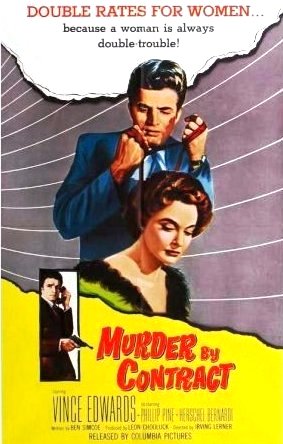
murder_by_contract_filmposterEvery once and awhile when you dig through the treasure trove of cinema which includes the B film you can wade through the refuse and come upon something truly special — elevating itself from all the lesser offerings of the past decades. Murder by Contract is such a film.
It’s not simply about the sheer economy because that’s what these lower billed films were supposed to be. Having a shooting schedule of a mere 7 days was hardly out of the ordinary. But it’s what all those involved from director Irving Lerner to cinematographer Lucien Ballard to lead Vince Edward were able to accomplish in that amount of time. This is an undeniable cult classic coming on the tail-end of what we know as film-noir and it’s easy to notice there’s something strikingly different about this film. It more ways than one it feels real, authentic, and true. Out of necessity, it chooses simplicity over the normal Hollywood production values and there’s an honesty in that.

Martin Scorsese even acknowledged the impact this film had on him at an early age and it’s true you can see bits of influence even in Taxi Driver as Travis bulks up and prepares for his future endeavors. You can see his fitness regiment mirrored in Claude our main person of interest.  In the same montage, the director adeptly suggests the passage of time while developing our protagonist through his silent actions.

Certainly, at face value, this is a very simple hitman film and there have been many ultra cool gunmen then and now. But there’s still something striking about the one we meet here. When we meet him he’s not a hit man at all but he’s driven to become one. He wants a contract, he gets it, and he carries it out. He does what he needs to do and he’s smart about it.

Vince Edwards does emit a certain calm and collected coolness but he’s also surprisingly existential for a film of this seemingly inconsequential nature. Alain Delon’s Jeff Costello is enjoyable for the very fact that he doesn’t talk. This man is interesting because he does — with choice words for waiters and about women among other topics. You get the sense that he’s a Superman as Dostoevsky wrote about and his handlers joke as much but that’s simply how he lives (Look, boy, you and me, we don’t pretend to be supermen. Me, I don’t even claim to be Mighty Mouse). Always smart, always proud and purposeful.

Given its initial humble locales, it’s easy to assume that the story is going to continue in this same vein for its entirety. But when Claude gets hired for a high-profile hit in Los Angeles his scenery also gets an upgrade to sunny Southern California. His timeline is two weeks but he’s content to soak in the sun, take his time, and think. He’s cool as always. The two men — his constant companions — who are to see that he completes the job are almost comically impatient. They don’t seem made for the crime business but here they are waiting at golf ranges and sitting in movie theaters to please their out of town guest before he goes to work earning his paycheck.

Another compliment to Murder by Contract is that it feels extraordinarily methodical and that’s a perfect reflection of Claude. He does get to his work in due time and he faces challenges, meeting them with the necessary reactions. Still, that doesn’t mean the hit is a piece of cake and because he waited so long even a pro like Claude begins to feel at least a little pressure. His two contacts are equally tense if not more so. Things begin to get testy between them as the deadline looms large.

This has to be the most idiosyncratic and interesting score I’ve heard since The Third Man. The strings of the electric guitar are used to haunt our consciousness as we nervously watch events unfold. Because that’s a lot of what being a hitman entails. Waiting around, biding your time. It requires nerves of steel. And Claude is business as usual to the end. But his business is a hard one.

4/5 Stars

“The only type of killing that’s safe is when a stranger kills a stranger. No motive. Nothing to link the victim to the executioner. Now why would a stranger kill a stranger? Because somebody’s willing to pay. It’s business. Same as any other business. You murder the competition. Instead of price-cutting, throat-cutting. Same thing. There are a lot of people around that would like to see lots of other people die a fast death… only they can’t see to it themselves. They got conscience, religion, families. They’re afraid of punishment here or hereafter. Me, I can’t be bothered with any of that nonsense, I look at it like a good business. The risk is high but so is the profit.” ~ Vince Edwards as Claude

The Big Clock (1948)

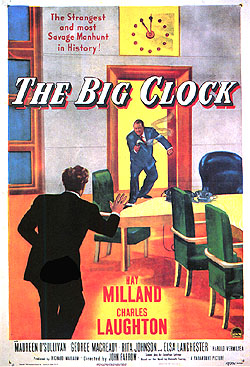
TheBigClock.jpgWith its rather dreary title aside, The Big Clock is actually an enjoyable thriller that works like well-oiled clockwork. It’s true that oftentimes the most relatable noir heroes are not the hardboiled detectives, although they might be tougher and grittier, it’s the hapless everymen who we can more easily empathize with. Bogart, Powell, and Mitchum are great but sometimes it’s equally enjoyable to have someone who doesn’t quite fit the elusive parameters that we unwittingly draw up for film-noir. Ray Milland is a handsome actor and he was at home in both screwball comedies (Easy Living) and biting drama (The Lost Weekend). He’s not quite what you would describe as a prototypical noir hero.

In some fascinating way, The Big Clock falls somewhere in the middle of those two reference points and to explain the very reasons it becomes necessary to start from the beginning. In fact, our story opens in a cold open that’s foreboding, shadowy and tense. The reasons being we don’t quite know yet and that’s how we get to know George Stroud (Milland), a workaholic chief editor of a crime magazine. He’s got a lovely wife (Margaret O’Sullivan) and a kid but, really, he’s married to his vocation. He’s never even been on a proper honeymoon.

And the reason for all this is Mr. Earl Janoth (Charles Laughton) the newspaper magnate with the vice-like grip and enigmatic way about him. He’s very practical in how he shows his displeasure (docking pay and firing employees at will) and it also allows him to exercise complete control in all facets of his business. That and the fact that his life is constantly on schedule, perfectly epitomized by the giant clock that has become the emblematic tourist attraction of his empire.

It’s a fascinating reflection of modern times circa 1940s Hollywood with international communication, journalists, and media conglomerates helping the world to function on a national level with mass media. Oddly enough, the story hardly conjures up Citizen Kane but instead the crime-filled frames of While the City Sleeps.

This film functions on two layers due to the fact that someone has been murdered. The blame is being pinned on a phantom man who looks strikingly like our hero, but simultaneously, the evil lurks close at hand. And things begin to fall into place. Strout is called upon to close in this criminal but only he knows that the man they are trying to capture is him. It’s complicated by the fact that, conveniently, he’s also the only one who knows for sure of his own innocence. After all, he would have known if he murdered someone. Here lies the tension as the film comes full circle back to its beginning – back to its climactic moments. Now we comprehend what’s at stake.

But what sets The Big Clock apart is the satisfaction in every little human interaction. The many characterizations are surprisingly lively and are at times fit more for a comedy than the darkened hallways of film-noir. Rita Johnson takes well as a bit of a femme fatale while Laughton pulls off his role with a certain sphinxlike iciness. Meanwhile, Laughton’s real-life wife, Elsa Lanchester delivers a scene-stealing performance as an eccentric artist who finds herself at the center of this entire investigation because of one of her very outlandish (and incriminating) paintings. And as every noir needs a thug, a menacing, mute Harry Morgan carries the mantle as is necessary–thank goodness he got promoted to M*A*S*H in due time. Everyone else, from the bartender to the elevator girl, to bar regulars all have wonderful moments to shine and show some personality that fills out the frames of the narrative.

Furthermore, John Seitz’s photography is on point, his camera roving with the necessary precision making for dynamic sequences while also developing the perfect tonalities of light and dark within the corridors of the mega news conglomerate. Director John Farrow is not all that well-remembered, but either way, The Big Clock stands tall as a quality film-noir that still somehow finds ways to be invariably funny. It’s a rare but still greatly welcomed combination.

4/5 Stars

Baby Driver (2017)

Baby_Driver_poster.jpgEdgar Wright has a reverence for movies, he knows his movies, and when he makes his own movies there’s always an inherent understanding of the cinematic landscape–taking what’s already been done and proceeding to add his own affectionate spin on it.
There are aspects of his filmography from Shaun of the Dead (2004), to Hot Fuzz (2007), and Scott Pilgrim (2010) that are familiar but you can never accuse him of being derivative because he seems fairly incapable of that mode of filmmaking. Coming from such a tradition of off-kilter modern classics, it’s no surprise that Baby Driver is far from your typical heist film though it boasts both cars and crime in equal measures.

Part of what sets it apart is a soundtrack, something that has been put back in vogue recently by films such as Guardians of the Galaxy. It reflects how popular music can replace a score by tying itself so closely to the plot and the most important elements of its characters so much so that it becomes vital even to the narrative arc.

In this case, it involves Baby (Ansel Elgort) a young getaway driver plagued by the memory of a life-shattering car crash, one of the many traumas being tinnitus, a ringing in the ears that he helps to alleviate by constantly blocking it out with music. Thus, he can be found with a ubiquitous pair of earbuds tucked into his auditory canals ready with an iPod Classic full of tunes for every occasion (He even has a pink one with sparkles).

Of course, his driving songs prove to be the most important and he uses music to keep himself in the zone when he’s making the getaway. What helps him concentrate proves to be an equally thrilling experience for the audience, immersing us in the action in the most utterly electrifying and crowd-pleasing way possible. Cars swerving this way and that down the busy urban jungle of Atlanta with retro tunes blasting in surround sound. If that doesn’t epitomize a summer blockbuster than little does.

Criminal types including a psycho killer named Bats (Jamie Foxx) and an armed and dangerous couple Buddy & Darling (Jon Hamm and Eliza Gonzalez respectively) are only a few of the colorful figures Baby falls into company with. Doc (Kevin Spacey) is their contact who runs all their operations with a plethora of inside contacts and a dry no-nonsense precision. He trusts Baby because he’s never steered him wrong. But it does beg the question how did this young man get himself into this life?

Because when he’s off “work” he spends time caring for his deaf foster father (CJ Jones), mixes audio cassette tapes out of his bedroom and frequents the local cafe that his mother used to work at. There’s also a waitress (Lily James) in said diner who intrigues him and brings him out of his shell with genial vivacity.  They share music as much as they share aspirations and mundane conversations.

But the danger is that the soundtrack becomes a gimmick and it’s true that Wright does a couple of no-nos including having his characters meet and subsequently fall in love over music, namely Carla Thomas’s 1966 hit “BABY” and Beck’s “Debora.” That’s an unforgivable cliche and yet we still want it and in his very best sequences he builds around the cadence and rhythms of the complementary songs that fit immaculately with the editing too. Whether a jaunt to grab coffee, the mundane creation of a peanut butter sandwich or a car chase, each becomes like a musical dance that’s surprisingly fresh.

If the genres of musicals and chase films ever had a point of intersection it would be Baby Driver. These opening moments have the energy of a Gene Kelly musical or even this past year’s La La Land pulsing through them. But it’s equally indebted to the heritage of The Driver (1978), Drive (2011), and of course the king of the heap, Bullitt (1968). The bottom line is that there is a care to deliver the goods as expected and have fun while doing it. There’s something refreshing about practical stunts that don’t utilize CGI and nevertheless manage to feel all the more exhilarating and real. There’s no question that this is an action film. But an action film set to the beat of the music.

Unfortunately, after setting such a fascinating groundwork for a film and delivering on a concept that seems admittedly absurd at times, it does feel that Baby Driver descends into utter chaos–action film hell if we want to coin a term–full of profane violence. No longer does it fully utilize the concept that it was built around or the engaging methods it initially used to draw the audience into yet another colorful creation of genre fiend Edgar Wright.

It’s as if the final act of the film doesn’t quite know where to go. The characters start to deviate from the axes that they have been moving on thus far. Not unsurprisingly Buddy is bent on getting revenge on Baby but Baby also shows a darker side without much provocation and Doc suddenly becomes a romantic sticking his neck out for the young lovebirds. There’s a certain amount of confusion on what direction to go next.

However, you could easily make the case that these developments are simply mirroring reality for a getaway driver, especially one as young as Baby. This is partially a tale of maturation. Losing innocence and trying to find it again without completely blocking out the world around you. In the end, the film settles down just enough into a conclusion that fits the parameters set up in the beginning. It’s lifted from the bloody wreckage and actually slows down long enough to ground itself in its characters once more as stylish and satisfying as ever.

4/5 Stars

The Hitch-Hiker (1953)

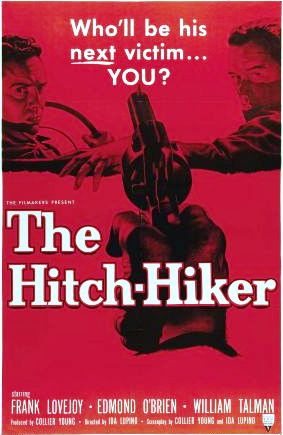
hitch-hiker_posterPart of the harrowing allure of the Hitch-Hiker is that it’s actually based on a true incident that occurred only a year before the events shown. It’s not as if someone took artistic license with some murderers and made it into a horror spectacle. Hitchcock’s Psycho especially comes to mind.
Instead, director Ida Lupino takes a much more universal approach with an opening title card suggesting that the events that follow about a man and a gun and a car could really happen to any of us. Perhaps it’s a cheap plotting device but it does throw the audience into the passenger seat quickly as they are introduced to a rash of murders and the hardened killer behind the spree Emmett Myers (William Talman) who soon has the entire mobilized police force looking for him.

The meat and potatoes of the film involve the brutal murderer taking two vacationing fishermen hostage and grinding away at them as he utilizes them to flee the authorities and bends them to his will. After all, he’s the one with the gun, and he’s proved numerous times he’s not squeamish about using it.

It also plays into the narrative’s hands that both Edmond O’Brien and Frank Lovejoy are not necessarily classically handsome. But they work as everymen. If Joel McCrea was the poor man’s Gary Cooper sometimes I think of Edmond O’Brien as the poor man’s Humphrey Bogart but that’s neither here nor there. Because in little films like this O’Brien left an indelible mark on film-noir. D.O.A. and The Bigamist are two other such examples. Lovejoy on his part is extremely understated, not even being able to quite place his face but we cannot help but admire his quiet stalwartness. O’Brien’s character seems the flightiest of the three and within their ranks, we’ve found a triangle that creates the contentious dynamic that’s the foundation of the film’s entire conflict.

A film of this length and from this era doesn’t have any right to be as intense as it is, yet the Hitch-Hiker proves to be just that. It’s chock full of not only frank depictions of wickedness but enough psychological torture to send tremors up the spines of an audience. It’s a real sweaty thriller. William Talman is absolutely diabolical in a performance that is as vindictive as any other role that comes to mind. It’s that evil.

Meanwhile, the deeply underrated cinematographer Nicholas Musuraca (Out of the Past) flaunts his skills in low budget filmmaking while former husband-wife duo Collier Young and Ida Lupino team up in another surprisingly compelling project, despite its meager production values. I laugh derisively at any contemporary who might have suggested Lupino could only do so-called issue-driven “Woman’s Pictures” because The Hitch-Hiker is really all about three men where the tension mounts to great proportions. Forget any other category. This is a stone cold crime film that goes beyond a simple gimmick.

3.5/5 Stars

This Gun for Hire (1942)

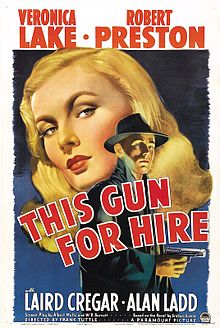
220px-this_gun_for_hire_movie_posterAlan Ladd and Veronica Lake found themselves partnered together on numerous occasions partially out of convenience (at 5’6 and 4’11 they were a perfect height match) but also there’s a genuine chemistry between them. And it all came into being with This Gun for Hire an economical film-noir where Ladd wasn’t even one of the top-billed stars.

Those coveted positions above the title went to Lake and the relatively young buck Robert Preston with Ladd tacked on with an “Introducing” title card. It was his latest attempt to break into the film industry that had long relegated him to bit parts and uncredited cameos (ie. Citizen Kane). It worked.

His menacing thug Raven is the first character we meet and he soon proves his brooding menace is more than just show. He is a gun for hire after all and he finishes up some business for a client getting his payoff through a nervous and portly fellow named Gates (Laird Cregar). But the money is hot and Raven soon finds a price on his head. He’s been had and he’s not about the let that slide.

The main push from the law enforcement is led by none other than Michael Crane (Robert Preston) who has recently been vacationing with his girlfriend Ellen Graham (Veronica Lake). As he burns the midnight oil she has her own gig as a magician/nightclub singer while also taking on some clandestine activities — activities that’s she sworn not to tell anyone about — even her beau.

As we might expect with the tenets of noir, the film is a lot bigger than we are initially led to believe, not simply involving murder, but also treason and government secrets as Pearl Harbor is still fresh on everyone’s minds. In such a way, our three leads get tied up both literally and figuratively as Raven continues as a fugitive in search of the man who set him up.

He too crosses paths with Ellen and in her, he finds a kind of confidante who doesn’t immediately write him off, despite his deadly tendencies. Before her he only liked cats, the reason, they don’t need anyone, rather like him. But he’s also not about to reform, not until his work is done.

Although its transitions are at times choppy and awkward, there’s indisputably an intrigue that courses through This Gun For Hire that makes it a diverting bit of noir and its latter half is the pinnacle of the action as the dragnet closes in around Raven. For the 1940s, it was a crackerjack finale but unfortunately, it’s sullied now by an abrupt happy ending. No matter.

While Robert Preston is a fairly flat lead, Veronica Lake is her usual playfully sympathetic self and Laird Cregar plays the spineless oaf to perfection. His slimy sort is one of the reasons noir becomes so wickedly delectable. In fact, he’s perhaps second only to Alan Ladd’s characterization because over the course of the film Ladd systematically steals the picture, taking every little bit of limelight and making it count. Solidifying his stardom by playing a highly compelling heavy and essentially stealing the girl away from his male costar.

Edward G. Robinson, Humphrey Bogart, and perhaps most notably James Cagney, all played corrupt, crazed, and vindictive gangsters at one time or another. What sets Ladd apart is his utterly emotionless eyes. They’re still the eyes of a stone cold killer but there’s a vast emptiness there. Anyways it’s the perfect laconic performance for film-noir and while he never reached the heights of Bogart (also a former supporting player), Alan Ladd rightfully so gained recognition for his own career — most notably in Shane. But everything has to start somewhere and This Gun For Hire is precisely that film. His mark is all over it.

3.5/5 Stars