Force of Evil (1948)

Forceofevil

This is Wall Street… and today was important because tomorrow – July Fourth – I intended to make my first million dollars. An exciting day in any man’s life. Temporarily, the enterprise was slightly illegal. You see I was the lawyer for the numbers racket”  ~ Joe Morse

Not in recent memory has a film left such a different taste in my mouth. Force of Evil has all the trappings of a thoroughly engrossing noir crime film. There’s the crooked lawyer Joe Morse (John Garfield), looking to get ahead by helping a top level gangster named Tucker take over the numbers racket in New York. There’s his estranged older brother Leo (Thomas Gomez) wanting nothing to do with his brother’s dirty money. It’s a classic Cain and Able type conflict. Add realistic location shooting inter-cut with voice-over, and a David Raksin score to make a real winner.

Yet Force of Evil is a dangerous film to take at face value because on that level alone it is highly entertaining. However, director and screenwriter Abraham Polonsky created something special here at only 78 minutes in length. His film has a certain rhythm that is hard to pinpoint. John Garfield especially delivers his lines impeccably, drifting in and out of common everyday jargon and moral convictions. It’s a slightly higher level of dialogue that deserves more digestion and thought. He even gives a taxi cab soliloquy that gives On the Waterfront a run for its money.

As a big picture, the plot makes sense for the most part. Joe is on the verge of making millions on the Fourth of July, and he wants to cut his brother in on it. But his brother works one of the smaller rackets which is bound to be pushed out. He has his own sense of morality, where he can bear what he does but not what Joe will hand him.

Leo reluctantly agrees to join the big operation out of necessity until things get way too involved, and this time Joe is in a place where he has to get out himself, with no way of protecting his brother. His resolve to watch over his brother is to no avail when the Ficco Gang tries to push their way into the racket. Meanwhile, Joe still finds time to flirt with the innocent and proper Doris Lowry (Beatrice Pearson), the former secretary of Leo, who is in complete juxtaposition with Mrs. Tucker (Marie Windsor), who Morse keeps company with initially.

However, this whole mess is constantly being complicated. There is “Freddie” Bauer (Howland Chamberlain), the nervous fellow who used to work with Leo and now, with the big takeover, is looking to blow the whistle on whoever he can to stay out of the fray. There’s the police who seem intent on getting their hands on everybody they can and not showing favoritism towards anyone. There’s Leo who is righteously indignant while also taking his brother’s offer of a better position begrudgingly. There’s Doris who is in all ways sensible and yet still falls for Joe, not in your typical passionate way, but it still happens nonetheless. There’s the line between legitimate business and criminal activity that is constantly be zig-zagged.

Finally, there is Joe who deserves the greatest amount of scrutiny. John Garfield apparently could not pinpoint his character’s deal initially either, but he must have figured it out because he nailed it. It’s probably his greatest performance. He’s the kind of guy who blows the whistle on his own brother in order to help him in his own way. It doesn’t quite make sense, and he seems so often blinded, but he keeps pushing forward in a vain attempt towards success. All the caustic words and aggressive come-ons don’t work. Ultimately, he has to come to reality. When Joe does, that’s when he realizes what he has started and what he has done to Leo. By that point, it’s nearly too late for him, and it’s most definitely too late for Leo.

4/5 Stars
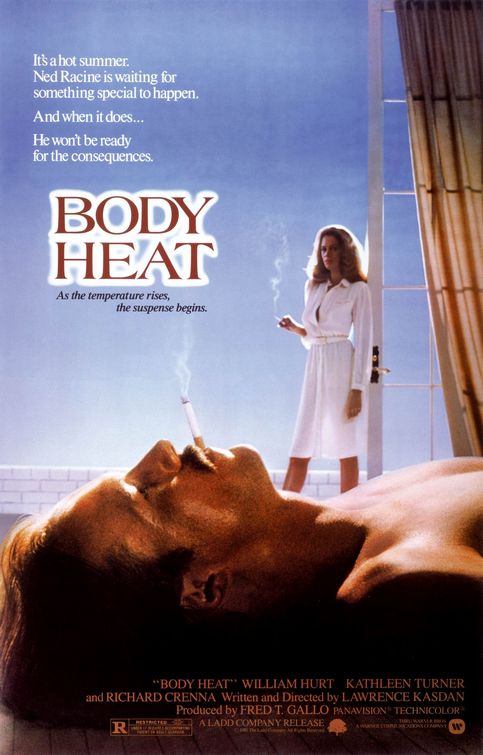
Body Heat (1981)

Body_heat_ver1In his directorial debut, Lawrence Kasdan (screenwriter for Empire Strikes Back and Raiders) brought us a neo-noir burning with passion and positively dripping in sweat. Quite the combination indeed.

It opens with the seductively jazzy score, courtesy of John Barry, dancing over the credits. It brings to mind cool afternoons with cool drink in hand. The first shot we are met with is a man driving in his convertible, top down and shades up. He’s a cool and collected looking young man, but we know that there must be something lurking underneath all of this. This exterior is soon dropped and we are met with a reality that is heavy with humidity and sticky days.

Our protagonist is Ned Racine (William Hurt) who is a struggling lawyer working in Florida during an especially sweltering Florida heat wave. One indelible evening he has his first encounter with a beautiful, cool blonde named Matty (Kathleen Turner) whose temperature runs a little hotter than most. He makes a pass or two even after finding she is married, and she rejects his attempts at first. However, during a point of no return, the two give into their cravings and spiral into a passionate tryst. Their affair is fairly easy to keep hidden from Mr. Walker (Richard Crenna), but an old high school friend of Matty’s and Matty’s niece unwittingly find them out one way or another.

They’ve had enough of secrecy and Racine resolves they must kill Walker so that Matty might be freed and so she might also get money due to his impending death. Not satisfied with that, Matty wants to alter the will so she gets more. Racine is completely against that idea.

The night of the murder comes and they act it out with precision and Racine gets rid of the body.  He finds out only afterward that Matty had a new will drawn up and he doesn’t like it one bit, but he is forced to play along. The prosecutor and police detective involved in the case (Ted Danson and J.A. Preston) happen to be friends with Ned through work. They spend many a sweaty afternoon chatting it up at the local diner. That’s what makes it hard when all the facts begin to pile up and slowly but surely Ned’s involvement becomes more suspect. His alibi and the degree of his relationship with Ms. Walker is being questioned.

Meanwhile, he and Matty must find a pair of glasses that might incriminate them. It becomes clear all too soon that things are not as they seem. Matty ultimately abandons Ned, and he winds up behind bars, happier without her. In one final revelation, he starts to put some of the pieces to together in prison. He’s a hot mess.

It’s difficult not to make comparisons between a film like this and classic noir such as Double Indemnity. In both films, there is a man who seems fully committed to going through with a crime, but it is really the woman who has the most to gain from the situation. Furthermore, Ned as the Walter Neff character has his Barton Keyes in the form of Lowenstein and Oscar, who are friends but also the ones who must bring him to justice. However, Body Heat can get away with more, such as sexuality and allowing certain crimes to go unpunished. It’s a rather surprising ending that is nonetheless very interesting.

Body Heat also has the cigarette prevalence of a film-noir (which Ted Danson comically will not take part in). It’s as if Lowenstein is the only character who realizes this habit is out of place in a world of 1980s sensibilities, not to mention crimes of passion.  It was odd seeing Ted Danson in a pre-Cheers role gulping down ice tea after ice tea. Kathleen Turner and William Hurt were a good fit as the gorgeous siren and her partner in crime. They are two attractive people and yet that did not put them outside of the law as they would find out. Body Heat certainly wrenched up the heat a couple of notches and never let off. It positively burns with frenetic energy and unbridled passion.

4/5 Stars

Zodiac (2007)

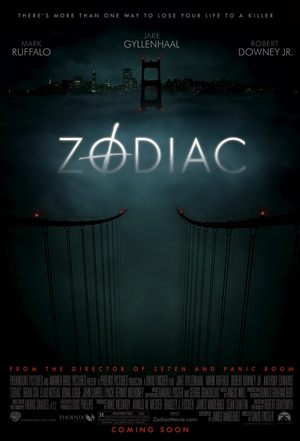
Zodiac2007PosterAfter watching this film I was certainly intrigued but I thought that it was a rather slow film in many respects. However, when you think about it this film is really intriguing. One reason is that as a procedural the film utilizes this pacing to its advantage as it covers the events of the case.
Another reason is that Zodiac is based on the true events that took place in Northern California in the late 60s and early 70s. Furthermore, the culprit was never truly found even if there are a number of suspects who seem the most probable based on circumstantial evidence and testimony.

The point is we still don’t know who the Zodiac killer is even at the end of the film and this adds to the legend, mystery, and intrigue that surrounds the whole story.

Most definitely deserving of a movie adaption, director David Fincher, Jake Gyllenhaal, Robert Downey Jr., and Mark Ruffalo, make Zodiac work as a engaging albeit plodding procedural.

4/5 Stars

The Crimson Kimono (1959)

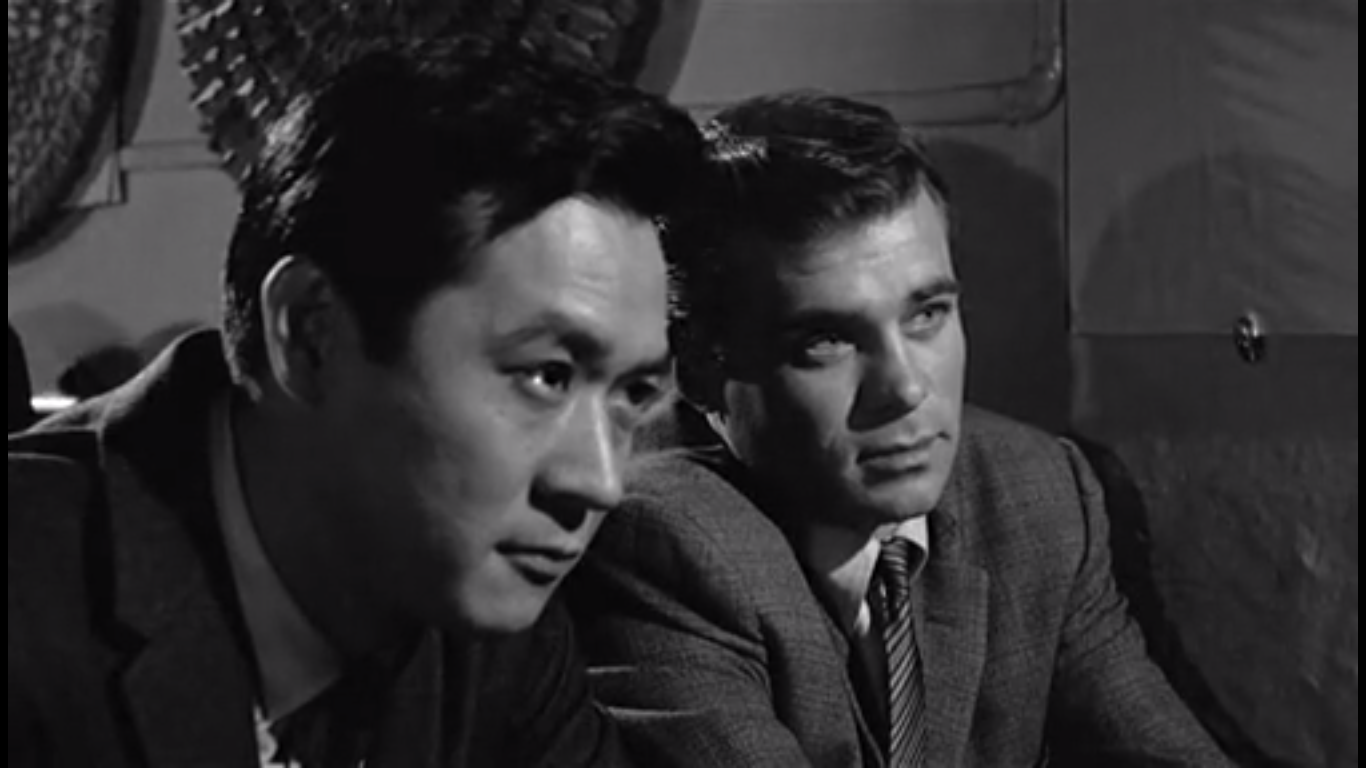
crimson kimono 1 shigeta and corbettFrom director Samuel Fuller comes another welcomed addition to his canon. It features the same type of seedy urban landscapes and back alleys of Pick up on South Street (1953) and there are some equally interesting characters like Mac (Anna Lee). It all is underlined by some sleazy jazz music in the vein of Sweet Smell of Success except this one is set in L.A.

The plot line is basic enough following two policemen as they investigate the homicide of a local stripper with a heart of gold and wasted plans for a new show involving kimonos and karate. Their only real lead is a painting and the name that goes with it. That’s where the more interesting part of the story begins.

I failed to mention that one of the cops is Caucasian. His name is Detective Sergeant Charlie Bancroft (Glenn Corbett). His partner is Japanese-American or “Nisei,” meaning the second generation. Detective Joe Kojaku (James Shigeta) is his name. The beauty of their relationship, which is one of Fuller’s focuses, is that they are equals who are inseparable ever since landing in a fox hole together in Korea.  Charlie was saved by a pint of Joe’s blood, Charlie practices kendo with Joe in their off hours, and they live together on the side. You cannot get much closer than that.

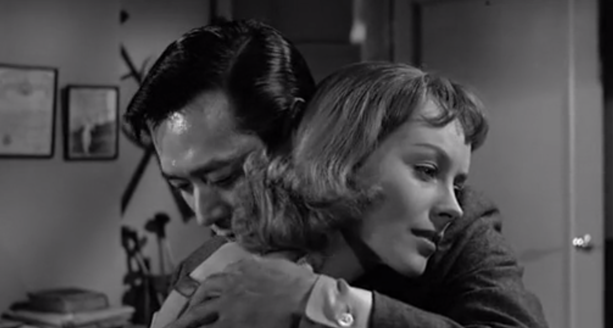
The movement of the plot leads them to Ms. Chris Downes (Victoria Shaw), a pretty young painter who is the only witness who potentially saw the man who shot Sugar Torch. In between looking at journals full of mug shots, she gets to know both Charlie and Joe. Charlie sees himself falling in love with her and like anyone he tells his best friend. Joe is happy for him until the fateful moment when he is alone with Chris. She makes her affection for him quite plain because he’s a pretty great guy, but as a good friend, he doesn’t do anything. It tears him apart and it only hurts them as they plod on with the homicide.

What follows is a painful love triangle embroiled with issues of race, friendship, and misguided notions. It’s jarring because these three are all likable and you want only the best for them, but it cannot be remedied like the murder which ultimately gets wrapped up neatly.

crimson kimono 4 shigeta shawSamuel Fuller always tackles issues of race head on like no other. In fact, he was ahead of his time when no one else would show such relationships, romantic or otherwise, on the silver screen. Beyond whether or not an Asian man and a Caucasian woman romantically involved was accepted back in the 1950s or not, it probably was not what audience cared to see at the movies. To me, now, it’s really interesting, especially to see such non-stereotypical roles all across the board. It’s a breath of fresh air from the Charlie Chans and Mr. Motos.

On another level, Fuller’s camera makes solitary L.A. street corners and the bustling Nisei festival amazingly dynamic. It brings Little Tokyo alive, filling it with genuine people, sights, and sounds. Thank you, Sam Fuller.

It’s like mixing two dabs of paint together. You could never separate them.” ~ Mac on Charlie and Joe

It’s what you think is behind every word and every look.” ~ Chris Downes

4/5 Stars

The Long Goodbye (1973)

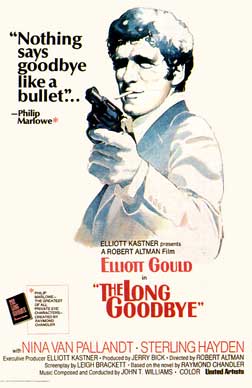
LongposterIn the storied tradition of film-noir comes another film in the canon and yet another depiction of Raymond Chandler’s Phillip Marlowe. However, the world with which Robert Altman places his private eye is far different than any place the character has ever inhabited before. Whereas another neo-noir such as Chinatown followed the storied tradition of noir in many ways, The Long Goodbye is often more of a satire than a new addition to the genre.

Elliott Gould as Phillip Marlowe has the smoking down like Bogart or Dick Powell, the garb, and even the car, but his environment is the 1970s, making him quite anachronistic, and that seems to be just fine with Altman. He subverts the genre by placing Marlowe in a world he does not seem to fit in and yet he himself does not seem to question it.

The girls next door are hardly your typical girls-next-door. The police station looks like it could be out of The Rockford Files. John Williams and Johnny Mercer’s title song pops up in all places from the elevator to the car radio. His tail Harry is an incompetent joke. Passing cars give the security guard time to practice his best movie star impressions. Marlowe as well proves he is not much of an animal guy with a cat that he loses and a dog that hates him.

The drama is not much better in that regard. Two murders take place (including the death of a friend), which are later followed by a man’s suicide and his beautiful wife fleeing the country. All the while, on the case Marlowe is scrounging around and coming up mostly empty. The cops bring him in, an unhappy thug roughs him up over some money, and he can get very little out of the drunken writer Roger Wade (Sterling Hayden) or his wife (Nina van Pallandt) before she disappears.

By now we know better than to compare this Marlowe to any predecessor. He gets smashed about by the waves trying to stop a suicide and ends up in the hospital after getting bowled over by a car. He seemingly does his best detective work in a stupor, and he somehow escapes a chilling confrontation where everyone is removing their clothes. All these scenarios make little sense and even with the twisted conclusion to the mystery, there still is no explanation for the way things are. Altman gives us a surprising end but no answers as we watch Gould dance off into the distance playing a mini harmonica. Marlowe can often be heard saying, “It’s okay with me.” It’s the story of his life and if he is fine with it, I suppose his audience will just have to accept it too, even if they do not quite like it.

4/5 Stars

Catch me if You Can (2002)

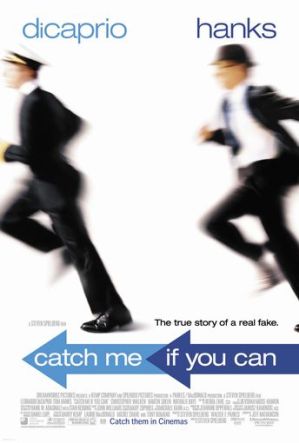
Catch_Me_If_You_CanDirected by Steve Spielberg and starring Leonardo DiCapprio, Tom Hanks and Christopher Walken, the film chronicles the exploits of Frank Abagnale. As a boy int he 1960s he grew up with an American father and French mother but after they get a divorce Frank flees home for good. As his money runs out Frank begins to pull confidence scams and he goes so far as impersonating a Pan-Am airline pilot.

He slowly moves across the country and cashes forged checks adding up to millions of dollars. Soon the FBI catches wind of him and agent Carl Hanratty (Tom Hanks) begins to track Frank. By now Frank has masqueraded as a doctor and a lawyer while also finding time to get married. Hanratty starts to close in again and this time Frank heads to Europe where he uses more of his forged checks.

Frank has a run-in with the French authorities but Carl got him out of it only to have Frank escape once more into the U.S. This time he is caught for good and given a 12 year sentence despite his youth. But thanks to Carl, Frank is offered a job with the FBI to lend his talents to check fraud. And from that point on Frank’s life was relatively normal.

I really enjoyed this story line, DiCaprio is good, the soundtrack is great (Come Fly with Me!) and the title sequence is unique. All in all this is an entertaining cat and mouse game that is well worth the time.

4/5 Stars

Review: Double Indemnity (1944)

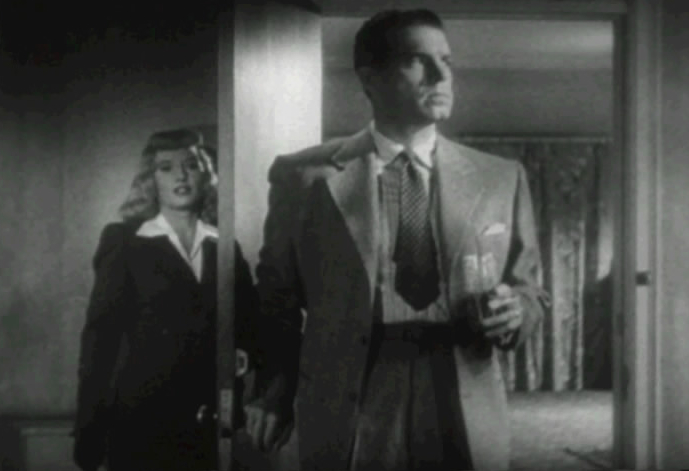
Double_indemnity_screenshot_8It was a hot afternoon, and I can still remember the smell of honeysuckle all along that street. How could I have known murder can sometimes smell like honeysuckle?” – Walter Neff

I can’t say this enough. Double Indemnity is so deliciously enticing each and every time I see it. Maybe it’s the A-grade script from Billy Wilder and crime novelist Raymond Chandler with its noir cynicism and memorable phraseology. Maybe it’s the shadowy, low-key interiors or L.A. exteriors. The monotonous beating score of Miklos Rozsa, mourning impending doom. Maybe it’s the plain, laconic way of Walter Neff or his bloodhound buddy Keyes. Is it the innocent Lola who gives the film morality? Or the artificial wig and the silky smooth purring of Phyllis Dietrichson?

In fact, I named many, if not all, of the many facets of this film, because I want to attempt to acknowledge all of them before I forget. But the reality is I love Double Indemnity at its most basic level as a piece of prime American cinema. Yes, it is film-noir and yes, it came from a European director, but it is very much a product of 1940s sentiment as the war years waned.

The story is pulled right from some pulp fiction sleaze by James M. Cain and cemented itself as a noir classic in its own right with all the trappings that are called for.

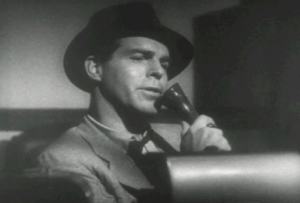
It opens with the beginnings of Rozsa’s score reverberating in our ears and it very rarely lets up. A car blazes wildly down the street and winds up in front of an insurance agency. Out stumbles our protagonist Walter Neff (Fred MacMurray) and for the rest of the film, he relates the recent happenings over the Dictaphone of his colleague Barton Keyes (Edward G. Robinson). It goes something like this:

During his first visit to the home of a Mr. Dietrichson, he instead has his first encounter with the man’s sensual wife, and his heart goes pitter-patter from then on. His motivation is no longer insurance. Now he just wants the chance to see her more. He gets his chance to advise her on a plan, and it all seems playful enough until she insinuates that she wants to knock off her ol’ hubby. At least that’s how Neff reads it. However, he cannot get her out of his head as he has fallen into her web. There’s no turning back.

They think of everything and Neff has everything figured out to a tee. As he suggests, it’s like having the perfect odds on the roulette wheel, you just need an accomplice to spin and Phyllis is just that person. From then it’s just straight down the line. They corroborate on all the details at local Jerry’s Market, Walter sets up his alibi, and he does the devilish deed as Phyllis stares with cool satisfaction at the road ahead.

They set it all up like an accident as the last touch, because as Neff knows all too well if it looks like Mr. Dietrichson was killed from riding a train the Double Indemnity clause of the insurance will mean double the payoff due to how unlikely the occurrence is.

 Double Indemnity (1944) - UpdatedHis only fear is the inquisitive nose of Keyes and the “little man” inside the claims investigator’s stomach, who warns him of the first sign of anything fishy. He gets close to the truth but not quite there. Neff is too close for him to see it. However, as things begin to heat up Phyllis and Neff must separate.

As Neff tries to console Lola Dietrichson over the death of her father, he quickly finds out what the naive girl has to say about her step-mother. It puts a little light on the subject, and Neff realizes what he’s been taken for. He wants to remedy things while he can, patching Lola up with her boyfriend, and going to confront Phyllis one last time.

It’s the perfect set-up. Darkened rooms with curtains drawn. Phyllis reclined in an armchair with evil intentions on her mind. In walks Walter and they have it out. Shots are fired, literally. Phyllis will never let up with her ploys until Walter gives her a little help for the final time. I’m sure the Hays Codes loved this one. I certainly did.

Back in the office Keyes finally overhears the end of Walter’s “confession” as his friend bleeds to death. In one last touching moment, Keyes returns the favor and lights the cigarette like Walter has been obliging to do the entire film.

Walter: “Know why you couldn’t figure this one, Keyes? I’ll tell ya. ‘Cause the guy you were looking for was too close. Right across the desk from ya.”
Keyes: “Closer than that, Walter.”
Walter: “I love you too”

Billy Wilder traded longtime partner Charles Brackett for Raymond Chandler, and despite a rocky partnership, they ended up with one of the greatest scripts, chock full of memorable bits of dialogue. You know you have an impressive cast when Edward G. Robinson is your third lead and each character is playing against type. It’s great casting, in a quintessential American drama solidified by great cinematography and storytelling.

It doesn’t get much better than this and it certainly does not need to. You know Double Indemnity is good when I’ve seen it multiple times and each time the bullets still keep me on the edge of my seat. Thank you, Billy Wilder, for teaching us murder sometimes smells like honeysuckle. That’s absolutely beautiful.

Phyllis: “No, I never loved you, Walter, not you or anybody else. I’m rotten to the heart. I used you just as you said. That’s all you ever meant to me. Until a minute ago, when I couldn’t fire that second shot. I never thought that could happen to me.”
Walter: “Sorry, baby, I’m not buying”
Phyllis: “I’m not asking you to buy. Just hold me close.
Walter: “Good-bye baby.”

5/5 Stars

The Grifters (1990)

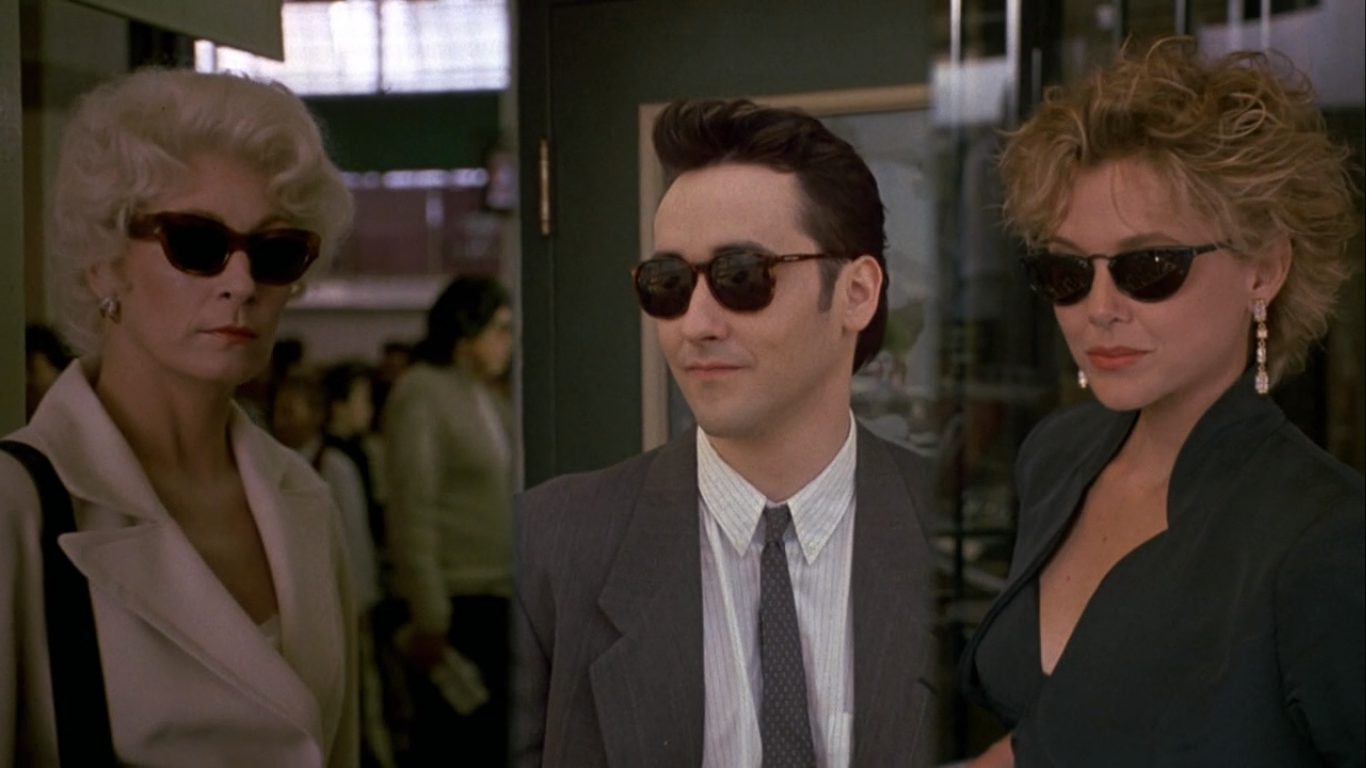
b2415-grifters1When you have Martin Scorsese producing and Stephen Frears directing you are bound to get something intriguing, and The Grifters is just that. It’s a Neo-Noir starring John Cusack (no Lloyd Dobler), Angelica Huston and Annette Benning. It’s got everything you can expect with a title like that from small-time swindling and horse races in La Jolla to deadly Femme Fatales with shady intent.

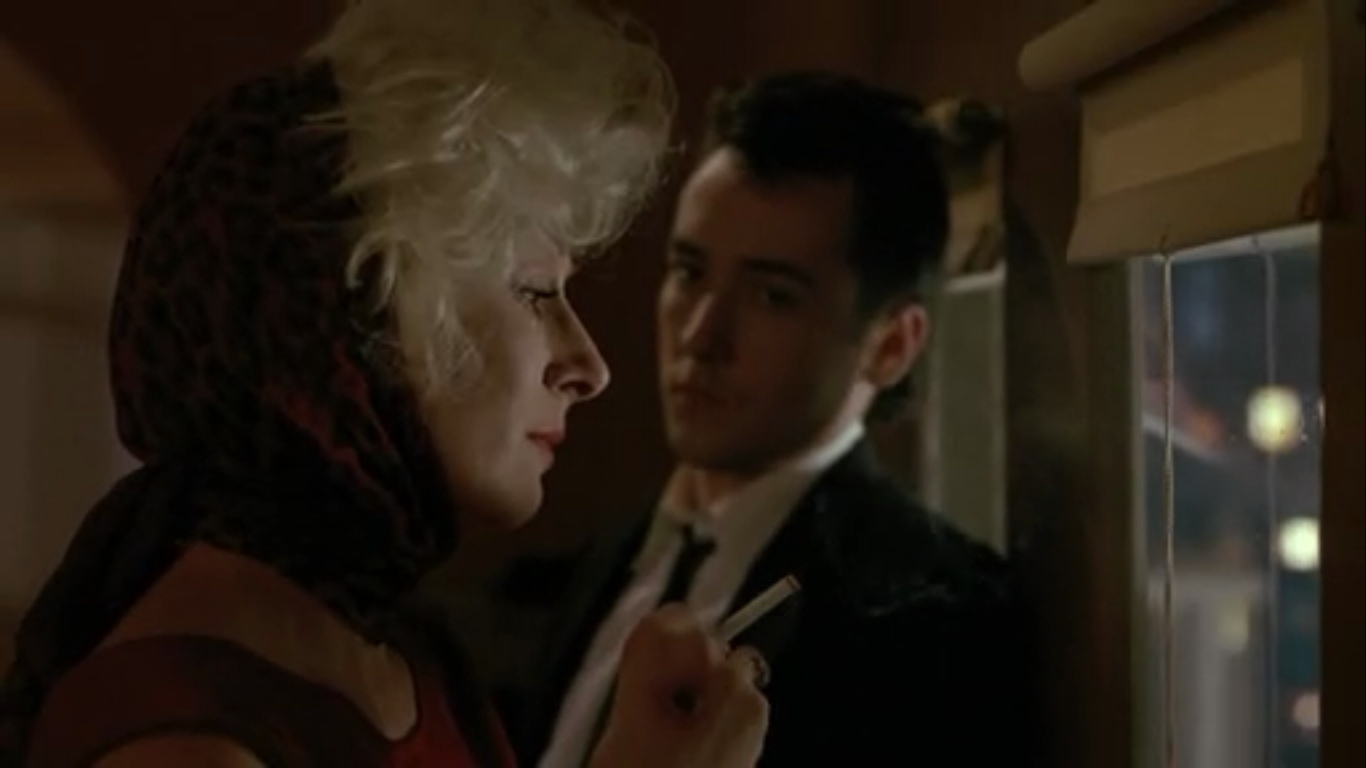
The film really has three stars in the above, but at the center of it is young grifter Roy (Cusack) who has been doing nicely for himself ever since he went off on his own. But his type of life does not come without a price. Lilly (Huston) is an old vet who has worked all the angles for a long time and now she is in the service of one tyrant of a bookie named Bobo. She hasn’t seen her son for 8 years, and all of sudden she comes back into his life finding him in need of medical attention. Their reunion is far from civil.

Then last but not least is the despicable Myra (Benning) who seduces her way into the hearts and the wallets of many men. Now she’s with Roy but before there was another con man and she is far from exclusive using her sexual wiles to get anything and everything she wants. It’s not surprising Lilly can’t stand her guts. No one could. If he’s honest not even Roy. Soon enough Lilly poisons him towards Myra and the seductress wants revenge and she seemingly gets it.

What follows involves lots of blood, lots of money, and a descent deeper towards a hellish conclusion that feels hollow and cold. Elmer Bernstein’s score accentuates the mood with a tense and altogether creepy string section.  As far as character dynamics, go this has to be the strangest triangles around. Each one of these confidence tricksters is a grifter and each one has a slightly different angle. However, when it’s all said and done only one of them can come out on top even if they didn’t want it to end that way. That’s just the way things go. There is no turning back, only running away for dear life.

The three leads played their roles to a tee and The Grifters proved generally engaging even if all the questions were not answered with loose ends still to be tied up. It also blends the general themes and outlook of noir with a setting that almost feels anachronistic at times. It’s hardly a complaint though and maybe things are better this way anyhow.

3.5/5 Stars

T-Men (1947)

fb214-tmen3T-Men looks like it could be a dated 1940s procedural right out of a stuffy newsreel. It’s complete with an omniscient narrator overlaying everything. He gives us all the juicy bits without relaying all the superfluous details because, after all, this is a composite case. Also, a lot of effort is made to bring up similarities with the Al Capone case.  So, in other words, it does feel like a heavy-handed newsreel at times.

However, thanks to director Anthony Mann and the pure cinematography of John Alton, T-Men sheds its shallow top layer and gets interesting.

We are given a bit of dry exposition to kick things off. We are following a couple T-Men named Dennis O’Brien (Dennis O’Keefe) and Tony Genaro (Alfred Ryder), complete with full personal bios, who are called on to infiltrate a counterfeiting ring. They get in with the Vantucci mob and make their way from Detroit to L.A. O’Brien aka Vannie Harrigan goes to all the steam baths across town and finally comes across a man named the Schemer. After putting his phony dough in circulation the plan is set in motion as he gets in with the thugs of L.A. too.

And that’s what the rest of the film entails, with O’Brien keeping his cover, while also staying in contact with his superiors and being joined by Tony, aka Tony Galvani from Detroit. It would be run-of-the-mill if not for a few scenes and Alton’s images as previously mentioned.

One day Toni runs into his wife in the most awkward and potentially deadly of circumstances. A well-meaning friend nearly blows his cover in front of a thug and Mary Genaro (June Lockhart) bravely protects her husband. It’s a painful moment.

All too soon Toni’s in trouble and O’Brien soon after, but he’s almost gotten to the top. The digging and prodding have nearly reached their apex. A bit of luck and some timely police support get to O’Brien soon enough so he survives. It’s a show of heroics and gutsy police work like we have undoubtedly seen many times before.

T-Men is kind of like The Departed without all the thrills and plot twists, and cursing if you want to see it that way. But the images are so moody and beautiful that it’s hard not to at least tip your hat if you had one. Do yourself a favor and see Raw Deal, a film with many of the same components and probably a slightly better payoff.

3.5/5 Stars

Pickup on South Street (1953)

bf34b-pickuponsouthstreetFrom American cult film director Samuel Fuller comes a brief, yet potent film-noir laced with communism, pickpocketing, and a lot of shady business on the streets of New York.
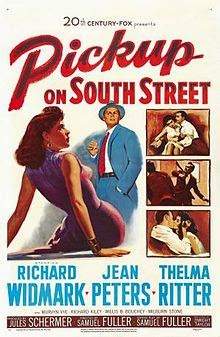
Grifter Skip McCoy (Richard Widmark) is just recently out of the can, and he is back on the streets up to his old tricks again swiping wallets. His victim this time around is a pretty young dame named Candy (Jean Peters) who has a mission of her own to drop off a package. Neither of them knows quite what they have gotten into and to start off with, nothing happens. What exactly has Skip stumbled upon? The answer includes microfilm, spies, and the Commies. All of a sudden things are hot, as McCoy tries to cut a deal with the Reds, and Candy tries to recover the film she unknowingly lost. Candy gets caught in the middle of her boyfriend who is sided with Communists and Skip who wants to cash in on his good fortune. Between Skip and Candy begins a wild and passionate love affair that seems destined for disaster. Both have their own agendas, but it is ultimately Candy who drops hers because of her new found affection. McCoy is callous at first but he comes around, in the end, leaving this noir on a surprisingly positive note.
Thelma Ritter was usually colorful in her many screen appearances and she has another memorable turn as the wheeler-dealer Moe Williams in this film. However, Moe does not just deal ties and secrets; she is a woman with a conscience and a touch of good old-fashioned patriotism. In her own simple way, she is a hero whether people know it or not.
Widmark played a similar conman in Night and the City (1950), but this time around things worked out a little differently for his character. The pickpocket sequences were perhaps less elaborate but still similarly intricate to Robert Bresson’s Pickpocket (1959). It is possible that he got some of his inspiration from Fuller’s work here.
This is a real communist era thriller that Fuller injects with passion, grit, and some unadulterated violence. It is not a pretty film necessarily, but that is not what Fuller is going for, and he never does. Instead, as a former journalist, he reveals to his audience the nitty-gritty of South Street up close and personal. He succeeds with flying colors in delivering a first rate scoop of uncompromising pulp.
4/5 Stars