Berlin Express (1948)

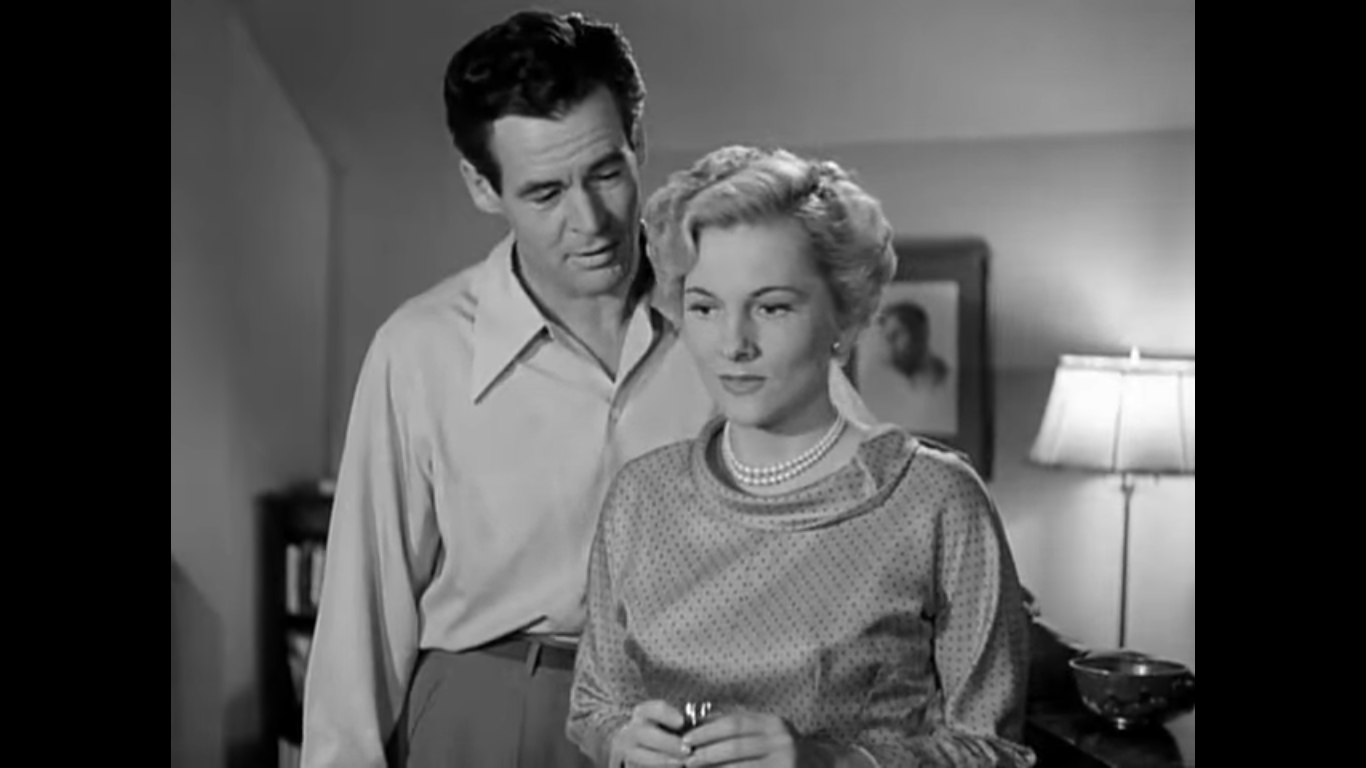
Added to the landscape of The Third Man, Germany Year Zero, and A Foreign Affair, Berlin Express is a fascinating portrait in the rubble-film genre. These are the pictures on the cutting edge of filmic history, shooting on-location in the post-war world that was still licking its wounds and putting the pieces back together across France, Germany, and really any other place that was directly affected.

Although we see the IG Farben Building — famously Eisenhower’s command post after the end of the war — it’s the bombed-out world surrounding it that proves the most telling. Even as the newsreel narration feels overbearing after a certain point (it doesn’t have the wry verve of Carol Reed), we’re getting to see elements of the world as it was at that precise moment. Jacques Tourneur is at his best with evocative canvasses to work against, and the post-war landscape certainly fits the bill.

It is a different take on The Third Man milieu. You get the seedy, grungy impoverished nature of the world, tramping around the train station where men fall to the ground for a dropped cigarette while peddling any miserable trinket they possibly can.

But the drama also considers the zones of the newly divided Germany by calling up characters of each rank and nationality. They are all very overtly represented and implicated in this story.

It commences with a train loaded with passengers of all different nationalities who make for a convenient focal point for our story because they come to represent the Allies looking to consolidate power and pave the way for the Cold War in a decaying imperialistic society.

One can’t help but think of archetypal train tales like Christie’s Murder on The Orient Express or Hitchcock’s The Lady Vanishes. However, the movie shares more in common with The Narrow Margin than some may realize. Even Charles McGraw, who would play the protagonist in the later Richard Fleischer B picture fills a part in this one.

Here he’s helping to smuggle a very crucial German leader (Paul Lukas) across the country to help the reunification efforts. The remnants of the Nazis would love to get their hands on him or do away with him for good. They are the film’s primary evil — lurking in the negative space — until they are finally forced to show their hand.

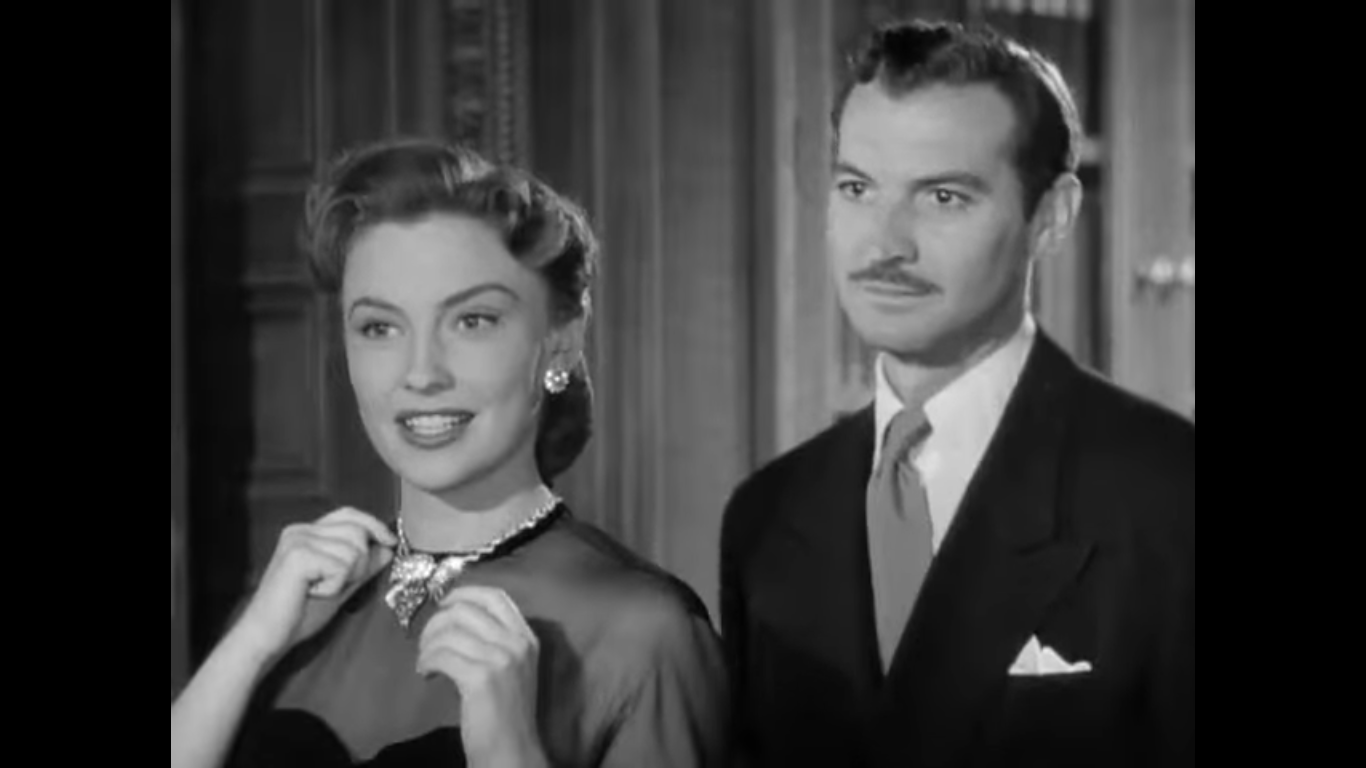
Merle Oberon calls on the sense of camaraderie from each Allied faction to help her find the missing doctor because it’s true that despite the best-laid plans, betrayal is imminent. He is far from safe. They group off to search in all the local back alleys and hellholes.

At this point, Robert Ryan seizes his chance because he’s taken an immediate shining to the French girl Lucienne (not to be confused with the film’s cinematographer Lucien Ballard). It’s amazing to acknowledge approximately 49 minutes into the picture Oberon and Ryan finally get together in what feels like a more traditional Hollywood dynamic with the headliner stars linked romantically. Until this point, however, it’s very much (and very purposefully) a picture by committee.

Ryan for his part is fairly straight-laced and likable, Oberon is principled, and the other blokes add their own touches of good humor or contrarian perspectives. It never feels like a consistent drama and there are whole patches of dialogue broadcasting its intentions too readily. Of course, this has been the cardinal sin of screenwriting since the dawn of time. Closely connected to the storytelling commandment passed down from Billy Wilder: Thou shalt not bore.

But when Tourneur is able to take moments and work them out through dynamic visual means, we get something wholly worthwhile. Even as it’s not always superb storytelling, watching Robert Ryan punch it out in a vat of beer in an abandoned brewery, cloaked in the shadows of noir, is the movie at its very best.

Close behind is when a wounded clown incognito totters onto the stage to uproarious laughter only to topple right on top of the camera as the investigating military police are left to pick up the pieces.

In such moments, it doesn’t matter where it happens or what it means so much as how it is executed for our benefit. We feel the impact. Or later on the train, with a traitor in their ranks, a violent act is perpetrated and implausibly reflected out a train window. Whether it makes total sense, the core of the action is relayed to the audience in such an ingenious fashion.

Then, the movie wraps up with more wry, slightly disdainful commentary about the bombed-out ruins of Berlin as if it’s a sightseeing tour. It runs in tandem with many of the more staged moments promoting a lasting message of goodwill. Alas, it was not to be.

So while the film can never get out of the shadow of propaganda or cast off its noble intentions, for viewers interested in something more timeless, Berlin Express has a handful of genuinely gripping moments belying any bouts of heavy-handedness. It’s relatively easy to latch onto the good and tolerate the rest.

3.5/5 Stars

Sometimes I Think About Dying (2023)

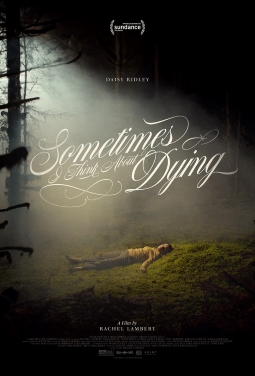
Sometimes you start a film and there’s such a specific sense of place, rhythm, and tone you perk up in anticipation. I felt that sensation from the opening credits of this new film starring Daisy Ridley.

The score is replete with a few murmuring voices and a harp, and there’s the muted color palette of a certain sleepy town in the Pacific Northwest. There’s an instant sense of where we are and what end we might be converging on. That is, besides death.

Sometimes I Think About Dying is directed by Rachel Lambert from a screenplay co-written by Kevin Armento, Stefanie Abel Horowitz, and Katy Wright-Mead. It’s easy to pigeon-hole it as a project filling the quirky indie fix and the proof of concept seems littered with a minefield of tropes.

Fran (Ridley) works in an office — the dreaded 9 to 5 desk job — and between emails and spreadsheets her mind will drift away to far off places in her subconscious. It’s also a movie with plenty of inserts of contorted posture. At times it’s uncomfortable watching her exist.

Robert (Dave Merheje) is the new guy. He’s personable and a little dorky in a charming sort of way. Make him a cinephile and you have a perfect movie character. He feels like the Yin to Fran’s Yang and somehow that bodes well.

They don’t so much have chemistry as stunted, awkward interactions. They go see a movie at the local art house theater. They have pie afterward as one does. One wouldn’t label them a couple so much as they’re two people looking for a connection; he’s just moved to town and well, she’s not the most sociable human being.

In this depicted life of dreary and at times surreal isolation, human connection is such a moving balm. They meet up again and she sees his new home, gets the tour, and learns he has his own past; he’s been divorced, not once but twice.

Ridley’s performance does feel like a performance, but the act of playing something so stunted and repressed and yet giving the sense of a charming person just trying to get out is such a meaningful focal point. Because in another movie it would vie to get bigger, but she never allows it to get into a cartoonish heightened reality of indie purgatory.

A distinction must be made. Fran doesn’t hate her life. She’s good at her job and in her own way is a part of the ecosystem in the office. Whereas Excel sheets and requisition forms are soul-crushing for someone like me, Fran seems to thrive in such a regulated environment. But that doesn’t mean she doesn’t also feel the pangs of loneliness. It’s not like they are mutually exclusive; people are nuanced.

Within the context of the film, budding feelings are meager but precious. Her personal hurt and even her greatest transgression are never extended blow outs but these contained moments thoughtfully developed within time and space by the filmmakers.

Fran and Robert get invited to a get together and they both oblige. The subsequent gathering of murder in the dark is a nice evocation on the movie’s primary theme. It’s a visualization of death for a character who does consider its headiness from time to time. The best parts of these scenes is that they feel like a rambunctious good time. That is one of the movie’s strengths: balancing these emotions of warmth and affability with real melancholy.

Robert tells her later in the car, “You’re secretly good at a lot of things. You just don’t let anyone know.” It’s true. Introverted people like this do exist in the world. I feel like I know at least a few of them. On the surface, they seem so taciturn and unassuming but there interior lives or even what they do in their off hours are so vibrant. They offer so much, but they don’t need to tell everyone about it. Selfishly I wish we knew about more of them because we would do well to learn from their example.

My primary critique of the movie initially might have been its opening runway. It felt like for a fairly truncated film, it took a lot of time to get to Robert’s introduction; we even watch as they give a going away party to his predecessor who is set to retire and go on a cruise with her husband.

But even this is paid off when Fran stops by a local coffee shop to get donuts for the office. She’s going through a different kind of pain and regret because she said something regrettable that she cannot take back; she wants to acknowledge her remorse; tell Robert how she feels. But how can she do that if she can barely string two sentences together?

There Fran bumps into her retired co-worker surprised. She was supposed to be on a cruise. Except her husband had a stroke; she couldn’t bear to tell anyone and so now she drinks her coffee alone and looks out the window at the harbor wistfully. Fran could have traded pleasantries and left it at that. There is no personal utility to stick around, and yet she stops and sits down. She makes the decision to listen and her reactions feel real.

Somehow these feelings make her empathy and concern genuine. The action of getting something for her coworkers — a learned altruistic behavior is one thing — but there is also another turn. For one of the first times, we see her sympathy on display for another human being. She connects even if it’s just a little thing.

Later, she asks Robert genuinely, “Do you wish you could unknow me?” What a question, but it comes from such a place of honesty and fear. It fits hand in hand with the hypothetical question, “If you died tomorrow, would anyone care?” Could the lie be true? The voices in our own heads can be vicious.

There’s probably an HR caveat in here somewhere, but a movie is a movie. What lingers is this reverberating optimism. Human connections are worth the risk and effort. I left the film thinking, “Me too, Fran. Me too.” I resonate with this title though not because of some kind of ideation. From dust we come and from dust we will return. 

In the final embrace of the movie, it’s in a copy room. But within seconds it’s transformed into a garden-like greenhouse — a little slice of paradise. The imagery seems only fitting. We were not made to be alone.

3.5/5 Stars

Evil Does Not Exist (2024)

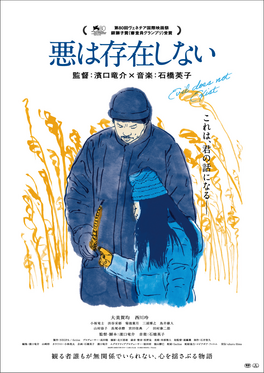
From watching one of director Ryusuke Hamaguchi’s interviews, it’s made clear he started Evil Does Not Exist by using the music of Eiko Ishibashi as inspiration. There’s a swelling breadth to it augmenting everything it touches. At times doleful and then evolving into a plinking intensity looking for release.

It plays against a backdrop of austere forests, trickling streams, and fresh dustings of snow outside the prying eyes of the Tokyo metropolis. The score becomes a viable metaphor for the movie itself.

The film’s relationship with its characters is also distinct. There’s something Bressonian about it. Because the famed French director famously envisioned his actors as models and often cast non-professionals. He wasn’t looking for performances in the conventional sense.

I don’t know Hamaguchi’s filmography all that well, but it doesn’t feel like he has a stock company. Rather he likes to use different actors for what they offer in each distinct context. We spend the opening minutes watching this man named Takumi (crew member Hitoshi Omika) exist and act, though not in the way we normally think of it in film.

It is slow cinema in the sense that we watch him in the paces of his life from collecting stream water to chopping wood. This tells us more about him than any amount of dialogue might, but it also signals to us what kind of movie we’re in for.

Hamaguchi is prepared to steady your heart rate, and I could use much more of this amid the daily grind. However, it is a tightrope because it’s so easy to lose your audience as they grow potentially disillusioned by the pacing and elongated editing schemes. Seeing as Drive My Car was over 3 hours and Happy Hour over 5 hours, there’s something about Evil Does Not Exist that feels, if not economical, at least more contained.

Takumi’s relationship with his quizzical daughter is rather reminiscent of Leave No Trace (2018). So much of their affection and relationship is facilitated through their shared love of nature with the father passing down his knowledge to his girl.

The movie’s dramatic conflict comes with an impending land development. A Tokyo-based talent agency has plans to install a Glamping site, which ostensibly is little more than a ploy to get a coveted tax subsidy.

Like any conscientious Japanese company, they do their due diligence by holding an open forum for the locals to voice their concerns. The subsequent extended community scene is trademark Hamaguchi with a sprawling dialogue exchange. While it’s not a Park and Rec episode, maybe it’s the Japanese alternative.

There’s something tight-knit about this small community rubbing up against the wary encroachment of the Tokyo firm. Their concerns are well-founded and measured. They see through everything with a clarity that no formal Japanese double-speak can totally obfuscate.

Their opposition, if you will, are the archetypes of a veteran salaryman and his deferential associate who hasn’t quite detached from her empathy. The audience I sat with was mostly quiet if attentive, but there was more than one occasion I found myself chuckling to myself, either from a line of Japanese dialogue or an interaction.

I found this section of the movie especially rich with behavioral humor. There’s a youthful rebel in baggy pants who tramples over the typical decorum and has to be held back. The ritualistic bowing is met with contempt and even Takumi is brusque. They want to try to recruit him as an advisor for their glamping endeavor. He has no business card to give them as is customary, nor does he want their token gifts or pleasantries.

These might be subtle, but it’s a pleasure to watch how these locals eschew what feels like traditional norms. Because so much of Japanese life feels like a tug of war between exterior and interior identity. We say don’t judge a book by its cover and here it holds true on more than one occasion. Many of these characters seem perceptive and ultimately nuanced.

One of the other surprises is how Hamaguchi turns the “enemy” into real people over an extended car ride back to the countryside. They know they’re not dealing with idiots, but their superior encourages them to return and ensure they stay on schedule. It feels like an untenable mission. Having seen both sides, we feel for them. Their hearts aren’t in it.

They trade their hopes, aspirations, and dating prospects in a way that you rarely see in Japanese work culture without alcohol as a social lubricant. Despite the modest scope, I’m not sure if others are aware of how radical this feels.

Takumi takes his guests out into the natural world and allows them to walk alongside him in his daily tasks. Later that same evening his daughter disappears and darkness is closing in. There’s something dismal and inevitable about it as the entire population mobilizes to try and find her.

Without drawing it out too much, they do discover the girl as well as a fawn and doe who feel like semiotic creatures. It’s no coincidence there was a movie called The Deer Hunter. He lives on the fringes of the frame here with his bullets flying in a game of offscreen roulette.

The willfully oblique ending is inexplicable, but I could not look away. You can take it one of two ways: either with mystified displeasure or a contentment in not understanding everything. I fit in the latter category. It was like staring at a mesmerizing spell.

Somehow it feels like a pleasure and a privilege to get these moments in time slowed down for us — sequences that are purposefully meditative. I couldn’t help thinking how much of a backward society we live in that it takes a screen in the dark projecting images in front of us to draw a person out of the hubbub and back into nature. Are we so removed that moving pictures are one of the last vestiges of the natural world in the urban jungle? Because it’s not the real thing.

I would find it instructive for the director to expound on his themes at length — that’s what I want — and yet the movie leaves the results up to us. Still, if nothing else, Hamaguchi gives us a reminder of our imperative ties to the natural world lest we forget where we originate. As much as we try, life cannot always be domesticated comfort. There’s wild beauty out there we would do well to remember.

I think we share an appreciation of the natural world. Maybe it’s semantics or a mere positive affirmation, but if evil does not exist, we could also conjecture, like The Deer Hunter, that interpersonal discord, war, and death are natural in a chaotic world. 

However, I would not say that humans nor beasts are inherently good. For the time being, we live in a broken, fallen world and this is just a reality. Our world is full of entropy, but this is not meant to be our resting state.

It’s all the more reason to do our utmost to look after our environments, be kind to our neighbors, and work toward human flourishing. Of course, that’s easier said than done, but like Thomas Aquinas posited I would like to believe that good can exist even without evil. We’re not there yet, but I’m still hopeful.

3.5/5 Stars

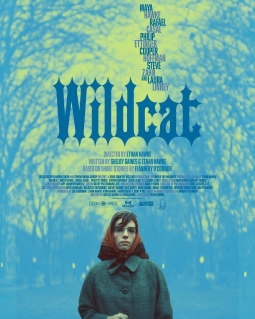
Wildcat (2024)

A version of this article was published in Film Inquiry.

“I am always highly irritated by people who imply that writing fiction is an escape from reality. It is a plunge into reality and it is very shocking to the system.” – Flannery O’Connor

As someone fascinated by story structure the biopic form is often a tough nut to crack. Cradle-to-grave entries in covering the breadth of a life, can either feel like rushed simulacrums or stodgy overlong hagiographies nailed to the floor.

The very best movies of this ilk inevitably evoke the spirit of their protagonist with the very sinews and bones of their structure. Hence a movie on Mishima that’s wild with heavily striking mise en scene. A Brian Wilson story that is empathetic, hallucinatory, and musical to the nth degree.

Director Ethan Hawke and his co-writer Shelby Gaines have found their own way to do service to famed southern Catholic author Flannery O’Connor. Because her life was famously banal — she lived in her Georgia town with her mother writing before her death at 39 — they tackle her formative years through the vivid imagination of her own literary works.

It’s important to note while this movie is full of fanciful and often humorous and grotesque portraits of humanity, it never feels like the escapism the author abhorred (One can imagine she would have choice words for a hothouse melodrama abruptly featured at the outset). O’Connor always was concerned with depicting the life she knew by unorthodox and often startling means. There was nothing conventional about it.

A Good Man is Hard to Find is case and point, one of her startling works where a self-righteous old hag ends up being shot to death by a wanted fugitive and in this precise moment she becomes a gracious person for the first time in her life. In the film when the gun shot goes off, we watch a young O’Connor (played by the director’s daughter Maya Hawke) go flailing backward from behind her typewriter. She feels her stories so profusely.

We watch her life during her early years as a young woman. There are stints at the illustrious Iowa Writer’s Workshop under the tutelage of Cal Lowell (Philip Ettinger). She pays a visit to a publisher who tries to tactfully give her feedback on her first novel Wise Blood. She’s quick to retort that she’s “amenable” to criticism but only if it does not attempt to neutralize her artistic vision.

There are segments of her returning to live with her mother Regina (Laura Linney) in a society where people want her to be the next Margaret Mitchell, penning the next Southern nostalgia lost cause classic like Gone With The Wind. Meanwhile, Flannery seems antithetical to this entire idea.

It’s evident she is a singular mind who will not settle when it comes to her writing. She tells the truth as spiny and ugly as it might be. This is my own experience with her work. I rarely enjoy it. I feel scandalized and assailed by it at every turn.

It’s difficult going and then she turns a story around and uses her characters and the bizarre scenarios to ambush me. Ironically, the saving grace of her stories are how they all revolve around the scandal of grace — our need to recognize and accept it in our own lives.

The threads of the movie’s narrative are tied together with earnest excerpts from her prayer journal and many of her most notable short stories. One that was my introduction to Flannery was “Revelation” where a self-righteous southern woman gets tackled in a waiting room by an indignant girl named Mary Grace. This comes only after a dream where Jesus comes to her and says she can only enter heaven as a negro or white trash. Perish the thought…

The other is “Parker’s Back” where a profligate covered in tattoos marries a devout woman and gets the image of Christ tattooed on his back to please only for his wife to beat him. He’s tossed out of the house, bloody and bruised, brought to the lowest point imaginable. Is this idolatry or as we watch the picture of Christ being bloodied in front of us, what are we to do with it exactly? It feels uncanny and uncomfortable, a perfect evocation of O’Connor’s sensibilities.

Delving into their conversations, it’s apparent Maya and Ethan Hawke have an abiding appreciation for this woman and her writing. There would be no other reason to make a movie like this with so much tender loving care. And so any mild criticism feels like putting kindred spirits under the chopping block. It need not be so. They feel like dear friends.

John Huston’s adaptation of Wise Blood has an intuitive handle on the Southern milieu and the absurd humor found in O’Connor’s work. She’s darkly funny. It seems to thrive while still getting to the perplexing themes at the core of a story that feels scandalizing as she tears through the Southern mentality with her incisive quill.

What Wildcat has is something so often absent from both film and art these days. It’s not squeamish about the tough conversations nor does it skirt over the most prickly issues, not only of America’s legacy but the very essence of the human experience.

There’s a weight and a gravity to it that’s felt in almost every frame. The only reprieves come from O’Connor’s own wit. This is all in service to its subject because Flannery was a young woman sincerely struggling to balance her aspirations to be a great writer and a devout person of faith in communion with God.

So often we are told these creatives and religious life are mutually exclusive. Which of course feels preposterous to O’Connor in the face of her Creator-God. It’s easy to be moved when she sits among her cohort at the writer’s workshop in Iowa — a midwestern institution that nevertheless maintains a reputation for the literati — and she says religion is not an electric blanket; it’s the cross.

It’s so difficult to take stories that live in our mind’s eye and bring them to the screen because then they are tangible and concrete. Endless possibilities of imagination are distilled down to distinct creative choices. Hawke’s film tailors its palette to a tempest-like existence that roils O’Connor’s soul as she seems to battle for life and death with her typewriter as her only weapon.

Is this a bit much? Perhaps and yet anyone who does write and cares about art or has suffered and struggled, recognizes that it doesn’t feel like hyperbole. It feels real and affecting — like something we understand intimately. In O’Connor, we see reflections of our own struggles in our creative endeavors.

Because we believe our words mean something and that life matters and questions of death and religion are not ancillary topics for dinner parties. They are the crux of our entire existence.

Cal, Flannery’s pen pal and hinted love interest, gives her Thomas Merton, and in this reference and watching her tumultuous struggle depicted on film, it’s difficult not to draw lines between Hawke’s performance and her father’s protagonist in First Reformed (Ettinger who plays Cal also had a crucial role in that film).

For that matter, one of the other integral scenes involves a priest played by Liam Neeson. It feels almost like a reprieve after his apostasy in Silence. He pays Flannery a visit as she’s bedridden, stricken with the lupus that killed her father, and currently unable to write.

Here he enters in to provide Flannery comfort and in all her internal struggles remind her of grace and grace abundantly — something given to her through the death and resurrection of the Jesus they believe in. There is immense power in this scene, even in its simplicity.

Because the storm outside her bedroom widow or even the lupus that’s ravaging her body almost feel like outward manifestations of the real struggle going on. Why does hardship often make us more aware of grace and our need for it in our lives whether we want to accept it or not. Pain is not easy. Happy, warm, affable stories are a lot more palatable.

O’Connor would never dare to be so disingenuous about her faith or her storytelling. And judging from her life and premature death, she was more than acquainted with troubles. She had an intimate relationship with them. Certainly this was not the life she had envisioned for herself.

Still, she ran the race of life even if it was on crutches. Perhaps not dissimilar to that hapless chicken walking backward. What’s more, she blessed all of us with her stories — signposts to help us along our own paths — shocking us back to reality.

I couldn’t get the image out of my head — first as Flannery picks up her new peacock from the train station and then the remarkable moment where its tail feathers fan out behind her in a glorious display. If other people saw her as that measly chicken, in the eyes of her Creator she really was that glorious peacock. What a gift it is.

4/5 Stars

Three O’Clock High (1987)

The introduction of the main character Jerry Mitchell (Casey Siemaszko ) feels fairly standard and in line with Ferris Bueller, Say Anything, or any of its brethren from the ’80s. Late for school. Dirty shirts strewn about. Simultaneously zapping pop tarts and wet clothes in the microwave. Flat tires and your kid sister hands you a diet Coke to gargle the toothpaste you just finished brushing with. It’s quirky enough to give us some sense of who we’ll be following for the next hour and a half without straying too far from genre convention.

Still, all of this handy exposition feels a bit like a misdirect or at least suggests up-and-coming director Phil Joanou started out with one movie in mind and came up with something else along the way. More on that momentarily.

Jerry is a likable, if innocuous, dweeb we can probably imprint ourselves on and his high school, located in Odgen, Utah definitely doesn’t have the Hollywood glam. It lends itself to a different kind of visual milieu we can appreciate. All the adults in the movie for the most part are only totems to hang necessary impressions and sentiments on.

Jefferey Tambor is the closest to an actual character as a teacher who entrusts Jerry to run the student store and marvels at what a profitable business he’s managed. Otherwise, most of the authority figures and even government agents (how they always have time for teenagers is beyond me) feel like caricatures without too much premeditation.

Despite some promising introductions, most of the friends and female characters feel fairly empty no fault of their own. Jerry’s sister Brei has a chatty wit about her but essentially disappears from the movie popping up only when required.

There’s his thoughtful if slightly ethereal girlfriend (Annie Ryan) whose eyes grow luminous as she speaks candidly about spirit animals and her spirit “guide” Ethan. Don’t ask me to explain. And because Franny’s the brunette (yes, her name’s Franny), there’s also the untouchable blonde goddess Karen (Liza Morrow) who exists as a figment rather than a full-bodied character. She’s always ready to induce traffic accidents and seismic heart palpitations in our fearless hero.

Although it is Jerry’s story, it almost feels like it’s too much about Jerry and his inner psychology. He’s not the most intriguing part of the picture though we do need him as a conduit. Perhaps more could have been built out of his relationship and even his alienation from others. But it’s also necessary to take a moment to consider the movie’s tone and inspiration.

I’m not sure how to parse the fact from the fiction (this oral history is the best resource available) but supposedly this is one of the films Steven Spielberg requested to have his name taken off as an executive producer. It probably comes down to how dark it becomes though even this might lack the ring of truth.

Although it’s easy to label Three O’Clock High as a high school rendition of High Noon, it actually stands more in line with Martin Scorsese’s After Hours from a couple years prior. Given this comparison, Spielberg’s purported surprise would make more sense because this premise has all the potential hallmarks of a traditional ’80s teen movie.

Like its predecessor, I find it drags in the middle using time a bit like After Hours to give in to its most absurd and surrealist tendencies as Jerry’s world dissolves and slowly closes in around him.

One could easily say Soho in the prior film has been distilled down to the school corridors and classrooms Jerry is tied to as he sweats the hours ’til his inevitable annihilation. It does make it feel like Gary Cooper’s Will Kane when evoking the limiting factor of ticking clocks.

However, a venture to the principal’s office features the décor and camera angles fit for The Bates Motel. Later Jerry’s chased down by a security guard in the parking lot. Wasn’t the man in After Hours pursued by an angry ice cream truck? Otherwise, there’s a ghoulish school assembly accentuated by Tangerine Dream’s quintessential ’80s synths and any number of preliminary bouts laying the groundwork for his dreaded showdown.

We have yet to mention the movie’s primary villain whose psychotic reputation more than proceeds him, whispered throughout the halls and steps of the school as it is. The only reason there’s even a movie stems from Jerry’s position at the school newspaper. He’s given the unenviable assignment to profile Buddy Reveill (Richard Tyson) and one urinal encounter makes them mortal enemies for life. Nothing he can do can put off the unavoidable.

The ending does deliver on some of its payoffs by casting off any sense of moralism for a good old-fashioned bloody smackdown between good and evil without a ton of didactic consequences. Law and order are thrust aside as the adolescent masses cheer and rage sensing the brass-knuckled fury in the air. I did begin to wonder if in 80s-era America this hulking villain was a stand-in for fascist or authoritarian regimes. It’s of little importance.

Because this is only an afterthought as Jerry faces Goliath and is subsequently saved by the student body in a deus ex machina a la It’s a Wonderful Life. The lesson: It pays to stand up against tyranny and oppression in the school parking lot. More important still, boyish fantasy is kindled and nothing else exists beyond this singular moment in time. It is a kind of wish fulfillment for young males of a certain age.

Whether it was Joanou’s inspiration, screenwriters Richard Christian Matheson & Thomas Szollosi, or more likely a confluence of everything, Three O’Clock High feels more like a cult curio than an unadulterated classic. That’s not meant to be a slight, nor a total dismissal. It’s not Scorsese (it’s not even Speilberg). But it shouldn’t have to be. It deserves to be taken or left on its own terms as another addendum to the ’80s teen movie canon.

3/5 Stars

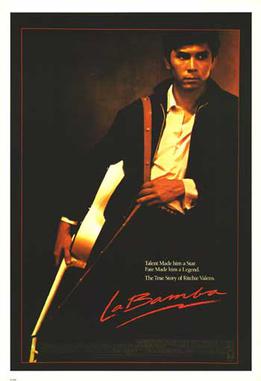
La Bamba (1987)

I must have learned about Ritchie Valens through Don McLean’s “American Pie.” Because there was a time when I was fascinated by all the musical references that seemed so oblique to my young mind. Eventually, the songwriter’s ode leads you to “The Day The Music Died” and if you know about Buddy Holly, you soon learn about The Big Bopper and Ritchie Valens.

The song “La Bamba” feels like a definitive track of a certain rock n roll era, and only now does it become easier to realize what an important cultural milestone it represents. The Mexican language went mainstream blending the rock craze with folk traditions of a people who felt well nigh invisible if no less important in the ’50s.

I do not know much about Luis Valdez, but as an emblematic figure in the Chicano movement of the ’60s and ’70s, he also gave us two of the most noteworthy Chicano movies of the 1980s. He turned his own play into Zoot Suit with Edward James Olmos, a film I was never able to fully connect with, but La Bamba feels like a more straight down-the-line biopic. He effectively brings to life one of the great Chicano heroes of the second half of the 20th century.

Lou Diamond Phillip’s vibrant performance glows with undeniable warmth and vitality. There’s not a disingenuous bone in his body, and he’s able to evoke the joy behind the microphone and the quiet fortitude that comes with his humble migrant background.

This is one of the most moving things about Valdez’s film because even almost 40 years on, these slices of life are still not always prevalent on the big screen. To see them in a period piece seems even more fitting because it’s a way of capturing the cultural moment for us lest we forget.

We see the plight and humble living conditions of migrant workers, there’s instability and broken families, but also the unbreakable bonds of extended families and communities looking out for one another.

La Bamba also has many of the beats of the biopic and since I don’t know the life of Valens intimately, I can only give conjecture on what’s fact and fiction. Part of the story involves his older half-brother (Esai Morales), who exists as the black sheep of the family opposite Ritchie. There’s the blooming of young love with the new girl in class, Donna (Danielle von Zerneck). His family and high school lives run in tandem with his meteoric rise after a record producer, Bob Keane (Joe Pantoliano), agrees to record some of his tracks.

Valens fear of flying, after a midair collision over his school, which killed his childhood friend and left him with recurring nightmares, has the ring of truth stranger than fiction. In keeping with this, the opening interlude of Santo and Johnny’s “Sleepwalk” feels apropos to represent the general mood of the era. What follows is a bit of a dream even as other moments sting with harsh realism.

There are so many narratives that could happen. There’s a bit of a Romeo and Juliet romance as Donna’s father tries to rebuff Ritchie’s sincere advances. Still, Donna remains devoted throughout the picture, and what a lovely thing is to see their euphoric joy together. The images suggest you don’t have to look like one another to fall in love. The fact the movie draws up this star-crossed romance between a 17-year-old and his 15-year-old beau feels of small consideration. It is a movie.

His brother knows how to make an entrance rolling up on his motorcycle, sunglasses on, cigarette between his lips. Or maybe this is only how we imagine him. Still, Bob’s demons could have been their own movie making him into a perturbing, abusive, drunken figure at the movie’s volatile center.

He’s effectively cast as Cain, never good enough or able to find favor in comparison to his thriving little brother. He spends the whole movie self-destructing and coming to terms with his brother’s burgeoning success. Later in life, it seems his real counterpart was able to resurrect his life and became a beloved member of his community.

Likewise, Bob Keane shows up in Ritchie’s life. We don’t really know how he got there or what all his motives are; still, there’s nothing too sinister in it. He helps Ritchie get big by recording and promoting him, and Valens is on top of the world.

It’s easy to see how all of these dynamics might have been either simplified or drawn up in such a way as to streamline the story or punctuate the dramatics. And yet I never begrudge the movie its choices, because it does feel like such a bountiful cultural artifact. The fact Los Lobos provided much of the soundtrack and even show up in a musical cameo is another notable distinction.

And the gutting, sinking feeling in the pit of our stomachs signals the dream cannot last. This talent taking the world by storm and rocking out with Eddie Cochran and Jackie Wilson will be snuffed out far too soon. So if everything else gets resolved in a Hollywood manner, our star is still going to be taken from us in the final reel. There’s no way to get around it.

McLean’s song mourned over it as “The Day The Music Died.” Thankfully, he was wrong. Yes, we no doubt lost out on years of musical output from Holly and Valens. Their young talents were undeniable, and yet their contributions to rock ‘n roll are far from dead. For their relatively short time in the public eye, they’ve cast very large shadows indeed. “La Bamba,” “Come on, Let’s Go,” and “Donna” feel like genre standards by now.

In his own way Valdez has guaranteed Valens won’t be totally disregarded (it was added to the National Film Registry in 2017), and Lou Diamond Phillips, bless his heart, made Valens far more than a hagiography of a deceased icon. He’s a young man with a warm, beating heart, a love for his family’s culture, and a love for rock ‘n roll. I can’t think of a better testament to Ritchie Valens than that.

4/5 Stars

Mystery Train (1989)

I hold an immediate affinity for the images at the core of Mystery Train: A Japanese couple (Youki Kudo and Masatoshi Nagase) riding a train. This is the ’80s so they’ve got a walkman with an audiocassette tape, and it’s blaring Elvis! It becomes apparent they are making a pilgrimage to Graceland so famously immortalized by Paul Simon. The song “Mystery Train” becomes an apropos and uncanny way to enter the story while paying homage to the King.

Jim Jarmusch always strikes me as such an open-minded and curious filmmaker. Modern society speaks in terms of diversity and inclusion, but the beauty of watching a Jarmusch picture, it’s the fact he’s not looking for these things in order to meet some quota. He seems generally interested by the stories and perspectives a whole host of characters can provide him, and his films benefit greatly from this enduring proclivity.

Regardless of where the funding came from, who else would consider making a film about two Japanese youth in search of Elvis Presley in the 1980s? They spend the first several minutes speaking a language that the primary audience probably does not understand. They likewise are bewildered by a upbeat yet motormouthed docent at Sun Records. Still, somehow shared passions for Carl Perkins, Jerry Lee Lewis, Roy Orbison et al., draw them together in inextricable ways.

There’s something perfectly fated about the whole thing with Screaming Jay Hawkins as a rather flamboyant hotel clerk aided by a youthful bellhop (Cinque Lee). I don’t know how to describe it but Hawkins has a command or a sway over the picture rather like Wolfman Jack in American Graffiti. His presence is felt and becomes so indelible in accentuating an aura. He comes to represent a certain era and a place in human form.

Jarmusch’s characters of choice often feel like sojourners, strangers in a strange land and Memphis is such a place. It is a film that features degradation — cracked pavements, garish neon lights, and portions of the world that are not perfectly manicured. What a concept. It’s almost like Jarmusch is giving us the real world albeit composed through his own cinematic lens. It’s no coincidence it has this kind of baked-in glow of Paris, Texas another film of geographical Americana captured so exquisitely by Robby Muller

It’s only a personal observation but my level enjoyment slightly decreased with each descending story. As someone who journeyed in Japan and went to one of the greatest concerts of my life in Yokohama, I feel this kind of kinship with these Japanese youths in their pilgrimage to Elvis and Carl Perkins. Also, on another level, this is a point of view we just don’t often see in movies of the 1980s or even today. Jarmusch is not using them as some kind of stereotypical punchline. He’s genuinely interested in their story and allowing it to play out in front of us.

Then, there’s Nicoletta Braschi in part two. She’s told a ghost story by a dubious stranger and gives him a tip to be left alone. She too seeks asylum for the night at the same hotel and gains a chatty roommate (Elizabeth Bracco) who is linked to our final vignette.

This last interlude with Steve Buscemi feels like it exists in the time capsule moment of a certain era where Tarrantino, the Coens, and others were making these stylized, often grotesque comedies. Elvis (Joe Strummer) gained his nickname inexplicably, but he’s also started to become unhinged because his girlfriend went up and left him. The cocktail of booze and firearms make his buddies Charlie (Buscemi) and Will Robinson (Rick Aviles) uneasy. Although it feels more like an absurd episode of The Twilight Zone than Lost in Space.

Regardless of my own preferences, Jarmusch still gives his world a sense of purposefulness. Again, it’s this serendipitous quality reminiscent of Jacques Demy’s fated films where lives cross paths and intersect in deeply poignant ways.

There’s something somehow elegant about the structure. It’s certainly premeditated and Jarmusch purportedly was inspired by classical literary styles in constructing his triptych, but it’s also a genuine pleasure to watch it unfurl.

The movie revolves on the axis of a few shared moments and places: A hotel, a radio DJ (Tom Waits) playing “Blue Moon,” and a gunshot. But it’s not like they’re all building to some kind of collective crescendo; it’s more so just a passing indication of how lives, whether they mean to be or not, are often interrelated.

Characters orbit each other and interact in these preordained ways that reflect the mind of the maker, in this case, Jarmusch. There’s something oddly compelling and comic about it, but there’s simultaneously a sense of comfort. We have order and a kind of narrative symmetry leading back out from whence we came.

Jarmusch is calling on the poetry of the ages and so in a movie that seems to have a free and laissez-faire attitude, there’s still a very clear order behind it, three distinct threads end-to-end and yet still interwoven into a tapestry that we can appreciate. Mystery Train represents the best in cinematic storytelling — with purposeful composition and aesthetics — but also a sense of aura and inscrutability.

It’s funny and yet when it’s over there’s also satisfaction and a hint of wistfulness. I wish there were more of its ilk today. The movie that’s come the closest is Paterson — another modern jewel from Jim Jarmusch. I see that film in a new light as a much older, wiser, and more forthcoming Masatoshi Nagase sits down on a bench with Adam Driver.

Again, it is a story about the human journey, how we are all travelers in some sense, and what a beautiful thing it is to relish the road because it can lead us to so many beguiling places if we take the time.

4/5 Stars

The Intruder (1962)

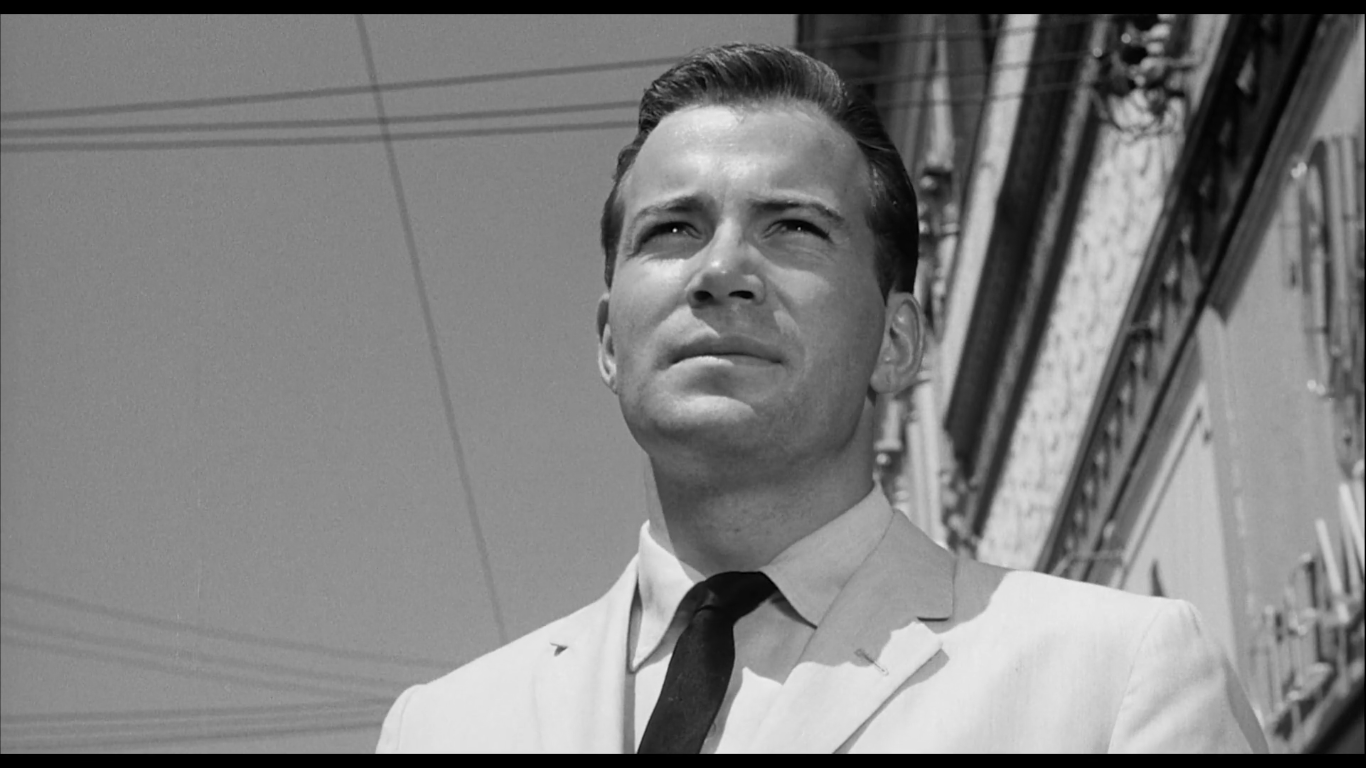
Before he became a caricature of his former self, even before the days of Captain Kirk and pop culture canonization, The Intruder is a reminder of something else in William Shatner. He still feels ripe and almost dangerous with a charisma that has yet to be calcified or even corroded by time.

The same could be said of Roger Corman at least if you only have a perfunctory understanding of his career like me. He is the master of fast and cheap entertainment turned out for profit at a rapid rate. Surely, The Intruder doesn’t fit into the patchwork of his career.

Before we blandly christen him the “King of Schlock,” a more nuanced observation seems to be in order, considering both his talents and his ambitions. Others must speak to this more knowledgeably. All I can say is that this specific film totally obliterates any preconceived notions of what we are getting.

Shatner stars as Adam Cramer, a self-described social reformer with a skeevy look in his eye to go with a cool disposition. He’s headed out on the latest bus to help the locals fight the government implementation of integration in the town’s high school. Under the guise of the freedom-loving Patrick Henry Society, he’s ready to stir up some action. Give me Liberty or Give me Death (though mostly death). In other words, a real creep.

He sets up shop at the local hotel — it bleeds with crusty southern hospitality — feeling like a stronghold for a racist status quo. He’s put up by a sweet ol’ lady while his next-door neighbors, a gregarious salesman (Leo Penn), and his flirtatious wife (Jeanne Cooper) don’t leave much to the imagination. We know what they’re doing and they don’t much care who knows it. It’s a good thing because the walls are especially thin in a place such as this.

Although the film is primarily white-centric, for a white audience, there are some black characters playing crucial roles on the periphery. One is the local minister, a man of faith who takes his calling seriously. He exhorts the youngest members of his congregation in meekness and prays over these 10 lambs from his flock. He’s well aware they are about to enter the valley of the shadow, a space no young person should have to be subjected to. Still, the letter of the law in some ways falls on their side in the face of threat and injury.

One evening on a grand old southern estate Cramer holds a rally to rile up the townspeople, spewing all sorts of epithets, and appealing to their spirit of discontentment.  The NAACP is a communist front, headed by a Jew. It’s all a sham. The government can’t be trusted and The Patrick Henry Society is tasked with preaching the truth — at least his version of it.

As we watch the masses be swayed and he skillfully plays them like a marionette with public opinion in his palm, the deviousness comes into full color. He’s a Lonesome Rhodes-type figure who uses his own magnetism to get what he wants.

When the whites, armed with their newfound ammunition, take to the streets ready to victimize a black family driving home the movie becomes too real. It’s almost like the film was overly cognizant of its time with an incisiveness toward the hot-button issues of the age. Even today it feels gutting to watch whether fiction or not. The images strike too close.

Shatner riding in a hooded caravan with a gang toting a cross through the black community is horrifying. There’s a faceless dynamiting of a church with the faithful minister left for dead. The only other time I recall something comparable in mainstream Hollywood was the mobbish vitriol in Phenix City Story a few years earlier. To Kill a Mockingbird is wistfully nostalgic in comparison. Right or wrong, The Intruder has no such illusions.

Cramer is a man who happily takes a prison sentence telling a wealthy backer (Robert Emhardt) to never underestimate a jail sentence — remember Socrates, Lenin, Hitler… How you can conflate all these men says so much about you. And of course, there’s no mention of Dr. King. This is not the kind of man to dignify a fellow reformer on the other team with an acknowledgment.

The most curious figure (aside from Cramer) is Tom McDaniel (Frank Maxwell). He’s a southern man. He’s been inculcated with the prevailing sentiments of the South, but he also seems to have a higher standard. It’s partially because he’s the herald of the local news — he has journalistic standards — but there’s something else we have to spend time with him to figure out. His wife disagrees. Grandpa wants to disown him. His daughter (Beverly Lunsford) is probably still trying to make sense of it all. Regardless, he believes the law must be carried out.

I don’t know if we ever get a clear indication of why. Although he’s not the only one we can say this about. I’m not sure if we ever get a precise reason for Cramer’s actions either. He’s not a Southerner and there’s never a clear indication he’s truly aligned with the white community, at least not when it gets right down to it. He’s not a Southerner. But he knows he can manipulate them for his purposes.

My fear is that the film is still too much the pipe dream of well-meaning moviemakers where southern guilt all of sudden turns a few solitary individuals into men and women of conscience. Maybe this is historically true. I don’t know, but for all the stories that ended like this with a life saved and a wolf in sheep’s clothing defrocked, we know that history was not always so forgiving. It is strewn with the names of men and women who were degraded, intimidated, and often killed.

That’s why part of me rumbles with a deep sentiment that must be acknowledged. It wants to cry out and warn folks not to see this movie. The inclination begins when they threaten to flip a black family’s car and reverberates again when a young white woman gets coerced into crying rape against a fellow black student named Joey (Charles Barnes).

There’s almost something indecent and profane about it as it echoes things that really came to pass. It’s this fine line I don’t know quite how to reconcile. Because I’ve rarely seen a movie this fierce and unflinching for the era, and yet in the same breath is this what is required then or now? It’s an open-ended rhetorical question. I don’t know the answer.

If the box office receipts are testament enough, the movie didn’t make much of a dent but for entirely different reasons. Roger Corman seems to have made his own implicit response. He never made another such picture again instead relegating his talents to Vincent Price Poe dramas and other such fare blessing the film world in another way. Yes, it was cheap entertainment, but also a breeding ground for some of the up-and-coming stars of the New Hollywood generation.

He did in fact make his own diagnosis of the film’s lack of success, which might be telling if not altogether definitive:

“I think it failed for two reasons. One: the audience at that time, the early sixties, simply didn’t want to see a picture about racial integration. Two: it was more of a lecture. From that moment on I thought my films should be entertainment on the surface and I should deliver any theme or idea or concept beneath the surface.”

Still, with a man’s face buried in the grass, a man fallen from grace head first, The Intruder totally reframes my perceptions of the now chubby anachronism of Shatner’s persona. I won’t say it redeems it so much as it augments it with a kind of duplicitous venom. It’s a new astounding contour to his career.

I’m still not sure if that’s a hearty recommendation or not. This is a very triggering film and a deeply onerous watch. The discerning viewer should make their own judgments. Because for some this kind of burden might be necessary. For others, it might be too heavy to bear.

4/5 Stars


Note: This review was written before Roger Corman’s passing on May 9, 2024

David & Lisa (1962)

Keir Dullea is an actor who will always be most prominently remembered for Stanley Kubrick’s 2001: A Space Odyssey. He’s Dave of pod door fame. However, part of me wants to promote him as the lead in David and Lisa because this film from Frank Perry, in its quiet empathy and emerging relationships, feels more deeply like his film.

It relies heavily on his turn as a grim young man with OCD-like symptoms. As his mother drops him off at a psychiatric center for a brief stint, he immediately carries himself as a youth too smart for such an establishment. He’s an aloof loner with cold temples and the most severe eyes. Surely, this is a story about David’s transformation.

But the ampersand in the title reminds us that he only works in tandem with another life. Likewise, Dullea’s performance gains more meaning when he is put up next to Janet Margolin in her screen debut. She causes him to change and shift even as he elicits something out of Lisa.

Since I got my first introduction to Margolin in Take The Money and Run and became instantly smitten, it’s fabulous to see her in another role that plays so exquisitely off her inherent human charms. Lisa is a young teenager with a penchant for rhyme. If we want to diagnose her, she has schizophrenia, but the beauty of the film is watching people reach out to each other, instead of categorizing each other dismissively.

Even someone like Howard Da Silva is a pleasant surprise. In the old days, he mostly played conniving heavies in film noir; here he settles into the role of benevolent authority quite easily, and it’s a fine look for him. He wears it well. David is so quick to distrust him and what he stands for. Over time, the authenticity is so apparent that even he is won over. He comes to appreciate the place as home. It’s a space to belong.

However, if I’m honest, David and Lisa is the kind of film that feels like it might be frowned upon today if we know nothing about it. Still, there’s a tenderness in the love story that I can’t quite shake. It’s disarming and totally flies in the face of expectations.

I realized that whatever way you take it, there are these kinds of overt metaphors to the film. People who are different than the society around them somehow find solace in this shared sense of otherness. He meets her with rhyming and she meets him in a way by not reaching out with human touch. The things that ostracize them also have the inertia to draw them together.

If these are idiosyncrasies, then they respect them and respect each other enough to take their predilections seriously. Meanwhile, “normal” well-adjusted people at the local train station castigate them as weirdos better resigned to the funny farm.

But even when David makes a brief return home, the perceived distance at the dinner table and the manifold hangups of his own parents, make it apparent we do not live in a society of the well-balance and the imbalanced. Those in the former category either do a better job at hiding it or they have enough money to smooth it over. Success and status can cover a multitude of social sins, at least on the surface.

There’s one particularly crucial moment where I became mesmerized with Margolin watching her sway with the metronome although it precipitates a kind of demonstrative ending that doesn’t do the story much service. In one moment of annoyance, David lashes out at Lisa only to work tirelessly to win her back. Their chemistry is so fragile, held together by wisps of gossamer thread, but that makes it all the more vital to maintain.

When Dullea scampers up the Philadelphia steps, and they share a moment so much unspoken emotion is carried with them in the scene. It’s only the two of them. She no longer rhymes. She’s fully herself. “Me,” she says.

He reciprocates by doing the bravest most vulnerable thing he can, asking her to reach out and touch him. I remember a line of prose by C.S. Lewis about love being vulnerable and this lasting image is a testament to this truth. Here the pain and transparency brim with sympathy.

David and Lisa can be characterized as a romance, although it is one where the leads never kiss, never embrace and only touch in the final frame. Somehow it’s packed with more import than many other films claiming the same genre conventions. Because what some other films forget is that love and affection, romance, they all require so much more than physical touch. It’s about warmth and stillness. Willing to open yourself up and be hurt by other people even as you stretch yourself as a human being.

For a film about psychological disorders from so many years ago, there’s a gentle subtlety to David & Lisa; it’s quite extraordinary, and Dullea and Margolin make a wonderful pair together. It’s only a shame they were not both allotted even more high-profile vehicles commensurate with their talents.

3.5/5 Stars

The Little Fugitive (1953)

The aesthetic of The Little Fugitive is made plain thanks to chalk drawing credits playing over “Home on The Range.” We are about to enter a little boy’s world with all the joys and menial problems an adolescent life engenders. The key is giving these problems credence. Because in a young life, they feel ginormous.

Joey Norton always has his trusty pistol and holster and his big brother Lennie can always be found with his harmonica. They have your typical sibling dynamic. The little brother nagging, the big brother both put-upon and protective.

There’s an initial impression from the clunky dialogue causing the illusion of the film to falter. However, everything else around it feels real and sincere in a way we are unaccustomed to seeing in 1950s American films. Then you realize the whole picture had its dialogues done after the fact and it falls into place.

Coincidentally, it does give it a European sensibility with the dubbed dialogue. I can see how a film like this might have come to Cahiers du Cinema, Francois Truffaut in particular, and lit a fire under them. This is what movies could be, and not only something they could be, but also something attainable to others as long as they had a personal story to tell.

The 400 Blows but also Breathless and Le Beau Serge, developed narratives out of spaces the directors knew intimately. It wasn’t outside the purview of their experience, and it made a stunning entry point into their respective cinematic visions as they continually evolved over time. Still, one cannot discount their origins.

In the era of The Little Fugitive, a boy’s world was occupied by very specific things: baseball, guns, cowboys and Indians, television serials, comic books. The premise itself feels like an episode of Leave It to Beaver albeit outside of the watchful eye of middle-class suburbia.

Mother has to go away to pay a visit to a sick grandparent. Lennie has to watch over his little brother, and it’s going to derail his birthday outing to Coney Island with his friends. We have a simple dramatic situation and although he’s not a bad guy, he needs to use his boyish ingenuity to find a way out of his responsibilities. A dagger made out of ice is too impractical so they get the idea of using ketchup to fake a grisly death like they do in the movies.

The trick works wonders on getting rid of a pesky brother, and the film really comes into its own as they take it to the streets, and he’s out on the lam. It seems prudent to mention Ray Ashley, Morris Engel, and Ruth Orkin, the trifecta behind the film’s conception.

Their greatest asset was a cutting-edge 35 mm camera both portable and unobtrusive making The Little Fugitive landmark for another reason. It really feels like one of the obvious birthplaces of independent cinema because we have this idea of film emerging from the studio lots out onto the streets. And these aren’t just exotic foreign locales but the humble spaces you and I frequent in our daily lives. Even these spaces can have their share of fascination for a willing audience.

It’s a cornucopia of leisure, a boy’s delight having a day on Coney Island. We get a steady stream of vignettes: photo cutouts, batting cages, hot dogs, watermelon, the beach, ball toss, and whirling carousel rides providing full immersion of a different era.

Not since Harold Lloyd can I recall such a great showcase for Coney Island. We’re even reminded recycling was a problem at the beach back in the 1950s too. Joey quickly learns he can make some loose change culling the seashore for glass bottles and simultaneously proving himself to be inquisitive and quite entrepreneurial.

I’m not sure how our little fugitive had so much money to begin with; the film doesn’t find need to explain itself, but then he figures out how he can get more and uses them on a very sound investment: pony rides. He’s positively infatuated with ponies, and it shows him returning time and time again just to get another chance to live out his dreams on the range.

Although the film is mostly kid-centric, it’s a pleasure to observe several of the adults who seem to be genuinely nurturing souls. Whether it’s the photographer (Will Lee) or Jay the ponyman (Jay Williams), they seem to encourage kids in their interests and imagination. It would be so easy for a film like this to feel severe and somehow oppressive, yet what comes off is the lightness and the joy of each of these very specific moments as experienced by a little boy.

If I’m honest, I’ve recognized a growing bias in my own film appreciation. I’m partial to films that use modest means, modest runtimes even, and still manage to transport us with stories and worlds we can relate to. I can think of no finer compliment for The Little Fugitive because it captures a moment plucked out of my parent’s generation, honed in on a very particular Brooklyn milieu, and through its images we are able to imbibe all these tactile sensations pulling us into the moment.

Although the boys at Cahiers can feel a bit arrogant and combative, even in how they dismissed much of the past and canonized the auteur-director as king, I do like the idea that they placed no undue importance on bigger, larger productions tossed out as awards bait. There’s something almost more satisfying happening in a movie like this because not so many folks will be joining the bandwagon — the fad of the cultural moment. That is the road lined with glitz, accolades, and transience.

Only with a bit of diligence and an open mind, do we get the opportunity to unearth it, and what a glorious joy it is. Unassuming gems like this make the moviegoing experience such a spectacular journey of human revelation. Because this little boy’s day speaks to so much and since I was a boy once, it resonates deeply. I won’t forget it until the next time I return to this story caught in time, where it will be waiting for me again even as I continue to change. This is the magic of the movies.

4.5/5 Stars