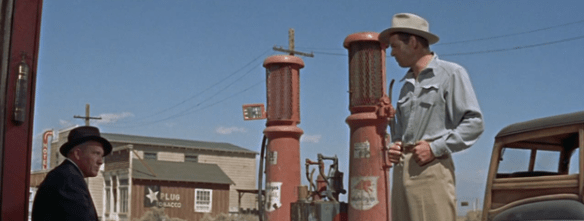
Run Silent, Run Deep (1958): A Streamlined Submarine Drama

run silent run deep 1.png

Run Silent, Run Deep features what amounts to a cold open, set in the Bungo Straits, near the coast of Japan in 1942. The foreboding sonar-infused score by Franz Waxman suggests this will be a no-nonsense war drama and sure enough, within the first 5 minutes, a submarine commanded by one P.J. Richardson (Clark Gable) has been sunk in its mission to destroy an enemy ship, leading to the capsizing of the entire crew.

As Richardson looks back at his receding enemy, we see the film’s objective right before us. He is bent on revenge. Given the situation, this is not a film so much about survival but returning to finish a job no matter the circumstances, dangers, or counter-orders standing in the way.

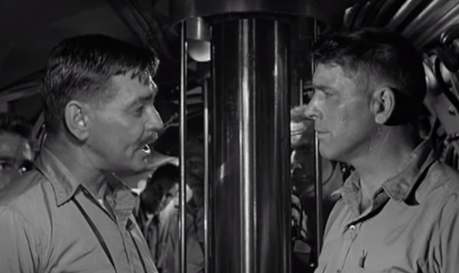
After a short leave of action, Richardson talks his way into another command, this time taking over from Jim Bledsoe (Burt Lancaster) who has already formed a close-knit rapport with his men. They don’t look too kindly on a new man taking over and Bledsoe broaches the subject bluntly with his new superior.

Richardson is hardly going to be dissuaded by a minor thorn in his side and his new crew begrudgingly take to the grueling regiment of drills he has them on. No one is looking to make any friends. This is hardly a film about buddy, buddy or camaraderie. There isn’t time. The one thing the commander does instill in them is discipline and well-oiled efficiency. It’s probably the greatest gift he can give them based on the circumstances.

The stakes are obvious as the death trap, Area 7, has led to the loss of four separate Allied subs, including Richardson’s previous command. What the story devolves into is a fairly straightforward WWII drama which is nevertheless riddled with tension as they knowingly enter perilous waters.

It’s true a submarine serves as an impeccable locale because its very form functions in constraining the action and ratcheting up emotions. There is no release valve and all these crewmen are literally submerged underwater for hours at a time. If that isn’t nerve-wracking I’m not sure what else qualifies.

Combine this environment with men who are already in tight quarters only to become more contentious over a major distaste in their commanding officer. It’s easy to envision him as a modern-day Captain Ahab. His white whale is the infamous Japanese Akikaze, Bungo Charlie, that he’s already has a deadly history with. The seafaring setting and power dynamics also hint at the traditions of The Mutiny on The Bounty though the story foregoes this exact demarcation.

While there are few flourishes or subsequent surprises from director Robert Wise’s film, there’s no question in labeling Run Silent, Run Deep an immersive experience, even for such a streamlined endeavor. In fact, that more than anything plays to its advantage. This allows it to be compact actioner extremely aware of its outcomes and not content until its mission has been accomplished. While it does not leave a great deal of leeway in the area of character development, our cast is a varied and compelling ensemble.

Obviously, the central figureheads are Gable and Lancaster, two hard-bitten battlers who are also consequently, far too old to be playing their parts. But this is Hollywood, after all, so it’s easy enough to make allowances when you’re getting top tier talent.

However,  surround them with the likes of Jack Warden, Brad Dexter, Don Rickles (in his film debut), and Lancaster’s long-time collaborator Nick Cravat, and you have something quite engaging.

The key to the success of both the mission and the film is that it ends as quickly as it begins. It gets in and gets out with striking precision, taking little time to rest too long on its laurels. Between the flurry of malfunctioning torpedoes, the barrage of enemy depth charges, and bombs raining from up above, there is plenty of flack to provide antagonistic interference. By the end, it seems a miracle our men get through at all but of course, it’s not without a toll, both physically and mentally.

Because even when you cannot see the enemy in the flesh, the capability to do harm hardly slackens. In some cases, it proves even worse. What is easier to exterminate, an enemy who lacks any type of form or personage or one that is living and breathing? In this regard, Wise’s picture is sterile and impersonal. It’s not so much a flaw as it is a sobering reality.

3.5/5 Stars

A Beautiful Day in the Neighborhood (2019): Mr. Rogers as The Helper

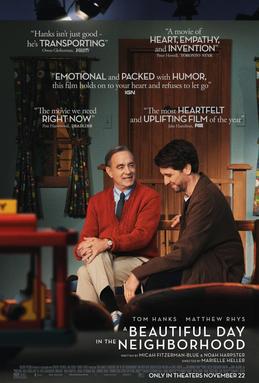
A_Beautiful_Day_in_the_NeighborhoodAs of late, it feels like the world has entered a bit of a Mr. Rogers Reinnaissance. He’s been gone since 2003 and yet last year we had Morgan Neville’s edifying documentary Won’t You Be My Neighbor? There are podcasts galore including Finding Fred and then Mr. Rogers’s words, whether before the Senate Committee or pertaining to scary moments of international tragedy, seem to still provide comfort and quiet exhortation to those in need.

Now to the array we can add A Beautiful Day in the Neighborhood. Although partially fictional, it borrows inspiration from Fred Rogers and his real-life friendship with journalist Tom Junod. Their interview and subsequent meetings became the basis of a front-page spread in Esquire Magazine. That was back in 1998.

Surely, this cannot be a mere chance at publicity. Too much time has passed in this regard for it to make a shred of commercial sense. And yet here we are in 2019 welcoming in yet another tribute to Fred Rogers. The man who taught many of us once upon a time (including this viewer) what it means to realize you are special, that there are ways to deal with feelings, and what a lovely thing it is to be a good neighbor and reach out an inquisitive hand to learn and ask questions.

What Marielle Heller’s gently radical film does well is capturing the spirit of the man. He was always so caring and engaged with others as a listener and concerned friend. There was real intentionality present and a candor toward both children and adults within him. But he was also humble and deferential. These qualities are much admired and somehow so difficult to replicate in our own lives. But the beauty of this portrait is the reminder that no one’s life is picture-perfect.

Lloyd Vogel (Mathew Rhys) is a man with a lot of pent-up, unresolved anger. He’s married now and has a child. But he still holds onto the grief of a beloved mother who died when he was young and an estranged father (Chris Carter) who was never around and is now trying to make an effort at reconciliation in his old age. Lloyd must come to terms with his own issues. But simultaneously his editor has enlisted him to write something out of his comfort zone. It’s an article on a hero: Fred Rogers. Here is the crux of the story.

So Mr. Rogers isn’t necessarily the focal point inasmuch as the film has his fingerprints all over it. In screenwriting terms, he is the helper and in life or film, there is no better title for the man. Because in Lloyd’s own family issues and private hurts, we see a projection of all of us sitting out in the dark.

In fact, just as the man in the red cardigan spoke to us throughout our lives, he’s speaking to Lloyd; he forms a relationship. This is not a television neighbor. He is a cinematic one, but it’s purely semantics because it doesn’t make much difference when Mr. Rogers is concerned. As you might have guessed, he likes Lloyd just the way he is. We witness the man change from a cynical, distant workaholic to someone who is trying to change and reach out to others in love. It’s imperfect, but it’s a start.

Tom Hanks in many ways is too much Tom Hanks for me to lose him in Mr. Rogers and this works out fine. Again, he captures the spirit of the man. As best as can be gathered, it comes down to two integral pieces. First, there is the genuine candor.

The words coming out of his mouth, the salutations, the affirmations, even the words spoken with a puppet on-hand (like Daniel Striped-Tiger) run the risk of sounding insincere and making a joke out of Mr. Rogers. But that would run contrary to the man himself who gave attention and respect to everyone no matter who they were. Thankfully, Hanks extends his subject the same courtesy. The words leaving his lips don’t sound exactly like our television neighbor, but they feel like him.

Equally important, Hanks gets down the rhythm of Mr. Rogers. So much about him comes down to how to utilize time, slowing down and being okay with stillness and silence. Heller aids with one brazenly unassuming scene where Rogers entreats his friend to take a quiet minute (as he famously did at the Emmys) to think about the people who got him there. The movie obliges including a brief cameo of fan favorites Joanne Rogers and David Newell. Again, in 2019 it all feels a bit quaint and yet — if I speak for myself — it’s also appealing.

Here is the man who built his life on disciplines. He woke up early to pray for his acquaintances and read his morning devotionals. He swam daily at his local pool. Letter correspondence was a rich part of his relationships. But they weren’t disciplines for mere discipline’s sake. All these things beget goodness and kindness toward other people. Because Fred followed the greatest rule: Loving others as you love yourself.

Yet the movie points out he wasn’t a saint. Not that there are hidden caveats to his characters. (For the record, he wasn’t a marine and he didn’t have tattoos.) Rather, he was human like each of us, and it is possible to grow in these same skills no matter the skeletons we have in the closet and the messiness under our rugs.

The movie has a couple bizarre dream sequences, but these are Lloyd’s and not Mr. Rogers. They are part of his emotional journey, tapping into his various attributed issues going back into his own childhood and a bit of his mind’s own neighborhood of make-believe.

Otherwise, Heller’s film does well to bring satisfying touches of the original show. There’s that unmistakable tint to the camera on-set that takes me back. That front entryway. The closet. The zip of the zipper. The toss of a shoe.

The script penned by Noah Harpster and Micah Fitzerman-Blue uses this familiar format of the program as a comforting window into Lloyd’s story. It allows us back into the world even as it puts us in touch with someone existing in our own.

Miniatures were also always an integral part of the show indicating Mr. Rogers’s home and where he was off to in the neighborhood. The movie entends this by utilizing models to chart the majority of Lloyd’s travels between Pittsburgh and New York. One other unique commute has Lloyd and Mr. Rogers receiving an impromptu serenade of “Beautiful Day in the Neighborhood” on the Subway.

Fittingly, music holds such a special place in the film, both the television set sequences and outside its scope. Johnny Costa’s distinct jazz playing always colored and left such memorable accents on the show’s myriad of interludes, whether it was the opening and closing tunes, the skittering of fish, or ready-made trolley sound effects. Mr. Rogers had such a gift for music as well. His compositions and aphorisms were deceptively simple but filled with so many brilliant articulations of content (“Everything mentionable is manageable”).

If they are gauged toward children that’s wonderful. I was struck by “Just Do It” playing over the credits — a less-remembered song I probably hadn’t heard since childhood; it all flooded back in a euphoric moment of recollection. Only as an adult do you begin to realize the impact this man had, how formative a television program could be. We want to write it off and cast off “childish things” and yet give him a second look and you realize how timeless he is. Why else would we be coming back to his well of modest wisdom?

It doesn’t seem like a coincidence, in a landscape that feels more antagonistic, mean-spirited, and divisive than ever, Mr. Rogers feels like a beacon from a happier time. During the film, I thought 400 words were far too short to chronicle the man. Sure enough, Lloyd took 10,000 instead. I would probably be capable of doing much the same. I can only gather many of us have a story about Mr. Rogers and how he impacted us.

For me, it was a photo signed and addressed in his immaculate calligraphy: With kindest regards from Fred Rogers. That was in 2003. He would pass away from stomach cancer in February of that same year. I lost a good friend that day…

When I was frightened after 9/11 he provided reassurance, when I doubted he reenforced my worth, when I didn’t know how to love my neighbor he showed me the way with graciousness. Because the brilliance of Mr. Rogers is how he backed up words and songs with action and feelings of radical affection. I want to be like that. I want us all to be like that. It can still be a beautiful day in the neighborhood. Sometimes we just need a reminder. We are all human. Just like Mr. Rogers. But we’re also special just the way we are.

4/5 Stars

I Want to Live! (1958): The Anomaly of Barbara Graham

220px-I_Want_to_Live!I Want to Live! calls upon the words of two men of repute to make an ethos appeal to the audience. The first quotation is plucked from Albert Camus. I’m not sure what the context actually was but the excerpt reads, “What good are films if they do not make us face the realities of our time.” This is followed up by some very official-looking script signed by Edward S. Montgomery, Pulitzer Prize winner, who confirms this is a factual story based on his own journalism and the personal letters of one Barbara Graham.
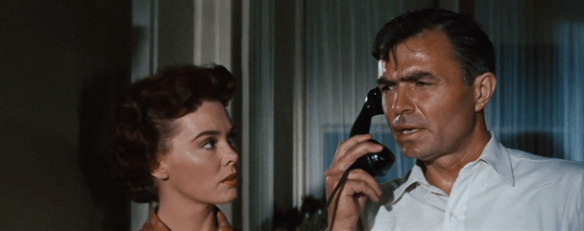
So the film asserts its authenticity right off the bat before even showing an image. It’s obviously hewn out of the tradition of the real crime docudramas popular at the time. And yet with any type of project, perhaps especially those that make such a claim, we must still call details into question and take them with a grain of salt.

Director Robert Wise is at it again handily developing an environment that feels lived in, opening with dutch angles to give us a slightly disconcerting introduction to a jazzy hole-in-the-wall joint. The crime maestro is at his best when he is working with locales he can play around with and in this case, the world gives way to character.

Meeting Susan Hayward in this picture is reminiscent of meeting Burt Lancaster’s Swede in The Killers. They’re in an upper room, a bedroom, cloaked in shadow and we know they have a tragic end in sight. Where we find them is almost as important as the characters themselves because it acts as an extension of who they are.

Graham is a different type of flawed figure who we find not in a lover’s room but some random bimbo. Though the word is never said outright, she’s undoubtedly a prostitute with police looking to nab her. This is our initial image of her, and it is telling.

However, the rest of her story is sutured together with whirling whip pans and mementos from photos to newspaper clippings to TV coverage, providing snapshots of a life through intermittent scenes. What we are given is admittedly jarring and not altogether cohesive, though one could easily concede no life is ever straightforward to piece together. So it is with this one.

Before seeing either film, I always mentally confused Caged and I Want to Live! because of the superficial similarity of women criminals behind bars. However, there is a substantial difference in Eleanor Parker who is able to lead her character through a visible transformation. With Hayward its more about reconciling and portraying the varying entities of this befuddling human being: Barbara Graham.

Soon she is styled as “Bloody Babs” by the media, initially lambasting her as a brazen killer with a past full of criminal activity and impropriety. But at least one man, Ed Montgomery (Simon Oakland), begins to change his tune and crusades tirelessly for her innocence. His help, along with the support of a benevolent psychologist (Theodore Bikel), just might turn the tide. Maybe…

Again, the most enjoyable aspect seems to be the mimetic world that has been evoked because to recall the Camus quote, “Here is the reality of our time, and we have no right to be ignorant of it. The day will come when such documents will seem to us to refer to prehistoric times.”

The people (including a young Gavin MacLeod), their clothing, the interiors of rooms, the press, and the mechanisms of the criminal justice system, are all touchstones of some kind. There’s always something we can learn from each even as we must be suspect of how authentic they really are.

Thus, the real star is the direction, featuring some of the most visual flourishes I recall in a Wise picture, further complemented by the jazzy scoring of Johnny Mandel. But its all elemental in creating a backdrop for the story.  Black & White serves Wise particularly well.

The final act initially stalls because the story is played from a waiting game angle, trying to ratchet the tension, although the ending is an already foregone conclusion. Everyone is waiting around. I would have thought the ending would go to Susan Hayward. Because until those foreboding final moments, her character hardly feels established even after all we have witnessed. But sometimes one scene can be galvanizing and emblematic of an entire picture.

However, this is not a boisterous exclamation point but an oddly entrancing death scene and this seemingly purposeful decision proves consistent with most of the picture. It foregoes dramatic and visual hyperbole for leaner more understated beats that bear markers of truthfulness. In the end, life doesn’t go out with an explosion but a drop off into somber nothingness.

With such a conclusion we certainly feel sorry for Barbara Graham. However, I’m not sure if we can completely empathize with her. Nevertheless, like any such high stakes story, I Want to Live! calls into question the American justice system, the death penalty, and our understanding of guilt in this country. So was Graham guilty or innocent? I would have to do more outside research to corroborate the facts though the film implies its own position quite overtly.

Regardless, maybe the picture is about larger themes altogether. Issues that go deeper still into the very fabric of how we enact justice, how we perceive it in the media, and even socially, how certain people seem to get raked over the coals.

Why Barbara Graham? Why not someone else? Why like this? It’s an issue that goes beyond superficial terms like good or bad. As a people, I think we are fascinated by individuals who are layered anomalies not to be understood with a cursory glance. Barbara Graham seems like such a person. We cannot write her off with a convenient stereotype.

3.5/5 Stars

Jojo Rabbit (2019): Taika Waititi’s Newest Coming-of-Age Story

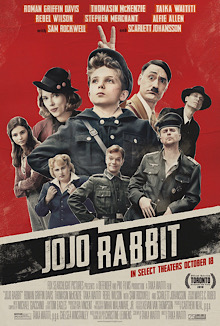
Jojo_Rabbit_(2019)_poster.jpgWe must acknowledge the elephant, or rather, the rabbit, in the room. Grappling with the intersection of Nazis and humor has always been a loaded and controversial topic. But usually, it fosters conversation nonetheless so here’s an attempt to provide some meager context.
The Great Dictator (1940) and To Be or Not to Be (1942) are two of the most prescient films to come out of their era, years before we would get the campy buffoonery of Hogan’s Heroes (1965-71) or Mel Brooks’ irreverent breakout The Producers (1968). Even something more squarely dramatic like Roberto Benigni’s Life is Beautiful (1997) is still buoyed by laughs. Understandably, with each of these examples, there have been detractors who have called into question the ways in which they tackle the historical moment given the subject matter.

I am not here to tell anyone they are wrong. There’s also the reality that the issues being wrestled with are still very real, and even after 75 years, in many cases still very raw. All of this must be taken into account.

For instance, I recall the first time I learned about Alfons Heck, trained up from the age of 6 to be a loyal cog in the Nazi propaganda machine. Only years later, did he come to terms with all the lies he and his generation of German youth were being peddled. He subsequently toured the university circuit in the states with Holocaust survivor Helen Waterford denouncing the ills of ideological brainwashing, lest we forget it ever existed.

Or I was reminded of Hans Detlef Sierck (better known as renowned film director Douglas Sirk), who after marrying a Jewish woman, was blocked by his first wife, an ardent Nazi supporter, from seeing their son Klaus. The boy would become a child star in Nazi cinema, although he eventually died in combat in 1944. Sirk never saw him again.

These are stunning reminders of how virulent ideologies can tear lives apart and this is much of what Jojo Rabbit occupies itself with. But the difference is taking the negativity and making it positive. This is a tale about empathy, understanding, anti-hate if you will. If you accept the term leniently, it is a satire, but I tend to see that word coming with a bite or an irony (not unakin to Sirk or Billy Wilder).

However, this story is mostly full of warmth, good-humor, and because this is a Taika Waititi production, wackiness. Mind you, that’s generally a compliment. The opening refrains of “Komm, gib mir deine Hand,” known in the English-speaking free world as “I Want to Hold Your Hand,” equates the nationalistic fervor to Beatlemania, recontextualizing the history but also giving it a raucous vibe. 

Consequently, some people will find Jojo Rabbit at best inane and inconsequential and at worst, offensive — as is the case when anything as sensitive as the Nazis is brought to the fore. In an age of political correctness, it’s a film trampling a danger zone where racial epithets and maledictions leave the tongues of oafish buffoons. One decidedly ironic line curses a “female, Jewish Jesse Owens.”

This is where the movie and Taika Waititi — as an emblematic supporting character — are able to succeed. It sings with a warm benevolence that proves unerringly sweet. Empathizing with those with whom we would do well to connect with and undermining the villains’ remnant of cultural clout.

It starts with our hero Johannes “Jojo” Betzler (Roman Griffin Davis) a kind-hearted young boy. His is a bildungsroman story like we’ve seen time and time again (even from Waititi). Because he is a creature of innocence, despite what the culture leads him to believe about himself. Because the difference is he, like Heck or Sierck, is coming to age in the fanatical regime of the Nazis where he is being trained up to be a good little soldier.

He’s adorably inept and faint of heart like any young lad dealing with the peer pressure around him. As a 10-year-old he still can’t tie his shoelaces nor can he muster up the needed brutality to kill a bunny during the local war games. His only real friend is the rolly polly, bespectacled Yorki. He also has an invisible friend: the imaginary dopey incarnation of Adolf himself, portrayed by Waititi.

In a sense, taking this prominent role on, with his inherent slapstick and humor, allows the director to possess the man and deconstruct him, ridiculing him from within. It’s not elemental but like many of the Nazis portrayed in Hogan’s Heroes, Waititi has some Jewish heritage, further underlying his caricature.

Rebel Wilson is good for a few of her typical bawdy punchlines and Steve Merchant as the creepily skeletal, smiling Gestapo man manages to walk the film’s tightrope of humor and lingering menace quite well. Sam Rockwell is another walking joke waiting to go off, and yet even he is allowed moments of warmth and ultimate redemption.

Scarlett Johannson asserts herself in a maternal role as one of the legitimately decent people in the movie. Whether or not it’s one of her best performances, I’ve never seen her quite like this and that is compliment enough. She reminds us, through her affectionate devotion toward her son, the powerful, if monumental, undertaking parenting can be. How goodness and decency can cover a world of sins. How laughter and yes, even dance, can be a window to some small semblance of humanity.

One is also reminded Waititi is a genuine storyteller because it’s a tenuous line to balance humor with the bleakness, injecting the story with tension and tragedy in equal measures. You half expect the film to skimp on the ruthless nature of Nazism in favor of far easier put-downs. Instead, it searches out hope within the world and less fickle themes, without entirely dismissing reality.

Thomasin Mackenzie (the brilliant actress from Leave No Trace) goes part of the way in making this possible. Because she is the girl in the walls. She’s not a rat. As Jojo comes to realize, she’s a person. A victim certainly, but she’s also got strength and defiance. After all, her people have a history of wrestling with angels. She comes out of the same hardy tradition.

What she brings into the picture is a complexity to upend everything in Jojo’s fanciful mind. What first begins as a horror trope quickly evolves almost reluctantly into mutual understanding. If his relationship with his mother holds such a stake in his life, this curious new friendship is the crutch of the film, containing its message.

In the final moments, life is back to some form of normalcy. They stand out on the streets letting their bodies free for the first time set to David Bowie’s “Helden” (or “Heroes”). Instantly this feels like Perks of Being a Wallflower and yet somehow this kind of association doesn’t feel wrong because I think Waititi worked so hard to not make this just another WWII movie cut out of the same mold.

It has this universal feeling of adolescence while not totally disregarding history and yet it’s free and comfortable enough to pull it out of its context and flair it with colors and touches of humor. The joy is how heart and hope are the final building blocks even beyond the laughter. The key is how it’s never at the true expense of the victims. Somehow it’s more tender than I was ever expecting. It wants to continue the conversation. Whether or not you agree entirely with its methods, it does seem like a noble task to undertake.

3.5/5 Stars

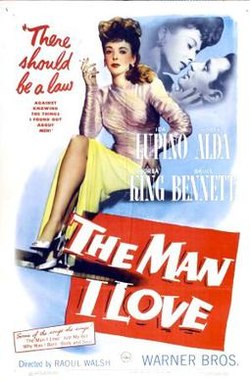
The Man I Love (1947): Ida Lupino Steals The Show

The_man_I_lovesmallIt feels like we might have the courtesy of a bit of Gershwin masquerading under the cloak of noir. We find ourselves at a hole-in-the-wall jazz joint after hours. Club 39 feels free and easy with an intimate jam sesh. Petey Brown (Ida Lupino) is having fun with a rendition of “The Man I Love.”

What strikes us is her breezy confidence. Everyone seems to like her, and she knows how to get by on her own laurels. So though we might begin on a New York street corner, this is all merely the set-up supplying not simply a preexisting world but the core tenets of our main character. We come to like her right from the outset.

However, quickly our action is transplanted to Long Beach, California because catching a bit of the homesickness bug, Petey goes to call on her two younger sisters and brother for the holidays. Could it be she brings darkness into sunshiny suburbia? Again, that would be a negative.

Instead, she comes back into her family’s lives to play the role of big sister and Ms. Fix-it, leaving their lives better than when she arrived. The eldest sister, Sally slings spaghetti for a living, and she’s angelic. But one Nicky Toresca (Robert Alda) has his eyes on her because his uncle runs the restaurant. He’s a real cad (On a side note: I will always have gratitude for Alda for bringing his son Alan into the world to star in M*A*S*H).

Admittedly, his sleazy charisma is pretty smooth, but it turns ugly on a dime. This isn’t just a dismissible instance of being “fresh;” it’s blatant, out-in-the-open harassment, and it grieves me to see. Because from everything we have been coming to terms with in the world, it is all but the norm. I am reminded of Janis Paige’s article bravely recounting her own real-life experience.

A movie like this can easily turn everything into an instance for melodrama, and we cannot blame it too much because it is meant to be riveting. Regardless, this is a film full to the gills with angry men. Sally’s own husband, a war hero, is under observation at the hospital for certain volatile instabilities. The girls’ younger brother Joey pushes back against the chiding of his siblings as he gets more involved running errands for Torresca.

Across the hall, a generally affable Johnny O’Connor is jealous over his glamorous wife (Dolores Moran), who finds her twin sons and a middling marriage to be a bore. Ida Lupino is the one who can capably joust with them all, because, of course, she’s from New York. She’s been around and partially to shield her sister, she takes up a job as a lounge singer at Toresca’s club. He’s got his paws and lecherous eyes all over her.

Even she falls for a man, a tragic and equally tormented pianist San Thomas (Bruce Bennet) with demons of his own to exorcise. So amid this constant collision of temperaments and personalities, there’s bound to be a firestorm of emotion, ultimately blowing up in a need for release.

Raoul Walsh is an old pro at manning stories even if this one feels slightly out of his typical wheelhouse. However, The Man I Love is blessed with a wide-ranging, truly eclectic cast. In fact, for the amount of time it has to work with, it’s genuinely surprising how many characters it chooses to erect.

Admittedly, despite the diverse spread, they could have used more shading on a whole. Martha Vickers, in particular, feels like a bit of a letdown, because her part is so tepid as the youngest sister who would rather stay home than go out with boys. Especially in juxtaposition with her scene-stealing turn in The Big Sleep, it seems like a monumental waste. Alan Hale also gets a lackluster part to fill.

So while not everyone is exactly electric (all but Lupino are fairly drab), the sheer variety of talent makes for some intriguing dynamics to go with all the genre pieces. I’m tempted to consider it a woman’s picture — more melodrama than noir — but why split threads? Infused with jazz and romance and even a bit of holiday cheer, there are some agreeable facets to the ambiance being created.

When the time comes, Petey drifts out of her family’s life and heads back out into the great big world ready to come back when she’s needed again. Wouldn’t we all like a person like that in our lives? But then real life doesn’t work quite like that. Messes are not remedied so easily. Oftentimes the pain and suffering have lifelong consequences that cannot be conveniently tied together by a Hollywood ending.

3/5 Stars

Somewhere in the Night (1946): John Hodiak and Amnesia Noir

Somewhere_in_the_Night_-1946-PosterOf the plethora of returning G.I. films and film noirs, this one reflects their fears most overtly and for this very reason, it might be generally the most forgotten today. That and the assembly of a lower-tier cast. Most of these names have been lost to time.
The one name remaining fairly enduring and bright in the annals of cinema is Joseph L. Mankiewicz who while still early in his career, was carving out a name for himself as both a writer and a director, following a stint producing. Somewhere in the Night is an early showcase for his skills.

He brings us an amnesia plot from the POV of a wounded veteran who has no idea about his own past. The soldier’s wartime injuries made sure of that and while he cannot speak, his mind is alive — an opportune moment for Mankiewicz to call on some illuminating voice-over. If anything it tells us how little this man knows and sometimes that is enough.

George Taylor (John Hodiak) finally returns to New York trying to start afresh and piece his life back together. All he has to go on are a few stray belonging from his former life. Everything, from his previous residence at the Martin Hotel, to a letter, and $5,000 deposited in his bank account, seem to lead to someone named Larry Cravat.

For the audience, we’re up for the mystery but in Taylor’s case, his identity hangs in the very balance of this question. He has to know and so he hits the pavements poking around. Henry Morgan can always be counted on in a bit part, gruffly pointing the direction to a local watering hole, The Cellar.

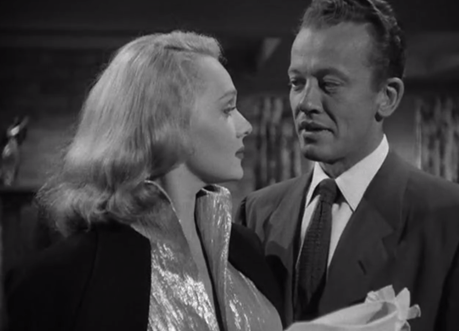
There a reticent Whit Bissell stands behind the bar. His face suggests he has something to say, but there’s hesitance when Taylor starts peppering him with inquiries. The bar has ears and two thugs lurk nearby. Our man doesn’t wait around to get acquainted, fleeing the scene. Instead, he wanders into the first room that happens to be open, a pretty girl’s dressing room (Nancy Guild).

The meet-cute has been sprung upon us out of necessity. Full disclosure, her singing is alright and she fits the good girl persona, but her piano playing leaves something to be desired. One must also question how easily Nancy falls in love with her deceased best friend’s former beau (This is how they connect with one another). Regardless, in watching her affable turn, you wonder why Guild never got a bigger break.

Since a good girl is never found without her foil, by pure ‘chance’ another pretty girl wanders into Taylor. It’s literally the complete inverse of the prior scene except this dame meant to be there. We don’t know why yet. The events keep on stacking one on top of the other until he’s forcibly taken for a rendezvous where he is told to stop poking around.

The story stalls when it gets talky, though it might seem a necessary evil to lend some clarity to the myriad of events. Up to this point, we have no true frame of reference. Mel Phillips (Richard Conte) becomes one anchor, as Christy’s boss who looks ready to help in any way he can. Also, Lloyd Nolan turns up as a steady police detective with an inside scoop. It turns out at the center of this entire web is hot Nazi money priced at $2,000,000. Of course.

We have mysterious messages left on windshields, house calls involving a belligerent Sheldon Leonard, Double Indemnity references, and a very familiar face; along with another ominous character. Another man named Anzelmo checks all the boxes for sleaze with his foreign accent and dubious reputation but he is only a piece in this puzzle. If this is all very oblique it’s meant to be in staying the film’s own tendencies. 

By this point, our plot is either overwhelming or monotonous as Taylor meets a homely woman sharing in a cryptic conversation that proves also deeply sentimental. Again, it is these long-winded moments that are to the story’s detriment. While Larry Cravat remains an important trigger word, one Michael Conroy is also a person of interest.

Somewhere in The Night earns its title outright around this juncture. When a character wanders into a building at the dead of night and goes down a long, low-lit corridor in search of some unnameable thing, we know we have arrived in the heart of film noir territory. There is no doubt. It feels like one of the turning points in The Big Sleep when Marlowe, snooping around, winds up finding a dead body on a carpet. An analogous outcome happens here. 

There’s a meeting of the minds in one final powwow to collectively assemble all the primary players for the long-awaited reveal.  But the final act’s twist is so obvious, it makes all the labyrinthine whirly gig leading up feel somewhat empty. However, it is often said it’s not about the outcomes but the road along the way. Taken in this light, Somewhere in The Night has its moments of genuine intrigue.

It is easy to write off the cast for their relatively forgotten status. Even Lloyd Nolan has high billing (the man most well-known for playing a detective) for a relatively minor part. But I would argue Richard Conte is an unsung hero of film noir, while the picture does give allowance for some intriguing roles in support.

Hodiak is not the ideal to hold a movie together, but he is not in this alone. It also turns out the movies were right. Detectives do always keep their hats on. Just in case they’ve got to shoot someone — it helps keep their hand’s free — makes sense enough.

3./5 Stars

Bad Day at Black Rock (1955): Spencer Tracy and Small-Town Bigotry

Review: Bad Day at Black Rock: Japanese-Americans and Small-Town Bigotry

In its theatrical cut, Bad Day at Black Rock opens furiously, charging forward with the momentum of a freight train as the credits roll and Andre Previn’s score thrashes in the film’s most manic moment.

From thenceforward, its greatest strength is restraint. The whole town cowers around watching the train arrive with a mysterious one-arm man named Macreedy aboard. If the mysterious out-of-towner isn’t enough, it might also be the fact they haven’t had a visitor for well-nigh four years. This is big news but they aren’t looking to be neighborly. The local observation from the train conductor is telling:

“Man, they look woebegone and far away.”

“I’ll only be here 24 hours.”

“In a place like this, that can be a lifetime.”

The opening minutes not only set up our character but this impeccable environment for accentuating the underlying unfriendliness. The wide-open spaces of Lone Pine, CA are as much about the vast planes created between people as it merely breathtaking landscape. Because it’s gloriously austere, and it’s completely evident we really are off the beaten track.

Spencer Tracy might seem an odd choice, given the traits of his character; he seems too old and overweight to be a recently discharged veteran of WWII, especially since the year is 1945. And he’s hardly a western hero or an action star in the commonly accepted sense. A film like this would normally call for a hybrid between Joel McCrea, Gary Cooper, or Clint Eastwood.

It borrows from westerns and noir, but I hesitate to label it as either. Because it has near revisionist outcomes and a palette more akin to large-scale epics than B-level entertainment. There’s really nothing else I can think of with such a fascinating and simultaneously confounding pedigree.

Macreedy is intent on visiting Adobe Flat, but he seems like a genial fellow. It’s everyone else who loiter around menacingly. They’re either outright brusque like, the local hotel clerk, or pushy folks who ask him straightforward-like what he wants around their town.

bad day at black rock 2.png

In certain terms, Black Rock is the epitome of rural America — with a sinister twist. It’s smaller than small. Everyone knows the business of everyone else. But these folks are about as tight-lipped and inhospitable as anyone ever in the history of humanity when it comes to outsiders. What’s more, they have little reason to be unless they have something to hide. Of course, they must be covering some secret, but we don’t know quite what it is. There we have our movie.

The beauty of the story is how it plays close to the vest on both accounts. Because Macreedy seems to be in no hurry to broadcast his news all around. Simply the fact he has come to town at all seems like enough. He finally does let his business come out talking to the local sheriff (Dean Jagger), another very gracious fellow in line with all the others. Macreedy is there to see a man named Komoko. The name is a tip-off for some. He is Japanese and we are sitting on the tail-end of WWII.

It recalls the quote always attributed to Hitchcock: “The thrill is not in the bang but the anticipation of it.” John Sturges, while known for action films, does such a measured job of stretching out of the tension of this picture. It gets to this unbearable high deserving some sort of release.

bad day at black rock 5

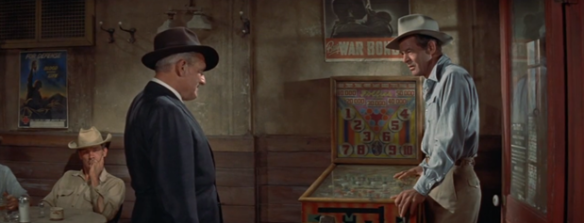
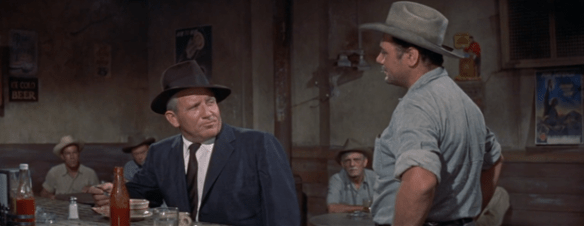
One could say it happens in the diner. Spencer Tracy is working on a bowl of chili, only to get needled by Ernest Borgnine. First it’s a squabble over a chair, then it’s a bottle of ketchup being poured into a bowl of chili. It’s a maddening scene of belittling, but Spencer Tracy takes everything in stride with the finest brand of mild amusement. Everything slides off his back. The following interchange is representative:

“You’re a yellow-belly Jap lover, am I right or wrong?” – Coley Tremble
“You’re not only wrong, you’re wrong at the top of your voice.” – Macreedy

Robert Ryan and Lee Marvin are lounging around to watch the show. Up until this point Macreedy has kept his cool and one might say he walks out as calmly as he came in, but he also exerts himself like he has yet to do. It’s a cathartic moment and as an audience, it gives us an unalienable belief in our hero. We wanted to believe he could hold his own implacably and he can. But the forces against him are nevertheless stifling.

We get the final piece of vital information. Macreedy came to town because of Joe Komoko, who died in Italy saving the life of his brother-in-arms. Forever in his debt, he thought the least he could do was pass on a medal and his condolences. It’s gratifying to have it spelled out, but the bottom line is still the same. Tracy is all but trapped without any outside assistance.

His only chance is some inside help — someone who is willing to do something right for a change, instead of turning a blind eye. The closest he finds is in the local doctor/undertaker (Walter Brennan) who gives his best half-hearted attempt to help the stranger.

Meanwhile, the town’s poor excuse for a sheriff (Dean Jagger), who spends his days nursing the bottle and his nights sleeping in his own jail cell, finally feels compelled to take a stand. His behavior strips him of his badge. The final reluctant players are the tight-lipped hotel clerk and his young sister (Anne Francis), who both aid Macreedy begrudgingly. In a town like this, each action seems nearly monumental. One questions if it is enough.

I challenge anyone to stack the movie up against most any cast of the 1950s, especially because this is not some grandiose epic. This film clocks in at a mere 81 minutes of film, but it has more than enough to go around. Robert Ryan, in particular, is a crucial piece. He always gets these roles as militant bigots and in one sense you feel bad for him and in the other, he’s so convincing at it you can understand why.

His blatant malevolence briefly hidden under a thin exterior is the perfect foil for Tracy to bounce off of. Because they share conversation civilly enough, but it all draws out how diametrically opposed they are. Macreedy got it in Italy. Smith tried enlisting straight after Pearl Harbor but wasn’t accepted.

We come to understand his view of humanity is cut-and-dry. Komoko was a lousy Jap farmer. Pearl Harbor and Corregidor. They’re all the same. There’s no such thing as a loyal Japanese-American. Its this type of rhetoric we must immediately be wary of. For it is pernicious.

At his first chance, Macreedy decides he should get out of town since he’s hit a dead-en, attempting to notify the state police on his way out. He bumps into another bystander, the squeamish telegraph officer Hastings, who excuses himself by saying, “I’m just a good neighbor.”

Of course, as Macreedy suspects, his definition only stretches to those who share his skin tone. He is yet another problem character. Because he has no guts and if I indict him then I am indicting myself as well. There is no place for wishy-washiness with such issues.

bad day at black rock 4

Bad Day at Black Rock, personally, is an important film for me because, like Daisy Kenyon or The Steel Helmet, it stands as a record of Japanese-Americans place in a polarized society. There was injustice done, and it’s not something we should try and forget. The acknowledgment alone is a victory and yet another important record in the annals of visual history.

However, getting beyond, this thriller is ultimately about a hero who is doing his best to honor another man — of course, he happens to be Japanese-American — but most importantly he is given the dignity and the respect of a human being. Because there is no greater love than a man laying down his life for his friends. Even if we never see Motoko, or his deceased son in person, their presence over the film is still felt, and it’s meaningful for me. The implications are that he matters as not merely an innocent citizen but a sacrificial hero for the sake of our country.

It manages to be universal. Because Black Rock could be the stand-in for any such towns. In this particular instance, it’s about a Japanese man. But in other stories, he could be any marginalized individual. The hateful frenzy of The Red Scare is too fresh to disregard any type of allegory in that context.

This type of bigotry and incensed racial (or political) hatred is not a thing of the past. It disadvantages many types of people by conveniently terming them “other” from the accepted subset of society.

What always fascinates me in history and in the stories we excavate is finding the people who faced this abhorrent reality and willingly pushed against it. Still, others initially accept it with apathy. It’s the path of least resistance. However, even they are forced to make a stand, lest they continually bury their conscience and grow miserable.

Bad Day at Bad Rock is about precisely these types of people, and it takes all sorts. So the beauty of it is that we can enjoy its utter intensity and the mystery at its core. It keeps its secrets close and only divulges them at opportune moments. The dialogue too is sparse and measured.

But seething under the surface is a commentary framed by a none too flattering portrait of America. It stands as a testament to fear leading to hate and hate leading to violence. There’s this sense of full-blown conspiracy and holding onto each other’s secrets because we’re all implicated.

If we are to break the chain, it’s imperative to band together in opposition and bring all those dirty secrets into the light. The greatest gift Spencer Tracy gives to this picture is not brawn but the unwavering sense of integrity — in his acting and in that iconic face of his. In a world of shady two-timers, his candor is something we can trust.

4/5 Stars

Riot in Cell Block 11 (1954): Social Commentary in The Guise of Exploitation

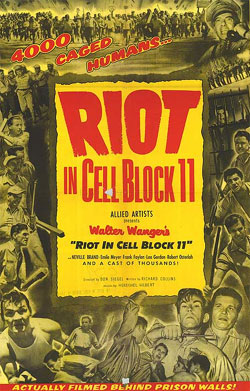
Riotcellblockpost.jpgIf you’re like me you met Don Siegel because of Dirty Harry (1971) or maybe The Invasion of the Body Snatchers (1956). But it was only after discovering the rest of his work — the likes of The Big Steal (1949), The Lineup (1958), or even this film, where you began to appreciate the consummate craftsman that he was.
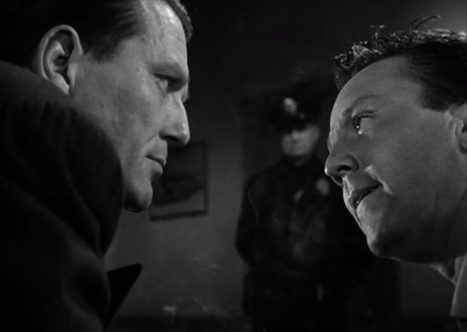
The film makes a creative choice to set up its narrative with real-life newsreel footage of prison riots across America and this is no facsimile; it feels like the real deal. This decision begins with the initial impetus of producer Walter Wang to make a picture authentic to the plight of prisoners. Showing the inside and the inherent issues with such mass incarceration. Why would he have such a stake in telling these stories in a picture like Riot in Cell Block 11 or I Want to Live (1958)?

It’s because he actually spent a spell in prison himself after shooting his wife’s lover. That is a whole different story, but it gives us some context for the aims of this project.

Compared to Brute Force (1947) or Caged (1950), for instance, this is not simply a story of brutality at the hands of some maniacal prison guard like Hume Cronyn or Hope Emerson. Those narratives are assuredly entertaining. But for something that looks similarly exploitative, this picture decides on a more nuanced approach in a generally successful attempt at open-ended social commentary.

The warden (Emile Meyer), for instance, is a no-nonsense man but far from a tyrannical monster; he has a grim view of the prison system, knowing they are not always able to offer the best rehabilitation. He constantly strives for discipline while also harboring a certain level of sympathy for those deserving of it. He is a first-hand witness to the short-sighted effects of negligence in our justice system.

It turns out that before the days of Johnny Cash, Folsom State Prison was used as the shooting location for this film. Siegel even had the ingenuity to cast real-life prisoners as extras. I’m not sure how the logistics worked out, but the film undoubtedly benefits surrounding the already believable tough guys like Neville Brand and hulking Leo Gordon with a host of others.

The usual suspects include a skulking Alvy Moore (pre-Green Acres) and “The Colonel” who is the most learned of the inmates and helps to give them some credibility. The lives of prison guards, including Whit Bissell and Paul Frees, reflect how close the jailers get to their charges. That’s a dangerous arena and especially with the guy’s in solitary.

Without this overcrowded, undermanned system, there would be no Riot in Cell Block 11. As it is, four guards are easily overpowered and held hostage to be used as leverage against the authorities.  There’s a giddy jubilance to their trashing of the cell block that’s nearly comical, even as the stakes are far more harrowing. It proves far more than a game, with lives on either side of the wire at stake.

James V. Dunn (Brand) takes the lead, daring all others to join him and his band of cronies. Crazy Mike Carnie (Gordon) is the one who frightens everyone into line. But it is The Colonel (Robert Osterloh) who is called upon to organize their grievances to be presented. He provides a voice of reason and rationality we would be lacking otherwise.

The warden is put in an agonizing position, walking the tightrope between the prisoner demands and the outsiders coming in, including the pitiless commissioner Haskell (Frank Faylen), going all the way up to the governor. Likewise, worried spouses call his office about their husbands’ well-being as journalists (including William Schallert) look to stir up the story around the riot.

At its cores is this ideological war of treating prisoners firmly but with inherent dignity and then caging them up with the most merciless of standards to keep them in line. To show clemenscy is seen as a sign of weakness.

Inside and outside the bars, you see people with grievances and problems like any person. It humanizes everyone, in a sense, going beyond mere exploitative drama. It somehow wears a fairly convincing cloak of authenticity while still remaining pulse-pounding stuff. Because I’ve seen prison riots captured on film before but to my knowledge, there’s never been anything so enveloping and tumultuous on all fronts.

Keeping with Wang’s agenda, the film does not pull any punches as it slinks back into the status quo. There is tragedy, there is victory, and finally, there is a feeling of powerlessness in the face of bureaucracy. It’s as if a man’s word stands for nothing. It’s as if this whole ordeal was entirely pointless.  The finale is as eye-opening as it is pessimistic. But movies have a license to do that. It makes them a lot more lifelike.

4/5 Stars

Armored Car Robbery (1950): Wrigley Field L.A. Noir

armored car robbery 1

Armored Car Robbery instantly had my rapt attention in part because of its location shooting and due to one place in particular. We start out at L.A. City Hall and soon a shooting and a robbery are being called in from nearby Wrigley Field, which sends Lt. Cordell (Charles McGraw) and his partner out to respond.

It proves to be a false alarm but the setting alone might throw some contemporary audiences for a loop. After all, Wrigley Field is synonymous with the ivy-laden bricks of Chicago, not Los Angeles.

Except L.A. enthusiasts might know that the area once held a Wrigley Field of its own, formerly the home of the original Los Angeles Angels expansion team in 1961. It also served as the backdrop in many classics including Meet John Doe and Pride of the Yankees. Added to that list is Armored Car Robbery, although it only uses a facade of the stadium, which could just have easily been a studio set.

Aside from always being fascinated by time capsule moments — Wrigley Field was all but demolished in 1963 — I had always heard talk of my Grandma growing up down the street in Los Angeles. She was born in L.A. County and her family ran a grocery store in the area. I don’t have much of a picture of that world and so even a brief image like the one provided here gives me a glimpse into yesteryear. But I digress.

Richard Fleischer’s heist noir is an obvious precursor to The Killing for its stadium locale and the ever necessary complications that begin to present themselves in due time. What good is a heist if it doesn’t go completely haywire?

Because of its limited time, Armored Car Robbery spends minutes on the preparations and the actual execution of the job. But the trick is, it’s all so efficient, we are never allowed time to get bored by the usual rhythms. Still, all the information is there for us to be brought into the crime.

Generally known as defense attorney Hamilton Burger on Perry Mason,  William Talman gives a far more insidious turn as a meticulous criminal obsessive about keeping a low profile and tying up every loose end so he can pull off the perfect crime. What’s more, he’s secretly got a bite on his accomplice’s girl, a heartlessly opportunistic blonde bombshell (Adele Jergens).

By night she’s got the entire male populous ogling. By day, she’s looking pretty, hanging around the bar, and getting miffed with her husband (Douglas Fowley), who can’t seem to make any dough. Hence her convenient extramarital operations. Dave Purvis is the man for her, taking charge of two other thugs as they set their sights on $200,000 of cold hard cash.

armored car robbery 2.png

But there’s always a slip-up. There can hardly be a heist genre without the wrench that causes everything to hurtle out of control. As it turns out, Lt. Cordell (Charles McGraw) and his partner are on the beat, responding to the subsequent distress call at Wrigley immediately. The culprits aren’t expecting it, and the ensuing shootout leaves one of the officer’s dead in the line of duty and one of the gangsters badly injured. Soon the alarm has been raised with roadblocks set out everywhere and the police force on high alert for the four fugitives.

For the rest of the film, Cordell must live with this galling injustice, stewing day and night in his own distraughtness and copious amounts of lukewarm coffee. First, jaded by the untimely murder of his partner and then saddled with a wet-behind-the-ears replacement (Don McGuire). Although the new recruit nevertheless proves to have a certain amount of gumption when it counts.

The film employs a low-budget airport terminal ending — one of the few times it lets slip its meager means — but the film goes for the narrative jugular. We see precursors to the likes of The Big Combo, The Killing, and even Bullitt. On multiple occasions, it’s not at all squeamish about letting the bullets fly and the death toll rises as a result. And it’s this disregard for the sanctity of life that gives the narrative real heft. No one is protected and there we have grounds for a thrilling drama.

These kinds of stories are awesome pulp classics with a stripped-down punchiness that’s instantly gratifying. RKO was such a wonderful studio in this regard for giving us such raw delights. They don’t make them like this anymore.  We waste too much time.

While not completely related, one should note RKO is the only of the major classic studios that completely folded. Those were the good old days. But all good things must come to an end. Wrigley got demolished. Actors die. Studios close down. That’s why cinematic memorials are often so important. They allow us to journey back into the past.

4/5 Stars

The Irishman (2019): Painting Houses Between a Rock and a Hard Place

The_Irishman_poster.jpgNOTE: I’m never too concerned about spoilers but just be warned I’m talking about The Irishman, which will come out in November. If you want to be surprised maybe wait to read this…

The opening moments caused an almost immediate smile of recognition to come over my face. There it is. An intricate tracking shot taking us down the hallway to the tune of “In The Still of The Night.” We know this world well.

Martin Scorsese does too. Because it’s an instant tie to Goodfellas. In some sense, we are being brought back into that world. Except you might say that The Irishman picked up where the other film left off, filling up its own space, coming to terms with different themes. This is no repeat.

A day ago if badgered about the film I would have said it’s about a hitman named Frank Sheeran (Robert De Niro) who had ties with the Buffalino crime family (Joe Pesci) and worked alongside Jimmy Hoffa (Al Pacino). The famed union teamster disappeared without a trace, only to become one of the most mythical unsolved cases of all time.

And yes, I had to take a few moments to get used to a de-aged Robert De Niro, although I think it might have been the blue “Irish” eyes, so I quickly accepted it and fell into the story. On a surface level, these are the initially apparent attributes. However, it’s a joy to acknowledge it’s so much more. Because all the greatest films offer something very unique unto themselves — and to their creators — in this case the world of organized crime.

We’re so used to having Scorsese and De Niro together; it’s staggering to believe their last collaboration was Casino (1995). Meanwhile, Joe Pesci came out of his near-decade of retirement to join with De Niro again and continue their own substantial screen partnership together. Some might be equally surprised to stretch their memories and realize Pacino and Scorsese have never worked together. Both have such deep ties to the American New Wave and the crime genre. The pedigree is well-deserved on all accounts.

But there’s something ranging even deeper and more elemental, resonating with us as an audience. This is not Sunday school truth but a type of hazy mythology with flawed titans going at it in a manner that feels almost bizarre. There are no pretenses here. If you are familiar with Scorsese’s work from Mean Streets to Goodfellas, this is an equally violent and profane work. And yet how is it we begin to care about characters so much that their relationships begin to carry weight? Especially over 3 and a half hours.

It is a monumental epic and that opening tracking shot I mentioned leads us to a white-haired, wheelchair-bound man who has seen so much over the course of his lifetime. Voiceover has a hallowed place in the picture akin to Goodfellas, but again, the man at the center of it all has such a different place in the story.

What’s more, The Irishman really is a full-bodied meditation on this lifestyle of organized crime. Yes, it’s placed in a historical context, but Sheeran is a man we can look at and analyze. He is a sort of case study to try and untangle the complexities of such an environment.

Steven Zaillian’s script lithely jumps all over a lifetime woven through the fabric of popular history, aided further by the music selections of Robbie Robertson (of The Band acclaim) and real-life touchstones ranging from the Bay of Pigs, the Kennedy Assassination, Nixon, and Watergate.

Thelma Schoonmaker makes the action accessible and smooth with ample artistic flourishes to grapple with the societal tensions and cold, harsh realities. Still, the majority of the picture is all about relationships. Everything else converges on them.

Sheeran didn’t know it then, but the day he met Russell Bulfino (Pesci) on his meat trucking route, would be the beginning of a beautiful friendship. Because he’s a man with clout and connections. Everyone comes to him, he expects other people to pay deference to him, and he looks kindly on those who carry out his favors.

In his company, Sheeran has a formidable ally, and he starts rising up the ranks even running in the same circles of the acclaimed Jimmy Hoffa. Being “brothers” as it were, it’s as if Sheeran and Hoffa understand one another intuitively and in a cutthroat world, they have a deep-seated, inalienable trust in one another.  Who is the man Hoffa comes to have in his room to be his friend, confidant, and bodyguard if not Frank? You can’t help but get close to someone in that context.

Al Pacino just about steals the show blowing through the film with a phenomenally rich characterization of the famed teamster, because he willfully gives a tableau of charm, charisma, warmth, humor, mingled with a ruthless streak and utter obstinacy. His loyalists are many as are his enemies. It’s facile to be a mover and a shaker when you’re an immovable force of nature.

Even as Sheeran is busy, mainly on the road, his first wife and his kids (and then his second wife) are always present and yet somehow they never get much of a mention, rarely a line of dialogue, always in the periphery. This in itself is a statement about his family life.

One recalls The Godfather mentality. Where family is important but so is the family business and never the twain shall meet. Womenfolk and children are protected, shielded even, and the dichotomy is so severe it’s alarming.

In that film, the cafe moment is where Michael (a younger Pacino) makes a life-altering decision. For Frank, that mentality somehow comes easily for him. Michael was the war hero and thus stayed out of the family business for a time. Frank’s involvement in “painting houses,” as the euphemism goes, is just an obvious extension of the killing he undertook in Europe.

It’s curious how everyone mentions his military experience, the fact that he knows what it’s like, and how that somehow makes what he’s called to do second-nature. Again, it’s business. It’s following orders. If you do a good job, if you do the “right thing,” you get rewarded.

There are some many blow-ups and hits and what-have-yous, it wears on you to the point of desensitization, especially when you’re forced to laugh it off uneasily. This is very dangerous but again, it’s anti-Godfather, which was a film where these were the moments of true climax and meaning and import for the psychology of the characters. Where Michael evolves and takes over the territory. Where his older brother Sonny is killed and his other brother Fredo gets killed. There’s meaning in every one of them.

In the Irishman, it could care less. Everything of true importance seems to happen around conversations, in dialogue, between people. To a degree that is. Because dynamics are set up in such a way and the culture and the unyielding ways of men make it inevitable, opposing forces will rub up against one another.

The complicated realms of masculinity, pride, and respect make minor tiffs and bruised egos the basis of future gang wars and vendettas. Phone calls are testy and people are pulled aside to get straightened out before more serious action is taken. It’s a social hierarchy where go-betweens come to mediate everything.

As time goes on, we come to realize Sheeran is the wedge bewteen two of these unyielding forces, and he’s caught between a rock and a hard place. Between his “Rabbi” Russell, as Hoffa calls him, and the man he’s been through the trenches with — the man he asks to present his lifetime achievement award to him. He’s deeply loyal and beholden to both.

Is this his hamartia — his fatal flaw — that will become his undoing? We never quite know if he was able to make peace with any of it. All we know is something has to give…But I will leave it at that.

The unsung surprise of the film is the load of humor it manages end to end. Everyone is funny. The exchanges get outrageous to fit the larger-than-life characters and situations. It’s the kind of stuff you couldn’t make up if you tried. But the jokes play as a fine counterpoint to the grim reality of these men and their lifestyles.

In the later stages of life, as he prepares himself for death, Sheeran meets with a priest, which prove to be some of the most enlightening moments in the film. When asked if he has remorse, he matter-of-factly admits, not really, but even his choice to seek absolution is his attempt at something.

Scorsese continues in the stripe of Silence with some deeply spiritual and philosophical intercessions in what might otherwise seem a temporal and antithetical affair.  The truth is you cannot come to terms with such a life — or any life — without grappling with the questions of the great unknown after death.

In another scene, Sheeran seeks out a casket and a resting place for his body muttering to himself just how final death is. That it’s just the end. It’s curious coming from a man who knocked off so many people, but somehow he’s just coming to terms with it himself. Perhaps it’s what old age does to one.

This is not meant to be any sort of hint or indication (we want more films), but if this were to be the last film this group of luminary talents ever made, I would be all but content. The film taps into content and themes that have been integral aspects of Martin Scorsese’s career since the beginning. Al Pacino, Robert De Niro, Joe Pesci, and even Harvey Keitel are all synonymous with the crime film — they share a common thread — a communal cinematic context and language.

My final thought is only this. The Irishman feels like Martin Scorsese’s Citizen Kane. I don’t mean it in the sense it’s his greatest film or the greatest film of all time. Rather, in a thematic sense, they are kindred. Although Scorsese’s version includes crime and violence, the ends results are very much the same.

You have a man with a life crammed full of power and money and recognition, whatever, but at the end of the day, what did it get him? He clings to dog-eared photos of his kids whom he probably hasn’t seen in years.

When the priest tells him he’ll be back after Christmas, Sheeran looks up at him pitifully, acknowledging he’ll be around. He’s not going anywhere. He has no family. He has no one to care about him. All his buddies are gone, and he’s the last of them holding onto secrets that do him no good. It’s all meaningless.

It’s a striking final image. All I could think was, “Oh, how the mighty have fallen.” Whether or not any of it was true (as the film seems to validate), what’s leftover is a paltry life. It’s a testament to everything we’ve witnessed thus far that we feel sorry for him.

4.5/5 Stars