The Third Man (1949): Out of the Rubble

the third man 1Like the fella says, in Italy for 30 years under the Borgias they had warfare, terror, murder, and bloodshed, but they produced Michelangelo, Leonardo da Vinci, and the Renaissance. In Switzerland they had brotherly love – they had 500 years of democracy and peace, and what did that produce? The cuckoo clock. 
Great films ring anew each time you see them. Or in this case, they twang with the oddly disconcerting strains of zither strings. The Third Man is such a film that continually asserts itself as one of the golden classics of the 1940s. But we must set the scene.

There’s an image of a great city–a formerly great city–blown up, diced up, and quartered. The first syllable of dialogue glibly carrying a twinge of irony lays the groundwork for the entire plot really. This is Post-war Vienna. It’s where the blown out buildings strewn with rubble can exist with the elegant remnants of royal dynasties. A land of black marketeering and shifty-eyed collaboration between wartime allies. It’s deception and ambiguity to the nth degree not only evident in the people but the very social structure they find themselves in. Everyone’s got an angle, a secret to hide, and a reason to hide it. There’s a consistently fine line between right and wrong and the storyline is ripe with incongruities and dissonance that, if nothing else, are disconcerting.

It struck me that this is the original Chinatown except it doesn’t simply act as a mere metaphor. We actually get enveloped in the atmospheric Vienesse world that feels invariably gaunt and hollow. It’s a world that’s flipped upside down and with the hapless American western pulp novelist Holly Martins (Joseph Cotten) as our guide, we become just as mixed up as he does.

He’s come to the town for the prospects of a job offered by an old school chum Harry Lime. But Harry’s not there to meet him. In fact, Harry’s not anywhere. He’s dead. But everything is clouded with that same ambiguity. The military police led by Inspector Calloway (Trevor Howard) and his right hand man (Bernard Lee) are still investigating Lime’s prior dealings on the black market in tainted penicillin. Meanwhile, Martins obviously goes blundering around trying to learn anything he can because these men are obviously incompetent. He scouts around for eyewitnesses and several of Lime’s acquaintances. Most of all he’s taken with Harry’s gal Anna (Valli) who is also torn apart by the death of her Harry. They bond over that although Holly soon becomes infatuated with her as she remains in love with a man who is gone forever.

This is the disorienting world that we are thrown into by Graham Green and director Carol Reed. Where heaven is down and hell is up. Ferris Wheels ever turning, rotating through their cycles. Dutch angles giving every figure a contorted view. We never see anyone for their face value and we can never assume anything. Because there’s always something lurking in the shadows.

the third man 2Joseph Cotten is surprisingly compelling as the poor, unfortunate stiff and it’s hard not to feel sorry for him in his ignorance because we can relate with him. Alida Valli is striking as the aloof beauty who nevertheless has an unswerving affection for her former love that remains the only joyous thing in her current existence. Then, of course, there’s Orson Welles as the charismatic myth of a man–arguably the most intriguing supporting character there ever was even if it’s mostly thanks to the legend created by those who knew him.

Meanwhile, Carol Reed’s film is stylish and simultaneously dingy around the edges another gritty entry in the annals of film noir with some of the most beautifully pronounced shadows in the history of film. The final setpiece through the dank cavernous underworld of the Viennese sewers is a fitting place for the Third Man’s climatic moments to play out. It epitomizes all that has been going on above ground so far.

Then in a strikingly Deja Vu moment, the story ends much as it began in the exact same place with the exact same people but now there is so much more tension underlying each character. Feelings now buried in the dirt.

And in his final shot, Reed is fearless. He plays a game with the audience, giving them their final shot but instead of bringing it to a rapid conclusion he lets the gravity of the situation sink in before it’s gone in a fit of wistful melancholy. It ends as all films noir should with one man dead, another man smoking a cigarette, and the girl walking off with neither of them. It’s about as bleak as you can get but then again we’ve already spent the entire film getting accustomed to this lifestyle. This is only a day in the life of a city like Vienna. This is what life is in a post-war zone.

5/5 Stars

Note: I will say that I rewatched the film on Netflix and I would vehemently dissuade others from doing the same (at least if they’ve never seen The Third Man before). Because one major change they made that you would hardly even think about is adding subtitles in some crucial moments. When I saw the film multiple times before the lack of subtitles only added to my general sense of confusion in the face of ambiguities, much like Holly Martins faces himself. Subtitles take some of that away from us as an audience. In this case, the subtitles are tantamount to colorizing black & white movies or resorting to pan and scan. They can easily ruin the experience.

Black Girl (1966)

LaNoiredeDVDWhat’s fascinating about this film is how it manages to give voice to those who are normally silenced and even in her subservience this narrative powerfully lends agency to a young Senegalese woman’s perspective. Because even when she is silent and words are not coming out of her mouth and her status ultimately makes her powerless, the very fact that her mind is constantly thinking, her eyes observing and so on mean something. Inherently there’s a great empowerment found there even if it’s only known by her and seen by the outside observer peering into her life. That’s part of her. We are given a view into what she sees. We can begin to understand her helplessness and isolation. Where she came from and the life she left behind. Giving up the master narrative of the entitled and shown the flip side of the world for once.
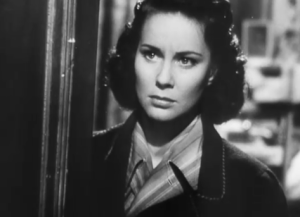
And the fact that this viewpoint comes from an African filmmaker casts the film in an even more profound light because just as this character is from one of the marginalized castes, the same could be said for the director Sembane Ousmane. My knowledge of African filmmaking is admittedly poor and that’s precisely the point. For me, this film is an entry point, a representation, a portrait of a lineage that I know very little about and that makes Black Girl extremely exciting. Because if this picture found its way to me, there’s a chance that it can represent something to others as well–namely the import that African cinema can have on the world at large if given half a chance.

With this picture, Ousmane makes a visual statement using the medium of film to offer yet another, broader perspective to the patchwork of world cinema that can be decidedly bland and monochromatic at times. Here is a story that even in its simplicity guarantees that more voices will be heard and at the very least more perspectives will be empathized with.

Diouanna is at best a servant and exotic sideshow attraction for party guests and at worst a prisoner who gets her job as a live-in nanny and de facto housekeeper rather like a slave off an auction block. Sadly, it doesn’t feel that much different. There’s a little more free will involved but that’s what humble circumstances can do. She has a choice but not much of one.

She looks at France as an extravagant promise land and a job is a gift of providence that she will gladly take. Still, once she arrives on the Riviera she soon becomes disillusioned. It’s hard not to blame her given the circumstances. She no longer is able to mind kids as she knows best and rarely is allowed to explore the beautiful country she lives in–if at all.

She doesn’t want the husband’s money or the patronizing kindness of the wife which demands every amount of deference and even most of her freedoms. It’s the high position that takes on the role of savior and expects a certain response whether it is fully deserved or not. That is what hangs in the balance of Black Gir signified by the ceremonial mask that Diouanna gifts her benefactors at the outset of her employment.

First relinquished as a gift and taken as an exotic souvenir exhibited on the wall for all to see–a symbol of charity, generosity, and simultaneously colonialism. But soon, as Diouana grows discontent she realizes she doesn’t want this. She will willingly give up this “lavish lifestyle” and whatever perks come with it to retain her identity. That’s too great a price to pay as she realizes and this job isn’t worth the toll. Her cultural identity and the identity represented by this film are vitally important. Because they represent yet another member of humanity.

4/5 Stars

Monsieur Verdoux (1947)

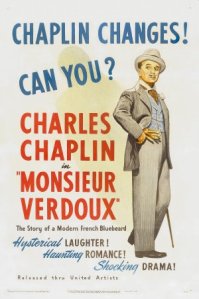
Monsieur_verdoux57Prior to the making and release of Monsieur Verdoux Charlie Chaplin had undoubtedly hit the most turbulent patch in his historic career and not even he could come out of scandal and political upheaval unscathed. To put it lightly his stock in the United States plummeted.
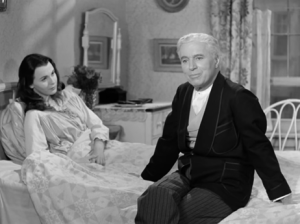
You would think that he more than anyone would have been aware of his current state of affairs. It’s a plausible assumption and yet that’s precisely what makes the release of his latest film during that very climate all the more remarkable.

Chaplin always had a handle on emotional clout and he was the king of pathos but with time as film evolved he did evolve with it and it could easily be said that his sound pictures were imbued with much more prominent political overtones, most notably in The Great Dictator and Monsieur Verdoux. The first was a blatant lambast of the world’s resident tyrannical dictator and his cronies with a tremendous bite that goes beyond simple comedy. The latter film takes a broader scope that’s not quite as evident at first.

It shares similarities with Shadow of a Doubt, Kind Hearts of Coronets, or even The Bigamist and it took inspiration from a passing whim of Orson Welles. But Chaplin plants his particular drama in the previous decade–the age of poverty and depression and that allows him to relate his protagonist once more to the plight of man as the Tramp did perennially. However, Chaplin’s latest incarnation is a far cry from the Tramp and no doubt on purpose. Chaplin had officially retired the character after Modern Times, but with the similarly depicted Jewish Barber in The Great Dictator, Monsieur Verdoux was a character with no semblance of his predecessors.

For lack of a better term, he is a wife killer, a Bluebeard, a gentleman murderer and there’s no other way to put it. Yes, he began as a bank teller with an invalid wife and little boy who hit hard times following the crash. True, he maintains his pretenses at civility and yet here is a character so vastly different from all others because for once Chaplin is making his hero difficult for the audience to like. At the very least, he’s a conflicted hero and as such the contemporary viewer was not about to pity him given Chaplin’s already muddied reputation. This was another nail in the coffin and it’s probably part of the reason Verdoux was generally scorned by the American Public at the time. But now, with the clouds of the cultural moment dissipated we can look at Chaplin’s blackest of comedies without the established biases.

The narrative is comprised mostly of Verdoux cycling from wife to wife, town to town, identity to identity with such fluidity it’s mindboggling. Our only indication that he’s moved is the ubiquitous image of the locomotive always chugging along to the next destination. But we’re introduced to this whole charade through the most curmudgeon, bickering household ever known to man in the Courvais.

The only reason they matter for this story is that Verdoux has married their sister who has just recently taken all her money out of the bank and vanished. Only the culprit knows what happened but presently he busies himself with tidying up his affairs in one location so he can check in on his other “business endeavors.” To Annabelle (Martha Raye) he is a sea captain away months at a time which explains his frequent absences.

Consequently, his Pigeon also has to be one of the most annoying chatterboxes of all time. It makes sense he’s crafting a poison to kill her even if it’s not quite forgivable.  He also calls upon his second asset the rightfully suspicious Lydia while looking to woo the affluent Marie Grosnay who happens to be less of a boob than the rest of his conquests. Though he is a persistent devil. Soon enough wedding bells chime again and that becomes the fateful day when his many strands get tangled in one brief moment at his latest marriage ceremony.

If nothing else it suggests that the time is running out as global tensions rise and Verdoux finds his fortunes dwindle in the wake of his imprisonment. But now on trial, he’s allowed to be up on the stand and mount his final defense–his rebuttal against the indiscretions of mankind. Ultimately, it’s an invariably cynical take on the ways of the world comparing his spree of mass killing to the prospects of the very scientific mass destruction of the world at present. It’s all business, war and anything else you can imagine, merely profiteering endeavors to get ahead. As he walks off to the guillotine the Priest asks him if he has anything to confess and strikingly he asserts, “I am at peace with God, my conflict is with man.”

This is where we overtly see Chaplin’s stance once more as he stands up on his soapbox as it were but he gave us some indications earlier on as well. Verdoux’s most telling interactions come in the form of chance encounters with a particular young woman. At first, he sees her as a test case for his poison, but soon he’s taken with her words, the way she sees the world. It affects him deeply (You better go before your philosophy corrupts me ). And in a striking parallel to Limelight several years later, Chaplin’s character falls to his demise as this young woman’s fortunes increase. She doesn’t forget him. But the rest of the world isn’t quite so kind.

Monsieur Verdoux goes to the chopping block deservedly so as did Chaplin but the verdict’s still out on whether he deserved it all. Perhaps that’s what his film is getting at. He was full of faults as a human being but then again we all are. It makes sense that God is other, perfect, and outside of our messiness. It’s the rest of us that cause ruin, pain, and suffering. That’s where the blackness of this comedy finds its source and it’s something to ponder and then resolve to allay with doses of love and compassion.

4/5 Stars

Limelight (1952)

limelight 1The glamour of limelight, from which age must pass as youth centers 
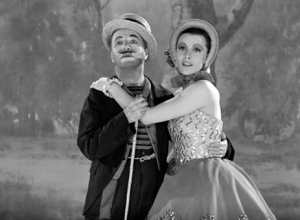
A story of a ballerina and a clown… 

In Limelight it quickly becomes evident that Charles Chaplin was well aware of his own legend and how couldn’t he be? For years he had been held in the highest regards, loved by the masses worldwide as one of Hollywood’s founding royalty. He was at the center of the universe and the limelight was burning brightly around him.

I’ve recently been reacquainting myself with Chaplin’s early works most notably those that paired him with the indelible Edna Purviance as well as the gargantuan behemoth of a bully Eric Campbell. But Limelight is a major flashforward in his career, really at the end of it all. By now Chaplin is in his twilight years.

In fact, Limelight is one of his last prominent roles and the feature where he audaciously placed everything in the public eye–a picture that is unequivocally autobiographical in nature, accented with Chaplin’s own romantic dealings and tumultuous history from his entire career up to that point. And yes, he faced scandal in his later years, not simply for his past indiscretions but also more overtly for his political affiliations which unquestionably must have made him an easy target during the supercharged age of McCarthyism.

Still, in a simple heartfelt narrative once more, for one last time, Charlie Chaplin captured his audience. The title card reads much like his old silents would have in setting the scene. It’s 1914, back in the days when he was probably just making it big in real life. However, as Calvero, Chaplin is a washed-up comedian prone to alcoholism with a career that has suffered dearly. But in a moment of action, he saves an aspiring dancer (Claire Bloom) from a self-attempted suicide and from then on becomes a sort of guardian angel for the girl.

Calvero heeds the doctor and allows the girl to stay in his flat, away from the trauma and although it receives the ire of their landlady, he calls Thereza his wife in order not to cause a local stir. It’s one half human drama, other half stage production because while he looks to lift her spirits in any manner possible, he daydreams of his past forays in comedy. He was the man who could pull off a whole gag with a pretense of performing fleas and he had wall to wall crowds.

limelight 2But now no one’s there. The seats are empty, the aisles quiet, and he sits with a dazed look in his flat the only recourse but to go back to bed. It’s as if the poster on the wall reading Calvero – Tramp Comedian is paying a bit of homage to his own legend but also the very reality of his waning, or at the very least, scandalized stardom. It adds insult to injury.

Still, in real life and on celluloid he put up the front of respectability for people. Although he went through 5 wives and now has a young woman living in his home less than half his age, he believes that after all his years of experience, “a platonic friendship can be sustained on the highest moral plane” as he puts it.

And it’s true Calvero is perfectly civil. This isn’t some passionate romance though he does try and call Terry to action in other ways. Chaplin composed his scripts of many great lines, monologues and sonnets where he himself gets to deliver beautiful rhetoric and impassioned rallying cries of truth to anyone who is listening. In this case, it’s the girl who sits despairingly in her bed but it’s for everyone else too. It’s like he took the stalwart speech from The Great Dictator and economized it into smaller bite sized pieces (That’s the problem with the world. We all despise ourselves, There’s something just as inevitable as death. Life! Life! Life!).

But there is something rather tragically demoralizing about watching crowds walk out on Chaplin even if it’s his fictional alter ego because you get the sense that his once faithful viewing public undoubtedly did the same thing–driven by the tides of the times and their own fickle ways.

But even as his fictional self fades, he watches Thereza ascend to the top of the dancing world as a prima ballerina and she looks to take her beloved Calvero along with her. There’s a necessity in life to never subsist, never cease fighting that she learns from him and takes to heart. So the second half is the role reversal. He began as her good samaritan and now in her bounty, she looks to take care of him going so far as professing her love for him and her desire to get married.

limelight 3It’s important to know that he writes off such an assertion as nonsense and one can question whether this is Chaplin’s chance at revisionist history or more so an affirmation of his life’s actual trajectory–working through his current reality that the world questions (IE. Marrying a woman much younger than himself in Oona O’Neil who he nevertheless dearly loved).

It’s ingenious really because there’s positively no way not to empathize with him, no matter our position and as he always was a premier master at, Chaplin once more tugs at our heartstrings in a very personal way–pathos overflowing from his performance one last time. He casts himself as the great sacrificial martyr and stepping down from his post as one of the luminaries of the cinema, his legacy burning brightly in his wake.

It’s also easy to suspect the tragedy of the Blue Angel or the madness of The Red Shoes displayed for all to see on the center stage will reveal itself in due time but Chaplin allows himself go out on his own terms since he’s a master of his own fate, in the film at least.

He’s reflected on his life and deemed it as about as good as it can be. That’s enough. Whether it’s his earlier marital troubles, his current marriage, the criticisms of the public, or even a real or fabricated feud between himself and Buster Keaton if there ever was such a thing. It is all laid to rest. It’s like old times even as the new age begins.

4/5 Stars


Review: A Streetcar Named Desire (1951)

Brando_-_Leigh_-_1951Blanche Dubois and Stanley Kowalski. They’re both so iconic not simply in the lore of cinema history but literature and American culture in general. It’s difficult to know exactly what to do with them. Stanley Kowalski the archetypical chauvinistic beast. Driven by anger, prone to abuse, and a mega slob in a bulging t-shirt who also happens to be a hardline adherent to the Napoleonic Codes. But then there’s Blanche, the fragile, flittering, self-conscious southern belle driven to the brink of insanity by her own efforts to maintain her epicurean facade. They’re larger than life figures.

In truth, A Streetcar Named Desire is one of those cases where play and film are so closely intertwined it’s hard to pull them apart. And there’s so many connecting points. Tennessee Williams helped to adapt his initial work and Marlon Brando, Kim Hunter, and Karl Malden all transposed their original stage roles to the screen while Elia Kazan took on direction once more.

As such it became the showcase of The Method, the shining beacon championing that long heralded yet controversial movement born of Stanislav Konstitine and disseminated in the U.S. by such instructors as Lee Strasberg and Stella Adler. It was from this latter teacher from whom Marlon Brando honed his craft and it’s true that he was one for the ages. The Greatest by some people’s account.

But before this film, Vivien Leigh was the biggest name on the marquee and she, of course, had ties to Laurence Olivier, the apex of Shakespearian actors and arguably the most reputed actor of the age until Brando came along. In Streetcar, you can invariably see the thin link connecting such luxuriant Hollywood offerings as Gone with the Wind to the evolution of cinema with later classics like The Godfather because it’s physically there on the screen.

Vivien Leigh, forever synonymous with Scarlet O’Hara and Brando’s own brand of sometimes brutal authenticity. She wavers and sashays through her scenes, clinging to the set and delivering her lines as pure searing drama. Whereas Brando just is. This animalistic force of brawn stuffing his face with chicken and moving through his home like he actually lives there. It’s social realism but it’s also a conflict on multiple levels that goes far beyond the main tension within the film itself.

Within the narrative, it is certainly a clash of culture, dialect, and acting styles and we’re never allowed to forget it anytime Stanley (Brando) or Blanche (Leigh) are in a room together. Still, they are not the only players in this film and Kim Hunter lends an added layer to the conflict as she simultaneously yearns for the romantic passion coursing through Stanely while wanting to protect her sister from harm. It’s a precarious tightrope to walk and Hunter makes it heartwrenching. Beyond her, Karl Malden plays Mitch, one of Stanley’s old war buddies who nevertheless exhibits a softer side that is easily taken with Blanche’s cursory level of class.

So in the end, Blanche’s fall not only harms Stella but Mitch too as he sees his heart get hurt and he feels lied too. But the one who fairs the worst is, of course, Blanche herself as she becomes completely overtaken by her delusions of grandeur. The fact that she goes for magic over reality ultimately becomes her undoing.

Today Streetcar does come off as stagy and yet Kazan is still able to personify the sticky, grungy, sweaty atmosphere of New Orleans — palpable with its billowing cigarette smoke and humidity. It somehow functions as this odd dichotomy between the theatrical and utter realism. In one way at odds and in another married perfectly because the juxtaposition only draws out the drama even further.  And the fact that the film pushed the boundaries as far as content easily heightens the drama. Stanley’s attack on Blanche is not only in a verbal or emotional sense but physical as well and we have little problem believing Brando in his role.

It also struck me that in her final moments Blanche feels hauntingly reminiscent of Norma Desmond in Sunset Blvd only a year prior. But her delusions are far more pitiful because she never was anything and yet she still tries to cling to this sense of pride in her upbringing and the looks that once were. She constantly needs the affirmation and adulation of others to reassure her in her fears and frailties. Always putting on a pretense — a face to get by — but she’s the only one she’s able to deceive in the end. It’s one of the preeminent tragedies of the 20th century and its actors guide it into transcendent territory.

4.5/5 Stars

Thelma & Louise (1991)

thelma__louiseposterThemla & Louise hardly feels like typical Ridley Scott fare but then again, neither is this a typical movie. It pulls from numerous genres that have been depicted countless times before from buddy movies to caper comedies, road films, and the like. But perhaps the intrigue begins with the two leads.
It’s not simply the fact that they are two women sharing conversations together although that is often not a common enough occurrence in a world where the Beschel Test is often a stumbling block, but it is the fact that the two women are played so exquisitely by Susan Sarandon and Geena Davis.

They start out as two people stuck in a deadend world and they feel like the heirs to some of Altman’s heroines in films like Nashville and 3 Women. In fact, it’s a rather ironic development that screenwriter Callie Khouri went onto another project called Nashville. Still, when we look at their lives one is a small town waitress with a gruff boyfriend (Michael Madsen) the other a bit of a bubble-headed subservient housewife married to a grade A jerk. It’s easy to pity them and to want something better for them–at least some kind of escape from their everyday monotony. In one sense, that’s what the entire length of the film gives them and much more.

A single weekend away in a single irrevocable moment of decision evolves into not simply a gripping film but a rather astonishing adventure where they get to step out in ways that they never knew possible. True, there is murder and armed robbery involved but what makes the movie work at all is the very fact that we still care a great deal for these individuals. They tiptoe across boundaries but it never feels brazen. It’s accidental, brought on by necessity, fear, and the like. Even to the end,  it’s as if Thelma & Louise naively believe that they are a notorious pair of outlaws but they don’t quite know how dark a place the world can actually be. It’s neither Bonnie and Clyde or Badlands. For good reason, they are simply Thelma & Louise.

One of the most memorable sequences involves Davis robbing a gas station register just as nice as you please using the pithy monologue she learned from the charismatic charmer J.D. (Brad Pitt in a key role early in his career) who always sports a cowboy hat and also ran off with all their dough. She feels completely out of place committing such an act, waving her gun around as the attendant empties the cash register into her waiting bag. But still, she does it and it epitomizes the inhibitions the two women begin to cast off.

But it’s also the same rascal J.D. who rats on them as they look to make their way to Mexico away from the authorities they believe are hot on their tail. Louise is paranoid of such things and Thelma is still just looking for fun but they’re together and that’s the important thing. Except the authorities on the other end of the line, digging around for answers, are actually led by a cop with integrity (Harvey Keitel) who seems generally worried about their well-being. He sees so clearly that their situation is atypical. They are not criminals even if they want to be.

Importantly Thelma & Louise remain friends to the end, even going so far as to visit the grand canyon together one final time. And that brings us to the film’s conclusion. While not wanting to sound too cryptic and simultaneously not wanting to spoil the experience for others, I can only say I wish Ridley Scott would have chosen a more brazen denouement or otherwise done away with his conclusion altogether. What he comes to is a compromise of an ending that lacks any satisfaction. But then again, maybe it reflects Thelma & Louise. They thought they had so much–that they were such big, bad people–except what did they end up with? Nothing at all aside from a polaroid picture to forever immortalize the craziest of road trips.

4/5 Stars

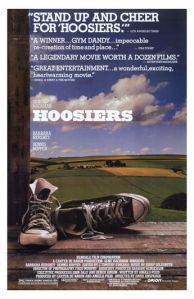
Hoosiers (1986)

hoosiers_movie_poster_copyright_fairuseThe last time I saw Hoosiers it was on VHS and I was only a boy and I hardly remember anything. Gene Hackman yelling. Dennis Hopper as a drunk. Jimmy the boy wonder, “The Picket Fence”, and of course Indiana basketball at its finest. But in those opening moments, as he drives into town and walks through the halls of his new home, I realized just how much I miss Gene Hackman. Yes, he’s still with us but the moment he decided to step out of the limelight and retire from his illustrious career as an actor, films got a little less exciting. His passionate often fiery charisma is dearly missed.
Norman Dale is a character who precisely reflects those very inclinations. He’s a man who had a long stint in the Navy following a lifetime ban from collegiate basketball. Supposedly he punched out some kid. The particulars aren’t all that important but what the town of Hickory represents for him is a second chance, a clean slate to leave his mark on.

And through a no-nonsense philosophy coupled with tough love he looks to get his pistons firing on all cylinders, the ultimate goal to lead his team to a winning season. However, his tactics early on receive the ire of most of the local fan base as well as many of his players who willfully walk out on his new regime.

Barbara Hershey is the skeptical love interest who is nevertheless a cut above most of the other locals. She went away for college and returned home in an effort to care for her family. She has the coach pegged early on but he is an individual who meets the pressure of the town’s expectations and combats them the only way he knows how, by coaching hard, fundamentally sound basketball.

Certainly, at first, his boys have their misgivings but once they buy into his system and realize that he will fight for them to the end, they really do become a team–the very word that they chant every time they leave their huddle. It’s meant to define them in every game they play. Hackman’s screaming tirades are just as good as I remember as he berates referees about every call imaginable, all in an effort to intercede on behalf of his players. Meanwhile. Dennis Hopper falls into the role of disgraced father catapulted to redemption with tremendous ease showcasing his typical savvy as a character actor.

Sometimes I consider the 1980s (rather unfairly) an era devoid of quality filmmaking but a film like The Hoosiers in its goodness, as sentimental as it is, feels so utterly sincere in all of its endeavors that it hard not to be won over. The rhythms of the plot are all there to develop one of the lasting feel-good stories of a generation and Hoosiers simultaneously set the groundwork for numerous subsequent and, more often than not, lesser sports films.

There’s one scene in particular that resonated with me. It’s not necessarily crucial but it’s poignant speaking to the character of the man before us. A young man comes to not only his teacher but to his coach questioning why Dale is giving the boy’s drunken, ostracized father a chance as an assistant coach. And essentially the answer has to do with grace. No one else will give the man a second chance. No one. But doesn’t he deserve it? Maybe not at all but Coach Dale is willing to give it to him. You get the sneaking suspicion he feels precisely this way because no one ever offered him any grace when he faltered. Small towns can often be rigid, set strictly in the ways of tradition. There’s no room for errancy or disgrace of any type but then coach comes to town and changes things. Redemption is possible.

As was commonplace at the time, every day is rife with Biblical imagery no more practical than an illusion to David versus Goliath in the State Championship. Because coach Dale and his boys are big fish in a small pond transported to a veritable ocean. But he says it all when with hands together in one final huddle he says proudly, “I love you guys.” At this point, the results really don’t matter though they play a good game. Something to be proud of, reflective of everything they’ve done the entire season, one last final exhibition of what they are — a team — first and last.

I was never a gifted basketball player hailing from the Kurt Rambis school of hustle and hard knocks and that makes me thoroughly appreciate this film. It’s fundamentally sound on and off the court. It also helps that I’ve always been a sucker for nostalgia. Whether they like it or not Indiana basketball will always be defined by Hoosiers.

4/5 Stars

Park Row (1952)

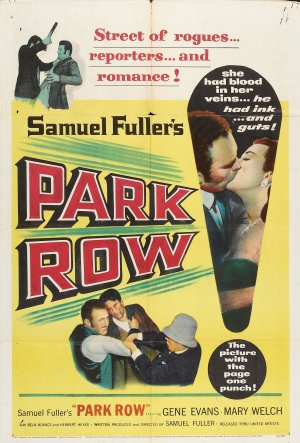
Park_Row_FilmPoster.jpegIt’s no secret that Sam Fuller cut his teeth in the journalism trade at the ripe young age of 18 (give or take a year) and so Park Row is not just another delicious B picture from one of the best, it’s a passion project memorializing the trade that he revered so dearly.

It’s also his typical style of economical filmmaking, shot in only two weeks and clocking in at just over 80 minutes and also funded on his own dime. To show just how much this movie meant to him he wrote, directed, and produced it. It was, of course, a monumental flop at the box office (despite an opening at Grauman’s Chinese). Still, that type of result could never quell a maverick like Fuller always prone to be a bit of a loose cannon who nevertheless perennially released a string of enduringly interesting projects. Consider a lineup of pictures including Steel Helmet, Fixed Bayonets, Park Row, and Pickup on South Street from 1951 to 1953 and you get the idea.

In some ways, Park Row seems like an invariably different film than its compatriots, very unlike Fuller, and yet it still gives off glimpses of Fuller’s style and sentiments.

The year is 1886. An industry has been developed and honed out of the invention and tradition of the likes of Johannes Gutenberg and Ben Franklin. The names of Horace Greeley and Joseph Pulitzer are as good as gold and the hub of that honorable profession, known to the masses as journalism, is based in Park Row.

Phineas Mitchell portrayed by Gene Evans–Fuller’s favorite brawny everyman–is a reporter at The Star, the publication that has a bit of a monopoly run by the icy empress Charity Hackett (Mary Welch). As he badmouths the very same newspaper at the local watering hole, he subsequently finds himself relieved of his position along with a couple of his colleagues.

But together, with the help of an eager benefactor they set out to craft their own newspaper. As envisioned by Mitchell, The Globe will be a paper for the people, devoted to honest to goodness journalism beholden to the facts. And in the subsequent days they take an abandoned office space, build a ragtag team, fix up a printing press, and scrounge around for any type of paper they can get their hands on. What they lack in resources they make up for with grit and determination. Because they have something Charity never had–verve and ingenuity. It sets their little paper apart and the public takes note.

Thus, the film’s entire narrative captures the ensuing journalistic feud between the established paper The Star and their rising rival The Globe. The main conflict coming from the very fact that their business models and mission statements are diametrically opposed.

Led by Mitchell, The Globe finds compelling cover stories to reel in the public. First, it’s a rallying cry for a man sent to prison for illegally jumping 120 stories off the Brooklyn Bridge and living to tell about it. They become his voice, interceding on his behalf and people listen. Next, it’s a public fund to help pay for the base of The Statue of Liberty–that symbol of goodwill, friendship, and ultimately, American liberty and idealism. Every member of the community, no matter the contribution, gets their name printed in the paper out of gratitude.

Still, Ms. Hackett is not about to be outplayed and while she admires her competitor’s tenacity, she is ready to resort to any means necessary to sink them for good. She tries all number of tactics, some more destructive than she ever anticipated. And while she might not be the most virtuous individual she’s hardly a killer. Mitchell hates her guts, rightfully so but that’s not how she wants to be known. There’s some nuance in their relationship, in fact, there’s a great deal of appeal to many of these relationships because they’re brimming with life.

Some noticeable hallmarks of Park Row include Sam Fuller’s typically dynamic camera that moves rapidly into close-ups and tracking shots gliding down the long avenues of Park Row with its horse-drawn carriages, train tracks, and the general hubbub of humanity. There are the accustomary fistfights and explosions, but the film stands out among Fuller’s other narratives for its championing of virtue, honor, and integrity especially in relation to a profession like journalism. It would have been so easy for this to be another expose of lurid sleaze and corruption and yet it’s surprisingly laudatory to the very end.

3.5/5 Stars

I Remember Mama (1948)

I-remember-mama-1948_poster.jpgInitially, I Remember Mama comes off underwhelmingly. It’s overlong, there’s little conflict, and some of the things the story spends time teasing out seem odd and inconsequential at best. Still, within that framework is a narrative that manages to be rewarding for its utter sincerity in depicting the life of one family–a family that feels foreign in some ways and oh so relatable in many others.

In this case, the Hanson’s are a family of Norwegian immigrants circa 1910 and the story gleaning inspiration from two earlier works features a post-war George Stevens at the helm with Irene Dunne anchoring the cast as the titular character.

And it’s true that the film is rather like a eulogy, memorializing this woman who was such a strong, stalwart example despite her unassuming ways. It is her daughter Katrin (Barbara Bel Geddes) who looks back fondly at her mother, as she, now being an author sees her mama as a worthy protagonist for a story. Because, after all, this is their story, personal, individual, and unique.

The film feels anecdotal as much as it is serial, taking galvanizing moments, little snippets of that time and place and crafting a very distinct picture of what life was like back then. And that’s part of the simplistic beauty of I Remember Mama just like Marta Hanson herself.

In the opening moments, the adult Katrin recounts vividly the evenings at the dining room table where the whole family would gather around to count out the weekly expenses. They scrimp and squeak by with the meager funds at hand so mama never has to go to the bank. Meanwhile, the timid Aunt Trina (Ellen Corby) looks to marry the local undertaker and she calls on her sister to rein in their two other sisters Sigrid and Jenny who are both rather unfeeling.

Other happenings include the entrance of the boisterously quirky Uncle Chris who blusters his way into their lives initially frightening the children with his antics which secretly mask a generous spirit. Young Dagmar subsequently goes in for an operation and Mama goes to visit her breaking hospital protocol to keep a promise to her little girl. This instance reflects exactly the character that Marta imbues.

She also appreciates the influence of the families’ elderly lodger Mr. Hyde who reads each evening from his many editions of classic literature from Dickens and “Fenimore Kipling” as mama recounts erroneously. She sees this as a gift not only to herself but also her children, opening them up to thoughts, ideas, and even a little bit of culture that she can never give them. The fact that he leaves behind his books in lieu of rent receives only her gratitude while her sisters become puffed up with contempt.

Again and again, she exemplifies that almost all-knowing love of a parent. While never perfect, there’s an innate understanding of what is best for each one of her kids and she is continually willing to work and sacrifice for the sake of her family. To say what those things are would be precisely against the ethics of such a person as Mrs. Hanson and so I will refrain. See them for yourself and you too will understand as Katrin does what makes this woman great.

This is yet another feather in the cap of Irene Dunne, confirming my belief that she is one of the most underrated actresses of the 20th century. At times she’s almost unrecognizable hidden behind that accent and a certain amount of stern, straightforward, and still motherly charm. Look at her character and you see a woman of such a phenomenal stock and integrity.

Nicolas Musuracas’ crisp black & white photography lends an authenticity to the San Francisco street corners as well as the interiors helping to develop a healthy aura of nostalgia. And you get the sense, that perhaps George Stevens was intent on tapping into a bit of that old-fashioned goodness because the post-war world was a far different, far darker place. I Remember Mama is a film of tremendous virtue and inextinguishable light.

There’s also a bit of a personal connection to this film as well because half of my ancestors were, themselves, Norwegian immigrants. Although I doubt they came through San Francisco there are some familiar touchstones and it’s easy to imagine that these people pictured up on the screen could share the contours and backgrounds of my own kin from bygone generations. Wishful thinking perhaps but it’s also incredibly exciting and that’s part of the reason that I left this story feeling as if I gained something from it.

So Stevens and Dunne succeed excellently with what they set out to achieve providing a character study that is nuanced and still evocative in its pure depiction of the sacrificial love of a parent. Some would say that there’s no greater love than that.

4/5 Stars


Dunkirk (2017)

Dunkirk_Film_poster.jpgUpon being thrown headlong into Christopher Nolan’s immersive wartime drama Dunkirk, it becomes obvious that it is hardly a narrative film like any of the director’s previous efforts because it has a singular objective set out.

It’s economical (shorter than many of most recent efforts) and the dialogue is sparse, sprinkled sparingly throughout his picture. After all, the main goal of this film is not so much to tell us a story — drawing up the lines as they might have been — but actually immersing us in that moment that was so crucial to British morale and ultimately the outcome of WWII.

As such, this is visual storytelling to the utmost degree and it comes off splendidly for the precise reason that film has always been a visual medium as much as we try and make it about dialogue. Because invariably dialogue is often used as a crutch while Nolan’s film relies almost solely on its images to tell its story and that’s a quality of filmmaking that is often lacking in the contemporary industry.

Backstories are all but left to the imagination and there’s immense power in that. Too often storytellers feel a need to spell everything out, providing all the perfect cookie cutter moments in order to hold the audience member’s hand so they comprehend it all. But has something as volatile as war ever been like that? I’m sure we can all answer with an emphatic “NO,” so why would a film be any different? Make people use their brains. Make them feel something viscerally. Leave them in the dark. Keep the outcomes ambiguous.

Likewise, there are no imagined interactions between the major figures at play whether Winston Churchill or Adolf Hitler. In fact, we never see a German’s face. We only see the results of their efforts to deter the British and cut off their escape route. As for Churchill, we never see the great English bulldog but his spirit wafts over the picture — certainly his words too — but it’s that spirit of resilience, that never say die attitude that speaks to his own character. That is enough.

Normally these type of decisions would signal a death wish but Nolan has been rewarded for his brazenness offering up a summer blockbuster that’s all but necessary. Because it tramples over much of the conventional wisdom that the industry has tried to impose on itself to reel in success. If there was any man to do it, Christopher Nolan certainly fits the bill.

There’s still very purposeful action playing out on three fronts. You have the soldiers actually stuck on the beach and in this case, we end up following a group of soldiers. Boys really. First, one who flees back to the beach after his compatriots are gunned down then joins with another boy to try and get aboard a battleship with a man on a stretcher. Finally, they get their chance only to get torpedoed out of the water. Treading in the oil-soaked ocean until someone can save them.

Then, there’s a trifecta of British Spitfires (led by Tom Hardy) traveling across the English Channel to provide coverage to their boys down below. Their exploits are documented with engrossing aerial shots that bring us right into their cockpits as they sit behind the controls looking to evade and vanquish their enemy.

Finally, we have the men of the home guard namely a father (Mark Rylance) and his two sons who answer the call to come to the aid of their young men stranded across the channel. You get the sense that they are riding into the valley of the shadow of death except that the valley of death is the sea and German U-Boats are waiting for them. Still, they push onward to rescue men coming by sea and by air. It too requires costly sacrifice.

Dunkirk’s soundtrack is magnified by ticking clocks and Hans Zimmer’s selection of screeching strings but it’s not necessarily developing the drama for drama’s sake. Again, there’s this underlying striving for authenticity.

One scene stands out in particular when the shell-shocked soldier (Cillian Murphy) asks if the boy he accidentally harmed is okay. He’s sorry now but doesn’t know the irreparable damage he has done. Still, the young man’s brother could lash out in anger. Instead, he takes the high road and tells him the boy is fine. His father grimly gives him a nod. He has made the most merciful decision for all parties involved.

It’s so easy to get caught up in the moment and you begin to understand to what extent these British soldiers were sitting ducks on the beaches of Dunkirk.  Because you are right beside them in every waking moment. And if we understand the horrors and the selfishness that begins to breed as survival instincts set in then just as easily we comprehend the pure euphoria that comes over the men when the flotilla from home comes to their rescue.

Even in these moments what is striking is not so much that Dunkirk is a grand epic but it feels surprisingly intimate. Despite the anonymity that runs through a great deal of this film Nolan still gives us characters that we can attach ourselves to and they begin to resonate not because we know their person inside and out necessarily but we start to empathize with their positions first hand.  When you begin to see the world as someone else sees it, it’s difficult not to connect. And that goes for everyone.

Because this was not just a war of soldiers from the army, navy, and air force. This was a war that involved nurses and the home guard and every other man, woman, and child who rationed their supplies and blacked out their windows all because of the collective war effort.

It’s often the most trying circumstances that bring us together so that we are no longer individuals but we become one. Dunkirk seems like precisely one of those galvanizing events that can forever be looked back on with pride. It personifies bravery, resilience, a stiff upper lip if you want to put it that way. And the significance in survival is that they lived to fight another day and ultimately with the other Allied powers they were able to quell the Nazis.

Some might come out of Dunkirk hailing it as one of the great war pictures of our generation, but truthfully it’s more so a survival story and a tribute to the fighting spirit that often dwells in the souls of men. In an age so often lacking in courage, fortitude, and honor those are the very attributes that rise to the surface and become most evident. Dunkirk is a striking reminder, not simply for the British people, but for us all.

4.5/5 Stars