Man in the Moon (1991)

maninthe1Robert Mulligan is an unassuming film director. Man in the Moon would be his last film in a career that was not so much illustrious as it was respectable. In truth, I’ve only had the pleasure of seeing one of his other films — his crowning achievement To Kill a Mockingbird.

There are in fact some similar threads running through these two films, starting with the Deep South nostalgia and close analysis of adolescence. Both these films take the point of view of a young girl. Their narratives hope to shed at least a little bit of light on that intricate stage of life. This time a 14-year-old Reese Witherspoon is our lead, playing the Elvis-loving, gum-chewing, spunky dynamo named Dani. She and Scout share a lot in common because as young people there’s an inherent tendency to mope, question, and disregard. They have not quite grabbed a hold of the mature world of their parents. After all, they still have a great deal to experience. That’s what makes these film arcs necessary.

Man in the Moon starts with Dani, but there’s a whole family unit around her. A father (Sam Waterson) who is a decent, down-to-earth-man, and he would rather commune with nature in his fishing boat than go to typical church. A mother (Tess Harper) who loves her husband and daughters dearly, knowing when to trade tough love for hugs. Maureen (Emily Warfield) is Dani’s oldest sister and her idol, along with the object of every local boy’s desire. She’s beautiful and yet what’s more extraordinary is her good nature. She doesn’t deserve the creepy father and son duo eyeing her in the local town.

maninthe2Arguably, the next most important character in Dani’s story is Court (Jason London). They have your typical terse meet-cute that signifies only one thing. They must fall in love. It turns out he’s the eldest son of an old friend of Mrs. Trant. Soon things change for young Dani because she’s never known someone like Court, much less liked a boy.

Their relationship is one of those complicated entanglements. He’s a few years older and is the man of the house. He has to grow up quickly and views Dani as a child. But their friendship blossoms with frolicking afternoon swims. Dani is ready for something more. She thinks she’s in love. Now if Court was one of the other boys, he could easily take advantage of the situation — this fawning girl who is madly in love with him. But he’s not like that. Dani can’t quite get that through her head. It just doesn’t make sense. They enter friend territory and Dani’s heart is still aflutter, but she’s happy again.

maninthe3The second half of the film enters melodramatic territory that first hits the Trant’s with familial turmoil, and then Court. Dani for the first time in her life is faced with the full brunt of tribulation. What makes matter worse is her feelings are all mixed up. She loves her sister. She hates her sister. She cannot bear to see Court. She cannot bear the suffering. It’s in these moments that uncomfortable feeling well up in the pit of your stomach.

Man in the Moon like many of the great coming-of-age movies is really about adolescents coming out of their innocence and being inundated with the often frightening realities of life. It reminds even the youngest of us that more often than not life is unmerciful. It’s how we pick ourselves up out of that fatality that matters. It’s hard but that pain is often how we grow and mature — learning how to cope with the way things are. That’s what makes the people around us so integral to existence. They can be our lifeline that keeps us afloat. Thus, Dani’s friendship with Court matters so much. That’s why Dani’s relationship with Marie matters too.

Perhaps the drama is laid on rather thick, but nevertheless, it’s difficult not to get behind this film. Reese Witherspoon’s perkiness is wonderfully disarming, and Jason London plays a decent young man. These are characters I want to watch and emulate. Not quite Scout and Atticus, but they are still definitely worth the time.

4/5 Stars

You’ve got a right to grieve, Dani. You got a right to be hurt. But if you get so wrapped up in your own pain that you can’t see anyone else’s, then you might just as well dig yourself a hole and pull the dirt in on top of you, because you’re never going to be much use to yourself or anyone else. ~ Mr. Trant 

Note: This review previously said Marie (Gail Strickland) instead of Maureen (Emily Warfield)

Once (2007)

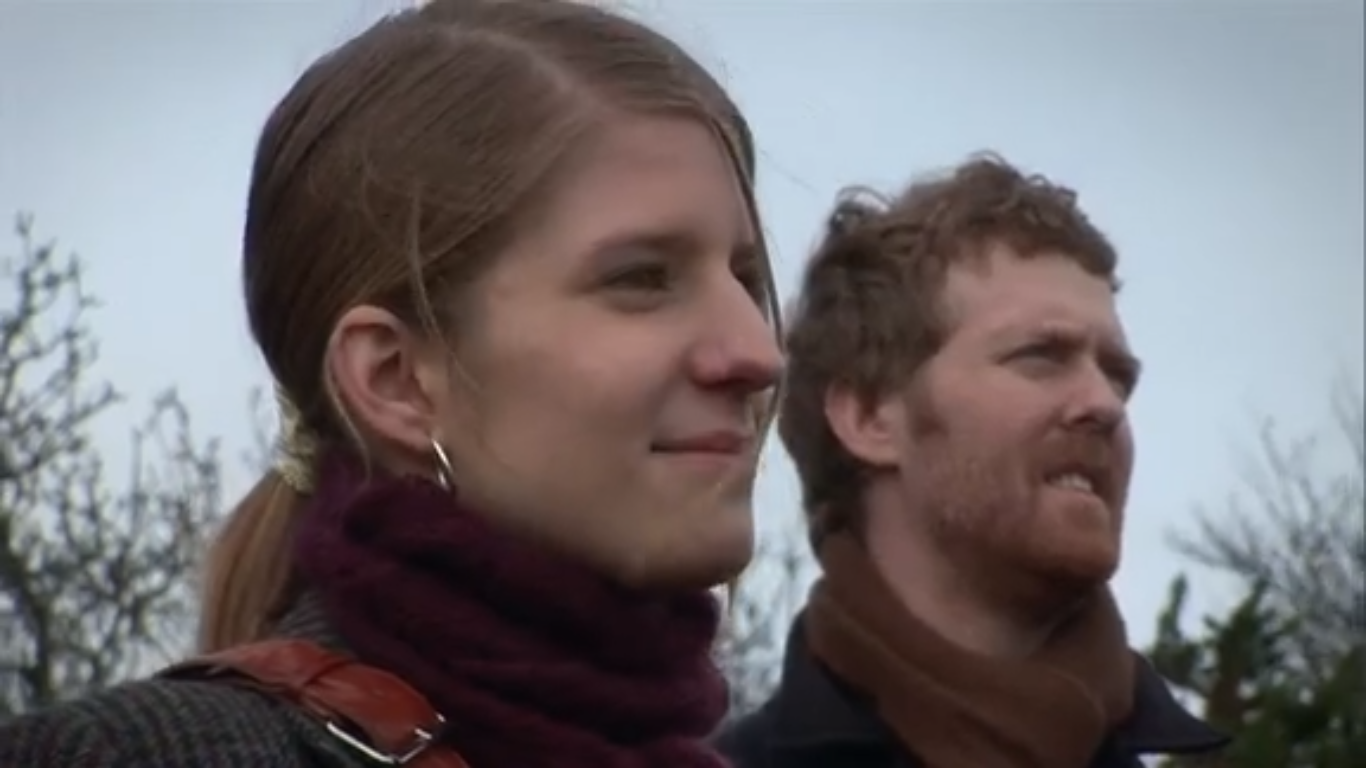
once1Only sometime after the film ended did I come to the realization that we never learn the names of our two protagonists. And yet we build such a connection with them through music, through their bits of humanity, and from being a part of their lives for a short time. Because Once really does feel like a documentary. It feels like we’re meeting these people and peering into their lives for an hour an a half of sheer delight.

The guy (Glen Hansard) is an Irish street performer who can be found on the street corners, guitar case open, strumming away, hoping to get a buck or two. He’s good but nobody much seems to notice him. It’s as if people see you doing such a gig and think you must not be very important. I must admit I’m guilty of such a fallacy myself many a time.

But there is one person who does come up to him. It’s a girl (Marketa Irglova), very straightforward and direct, and we learn she is Czech. What could two such people have in common? Music. Of course. The universal language even more so than English. Because she obviously has an accent and he does too, to my American ears, but their music transcends cultures.

It’s easy to forget Once technically functions as a modern-day musical because more often than not the genre seems like a dying breed. The songs in this film are beautifully melodic, with wonderfully earnest lyrics, and equally well-wrought instrumentation. But it fits into the narrative and nothing feels like a forced plug to get our respect.

They’re laying it out there. Letting us into their homes and keeping all their feelings out in the open. Really they both have a humble existence, and each has had their own romantic pasts. He has memories of a love who now lives in London and despite her young age, the girl has a husband she left behind in her home country. It’s a surprise to him and the audience both.

once2Their ride on a motorcycle, for a brief instant, brought to mind the Vespa ride in Roman Holiday, although their excursion is a little less chaotic. There’s still an innate playfulness of people with wonderful chemistry and whether they are acting or not is anyone’s guess.

Everything goes back to the music though since that acts as the heart and soul of this story. When the pair of them are able to get a recording studio it looks like he might get his big chance. He invites her to sing because he really wants her to be a part of it. He rounds up a few more street musicians and they’re set. When they get to the recording studio and the tape starts rolling what follows is a performance bursting with passion and energy. You can feel the electricity.

It feels as if we’re on the ground floor of something special, unwinding right before our eyes and yet we don’t know exactly what is going to happen. He’s about to head off to London to show off his sample and perhaps catch up with an old flame. She is preparing to make amends with her husband. But before leaving the guy drops a very big present on her doorstep to thank her for all she’s done for him.

Their tune “Falling Slowly” plays in refrain summing up this music-infused love story. The question is, is this an actual love story? I would answer in the affirmative. There is no sex in the contemporary sense, but this film does most certainly have love, whether or not it becomes physical. And it acknowledges the clear distinction between sex and love. These are two people who deeply care about each other and share a connection more intimate than most people can manage.

4/5 Stars


The Best Years of Our Lives (1946): The Forgotten Counterpart to George Bailey’s Story

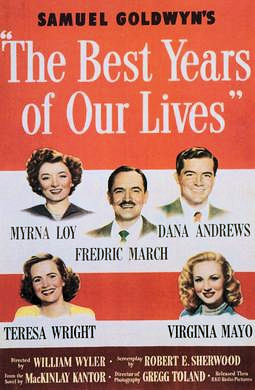
The_Best_Years_of_Our_Lives_film_Inherent in a film with this title, much like It’s a Wonderful Life, is the assumption that it is a generally joyous tale full of family, life, liberty, and the general pursuit of happiness. With both films you would be partially correct with such an unsolicited presumption, except for all those things to be true, there must be a counterpoint to that.

Upon watching both these films on subsequent days, that became markedly evident. George Bailey (James Stewart), of course, must go through a perturbing alternate reality where he never existed, and the consequences are catastrophic to all those he knows and loves in his community. But such a paradigm shift or new perspective, does truly revitalize his entire existence. It’s as if he sees the whole world through an unfaltering lens of hopefulness thereafter.

Although it lacks the dark fantasy that engulfs the latter half of It’s a Wonderful Life, Best Years has its own heavy dose of foreboding, that while more realistic, is no less disconcerting. All the boys have returned from the theaters of Europe and the Pacific, including our three protagonists Fred (Dana Andrews), Homer (Harold Russell), and Al (Fredric March). Upon getting back to their old abode of Boone City, sons talk about nuclear fallout in Hiroshima and men at drug store counters warn of the imminent threat of “The Reds.” Some soldiers like Fred have trouble landing work. Others struggle with getting the necessary loans from banks like the one Al works at,  or they come back to far less glamorous lifestyles. Homer copes with being a double amputee and simultaneously closes himself off to all those who love him, including his longtime sweetheart Velma (Cathy O’Donnell). He must learn not so much how to love, but the equally difficult life skill of allowing others to love him.

Derry also struggles in a loveless marriage with his superficial wife Marie (Virginia Mayo), while also battling with PTSD symptoms like recurrent nightmares. Even the subtle reality that the only African-Americans in the film work behind soda fountain counters or in nightclub jazz bands has greater implications. Theirs is a relegated status, even in a country of liberty like America. Unlike the former film, we do not see any ghoulish human cemeteries, but we do see plane graveyards like ghost towns where metal is slowly rusting just waiting to get demolished and re-purposed. At this point, it is only a sobering reminder of all those who fought and died in the war years.

Many of these topics are only mentioned for a brief moment or we can only infer them from visual cues, but still, they lurk there under the surface or better yet, right in plain view. These real-life unsettling concerns are worse than It’s a Wonderful Life because they fall so close to home even today.

Wounded veterans are still coming home to a country that doesn’t know what to do with them, or a country that seems ungrateful for their service. Married folks still struggle through marriage and divorce. Single people still struggle with figuring out if they should get married and so on.

I think part of the reason I admire The Best Years of Our Lives so much, despite its nearly 3 hour running time, is its ability to captivate my attention rather like a day in the life of someone I would meet on the street. Although Virginia Mayo and Mryna Loy seem the most Hollywood, most everyone feels rather ordinary. Certainly, Dana Andrews is handsome and Teresa Wright, as well as Cathy O’Donnell, are wonderful as multidimensional girls-next-door, but I feel like I could potentially know people like them. And of course, Harold Russell was unusual since he wasn’t a trained actor. That casting choice pays off beautifully in moments such as the final wedding scenes where in a dyslexic moment he switches up his vows. But it works wonderfully as an authentic addition.

Although Gregg Toland worked on revolutionary fare like Citizen Kane, and William Wyler dabbled in all sorts of genres from westerns to period dramas, they have all the necessary sensibilities for a perfect presentation given the subject matter. The visuals are crisp and beautiful, but never flashy or overly conspicuous. The use of deep focus concerns itself with the overall composition of the frame -never attempting to focus our attention on any singular action.  It all becomes equally important. Meanwhile, Wyler directs with a sure hand that makes the actions flow organically and at the same time his ensemble is given the space and the time to grow and evolve before our very eyes.

It’s a timeless film for what it brings to the forefront and also because of what it evokes out of the audience members themselves. There is an underlying somberness to it at times, but most importantly it rings loudly with the high unequivocal notes of hope. In the post-war years, it was a pertinent film, and it still has something to offer even now. More people need to know about The Best Years of our Lives.

5/5 Stars

The End of the Tour (2015)


endofthetour1My Dinner with Andre
was a film that was interesting in conception and not quite as engaging in practice — at least for me. The End of the Tour is another such conversation-driven story with a similar promise, but by some miracle, it really seems to pay off.

The narrative actually felt rather like a stripped down Lawrence of Arabia, because we first are introduced to our main person of interest, writer David Foster Wallace (Jason Segal), following news of his death. Then, with the aid of his numerous taped dialogues, Rolling Stone journalist David Lipsky (Jesse Eisenberg) takes us back to the 1990s where he had a few days to interview the accomplished author. David and Dave spend a great deal of time together, and the author willingly and openly allows the other man into his life. It’s not some monumental epic, and in that way, it parts company with Lawrence of Arabia, but it is an intimate heart-to-heart.

Furthermore, it doesn’t matter if you don’t know the man or not, because I, in all honesty, did not know him. Under Pondsoldt’s direction, however, the film is so universal — it does feel so personal — like you’re slowly getting to know Foster Wallace bit by bit as the layers come off. He speaks into so many issues of what it means to be human, though this is only a one time interaction between two men. The conversations at times become contentious and bitter as Lipsky tries to dig in more. And that’s perfectly alright.

Foster Wallace describes himself interestingly enough as a “combination of being incredibly shy and an egomaniac.” But in this paradox lies a lot of his personal insecurities as a successful writer. Truthfully, they also put the mirror up to all those listening in, because he’s not the only with anxiety, it’s just that he’s the one voicing it.

Jason Segal does a superb job of portraying someone with obviously unfathomable talent, while also being candidly vulnerable as time progresses. There’s an understated humor to this man that is somehow warm and disarming. Underneath there obviously dwells a woundedness that gives way to a plethora of issues which also consequently becomes topics of discussion. For instance, pornography, entertainment, television, depression, loneliness, fears, doubts, and a great deal more.

We return to the present as David listens to his final audio cassettes from so many years ago now. How do you try and paint a canvas of a person’s life with all the minutiae that are involved? The soda and foods they like. How they dress. The name of their pets. Where they live and so on. David delivers a beautifully evocative memo that he speaks into his recorder in order to try and capture that moment just as it is. That time and place, in some respect, feels like hallowed ground amidst a far off realm. Now, with Wallace gone it’s only a distant wisp of a memory. Therein lies the beauty of that conversation for not only Lipsky but the entire audience. That dialogue — that human interaction just as it happened — can never happen in the same way, but you can still take solace in the memories and the words that were said. David Lipsky looks back at that one time conversation with only fond thoughts.

The End of the Tour reminds us what real life can be like, and it reminds us that we are not alone — but surrounded by a wide expanse of humanity just waiting for someone to reach out and talk with them. It’s not a radical idea, but then again if David Foster Wallace, the preeminent author that he was, had such an impact with it, then maybe we can too.

4/5 Stars

“It may be what in the old days was called a spiritual crisis or whatever. It’s just the feeling as though the entire, every axiom of your life turned out to be false, and there was actually nothing, and you were nothing, and it was all a delusion. And that you were better than everyone else because you saw that it was a delusion, and yet you were worse because you couldn’t function.”~ Jason Segal as David Foster Wallace

The Double Life of Veronique (1991)

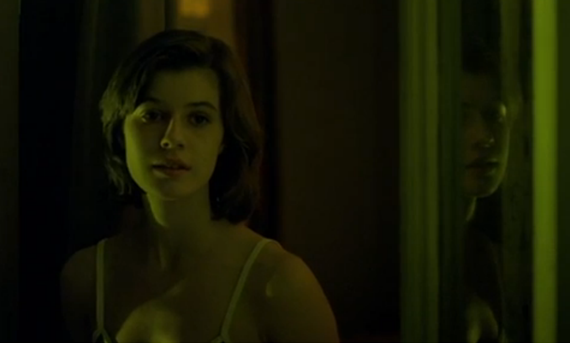
thedoublelife4Krzysztof Kieslowski’s The Double Life of Veronique fills an ethereal world full of dancing light, soft hues, and faint reflections. It’s beautifully muted visuals complement a wonderfully mysterious story. Its title suggests the potential of a story about one woman living two varying lifestyles, one respectable, the other not. Instead, the film revolves around two women living parallel lives. Neither is shameful or noticeably corrupt. They are both sweet individuals with aspirations that drive their lives. They desire love and commendation like many of us.

The first is named Weronika, a Polish beauty, who is an up and coming operatic performer. While her star is on the rise, she meets a new boyfriend and goes a trip to visit her aunt. But everything goes back to the music. In fact, music often takes center stage totally enrapturing us in song. There are sublimely haunting melodies that pierce right through our core. The angelic voices are gracefully wafting through the chambers of cathedrals and music halls. And just like that the breathe is gone out of one of the angels for good. We get a hint at it from Weronika’s aunt, suggesting that all their family members died unexpectedly, but there’s no more explanation.
thedoublelife5
The majority of the narrative follows French music teacher Veronique, who is the spitting image of her Polish counterpart. Except they have no relationship whatsoever, only some odd intuition that there is someone else out there who they do not fully know. As we observe the daily rhythms of this young woman’s life, it feels almost otherworldly with an unearthly golden glow that illuminates the streets she walks. It’s a film where marionettes are made graceful and bouncy balls are little orbs of wonder. Along the way, Veronique finds a love of her own that she doesn’t even know. But she’s enchanted by him and the magic that surrounds him, much as we are bewitched by her. Her lover is constructing two identical marionettes in order to tell a new story about two women with a connection that cannot be described. In other words, the mythos around his narratives, tread closely to Veronique’s own life. A girl in one of her photos makes it clear. Everything comes to a fitting full circle, and yet we get little in the realm of a fully gratifying ending.

thedoublelife2More often than not Kieslowski’s film has a mesmerizing effect on me and a  great deal of that power of entrancement is due to Irene Jacob. She is like a cinematic goddess with a face made to be scrutinized. A charming classical beauty, she exudes a range of emotions, while still managing to hold onto a semblance of mystique. Jacob is a wonderful muse for the director’s purposes and she would prove so again in Three Colors: Red. But that’s another conversation entirely.

I consciously ask myself, “Is this a film even to be understood?” Because the plot points and the pieces don’t always seem to fit together especially well when you actually consider them. And somehow I remain content in that reality. Whereas someone like Michelangelo Antonioni throws away a few pieces of the puzzle for good measure, for Kieslowski these final pieces never existed. They are not paramount to what he is trying to accomplish. The Double Life of Veronique maintains such a transcendental almost spiritual quality because we can only watch and listen. Ours is not to reason why ours is to simply look on in awe at what we are witnessing. The beauty, the enigma, and the feelings. Because Kieslowski is more interested in the essence of the film than the particulars.

4.5/5 Stars

A Christmas Carol (1951)

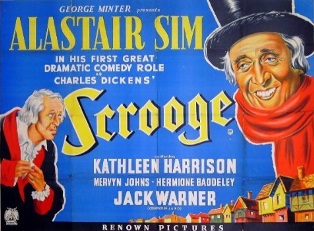
Scrooge_–_1951_UK_film_posterOftentimes during the holidays, we are quick to label someone a “Scrooge,” almost jokingly because it’s a moniker that’s somehow lost a great deal of its magnitude with overuse and the passage of time. However, if we look at this film, so wonderfully anchored by Alastair Sim, and even Charles Dickens original work from which it is derivative, we would adopt a much wider definition of the word “Scrooge.”

Surely it is the archetypal Christmas tale and one of the most widely adapted works. Off the top of my head, I can think of versions from 1938, ’51, ’70, ’84, and 2009, not to mention countless retellings by Disney, Mr. Magoo, the Muppets, and Bill Murray no less.

We all know at least a little of the legend of Ebenezer Scrooge, and we can come up with a rough composite of what he must be like. He’s money-grubbing, has no spirit, and hates Christmas. If you say any of this you would be, in fact, most heartily correct, but there’s so much more to his character and his story. It’s far more universal than perhaps I would even give it credit for.

The narrative is beautifully elongated with the device of the three specters represented by the Ghosts of Christmas Past, Present, and Future respectively. Of course, it takes the apparition of his long-deceased partner Jacob Marley to scare Ebenezer out of the status quo — out of exactly the kind of person we assume him to be. But the key is he wasn’t always about the “humbugs” and lack of charity towards the poor and needy.

We learn about his story more in depth by the illumination of the first ghost. Scrooge began, a relatively humble young man, but his sister Fan had great affection for him, and he found a young woman named Anne, who loved him in spite of his lowly status. Money did not define their happiness — in fact, they were happier without it. But the way of the world back then was, and still is now, the pursuit of happiness by way of money. In a sense, although Scrooge greatly admired his generous employer Fezziwig, he became scared by the ways of the world. Once joining forces with another ambitious gentleman Jacob Marley, the two of them pressed their advantages when necessary and expanded their assets exponentially. The sweet, savory call of money quickly seduced them and as a result hardened their hearts. You see in the moments where Scrooge loses his sister and breaks off his engagement, that they are so emotionally charged even in the present. He hasn’t quite found a way to alleviate the pain because not even money can satiate that hurt.

The ghost of Christmas present shows him the inside of the humble Cratchit home, bringing to mind his previous comments about prisons and workhouses — as one of their foremost supporters. But the Cratchits, and specifically young Tiny Tim give a humanity to the common man like he has never seen before. He realizes that he has failed miserably in doing one of the most basic things — loving his fellow man and taking care of the widows and orphans. Scrooge still clings to the most poisonous belief that he is too far gone and he cannot be redeemed. That’s why what the Ghost of Christmas Yet to Come shows him scares him the most. The pictures he sees ahead of him are haunting and all too real, but it makes his opportunity at a second chance all the sweeter.

In truth, when Scrooge wakes up from his dream-filled slumber he’s giddy almost to the point of insanity, but Alastair Sim is so brilliant to play his part that way. His character change is so radical because his paradigm has been completely overturned. It shows in how he interacts with his world whether it’s his housekeeper, a lad on the street, his nephew, or even the long-suffering Bob Cratchit. Ebenezer Scrooge represents the hope of Christmas when mankind begins living for their fellow man instead of all the fortunes in the world that will only grow old and dusty. Thus, before calling someone “a Scrooge,” it is best to take note of what you’re saying and then get the whole story. People are a lot more complex than we often give them credit for. That becomes obvious even in this streamlined Christmas classic of only 86 minutes.

4/5 Stars

Calvary (2014)

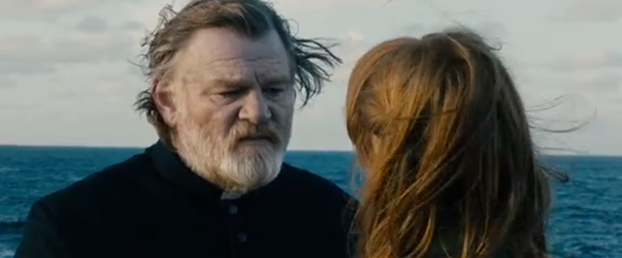
calvary1We meet Father James (Brendan Gleeson) as he sits listening to one man’s confession, but it turns out that this confession is more of a threat. The unseen figure threatens to kill the Father by the end of the week, not for anything he has done, but because the world is an unfair, ugly place. The vengeful man had a traumatizing experience as a boy that rightly so alienated him from the church. The Father listens and does the most humanly thing possible. He doesn’t act as if he has the solution to all the problems, he can’t attempt to fix what has already happened, so he simply acknowledges it and extends his sympathy.

The same goes for the threat of death. He’s not sent into some hysterical fit of terror or rage. He continues through his life, making his rounds through the community to the people in his parish. He goes to their shops, their places of residence, and the bars. You can tell he truly cares for the people around him, but there is an underlying jadedness to everything he does. You can see it on his face wherever he goes. But it doesn’t come from a lack of conviction or faith in his God like father Tomas in Bergman’s Winter Light. James is a priest for the modern age, and it all makes sense if you look around his town.

True, this film starts off with a death threat to a priest, but it’s hardly a mystery because James knows who the Judas is. What’s really paramount are all the people he interacts with. They are the ones who are truly sucking the lifeblood out of him, not the threat of death. The young people are fully engulfed in a secular world and have little notion of how religion plays a role in life. They’re not against it so much as they’ve lived a life without it.

The adults are perhaps worse because they look at the Father and his calling with a cynicism. They say his way is finished. They scoff, belittle, and make light of him for no good reason. Simply because they have no need for Him or his faith. This is the modern world after all. Butchers, bartenders, mechanics don’t need someone to repress them and act as a moral compass. That’s so archaic and constricting.

Meanwhile, they stand by as his church is razed to the ground and they do nothing. The throat of his beloved dog Bruno is slit and Father James is left to weep alone. There are a few characters on the outskirts, who seem to care for him, and one happens to be his daughter Fiona. She too has grown up in the secular world, but they love each other dearly. Her serious contemplation of suicide is yet another anxiety plaguing her father’s life.calvary2Interestingly enough, Father James notes how there’s much more talk about sin rather than virtues. He realizes that forgiveness is highly underrated and that is something that he learns a great deal about over the course of his week. Whether it’s in easier circumstances when responding to his daughter or invariably more difficult forgiving all those hard-hearted individuals around. Or perhaps the most difficult of all, forgiving the man who is going to kill him.

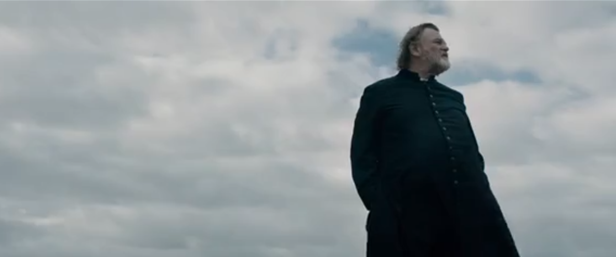
The Father makes his way to the beach ready to meet his assailant as a stoic solitary figure, not simply ready to meet his executioner, but ready to meet his maker. This is a dark and heavy film, but certainly not without merit. It’s weighed down by cynicism, but at its core is a man of immense strength and personal conviction. He’s not a perfect example of a man of faith, but does anybody really want a perfect example?  It’s an impossible expectation, but Father James is a living example. Living, breathing, and dying. A man who was just as prepared to forgive those who despised him as much as he loved those ones who actually cared. Kudos to Brendan Gleeson for a truly stirring portrayal.

4/5 Stars

Phoenix (2014)

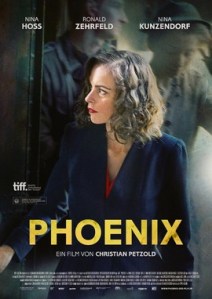
Phoenix_(2014_film)_POSTER

Speak low when you speak, love
Our summer day withers away too soon, too soon
Speak low when you speak, love
Our moment is swift
Like ships adrift we’re swept apart too soon
~ Speak Low (1943)

Anyone who’s watched a Christian Petzold film already knows that he crafts fascinating almost spellbinding films and that quality rests greatly on the laurels of Nina Hoss. Phoenix is yet another film that is a mesmerizing enigma.

It’s positively entrancing with its pacing — where you almost get lost within its minutes. Because although time never moves fast you quickly lose track as the mind is soon overwhelmed with a plethora of questions. In fact, all the time while you’re watching it all you can do is question. Implausibilities all but fade away in the presence of such uncertainty. If anything they get lost in the rubble.

It feels as if we’re trying to construct our own truth, which is almost maddeningly impossible because none of these characters seem ready to divulge any information. The past is a black shroud that everyone is reluctant to talk about. It makes sense because that soon after what do you say about the Holocaust? How do you cope or even begin to acknowledge the horrors that went on? It’s only 50, 60, 70 years later that we’ve finally been able to broach the subject as outsiders — people who did not experience those events firsthand. It’s easier for us to try and talk about it because we can never fully comprehend the climate. What would we have done? What would have happened to us? What would our lives have looked like in the aftermath?

The characters in Phoenix are beings in that post-war wasteland with specters hanging over them, and lives scarred by pain and suffering. They’re trying to salvage their existences the best they can, but they’re hardly existing as they did before the war. But allow me to backtrack for a moment.

Nelly (Nina Hoss) is physically maimed so horribly that her face is constantly covered in bloody bandages. Petzold does us a favor by not showing her visage before she gets reconstructive surgery. Like the shadow of the Holocaust, we are forced to imagine it on our own which is far more powerful. This is what her face looks like and this is perhaps how it happened.

What we do know is that she was arrested on October 4th, 1944 and her husband Johnny was as well. But Nelly’s faithful friend and guardian angel Lene says that he betrayed her. That’s what she believes, and yet upon hearing this news it hardly alters Nelly’s response. She’s still intent on finding him and picking up all the pieces. When she has a little more strength she begins wandering about the American sector looking for any signs of her former beau.

It turns out that Johnny works as a waiter in a cabaret Hall called Phoenix. When he first sets eyes on Nelly — it’s not his wife that he sees, but a wonderful impostor. She’s a woman who is strikingly similar, but her face is different. She’s the perfect accomplice as Johnny, or Johannes as he now goes tries to secure his dead wife’s assets.

What follows is his mission to make her into his old wife.  In many ways, it works as an inversion of the Vertigo conundrum. He thinks he’s making this woman into his deceased wife, and he coaches, dresses, and shapes her more in the image of Nelly. However, this hardly feels like an obsessive desire of dashed love, but a project to get him closer to his final goal. It’s not that sentimental, but Nelly follows along with the whole thing benevolently. To be close to Johnny is enough. But how does she even begin to break the news? Perhaps most frightening of all what will Johnny’s reaction be? After all, the wartime has changed them both.

So if you want to break it down to its most basic roots, Phoenix feels rather like a Holocaust film meeting Vertigo. But in essence, it defies that type of simple categorization. It lacks the odious horror of flashbacks and the glossy Hollywood production values of the latter. It fills its own niche altogether that even channels some of the darkness of noir. And there is no cathartic moment of emotional release. Instead, we are forced to watch as the characters bury their thoughts and feelings deeper and deeper. Perhaps they lie there somewhere under the surface. However, these are not histrionic people. They feel common and every day led by the performances of Hoss and Ronald Zehrfeld.

In this way, the performances are muted and repressed. In fact, there is little headway in the film and few epiphanies until the very end. That’s when for a few brief solitary moments things fall into place. We don’t know what will happen afterward, and in a way, we are suspended in the moment — left to ponder so many things. You could either make the case that Phoenix has shallow characters, or that there is so much depth within them that we cannot even begin to understand — like icebergs still partially submerged.

Many wonderful films lose so much of their magic because they dispel too much — give away too many of their hard-fought secrets. But Phoenix makes us work through everything, and it can be hard going certainly, and yet it is a thoroughly gratifying experience. We watch movies to be moved. We watch movies to be perplexed. We watch movies to acknowledge our wonderment in the human condition because it is a complex quandary that continually reveals new bits of enlightenment. Phoenix might leave us with more riddles than answers, and we should be content in that reality. That’s part of the magic.Like the mythical Phoenix of old, in a way, these characters try and die to their old selves, and rise out of the ashes a new.  Life is never that easy — always being clouded by doubts as our pasts come back to haunt us. It’s how we deal with that past that matters most.

4.5/5 Stars
Barbara (2012)

Barbara_(2012_film)If you’re acquainted with director Christian Petzold you probably know what you’re in for. A character study that is deliberate and systematic in its execution, courtesy of Nina Hoss, and moreover impactful in more ways than one. In this film, the narrative mode of the period piece certainly serves Petzold quite well. The setting is East Germany circa 1980. The settings are wonderfully stark. Depressed representations of a bygone era and yet somehow still strangely beautiful for depicting a simpler age. As Americans, we have a certain perspective that includes Cold War sentiment, boycotting the Moscow Olympics, and the like. But it’s a much different even intimate picture on the inside.

Our person of interest is the eponymous Barbara, a nurse stationed in Berlin, who tried to get an exit visa to the West. Now she has been transferred to a rural locale to continue her work with close surveillance by the Stasi. Her primary colleague is chief physician Andre Reiser, who is genial, but from the get-go Barbara is aloof. She does not want friends and she knows anyone could be working with the police.  She goes about her work being the best nurse she can possibly be, treating patients humanely. Most notable is Stella a girl from a labor camp, who is suffering meningitis, and finds a comforting figure in Barbara. From then on she is the only person Stella trusts.

In her free time, Barbara can often be seen smoking, riding her bike, or taking the train, but there is always a purpose to her activity. It’s in quiet defiance of her plight — an active form of rebellion as she tries to rendezvous with her boyfriend from the West in an effort to reconnect with him. Unknowingly Dr. Reiser grows continually fonder of Barbara and continues to be nice to her because she is quite remarkable. Together they try and decipher what is wrong with a young man who is recovering from a suicide attempt. But of course, his necessary surgery coincides with Barbara’s set date of escape. What follows is far from melodrama, but it is a far tenser slow burn as we watch events unfold. Our heroine does something that will alter her future although we cannot know for certain. Sometimes the best place to end a story is inside our own minds, and that is true with Barbara.

It’s a film that can make you squirm, but also make you think and feel. The German scenery is often breathtaking, the perfect landscape for bike riding, and the birds chirp blissfully in the background. It is the ultimate irony that in such a peaceful land so much suppression and pain takes place. But then again there can be so much joy taken out of something so minute as a masterwork by Rembrandt, proving that the human spirit cannot be fully quelled even there.

In the film’s nuances, you are apt to find beauty and also great depth of character. Not just in Nina Hoss, who is once again brilliant carrying an air of mystery mingled with moroseness that lingers on her face. This might be a poor comparison, but Hoss reminds me in some respects to other European starlets like Juliette Binoche, Irene Jacob, and Julie Delpy, who all carry a fascinating aura around them. The truth is American actors, in general, have to use so many words and in this way, they lose some of their allure. Nothing is left unspoken. Nothing is left untrod. But with Barbara, we do not know her ins and outs, what she is thinking, or even how her story ends.

Next on the watch list is Phoenix, the latest Petzold/Hoss collaboration. It goes without saying that I am beyond excited.

4/5 Stars

The Station Agent (2003)

220px-Station-agent-posterLife takes all sorts of people. Otherwise, our everyday human interaction would have no meaning, no real importance. But when each person brings something different to the table, that’s when life gets interesting. We need the introverts, the extroverts, and every shade in between. That’s really what The Station Agent is about. It’s made up of a ragtag cross-section of humanity. Each one’s a different puzzle piece and you wonder how they ever got together. But they all get thrown into one box in the sleepy town of Newfoundland, New Jersey, and these people wind up living life together. Maybe it sounds rather banal, but the result is actually quite rewarding. I don’t exactly find trains exhilarating, but if you have somebody to share them with they’re not so bad.

The central character in our film is a train aficionado and reserved man named Finbar (Peter Dinklage). He’s been gifted a ramshackle shack bequeathed to him by the elderly proprietor of the hobby shop he used to work at. They both shared a contentment in silence and a deep affection for trains. Fin has seemingly lost his only friend in the world, and he resigns himself to silence because he assumes that all people ever notice about him is his size. They don’t seem to care about the person inside the body and he doesn’t want to take a chance. But that’s before he meets the genial dynamo Joe (Bobby Cannavale), who runs a coffee cart out in the boonies. It’s absolute torture for such a vibrant personality, and he jumps at the chance to have someone to talk to nearby.

The quiet little man constantly deflects any attempt by Joe to become acquainted and yet it never fazes him. First reluctantly and then wholeheartedly Fin allows Joe on his long walks along the train tracks, and Joe breaks down the barriers. The unlikely pair gets even more unusual when they add middle-aged artist Olivia (Patricia Clarkson) into their ranks after she nearly runs over Fin several times. Like her two new acquaintances, she has personal issues to work through on her own. But that doesn’t mean she has to live life alone, and with Joe being the glue, these three have something going that truly blossoms into friendship.

Two of the other pieces of the puzzle include the inquisitive girl Cleo, who shares Fin’s fascination with trains and builds an instant connection with him as children often can with other people. She’s direct, innocent, and she accepts Fin for who he is. Then there’s Emily (an almost unrecognizable Michelle Williams), the local librarian, who adds another layer to the town’s charm. She is pretty, but also very sweet and open to talking with Fin. Really she’s just looking for someone to listen since she’s going through a pregnancy with a boyfriend who is bad news.

It’s easy to respect The Station Agent because it’s not a story where romance heals all wounds. There are two such moments when the film could have easily become that, but Tom McCarthy has a greater respect for his characters than that. They don’t get caught up in needless romantic entanglements for the sake of drama. Their interactions are more nuanced and sensitive than that. Because Joe might make jokes, but behind that veneer is a deeply caring heart.

Noticeably McCarthy also has a great respect for quiet. His film is full of solitude as much as it is full of human interaction. That might be off-putting to some, but it makes the story all the more powerful, juxtaposing the idle chatter with tranquility. On his part, Peter Dinklage gives a breakout performance as a man who realizes he can let people into his life. Because in life true friendship can form between people of all colors, shapes, and sizes. We have to give out a chuckle when this unlikely trio is sitting on the porch talking about Fin’s love life one last time. Not in a million years would we expect to be sitting there with them enjoying the moment. But it happened and we do. In many ways, it’s a lot like life.

4/5 Stars