Fourteen Hours (1951)

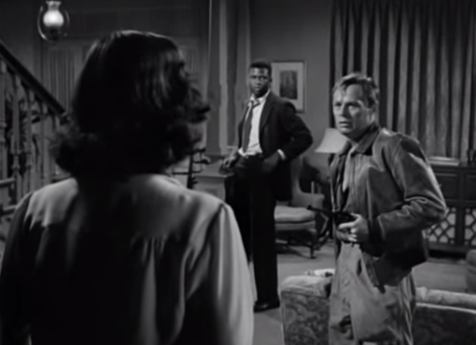
fourteenhours1Fourteen Hours is a taut little thriller, based on real circumstances that occurred in New York in 1938. The film opens with a young man standing on the ledge of a tall hotel in New York City. An unsuspecting waiter happens upon him and a traffic cop (Paul Douglas) spies him from the street below. All of a sudden, a mundane day gets a little more exciting for all the wrong reasons.

Henry Hathaway’s film has the kind of self-contained drama of a modern film like Phone Booth (2002) and a media frenzy that is in some ways similar to Billy Wilder’s Ace in the Hole (1951). Really when you break it down it’s essentially about two men. Robert Cosick (Richard Baseheart) is the despondent and disturbed man tottering on the edge of destruction. He needs a friend. He needs guidance. The rapport built between him and Charlie Dunnigan (Douglas) is what keeps him where he is.

Outside of this main dynamic, we have a lot of smaller events all happening at once. The gruff deputy chief Moskar (Howard Da Silva) tries to work on the inside of the hotel to get the man indoors. A psychiatrist with a hypnotic stair (Martin Gabel) tries to divvy out advice to Dunnigan and others. Meanwhile, Robert’s histrionic mother (Agnes Moorehead) and his plain-speaking father both make appearances, but to no avail. They even finally track down his girl Virginia (Barbara Bel Geddes) in the hopes that she can get him down. All the while the journalists scrounge around for a good story that they can feed to their papers because this is news!

fourteenhours3Down in the streets below young people (Debra Paget and Jefferey Hunter) look up wishing they could do something. The cynical cabbies decide to make a wager on when the man will jump since they aren’t getting any more business for the time being. Even Grace Kelly makes an appearance (her debut), as a young wife who is about to go through with her divorce. But the man on the ledge flusters her and she and her husband have a happy ending.

Hour after hour drags on as Dunnigan continues to work on Robert to get him to come in. He loses his temper once, converses about fishing for floppers, and talks fondly about his wife. By far Paul Douglas is the standout because he has such a genial quality that makes his newfound friend, and the audience, trust him. He’s a good egg as they say, and at the end of the day, he gets to walk off with his wife and son after a good day’s work.

I think it’s true that the film was remade as Man on the Ledge, but I doubt that I would ever want to see it after this film. Don’t get me wrong, it crawls a little bit in the middle, but the combination of this human drama and the plethora of characters lent itself to a generally interesting tale. Also, it’s never static visually. Hathaway gives us a lot to look at. I will admit that several of the storylines were flimsy and unnecessary, but it was still fun to see Grace Kelly for at least a few moments.

3.5/5 Stars

Review: All About Eve (1950)

EveEveMargotCasswellWitt“Fasten your seatbelts. It’s going to be a bumpy night” ~ Margo Channing
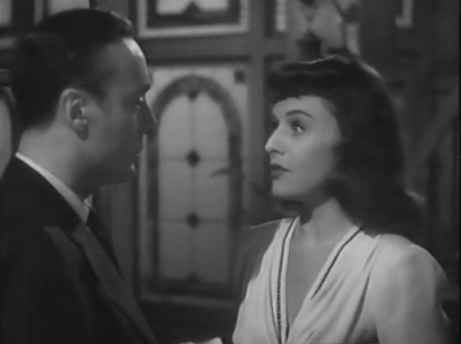
It’s cliche, I do admit, but they simply do not make films like this anymore. Stories about people talking where the actors take center stage. In this case, the story from Joseph L. Mankiewicz is about the Broadway stage and all that happens behind the curtains, in the dressing rooms, and behind the closed doors of the royalty of that profession.There is so much that could be dissected, antagonized over, or acknowledged so I will move through it the best way I know how.

A moment must be spent acknowledging that this is the film that revitalized the career of Bette Davis. She was the tops during the 30s and early 40s, but the role of the histrionic stage icon Margo Channing was her comeback and it thoroughly suited Davis. I have actually never been a fan of hers because I always found her rather arrogant and she scares me visually. However, All About Eve plays on my personal sentiments wonderfully. When we’re first introduced to Margo, she’s everything we expect in a Bette Davis character, and truth be told I don’t really like her. But interestingly enough that changes. That’s where Eve and the rest of the cast come in.

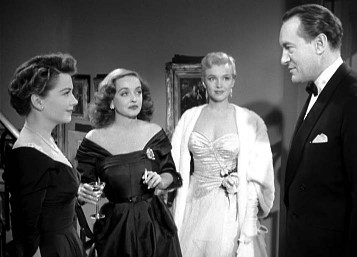
The film is book-ended by the wonderfully wry and snooty commentary of theater critic Addison DeWitt (George Sanders). He makes it his mission to rake every new play over the coals, and he can be merciless. But he also is a great ally and he proves so for young Eve Harrington (Anne Baxter). Because, after all, this film is her story, we just don’t quite understand why at the beginning.

Eve came from humble roots and was the most devoted young fan of Margo Channing. She would attend every one of her performances and wait outside her dressing room timidly, just to get a glimpse of the star. One of Margo’s best friends Karen Richards (Celeste Holm) was accustomed to seeing the girl and in a kindly gesture she invited Eve up to the dressing room. And just like that Eve had her backstage pass into this world rounded out by Margo Channing, Karen, her husband the playwright Lloyd Richards (Hugh Marlowe), and the young director Bill Simpson (Gary Merrill) who also happens to be Margo’s suitor.

She begins unassuming enough on the outskirts of their little group. Always seen, not heard. Always thoughtful and ready to be of service. Eve takes on the role of Margo’s personal assistant just like that and an ego like Channing doesn’t mind. In fact, everyone seems to like having her around except the skeptical Birdie (embodied by the always spunky Thelma Ritter).

As time marches on, Eve loses her charm. More and more it feels as if she’s analyzing Margo. Watching her every move. Monitoring her success and slowly moving in. She plants the idea that she can be the next understudy and so it is. One fateful night Karen agrees to stall Margo and Eve gets her big chance as an understudy. She of course politely invites all the major critics to see the performance. It was the conscientious thing to do after all. Ironically, it’s at this point where things turn. Margo becomes the victim and in her great vulnerability, while sharing with Karen, we begin to sympathize with this woman hiding behind the facade of Margo Channing. Meanwhile, Eve continues her ascent using whatever means possible. She alienates Margo and begins driving a wedge between the always amiable working relationship of Lloyd and Bill. Eve even resorts to blackmail and home wrecking sharing her master plot with Addison.

She’s used everybody else and so he seems like the next logical target. However, he’s too much like her. He’s too cynical to fall for her act, and he points out a few chinks in her armor. So like that we end up back at the award ceremony where Eve is about to win her big award. Now we know all the clawing and backstabbing it took for her to get there. Now all that is veiled under her perfectly demure features and charming voice. But we see it on the faces of all the ones who sit there knowingly. Each one knows all too well the damage that this girl has done. She came out of the woodwork, used and abused them because everything was about Eve. Nothing else mattered to her.

But the beauty of the film’s ending is that the cycle continues. Margo is fading away yes, and Eve is taking her place, but that means that there are more Eves where she came from. Young girls obsessed with stardom, fame, and success. It’s a frightening evolution and it proves to be a sharp indictment of the industry as a whole.

The five leads are solid and their performances shift as the Margo-Eve dynamic fluctuates. However, George Sanders is possibly the most enjoyable character, because, despite his cruel wit, he’s the one who is outside of Eve’s influence, or at least he catches her in her charade. There’s something utterly satisfying in that. Also, he has some memorable moments alongside the aspiring Ms. Casswell (none other than the show-stopping Marilyn Monroe in an early role). So really this is a film about the performances and they are well worth it because they suggest that in such a cultured world, so many things lurk under the surface. It might be insecurity, fear, suppressed desire, or savagery. Humanity is most definitely messy, you just have to look behind the curtain sometimes.

5/5 Stars

Hold Back the Dawn (1941)

holdbackthedawn boyer de havilland 5Hold Back the Dawn was written by the winning combination of Billy Wilder and Charles Brackett, but the director was actually Mitchell Leisen. That was the last time Wilder would let someone else take hold of his work. It’s actually rather meta, a film within a film. We see our director and a film being made (Complete with Veronica Lake), but that is only a pretense for this story to be told.

Georges Iscoveu (Charles Boyer) wanders into the studio hoping to tell his story to somebody who might help him. The tale goes something like this. Much like many other hopeful emigrants, he heads to Mexico in an attempt to try and get into the states, but he’s told that he’ll have to wait and so Iscoveu holes up at the Esperanza Hotel with all the other masses. Time passes and he is getting nowhere fast, but he does bump into an old partner in crime named Anita (Paulette Goddard). Undoubtedly using her feminine charms, she wrangled herself a husband in order to secure herself citizenship. Then she swiftly got a divorce to close the deal. She’s a real peach and she plants the idea in Georges because he is desperate after all.

The gears are turning and he sets his sights on the pretty young schoolteacher, who is in Mexico with some of her students. Their car is in the shop, and after swiping a sprocket, Georges goes into action.

With soaring rhetoric, he wins Miss Emmy Brown over and he puts a ring on it, a borrowed ring from Anita to be exact. He’s a real cad, but it is a Charles Boyer leading man.

To her credit, Olivia De Havilland plays this ingenue and small-town teacher with bright eyes and idealism. We cannot help but feel for her because this is a woman who is swept off her feet and she exhibits true affection. She’s naive, but as Georges acknowledges, she’s swell. Anita has plans for them to meet up once the marriage is terminated because she thinks that she and Georges can run in the same circles once more. But all the time he has spent with Emmy has not left him unchanged. Car rides and travels through Mexico becomes intimate and sweet. So somewhere there is a turning point in the psyche of Iscoveu. It no longer becomes a con game with Anita, but a true romance with Emmy.

However, the trouble comes when the inspector named Hammock (Walter Abel) comes sniffing around because the marriage of Emmy and Georges seems obviously fishy to him. But Ms. Brown does the noble thing and defends Georges not out of ignorance, but charity. She knows she was living a dream and is about to go back to reality, making the drive back to her home in Azusa, California.

Georgholdbackthedawn6es has what he had initially set out to get, but the story cannot be over. When he hears of a deadly car accident, he rushes across the border without heed of the law so that he can be with the love of his life. It’s a gushy conclusion that looks like it might end badly. After all, Iscoveu broke some major laws, but Hammock gives him some grace showing he’s a softy at heart. Even Anita gets what she’s always wanted.

The film is a treat because we not only get an A-grade performance from De Havilland, there’s a conniving Paulette Goddard, and even a brief cameo by everybody’s favorite Peekaboo girl Veronica Lake. Curt Bois (the pickpocket from Casablanca) also makes a spirited performance in one of the minor plots.

Hold Back the Dawn certainly begs the question whether Wilder’s own experiences are infused into this story since he often told anecdotes about his emigration into the U.S. which ultimately led him to success in Hollywood. Also, this film suggests that Mitchell Leisen is not so much a great director or a maker of masterpieces, but he is in his element with romances. However, I wonder if part of his success was having the likes of Billy Wilder and Preston Sturges writing scripts for some of his most prominent films (including Easy Living, Midnight, and Remember the Night).

4/5 Stars

Me & Earl and the Dying Girl: Depth and Dying (2015)

meandearlandthedyinggirl1What struck me about Me & Earl this time around was not just the cinematic homage or the quirky indieness, but the fluid movement of the camera matched with the ever-evolving score of Brian Eno. It made me appreciate this film yet again because some people might say it’s weighed down by over-trod tropes, but it leaves those in the dust. Others might criticize it for playing up to all the cinephiles out there in order to garner respect. Which might be true.

But in essence, this film resonates on such a greater level. All the side characters are fun and interesting and I’m sure all the various parodies will open the floodgates for some enthusiastic young moviegoers to discover film’s roots. Those are all wonderful perks of this story. And yet again, Greg Gaines feels so relatable it’s almost scary at times. He’s so insecure on so many levels, drifting in and out of the school corridors, awkward around dying girls, and awkward around girls in general. Most of this I pointed to already in my initial review.

However, it’s the work of director Alfonso Gomez-Rejon along with cinematographer Chung-hoon Chung that contribute an added layer of depth to this film. The gracefully spiraling camera is at times reminiscent of Ophuls ascending a staircase. There are perfectly symmetrical shots popping with colors that Wes Anderson would most certainly approve of. But like the great minimalists out there, the camera is still when necessary. In poignant moments when Greg and Rachael have real, heartfelt, even hurtful conversations, there’s no need for flashiness. It’s in these moments where those behind the camera prove their skill because we can see them having fun with their artistic vision, but we also notice the great deal of care they have for these characters.

meandearl2It never feels flashy or superficial in these crucial moments. Any slick plot device or cinematic allusion falls away to get at the heart and soul of this film. It’s about coping with death and finding closure in that terrible event in life. Specifically for this one young man, but it is universally applicable to most every one of us. Especially when you’re young because as young, naive individuals, death can feel like such a foreign adversary. It’s so far removed from our sensibilities, and that’s what makes it so painfully unnatural when it strikes. In many ways, Greg is our surrogate. For all those who struggled to find themselves in high school, or college, or even life in general. And for all of those, who took risks on friendship in a world full of death and dying. Once more Me & Earl and the Dying Girl proved its worth, not by being a perfect film, but by being a heartfelt one.
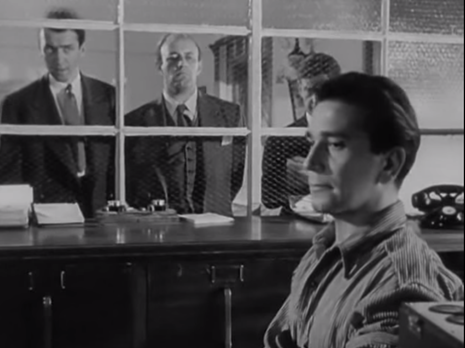
4.5/5 Stars

Review: Sullivan’s Travels (1941)

Veronica_Lake_and_Joel_McCrea_in_Sullivan's_TravelsIf Preston Sturges was a comic wordsmith then Sullivan’s Travels was his magnum opus. It has so many pieces worth talking about, despite it only running a meager 90 minutes. It is the kind of comedy that director John L. Sullivan (Joel McCrea) would want to make, and it’s a message movie against message movies. It’s a film about filmmaking (including mentions of Capra and Lubitsch). There’s even a scene where an ecstatic actress goes racing around the studio lot, completely disregarding the period piece she is acting in. The script has the undeniable frenetic poetry of Sturges and even takes time to wax philosophical at times. Sullivan opens the film with some very grandiose vision of what film can mean for the everyday filmgoer (I want this picture to be a commentary on modern conditions. Stark realism. The problems that confront the average man!).

Sturges’ film is scatterbrained and insane in its pacing at times. Take the opening speeding sequence as a newly bedraggled Sullivan tries to shake his caravan so he can really get a feel for the common man’s plight. It almost gives you a heart attack as they blitz down the road, people and everything imaginable flying every which way. It’s faster than most modern action sequences could achieve.

However, although Sturges is undoubtedly known for the strength of his scripts, it’s important to note that Sullivan’s Travels has some wonderful visual sequences. Many of them lack his typical lightning dialogue and instead rely on music and images to develop scenes. Sometimes it’s the plight of the homeless on the road as Sullivan and his companion make their way across country. I would have never thought of this comparison before, but sometimes his heroes elicit the same type of empathy that would be given to Charlie Chaplin or the Gamine (Paulette Goddard) in Modern Times. In that same way, this film so beautifully fluctuates between comedy and heartfelt drama.

Another beautiful thing about Sullivan’s Travels is the cast. Our star is Joel McCrea, who is sometimes known as the poor man’s Gary Cooper, but that is rather unfair because he’s a compelling actor in his own right. Just look at this film to prove his case. Also, he and Veronica Lake (Ms. Peekaboo Haircut herself) have a fun relationship going from the beginning when they first meet in a diner. You might say the shoe’s on the other foot since she thinks she’s doing a good deed for this down on his luck nobody. She has no idea that her “big boy” is actually a big shot movie director. However, it makes no difference, because in some ways she feels responsible for him, and so she takes part in his noble experiment even afterward. That’s where we build respect for them, and she, in turn, falls for him. It’s what we want as an audience. And we finally get it when Sullivan beats his death and a chain gain to return to civilization. His nagging wife has married some other boob, so Sullivan gets his girl.

Sometimes I feel like a broken record, but it definitely seems like they don’t make character actors like they used to. It helps that Sturges has a stock company of sorts and the studio system probably helped in propagating certain actors. However, there’s no doubt that players like William Demarest and Porter Hall are so memorable. Their voices. Their look. There’s no escaping them and there are numerous other faces that you get deja vu with. We’ve seen them before somewhere and just cannot place it.

Within this whole story of comedy, romance, and a heroes journey, there is, of course, a moral. However, I don’t mind Sturges and his simple didacticism. Because he ditches high rhetoric or sickening idealism for a simple conclusion (There’s a lot to be said for making people laugh). A Pluto cartoon short that brings a few giggles can be just as impactful in this world of ours compared to the next big Oscar drama. That’s what Sullivan’s Travels led to. A change in perspective through a hilarious itinerary.

5/5 Stars

Call Northside 777 (1948)

callnorth1It’s not really noir and it’s hardly a procedural. After all, it’s not from the point of view of the cops, but an intrepid investigative journalist who is looking to clear a man’s name after 12 years. Henry Hathaway’s film has the feel of a docudrama much in the same vein as it’s post-war contemporaries T-Men and The Naked City.

It’s methodical. It goes through the paces. Setting up the story by first going back to the prohibition era in 1932. That was the year that the unassuming Frank Wiecek (Richard Conte) was sentenced to a 99-year sentence thanks to some eyewitness testimony.

Years later the story catches the attention of a newspaper thanks to an odd ad in a paper offering a $5,000 reward for answers. The editor of the Chicago Times (Lee J Cobb) thinks there’s a story behind it and that sends his ace bloodhound P.J. McNeal (James Stewart) out to dig around for answers. Others have sympathy for Wiecek, but McNeal comes into the story as a skeptic. He’s just looking for an angle, a way to spin it to get a good story. But after testimony, lie detector tests, and bits and pieces of information he begins to change his tune.

However, the puzzle pieces just aren’t fitting together completely and he even begins searching around the Polish sector for the key witness Wanda Skutnik, but the state attorney’s office is putting pressure on him. In the end, it ends up being technology, in the form of blowing up a picture, that is able to set Wiecek free and it’s all thanks to McNeal.

Obviously, the main reason to watch this film is Stewart because this film feels strangely different than anything else he ever did. After the war, he was done with the idealism of Jefferson Smith and later on he would devote himself to westerns and thrillers steeped in psychology. Call Northside 777 is a rather straightforward film, about cold hard facts, and the truth. Almost like an episode of Dragnet with Stewart’s reporter standing in for Joe Friday. His dynamic with Helen Walker feels genuine and real so it’s a shame that his home life did not play more of a role. Richard Conte also does a good job at exuding innocence (very different from his role in The Big Combo). Aside from an understated role from Cobb, we also have E.G. Marshall, and we even see Thelma Ritter for a brief moment.

3.5/5 Stars

Review: Dr. Strangelove or: How I Learned to Stop Worrying and Love the Bomb (1964)

Dr._StrangeloveHow to speak of Dr. Strangelove? To clarify I mean the film and not the character. First and foremost, it’s one of those films that has so much significance, because of the era it came out of and for the way it represents that time and space. It’s the defining film about the Cold War, much in the same way All the President’s Men is identified with Watergate and the sentiments at the time.

This film is wickedly funny, and yet I never found myself laughing out loud. There was more often a smirk slowly forming on my face. This film is a landmark and an important piece of cinema and yet I could never say I have a passionate love for it. What sets it apart is the way that Kubrick is able to tackle the paranoia at the time.

His plot is utterly ridiculous and absurd and yet in anything, there is always a sliver of truth that seems all too real. A film throwing around talk of nuclear war and doomsday devices is rather bleak and so I suppose Dr. Strangelove is a type of morbid humor. Certainly a black, satirical comedy.

Kubrick’s story is split into three sections: There the B-52 bomber where the crew including Slim Pickens and a young James Earl Jones patrol the skies until they get the unmistakable order to proceed with “Plan R” which begins an attack on Russia. Slim Pickens is an inspired piece of casting with his iconic southern drawl because he plays everything straight, but you cannot help find it funny. He sticks out like a sore thumb in the cockpit and then there’s, of course, his mounting the bucking bomb, but that comes later…

The order was given on the command of a General Jack D. Ripper (Sterling Hayden) after he ordered his aide British officer Lionel Mandrake (Peter Sellers) to put their base on high alert. All this came about because of Ripper’s fears about fluoridation and bodily fluids. He’s sure the Commies have infiltrated and so he prepares to decimate them. He bypasses the president, all communication is cut off, and he locks himself and Mandrake up in his office. As far as he’s concerned the deed is done. He can just go on chomping on his cigar while comforting Mandrake. Because there’s no way that he would ever disclose the three-letter code so his aide can warn the Pentagon.

The final setting of the film takes place in the legendary war room which feels rather like a velodrome with a table in the center. There the highest officials of the nation gather round to try and figure out what to do about this national crisis. General Buck Turgidson (George C. Scott) advises the president on what to do about the situation while chewing away at a wad of gum. President Merkin Muffley (Sellers once more), is far from pleased and he even sends a call over “the hotline,” to the Russian Premier. He shares his deep regrets about the situation with Dimitri and it gives Sellers a stage on which to work his deadpan humor. Muffley also tries to maintain order after Turgidson and the Russian Ambassador get in a scuffle (Gentlemen, you can’t fight in here! This is the War Room!).

Meanwhile, a battle ensues at Ripper’s base as the apt billboard inscribed “Peace is our Program” sits in the background. This is an utterly ludicrous firefight and it ends with an appearance by Keenan Wynn ready to take Mandrake and Ripper captive. However, the general has already kicked the bucket and Mandrake attempts to use a payphone to reach the Pentagon.

But the best advice the president gets comes from Nazi defector Dr. Strangelove (Sellers number three), who is restricted to a wheelchair and still has trouble stifling his “Heil Hitler” and “Mein Fuhrer.” His final solution is to gather a few hundred people in mine shafts underground, away from the radiation, where they can procreate. The female to male ratio optimally would be 10:1 and that starts Turgidson salivating. We don’t quite know how it ends, but Kubrick ends with the iconic juxtaposition of nuclear bombs exploding as “We’ll Meet Again” wafts through the air. It’s the last brilliant piece of humor.

Dr. Strangelove is a great film in part because of its performances beginning with Sellers. We’re used to his lovable buffoon Inspector Clouseau and yet he’s quite different here. Each character is starkly different in fact, but each one is played straight with their assorted quirks laid out for us.  Slim Pickens, a man also known for his comedic sidekick roles is playing it straight, which is also funny in itself.

Finally, George C. Scott is one of the stars that we would label a dramatic actor, and yet this is probably the most over the top and odd performance of his career. It’s wonderfully vibrant in all respects from the gesticulation of his body to his facial expressions.

Everything’s an odd mix where hysteria with global consequence is matter-of-fact. There’s no fighting in war rooms. There are Cold Wars and Hotlines. Nazi Doctors advise the president and Russian ambassadors are tackled to the ground. It’s pointing to the inconsistencies in this world that we live in. It’s a satire about the absurdity of nuclear deterrence in an age where that was en vogue.

4.5/5 Stars

Review: Short Term 12 (2013)

shortterm1In recent years Hollywood has been the land of superhero films, special effects extravaganzas, and star-studded drama. It all fits into the mold of this industry personified by sun-soaked beaches joined with excessive glitz and glam.Go down the California coast to San Diego and you find a slightly more humble, but still highly prevalent affluent beach culture. Look no further than La Jolla and that reality is extremely evident. That’s part of what makes Daniel Destin Cretton’s film so credible. It’s not like that. But it’s important to start from the beginning to understand why that is.

Cretton, who is originally from Hawaii, came to San Diego in order to attend Point Loma Nazarene, one of these pristine waterfront getaways that also doubles as a school. Afterwards, he went through film school at San Diego State. However, in between his two stints in school, he spent some time working as staff for a short-term home for teens. It proved to be a formative experience and the jumping off point for Short Term 12.

It began as a short film for Cretton’s Master’s thesis, but with the proper funding, he turned his modest work into a full-fledged feature project. However, this is far from your typical Hollywood production and it undercuts the typical San Diego persona. Instead, this story literally bleeds with humanity flooding out of its veins like no other.  In other words, it’s not your high-brow epic. It’s truthful, gritty, and inherently real. The facility pictured here feels like a more typical San Diego, depressed, humble, and full of people fighting against the currents of life.

shortterm4These characters are not caricatures, but reflections of people who could very easily be real. Headlining the modest cast is Brie Larson, who is on the rise with a few more mainstream roles on the horizon. With Grace, she channels a spirit that is so affecting in a raw, visceral way. She is the catalyst of the workers who are meant to be a stabilizing force on the kids in their care. Day in and day out they must deal with angry outbursts, insubordination, and sometimes worse. It’s a difficult job, to put it lightly, and yet Grace does the work dutifully with an unfaltering mix of tough love and compassion.

These kids often come from the worst of family background including abuse. Grace was one of those kids herself and now she helps others with a group of staff including her partner and best friend Mason. In essence, she is their friend and champion, but behind this facade lies a girl — timid and scared. Not ready to let others in after she so readily enters into the lives of others.

The kids are a big part of this story as they deal with their baggage, but first and foremost Short Term 12 is the story of Grace. The story of how she finally learns to open up her life, to confront the pain, and allow herself to be vulnerable with the one she loves.

In so many of these characters, there are a multitude of emotions that brew in isolation. So much is pent up inside and so much goes unspoken. It’s barely hidden under the surface but always written on faces and in averted gazes. This is not a pretty film and it should not be because life rarely is the perfect portrait that movies often seem to paint. Drama is not dazzling theatricality; it’s dirty and low, besmirching all that it touches.  There’s so much loneliness to be parsed through, in the adults and adolescents alike, before problems can be resolved. They are never made perfect, but the film leaves these people better than when they started.  Life goes on much as it had before, and a great deal of hope is unearthed beneath all the debris. So though it might not be pretty, it is unmistakably beautiful.

shortterm2The director’s unsteady handheld camera feels a little abrasive at times, but also brutally honest, spending a great deal of time on close-ups. Cretton’s script is relatively simple, still, it continually brims with harsh realities and little moments that feel terribly human. It might be Grace sitting solemnly in an abortion clinic, the brooding Marcus throwing down a heartfelt rap, or Jayden illustrating her pain through the story of an armless octopus. The minutiae work marvelously, collectively making these into people who we can truly feel for.

Many might vehemently disagree, but Short Term 12 seems to prove that all a film needs is a grain of truth mixed with some authentic humanity to be engaging. That is far more gratifying than any amount of special effects or explosions that Hollywood can manage to throw up on to the screen.  Unfortunately this is a criminally underseen film and hopefully, Netflix might help change that.  But if not it will take individuals championing lost clauses just like the workers in this story. They never gave up on these kids and they were willing to go the whole nine yards when everyone else had forgotten. Please do yourself a favor and do not forget Short Term 12. I certainly won’t be forgetting it anytime soon.

4/5 Stars

The Dark Corner (1946)

Dark_Corner_1946“I’m backed up into a dark corner and I don’t know who’s hitting me.”

It’s always satisfying to find another little gem of a film-noir, and I think this thriller from Henry Hathaway fits that bill. Our stars include a serious and quite beautiful Lucille Ball along with Mark Stevens as gumshoe Bradford Galt. He’s more of a Cornel Wilde type. A rather nondescript lead compared to Bogey or even Dick Powell, but he works well enough as the focal point of this story.

He served a stretch in prison after he was framed for a murder wrap and now he’s a P.I. trying to keep himself on the right side of the law. But nevertheless, it’s a dirty business that’s bound to catch up with him. He’s being shadowed by a man in a white suit and almost gets mowed down by a car that had his name on it. His secretary Ms. Kathleen Stewart genuinely worries for his safety and tries to help him, so he reluctantly lets her into his life.

Everything seems to point back to one man. Anthony Jardine was the attorney who set Galt up and sent him off to the clink. It only makes sense that he would want to silence the P.I. for good. After all, if not him who else could it be? Except things get especially dicey when Galt gets framed once more and this time he knows for sure his old nemesis cannot be involved.darkcorner1The race is on for the real murderer because Galt must also attempt to clear his name before he gets charged with another killing leading to a date with the electric chair. This is when a juicy piece of dramatic irony comes in since as the audience we know who has it out for the P.I. We just don’t know why… Some sleuthing leads Galt to another crime scene and finally to an art gallery where he follows a hunch. His suspicions were on point, and he finally fights his way out of the corner.

It should go without saying that The Dark Corner is beautifully shot with a lot of wonderful low lit sequences that are deliciously moody. Interestingly enough, the storyline is infused with a lot of Culture whether it is jazz music or pieces of fine art. It’s a weird juxtaposition of this noir world bleeding into these higher echelons of society. The people and places criss-cross and intertwine in a web of the urban and the urbane. It proves that treachery can rise up from any level of society.

3.5/5 Stars

Scarface: The Shame of a Nation (1932)

Ga220px-Scar2ngsters, prohibition, Al Capone, the St. Valentine Day’s Massacre. It all sounds like some distant piece of folklore that by now is far removed from our modern day sensibilities. But when films like The Public Enemy, Little Caesar, and of course Scarface came out, these things were at the forefront of the national conscience. In fact, it seems like these films have seeped into our culture, making it hard to pull the legends and cinematic stereotypes away from the cold hard facts that have now dissipated with time.

Like the other gangster dramas, Howard Hawks‘ effort makes it blatantly obvious with its introductory title card that it is a story condemning the rise and fall of the gangsters. Much like many modern films, there is a great deal of screen time given to corrupt characters, but in this case, there is meant to be less ambiguity. The audience is directed to the fact that this is not a glorification, but an indictment. That didn’t mean controversy was not stirred up since Scarface’s immense amount of violence got it held up by the censors. But it did finally make it past in 1932.

What follows is what we would expect: The rise and fall of one ambitious mobster Tony “Scarface” Carmona. He starts out as an enforcer and tough guy who is ready to make his way up the ranks and he’s not going to allow any Tom, Dick, or Giuseppe get in his way. He often incurs the displeasure of his worried mother, and he is often distraught with his baby sister (Ann Dvorak) since she will not keep away from the boys.

Pretty soon Tony is made second in command, and his boss is looking into taking over the South Side after the previous big shot was knocked off. The little men cannot do much about Johnny and his crew moving in on the territory, but of course Tony’s not satisfied. Along with making a pass at the bosses girl, he starts taking it to rival mobsters on the North Side even when Johnny told him to lay off.

Retaliation follows with a vengeance and the cops are also taking an increasing interest in nailing Tony since he’s such a smug hotshot. But Scarface’s new best friend is the Tommy Gun. Tony only increases his ambitions by countering the rival mobsters, ambushing and gunning them down all across town. There’s no mercy and he even annihilates the rival boss Gaffney (Boris Karloff) at a bowling alley. Tony even manages to escape a hit put on him by Johnny and pretty soon old Scarface is running the show like he always wanted.

Every rise is always followed by a crushing fall, and Tony is no different. He is enraged to find his buddy and perpetual coin flipper Little Boy (George Raft) calling on his sister. Tony literally loses his mind gunning his friend down in cold blood and thus unwittingly setting himself up for an undisputed murder wrap. He deliriously holds himself up in his barricaded flat, but the hourglass is slowly running out. The game is up as quickly as it began.

Paul Muni is a fairly captivating lead who pulls off the gruff Italian tough guy pretty well. His supporting cast including the glowering George Raft and his hapless “secretary” (Vince Barnett). Although Ann Dvorak felt like a girl miscast. Otherwise, this pre-code film has its fair share of bullets flying and sirens blaring. It’s a film full of grit and shadowy avenues that are sometimes swimming with beer and sometimes blood. It is extraordinary to think of where Hawks went from this film, one of his earlier works because he really was one of the most adaptable and successful directors I can think of. His films do not always reflect his own personal style per se, but they are more often than not engaging, self-assured, and dynamic. Scarface is little different. An early classic from one of the great American visionaries of film.

4.5/5 Stars