Blow-Up (1966)

40940-blowup_posterDepicting the time and place of Swinging London in the 1960s, this film is directed by Michelangelo Antonioni and it stars Peter Hemmings as the protagonist. He is a fashion photographer in a hopping city. He spends his day working with models with countless photo shoot after photo shoot. He is skilled at his job and as such he is temperamental and at times irritated by his fashionable but arduous occupation.

After one such string of photo shoots he goes off on an excursion to an antique shop and a park where two lovers have met. He sticks around and snaps pictures of them before he is chased off by the woman. The next day the attractive woman comes to him asking for the negatives and at first he refuses. After she has left he develops the negatives and blows them up only to find something very intriguing. He goes back to the park at night and finds something very perilous indeed. He returns to his flat and then he spots the woman at a club only to lose her during a concert.

Following the lively evening he returns once more to the park, this time to find something even more unusual. Despite all his efforts everything is still a complete mystery that he cannot hope to solve or understand. There seemed to be some superfluous scenes in this film but it was interesting to watch it unfold. The photographer has an intriguing lifestyle but he is not a very likable character. Following the blow up of the image everything begins to change and we begin to sympathize with him. When the film ends and the mystery is still unresolved, it forces him as well as the audience to simply accept it and move forward. This is an anti-mystery if there ever was one.

4.5/5 Stars

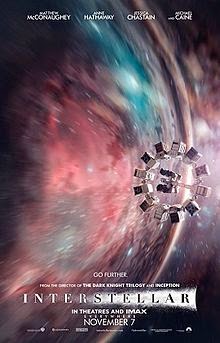
Interstellar (2014)

77062-interstellar_film_posterAs has always been his calling card, Christopher Nolan has an eye for grand, expansive, thought-provoking experiences wrapped up in cinema. Perhaps his aims are too ambitious at times, but you can never accuse him of making an everyday film. He always shoots for the moon (or better yet a wormhole) and so his projects are ultimately better than most, even if they miss the target a bit. The reason being, Interstellar is still full of enough questions and concepts to leave us thinking for a good long time after we leave the theater.

Although approximately 2 hours and 49 minutes, hardly anyone could call Interstellar too long, because it is more often than not engaging, as we try and decipher where Nolan is going to take us next. His story starts on a world that is certainly earth but strangely dystopian compared to the planet that we know and love. Reminiscent of When Harry Met Sally or something, old folks speak of the way the world was when the dust first hit and the corn crops had to be burned. Not much explanation is given but it is what it is.

This is the climate that the engineer-turned-farmer Coop (Matthew McConaughey) has to raise his two kids after his wife passed away. They are good kids for the most part. Murph blames a so-called “ghost” for accidents that happen around the house and her brother teases her some. But they hardly complain about this life they have they; just push forward.

However, their father has always been an explorer at heart, a pilot who never got to truly test the vast seas of space or spread out his wings fully. That changes when he and his daughter come across an old relic from the past. No, it’s not a monolith but something far more human. He somewhat reluctantly teams up with his old professor Brandt (Sir Michael Caine) and the professor’s daughter Amelia(Anne Hathaway) in a major undertaking.

They want Coop to pilot a mission to a wormhole which is just out of humanity’s reach. It was seemingly miraculously gifted to the human race by some unknown third person. This is their chance to A: find a new planet for a mass exodus or B: restart a colony on a far away destination. The first option is far less grim. Coop takes the mission in the hopes of saving his kids, but he knows the ramifications. Since time is all relative he does not know when he is coming back. He does not even know what he will find or if he will be successful. He heads off as an angry Murph tearfully watches him fall out of her life.

In a match cut of his own, Nolan transports Coop from his truck to the outer reaches of the galaxy. The real adventure has begun. The mission is clear. Save humanity from most certain extinction. It does not make it easier however that messages are constantly being relayed from earth. Coop and his three colleagues set up a plan of action. Their first target is a water covered environment that looks promising. Not so. Next, Coop overrules Brandt and they head to a desolate world that a previous explorer had labeled as inhabitable. To put it bluntly, he lied and he was not the only one.

Now Murph is older (Jessica Chastain) and she still has a hard time reconciling the departure of her dad. In an especially impactful scene, a still ageless Coop watches tearfully as his older son’s life literally passes before his eyes through the video communications that have been relayed up.

Coop has no way to reply. He can only watch and push forward to try and find a solution. But the answers are few and far between as time continues to move rapidly faster on earth than with the crew of the Endurance. In one final act of selfless valor Coop heads into a black hole and thus begins his own mind-blowing leg of his space odyssey. Some connections are made and when all the pieces are put together all that really matters is his inextinguishable love and family. In the end, Coop spends a nice moment with his daughter under very different circumstances. Together they saved the human race. Together they survived.

For a film that was made for Physic nerds with talk of black holes, worm holes, relativity, quantum mechanics, Newton’s Third Law, gravity and the like, Nolan’s conclusion has a universal ring. As Amelia Brand claims, “Love is the one thing that transcends time and space.” There are still scientific questions left to be debated for years to come, but we know that love is one thing that is forever true.

There are obviously numerous comparisons that can be made between Interstellar and 2001. I would rather focus on the differences very briefly. In Nolan’s film, A.I. is actually useful and more reliable and kind than humanity itself. It is Man who lies, cheats and reverts to animalistic behavior all in the name of survival. Interstellar has a lot of scientific theory behind it (which I will acknowledge I do not know the ins and outs of), however, it also has a very human component. It is grounded on earth with Coop’s kids.

The visuals in Interstellar are often breathtaking but we would probably expect that for such an ambitious space saga. What I really took out of this film was the score and juxtaposition of sound. Hans Zimmer’s compositions were full of pounding organs that somehow fit the mood with their majestic and still austere sound. Furthermore, this film had a lot of dialogue and tense moments of noise, however, when we are outside the spacecraft it is almost completely silent reminding us of the reality of space. It is more often than not a vast, silent unknown.

I am reminded of when Coop explains to his daughter why she was named after Murphy’s Law which seems to be bad. He replies that “Murphy’s law doesn’t mean that something bad will happen. It means that whatever can happen, will happen.” And that was good enough for Coop and his late wife. In some ways I think these words can be used to describe Interstellar. With Nolan, there is the potential that whatever can happen, will. There is excitement and magic in that, even if it sometimes overshoots its bounds. It’s not necessarily a bad thing and that’s good enough for me.

4/5 Stars

Do not go gentle into that good night,
Old age should burn and rave at close of day;
Rage, rage against the dying of the light.
~ Dylan Thomas

Planet of the Apes (1968)

f0ab6-220px-planetoftheapesposter“Take your stinking paws off me, you damned dirty ape!” ~ Taylor

Planet of the Apes is a highly disconcerting tale despite the rubber visages of the apes which feel quite tacky at times. However, they are so unnatural that they seem to still work within the context of the film. This Sci-Fi classic also really works on another level, because it is an inversion of our accepted dogma. Yet it still shares a degree of similarity to our reality making it a frightening dystopian  world to take in.

The story begins calmly enough in outer space as a group of human explorers circle the solar system with the fate of earth up in the air. We assume the worst. After spending time in hibernation the crew finds that their ship is making a crash landing for an unknown reason so the three surviving passengers bailout. There’s Taylor (Charlton Heston), Landon and Dodge and though they do not always see eye to eye, they begin to explore the vast expanses of the seemingly lifeless world for any sign of life.

As time passes, they finally come across human life: a very primitive human society that has no form of communication. They assume they can run this society soon enough with their advanced intellect. However, what they were not counting on were the apes who have advanced far beyond the animalistic humans. Apes are the one with language, culture, weapons, and a whole stratified society.

Taylor and his shipmates are hunted down like common animals along with the rest of the mute natives. What ensues is a rather terrifying story following Taylor as he tries to prove his intellect only to be beat up and caged like a common zoo attraction. It feels strange watching the apes speak in common English as they laugh contemptuously at the stupidity of human lifeforms.

However, a pair of scientists (played by Roddy McDowall and Kim Hunter) become interested in Taylor and he must fight an uphill battle to prove he is different. It is no easy task with beatings, chains, and court trials. The society is so set in its ways that no one will believe that a human actually can have intelligence. It is utterly impossible. This gives context for the famous insult that Taylor hurls at the apes. It’s the first time a mere human has addressed an ape. Needless to say,  they don’t take it well.

Taylor has enough grit and stubbornness to get what he wants, but only when he has gotten away does he really understand what has happened and where he is. How he didn’t realize it before is a puzzle. Then again, he probably was not the only one blinded. Planet of the Apes works on a number of levels, although it can feel a bit corny. First off, the music of Jerry Goldsmith makes every sequence feel all the more unnerving. The lack of CGI in the panoramic images is a breath of fresh air. I will assume that those cinematic shots were actually real, and they would undoubtedly look fantastic on the big screen. Amazing! Furthermore, Charlton Heston does a decent job as the cynical explorer Taylor and as I noted early on he got the girl. Just not the one I expected.

There are a lot of sequels/prequels to be watched and I will certainly try and get around to them some day because this film was definitely enjoyable. Without a question.

4/5 Stars

Paper Moon (1972)

463f4-paper-moonDirected by Peter Bogdanovich and starring the father, daughter pair of Ryan O’Neil and Tatum O’Neil, this film is set filmed in stark black and white and set during the Depression. 

Addie Loggins is a little girl who has just lost her mother and her closest relation is the shifty Bible salesman Moses Pray. Reluctantly he agrees to take Addie along to some kin in St. Joseph’s Missouri where she can be cared for and he also pockets $200 which is rightfully hers. Sparks fly from the beginning between the perpetually grouchy Addie and the constantly annoyed Moze. However, with the tricks of Moze and the cuteness of Addie, this unlikely pair is able to sell numerous Bibles all over the state to hapless widows. 

However, all that is put on hold when they stop at a carnival and Moze becomes infatuated with a high maintenance, exotic dancer named Trixie (Madeleine Kahn). Trixie and her young maid tag along and Addie becomes annoyed with all the attention Trixie now receives. Addies devises a plan with Imogene and it results in a disgusted Moze heading back on the road with Addie. 

Their next job includes taking a store of whiskey from a bootlegger so they can sell it back. However, they run into trouble with the local sheriff, who just happens to be the bootleggers brother! They escape thanks to Addie, pawn the car, and get across to Missouri. There everything catches up with Moze and he gets beat up and all their money is stolen. Soon after, he and Addie finally part ways. But in the end this rag tag pair realizes they actually care for each other and they head out to pull more cons all across the country… so Moze can pay Addie her $200. 

The strained relationship between the two leads unfortunately reflected the real relationship of father and daughter. In the film however, they were great together adding both humor and drama to this bleak story. As always Bogdanovich loves his nostalgia and there is plenty of it here to be enjoyed.

4/5 Stars

Wings of Desire (1988)

7ebbf-wingsofdesireposterDirected by Wim Wenders, this German film has almost a stream of consciousness feel. It opens over the skies of West Berlin where a couple angels watch over the humans as unseen and unheard guardians. They pay attention to the thoughts, desires, joys, and fears of a plethora of folks from all walks of life and act as unobserved comforters. These angels are immortals and although they are familiar with humanity they are not a part of it. 

Among others, the angel Cassiel observes an old man named Homer who dreams of a world of peace. Damiel on his part finds himself infatuated with an utterly lonely circus trapeze performer, and he also watches over the actor Peter Falk as he begins shooting his next film. Because of his newfound love, Damiel desires to feel what it is to be human. Aside from affection, he yearns to be able to do the little things that go along with being mortal like drinking a hot cup of coffee. Finally, determined Damiel does indeed shed his angel wings and immortality for a chance to be human. He knows what it is to breathe, to tell colors apart, and he finally does get his cup of coffee. 

Quite by chance, he has an encounter with Falk who tells Damiel a secret and encourages him in his new life. Cassiel, still an angel, tries to stop a suicidal youth from jumping, but he is unsuccessful and it hits him hard. 

In the final moments of the film, by fate, Damiel meets his girl at a concert, and they embrace as if they had known one another for an eternity and in a way they had. This film is beautifully photographed in a sepia tone that reflects the viewpoint of the angels. It is only the humans who see the world in all its glory, bursting with different colors. This film was quite fascinating, and it is the type of film I would want to make that really gets up close and personal with some many people without actually focusing on them. Furthermore, Peter Falk was a wonderful addition to this film, and he was a pleasure to watch because he gave off the impression that he was simply being himself. And I think he was.

Next on my list to see from Wim Wenders is Paris, Texas, but I would also like to explore more of the New German Cinema from the likes of Rainer Werner Fassbinder and Werner Herzog. 

4.5/5 Stars

Alien (1979)

70cca-alien_movie_posterIn the wake of other Sci-Fi smashes like Star Wars (1977) and Close Encounter of the Third Kind (1977), Alien was a radically different film, since it lacked the same sentiment of its precursors. One would wager a guess that this core variance stems from director Ridley Scott who certainly is no George Lucas or Spielberg. His films are generally darker, more world-wearied, and disillusioned. Blade Runner is a perfect illustration of this, but three years earlier came Alien, a Sci-Fi Horror film of immense critical acclaim and impact even to this day.

The film opens as a spacecraft called the Nostromo gets ready for a return trip to earth after a commercial excursion by its 7 member crew. However, a distress signal halts their plans and the captain named Dallas (Tom Skerritt) resolves to go investigate. On the surface of the abandoned planet are the remnants of what seems to be an ancient alien empire. One member of the crew Kane (John Hurt) comes upon a chamber full of what appear to be eggs and as is expected he is attacked. We knew it was building up to this point.

Back on the craft, Kane is still alive but now he has an octopus-like alien clinging to his head. It’s an acidic situation because it appears to be feeding him oxygen and it has no plans of coming off anytime soon. Next, comes the calm before the much-anticipated storm as the tension slowly increases exponentially.

What ensues is a cat and mouse game between the crew and this belligerent alien which has grown increasingly larger. Its evolutionary adaptations make it seemingly immune to extermination, but the crew tries desperately to destroy it with electric prods and flamethrowers. Soon it’s difficult to know who the cat and who the mice are, but it certainly favors the alien.

It doesn’t help that Jones the cat is on the loose and there is even a bit of mutiny aboard the craft. It feels a bit like a tense Agatha Christie novel with person after person slowly getting knocked off. But that sensation does not last long when we actually see what we are dealing with. This creature has no conscience. No humanity. It only cares about survival by killing its prey. To win you must do the same and beat it at the game.

Thus, although I initially thought it a weakness to only have one alien, it turns out that it makes this film all the more tense. Also, very little of the action actually takes place outside of the ship. They are stuck on board in the middle of outer space fighting for their lives. Not much can be more horrific than that, and it is a very unnerving ride with surprisingly good pacing and many graphically shocking moments

The cast is a nice diverse group of actors including Skerritt, Hurt, and Ian Holm, but Sigourney Weaver is undoubtedly the standout as 3rd in command Ellen Ripley. She is the last one to keep her head and her story would set the framework for the entire Alien franchise. Not to mention the role propelling Weaver to stardom and introducing the archetypal model for future female protagonists.

Alien definitely has a lot to offer and I am excited to see the next installment Aliens. That added “s” has me intrigued.

4.5/5 Stars

Night of the Living Dead (1968)

ee1cb-night_of_the_living_dead_afficheI came into Night of the Living Dead expecting a whole lot of zombies and some gore and a few deaths. There was most definitely some of that to be sure, but that was far from the whole picture.

First off, it must be acknowledged that George Romero’s picture is a true low budget B film, and it certainly looks the part with its choppy black and white cinematography. Instead of taking away from the film it adds to the aesthetic because we are even less sure of what we are seeing.  The inciting details are also rather blurry as well.

It begins with a prudish girl named Barbra (Judith O’Dea) who goes to visit her father’s grave with her brother. Their little sibling quarrel is soon interrupted by a thing. A zombie for lack of a better term. Johnny is taken down, but Barbra frantically escapes to an abandoned house. Soon she is joined by burly, level-headed Ben (Duane Jones) and a few others. Still little is known about the crisis as the men butt heads about the best plan of action in response to the impending onslaught. Whatever their decision it has no power to impede the ghouls from steadily multiplying and moving closer. The authorities can do very little as the men board of the house and get ready to defend their makeshift fortress.

Plans of escape with a truck go awry and they see all too quickly the ferocity and cannibalistic nature of the undead terrors.  Meanwhile, the Press and Big Whigs in Washington try to make heads and tails of what is going on across a third of the country. The only explanation is radiation from Venus, but that does little to help our protagonists in their predicament.

By its conclusion Night of the Living Dead becomes increasingly more suffocating and claustrophobic as the zombies close in and do their worst. Ben somehow pulls through, but fate does not smile fondly on him. After all, the line between undead and living is sometimes difficult to differentiate. So much so that sometimes I felt like I was watching some Vietnam footage or a White Supremacist posse instead of a fictional horror tale. Yet another layer that makes Night of the Living Dead strangely unnerving.

This film ushered in a new era of horror films, and it truly is the seminal zombie flick before it was cool. Although to the modern viewer this film can feel slow, it has a surprising amount of social and political commentary. One thing’s for certain. I never want to be stuck in a house with zombies closing in on me. Not fun. Not fun at all.

3.5/5 Stars

The Friends of Eddie Coyle (1973)

76af9-the_friends_of_eddie_coyleIn this precursor to other gritty Boston crime films like The Departed, Eddie “Fingers” Royle (Robert Mitchum) is a middle-aged truck driver who does some gun running on the side for the mob. On one occasion he got caught with his hand in the cookie jar, and it meant two more years of jail time. He’s seen the clink before.

Three men have been pulling off bank jobs in clear daylight using hostages and new guns each time. Eddie is the guy who has been delivering the guns, and he deals with a young thug (Steven Keats) who acquires the stolen merchandise.

Eddie also gets acquainted with F.B.I. agent Dave Folley (Richard Jordan) who tells Eddie his only way to dodge prison is to become an informer. Unbeknownst to Eddie, Folley has another informant working for him, in fact, it’s the man who set Eddie up. Now Eddie is thinking of himself and so he sets up the gunrunner Jackie because he has everything he needs. Folley closes in and nabs the guy. Eddie wants to be done with it, but Folley wants more. Eddie’s buddies who have been pulling the heists are his next victims, but Folley’s other man gives him the information faster and Royle is left with nothing to bargain with. To top it off, he is suspected to be the stool pigeon, and a hit is secretly planned on him. The middle-aged, hopeless, beat down, world-weary, nobody is knocked off and no one loses any sleep over it.  The manipulative stooge reaps the benefit and agent Folley has what he wants. Royle was the one who got the short end of the stick. Some friends he had.

Peter Yates proves again after Bullitt that he can deliver on gritty crime films. He left San Francisco and car chases behind for Boston, Mass. and bank jobs. Murder seems prevalent everywhere and with the killing comes a wide array of tough guy types. The violence is not over the top and neither is the drama, but it is cool, collected and unsentimental.

I cannot help but compare Mitchum’s performance to earlier crime films of his like Out of the Past. He has some of the same grittiness and toughness, but he is decidedly wearier in this film. He has similar moral ambiguity, but his death is far more pitiful. There is no redemption here, and he is a lowlife loser to the end. Despite his rough edges and shady activity, it is difficult not to feel just a little sorry for the man. The film’s title only helps to point out the irony of his situation. We thought he was the rat, but it turned out it was someone else. He needed to find new friends, but then again it takes one to know one. They were a product of their environment and that environment was not the friendliest place to be.

4/5 Stars

“Look, I’m getin’ old, you hear? I spent most of my life hanging around crummy joints with a buncha punks drinkin’ the beer, eatin’ the hash and the hot dogs and watchin’ the other people go off to Florida while I’m sweatin’ out how I’m gonna pay the plumber. I done time and I stood up but I can’t take no more chances. Next time, it’s gonna be me goin’ to Florida.” ~ Eddie Coyle

Le Silence de la mer (1949)

f9677-lesilence1Out of the many titans of French film, I found a personal favorite in Jean-Pierre Melville. Aside from changing his name in honor of the American author who wrote about the great white whale, Melville was also a member of the French Resistance during WWII. Thus, he seems to be the perfect man to helm a film based on a novel that was secretly published during the Nazi occupation. You would think that it would be brimming with political agenda and underhanded controversy.

Instead, Melville gifts us a nuanced and sympathetic film about a German Lieutenant who is quartered in the home of a French gentleman and his young niece. In many ways, much of the story plays out as an extended monologue rattled off by Werner von Ebrennac, and it becomes the perfect narrative device for an intimate character study. He is met by silence and passive aggression from his hosts, who hate his guts and the situation they have been placed in. He represents everything they despise, and his mere presence also reminds them of the shameful fact that France has fallen.

And yet he is far from the stereotype, and Melville never allows this German Lieutenant to succumb to our preconceptions. This has to be one of the most sympathetic depictions of a German soldier ever seen captured on film. It turns out that Ebrennac is a perfect gentleman, cultured in literature (Moliere, Rascine, Cervantes, Dante, Shakespeare, and Goethe), and a seasoned musician. His head is full of romantic ideals about the reviving of France as it is taken under the wing of its new conqueror.

His words are always met with a quiet contempt as uncle and niece continually sit reading and knitting. It never seems to change or stop. There is never a change in temperate or a word spoken. Just the words of Ebrennac every evening after he gets back and the voice-over of the older gentlemen constantly illuminates us about the unspoken workings of his mind.

Soon, however, the Lieutenant learns the reality of the war from Treblinka to the Nazi ideology pervading the psyche of all the German military. Friends have been brainwashed, and his view of the German war is completely dashed. There is nothing left to do but apply for a transfer and resign himself to the hell that has been created. Uncle and niece reluctantly bid farewell to a man who was the exception.

This was Jean-Pierre Melville’s first feature, but I really enjoyed it as simple as it is. He seems to understand the ambiguities of war. It often is difficult to decipher who is in the right or the wrong. Germany was the odious villain and France the obvious victim. However, in this domestic drama the tables are seemingly switched in stark contrast.

4/5 Stars

My Dinner with Andre (1981)

18639-my_dinner_with_andre_1981_Directed by Louis Maille and starring Wallace Shawn and Andre Gregory playing characters named after themselves, this interesting film has a relatively simple, albeit, unique premise. A writer who lives in New York goes to a dinner engagement with a man who he used to know well. 

However, he approaches their meeting with some anxiety not knowing what to expect from a man who has no doubt changed. Andre greets Wally and pretty soon they are talking about this and that as they wait for their food. Andre initially talks about his experiences abroad in Poland, Findhorn Scotland, and even the Sahara. All the while Andre experimented with spiritual encounters, met unusual artists, and took part in performance art. During his time away he was made to contemplate humanity, life, death, and many other profound subjects. 

Wally for his part describes his own life in contrast and what he thinks about his more droll existence. It includes spending time with his girlfriend, reading an autobiography on Charlton Heston, sleeping with an electric blanket, and trying to write plays. Andre on his part believes there are problems with this lifestyle because it is more like a dream than reality. 

Both men leave the meeting content and Wally rides off in a taxi ready to tell his girlfriend about his dinner with Andre. Andre Gregory represents your philosophical existentialist who is discontent with the normalcy of life. Then, Wallace Shawn is your common everyman who lives his days simply, content with simple comforts and a normal existence. Maybe not your normal dinner conversation, but after all it is a movie. This film is certainly not for those with a short attention span and I myself find this film more intriguing in concept rather than in practice. However, there are many philosophical issues here so if you are ready to ponder and sit back so the conversation can flood over you, it can be an interesting film to take in.

3.5/5 Stars