Purple Rose of Cairo (1985)

purple rose of cairo 1.png

“How many times is a man so taken with a woman that he walks off the screen just to get her?”

This line spoken by one of Jeff Daniels’ characters is really the key to opening up the fantasy that is Purple Rose of Cairo. Here is a film where Woody Allen most blatantly gets to parade his love for the movies and it revolves around the Depression, a love story, and a movie theater. Cecilia (Mia Farrow) is a woman who gets by working in a diner with a bum of a husband (Danny Aiello) who beats her more than he loves her. Her one getaway is the escapist thrills derived from the weekly romances and melodramas found at the local theater. She’s one of the most faithful attendees making it out to the movies religiously and she goes back out into the world reciting all that she has seen to anyone who is willing to listen.

And there is a bit of Buster Keaton’s Sherlock Jr. here as well. It’s not as inventive visually but several scenes that include the firing off of dialogue between the screen and reality work to great effect.  That’s something Keaton could not do in a silent picture, have his movie characters and audience members interact so directly.

It’s striking that the scenes that have been constructed as “film” really do look like films of old. There’s an attention to the craft rather than the shoddy caricature of grainy black and white that we’re often accustomed to. Even the striking resemblance of Edward Hermann to Edward Everett Horton as well as the makeup work complete with black eyeshadow lends itself to the whole charade.

And Purple Rose of Cairo is literally about a man coming off the silver screen to interact with one of his viewers — one of the people who is devoted to him — and he loves her. The woman is, of course, Cecilia, and the man off the celluloid is Tom Baxter (Jeff Daniels the first time around) a man who was written as a supporting character, an archaeologist.

That in itself might be enough to play with but Allen takes his story a step further so it’s not simply about this unlikely romance of worlds colliding. But it gets even more intriguing when the famed actor who plays Tom in “real life,” the man Gil Sheppard (Jeff Daniels again) crosses paths with Cecilia. At first, he’s interested in her because she has a way to assist him in his predicament since she knows his unruly alter ego. However, over time it turns into a certain amount of awe because she is devoted to his characters and by a certain amount of transference, him as well. The question that is then raised rather obviously is, do you take the perfectly constructed fantasy man or do you go with reality? That which is right in front of you, both living and breathing and fully human.

It’s also a commentary on the rigid conventions that storytellers are often forced to adhere to. Aside from “art-house,” there can be little to no films with people talking or dealing with philosophical issues. That’s too mundane. Of course, Allen is notably one who matches his comedic delivery with his own philosophical quibblings. And this film is light but it still raises some of the questions he is often preoccupied with. Whether or not he comes to a satisfying conclusion is for only the viewer to decide, and if the film itself is any indication they are the ones who must decide. The viewer, in this case, has great agency. They are the focal point of this film, again, in the literal sense.

As is Woody Allen’s penchant, the film opens with an old standard, in this case, the crooning voice of Fred Astaire knocking off a few bars of “Cheek to Cheek.” And the story ends with Astaire & Rogers dancing the night away. While Purple Rose of Cairo cannot quite top Top Hat, it’s a bittersweet dose of 30s nostalgia all the same. It shows once more that Woody Allen truly does love movies with a passion. That’s one thing that’s difficult to take away from him, but it does beg the question, can movies really be your be all, end all?

Some of the implications are rather troubling as we leave Cecilia completely immersed in a film, her real life completely ripped to shreds without a marriage or a job or really anything else. But she has a movie. Except movies can only go so far in how they emulate reality. They cannot replace it or perfectly replicate what is real. They can only help us understand it better. That is why, while movies can and should be entertainment at times, they should not only be pure escapism. Because the reality is that life is still right outside our door. We cannot get rid of it or lose sight of our role in it — both in good times and bad.

We are probably all just as messed up as the next person and perhaps little better than Woody Allen in some ways, still, if we don’t simply love movies but hope to glean a little from them about life then we are better off. They cannot be the ultimate thing in life but they can direct us towards the important things.

3.5/5 Stars

La Belle et la Bete (1946)

La_Belle_et_la_Bête_film.jpgChildren believe what we tell them. They have complete faith in us. They believe that a rose plucked from a garden can plunge a family into conflict. They believe that the hands of a human beast will smoke when he slays a victim, and that this will cause him shame when a young maiden takes up residence in his home. They believe a thousand other simple things. – Jean Cocteau 

From the outset director Jean Cocteau entreats his audience to have a “childlike sympathy” and as a viewer, you do well to heed his advice. Because, that posture is exactly what becomes the guiding force behind this entire fairy tale that he has developed, in some ways so planted in reality and in others very much the purest of fantasy stories.

Though simple, the film’s special effects are surprisingly mesmerizing with magically opening doors, mirrors and human columns spewing smoke. You half expect to see strings or some other obvious cue to signal that this is all a facade, all hokey tricks, but a moment like that is never obvious. The film maintains much of its magic even after 70 years.

The Beast’s castle shines with the opulence of goblets and jewel, while the farmhouse of Belle and her family is humble, characterized after the artistic works of the great Flemish master Jan Vermeer.The atmosphere is equally gripping and Cocteau stages some of his shots in invariably interesting ways interrupting the plane of view with candles, smoke and anything else that suits his fancy. And that’s the beautiful things about fairy tales. You are not tied down to any sort of logic or narrative convention. His film is free-flowing, pacing itself as it sees fit. Even it’s ending is enduringly perplexing, hardly as straightforward as a Disney adaptation, but there is still immense power in that.

There are also an equal number of familiar reference points like evil sisters, who are blinded by their own avarice and then, of course, their humble sister, Belle, played so exquisitely pure by Josette Day. Her face beams with a radiance not often equaled and whether clothed in rags or the finest robes, it’s her humble elegance that shines through.

But it’s Jean Marais’s performance that is perhaps even more noteworthy if that were possible as he takes on a dual role. The first is more obvious, as Avenot, the man that Belle secretly loves, but it looks like it will never be due to their circumstances. However, Marais also takes on the monumental role of the beast and hidden behind tireless amounts of makeup and fur, it’s easy to lose him in the role. What would have been lost if he was animated or computer-generated, is betrayed in how he carries himself and even how he talks at points. Certainly, he is a creature prone to barbarism and violence, but innate in a performance such as this are those human characteristics. Thus, the perfect fairy-tale ending that we all know by now — probably thanks to Disney — is also a striking reminder. Yes, the fate of the prince of becoming a beast was due to spells and incantations, but we can just as easily be beasts now.

Without trying to go too far with the idea, it’s easy to recognize moments when we act almost inhuman. In fact, that’s the constant struggle of mankind, fighting against our more animalistic desires to do what we actually perceive to be upright. So you see, the Beast is not just a fairy story or the Beast is not simply someone else acting out in a horrid way, but the Beast can just as easily be you and me. In Cocteau’s film, a lot is made of the mystical mirror. Belle looks absolutely divine under its gaze but her sisters show up as an old woman and then a cackling monkey. If each one of us was to peer into that same mirror what would we show up as? What characterizes our lives? Beauty or bestiality? If this story is any indication, at least there is a chance at redemption. But that’s enough of that. La Belle et la Bete is a sublime fantasy deserving airtime alongside Disney’s more well-known adaptation.

4.5/5 Stars

Pleasantville (1998)

pleasantville 1This was not the film I expected from the outset, and oftentimes that’s a far more gratifying experience. Nostalgia was expected and this film certainly has it,  even to the point of casting the legendary funny man and cultural icon Don Knotts in the integral role as the television repairman.
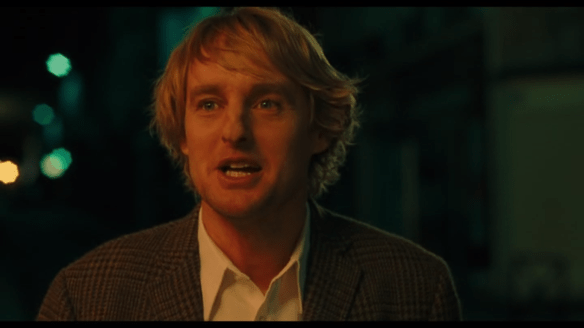
However, with this there was a degree of apprehension, because while paying homage to the past, Leave it to Beaver, Father Knows Best, Andy Griffith and so on, there seemed to be a certain amount of denigrating of such classics– a tongue and cheek way of approaching the quaint television past of the 1950s. There was little reverence for these admittedly quaint but still respected programs.

My fears were seemingly confirmed minutes later with black and white imagery being equated to repression as the beautiful colors of the town became unfurled with greater enlightenment and personal expression. But that’s not quite right. The story goes both ways. And to understand that we have to take a closer look at our two diverging main characters.

When Garry Ross’s film begins in the present day, David (Tobey Maguire) leads the life of a bookish TV nerd, watching old reruns and cataloging trivial factoids in the cavernous crevices of his mind. At this point he’s relationally stagnant and based on this social life, he looks to be going nowhere fast. His sister Jennifer (Reese Witherspoon) is on the complete opposite spectrum, infatuated with boys, imbued with sexual freedom, and dare we say a tad superficial.

But to make a long story short, these two siblings get thrown into the life and times of David’s favorite TV show Pleasantville, complete with black and white cinematography and vintage ’50s lifestyles. The interesting part is watching them learn how to find another part of themselves contrary to what they initially found their identity in. It means freedom of not only body but mind too and that extends to all the other people who they influence.

In a pinch, it also makes for a handy allegory on race, with literal color being of such a high concern among the paranoid townsfolk. Because as more people become “colored” it creates a degree of unrest in the community. They hold to the belief that “different” is not good — to be “other” is to be frowned upon. It’s Jennifer first and then David who begin to change the status quo, including their mother (Joan Allen), the local diner owner (Jeff Daniels) and many of the other teenagers.

So on second glance, Pleasantville is a film that says television reruns and nostalgia are quite alright, but then again, there’s so much to be lived and experienced in the present moment too. There will be bad just as there was bad before and there will be good things that will manifest themselves still more abundantly like previous generations. Those are the universal rhythms of life, and they should free us up to live with supreme confidence in who we are, breaking out of the tedium that is our comfort zone. And that’s a lesson that not only revels in the glories of previous generations but still gives us hope for the future millennium, now well underway over 15 years after Pleasantville was originally released.

It’s not a story without flaws, but it’s the fact that it has flaws that actually make it worth watching. We need a little bit of rain in our lives — the inconsistencies and the idiosyncrasies to add greater depth, not only to our character but in turn to our relationships. It then becomes absolutely necessary to come up with a clear definition of pleasant or even to concede that not everything can or should be pleasant. Because you need the darkness to bring out the full spectrum of colors — all those colors commonly referred to as human emotions.

4/5 Stars

Midnight in Paris (2011): Lessons in Nostalgia

midnightin1Midnight in Paris begins with scene after scene of the Parisian landscape. It gives off the feel of a lazy vacation, strolls in the park, sidewalk cafes aplenty, and even romantically rainy afternoons. For those who have never been to Paris, it makes you fall in love with the city in only a matter of minutes. Gil Pender (Owen Wilson) is such a person who would easily be content with the Left Banke, Baguettes, and a chance to write his latest novel.  There is an air of wonderment that pervades his very being. He’s often naive and unassuming — hardly someone you would peg for a big Hollywood success story.
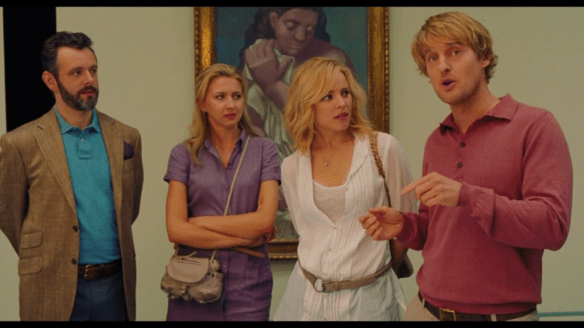
He’s about to be hitched to Inez (Rachel McAdams), a young woman who epitomizes the affluent American girl who was used to getting everything she wanted from dear old dad. Now she’s going to marry rich and maintain her lifestyle. Her life is a continual conveyor belt of first world problems. Such as buying a pair of 20,000 euro chairs in an antique shop. Meanwhile, she is easily impressed by puffed up pontification.

When she runs into an old school friend Paul (Michael Sheen) and his wife, all Inez wants to do is listen to him talk. After all, he knows about painting, philosophy, wine, and about anything else a stuffy intellectual should know. To coin a phrase he’s a contemptuous, conceited bag of hot air,  or as the museum guide (Carla Bruni) so aptly puts it, “a pedantic gentleman.”

midnightin4For obvious reasons, Gil cannot stand spending time with his wife’s friends. Instead, those breezy, absent-minded walks down the lanes are more his taste. Inez can’t begin to understand why he does it, but one night he’s in for a big surprise. One minute he’s  out for a stroll and then the clock chimes twelve. All of the sudden something a la Cinderella happens. A coach pulls up, Gil tentatively gets in not knowing what he has just stumbled upon, incognizant of the adventure ahead of him.

What follows are the most whimsically joyous moments of the film. Gil has wandered into 1920s Paris, and it’s beyond his wildest dreams. It’s practically paradise with the music of Cole Porter, dancing, pretty girls, and the biggest names you could ever hope to meet. In fact, you can tell Woody Allen has great pleasure in bringing to life such visionaries as F. Scott Fitzgerald, Ernest Hemingway, Gertrude Stein, Pablo Piccaso, Salvidor Dali, Luis Bunuel, and so on.

It’s too much fun to be critical of historical accuracy. After all the Fitzgeralds throw wonderful parties, Hemingway gives Gil romantic advice, and he gets his fledgling novel read by none other than Stein. All the while Gil returns to the present giddy with excitement about what he has experienced, but Inez has none of his appreciation for nostalgia. She’d rather go dancing with Paul because he’s so refined.

midnightin2The linchpin of the whole story is really the ravishing French beauty Adrianna (Marion Cotillard), the muse of Picasso, the desire of Hemingway, and a newfound friend of Gil. He cannot help but be enraptured by her grace and the time they spend together is wonderful, that is until he tells her that he is pledged to be married. Although, it looks like he and Inez will not be together much longer as they continue to drift further and further apart.
It’s in one of his last visits to the past that Gil makes the startling discovering that Midnight Paris hinges on. He realizes Adrianna dreams of the turn of the century as he dreams for the roaring twenties. Toulouse Lautrec, Gauguin, and Degas dream about the majesty of the Renaissance. In such a revelation lies a valuable lesson (“I was trying to escape my present the same way you’re trying to escape yours, to a golden age”).

In doing so Gil comes to appreciate his present, because life may be unsatisfying at times, but perhaps maybe that’s the way it should be. Otherwise, we would never know what true joy or excitement or love is. There would be no change, no threshold to truly experience life as it is. Gil can go back to his nostalgia shops and Cole Porter hit parades and that’s alright. But now he’s found a Parisian girl (Lea Seydoux) who shares his affinity for long walks in the rain. This is certainly a fairy tale ending, but then again this whole story is a fantasy. In getting a little bit sentimental Woody Allen really gifted his audience something unmistakably special. Owen Wilson was fantastic as was Marion Cotillard.

4/5 Stars

The Bishop’s Wife (1947)

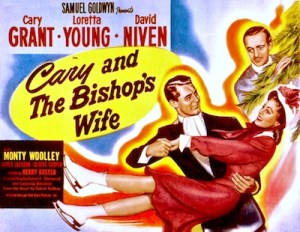
Cary_and_the_Bishop's_Wife_posterAlthough its theology probably isn’t sound, rather like It’s a Wonderful Life, The Bishop’s Wife nevertheless utilizes its central plotting device wonderfully.
Imagine if on a whim an angel came to your rescue, and then imagine that the angel is named Dudley and looks and acts like none other than Cary Grant. In this case, the person in need is a distraught Bishop named Henry Brougham (David Niven). He is right in the middle of a major undertaking to build a new cathedral, and his primary benefactor Mrs. Hamilton (Gladys Cooper) is being a thorn in his side. The building project has consumed all his time and efforts, causing him to neglect his radiant wife Julia (Loretta Young), their little daughter Debbie, and the people from their old parish.

Director Henry Koster crafts a whimsical and rather sentimental film much in the same mold as Harvey (1950) which came three years later. This time Dudley is the character who exists outside of worldly convention. He is constantly kind, always patient, never hurries, and is always helpful to everyone in need be it blind man or bishop. In truth, everyone adores him, because after all, he is an angel. Everyone, that is, except Henry who needs him most. Henry unwittingly asked for help and now he has an angel in his midst, but Dudley will not allow that to be revealed to anyone else. It’s an unnecessary detail, and besides, he has much more pressing matters like attending to Julia and assisting Henry with his work. To her, he is purely a radically pleasant and good-hearted individual. With such positives, there hardly needs to be any explanation, only wonderment.

He takes Julia through the old town she used to live in happily with Henry. They meet old friends like the blustering Professor Wutheridge (Monty Wooley), who Dudley also happens to give inspiration to. He makes little Debbie a ringer in a snowball fight, and he and Julia are joined by a chipper taxi driver (James Gleason) in an ice skating adventure. Even a check in on the humble cathedral at St. Vincent’s leads to an angelic rehearsal by the local boy’s choir. Meanwhile, Henry is absent, attending to other matters.

Of course, he is as bitter and distressed as ever by his plight — his attention still skewed in the wrong directions. Even when Dudley goes to grumpy old Mrs. Hamilton and totally redeems her perspective in order to feed the hungry, Henry hardly seems pleased. His artifice, his tower is now even farther from being completed.

The final scenes of Bishop’s Wife are key because it’s in these moments where we see the change in Henry. Cary Grant might seem obviously miscast for this role, and in truth, it was originally supposed to go to Niven who was to play opposite the equally angelic Teresa Wright. But Grant’s debonair side is important for this final act because it makes sense when he makes a pass at Julia. It fits his screen persona as the suave bachelor, angel or not. You can debate whether he was actually in love with the beautiful mortal, or if he was just doing it to get a rise out of Henry. Whichever way you see it, for the first time Henry is driven to fight for his wife out of love and because of the human emotion that still pulses through his veins. Finally, he drops the peripheral and looks at what is central, his family and friends. Dudley, or Cary Grant, takes one final approving look and walks off in the snow. His work here is done. Peace on Earth and Goodwill towards men.

4/5 Stars

“We forget nobody, adult or child. All the stockings are filled, all that is, except one. And we have even forgotten to hang it up. The stocking for the child born in a manger. It’s his birthday we’re celebrating. Don’t let us ever forget that. Let us ask ourselves what He would wish for most. And then, let each put in his share, loving kindness, warm hearts, and a stretched out hand of tolerance. All the shining gifts that make peace on earth.”

~ Final Message given by Henry (David Niven)

I Married a Witch (1942)

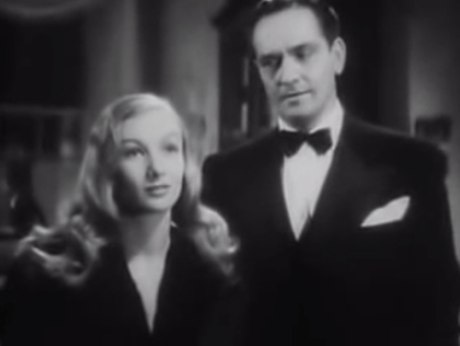
I_Married_a_Witch_posterDirected by French emigre Rene Clair, I Married a Witch is a surprisingly cheeky comedy for the 1940s. The plot opens up with the Salem Witch Trials where a male and female witch are both to be burnt at the stake. However, before dying they cast a curse on the lineage of one Jonathan Wooley (played in Puritan garb by Fredric March), and so going forth all his ancestors are doomed to accursed marriages.

Now in the present (1942), the current ancestor Wallace Wooley (March) prepares for a run at the governorship as he also prepares to marry his disagreeable fiancee (Susan Hayward) to bolster his appeal on the campaign trail. Meanwhile, the spirits of Jennifer (Veronica Lake) and Daniel (Cecil Hathaway)  are finally released from their prison and they head out ready to cause all sorts of mischief. At first, they travel as smoke floating through the air and residing inside bottles. However, Jennifer has the brilliant idea of taking on human form so she can torment Wooley even more.

They follow to burn down the Pilgrim Hotel and then Jennifer gets Wooley to unwittingly rescue her from the burning remains, a hero. Little does he know what’s he’s done. She pulls all sorts of pranks on him that leave a bad impression on his housekeeper and are bound to get him in the doghouse with his fiancee. Veronica Lake is very alluring in a sing-song sort of way as her character tries to playfully seduce Wooley. She even crafts a love potion, but plans go awry when she actually ingests it. Now she’s hopelessly in love and she must try and crash Wallace’s wedding to win him back.

Joined by her father in physical form, they put the proceedings to a halt with a gust of wind and then Daniel tries to impede Jennifer by turning her into a frog, but he ends up drunk instead. Of course, Wallace is caught in yet another awkward spot with the witch. The wedding is off (along with the dreadful song “I Love You Truly”) and the campaign is done for…or is it?

imarriedawitch1

In the end, it looks like Wallace might lose his new found love, but she comes back to him, the moral of the story being, “love is stronger than witchcraft. It conjures up a Frank Sinatra song right about now.

This film has a whimsically absurd scenario bolstered by simple special effects that allow buildings to burst into flame, Jennifer to slide up the banister, and Daniel makes the car levitate. This is an obvious precursor to a pair of 1960s sitcoms. Veronica Lake’s performance is very reminiscent of Jeannie in I Dream of Jeannie and the plot feels like a plot line out of Bewitched since our heroine is also a witch. Too bad Robert Montgomery was not in this film. His daughter was a witch after all.

3.5/5

Lost Horizon (1937)

LostHorizonPosterCertainly this is not the most well known or the best film of Capra. It is, in fact, quite different from a lot of his filmography. That is not to say that it is not an enjoyable film about a man who finds a little piece of Utopia called Shangri-La. Ronald Colman was certainly a likable fellow in the lead role and Jane Wyatt was pleasant during the time she was on screen.

What I really enjoyed in this film was the quibbling and bickering of Thomas Mitchell and Edward Everett Horton’s characters. These are two tremendous character actors who represent all that was great about the stock characters of Hollywood’s Golden Age. They are so recognizable and though not the stars they seemingly steal their scenes.

Because some of this film was lost, parts were understandably choppy since there was no visual aside from photos to go with the dialogue during certain moments. Despite this, the film is an enjoyable, albeit dated, 1930s fantasy.

4/5 Stars

Review: It’s a Wonderful Life (1946)

5632c-wonderfullife4Every time I go through the emotional, romantic, heart-warming and at times uncomfortable roller coaster that is It’s a Wonderful Life, something new always seems to stick out to me.

It is always impressive for a film of this length that so much is packed into it. Within minutes we are fully enveloped in this story, and every sequence gives further insight into these characters. There is hardly ever a wasted moment because there is significance in each scene. Pointing us to the nature of George Bailey.

Furthermore, it is easy to forget the darkness that this film submerges itself in because it reaches such a jubilant crescendo. However, this is a story that covers the years including The Great Depression and World War II. Its protagonist sinks into a state of wretchedness complete with angry outbursts, negative feelings, and drunkenness. George Bailey loses all hope and his perspective is so completely distorted. For all intent and purposes, his life looks like it’s over, and it takes a frightening alternate reality to shake him out of his disillusionment. Put in this framework, it makes sense why it was a commercial flop when you juxtapose it with the big winner that year The Best Years of Our Lives. They both deal with post-war reality, but with very different lenses.

That’s the benefit of hindsight and a new context since we do not usually see It’s a Wonderful Life as a gloomy post-war tale, but a more positive parable that is universal in its impact. The first part of this story feels a bit like a Job story of hardship, and the second act is reminiscent to Dickens’ A Christmas Carol, but that’s the simplest of observations. There is a lot more to be parsed through.

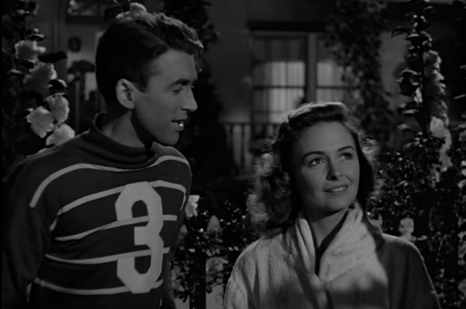
The romance of George and Mary is what many of us aspire to and it causes us to really empathize with their young love that weathers the good and bad breaks they receive. It’s the fairy tale love story we want, with the rock hard reality we are used to in our own lives. Some favorite moments in their life together would be the splash they make during the Charleston dance off, singing Buffalo Gals together, smooching on the telephone together, sharing a makeshift honeymoon together, and embracing after George gets his new perspective on life.

There are a fair number of close-ups utilized in this film, but they are usually used at crucial points in the narrative, and they tell us a great deal about both George and Mary.

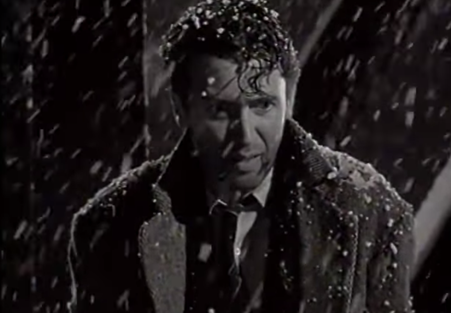
The first key moment comes during a freeze frame of grown up George with hands outstretched giving us our first look at the man we will be following from there on out. The next big moment occurs when George learns that Potter will gain control and the Building and Loan will be disbanded if he leaves. He realizes in an instant that he must give up his plans. Then, he waits excitedly for Harry with Uncle Billy and it is a happy moment, but George learns his younger brother might have another job. The camera follows his worried face as he goes to follow his new sister-in-law. Never thinking of himself, he realizes that Harry has a chance for better things and that leaves George still working the Building and Loan.

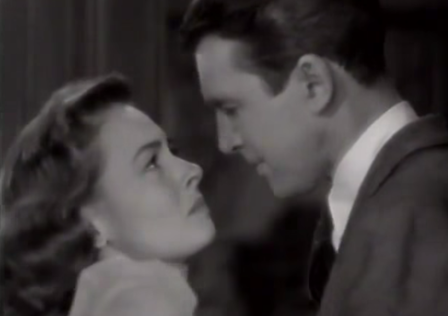
After their tiff, the scene where George and Mary are talking on the phone with Sam Wainwright is a solidifying moment in their relationship. There are so many underlying emotions and unspoken feelings that they are having trouble figuring out and reconciling. And yet there is that violent epiphany when their eyes link. The tears and anger are quickly traded for passionate kisses reflecting the often complicated facts of romance.

One of the final close-ups that hits home occurs when the now non-existent George stumbles away from the front door of his mother, who now has no concept of him. There is sweat on his brow (maybe from the 90 degree summer heatwave) and desperate bewilderment in his eyes. This is the lowest point he could have imagined. His own mother does not know who he is. His wife has grown old and lonely in an existence of exile. Stewart’s face is so expressive and earnest suggesting that George knows just how important human companionship is. Humanity was made to be in fellowship with each other. Lack of money means very little in comparison to our friendships and family ties. This is essentially what George finally comprehends and what Clarence reminds him. George understandably lost sight of his wife and his children and his friends. They were a gift not to be taken lightly.

Aside from these close-ups, it is also evident that a great deal of  effort was put into creating this world from the characters and their back stories to the town itself which was constructed on the RKO lot. Everything from the building facades, to stray dogs, and snow make the drama more atmospheric. It’s one of those films that reveals the beauty of using real props inhabited by seemingly real people. That’s why I sometimes am disillusioned by CGI. Although it can allow us to create amazing spectacles, oftentimes it creates a world that feels altogether fake and alien. It’s not relatable and it lacks the humanity that makes up our existence each and every day. In other words, it has very little of what makes It’s a Wonderful Life so compelling to me.

Perhaps there are more impressive or greater films, but there are few with greater heart and there is something to be said for that.

5/5 Stars

8 1/2 (1963)

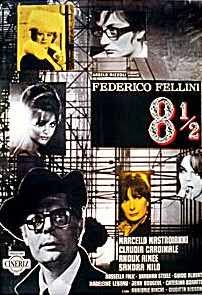
4b2c1-8mezzoDirected by Federico Fellinni and starring Marcello Mastroianni, the film follows the famous director Guido. After an opening sequence that reveals how he feels, we see Guido as he spends time at a spa trying to get healthy. However, he also must prepare for his next epic film production and he is constantly being bombarded by his writer, producer, actors, and all others involved. First his mistress arrives which he is unhappy about and then his wife comes and he is glad to see her. All these various things leave Guido confused since he does not have any answers. He wanted to make a genuine film full of truth and yet he cannot even be truthful in his own life. Even the ideal woman, the actress Claudia, has no real answers for him. Despite this, the film ends on a positive note with everyone holding hands in dance. What makes this film so fascinating is the interlocking dreams, reality, fantasy, and Guido’s childhood memories. Sometimes the viewer may get confused and yet often it is possible to decipher what is going on still. This is  a very personal film about film making itself and for Fellini it is also considered by many to be his greatest achievement.

5/5 Stars

The Fellowship of the Ring (2001)

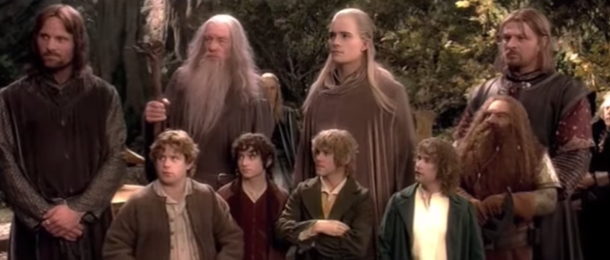
fea8c-fellowship1Without the inventiveness and lore that J.R.R. Tolkien created in his books, there would never be something as visceral and grand in scope as The Lord of the Rings. However, it is a vibrant mythology that Peter Jackson breathed life into, and it becomes evident in the opening minutes of the Fellowship.

There is so much ground to cover as far as history and context go and Jackson sets it up beautifully with an epic prologue narrated by Galadriel (Cate Blanchett) which became synonymous with this trilogy.

“But something happened then that the Ring did not intend. It was picked up by the most unlikely creature imaginable: a hobbit, Bilbo Baggins, of the Shire. For the time will soon come when hobbits will shape the fortune of all.”

Thus, begins the Fellowship of the Ring. We find ourselves in the awesomely beautiful Shire (courtesy of New Zealand) backed by an exuberant score by Howard Shore. This is the home of a now elderly Bilbo (Ian Holm) and his relation Frodo Baggins (Elijah Wood). The backdrop is Bilbo’s Eleventy-First Birthday and Gandalf (Ian McKellen) is making an appearance for his old friends birthday.

There is a lot of merriment to be had complete with Gandalf’s world famous fireworks, however, Bilbo is also preparing to say adieu, and he must finally give up the Ring. It is at this time that Gandalf is reminded of its power as it gets handed off to the unknowing Frodo. It is now this little hobbit’s task to flee everything he has ever known because 9 Black Riders sent by the evil Sauron are heading to retrieve the Ring.

By his side is the loyal gardener Samwise Gamgee (Sean Astin) and his two jesting friends Merry and Pippin. As for Gandalf, he must deal with some business with the head of his order Saruman (Christopher Lee).

With the Riders in hot pursuit, the hobbits stop at the Prancing Pony. By this time Gandalf has yet to return but they cross paths with a ranger named Strider (Viggo Mortensen). He agrees to lead them to the Elvin city Rivendell but before they can get their Frodo is ambushed by the Ring-Wraiths and receives a fatal wound. He survives and is reunited with Bilbo as well as Gandalf who was forced to flee Saruman who has switched his allegiance.

A decision is made to destroy the Ring in Mount Doom from whence it came and Frodo is joined by his friends, Gandalf, Aragorn, Legolas the elf (Orlando Bloom), Gimli the dwarf (John Rys-Davies) and Boromir (Sean Bean) the man.

They must take a treacherous path leading to the Mines of Moria which are in complete ruins. The area has been completely overrun by orcs and Gandalf must stave off an ancient demon called a Balrog so the others can escape.

They wind up in Lothlorien the home of more Elves including Galadriel who informs Frodo of what the future hold for him. Boromir is the next person to be tempted by the Ring and he tries to get it away from Frodo who starts to flee once more.

Aragorn, Gimli, and Legolas take on a legion orcs and Boromir attempts to redeem himself but is struck down. Merry and Pippin get kidnapped leading the enemy away from Frodo. Ever faithful Sam follows Frodo because of the promise he made. And the three other members of the Fellowship resolve to go after the press-ganged hobbits after they pay their respects to Boromir.

It’s a cliffhanger ending, but it is packed with enough epic drama and heart to make it a worthwhile ride. Just know that this is just the beginning of a long, hard journey.

Lord of the Rings is visually magnificent and it’s absolutely mind boggling that most of the scenery and extras in the film (ie. orcs) were actually real. Thus, it seems like The Lord of the Rings is one of the last great epics in a long line of epic films. It is sad to think that this kind of “real” epic is a dying breed with the use of CGI. Human actors and real life scenery is slowly, or actually quite rapidly, getting replaced by computers.

My criticism is that computers make the world and even characters look too perfect. You can tell that it is not real and it loses some of its allure in my mind. Furthermore, if characters are being created from scratch you lose the human interaction and thus a great deal of movie magic. My hope is that these type of epics will find a resurgence because they are usually well worth it.

Another observation has to do with Howard Shore’s magnificent score. If you removed it from this film we would have a completely different movie-going experience. It would be as if a piece of the puzzle is missing, because he seemed to so perfectly personify each locale and he accented each scene so wonderfully with music. Whether it was epic choral arrangements during dark moments or the flute for the gaiety of a sunny day in the Shire.

This certainly not my first romp in Middle Earth, but I was reminded why this world was so engaging. I am excited to revisit the other installments, because the story only gets better with time, even if we already know the ending. Thank you, Peter Jackson, and thank you, J.R.R. Tolkien.

5/5 Stars