Cleo from 5 to 7 (1962)

cleo-from-5-to-7It’s a joy to watch Agnes Varda dance. Or, more precisely, it’s a joy to watch her camera dance. Because that’s exactly what it does. Her film opens in color, catching our attention, vibrant and alive as the credits roll and a young woman (Corinne Marchand) gets her fortune read by an old lady. She’s worried about her fate. We can gather that much and this is her way of coping. Superstition and tarot cards but she’s trying and the results are not quite to her fancy.

And from that point on Varda’s camera continues to move dynamically but her film quickly turns to black and white as if to say something. Our main heroine, this young, attractive singer named Cleo has sunk into a sense of despondency. For the next two hours, she must wait it out to hear the news from her doctor. The news being whether or not she has been stricken with cancer. And if cancer then recovery or even….death. This is her existential crisis.

In the following moments, the camera falls back as an observer even donning her point of view from time to time and that’s the true enjoyment of this film. There are stakes laid out right from beginning and those remain in the back of our minds but it’s really about how we get there. How she gets there.

Cleo walks the streets of Paris browsing shop windows for hats, taking cab rides through the city, patronizing local establishments, resting at her flat with her assistant, and even calling on friends.

It becomes obvious that Cleo needs other people in her life whether she knows it or not. There’s an importance in solititude when she gets to examine the passing world and take in the serenity of running water in a park on a peaceful afternoon. But it’s the people that bring some color to her life. True, she does note that everyone spoils me, no one loves me, undoubtedly bemoaning the quick house call by her lover, the doting of her houskeeper, and the comical buffoonery of her pianist and lyricist duo.

But she also calls on her friend Dorothee who models by day in a sculptor’s studio taking in the bustling Parisian streets with all sorts of people but more importantly time for all sorts of conversation both superficial and sincere. They visit the local cinema and are treated to a silent comedy short (starring Nouvelle Vague power couple Jean-Luc Godard and Anna Karina). As the girl’s boyfriend rightly ascertains comedy is good for the soul. It can help alleviate a world of hurt.

Cleo’s final confidante comes quite by chance. A soldier on leave from Algeria as it turns out. He’s at first forward, then didactic, and finally utterly sincere. He’s perhaps just the type of person Cleo was looking for without even realizing it — someone who is perfectly obliging with conversation when she feels completely taciturn. Theirs is a quick friendship as he agrees to go with her to the hospital for the impending news and she, in turn, looks to see him off to the train station as he goes back from whence he came.

And does the film’s conclusion suffice? Not particularly. It’s abrupt and unsatisfying after all that prolonged wait but curiously Cleo seems at peace. Perhaps that is enough. What this film does impeccably is capture a moment as if it was pure and true and utterly authentic. It takes real world issues and a real world setting, synthesizing them into a fictional storyline that still functions as the every day would.

This is the world of the Cold War, war in Algeria, Edith Piaf in the hospital, Elmer Gantry, Bridget Bardot, and French pop music. It’s all melded together, bits and pieces, and moments and ideas and snapshots into a thoroughly engaging piece that becomes a sort of rumination on life and death and all those things that complicate living. If it all sounds like a jumbled mess of words it is and instead of trying to comprehend it by any amount of diction you should do yourself an immense favor and see Agnes Varda’s Cleo from 5 to 7 for yourself. If you are disappointed then I am truly sorry for you. Because it’s a wonderful film.

4.5/5 Stars
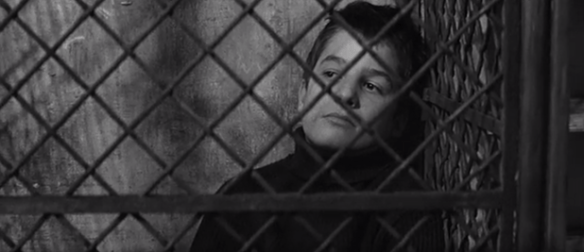
Review: The 400 Blows (1959)

400 blows 1.png

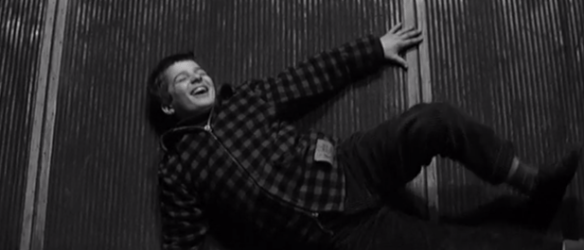
Being a great believer in context,  it was a wonderful thing watching 400 Blows once more because I felt like I knew this man behind the camera so much better and I knew this character Antoine (Jean-Pierre Leaud) even better than he knew himself. After all, he was just coming into his own in this initial film.  I was also aware of some cameos including Francois Truffaut himself, Jean-Pierre Brialy and of course Jeanne Moreau, all important forces in the French New Wave movement.

However, one the most powerful things is the degree of foresight we gain about Antoine Doinel. All the things that make up his life at this juncture in time have repercussions later on that Truffaut continued to examine as he matured. We can see the gears turning as the boy develops as an adolescent. He skips out on class to go to the cinema and the carnival. He purloins a bottle of milk out of thirst, steals little trinkets from the ladies room and finally a typewriter from his father’s work. He receives the ire of his teacher and goes home to the cramped conditions and turbulence of his home life. His mother and step-father are constantly bickering. His mother is having an affair. It’s not a very happy life or a firm foundation for a boy to grow up in. And it shows.

In many of these moments, the autobiographical aspects come to the fore. Before Antoine’s story was simply a depiction of realism but as time goes on it becomes more obvious that Truffaut is being very transparent in showing bits and pieces of his own experiences. What’s striking is that this is hardly a bitter film. Somber and melancholy, yes, but it hardly ever seems to cast blame. It shows the brief moments of reverie along with the pain and that’s why I am a great admirer of Truffaut. He’s a deeply heartfelt and personal filmmaker, no more evident than in The 400 Blows.

400 blows 4.png

Antoine Doinel is a vagrant and pretty dismal kid, getting in all sorts of trouble and yet Truffaut makes us sympathize with him and to an extent we see the director’s point of view too. He’s the one trying to fall asleep while his parents bicker about what to do with him. He runs away from home and relies on the charity of a friend. He’s being locked up in a jail cell on his way to juvenile detention. He talks to a psychologist candidly about his parents never trusting him. All those moments have the power to move.

And the film is so easy to watch, so simple and wonderful and honest and unassuming, it’s almost hard to remember how influential this film was for not only jump-starting the French New Wave but for rejuvenating cinema in general. Hollywood didn’t make movies like this. That’s all I had ever seen for the longest time. But the likes of Truffaut, Godard and even Renoir, De Sica and Rossellini revealed to me that there are numerous ways to make an impassioned cinematic experience.

400 blows 3.png

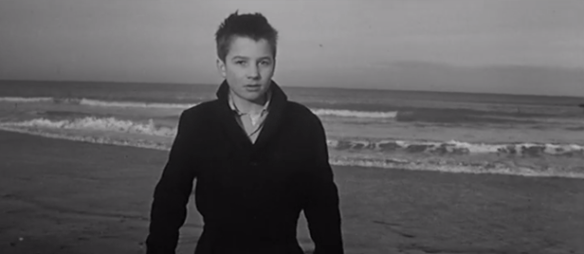
As always, my mind returns to the climatic freeze frame of The 400 Blows. It remains with me and part of its iconic status is undoubtedly due to how it sums up this boy so perfectly. There’s a sadness in the eyes that without saying anything denotes all that we have already seen. It’s the perfect summation of his story thus far and with that look, it’s difficult to forget his hardships–his flaws too. Perhaps it allows us to extend grace to him because we can see firsthand that he’s in dire need of some. He has not been offered much his entire life with true love and affection being traded for punishment and biting remarks. True, his story does not end here but it’s a telling chapter of his life. Arguably the most formative years for the rest of his existence.

Within the storyline, Truffaut includes passing references for his love of the cinema and even suggests his promise with his writing composition though his teacher accuses him of plagiarism. But from these troubled roots came a man who loved movies to an extent that few others could claim. He was passionate both as a critic, champion, and creator.

Thus, it makes perfect sense that this film was dedicated to the memory of Andre Bazin, the noted founder of Cahiers du Cinema. Truffaut undoubtedly owed a tremendous debt to the magazine and its editor but he also elevated it with his own amount of passion. That same passion comes out in The 400 Blows and really all the subsequent films he made before his death. His movies are wonderful because each one shows that he genuinely cares about the material on its own individual merit. That is the kind of director that I want to watch.

5/5 Stars

La Ronde (1950)

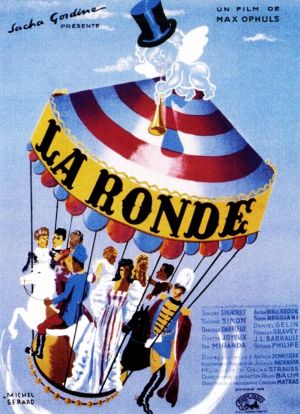
LarondeposterIf you know anything about director Max Ophuls you might realize his preoccupation with the cycling of time and storyline, even in visual terms. He initiates La Ronde with a lengthy opening shot that, of course, involves stairs (one of his trademarks), and the introduction of our narrative by a man who sees the world “in the round.” He brings our story to its proceedings, introducing us to the Vienna of 1900. It’s the age of the waltz and love is in the air — making its rounds. It’s meta in nature and a bit pretentious but do we mind this jaunt? Hardly.
It’s many vignettes of love and romance take us through drawing rooms and bedrooms, past bacchanalian gardens and statues involving a menagerie of figures from prostitutes and soldiers to poets and actresses. By the standards of the 1950s, it’s a highly overt and provocative film — even cheeky. And despite being set in Austria, it undoubtedly brings to mind the Rococo work of the likes of Fragonard or even Watteau’s “Embarkation for Cythera.”

Ophuls seems fascinated with the metaphor of carousels because, in a way, everything turns. Life is constantly of a cyclical nature just as film and the stories it tells always fluctuate from high to low and so on.

When I began my fledgling investigation of world cinema Simone Signoret and Simone Simon were two names that I egregiously intertwined. Now, forced to confront my confusion, I can say definitely that there is a clear distinction in my mind. They stand alone and really this is a film with some of France’s greatest female icons with Danielle Darreiux being another name of note.

However, this is hardly a story about a certain character, but more the themes running through the story and it gives Ophuls the means to exert his artistic mores. His shot lengths indicate just how assured he was in his work — commanding every detail.

When you think he’s going to fall back on a cut and move on, he finds yet another way to keep the shot going. It really is remarkable and it becomes noticeable just how continuous this film is at times. He’s also very much in his element with figures pirouetting on the dance floor. It’s only matched by the elegantly whimsical refrains of the score.

La Ronde actually brought to mind the biblical allusion from Ecclesiastes sung about so iconically by the Byrds. There is a season turn, turn, turn. Except in Ophuls’ case, he seems only interested in the idea of this carousel of romantic encounters. He never actually looks at the inverse of these fluffy tete-a-tetes — what happens when people are alone or their hearts are broken.

It’s very convenient actually, and it allows the film to maintain it’s light, airy quality. For instance, it never looks at the underlining issues that become apparent in a film like A Brief Encounter (1945). Still, I suppose its exquisite elegance and manners are meant to cover up the more base qualities of mankind. In the end, everything goes round and round. Whether or not there is a purpose to it all is for the viewer to decide.

4/5 Stars

Trafic (1971)

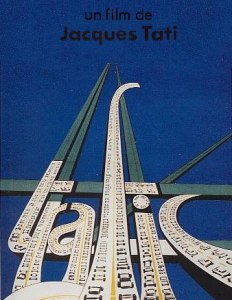
TraficWatching films with French treasure Mr. Hulot (Jacques Tati) is a wonderful experience because, in some respects, it feels like he brings out the child in me. And if history is any indication — I’m not the only one — others feel this sensation too.

It’s not sophisticated humor. The laughs are not dependent on any amount wit or mature understanding, but it’s universal. Everyone, whatever age, language or temperament, can laugh along with Monsieur Hulot.

Once more it’s easy to see his debt to the great silent stars and his use of sound is always impeccable yet still outrageous in the same breath. It accentuates anything on the screen with auditory hyperbole that is absolutely brilliant. Any sound imaginable is amplified in Tati’s memorable everyday comedic symphony of noise.

If you wanted a plot Trafic, as expected, has very little. Mr. Hulot, for a reason not explained to us, is now working for an automobile company named Altra that is preparing for a big car show in Amsterdam. He along with a truck driver named Marcel and Ms. “Public Relations” (American model Maria Kimberly) must weather the roads and every hiccup imaginable to make it to the show on time. She streaking in her bright yellow convertible and they riding in their truck cursed with flat tires and an empty gas tank among other ailments. It’s hardly a spoiler to say that they don’t quite make it there on schedule.

Jacques Tati was always one to playfully nudge at our modern culture obsessed with technology, expedience and, of course, automobiles. However, there’s nothing terribly vindictive about the way he goes about it. In contrast to the images of hustle and bustle and “progress,” there are also a great many that take comfort in the tranquility of farm life or quaint cottages. Everyday people and their mundane lives that, while idiosyncratic, are in no way inconsequential. He is a director who makes us appreciate people more. Mechanics, old couples, even cats, and dogs.

Many viewers undoubtedly will remember the crazy traffic jam with cars careening everywhere, hubcaps and tires rolling every which way and so on. It’s comedic madness. In fact, for numerous reasons, it’s easy to juxtapose Trafic with an earlier French film of a very different sort, Jean-Luc Godard’s political satire Weekend, which has some massive traffic of its own. And Tati creates comparable chaos, mischief and so on but I prefer his method of execution. Because he finds the charm and humor in every situation — even a car accident (with the multitudes simultaneously relieving the cricks in their joints). There’s no spite, cynicism or anything of that sort. He doesn’t feign pretentiousness, choosing instead to remain comically genuine right to the end.

That’s why there’s something so endearing and satisfying about Mr. Hulot. He remains unchanged and unmarred by the world around him. We can count on him to be the same as he ever was — the same hat, the same coat, the same pipe and the same hesitant gate. Maybe his adventures are not the most titillating. Some people admittedly will not like Trafic. It’s either too meandering like Monsieur Hulot’s Holiday or too jumbled compared to the exquisite patchwork ballet that makes up Tati’s earlier masterwork Playtime.

But, no matter, Tati is still a joy for what he brings to the screen, for those who are acquainted with his work and those who are willing to join an ambling adventure full of small nuggets of humor. Here is a film that through inconspicuous nose picking, windshield wipers, and road rage tells us more about humanity than many other more ostentatious films are able to manage. Trafic is certainly worthwhile.

4/5 Stars

Love on the Run (1979)

love on the run 2You can’t just do anything at all and then say ‘forgive me!’ You haven’t changed a bit.” ~ Colette

The prospect of watching Love on the Run saddened me and not for the reasons you might expect. Not because it’s noted as the weakest film in Truffaut’s famed Antoine Doinel series, although that it is. Not because it utilizes a clip show rather like a lazy sitcom as some will undoubtedly note (although this does actually give way to some rather entertaining reminisces as Antoine crosses paths with two old acquaintances). And it’s not even because this is the last film in the series and Truffaut never got around to any more installments before his death in 1983. Though that is sad.

The truly heartbreaking thing about this film is not even the fact that Antoine and Christine (Claude Jade) are getting a divorce although that is at the core of it. It’s that Antoine, who has long been the focal point of these films with his certain brand of charming charisma, really has not changed a great deal.

Time and time again, his superficial relationships with women are explored and time and time again his self-destructive habits hardly seem playfully entertaining but if you want the most honest answer, it’s all rather disheartening.

He has a new girl who we meet in the opening credits. Her name is Sabine. She’s young, radiant, very pretty and works in the local record shop. If we didn’t know any better we could easily make comparisons between her and Christine.

We see that little boy from 400 Blows and even that same young man looking to win the affection of a cute brunette named Collete. However, now a few years down the road, none of that panned out. He’s terribly selfish, undeniably a cad and always trying to say he’s sorry to save face. Sabine says it well when she calls him a pickup artist (You sure have a strange idea about relationships. You seem to only care about the first encounter. Once they’re together it’s all downhill).  

However, if we look again we remember that Doinel’s home life was hardly a prize, schoolmasters were unfeeling and his mother passed away — the only real family he had in the world.
Maybe, love on the run 1Antoine Doinel is a character who thinks only in the cinematic and it is true that he often functions in a bit of a faux-reality. He seems normal but never quite is. He seems charismatic but we are never won over by him completely. Still, we watch the unfoldings of his story rather attentively.
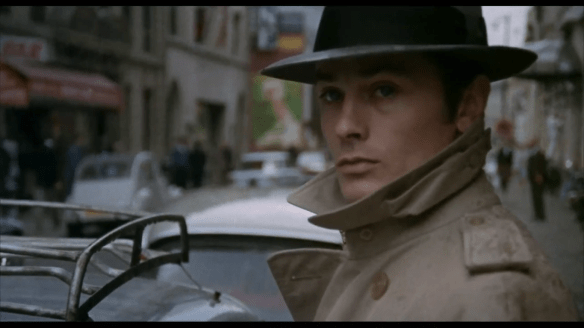
Like all the women who he tiptoed around with, as an audience, we have liked him but never truly loved him — an important distinction to make. And coincidentally, we also see right through him. Perhaps because he’s often too much like us or other times not enough like us. It’s hard to put a finger on which one it is exactly.

We leave the film essentially where it began. Antoine has once more been scolded by his girl and made up. It’s difficult to know quite precisely how to feel about that. Love on the Run is worth its nostalgia, woven in between the most recent moments of Doinel’s life. While his character is trying, he is still strangely compelling. But at this point, it’s hard to know what to do with him. Nevertheless, Francois Truffaut was unparalleled in the continuous narrative he was able to craft — flawed, personal and most certainly memorable.

3.5/5 Stars

Review: Le Samourai (1967)

le samourai 1There is no solitude greater than that of the samurai unless it be that of a tiger in the jungle… perhaps…
It would be easy for some to call Le Samourai flat and pedestrian due to its visual style and even the workings of its plot. All very straightforward with cool tones and characters who barely crack a smile. Emotions are even less common. But that’s disregarding how exquisitely confident it is in its execution. Jean-Pierre Melville is a director who evolved into one of the great forgers of crime films for the very reasons mentioned above.

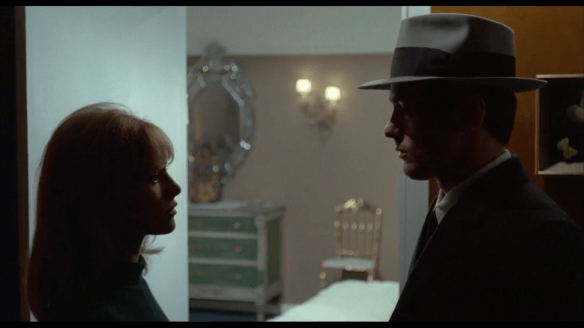
His hero played so iconically by Alain Delon is one of those great film characters who does not need to fill every moment of silence with a witty comeback. In fact, Jef Costello is not one to spitfire witty repartee at all. Instead, he’s calculating, steely-eyed and ridiculously phlegmatic. He fits the corridors of this film like a glove, perfectly suited for the cold exteriors and drab interiors.

We meet him not in some moment of dramatic action, but while he reclines silently on his bed, veiled in shadow, cigarette smoke clouding over him and the chirps of his caged canary piercing through the traffic sounds murmuring outside his window. Although we linger there for a time as the credits roll, it takes a moment to acclimate. If you’re not paying attention, the contours of his body are almost lost to us — an extraordinarily ordinary man. But that’s precisely what he wants you to think.

Meanwhile, he highjacks cars, puts an airtight alibi in place, takes on a hit at a local nightclub with ease and disposes of all evidence without even a hiccup. Veins of ice and nerves of steel give him the perfect physique for a hitman. Top it off with his uniform — a trenchcoat, fedora, and cigarette, bolstered by Delon’s imperious stare and it’s difficult not to be mesmerized by his every movement.

It’s the kind of self-assuredness that allows another character to ask him, What kind of man are you? and no answer is needed — at least not with words — because with every action, every look, he tells us precisely what he is. An aloof assassin of the highest order. Yes, if you want to make the comparison, a samurai.

le samourai 2And though he does call on his lovely girlfriend (Nathalie Delon), who is absolutely devoted to him, as well as making eyes at the nightclub pianist who is the main eyewitness to his hit, Jef for all intent and purposes, is alone. It’s a kind of forced solitude, a self-made exile created by his trade. After he goes through with the hit, he must shut himself off more and more. That is his job.
So he goes to the police station to be questioned. Goes through the lineup. Stairs down the witnesses and goes home. Not to his girl but the dismal flat with his mournful canary. His contractors are out to get him, the cops are looking to catch him in his fabricated alibi and still, Costello maintains his composure as is his habit. He’s unphased by bugs or tails and when he has a gun to his face he never blubbers, only proceeds with beating up his assailant when the opportunity arises.

And although there is never much of overt romance in Le Samourai — Jef never shows any kind of passion — there are still glimpses that he cares about people. Perhaps he holds onto chivalry as part of his moral code. Even after staying away from his girlfriend for many days he comes back to her not expectant of anything but asking her if she’s alright. Pragmatic but concerned. Distant but still invested.

The same can be said for the film’s tremendous finale. Le Samourai is not a film of gratuitous killing but pointed moments of violence that are careful acts of deliberation. Costello kills two people and the film ends with his third and final hit. But it is in these tense moments that we gain yet another insight into the moral makeup of a world-class hitman.

Melville was obviously an admirer of American gangster films but what makes his vision of the genre so fantastic is the demeanor of his characters. Again, some might say boring, but that is probably a predilection of those raised on Hollywood action. There is no aura left. No shred of intrigue or tension left to be examined. Le Samourai is a crime thriller that performs differently, its pacing is entrancing and far from being tepid, it elevates the hitman to enduringly riveting heights to the last bullet fired. It doesn’t hurt that Jef Costello just might be the coolest action hero of all time.

5/5 Stars

Mouchette (1967)

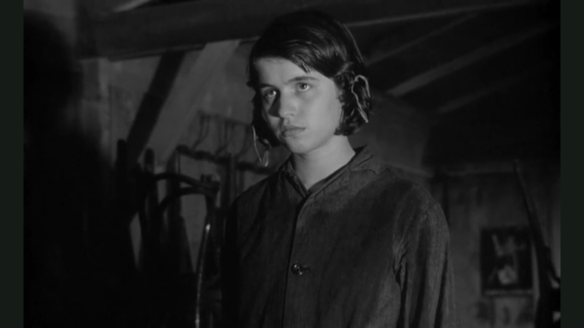
mouchette 1Robert Bresson’s film is an extraordinary, melancholy tale of adolescence and as is his customs he tells his story with an assured, no-frills approach that is nevertheless deeply impactful.

There is one moment early on that sets the tone for the entire story to follow. Mouchette stands in her class as the line of young girls around her sing a song in harmony with one another. She is the only one not involved, standing sullenly as her headmistress passes behind her.

In front of the whole class, her face is dragged down to the piano keys and she is forced to sing aloud, her pitch nowhere near the mark. She goes back in line with tears in her eyes as the girls around laugh at her sheer pitifulness. But as an audience, it makes our hearts twinge with pain.

She is the girl who looks out of place at a carnival, her clothes frayed and clogs constantly clomping. She is the girl who doesn’t have enough money to pay for a ride apart from charity. She is the girl who gets hit by bumpers cars. She is the girl looking for a friend, but none can be found — the school girls having nothing to do with her and her father scolding her if she ever made eyes at a boy.

She is forced to be mother, housekeeper, and caretaker as her mother lies in bed deathly ill and her swaddled baby brother cries helplessly night and day. When her father comes home he’s of no use and when he’s out he’s quick to drink.

So in many ways, Mouchette understandably finds life unbearable. She never says that outrightly. In fact, I doubt a character in a Bresson film would say something like that because it wouldn’t feel real. It wouldn’t fit his MO. Still, every moment her head is tilted morosely or she trudges down a street corner dejectedly nothing else must be said. That’s why she slinks off into the surrounding forest and countryside to get away from all that weighs on her.

And even there she cannot find complete relief. One such night during an escapade she witnesses what looks to be a fight between two men from town who have feelings for the same woman. As they are drunk in the rocky depths of a stream, such a confrontation does not bode well. When both men go tumbling down and only one gets up, Mouchette believes she is privy to a murder. The perpetrator Arsene sees her and coalesces her to keep a lie for him, making sure she doesn’t say anything. But she’s also not safe in his presence and so she eventually flees into the night.

In the waning moments of the film, what we expected from the outset comes to fruition and Mouchette loses her mother, the only person who seemed to deeply care for her with reciprocated love. And as she wanders through town to retrieve milk for her brother, she turns off anyone and everyone who makes any pretense to help her. Of course, their help is always a backhanded or pious type of charity and in the same breath, Mouchette is not about to be thankful for them. It’s a self-perpetuating cycle of sorts. All parties are to blame.

In the end, she seems to be at her happiest rolling down the grassy hills away from any sort of human sorrow or interaction. It’s a sorry existence highlighted by very few silver linings. Bresson’s film hits deep with numerous bitter notes, offering up a life that is wounded and broken. Mouchette’s tragedy is great but perhaps the most important question to ask is where does her solace come from?

It’s interesting how Bresson often focuses on bodies in action, at times it almost feels like the characters are faceless. We know them, we see them but what they do and how they move speaks volumes about who they are. Posture, actions, desires, these are the things that define characters far more than even the words that cross their lips.

4/5 Stars

La Belle et la Bete (1946)

La_Belle_et_la_Bête_film.jpgChildren believe what we tell them. They have complete faith in us. They believe that a rose plucked from a garden can plunge a family into conflict. They believe that the hands of a human beast will smoke when he slays a victim, and that this will cause him shame when a young maiden takes up residence in his home. They believe a thousand other simple things. – Jean Cocteau 

From the outset director Jean Cocteau entreats his audience to have a “childlike sympathy” and as a viewer, you do well to heed his advice. Because, that posture is exactly what becomes the guiding force behind this entire fairy tale that he has developed, in some ways so planted in reality and in others very much the purest of fantasy stories.

Though simple, the film’s special effects are surprisingly mesmerizing with magically opening doors, mirrors and human columns spewing smoke. You half expect to see strings or some other obvious cue to signal that this is all a facade, all hokey tricks, but a moment like that is never obvious. The film maintains much of its magic even after 70 years.

The Beast’s castle shines with the opulence of goblets and jewel, while the farmhouse of Belle and her family is humble, characterized after the artistic works of the great Flemish master Jan Vermeer.The atmosphere is equally gripping and Cocteau stages some of his shots in invariably interesting ways interrupting the plane of view with candles, smoke and anything else that suits his fancy. And that’s the beautiful things about fairy tales. You are not tied down to any sort of logic or narrative convention. His film is free-flowing, pacing itself as it sees fit. Even it’s ending is enduringly perplexing, hardly as straightforward as a Disney adaptation, but there is still immense power in that.

There are also an equal number of familiar reference points like evil sisters, who are blinded by their own avarice and then, of course, their humble sister, Belle, played so exquisitely pure by Josette Day. Her face beams with a radiance not often equaled and whether clothed in rags or the finest robes, it’s her humble elegance that shines through.

But it’s Jean Marais’s performance that is perhaps even more noteworthy if that were possible as he takes on a dual role. The first is more obvious, as Avenot, the man that Belle secretly loves, but it looks like it will never be due to their circumstances. However, Marais also takes on the monumental role of the beast and hidden behind tireless amounts of makeup and fur, it’s easy to lose him in the role. What would have been lost if he was animated or computer-generated, is betrayed in how he carries himself and even how he talks at points. Certainly, he is a creature prone to barbarism and violence, but innate in a performance such as this are those human characteristics. Thus, the perfect fairy-tale ending that we all know by now — probably thanks to Disney — is also a striking reminder. Yes, the fate of the prince of becoming a beast was due to spells and incantations, but we can just as easily be beasts now.

Without trying to go too far with the idea, it’s easy to recognize moments when we act almost inhuman. In fact, that’s the constant struggle of mankind, fighting against our more animalistic desires to do what we actually perceive to be upright. So you see, the Beast is not just a fairy story or the Beast is not simply someone else acting out in a horrid way, but the Beast can just as easily be you and me. In Cocteau’s film, a lot is made of the mystical mirror. Belle looks absolutely divine under its gaze but her sisters show up as an old woman and then a cackling monkey. If each one of us was to peer into that same mirror what would we show up as? What characterizes our lives? Beauty or bestiality? If this story is any indication, at least there is a chance at redemption. But that’s enough of that. La Belle et la Bete is a sublime fantasy deserving airtime alongside Disney’s more well-known adaptation.

4.5/5 Stars

Weekend (1967)

weekend1One of Jean-Luc Godard’s strengths is his capability of feigning pretentiousness, while still simultaneously articulating humor. His film opens with its first of many inter-titles, “A film adrift in the cosmos,” followed by the equally poignant “A film found in a dump.”

Our protagonists Roland (Jean Yanne) and Corrinne (Mireille Darc) are hardly protagonists at all, but curmudgeon bourgeoisie couple both caught up in affairs and preparing to out into the country in order to acquire Corinne’s rightful inheritance from her dying father. But this is never a character study and the actual arrival at the home of her parents is of little consequence. It’s another occurrence in a long string of events that Godard plays at with acerbic wit.

We are constantly reminded that this is an age of sexual revolution and political unrest–the class struggle against the tyranny of the powers that. In foreshadowing the events of the 68ers or even putting a finger to the social unrest, Godard is not alone. It’s how he does it that should be of note.

Weekend quickly becomes a discordant cacophony of sound and image that immaculately illustrates the dissonance of the decade.  Rather like a Tati film, Godard uses color prolifically, but it’s hardly as innocent as the former. The colors show the pools of blood and piles of wreckage scattered across the land–In one instance inane and another horrifying.

It’s the emblematic film of the modern age of noise pollution where Godard practically tortures us with the sound of car horns. Constantly adding to the general din. Not to mention the universal, ubiquitous road rage that overtakes everyone and leads to heavy carnage. Some seen, some unseen. Meanwhile, actors or real-life historical figures–the distinction is difficult–including St. Just (Jean-Pierre Leaud) wander the wasteland spouting off inconsequential rubbish in anachronistic garb.

weekend2Conflagrations engulf cars and human bodies while above the din comes the piercing screams of a woman bemoaning the loss of her Hermes handbag. We cannot take this anyway but humorous because it once again is yet another moment of utter insanity.
The French countryside becomes the perfect locale for an apocalypse mixed with a modern coup de’tait. There’s a call to arms for guerrilla tactics–a new French Revolution. Still, Roland and Corinne frantically hurtle towards their destination of Oinville. Their actions there are far from unexpected highlighting the baseness running through the entire film.

Once again it feels of little consequence that the pair is captured by a band of cannibalistic, free-loving revolutionaries. Cracking eggs on lifeless bodies and painting on naked ones. It’s pretty strange. Godard slips in a bit of love of the cinema as their call names include Battleship Potemkin, The Searchers, and Johnny Guitar. But there’s little point to it, only another pointless attribute in this narrative of volatile absurdity. But in that respect, Godard has hit his point home, by spurning convention as always and supercharging his film with political chops. It drags a bit in the second half, but he salvages it with the utter insanity of it all.

Furthermore, Godard and cinematographer Raoul Coutard are absolutely fabulous at utilization tracking shots to the nth degree in several instances, namely with the initial traffic jam extending for what feels like eons and then camera cycling through the town as the music plays in the background and our two travelers wait for their next ride. Let’s not forget the final moments of Weekend either, where Corinne has been transformed into a fellow commune member feasting on a scrumptious piece of meat with a fellow hippie. Her husband was not so lucky. There’s little to no need to say what happened to him.

4/5 Stars

A Day in the Country (1936)

adayinthe1It’s only 40 minutes — hardly a feature film and more of a featurette, but Jean Renoir’s truncated work, A Day in the Country, is nonetheless still worth the time. Admittedly, I still have yet to venture to France and I hope to do that someday soon, but this film propagates marvelous visions of the countryside that resonate with all of us no matter where we hail from. Those quiet jaunts out in nature. Sunny days perfectly suited for a lazy afternoon picnic. Peacefully gliding down the river as men fish on the bank contentedly.
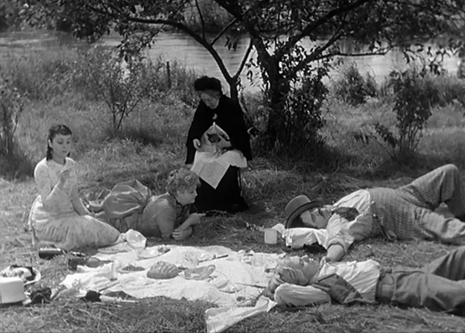
Our little vignette opens at a calm seaside fishing getaway where a group of Parisians journeyed for a little relaxation away from the city limits. Among their ranks are the worldly but personable Monsieur Dufour and his bubbly wife. They are accompanied on the adventure by their pleasant daughter Henriette and the peculiar shop assistant Rodolphe.  Their arrival in the country is full of gaiety and playful interludes reminiscent of the decadently sensuous works of Rococo artists Watteau and Fragonard, most specifically The Swing.

Two young men named Henri and Rodolphe spy the recently arrived female travelers and are immediately intrigued. As veteran fishermen, they’re prepared to set out their bait,  cast their lines, and hook their catches for an afternoon of harmless enough fun.

adayinthe2As always these characters set up Renoir’s juxtaposition of luscious extravagance with the earthier lifestyle of the lower classes. However, there is a geniality pulsing through this film, with Mrs. Dufour exclaiming how polite these young men are–they must be of good stock, obviously not tradesmen. Even Mr. Dufour is a good-natured old boy who gets fed up with the elderly grandmother, but he willingly takes the boys charity and advice when it comes to the prime fishing holes.

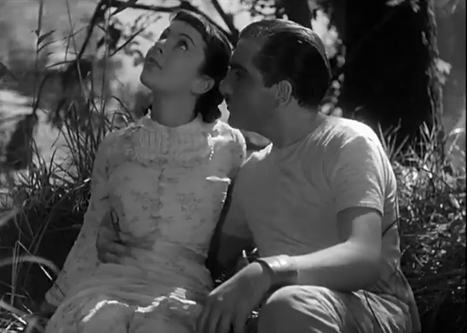
There is only one point of true drama, in the melodramatic sense of the word, and that’s when Henri takes Henriette to a secluded to observe a bird up in the treetops and proceeds to try and kiss her amorously. It’s a quick sequence, initially met with rebuke and finally accepted in a moment that will leave an indelible mark on both their lives.

It’s the quintessential wistful love that can never be that we’ve seen countless times in film and television series. Time passes and  Henriette comes back with the image of that place and Henri with it, emblazoned on her mind. They reunite, but again, this time, it cannot be either because Henriette is now married. She is spoken for and there’s nothing that Henri can logically do about it. That’s where our tale ends. Certainly, there could have been more, but we don’t necessarily need anything.

adayinthe3We get the essence of what is there and we can still thoroughly enjoy Renoir’s composition. His is a fascination in naturalistic beauty where he nevertheless stages his narrative to unfold in time. But really this mise-en-scene created by the woods, and meadows, trees, and rivers really function as another character altogether. And when all the players interact it truly not only elicits tremendous joy but an appreciation for Renoir’s so-called Poetic Realism. Whether he’s capturing a woman swinging jubilantly on a swing or framing a shot within the trees, we cannot help but tip our hat to his artistic vision. If his father Auguste was one of the great painters of the impressionist era, then Jean was certainly one of the most prodigious filmmakers of his generation, crafting his own pieces of impressionistic realism. In fact, with father and son, you can see exactly how art forms can overlap on canvas and celluloid. They truly share a fascination in some of the same subjects. Universal things like nature and human figures interacting in the expanses of such environments. It’s beautiful really, even in its pure simplicity.

4.5/5 Stars