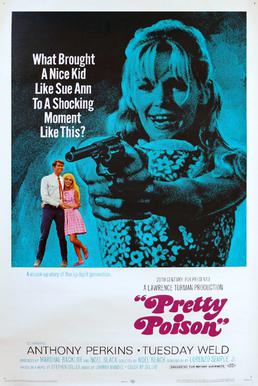
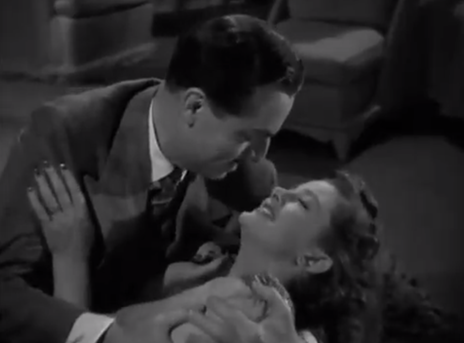
Pretty Poison (1968)

Prettypoison1.jpgBoy. What a week. I met you on Monday, fell in love with you on Tuesday, Wednesday I was unfaithful, Thursday we killed a guy together. How about that for a crazy week, Sue Ann?” – Anthony Perkins as Dennis Pitt
Director Noel Black himself described the story as “a Walter Mitty type who comes up against a teenybopper Lady Macbeth.” It seems like the perfect shorthand to get a line on the characters and the actors more than rise to the challenge.

By all accounts,  Black, a recent UCLA film grad, wasn’t much of a director, at least when it came to working with actors. But he could sure edit a film together. The cutting helps to accentuate this trippy world with the spliced together images of Anthony Perkins’ unstable psyche.

After securing his release from a mental institution, Dennis (Perkins) is continually fixated on all sorts of fantasies — playing games full of cops and robbers and CIA agents. He keeps surveillance on a pretty blonde majorette (Tuesday Weld) drilling nearby and unwittingly meets her at a local hot dog stand. They make contact and his nonchalant cool captures her imagination.

We are always wondering if they actually take each other seriously. But the beauty of the script is how they never seem to question one another. They just go with it. What seems utterly ludicrous to us as an audience is so very believable to them.

It relies on Anthony Perkins being able to pull it off and he gets it spot-on with every line coming out of his mouth with total conviction. He makes us believe he’s serious with every bit of fanciful conspiracy he matter-of-factly dreams up.  At his core is this benign human being. We get a sense he wouldn’t hurt a fly. Of course, watching Psycho (1960) might give us a different inclination. And that’s part of the issue.

Perkins’ performance can never be seen outside of the shadow of his greatest triumph and simultaneously his most constricting role. Because everything he does is informed by the part of Norman Bates. If we were able to remove this distraction, his part in Pretty Poison would feel much the same as Tuesday Weld’s does. Because in films like Friendly Persuasion he was the shy, All-American boy. But conventions are getting subverted left and right.

They both make us start believing in their reality. They rendezvous in “makeout valley” only to get ousted by some cops and Dennis tries to hold down his job at the plant, despite constantly being distracted. He professes that aliens are trying to infiltrate the water supply and then very reluctantly stakes out Sue Ann’s home to spy on the mother’s boyfriend.

They are swimming in the invigorating paranoia of their own little world and the drugged-out love romp they create for themselves. Each reverie-like frame bathed in sunbeams and an ever refracting prism of colors. For these very reasons, Pretty Poison could play as a companion film to The Shooting (1967) – another acid singed genre picture.

But at some point, it begins to turn on its head. Because Dennis is the one we suspect will become dangerous due to his erratic behavior. It seems all too inevitable as his parole officer (John Randolph) continues to warn him. Yet the killer joke of the whole movie is how it plays out for real.

This pretty blonde in the high school honor roll turns out to be a femme fatale sipping Pepsi. What are the chances? A little friendly neighborhood murder is what’s on the docket one evening. She gets an emotional high from her adventures with Dennis only to take them to an even deadlier end. The film is not meant to make conventional sense. It never does.

Instead, it operates in alternate realities, delusions of grandeur mixed with sociopathic behavior. It is an instance of a story having two edges, both the terrifying and darkly funny. If there was ever an obvious precursor to Gone Girl (2014), Pretty Poison seems like an obvious jumping off point.

Unfortunately, it was the casualty of absolutely horrific timing. Not only did it not get the distribution it needed but the year of 1968 was punctuated by the assassinations of both MLK and RFK. A film with such content was probably not on the top of the public’s watch list.

For the actors as well there were unfortunate circumstances. Since it was Perkins’ first highly visible American film since Pyscho (1960), his typecasting was again solidified because the shades of an unhinged Norman Bates type is all people seemed to focus on. Tuesday Weld hated the entire process and considered it one of if not the worst of her performances. Though her rapport with Black might have been nonexistent, somehow an evocative performance of contradictions still comes through to compliment her costar.

It’s easy to see where the roots of a cult following might grab hold of such an idiosyncratic picture as this. It fits into the love-on-the-run canon with the likes of Bonnie Clyde (Weld was offered the lead initially) and then Badlands (1973) but Pretty Poison is an even smaller scale story never breaking out of a small town scope.

Its neuroticism and quirks are incubated in such a way to deliver a tone indicative of late 60s disillusionment within the youth culture. Weld might be the finest example as she along with a select few represented the prim and proper girl-next-door sensibilities of the 1950s. Pretty Poison blows the lid off the past and in its own unassuming way it offers a warped portrait of where the world might be heading. If the right person dusts off this offbeat genre flick, it casts a certain off-the-wall spell to capture the imagination.

3.5/5 Stars

Shanghai Gesture (1941)

shanghai gesture 1.png

Josef Von Sternberg always seemed preoccupied with telling stories involving places that he indubitably knew little about but therein lies the allure. He could develop the Moroccos, the Shanghais, the Macaos into places imbued with far more meaning than they probably ever could have in real life.

Because he is hardly working in reality but with the inventions of his own mind and he was a master when it came to setting the scene and texturing atmospherics. He was a world maker and one of the finest craftsmen in Hollywood exoticism.

The opening prologue juxtaposes the seedy underworld that we are about to witness to the last remnants of the Tower of Babel where Man coalesced in his indiscretions before being scattered over the ends of the earth. It proves to be a rather odd analogy as the film revolves around a velodrome of gambling — a pit of worldly devices that the camera slowly descends on.

Visually it’s the inverse of babel as our eye is led to sink into this world of Mother Gin Sling’s establishment, joining the ranks of Rick’s Cafe, the Cantina, and countless others in the pantheon of dubious melting pots of humanity captured on the screen.

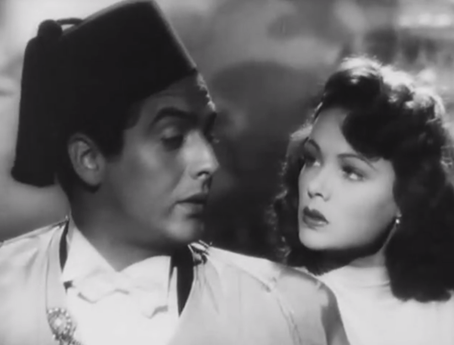
We meet a fair many of the individuals who play a small part in her operation including Dr. Omar (Victor Mature) and Poppy Smith (Gene Tierney), a young provocative beauty looking for a good time and a glimpse of the notorious proprietor.  Then our friendly neighborhood dragon lady (Ona Munson) makes an appearance and things are in full swing.

The kind Doctor easily distracted by an attractive young woman, lets himself get wrapped up with Poppy while still sharing drinks with Ms. Dixie Pomeroy. But this is only a minor spat.

The main problem is Mother Gin Sling’s who has been ordered to relinquish her property and move her establishment to the Chinese sector which is far less profitable. But being the conniving magnate that she is, she’s not about to go down without a fight before the New Year.

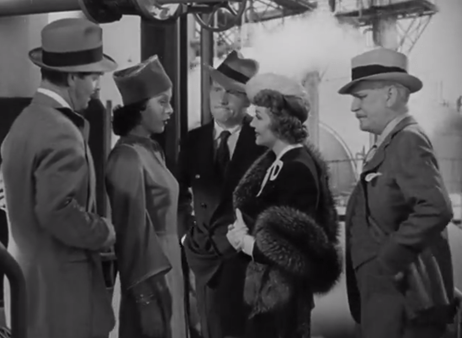
She will host a little dinner party inviting many prominent guests including Sir Guy Charteris (Walter Huston). All of this feels fairly straightforward and mundane though there is an obvious sense that dark secrets are being veiled in shadows to be revealed at the most advantageous moment.

Though it never truly grips us with a substantial climax, the film’s laurels rest mostly on its setting and the breadth of its character reservoir. It always makes me sad to see Marcel Dalio relegated to a roulette man following the work he commanded in the films of Jean Renoir. Meanwhile, Eric Blore always delights me even in his smallest, most insignificant appearances. In this picture, he plays the Bookkeeper. There’s not much to be said about his cruciality to the plot but he’s delightful all the same.

The feisty Phyllis Brooks delivers an acerbic and spirited performance as the chorus girl that comes with a lot of panache even if it feels so at odds with the world she has fallen into. Perhaps that’s the point.

But rather remarkably her screen presence is only surpassed by Gene Tierney in a seemingly uncharacteristic role — though I admit that the assertion is made with a certain degree of foresight glancing over the extent of her career.

In Laura (1944),  Tierney played a character who was a femme fatale without ever trying to be — men simply got drawn under her spell but in Shanghai Gesture, there’s a markedly different glint in her eye. It’s probably the same glint that would make her so deliciously evil in Leave Her to Heaven (1945). But no matter, she’s a conceited and ungrateful woman with a compulsive nature for the roulette wheel. Thus, her main companion is not Dr. Omar but gambler’s fallacy.

While there are some enjoyable performances, the aforementioned providing perfect specimens, the holes or inadequacies of the cast in certain areas is also an obvious weak point. Yellowface and other types of whitewashing are not just a matter of bad taste they simply take the world of the film and make it feel a little bit hokey when you think of the alternatives.

It really is a shame that at the very least Anna May Wong couldn’t have donned the role of Mother Gin Sling, especially because she appeared prominently in Shanghai Express (1932). Some might consider this as a spiritual sequel to von Sternberg’s earlier film barring the absence of two of its finest assets, namely Marlene Dietrich and Wong.

True, once again even if she was cast, there could be another digression on perpetuating negative stereotypes but if you don’t even have a part, to begin with, that’s a whole different problem. No disrespect to Ona Munson whatsoever but she seems woefully miscast. Anna May Wong would have at least been a step in the right direction.

There’s also the issue of the Hays Code which called for a markedly different script and numerous rewrites. Much of the content changes were for its earthier more debauched aspects, but another crucial change was Dr. Omar replacing a character named Prince Oshima.

Instead of the plastic piece of eye candy Victor Mature, we could have had someone maybe a little more authentic like a Keye Luke, Philip Ahn, or Richard Loo. And I’m not being very discriminating about acting styles just the fact that these men are actually Asian (not even Japanese) and they had some prominence in Hollywood. Just not enough to wind up in a film such as this — set in Asia — though completely enveloped in Hollywood’s own distillation of reality. Not even von Sternberg could save the film in that capacity with his production values. Still, fezzes are cool. It’s an undisputed fact. But if I had to make a personal preference I would take Greenstreet in Casablanca (1942) to Victor Mature here.

3.5/5 Stars

They Won’t Believe Me (1947)

they won't believe me.png

We open in a courtroom and with a flashback but what’s stunning is that the man relating the information is on the witness stand and also the defendant in a murder trial. So much hangs in the balance of the perspective he’s about to disclose and that’s how the picture nabs us. Often there’s no import to the use of voiceover. It’s only a stylistic choice or a bit of lazy storytelling utilized without a great deal of forethought. This testimony actually matters.

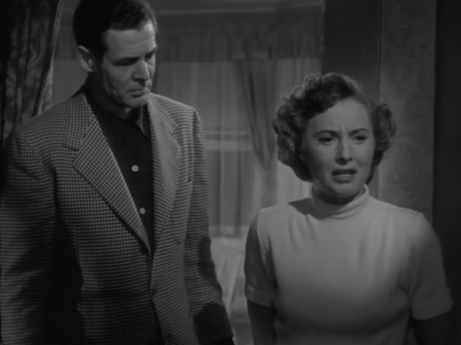
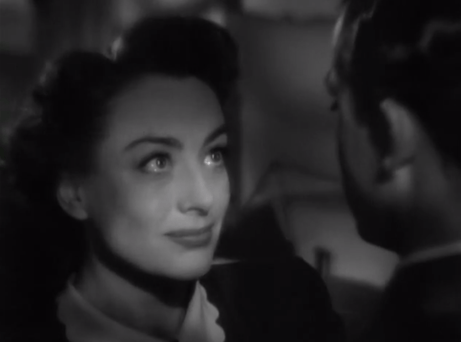
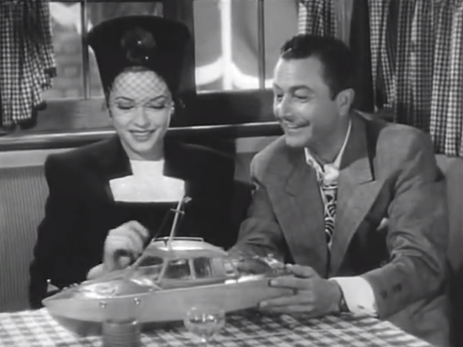
The man in question is one Larry Ballentine (Robert Young). His Saturday afternoons most recently have been spent in the company of his “Skipper” Janice Bell (Jane Greer) and their relationship is full of good humor. You can see it on their faces that they enjoy each other’s company tremendously. But he has a wife of 5 years. It’s the old story. He’s only realizing now when another woman comes into the picture that he never really loved Helen (Rita Johnson), marrying her instead for her healthy endowment. She’s quite rich.

We can discern already a tale of adultery is in the works as Larry plans to break the news to his wife and leave with Janice for Montreal though the other woman wants no part of being a homewrecker. Still, Helen loves him dearly and tries to do everything to salvage their marriage so Larry relents and vows to stay with her. He ditches Janice without even a word of goodbye.

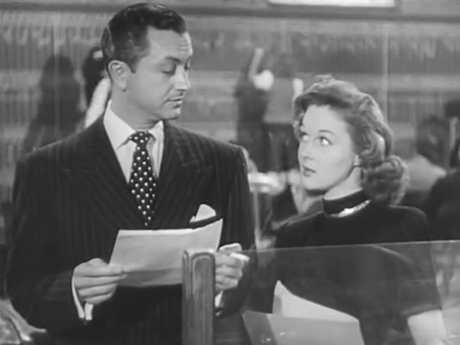
But he’s a man with a pathological problem and although his wife has set him up with a cushy job, he’s already up to his philandering ways again. One day his alluring secretary (Susan Hayward) saves his neck with the boss and starts to flirt with him. It begins again. Secluded cafes. Hidden spots — a game of “hide and seek with fate” as Larry so aptly puts it. He’s hardly phased by Virna’s admission to being a gold digger and while Helen vows never to divorce him, he plans to clean out their joint checking account and run off with Virna.

they won't believe me 2.png

Up to this point, They Won’t Believe Me is an engaging albeit straightforward tale of infidelity but then it goes wildly out of control as Larry’s life careens off the tracks. He leaves his wife a note with no forwarding address as he goes off with his latest gal toward fateful consequences. Later, he winds up meeting an understandably aloof Janice again in Jamaica of all places. He is clearing his head. It’s unclear how she got there. But it’s yet another prime example, to evoke Detour (1945), of how so often fate can put the finger on you. There’s no chance of getting away from it.

There’s also the sense this is a picture and a version of film noir that is akin to the common everyday circumstances of James M. Cain’s crime novels. But this is spun in such a way where we still have empathy for our perpetrator. The same can hardly be said of Double Indemnity (1944) or The Postman Always Rings Twice (1946).

However, the moral ambiguity is still very much apparent to the final moment when an explosive action twists up the narrative threads in such a way that’s meant to evoke some form of cognitive dissonance. How are we suppose to respond to it all?

Because the film’s title is almost beside the point. It’s one of those lurid melodramatic billboard toppers meant to make you look up and take notice. But as per usual, it doesn’t actually get to the core themes of the film nor does it really matter. Whether or not he is believed is an arbitrary issue. Larry might as well have been a killer. This is the quintessential role (aside from The Mortal Storm) if you are looking for something to subvert your view of Robert Young as the world’s perfect father. Here he’s the perfect cad.

They Won’t Believe Me also deserves note for its producer Joan Harrison who began as Alfred Hitchcock’s secretary and eventual co-screenwriter before she became one of the pioneering female producers in Hollywood and a great one at that.

This picture can be added to an illustrious list of noirs including The Phantom Lady (1943) and Ride The Pink Horse (1947). Perhaps her influence is most obviously felt in the fact that our female characters have a rather refreshing resonance. Though they might be unfairly used and manipulated there’s a certain traction to the roles that give them an extra dimension often lacking in other works. Each performance adds something of value to the picture.

3.5/5 Stars

Note: The reissued version of They Won’t Believe Me put out in 1957 was cut down to 80 minutes. 

Love Crazy (1941)

love crazy 1.png

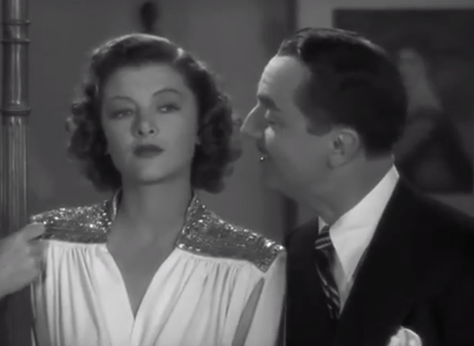
Love Crazy puts William Powell and Myrna Loy in their wheelhouse as the lithe and sprightly romantic partners placed at the center of this screwball comedy.  Steve Ireland (Powell) is in a terribly good mood getting home in his taxi singing ditties as he makes his way up to surprise his wife Susan on their wedding anniversary.

All of which is an encouraging change of pace because Hollywood often made the nagging of marriage look like a real ball and chain. For once that’s not the case. They want a romantic second honeymoon full of dancing, escapades, and a dinner served backward. It’s the fact that he can never get enough time with his wife to suit either of them. Well, there you have the film in a nutshell anyway.

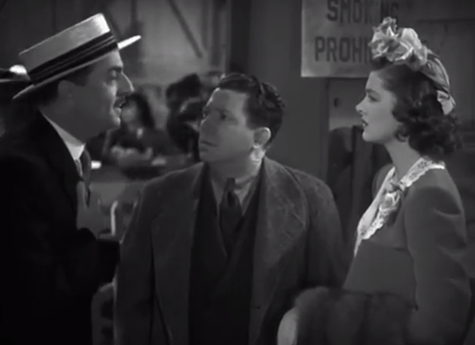
Except storytelling 101 tips us off that the film will have to begin swinging like a pendulum in such a way that both our lovebirds in this connubial comedy will no longer be so inseparable. The main instigators prove to be his overbearing mother-in-law who inserts herself into all their plans. The other is a former flame, Gail Patrick at the most delightful I’ve never known her to be, who playfully cajoles him to have some fun. She’s married but acts as if she’s still single and ready to mingle.

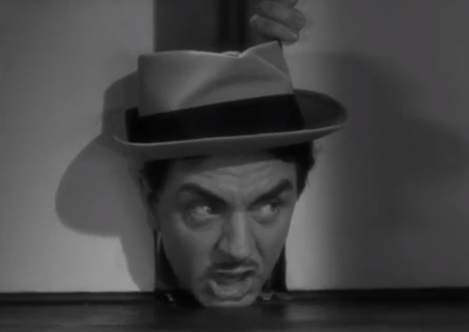
You would think he already had more excitement than he could take getting trapped in the elevator shaft with this frisky female and the elevator boy (Elisha Cook Jr.). Proving I’m no comic snob, I heartily enjoyed watching Powell’s head get clunked around. It’s a resoundingly hilarious image.

love crazy 2

However, he forgot about who was waiting for him back home. It’s the lesser of two evils to sneak out for a drink with Isobel and while his wife has to step out he uses his worst possible lifeline to get away from his aggravating mother-in-law. It doesn’t take too much for the root of doubt to sneak up and it only gets worse when Ward Willoughby (Jack Carson) is introduced as a studly archer in an undershirt. What else? Now both spouses have someone to be jealous of.

It hearkens back to the days where the sitcom hadn’t been invented yet because we didn’t have TV so instead, there were films like this which function around all the most cringe-worthy bits of comedic irony, namely mistaken identity and all sorts of misunderstandings. But like its predecessor from the year prior, I Love You Again, the steam slowly begins to evaporate off about midway through.

Because the main subplot becomes the whole plot in a way that provides some gags but on the whole feels tired and worn out. I want to see Powell and Loy together or at least more of Patrick and Carson who actually bring a lot of comedic chops to the picture. In fact, one of the more hilarious wrinkles involves Powell getting the other man interned at the sanitarium only to have him escape later. But it means very little to the integrity of the story. That’s part of what makes it so enjoyable.

Otherwise, Powell plays up his insanity to string along his wife so she can’t divorce him. His main showcase is at a party where he emancipates a fleet of hats trying to play up his looney side, followed thereafter by a string of other coincidental mishaps. His wife knows it’s a game but the man he’s christened “General Electric Whiskers,” who he met at the party, is actually a doctor who thinks he’s very sick indeed.

This all feels like fairly uninteresting fluff. Meanwhile, the film’s finale relies on another bout of concealed identity but to its credit, it circles back on the things that made it laudable before, entering back into the apartment complex. There the chaos of all those individuals from earlier is heightened in close proximity with a supposed crazy man on the loose and the police after him. They are aided by Willoughby and Steve is helped first by Isobel and then his wife.

But the crowning piece of comedy has to do with Powell’s ultimate masquerade as he even sacrifices his beloved pencil-thin mustache for the sake of it all. While not particularly inspired by today’s standards, Love Crazy boasts Powell and Loy in as fine a form as ever. That is enough to enjoy the picture even in its middling moments.

3.5/5 Stars

I Love You Again (1940)

i love you again 1.png

The film’s plotline can be summed up by amnesia. A no-fun businessman named Larry Wilson who drinks nothing harder than grape juice is conked on the head while saving a drunk who went overboard. Poof! Just like that Larry is no longer and he becomes his presumed former self — the suave alter ego — George Carey. If you’re willing to buy into the premise and not ask too many clarifying questions, it’s quite easy to enjoy the inevitable wacky ride ahead of us.

I even got the inkling that it was going to be a funnier version of Random Harvest (1942). Really it’s part of that esteemed screwball subset — the comedy of remarriage. Carey heads back home with his newfound pal and fellow grifter Doc (Frank McHugh) to scope out his past life and do his best to be the man he is supposed to be with humorous complications. You see they don’t realize he’s a married man until his wife comes to meet them at the gangplank. Well, actually he’s a soon to be a divorced man. Hence the marital conflict perfectly positioned for ensuing comedic fodder.

The main wrinkle and ultimately what makes it so different is that Powell and Loy are at separate poles in this film by necessity. All throughout The Thin Man pictures, they’re in perfect cadence and that’s what makes their chemistry and the onscreen marriage work.

Here Powell is a charming man with a twinkle in his eye like always — but his wife is expecting the same boring schmuck she married all those years before. She’s coming at this man from a different point of view and boy is she surprised with what she gets. In one way, annoyed because he makes it infinitely more difficult for her to let him go but then thankful because he is the precise man she always dreamed was right in front of her.

i love you again 2.png

In this way, I Love You Again is actually a fairly personable romance beyond its simple roots in screwball comedy. There’s almost a bit of depth there if we dare admit it but of course, that doesn’t take away from the underlining laughs most especially offered up by Powell.

He’s not opposed to making a fool of himself by dancing all by his lonesome until his wife saves his self-respect. And he plants a kiss on her that all but broke the world record in the sleepy town of Haversville. But she’s not going to go down without a fight and in one particular squabble he gets scrambled eggs all over his face (and on top of his head). Her current beau is an idiotically annoying bloke in his own right who is made for antagonizing. They always are.

If William Powell fly fishing in Libeled Lady (1936) was one of the defining comic images of his career than perhaps its equal is found in the confines of this film where he dons a boy scout uniform from his past life. Because he’s a woodsman of some repute who has quite the following with newspaper articles being penned about him and little tykes (AKA Alfalfa) being discouraged by how difficult he is to track. I feel that I saw some of these images years later in another intrepid yet bumbling outdoorsman, Barney Fife.

The moments exuding entertainment appeal outpace the rest including Powell’s constant cooing impression of a lovebird but nevertheless, it does drag in segments after a fairly interesting setup. Extended boy scouting sequences and spying out the old stomping grounds aren’t all bad though.

One could say that it’s even necessary as we watch the malleable relationship between Powell and Loy morph into something new. Everything else serves this singular purpose. It’s really what you wait for in a comedy of remarriage as the wistful regrets and longings seep in only to get replaced by happy expectancy of what is yet to come. The future is made sweet and those truths remain in I Love You Again.

3.5/5 Stars

Boom Town (1940)

boom town 6.png

Clark Gable was anxious to do a movie about oil — wildcatters as they call ’em — because his father had been an oil man. Of course, MGM was looking to put him in such a picture too and when a certain story was published in Cosmopolitan it would prove the inspiration for Jack Conway’s Boom Town.

The most obvious attraction to this picture then and now is the copious amount of star power. We already mentioned MGM’s beloved Gable but Boom Town has Spencer Tracy, Claudette Colbert, and Hedy Lamarr all readily available. This would be the two men’s final film together out of three outings. It’s not so much that they didn’t like each other but the fact that they were both formidable attractions and Tracy was starting to command top billing.

In an industry consumed with A-list and B-list stars, MGM didn’t quite know how to go about keeping them together and so they never appeared in the same film again. I can’t say that it leaves me heartbroken.

They meet on a plank crossing a muddy mining street. Whether it was purposeful or not you can’t help but recall the fateful meeting of Robin Hood and Little John. Except these two men share the same name. The local saloon keeper christens them Big John (Gable) and Square John (Tracy) respectively. They’re none too amicable at first but after a bar brawl that looks more like lawn bowling, they’re pals enough. Those type of things builds camaraderie in hard-bitten men like these.

Soon enough they are going halfsies on a piece of land “Shorty” has been aiming to drill on. Frank Morgan isn’t much help as the begrudging equipment salesman and so they take matters into their own hands. A lovable Chill Wills plays a drawling Sheriff with a penchant for cookbooks and a decent shot with a rifle.

The film could have been a gusher laden with drama but most of the blasts of energy are few and far between hidden under layers of good luck and hard luck, romantic interplay, and the ever-changing tides of the oil business. Some of these themes would be echoed again in works like Giant (1956) and There Will Be Blood (2007).

The most rewarding scene by far is watching Gable and Tracy brawl it out in an office. By now they’ve both been big men who have known both failure and success. But this strips everything down to the two of them and the woman caught between them.

boom town 8.png

I must admit that Hedy Lamarr’s part is rather uninteresting — little fault of her own — though most would note that she is as alluring as ever as the ingenious socialite and serial eavesdropper who helps McMasters take over the New York market.

Claudette Colbert is compelling enough in a role that reunites here with her It Happened One Night (1934) leading man, though the role was written initially for Myrna Loy and there is an innate sense that if she could have repeated her spectacular turn in Test Pilot (1938), this picture now transplanted to the oil fields would have been better for it. As it is Gable and Tracy do seem to command most of the attention. After all, this is really their story as we watch them rise, fall, and come back clawing again and again.

The final big moment, however, goes to Tracy standing up at the witness stand and even though he and McMasters have long since parted ways, pushed each other out of business, and even come to blows, he still manages to exonerate the man of any wrongdoing.

Because if nothing else they are both oil men with ideals of what the country might be if we take care of our limited resources for our children. You might call “Hogwash” but it’s a nice sentiment anyways and as usual, Spence delivers it with his typical candor that silences any naysayers. However, one wonders what the picture might have been if Colbert and Lamarr were given a bigger stake.

3/5 Stars

Test Pilot (1938)

test pilot 1.png

Test Pilot is a fine piece of time capsule filmmaking and there’s little doubt that the film showcases a dizzying array of airplanes that we very rarely see today. In that sense, it’s an aerial picture with some truly dazzling footage.

By 1930s standards, this is also an action picture, a sprawling exhibition that simultaneously has a pretty thin story in some patches. In fact, it’s too long for its own good. But it’s a character drama as much as an aerial show, which takes precedence over anything else, narrative included.

The screenplay was forged by Howard Hawks (who worked on several other flight films) and a whole host of others. Its overall success is not necessarily in any amount of tension that is created or a certain brand of visceral storytelling though there are undoubtedly some emotional moments, the brunt of the heavy lifting comes from the cast as they articulate the beats of the script.

It’s true that under veteran director Victor Fleming and a cast including Clark Gable, Spencer Tracy, and Myrna Loy, it’s difficult to find a more prestigious partnership out of MGM in the 1930s. This was pretty close to tops. Still, even in this dynamic, there were foreseeable problems. Spencer Tracy has a bit of a thankless job playing the faithful mechanic Gunner Morris, the character who is there to support his friend and he conveniently never gets the girl.

You can understand why Tracy could get a little tired of such roles because there’s no doubt that Gable is in one sense the main attraction as the eponymous “Test Pilot” Jim Lane. He was the great movie star of the age.

test pilot 3.png

However, Tracy was the acting powerhouse of the two and that’s the chafing at work once again in this picture. The stellar personality and the quality talent seesawing back and forth. Except Tracy’s stock had been rising year after year and by now he was a solid draw in his own right. It’s evident that he’s a formidable third wheel in the picture though he had his sights set on something slightly more gratifying.

In fact, he’s nearly invincible. Gable famously implored “Spence” to go ahead and die already because the actor milked his last words for all they were worth. However, even if this jousting match between the two male stars is most visible, out of the three I think Myrna Loy comes away having the most fun and getting the most out of the picture. It’s completely understandable why she cherished her work here.

She is the Kansas girl who has her head in the clouds like a ditzy farmer’s daughter watching as a man brings his plane down on her family’s land. He’s simultaneously an ungrateful lug and her shining knight. There’s something whimsical and wholly uninhibited about her that lets her meet a grouchy pilot out in the pasture with a wit of her own and yell her head off at ballgames like a seasoned fanatic.

Her performance runs the entire gamut from near screwball antics to deep heartfelt emotion. The dimensions there are at times difficult to read — even enigmatic. I think that’s why Jim falls for her. She’s in some ways just as tantalizing and fascinating to him as the air above.

Test Pilot also examines tragedy of such a pioneering and devil may care lifestyle — themes that Douglas Sirk would streamline in a picture such as Tarnished Angels (1956). Here we get the alluring frolicking fun of going where no man has gone before until it is tapered by the stark reality at hand. Icarus had the thrill of his life but it’s possible to fly too high or for your engines to blow out or for your instruments to fail. It’s a part of the lifestyle that pilots come to accept. They take the risk because the skies call out to them so earnestly. It’s their obsession.

Jim is one of those who has always followed that call. His story is really about his romance with two women. His wife waiting for him on the ground and the blue heavens which call out to him from above. It takes a reality check ripping something so dear away for him to realize he doesn’t mind being grounded. It was the one thing he swore he would never do and yet, in the end, he gladly does it.

3.5/5 Stars

San Francisco (1936)

san francisco 1.png

There was a time when San Francisco was synonymous with the earthquake. Before Rice-A-Roni, The Golden Gate, Bullitt, or heaven forbid, The Giants. For me, it’s hardly a major spoiler to say this film revolves around this tragic date back in 1906 (a strikingly recent 30 years before the film came out).

What the film does for most of its runtime is stack the bricks of the foundation while developing some kind of connection to the material through the world of that age. Because for destruction to mean anything there must first be context.

Clark Gable is Blackie (a name he also carried in Manhattan Melodrama), a man who runs a club in the dubious Barbary Coast sector of the city. It’s not a ritzy joint by any means but due to his outspoken nature, he’s a beloved pillar of society — especially when the society is a difficult place to live in.

Similar to the earlier film, it’s about people on the opposite side of the railroad tracks at least when their vocational calling is concerned. You see, Blackie can at best be called a saloon keeper moonlighting as a gambler and his best bud from childhood just happens to be a priest — Father Mullins (Spencer Tracy) — who runs the local parish.

An up-and-coming Mary Blake (Jeanette MacDonald) is hired on to sing San Francisco honky-tonk by Blackie because she needs work bad. Despite the prominence of the male actors, this was actually meant to be a vehicle for MacDonald and though she is no doubt vocally powerful, she’s not my favorite, blasphemous as it might be. Clark Gable didn’t like her much in real life for some reason.

Their relationship within the film proves to be a complicated one because she is a preacher’s daughter and her style of singing cannot find its true audience in Blackie’s place. She has the training of an opera singer who is far above the trash that’s she’s expected to peddle. But she is loyal to him and the favor he has shown her. She becomes a fan favorite.

That doesn’t make the tantalizing glow of the opera any less seductive nor her relationship with the man who made her any less difficult. Father Mullin tries to reform his good friend and he sees Mary as the perfect figure to help him in his crusade and yet in the same instance, he wants her to get away from Blackie’s influence. There are some happy times dancing in the park (“Would You”) but ultimately it seems she can find nothing but heartbreak in his presence.

san francisco 2.png

Meanwhile, Blackie is coaxed into making a run at the position of local supervisor to finally get some reforms including fire regulations. Father Mullins has long been trying to scrimp and save for an organ to have at the church. Without batting an eye Blackie donates one to his old pal. And that’s what makes this character fascinating given his paradoxical qualities.

He’s a tremendous force. He lives by a code and always has. But to him, religion is just a bunch of hocus-pocus making monkeys out of everyone. He’s a relativist. If that’s what you believe it’s alright by him. He won’t hold it against you for being a sap. But in his world, Blackie is number one.

Now that the context is set, the forthcoming impact is inevitable and it’s one of the great setpieces of its day. In fact, it’s a sequence so overwhelming even today and that import is placed on it because we have been so conditioned; it leaves us feeling truly shaken to the core. Yes, it’s a visual feat, to be sure, but there’s an equally crucial understanding to be had. There are consequences to this horrendously devastating disaster. It matters deeply. Not just the damage from the earthquake but the ensuing rash of fires that broke out all over town too.

I must admit I balk slightly at the film’s finale, however, as we see Blackie fall to his knees and pray to God after all the destruction he has experienced first hand. I want this transformation to be true as much as the next person but I couldn’t help thinking that this is often not how the world works or at least based on the little I know of humanity. Would a man who has no belief in a God all of a sudden drop to his heels and be made prostrate?

If anything he would seem more likely to lash out in anger. How could a loving God let this happen? How could He be silent with so much suffering? Those are the questions that ring out within me. Those are the burning thoughts that need an answer. And usually, I get them but in my own way. Still, what do I know?

Each person processes through grief and tragedy in different ways. I’ll begrudgingly give the film San Francisco its happy Hollywood ending. That might speak truth to somebody. There’s no doubt powerful emotions course through the scene based on all we have already witnessed thus far. I’ll willingly concede that. The emotional resonance in the wake of the visual horrors is unparalleled. It actually does make me feel something. That alone is something to marvel at. Not whether or not those emotions are logical or so-called correct. They very rarely are. I’m realizing now that that is okay.

Although I must admit it’s rather strange that MacDonald belts out a few rallying lines triumphantly as Clark Gable holds onto her and he just walks forward silently. Somehow it lacks camaraderie. It was as if he was implicitly saying, “You can sing but you won’t get me to do it in a million years.” However, don’t let this completely detract from the moment.

3.5/5 Stars

Red Dust (1932)

red dust 1.png

My earliest recollection of knowing anything about Red Dust comes from the novel A Confederacy of Dunces where it’s recounted how the feckless oaf of a main character was born soon after his parents saw the picture being so caught up in the throes of Gable and Harlow’s cinematic passion. The fact we had this film in part to thank for such an annoying lout kept me away no fault of its own. But let’s forget Ignatius Jacques O’Reilly and cut to the picture.

The world we find ourselves in is a far-off land in Indo China on a rubber plantation. As such, Red Dust is a Pre-Code colonialist tale full of romantic heat, natives, tigers, and more heat. The only speaking part these natives are accorded belongs to the giggling cook who is not too bright as far as stereotypical Asian characters go. The tiger speaks a few times too. It’s noted more than once to be a dirty rotten country. It’s also true that to an untrained eye like my own the rubber industry looks a bit like a maple syrup colony but hardly as tasty.

The man running this particular one is named Dennis (Clark Gable). Why he could care for such a life is a worthy question and the one and only answer is that he was made for this country. It runs in his blood and he was born smelling the smells of rubber. But that doesn’t mean he wants other people in his life.

The film introduces two women in particular who test him in different ways. The first is (Jean Harlow) who gabs and gabs while pushing the boundaries of what is decent during the 1930s. She annoys the man mostly. There’s no question that Clark Gable and Jean Harlow light it up. In fact, they sizzle like hot coals. It’s often the case that true romantic chemistry that burns like this comes out of conflict and they have plenty of it.

He’s a strapping man’s man and he doesn’t want a worthless gal with a dubious reputation motoring her mouth off around him. He’s got work to do. She’s not about to be pushed around and she’s going to push all his buttons (You won’t grow up to be a big strong boy if you don’t eat your din-din ) and stay around as long as she pleases. The kerosene and gorgonzola is provided. Just stay around for the fireworks also free of charge.

This could be the picture right there. However, the new surveyor arrives, which is news enough, until it comes out that his wife is with him as well. It’s an added complication especially for Dennis because after her husband gets sick and they nurse him to a full recovery, he finds himself falling for a married woman. The difficulty is that the feelings are mutual.

red dust 2.png

There’s a clear evocation of David and Bathsheba when Gable sends off his new surveyor into the swamps and his wife is left behind. It’s the perfect opportunity to get to know her a lot better. He knows what he is doing. She probably does too.

When the monsoon hits and Clark Gable plucks Mary Astor up and starts carrying her through the underbrush you can feel the forces of nature ripping through the country. It’s one of those precise moments when you remember why we go to the movies.

Then we also realize why Clark Gable was so popular with the ladies. He was a brash yet handsome cad. “Dreamboat” was written all over his rugged features. In the movies it spelled stardom but if this were real life it would mean disaster for true romance.

In some sense, you would think that Gable and Harlow own the picture but Astor has just as much right to it as anyone with her performance that while begging pathos is still slightly muddied by her own indiscretions. She’s not quite without fault as we find out.

But the film ends with imperfect people making certain decisions that look to preserve lives rather than utterly ruin them. Sometimes those are the most impressive feats. It’s not simply the white knights remaining untarnished but the already muddied ones willfully doing something decent. So Red Dust is a fairly landmark love story but to the credit of its cast and crew, there’s still some magic left in it even today. I won’t begrudge Red Dust anymore than I already have. It deserves that much.

Famously John Ford would remake the story as Mogambo (1953) which brought back Clark Gable 20 years later with two more ladies portrayed by Ava Gardner and Grace Kelly. I feel like colonialism was more in vogue during the 1930s.

4/5 Stars

Red-Headed Woman (1932)

red headed woman 1.png

Ironically Harlow as a Red-Head feels more representative of her projected image than Harlow as a Platinum Blonde (1931). Lil is a malevolent seductress. A homewrecker. The queen of meretricious relations. Simultaneously frisky and fun.

But she’s got one specific man (Chester Morris) on her radar and she makes it her goal to bring him down. Of course, he’s married and he has means. Everything she could want in a man. Perhaps there’s a tinge of actual romance in the air too. She kisses him enough for it to be so.

She continually ambushes him to begin with and he’s not particularly averse to her. He’s not as strong as he would like to think. First, in his office. Then, in a telephone booth and so on and so forth. As strong as he is and as much as he glares at her, there’s only so much he can take. “Red” goes back to her boarding house to regale her roommate (Una Merkel) about her daily victories. It seems she enjoys the hunt, mechanizing her feminine wiles to serve her. But she’s not above knocking back a few drinks slowly sinking into a stupor on the floor with the lively strains of “Frankie and Johnny.” That about sums up the woman we have before us.

Finally, she locks her prey in a room with her and throws away the key as it were. In the end, it works. Soon Bill’s marriage with his sensible childhood sweetheart “Rene” (Leila Hyams) is utterly trashed. Lil has got him where she wants him and he resigns himself to this new lifestyle. Divorce follows. She’s got him tied down.

Their life together isn’t perfect as “Red” wants more of a society life with parties and notoriety. And of course, little surprise, there are other men she’s openly involved with. Still, she exploits her charms fishing for compliments, flirting, throwing out typical Harlow baby talk. All the works.

Baby Face (1933) with Barbara Stanwyck seems like an obvious answer to this picture’s themes. And it must be said that while there’s the inkling of an idea here, what the latter film has is a greater resonance because it’s not just a trashy romance propelled by a leading performance. But Stanwyck beyond being a siren also has a depth to her that while not fully fleshed out leads to some amount of conflict.

Here Harlow’s no good and that’s most of the novelty. There’s not a speck of true integrity in her and we are given few cues to why she’s the way she is. Maybe if we were provided more it would be easier to empathize even a little.

Baby Face makes me dismayed because Stanwyck is a tragic figure. Red-Headed Woman gets to me for a different reason. There is no remorse in Harlow’s “Red.” She’s just a sleaze and there’s little interest in anything else. It feels exploitive.

Everything is summed up perfectly by an uncomfortably comical ending. After taking a shot at her former husband and nearly killing him, she finds a life for herself in France with her chauffeur (a dashing Charles Boyer) no less.

F. Scott Fitzgerald purportedly got taken off the picture in favor of Anita Loos because he took the material too seriously. However, I’m inclined to want to see how his rendition would have panned out. For some reason, I cannot find it within myself to laugh at these characters. That’s undoubtedly a tribute to Jean Harlow but it’s still ribald entertainment any way you slice it.

3.5/5 Stars