Casablanca (1942): 75th Anniversary Review

Casablanca,_Trailer_Screenshot.JPG

When someone inquires if I consider Casablanca one of my favorite movies, I don’t quite know how to respond. Yes, I do love this film passionately but I feel as if Casablanca is more deeply America’s favorite classic movie. It is not for me to call my own and I will gladly share a joint appreciation for it. Because it’s a film for all of us. As it should be. It’s the perfect articulation and expression of that former Hollywood that existed during the studio age as brought to us by Michael Curtiz.

When we are finally allowed to enter into Rick’s Cafe Americain, it almost feels like hallowed ground. It’s a mythical place that never existed in reality and yet feels so immersive to us as an audience. Curtiz moves through the space with such intent that it makes us completely involved with every person his camera settles on. This is a picture for romantics and sentimentalists to be sure but it caters to those with a cynical edge too. It suggests a deceitful world of pickpockets, unscrupulous officials, and of course, Nazis.

The political tides of the times are reflected in that cinematic bastion of a man Rick Blaine (Bogart). His foreign policy is that he sticks his neck out for no one. But that’s only on the surface. That’s the beauty of the character. There’s a sensitivity and a sacrificial nature that wells up deep inside him, hidden from view. Tortured and embittered as he is, that is not the last word.

There’s also an undeniable undercurrent to the film. Yes, this is not reality. As enveloping as it is, this is wholly a Warner Bros. aesthetic but moreover there’s a sense that the emotions that deluge over Casablanca are very real.

Aside from Bogart and the lovely, incomparable Ingrid Bergman, our cast is made up of a plethora of emigres, men and women, who fled the Nazis for this reason or that. Whether they were Jewish or had different political affiliations or just couldn’t bear to live under such an oppressive regime.

Director Michael Curtiz was originally from Hungary and in him, we find someone who totally understood the plight of those fleeing and the context of the moment where Casablanca was only a pitstop for America. Because take the picture out of its context and something would be lost. Firmly plant it in the era and you have blessed the production with something enduringly special.

Furthermore, in the scene where Lazlo (Paul Henreid) calls on the band to play “La Marseillaise” to drown out the German’s proud merrimaking it ceases to be a mere scene in a film but becomes an event that swells with real emotions. You can see it in the very body language, the tears in the eyes, and the fervor that comes over everyone. Madeleine Lebeau (the film’s last surviving cast member who passed away last year) singing defiantly, with the tears freely flowing. No longer acting but pure feelings incarnate.

When so many other minority characters make me cringe in pictures of the 30s and 40s, Sam, the piano man (Dooley Wilson), remarkably rarely does. That’s because he’s endowed with a certain autonomy attributed to him in part by Blaine. They are partners, friends, and they watch out for each other.

His singing holds the love story together. Like many of the film’s greatest faces, he’s not a mere sideshow attraction. There’s a necessity to his characterization that adds another dimension to the world that has been conjured up on the Warner Bros. lot. What would Casablanca be without Dooley Wilson, Peter Lorre, Sydney Greenstreet, S. Z. Sazall, Curt Bois, Leonid Kinskey, Marcel Dalio, John Qualen, etc.? It would lose so much color — so much definition.

Another joy of the picture after you see it too many times to count is the continued relish of the script, waiting for your favorite lines only to be taken with new quips that you never picked up on before. For me, most lines of this nature come from the wonderfully amoral and yet completely personable Captain Renault (Claude Rains). But there’s also so much going on around the edges of the frame. One of my favorites involves the young woman who fled from Bulgaria with her husband. The young lady is played by Jack Warner’s step-daughter Joy Page.

Here we see a relationship that mirrors that of Rick and Elsa in a way that only becomes apparent later on. Because she is a woman desperate to get to America with her impoverished husband. He is trying to win money gambling but it’s a desperate even futile situation.

She loves him so much, she is willing to try and use her own beauty and the influence of another man, Inspector Renault to help the man she truly loves. There’s so much subtext to the scene written with the production codes in mind and the sincerity is immediately evident even if some of the import can be lost on us. The same can be said for the foreshadowing.

Part of what makes the picture’s final act work is the fact that Lazlo is such a decent human being. He loves his wife so much, he’s willing to have Blaine take her to safety by using the Letters of Transit if need be. Thus, this dichotomy is set up and Rick must make a decision. He must do the thinking for both of them but that request from Lazlo saves Rick’s reputation no matter the decision that he makes. We know that either might be right. Even though deep in our hearts, there’s only one denouement we want.

Did I even need to write this review? Certainly not but it’s more for my sake than anyone else’s. Casablanca is a dear friend of mine and after 75 years it still comes up smelling like roses. Its themes are timeless in the sense that it allows romance to be its guiding light while still tempering it with the disillusionment and licentiousness that often is so prevalent in this world of ours. That makes its bittersweet interludes ring with a certain deep-seated truth that never comes off as fake. It’s as evocative and witty now as it was in 1942. Perhaps even more so.

5/5 Stars

The Soft Skin (1964)

the-soft-skin-1There might be an initial predilection to call The Soft Skin Francois Truffaut’s most conventional film to date, but for me, it shows at this fairly early point in his career he seems to have grasped the main tenets of traditional filmmaking. Because his first films are full of life, energy, and idiosyncratic verve that easily charm their audience but here we see a film that in most ways looks like other classic works, well constructed and still quite engaging. Because within this very framework Truffaut is able to play around with issues that in themselves are still quite compelling. Love, intimacy, infidelity, and the like. Even with familiar names like Truffaut and Raoul Coutard, it feels very un-Nouvelle Vague. And that’s okay.

We often expect comedy from Truffaut as he shows in many of his other films but here everything is fairly reserved and understated dictated by our gentlemanly protagonist Pierre (Jean Desailly) and accentuated by most everyone else. They are not inserted into the story line to make light of issues but to actually grapple with these real life circumstances in ways that feel quite candid in their humanness.

Furthermore, Truffaut’s films are often, cinematically speaking, very self-aware but aside from a brief foray into a documentary on Andre Gide, our characters seem very much absorbed in their own world with the problems at hand and Truffaut seems to realize that. As audience members, we too become implicit accomplices to this tryst and that’s where the story comes into being.

Pierre is a managing editor of a prominent publication with a lovely wife and sweet little girl. He’s well off and travels across France in high demand at lectures and cultural galas. People want his autograph.

But in a moment he meets someone. Truffaut allows them to interact and pass each other by without anything happening. That’s the key. As I imagine it is with real life, moments go by and it’s in those passing moments that things begin to unfold. Pierre is taken by the stewardess (Francoise Dorleac) he now sees in the elevator and then invites her for a drink awkwardly. It begins there. He’s clumsy about it but his respectability and candidness probably attract the girl.

The title, of course, implies the very physical nature at the core of an affair. It’s the touch, the feel, the intimacy that is longed for. But it runs awry because that very thing that is craved becomes muddied by deception and infidelity that threatens to tear relationships apart. Not just with spouses and friends but the very people who are caught up in the throes of the affair. There’s the necessity to keep them hidden, skip out on them at a moment’s notice so as to not raise suspicion.

Everything is clouded and nothing is pleasurable anymore. There’s a moral repugnance that often goes with the territory. Of course, the one individual that we might do well to feel the sorriest for is the one we rarely see, the third party who is deceived, in this case, Pierre’s wife.

Still, Pierre is so sincere and Nicole much the same that it’s somehow easy to feel sorry for them as well as Franca. As Nicole notes to Pierre, “you made a real mess of things” partially because he’s having trouble leaving his wife after 15 years and he still wishes to see his little girl Sabine every day. He’s not much good at the whole affair business. Whether it’s leaving his wife or staying with the girl he’s found.

Perhaps the most poignant scene comes with Nicole on the balcony confiding in Pierre because we understand what she’s trying to hint at. And we don’t see Pierre but you can guess where his thoughts are at that very moment. In not so many words she is saying this thing they have won’t work anymore and that’s the end of it — at least in the way he envisioned it all, with marriage, a home, etc. It cannot exist.

And of course he has no recourse but to return to his wife and beg her forgiveness and it seems like a road worth the risk but in his unassertiveness, Pierre puts it off just long enough for it to be too late. There’s no getting it back. Because infidelity, no matter the strain, can be thoroughly insidious undermining trust and planting seeds of doubt and bitterness. That is rocky soil to maintain a relationship on and in cases like this, it can only end in tragedy. It’s true that The Soft Skin blows us out of the water in the end but what makes us stay is the great care it takes in getting there.

4/5 Stars

Morocco (1930)

Gary_Cooper_and_Marlene_Dietrich_in_Morocco_trailer_2.jpgBefore the exoticism of Casablanca, Algiers, or even Road to Morroco, there was Josef Von Sternberg’s just plain Morocco but it’s hardly a run-of-the-mill romance. Far from it.
Although it involves soldiers, it’s also hardly a war film but instead set against a backdrop that presents an exotic love affair as only Sternberg could. With a sultry Marlene Dietrich matched with a particularly cheeky Gary Cooper, it instantly looks to be an interesting dynamic because they couldn’t be more different.

She, a radiant German beauty with an evocative pair of eyes to go with a somewhat sullen demeanor. He, America’s ruggedly handsome ideal of what a man should be. And it in Sternberg’s film neither of them is what we’re used to.

He’s a renegade soldier in the French Foreign Legion. She’s a cabaret singer (that hasn’t changed) but she also manages to be French, not German. Somehow it’s easy enough to disregard because it’s not necessary to get caught up on the particulars.

All that matters is that they both find themselves in Morocco. He is traipsing through town with his division and spends some free time taking in her floor show along with the rest of the rowdy masses. Neither one of them has found someone good enough for them — they’re equal of sorts. He’s a gentleman cad if you will and she’s hardly an upstanding woman, making a living in a dance hall but there’s more to her. It’s hinted that she once had love, perhaps.

It takes so long for them to actually speak to each other but they’re flirting from the first moment they lay eyes on each other. They say so much through simple expressions all throughout the cabaret show. Things proceed like so. She slips him a flower, then an apple, and finally a key. At this point, he gets the drift and we do too.

Later that evening he winds up at her flat and they spend their most substantial time together. It’s full of odd exchanges, meandering conversations that run the risk of sounding aloof. In fact, their entire relationship is replete with oddities.

Another man (Adolph Menjou) is smitten with Amy but he’s never driven to jealousy. He’s good-natured and generous in all circumstances. People like him must only drift through the high societies.

She holds onto some wistful longing for the tall dashing Legionnaire who drifted through her life. But she’s slow to act. Meanwhile, he hardly seems to take it as a blow to his love life when she resigns to stay behind. After all, he’s quite the ladies’ man. He probably doesn’t need another woman. He’s always got several draped over each arm.

Morocco is a film interesting for the spaces that it creates and not necessarily for the story it develops. Visually, by the hands of the director and then simultaneously by Cooper and Dietrich as they work through their scenes both together and apart. Though it might in some ways lack emotional heft, its stars are still two invariably compelling romantic stars of the cinema.

Somehow it still manages to be quite lithe and risque when put up next to its contemporaries. It exudes a certain mischievousness of the Pre-Code Era. It’s not so much licentiousness and debauchery but it wishes to suggest as much. It can be implied without actually going through all the trouble of showing it.

Dietrich sums it up perfectly in her little diddy about Eve (What am I bid for my apple/ the truth that made Adam so wise? On the historic night/ when he took a bite/ they discovered a new paradise). In essence, the world got a lot more exciting when sex and deceit were brought into the equation. Maybe she misses the implications the Fall of Man but that’s precisely the point. Still more Pre-Code sauciness case and point.

In the final moments, where Dietrich abandons her heels and goes slinking across the sand chasing after her man, it feels less like a romantic crescendo or even a tragic turn and more like a ploy by the director to make his leading lady the focal point of his story one last time. She is granted the final bit of limelight. Because in many ways Gary Cooper could not win when it came to upstaging Marlene Dietrich orchestrated by her devoted partner/director Sternberg. Thus, Morocco turns out to be a rather curious love story different than some of the more typical Hollywood fare.

4/5 Stars

The Whole Town’s Talking (1935)

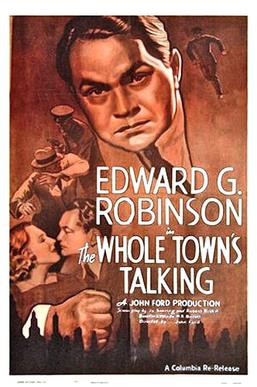
the_whole_towns_talking_1935_posterComic mayhem was always supercharged in the films of the 1930s because the buzz is palpable, the actors are always endowed with certain oddities, and the corkscrew plotlines run rampant with absurdities of their own.  Penned by a pair of titans in Jo Swerling and Robert Riskin, The Whole Town’s Talking opens with an inciting incident that’s a true comedic conundrum.
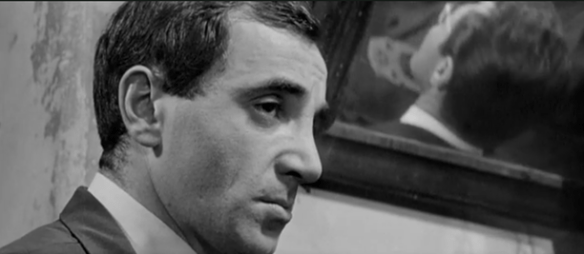
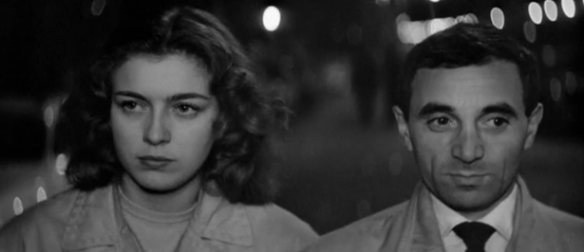
Bald and beady-eyed Mr. Seaver is called upon to fire the next employee who comes in late to work. A tough proposition to begin with but it gets worse.  Arthur Ferguson Jones has not been late to work in 8 years and of course, today’s the day his alarm clock doesn’t work. Although he gets a reprieve. Still, the next person walking in isn’t so lucky. The hardy, wisecracking Miss Clark (Jean Arthur). And that’s our introduction to our main players.

But the real wrench comes from an age-old device that’s easy to scoff at initially. There’s a doppelganger. Yes, the same upstanding, timid Arthur Ferguson Jones is cut in the spitting image of Public Enemy No. 1, Killer Mannion. But before you check out, consider what this does for this ruckus of a story. It ties it up in knots.

Jones is the talk of the town. Exploding flashbulbs. Cover stories. Tumult. Back in the glory days when the press ran in a pack like hyenas.  His boss invites him to dinner, wants an autograph for his boy. He’s being ribbed by his coworkers and Miss Jones takes an interest in his literary endeavors. This leads to a gig ghostwriting the gangster’s life story in the local paper.

Meanwhile, the police argue about what to do about him. They finally decide to give him a special passport. It says he’s not Killer Mannion. And hapless little Mr. Seaver still badgers his employee to finish up his waiting caseload. What no one expects is that Mannion will sneak into Jones’ home and sets up camp.

And from that point on, everything gets confused. Robinson gets a chance at a great deal of range sometimes having his two diverging roles playing off each other in the same frame. All you need to know is the gangster is looking to leave his new benefactor holding the bag for his numerous crimes. Whether it works out or not is quite another story.

This a particularly odd film for the talent assembled. It doesn’t especially feel like a John Ford film and not simply because it’s not a Western. But at this point in his career, his stock company isn’t even assembled.

Edward G. Robinson will always be identified with gangster pics and it’s true he was tired of that association. Here he’s playing comedy. He has one foot in his usual wheelhouse but the other seems utterly alien to his usual persona. As such it’s great fun.  And his timid common man isn’t even a tragic figure like Chris Cross (Scarlet Street). The comedy is far more apparent and that in part stems from Arthur.

She shows up late to work, gets fired, and still has quips coming out of her ears. She plays all the journalists trying to pump her for facts and at the same time falls for this dope who has her picture framed by his bedside. Perhaps better than anyone she perfected how to be cheeky but still wholesome and caring. Arthur feels most at home in this film more than anyone else, given her comedic pedigree but she and Robinson bounce off each other well.

In a few years she would play a Miss Jones but for right now she’s content calling her colleague by the pet name “Jonesie” and (tiny spoiler) she does become Mrs. Jones. So an oddball romantic pair they might be, but that doesn’t make the partnering of Robinson and Arthur any less amusing. They’re both on their A-game in The Whole Town’s Talking and thankfully there would be many more arresting performances to come.

4/5 Stars

Shoot the Piano Player (1960)

shoot-the-piano-player-1

Shoot The Piano Player begins thrillingly with a car chase. The man being pursued flees down a street corner, his assailants disappear into the night, and he subsequently bounces off a streetlight like an idiot. The man who brings him back up on his feet proceeds to regale him with stories about how he met his wife before walking off, never to be seen again.

In fact, none of these characters are our main protagonists but it perfectly encapsulates the glories of Francois Truffaut’s stroke of genius in this early emblematic film of the New Wave.  It’s a petty crime story with a comical streak. The two tough guys aren’t tough guys at all but with their hats and pipes they look like a pair of Monsieur Hulot doppelgangers or something. That is until they pull out a gun. But even then, they’re hardly thugs.

Listed out as simple plot summary, it has certain flourishes fit for a Hitchcock thriller. A man on the run. Lurking criminals, kidnapping, murder, romance, humor, but there’s no doubt, even with this being only his second feature, that this is very much Truffaut.

It’s all a wonderful front for Truffaut’s own explorations. And the bottom line is not simply homage to film-noir and the Master of Suspense but more broadly all his fascinations of men, women, love, and everything that intrigues him about putting a mirror up to humanity–cinema itself. However, as the director long suggested, he preferred film to reality because he could orchestrate it, make it to his liking, with touches of humor and tragedy.

This pseudo-storyline starts with Charlie who placidly knocks out honky tonk for the public’s enjoyment. It’s hard to know if he’s content or simply biding his time. The latter seems more likely. Except when his big brother Chico busts into the joint with a couple of hoods on his tail, in some small way it brings everything rushing back on Charlie.

shoot-the-piano-player-2

It’s not much but the ensuing events have him wrapped up in his own bit of intrigue as he navigates his romantic inclinations and every other thing that is thrown his way.  A Hollywood reference point would certainly be Out of the Past and similarly sinks back into a flashback. But here it is used in a way that’s completely jarring, hardly convenient for those seeking comprehension. And Truffaut’s character utilizes voiceover as well but this is not the laconic, cynical speak of film-noir, instead the nervous inner monologue of a timid piano player.

His sometime bedmate and the housekeeper for his kid brother is Clarisse. Meanwhile, the waitress at his work Lena has his heart going pitter patter, not quite a Hitchcock blonde but a woman who is willing to get involved with his drama. But there was also another important woman in Charlie’s life: His wife.

It’s from these three women in their relationships with Charlie and all the other male characters that some very blatant realities become evident. There’s a conscious separation of the woman into parts whether it is her heart or her body. In one sense, the aforementioned women are strong characters. Meanwhile, the men are all fairly passive, their main outlets include objectifying, ogling, even ridiculing their female counterparts.

At least Charlie’s candid about it but he’s still part of the problem. In many ways, in looking at the women as the tragic figures often used by men as a cinematic object, Truffaut could very easily be wrestling with his own issues of love and romance. What does that actually mean? What causes people to marry? What causes them to love and fall out of love, break up and come back together or even commit themselves to death?

All that can be found within this film although it is obviously veiled by scenes masquerading as crime and comedy. The crowning joke of them all is really a kind of tragedy. Amid the strangest turn of events, Charlie or Edouard (as we now know he is called) is resigned to play behind his piano once more.

The final moments at the snowcapped cabin are madcap and still almost surreal with some stunning sequences captured vividly by iconic New Wave cinematographer Raoul Coutard. In breaking so cleanly with his initial effort of The 400 Blows, Truffaut simultaneously positioned himself as a very special filmmaker. He’s beholden to drama, comedy, crime, and romance, but most of all, he’s beholden to the magic of the silver screen.

4.5/5 Stars

The Big Sick (2017)

The_Big_Sick.jpgIn his opening introduction, Kumail (comedian Kumail Nanjiani playing a cinematic version of himself) explains what it was like to grow up in Pakistan with cricket and praying and arranged marriages. All those fun Pakistani traditions. There’s a bit of a matter-of-fact flippancy to how he recounts it all. Truthfully, it’s in stark contrast to much of what we’re used to. As he so rightfully points out, it also meant they got episodes of Knight Rider a lot later than everyone else. That’s before his parents made the decision to move to the States with their two sons.

America has always been a melting pot since the day of Alexis De Tocqueville and that’s part of what this film celebrates while never completely denigrating Kumail’s Pakistani roots. It so refreshingly provides a story told from a different point of view — one that we have not seen all that often — which is all illustrated so exquisitely in the opening moments.

But The Big Sick is also resonant in part because of the conflict of cultures that dwells at its core. A differing perspective usually causes chafing and it’s no different in this case. Still, at first, it must start out as a love story and it is or at least it evolves into one. This particular romance feels invariably relevant to the current world we find ourselves in. It’s a picture informed by a 21st-century worldview.

Kumail is making a go of it as a stand-up comedian in the Windy City and he makes ends meet with a bit of Uber driving. He meets a girl named Emily (Zoey Kazan) at his comedy club, a local grad student with aspirations to be a therapist. They go on a date and wouldn’t you know it, they sleep together. That is the culture after all as much as Uber, ethnic diversity, profanity, and irreligiousness.

Perhaps it’s more precisely put by Kumail who so candidly admits he hasn’t prayed for years because he does not know what he believes. That is the world that this movie occurs in, our world right here and now. They have their rounds of playful patter and time spent together watching Kumail’s favorite horror movies (he proudly has a poster of Shaun of the Dead up on his wall like any unabashed nerd). Still, they are equally noncommittal in how they never want to get too serious about relationships.

It makes sense that romances are about relationship but often those very things are also so closely tied to family. Both sets of parents play a significant role in the picture and certainly, none of them are perfect — exhibiting a wide range of idiosyncrasies — and yet the key seems to be that they are more than a pair of punch lines. It’s those very relationships too that seem to add even a greater depth and heighten the stakes. Because parental commitment more often than not is for the long haul even when their kids’ relationships don’t seem to be.

In case the title didn’t tip you off already, I’ll save you the trouble and let you know that Emily winds up sick in the hospitable. The people by her side are her mom (Holly Hunter), her dad (Ray Romano), and Kumail who feels bad even as their relationship was all but finished.

As we get to know them as people though, it really feels as if we are getting a better understanding of Emily and the same goes for Kumail. In the same way that Kumail feared telling his family that he was dating a white girl, we see another culture clash in her parent’s who fell in love years ago despite coming from two very different backgrounds, one a stiff New Yorker the other a southern belle in a football-loving family.

Kumail begins to gain a certain modicum of courage to stand up to his own parents, in particular, a mother who is always trying to set him up with a nice Pakistani girl like she did with his older brother. He’s weathered a long list of resumes and “drop-bys” by the most eligible Pakistani ladies. We sense the need for personal integrity. He needs to learn how to exercise it not only in dealing with Emily but his parents as well.

You can still be an American and embrace other cultures and that’s one of the keys to this story because navigating that can be utterly trying. Our differences far from encumbering us should bless us with life more abundant and humanity still proves that love can be a universal language that crosses many divides, cultural or otherwise.

Furthermore, could it be that this film too succumbs to that character trope formerly in vogue as the manic pixie dream girl? It’s a stretch since this is based on real events but it falls apart further still as we watch the film progress to its full conclusion. Because if you remember this fantasy character is meant to bring something out of the male character and cause a change in them. That does happen to Kumail to an extent.

The crucial development for the sake of Zoe Kazan’s character is the fact that she is allowed more growth than simply being the cause of Kumail’s growth. Thankfully she is more than a mere plot device. She is given the dignity of an actual human being meaning that she’s able to acknowledge that maybe she hasn’t changed as much as him — she’s not ready to just go back to the way things were before — and that’s okay because that feels authentic.

That’s not to say there can’t be a happy ending but as many of the greatest modern romantic comedies have managed this one leans into ambiguity and makes that a strength far more than a weakness. Kumail has gone onto to pursue his stand-up career. Emily no doubt continues her aspirations to become a therapist. Still, there’s such a thing as a fairy tale and this might be a good time to point out again that this is semi-autobiographical. Real life fairytale romances are possible. They just usually happen to be a lot messier than we’ve read about in books. A lot like this story.

3.5/5 Stars

Update: On September 16th, 2017 a man named Nabeel Qureshi passed away. And I bring up his extraordinary life because it was difficult for me not to see the parallels to this film.

Like Kumail, Nabeel was Pakistani-American. Like Kumail, Nabeel also faced the challenges of going against the wishes of his parents when it came to core aspects of his life. Like Kumail, Nabeel and his wife faced the malevolent onslaught of sickness. But in Nabeel’s case, the sickness struck him and he did not recover.

It sounds like a very sad tragedy and it is bittersweet but I reference it because Nabeel was a man who had tremendous joy and hope and he left such a lasting impact on his fellow man. It is a life worth sharing about. I enjoyed the Big Sick but even in the last few months and weeks, I have been inspired by Nabeel Qureshi’s life even more.

History is Made at Night (1937)

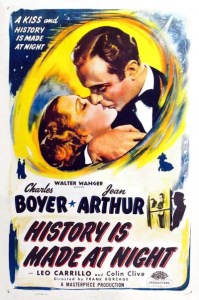
history-is-made-at-night-1937History is Made at Night molds love into the grandest of pursuits and it wouldn’t be altogether wrong in that assertion because for humanity it is one of the most euphoric, confounding, beautiful entities known to mankind. I have no qualms with saying that whatsoever.

And if there was ever a movie title to act as the quintessential summation of director Frank Borzage’s work this might well be it. This is not his greatest effort but within those aforementioned words lies the essence of his filmography. This overarching idea that romance is this unassailable force that is ethereal and grandiose — capable of combatting anything that the world might throw its way  — wielded by a man and a woman when they both become so enraptured in the throes of passion. The antagonistic force might be human, ideological, or environmental. It makes no difference. As the pithy saying goes, love conquerors all. But it’s unfair to strip Borzage down completely with any attempts at generalization and there’s the necessity to look at this film specifically.

History Begins at Night revolves around an age-old device: The love triangle. A rich man named Bruce Vail (Collin Clive) prone to jealousy is looking to catch his wife Irene (Jean Arthur) in infidelity even if he fabricates it on his own. Because he’s not about to let her divorce him. Except in her time of need, the head waiter (Charles Boyer) at a highly reputed local establishment happens to be in the next room and comes to her aid masquerading as a burglar looking to purloin her jewels. Except he soon lets her go free and that might be the end of it. But Vail is not about to let his wife off scotch free and blackmails her into staying with him. He’s a real snake in the grass and this makes Irene long for Paul even more. That’s really all you need to know to get the general idea and the particulars are not what is paramount anyways. It’s enjoyable taking them as they come and watching how Boyer and Arthur react.

Charles Boyer, just coming off his American debut, was entering into the peak of his career as the token Frenchman in Hollywood and he and Jean Arthur make a charming pair. For her part, she will always be an archetype of the screwball comedienne but with this film, she’s a little different. She plays the comedic moments but right along side the melodrama — working through entire scenes with the simple inflections of the word “Oh.” And while Boyer seems suited to drama, more than his predecessor Maurice Chevalier, he does still prove he can be quite funny.

By the end, there is hardly any need to pay attention to the plot. It is enough watching these two individuals come to together into something quite spectacular with a brilliant climax as their backdrop — a stunning culmination of their relationship. It’s a titanic ending to be sure with sinking ocean liner included but that’s not all that unusual. It conjured up some similarities to Leo McCarey’s romantic drama Love Affair (also starring Boyer) and then Barbara Stanwyck’s own extraordinarily moving Titanic-vehicle.  Each storyline utilizes an ocean liner as the perfect locale for a tragic love story but it’s the individuals involved who actually create the intrigue.

What struck me about this film was the fact that it does not fall into your usual categorizations. There’s comedy but not the outlandish scatteredness of 1930s screwballs and there’s melodrama but most of the time the plotting seems inconsequential. Again and again, the story falls back on the fact that this is a love story pure and simple. Indeed, history is made at night. That is what Borzage hammers home. But he wields his hammer with a deft touch.

4/5 Stars

The Mortal Storm (1940)

The_Mortal_Storm-_1940-_Poster.pngOur introduction to The Mortal Storm feels rather flat. Bright and bland in more ways than one as we become accustomed to our main storyline.  Professor Viktor Roth (Frank Morgan) is held in high regard all throughout the community as a prominent lecturer at the local university and beloved by his colleagues and family. The year is 1933 and the Bavarian Alps are still a merry and gay place to live. That’s our understanding early on as the Professor celebrates his 60th birthday with much fanfare and receives a commemorative memento from his class.

In some ways, Frank Borzage’s picture shares a striking resemblance to All Quiet on the Western Front another film that makes its German roots blatantly obvious and yet it wears its incongruities like the ubiquitous use of the English language with ease. And as all the characters accept it, we do too as we begin to sink into the story. But crucial to this story is that they are not as accepting of other things. It feels a little like paradise. Life is good and people are happy. But we expect that at some point the time bomb will go off and it does. Adolf Hitler is elected Chancellor and just like that people begin to change. It’s a collective revolution — a youth movement of sorts.

Pastor, pacifist, and thinker Dietrich Bonhoeffer tore apart the Fuhrer concept straight away in a talk he gave in 1933, long before many of the later horrors during the Nazi reign of terror. But much as this film portrays, such an ideology only leads to destruction — a necessity to harm your brother. Bonhoeffer stated the following which feels surprisingly pertinent to this narrative:

“This Leader, deriving from the concentrated will of the people, now appears as longingly awaited by the people, the one who is to fulfill their capabilities and their potentialities. Thus the originally matter-of-fact idea of political authority has become the political, messianic concept of the Leader as we know it today. Into it there also streams all the religious thought of its adherents. Where the spirit of the people is a divine, metaphysical factor, the Leader who embodies this spirit has religious functions, and is the proper sense the messiah. With his appearance the fulfillment of the last hope has dawned. With the kingdom which he must bring with him the eternal kingdom has already drawn near…

 “If he understands his function in any other way than as it is rooted in fact, if he does not continually tell his followers quite clearly of the limited nature of his task and of their own responsibility, if he allows himself to surrender to the wishes of his followers, who would always make him their idol—then the image of the Leader will pass over into the image of the mis-leader, and he will be acting in a criminal way not only towards those he leads, but also towards himself…”

And so it happens in this film. We see it around the professor’s dinner table first. Formerly, a forum for high-minded debate, it’s quickly become a battleground of ideology. Roth’s step-sons and most notably his daughter’s fiancee Fritz Marberg (Robert Young) have all been caught up in the rhetoric and promises of Herr Hitler. All other forms of thought and free thinking have been discarded, these new ideals burrowing into their minds, dictating their actions, and ultimately poisoning their lives and the lives of all those around them. I never thought it was possible to despise Robert Young but when his mind is polluted by an ideology as rancorous as Nazism it’s far from difficult.

We don’t see Jimmy Stewart until quite a ways into the film and he disappears from sight for some time following an escape to Austria from the Nazi clutches, but he’s still our hero imbued with that same iconic everymanness. He is the man to continue the open-minded, compassionate forms of thinking that Professor Roth exemplifies and subsequently get torn asunder.

Margaret Sullivan and Stewart yet again make a compelling pair following Lubitsch’s Shop Around the Corner. She is the good little German girl Freya who actually proves to have a backbone and he is the humble farm boy who stands by his ideals like Stewart always did. They are caught up in a love story amidst a world that seemingly lacks any shred of romantic passion.

Undoubtedly the Production Codes forbade from mentioning Jews in the story — the non-Aryans like Professor Roth, but that makes this film even more haunting, the fact that the people without a voice are not even acknowledged. They are silenced and remain silent.

With its overt portrayal of the Nazis as menacing thugs and brainwashed ideology machines, The Mortal Storm is startling. For years and years most all of us have read, heard, and seen a great deal on the Nazis that we have unknowingly compiled but this film brings many of those common factors to the fore. It’s obvious that people saw them then. They knew them then. They weren’t blind. Thus, it makes us beg the question what were other Europeans and Americans actually thinking? Because although The Mortal Storm might be the exception rather than the norm, there had to be a general consciousness about the Nazis.

Because the film hardly sugarcoats anything nor does it mince words. It’s surprisingly blunt and utterly bleak in its portrayal even with a bit of a bittersweet Hollywood ending. What’s left is a lingering impact that’s terribly affecting. Only at that point do we realize the total transformation the film world has gone through. Those opening moments of The Mortal Storm are so vital as it is only in the waning interludes where we truly comprehend how far things have fallen into hell.

It’s a stunning piece of work and this is not simply the ethereal love story I was expecting. It is a thoroughly gripping indictment of the Nazi menace and far more candid than I would have ever imagined. The Mortal Storm suggests perhaps most audaciously that there were people who waded against the pervasive current of the time. They let their lives be dictated by good will, decency, and personal relationships rather than any churning force of a single political ideology.

The final quotation pulled from the moving work of Minnie Louise Haskins “God Knows” ends like so:

“I said to a man who stood at the gate, give me a light that I may tread safely into the unknown. And he replied, go out into the darkness and put your hand into the hand of God. That shall be to you better than a light and safer than a known way.”

4.5/5 Stars

Portrait of Jennie (1948)

portrait-of-jennie-3The strands of our lives are woven together and neither time nor the world can break them.

From the outset, you get a sense from the grand philosophical dialogue and imagery that we are being treated to a classical Hollywood precursor to Terence Malick’s Tree of Life. Quotes from Euripides and Keats flash over the screen. Profound questions are brought to the fore. What is time? What is space? What is life? What is death?

And it is somehow a spiritual film and not because of convents or biblical references. It’s a different type of spirituality — more elusive than a simple description. It’s summarized by the early supposition that each person must find their own faith. You must learn how to care deeply about something. And these initial suggestions give a hint to the film’s intention although the rest rolls out in more typical Hollywood fashion courtesy of David O. Selznick.

Eben Adams (Joseph Cotten) is one of those starving artists types who gets very little monetary value out of his creative vocation as a painter. Although initially brusque, he does receive some encouragement from a pair of veteran art dealers (Ethel Barrymore and Cecil Kellaway) and for the majority of the film, they remain buttresses to his career.

They see a spark of talent in this man — though not fully realized — there’s something there that can develop into something beautiful. Perhaps they see the landscapes like he does, where the images of the world are literally on canvass (Director William Dieterle denotes this phenomenon well).

portrait-of-jennie-2But it’s a chance encounter with a young girl named Jennie (Jennifer Jones) that gives Eben the type of inspiration that every artist dreams of because it’s precisely this spontaneous spark of joyous energy he needs to add something vibrant to his own life. In her constantly evolving role, Jennifer Jones exudes an effervescence, a certain radiance in body and spirit that lights up the screen in embodying this apparition of a girl.

She meets Adams first near a park bench, then doing whirly-birds on the ice rink. They continue to have these little moments together made up of chance encounters and pieces of fate. Although the film hardly gets to explore the idea, Portrait of Jennie plays with time for the sake of love. And it conveniently allows its two characters to meet each other at very different reference points in life. For him, it’s only a few days. For her she’s no longer a young girl, now blossoming into a mature young woman. And that is part of the tantalizing charm. Their chemistry flourishes. It becomes evident that much of romance is made up out of memories, these little fleeting moments of joy in being together.

It’s fantasy aspects make it a fine companion piece to the Ghost and Mrs. Muir as well. Light, passionate, moving, all those things. Yes, its conclusions on love are more than soppy, but a little soppiness does wonders in this cynical world we find ourselves in presently.

Out of context, it sounds ludicrous that Adams pilots a boat out into a New England gale for no reason except that it is the last place Jennie was seen. But interestingly enough, this conclusion hardly feels out of the ordinary since we intuitively know that Eben is going where he needs to, or at least where the film suggests he needs to go. And it’s not terrifying in all its technicolor glory because those apprehensive feelings easily give way to the raw majesty of it all — the pure awesomeness of the crashing waves — the churning forces of natures.

In these moments the film reaches its crescendo of love while also coming full circle to its opening prologue. But there’s something inside of me that feels unfulfilled with this ending. There’s a hollowness. Eben and Jennie had something together but what is it exactly, is difficult to comprehend completely. Eternal, no. Immortal, no. It’s only a moment. That is all.

portrait-of-jennie-1I find that despite his pedigree Joseph Cotten still comes off as an underrated actor and with each film I see him, I enjoy him immensely. Maybe for those very qualities. He’s not altogether handsome but he has a pleasant face. His voice isn’t the most formidable or debonair but it does have character. The supporting players lend some Irish flair to the cast and it’s striking that everyone from Ethel Barrymore to Lilian Gish glows with a certain hope. There is no obvious antagonistic force in this film. Eben Adams found his inspiration — the muse of a lifetime — and that passion is enough to lay the foundations of a film.

In some ways, I am discontent with the actual portrait of Jennie. The film acts as a better portrait of who she was as we continually get small swatches of her personality and glimpses into her character. In comparison, that painting seems little more than an austere shell. It lacks the same joyous vibrancy of the woman it was hoping to capture. That is to Jones’ own credit but to the detriment of the story. The painting lacks the same aura of the film.

3.5/5 Stars

The Rage of Paris (1938)

752px-The_Rage_of_Paris_Poster

It’s one of those anomalies of life that only a few days before I write this, the renowned Danielle Darrieux celebrated a century on this earth and I watch a film from some many years ago that showcases her budding screen presence. While so many others deteriorate with age, she seems the epitome of aging gracefully. Perhaps it’s the French way in some respects.

But going back into her catalog of films and finding The Rage of Paris you see a fairly straightforward romantic comedy that’s sweet, adorable, cute all those apt superlatives but there’s that one thing stands out nigh 80 years later. I am always squeamish about praise sounding shallow but at 21 years of age, this young actress who came on the world stage with Boyer in Mayerling is a bouncy precocious beauty–a real looker–absolutely mesmerizing to watch as bright eyed and bushy tailed as she manages to be.

Yes, the script follows that time-honored tradition often found in these types of screwball storylines where two individuals who initially despise even to look at each other ultimately fall madly in love and into the same bed with the wedding bells chiming soon thereafter. It’s that sexual tension that is able to develop some sort of romantic passion that gets audiences invested supposedly.

However, as the years have rolled on and I’ve seen more films by Henry Koster I have grown affectionate of his very particular outlook. There’s a certain vein that runs through all the material that he directs–an inherent good-natured charm to it no matter the topic that is always and fundamentally enheartening. He never leaves you melancholy because each picture ends with a smile.  That’s the greatest compliment I can honor him with.

So despite the typical nature of the material, Koster’s always sincere perspective and Darrieux’s intoxicatingly endearing performance as a gold-digging yet genuine French model make this one a minor winner.  The class divide that always seemed to find its way into screwball plots of the 1930s such as this (sentiments left over from the Depression no doubt), helps to complicate matters but also allows for the necessary amount of empathy to be developed for not only Nicole, the girl desperately trying to find a husband just to survive, but also her main opponent Jim (Douglas Fairbanks Jr.) who has a rustic background of his own.

To be honest, for me Fairbanks doesn’t hold a candle to his father or Darrieux for that matter but the film does have a wonderful assortment of supporting players. The most important ones include Nicole’s core conspirators the worldly wisecracker Helen Broderick and her maitre d’ accomplice (Mischa Auer). All minor criticisms aside and barring any complaints about being overly sentimental or somewhat predictable, The Rage in Paris really is the paragon of a cute picture. I bow in deference to Danielle Darrieux’s career and thank my lucky stars that unabashed sentimentalists like Koster are still available in this oft cynical world that we live in now.

3.5/5 Stars