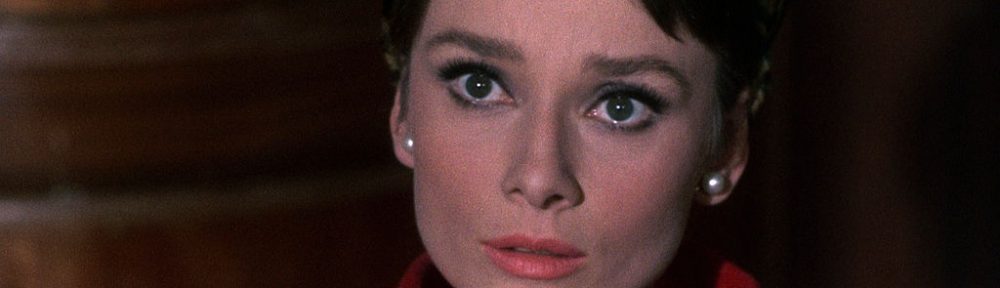
 “Two people shouldn’t know each other too well if they want to fall in love. But, then, maybe they shouldn’t fall in love at all.” – Vittoria
When it comes to being aloof, apathetic, and distant Monica Vitti knew no equal, and she works so marvelously against the worlds that Michelangelo Antonioni creates. Her sultry pair of eyes speaks volumes as far as sensuality and charm — making words hardly necessary. When we look at her and how she moves so indifferently through this romantic space with her former lover, it becomes all too obvious. There’s no feeling there. There’s no magic left to be tapped into. That happens with love sometimes, and it’s excruciatingly painful, even to watch.
In these opening minutes, nothing is said yet it’s hardly boring. There’s something tantalizing about sitting and waiting for some piece of exposition to come our way. Besides Antonioni’s extended shot length, a steadily smooth camera, use of mirrors, and a wonderful manipulation of the interior space to frame shots keep us constantly engaged.
 The initial scene in the stock exchange is gloriously tumultuous and it never lets up. This is the dashing young Piero’s (Alain Delon) domain that he rushes through with lithe business savvy. What this arena becomes is the quintessential Italian marketplace, a hectic theater of business made up of all kinds, involved parties and observers alike. Vittoria (Vitti) is one of those who looks on with mild interest and really throughout the entire film she is a keen observer as much as she is a person of action.
Through the mutual connection of her distraught mother, she and Piero become acquaintances. No more, no less. But we expect there to be more, because how could you waste stars like Vitti and Delon without at least a few romantic interludes? But we are made to wait patiently as they share a little contact, watch the extraction of Piero’s car from its underwater mortuary, and take a long walk.
Again, Antonioni continues with glorious panoramas, a meticulous framing of shots, and exquisite overall composition of mise-en-scene. It makes every image that comes onscreen hold merit and they stay onscreen certainly long enough for you to truly appreciate them. He’s audacious enough not to feel the need to have his figures centered in the frame, and he dances around them, placing them really wherever he pleases, but there’s still something strangely satisfying about it. Doorways, trees, pillars, heads all work nicely.
 And the narrative becomes perhaps even more tantalizing than love because it’s the prospect of romance that keeps it going. But it never seems fully realized. It’s frustrating, unfulfilling in a sense, like most of his films. Whether it’s an unsolved mystery or the most perplexing conundrum mankind has ever faced romantic attraction, he always leaves us an open-ended denouement.
There are laughs and moments of immense satisfaction, but they are transient — invariably lasting for only a very brief instant. In fact, this film’s finale is a dour twist that submerges L’Eclisse even lower than we could ever expect. With a title such as “Eclipse,” there’s a potential for foresight, but there also are very few warning signs. Then, all of a sudden, we are privy to a newspaper dotted with headlines like “nuclear arms race” and “fragile peace.” That is all.
It’s in these final moments that L’Eclisse takes a far more haunting turn than Dr. Strangelove and any of its compatriots. It just stops. No explanation. Not even a sign of our protagonists. Again, it’s that maddening ambiguity that comes with waiting out this lull. But the ultimate joke is that there is nothing after the lull. The frame literally gets darker and quieter and then everything ends altogether. There is nothing more. Enveloped in darkness, it simply ceases to be, another enigmatic visual tour de force from one of Italy’s most fascinating titans.
4.5/5 Stars

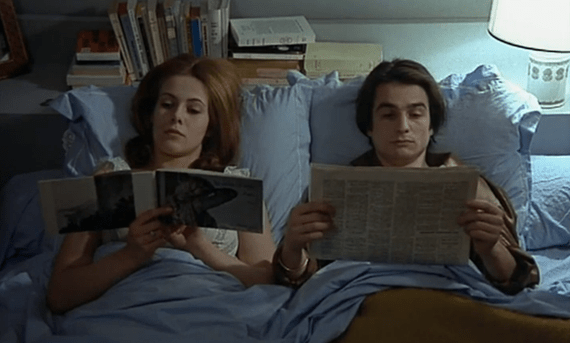 Arguably the greatest French comic was Jacques Tati and like Chaplin or Keaton he seemed to have an impeccable handle on physical comedy, combining the human body with the visual landscape to develop truly wonderful bits of humor. Bed and Board is a hardly a comparable film, but it pays some homage to the likes of Mon Oncle and Playtime. There’s a Hulot doppelganger at the train station, while Antoine also ends up getting hired by an American Hydraulics company led by a loud-mouthed American (Billy Kearns) who closely resembles one of Hulot’s pals from Playtime. Furthermore, there are supporting cast members with a plethora of comic quirks. The man who won’t leave his second story apartment until Petain is dead and buried at Verdun. No one seems to have told him that the old warhorse has been dead nearly 20 years. The couple next door that is constantly running late, the husband pacing in the hallway as his wife rushes to make it to his opera in time. There’s the local strangler who is kept at arm’s length until the locals learn something about him. The rest is a smattering of characters who pop up here and there at no particular moment. Their purpose is anyone’s guess, and yet they certainly do entertain.
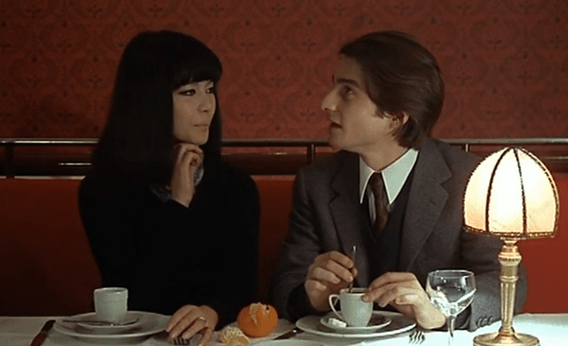 But as Truffaut usually does, he digs into his character’s flaws that suspiciously look like they might be his own. Antoine easily gets swayed by the demure attractiveness of a Japanese beauty (Hiroko Berghauer), and he begins spending more time with her. Thus the marital turbulence sets in thanks in part to Antoine’s needless infidelity –revealed to Christine through a troubling bouquet of flowers. It’s hard to keep up pretenses when the parent’s come over again and Doinel even ends up calling on a prostitute one more. It’s as if he always reverts back to the same self-destructive habits. He never quite learns.
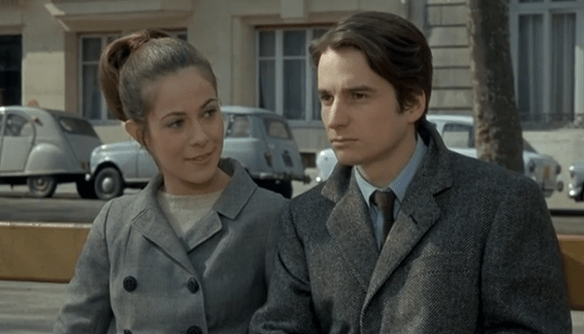 Charles Trenet’s airy melody “I Wish You Love” is our romantic introduction into this comedy-drama. However, amid the constant humorous touches of Truffaut’s film, he makes light of youthful visions of romance, while simultaneously reveling in them. Because there is something about being young that is truly extraordinary. The continued saga of Truffaut’s Antoine Doinel is a perfect place to examine this beautiful conundrum.
 In fact, all in all, if we look at Doinel he doesn’t seem like much. He’s out of the army, obsessed with sex, can’t do anything, and really is a jerk sometimes. Still, he manages to maintain an amicable relationship with the parents of the innocent, wide-eyed beauty Christine (Claude Jade in her spectacular debut). Theirs is an interesting relationship full of turbulence. We don’t know the whole story, but they’ve had a past, and it’s ambiguous whether or not they really are a couple. They’re in the “friend zone” most of the film and really never spend any significant scenes together. Doinel is either busy tailing some arbitrary individual or fleeing pell-mell from the bosses wife who he has a crush on.
 By the time he’s given up the shoe trade and taken up tv repair he’s already visited another hooker, but Christine isn’t done with him yet. She sets up the perfect meet-cute and the two young lovers finally have the type of connection that we have been expecting. When we look at them in this light, sitting at breakfast, or on a bench, or walking in the park they really do seem made for each other. Their height perfectly suited. Her face glowing with joy, his innately serious. Their steps in pleasant cadence with each other. The hesitant gazes of puppy love.
 We are definitely in the age of the well-wrought period piece and Brooklyn has all the trappings you could want. Adapted from Colm Toibin’s novel the film showcases a pure, noble heroine in Eillis Lacy who like many others makes the journey from her homeland of Ireland to the golden-paved streets of New York.
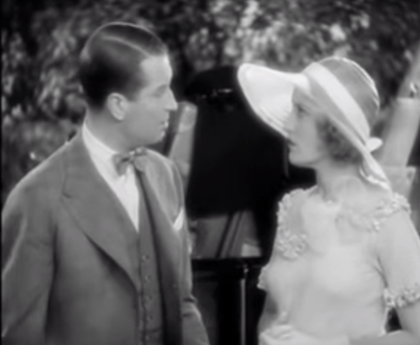 This is unequivocally the age of sound! That’s what this film proclaims from the rooftops with its symphony of syncopation as the world of Paris awakens from its slumber. Its opening rhythms are pure ingenuity and the glorious unfoldings never cease for the rest of the cheery production.
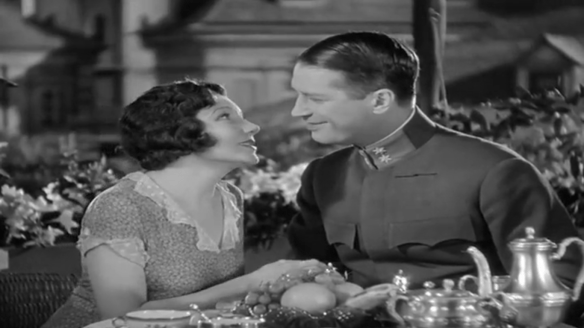 One would never think that one well-placed wink would change the course of an entire life or be the basis for an entire film, but on both accounts it is true. Ernst Lubitsch’s The Smiling Lieutenant represents all that is good and right about one of his films. It’s light and airy with a dash of charm and a tune in its heart. It’s light on its feet with humor and somehow maintains its self-respect, much like the man at the center of this one (Maurice Chevalier).
 But Lubitsch’s final twist is completely out of left field and a completely comic inversion of what’s supposed to happen — capping off his oeuvre of song, suavity, and sensuality in high fashion.
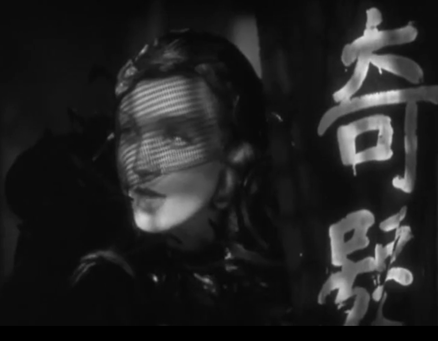 The same year as Grand Hotel there came another film, that while still boasting an ensemble cast felt far more intimate. In its day it was christened “Grand Hotel on wheels” and its narrative does unravel aboard a train. However, Josef von Sternberg’s film opens with a faceless atmosphere spilling over with the bustling commotion of a railway station. It takes a few moments to lock onto the characters we will be making the journey with, but we won’t soon forget them.
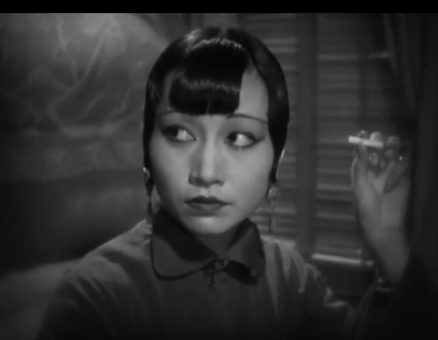 It is in these moments that are two female heroines must act. Hui Fei (Anna May Wong) so that she might defend the honor of herself and her country. Lilly so that she might express the great, expansive depths of the love she still holds for “Doc.”



 4 Star Films