39 Steps (1935) – Alfred Hitchcock

In one of Hitchcock’s great English films, he plays with the idea of a man on the run. Robert Donat is just an ordinary Englishman until a strangle woman tells him a deadly secret. Upon finding her murdered by a dangerous foe he flees. However, that puts him under suspicion and the hunt is on. He makes his way up to Scotland and gets some assistance however soon trouble brews. Somehow he finds himself cuffed to a woman he detests and he drags her away with him in order to escape. Due to their predicament, the unlikely pair soften to each other and try to discover the truth. After running for so long the answer finally comes to Donat  in the theater. He finally discovers what the 39 Steps are.

4.5/5 Stars

Vertigo (1958) – Alfred Hitchcock

acaeb-vertigomovie*May Contain Spoilers!

Vertigo is an intriguing Hitchcock thriller, set in San Francisco, that has you cheering for Jimmy Stewart as he falls in love and struggles with his fear of heights. Right away you are met with the haunting opening credits and the dramatic opening sequence where Scottie (Stewart) acquires his vertigo. From then on Scottie must cope with his dizzying condition however, he has no time to remedy it since he suddenly finds himself tailing a beautiful woman for a friend. Much of the rest of the film seems surreal with minimal dialogue and interesting cinematography, leading up to the death of Madaleine (Kim Novak). Then the film switches gears and is mostly about the impact on Scottie who had become infatuated with Madaleine. Often he appears to be in a trance and he becomes obsessive after meeting Judy who looks strikingly like Elster’s dead wife. Scottie becomes controlling, trying to make Judy into the image of the woman he loved. She just wants him to love her for who she is but that cannot be. Fittingly, the film ends the way it began with drama and tragedy. This certainly is a fascinating view of human psychology and complex emotions. In order to appreciate this film it is almost necessary to watch it at least twice, once to understand the plot and then another time to spot the little details. Of all of Hitchcock’s work, I would say I still enjoy Rear Window or North by Northwest better but this film at least deserves a viewing or two.

5/5 Stars

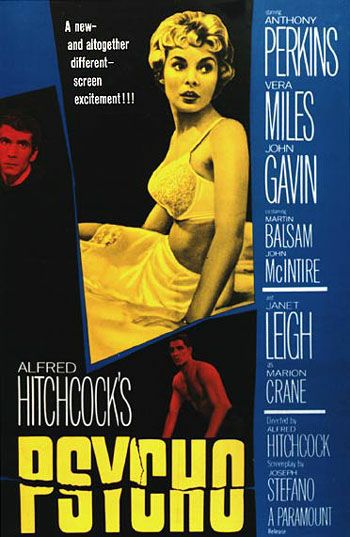
Psycho (1960) – Alfred Hitchcock

Alfred Hitchcock is much appreciated now but this film especially stands out in American culture because it was a first rate horror film when that was an anomaly. It has a chilling score, a notorious villain, and a sequence that is one of the most famous in film history.

*May Contain Spoilers

Directed by Hitchcock and starring Janet Leigh, Anthony Perkins, and Vera Miles, this film is intense from the opening sequence. Marion Crane seems to be your average love-struck woman stuck in her job. However everything quickly changes for her after she runs off with $40,000 that had been entrusted to her. Before she can get it to her boyfriend she must stop for the night at the Bates Motel. She rents a room and meets the timid, unassuming proprietor Norman. Soon it becomes obvious that he likes her but his domineering mother does not approve. Then later when Marion is taking a shower she is brutally murdered. Soon the situation becomes even more confused when a private investigator winds up missing. Marion’s sister and boyfriend resolve to go to the motel themselves. Little do they know the shocking events that await them. Undoubtedly Hitchcock’s most famous film, Psycho shakes the nerves and excites. Furthermore, it solidified Norman Bates as one of the most notorious villains of all time .

5/5 Stars

Mr. Smith Goes to Washington (1939)

84a24-mrsmithgoestowashingtonposterAs both a political drama and feel good movie, this film cemented James Stewart as an acting powerhouse. Furthermore, despite its age, it acts as a timeless reminder of the evils of political machines. It makes us root for the underdog, and it is distinctively American. Here is a cast and a story that seemingly could never be equaled, but what this film really had going for it was an idealistic outlook. I can, myself, often be a cynical person, and still Mr. Smith never fails to make me acknowledge the numerous attributes that make our country great, whether it is through montage, monuments, music, and of course Jefferson Smith himself. 

In one of his best performances, Jimmy Stewart is an idealistic, naive boy’s troop leader named Jefferson Smith. The starry-eyed Smith trusts that our nation is founded on some very noble principles that should be fought for tirelessly in government and in society. Above all, he is a likable fellow, who earnestly believes in the merits of this country, and he is beloved by boys all across the state. Now, this all sounds fine and dandy, but it would never have come across on the screen if it had not been for Stewart. He emanates this awkward and innocent energy that puts life into the idealistic creation of Jefferson Smith. 

When the film opens, everything is in turmoil when a senator suddenly dies and a replacement is needed fast. Believing Smith will be a pawn, a powerful man named Taylor (Ed Arnold) gets Smith a seat in the nation’s Senate. There he joins the respected Senator and old family acquaintance, Joe Paine (Claude Rains), who is also a cog in Taylor’s machine. However, although he is out of place in Washington, the patriotic Smith does his best to be worthy of his position. He realizes that the press will not give him a break, and the other Senators do not take him seriously.

So, on the urging of Paine, he decides to come up with a bill for a boys camp back in his home state. He requires the help of the world-weary secretary Saunders (Jean Arthur) to get his bill done. Initially, she is disgusted by his naivete, but as she grows to know him, she realizes he is only going to get himself hurt. His action to propose a bill soon find him face to face with the political machine that elected him. Taylor also has stakes on the piece of land where the boy’s camp would be, and he wants it for a dam. 

Smith finds himself being accused of using his position for his personal gain, and pretty soon he is before a committee with false evidence piling up against him. With all odds and seemingly everyone else against him as well, Smith makes one last monumental effort. Thanks to the help and guidance of Saunders, Smith fights to plead his case through a filibuster.

Fatigued by many hours of giving impassioned speeches and reciting the Constitution, Smith finally collapses, but not before effectively succeeding at his task. I doubt this would ever happen in real life, but in the film, it is fantastic watching the Senate break out into complete and utter mayhem. Ultimately, a young man with “a little bit of plain, ordinary, everyday kindness and a little looking out for the other fella,” was able to win. True, it may be overly sentimental, but it is a wonderful piece of sentiment all the same.

Frank Capra was wonderful at these type of cheering tales and his stars were in top form. There is an absolutely wonderful supporting cast here including Claude Rains, Edward Arnold, Eugene Pallette Thomas Mitchell, Charles Lane, Harry Carey, William Demarest, Beulah Bondi, and numerous other familiar faces I don’t even know the names of. That’s the beauty of the studio system I guess. It may have the same director, same leading man, and some of the same general themes, but Mr. Smith Goes to Washington covers completely different territory from Capra’s later classic It’s a Wonderful Life. Mr. Smith should be seen as a unique, and very much American film.


5/5 Stars

Rear Window (1954) – Alfred Hitchcock

02805-rearwindowposterStarring James Stewart, Grace Kelly, and Raymond Burr with director Alfred Hitchcock, this is a superb film that takes place in a very limited space. L.B. Jefferies (Stewart) is a professional photographer who is incapacitated in his flat with a broken leg. All he has to pass the time is watching the people across the courtyard. Although he very rarely interacts with them, he slowly begins to know them just by spectating. Pretty soon he realizes something is amiss when the annoying wife across the way is no where to be seen and her husband (Burr) is acting strangely. With help of his ravishingly beautiful girlfriend (Kelly), Jeffries tries to uncover the truth. Everything escalates when Lisa breaks into the man’s apartment and it finally peaks in a climatic confrontation. In the end all is well and Jeffries realizes his true love. This is one of my favorite films because of its unique setting and it is possibly Hitchcock’s best. He takes an environment that is so confined and then makes a very entertaining and suspenseful film with it.

5/5 Stars

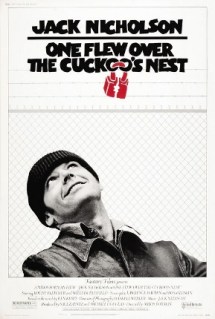
One Flew Over the Cuckoo’s Nest (1975)

This is a powerful film from the 70s that has such an intriguing conflict between Jack Nicholson and Louise Fletcher. There have been many chilling villains in the annals of cinema, but Nurse Ratched was arguably the coldest and yet understated of them all. She makes this a true battle for supremacy. Nicholson is supported very nicely by the rest of the cast who he helps to rile up.

*May Contain Spoilers

Originally adapted from the novel by Ken Kesey, the film tells the story of a criminal interned in a mental hospital, because he thinks it will be “life on easy street” with a bunch of crazies. Jack Nicholson plays this Randle McMurphy, who goes in ready to live easy and challenge authority whenever he can.

Meanwhile, the doctors observe him seeing if Randle really belongs. As he grows accustomed to the institution, he becomes the instigator of the other patients. Whether they are playing cards, talking with the group, taking medication, getting their exercise, or taking a fishing trip, he always looks to get his way and have the other patients rally around him. However, he must deal with Nurse Ratched, a cold and iron-fisted woman, who keeps everyone at bay believing it is for their own personal well-being.

In fact, she chooses not to send McMurphy away because he is their problem and Ratched is ready to deal with him in the way she sees fit. Not even McMurphy seems able to prevail over Ratched and her tactics in the end. He starts a riot in the ward after they are not allowed to watch the World Series, and as the final straw, he holds a wild Christmas party with girls and alcohol. He plans to get away in the aftermath with his new-found friend “Chief,” only to wake up in the morning to a very displeased Ratched. Her pressure causes one unstable young man to commit suicide, and with the opportunity to escape right in front of him, an enraged McMurphy strangles the nurse, only to be subdued. Things quiet down and the patients revert back to their old ways with “Mac” nowhere to be seen.

One night he is returned and in a Deja Vu moment, the Chief goes to talk to Randle, only to see a blank look on his face. Ratched’s methods have seemingly won. However, Chief is able to use Randle’s plan to escape and keep the hope alive. Nicholson was backed by a stellar cast including Louise Fletcher, Danny Devito, Christopher Lloyd, Brad Dourif, Will Sampson, Sydney Lassick, and William Redfield.

Although this film is rougher around the edges, it reminds me of the earlier dramatic classic 12 Angry Men, because both films have wonderful casts that are able to create such tension through their collaborative performances. Much like Henry Fonda, Nicholson is the undisputed star, but all the other players make this movie truly extraordinary. Early on there are some definite comedic moments, but the film begins to get darker as the story progresses, and Ratched gets more and more strict.

Furthermore, this film is shot in a realistic almost bleak documentary-like style that really adds to the film. It is almost difficult to watch the scene where Randle chokes Ratched because it is up-in-your-face and graphic. Despite, the fact that the ending is depressing, there is still a hint of hope. It is one of the things that makes One Flew Over the Cuckoo’s Nest so riveting. Much like many of the patients that inhabit the facility,  the mood constantly swings like a pendulum from humorous, to calm, to bleakness, and finally hopefulness.

5/5 Stars
 

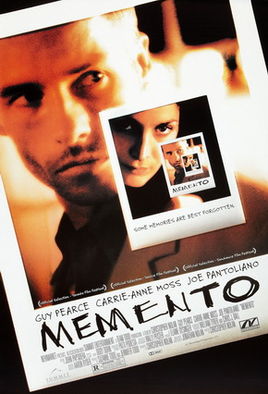
Memento (2000)

6c3e2-memento_posterDirected by Christopher Nolan and starring Guy Pierce, this thriller has an interesting narrative that stars in descending order, simultaneously goes in ascending order, and then meets in the middle. Leonard is a man whose wife was murdered and he wants to find the culprit. However, he has short term memory loss so he must use Polaroid pictures and tattoos to help himself remember. He talks to a policeman on the phone about a case he recalls. He meets the man Teddy and also gets involved with a woman who wants his help after her boyfriend was killed. However  Leonard makes his own truth and when reality is revealed to him, he will not accept it. The story meets and so the audience must come to realize this is in fact true. I feel the storytelling style alone is intriguing because it is so different and it truly makes us think. Nolan made another such film in Inception 10 years later.

4/5 Stars

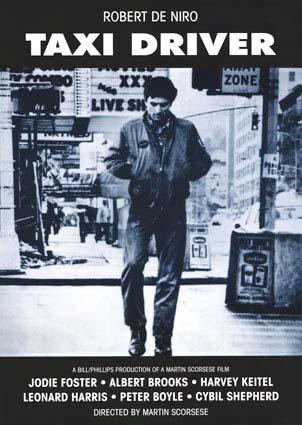
Taxi Driver (1976)

d184d-taxi_driver_posterDirected by Martin Scorsese, the film stars Robert De Niro with Jodie Foster and Cybil Sheppard. The story opens with a Vietnam vet, Travis Bickle (De Niro) who takes a job as a taxi driver. Travis is a quiet and lonely man who is turned off by the scum and filth he sees on the streets of New York. He becomes enthralled with a beautiful campaign worker who eventually turns him off. Then he also comes in contact with a young girl who makes her living working the streets. His frustration deepens and he begins to work out and collect weapons. It becomes obvious he is about to explode and after an initial failed attempt he does  just that. However, ironically the aftermath leaves him as a hero. Travis is an interesting character because you feel sorry for him and yet he does things that are truly wrong. I found Bernard Hermann’s score, the voice-over narration, and the cryptic ending all to be interesting parts of this film.

4.5/5 Stars

Dirty Harry (1971)

2daf4-dirty_harryStarring Clint Eastwood as San Francisco police Inspector Harry Callahan, the film opens with a sniper knocking off a young woman. The self-proclaimed Scorpio says he will keep killing a person everyday until the city pays him off.  They go on high alert and Callahan stakes out with his new rookie partner Chico. However, Scorpio escapes once again and he is just begun. He kidnaps a young girl and threatens to kill her. Callahan runs all across town to deliver the ransom where upon a confrontation occurs. After they recover the girl they track down the killer but he is released because they had no warrant. A furious Callahan finally hunts down the conniving killer one last time after Scorpio kidnaps a bus load of children. In the ensuing chaos Harry finally gets his man. This is one of the great action films and it spawned a memorable character in Dirty Harry.

4.5/5 Stars

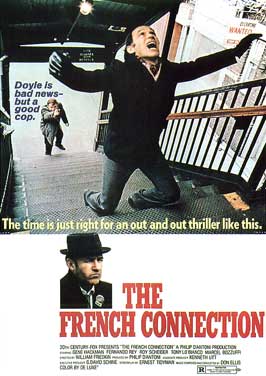
The French Connection (1971)

af50c-thefrenchconnectionIn this crime thriller starring Gene Hackman and Roy Scheider, two detectives, Popeye Doyle and Cloudy Russo, work the grimy, tough streets of Brooklyn. They think they have happened upon a narcotics job and they use tapping and tailing to close in on the suspicious activity with a french connection. With no real results, they get pulled off the special assignment. That all changes after an unexpected twist followed by a wild chase. Doyle and his partner are finally close to cracking the case but it still takes more work and even more waiting. Finally, they seem to have the culprits but it ends far from perfectly for them. Up to the end Doyle is bent on finding “the frog” who has eluded him for so long. The ending felt a little too abrupt for my liking. However, this film did a good job at portraying the ugly and dirty side of New York realistically.

4.5/5 Stars