Review: True Grit (1969)

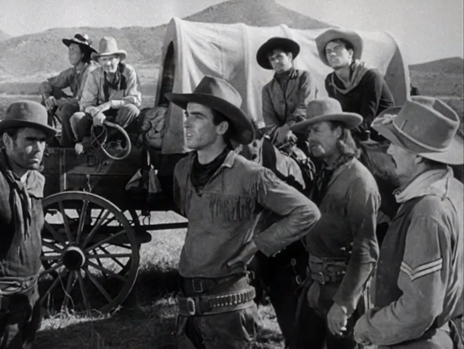
truegrit1My father has always maintained that two of his favorite films are The Magnificent Seven and True Grit. The first one makes sense with its stellar cast, resplendent score, and some top rate gunslinging. The second film, well, it makes sense too, but for completely different reasons.

Director Henry Hathaway is never flashy but he is a self-assured worksmith of early film-noir and westerns such as The Sons of Katie Elder. Those are minor classics, and yet each one is gripping in its own way.

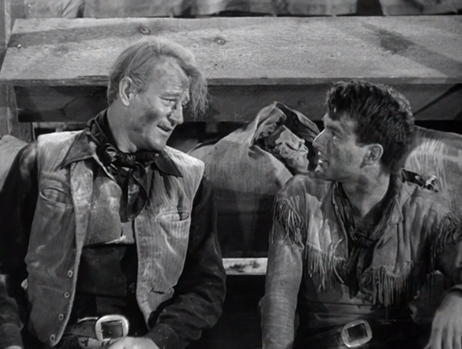
John Wayne is just John Wayne pure and simple except with an eye patch slung over his eye, but do we care? Not in the slightest. When you have such a presence in a film, it will never lack at least a shred of viewing value. He was always memorable, but he was probably never more iconic than his turn as Marshall Rooster Cogburn. He’s a gruff, tough, drinking man who is willing to take on anyone and everyone at the drop of a hair. Yet despite all of that fury, Wayne embodies him in such a way that makes him lovable all the same.

Wayne is usually a given to steal the spotlight but Kim Darby gave him more than he bargained for as the stubborn, no-nonsense Maddie Ross. Following suit, singer Glen Campbell showed he can do more than knock back a tune, playing the Texas Ranger.

Darby beautifully embodies the rational-minded young Maddie with her terse and straightforward rhetoric. She knows what she wants and she will not budge on those proclivities – whatever they might be. Glen Campbell was hardly an actor, but instead a country music superstar and yet the musician makes a handy Texas Ranger in a pinch bringing a sense of camaraderie and humor to wrangle with his counterparts.

As with many of his other great westerns, Wayne and company are surrounded by a solid group of stock characters including the likes of Dennis Hopper, Robert Duvall, Strother Martin, and even John Fiedler.

The film is adapted from the Charles Portis novel where Maddie, intent on catching the man who killed her father, hires Cogburn to track him down. They are joined by Laboeuf and thus begins their search.

Looking at the plot alone, this film is about a journey to apprehend a fugitive man named Tom Cheney, who killed Maddy’s father as well as a Senator back in Texas. But really what we’re watching is this unlikely trio joins forces to do things we would never expect from them. It’s certainly no coon hunt, but then again it’s hardly a single-minded mission. Maddy has one opinion, the Texas Ranger has another, and Rooster Cogburn’s mostly drunk when he’s not belittling his rival or poking fun at “Baby Sister.” Do we mind? Certainly not because time makes these three companions into friends. Their ribbing gives way to trust and their anger and annoyance breed mutual respect.

Nothing beats the adrenaline rush of seeing Wayne charge across a vast meadow towards Ned Pepper and his cronies, with his guns drawn and a bridle between his teeth. The sequence is enhanced by the spectacular Colorado landscape that adds another character to the entire film. You cannot witness such a scene and simply write it off as average. That’s part of the reason we go to the movies – to see men with True Grit.

The Coen Brothers brought us a darker, more dramatic interpretation of this film, but it is hard to beat the fun of Henry Hathaway’s version. John Wayne, Rooster Cogburn, whatever you want to call him, he has True Grit. Isn’t that right baby sister?

4.5/5 Stars

Review: The Magnificent Seven (1960)

themagnif1“Nobody throws me my own guns and says ride on. Nobody” ~ James Coburn as Britt

People always resonate with stories of valor, honor, and bravery. It doesn’t matter if it’s a war film, a tale of samurai, or a western. Thus, Akira Kurosawa’s Seven Samurai rather seamlessly became The Magnificent Seven, one of the most reputed westerns of the 1960s.

In theory & practice, it has everything you want in a western from a stellar cast to thrilling gunfights matched by one of the most epic soundtracks ever coming out of the annals of cinema.

But although it’s script is not exactly taut, you can hardly accuse The Magnificent Seven of being superficial. Its characters and its narrative are too satisfying for such a claim. After all, who wouldn’t want to see such a company as Yul Brynner, Steve McQueen, Horst Bucholtz, Charles Bronson, James Coburn, Robert Vaughan, and Brad Dexter? You have “The King and I,” “The King of Cool,” and about every other figure you would want in a good shoot’em up. They were seven who fought like 700.

In not completely splitting with its samurai roots, this western deals in moral codes and issues of honor perhaps more closely than even many of the best known western. The main issue here is that this laconic and sleek gang is brought together to defend a small Mexican border town made up of farmers against a bandit and his band of marauders. What causes men such as these to take on such a dangerous and in many ways such a one-sided job? For some it’s money (because they have none), some want the excitement, and for others, it’s something different. But all that matters is they all go into this together – some of the deadliest guns prepared to duke it out.

themagnif3Into the valley road the seven rather like the light brigade, at first simply preparing to train up and prepare their little village of farmers to fight back against the brutal outlaw Calvera (Eli Wallach). But there’s something that happens over time. When you spend time in close proximity with people, eating their food and sharing their shelter, it’s hard not to build a bond — a connection that holds you there. At first, it seems of little consequence when the enemy gets beaten back, but everyone knows they will return with a vengeance.

Ultimately, the seven are betrayed and are given a clear choice. They can keep moving on or turn back the way they came. It’s just a small inconsequential town, but they cannot turn their back on it, even when they were betrayed. They grapple with what’s good, what’s right, and what’s rational, and then make their decision. It goes against all reason and yet into the valley road the seven together (eventually).

themagnif2And we get the final skirmish with guns blazing, bullets flying, and lives being put on the line. Here is a film where the final body count deeply matters. Not so much of the enemy, but of our heroes, because each one chisels out a little niche for themselves. Everyone has worth and importance even as they jockey for screen time and it pays off in the end. They fight with honor just as they die with honor. Perhaps it might seem futile, but not without significance. The little village is left in peace to live out their days in tranquility. Calvera’s final words echo in their ears: “You came back – for a place like this. Why? A man like you. Why?”

Elmer Bernstein’s score is masterclass. Majestic, grand, playfully prancing about, and at the same time eliciting a grin from any boy who has ever dreamed of the Wild West. Furthermore, there are so many characters to idolize, because this film made ensemble action films the style along with the likes of The Great Escape, The Professionals, and The Dirty Dozen to name a few. This has always been one of my father’s favorite film’s and I can completely understand why. It has gunfights, bad guys, and good guys, quips, and tricks. But at the most basic level, it’s a striking parable about moral codes, personal pride, and the sacrifice that goes along with such things.

4.5/5 Stars

Hombre (1967)

hombre1“You don’t get tired, you don’t get hungry, you don’t get thirsty. Are you real?” – Jessie

“More or less” – John Russell 

How to function within Western culture. That’s what John Russell must figure out as a man who was raised by Apache and then is forced to enter the “white man’s world” to collect his deceased father’s possessions (a watch and a boarding house). He starts out complete with long locks and a bandanna but soon switches over to more traditional western wear in a way blending into society — while simultaneously beginning to look more like the Paul Newman we know.

But he’s far from the affable ne’er do well. In fact, he hardly even utters a word. He’s not agreeable and about as terse as they come. He’s not looking for any favors and he’s not looking to hand out any charity. He’s also not going to take the white man’s flack. But his decision to sell his boarding house for horses is not too popular with the home’s residents, including the fiery Jessie (Diane Cilento).

hombre2Ultimately, Russell boards the local stage with a few other individuals. The destination doesn’t seem to matter much, but the people do. Leading the coach is affable Mexican Henry Mendez (Martin Balsam) and along with the two aforementioned, the other two misplaced tenants, young Billy Joe and his wife join the contingent. The coach is rounded out by Indian Agent Alexander Favor (Frederic March), his well to do wife, and finally, the vulgar tough-guy Cicero Grimes (Richard Boone).

When Dr. Favor learns of Russell’s background he requests that the Indian sit up top and such a reaction embitters Russell. But there’s not much time to worry about the prejudice because Cicero’s cronies hold up the stage in an effort to swipe some ill-gotten gain from the esteemed doctor. The survivors are left to die and Russell heads off on his own with a few stragglers trying to catch up with him. He has no sympathy to offer, but they follow him because he is the most knowledgeable among them.

Of course, the film must reach a crescendo and it occurs with Russell dealing with Dr. Favor and then Boone. Both men are crooked in their own ways. Grimes is sadistic in nature, but Favor is also a despicable and sorry excuse for a human being. And yet Russell himself has his own streak of heartlessness. What it means is that each man must face justice and in some way, shape, or form pay for their deeds. Just as the men come in different incarnations, they are complemented by varying degrees of women from all across the gamut.

Director Martin Ritt’s Hombre really feels like a riff off of Stagecoach and feels somewhat reminiscent of Boetticher’s western The Tall T (also featuring a no good Richard Boone). But it’s no doubt a western for the 1960s, coloring the West with more liberal and revisionist tones. However, the film deals not only with prejudice but morality. For although John Russell has a gripe with the world and its hypocrisy since his people are getting pushed out by men who call themselves “Christian,” he’s not without fault. Jessie so rightly points out, that if the whole world didn’t lift a finger then the whole world would go to hell in a hand-basket. And in many ways this world does.

3.5/5 Stars

Review: Red River (1948)

redriver1Any conversation on quintessential American Westerns certainly has to at least consider Red River. It has genre mainstay John Wayne in one of his most stirring performances, a moody precursor to The Searchers. It boasts the debut of the often criminally under-appreciated method actor Monty Clift. Moreover, it’s cinematic space is filled out by a colorful array of prominent Western stock players. You have the always ornery Walter Brennan, pudgy Noah Beery Jr., Harey Carey Jr., Hank Worden, and numerous others. For a second you can even forget that this isn’t a John Ford film, but instead, the story is placed in the ever-adept hands of Howard Hawks, who knows how to craft compelling stories no matter the genre he’s working in.

In 1851, before Tom Dunson (Wayne) settles on a new plot of land near the Rio Grande and begins to raise his cattle with the brand of the Red River D, he loses the love of his life to an Indian raid, while also picking up an orphaned boy in the aftermath. That young man, Matt Garth (Clift), would become like Dunson’s adopted son and his right-hand man when it comes to running his ranch. The rest of Red River is essentially a road film that chronicles the first cattle drive along the Chisolm Trail. It’s bound to be a gritty, sweaty, and undoubtedly smelly road ahead as Wayne and Clift take the reins on this journey. The intrigue comes with power dynamics because when you put two or more people in a confined space sparks are bound to fly at some point.

redriver2When Dunson begins the massive journey to sell his cattle in Missouri, many wranglers sign on for prospects ahead, but they don’t quite know the degree of hardship that they will face. Soon enough, a stampede leaves one man dead and the company without one of their chuck wagons of provisions. Dunson is a hard taskmaster, who expects his hired hands to finish their job. Morale in the band begins to sink from lack of food and fierce downpours that leave most everyone dejected and distraught.

Then, when Dunson prepares to hang two deserters to make an example out of them, Matt must finally step in. He’s always the subservient one, always backing Dunson with his gun, but for the first time in his life, he crosses the will of his mentor. All the wranglers are quick to continue the journey as they change course for Abilene Kansans and the prospect of the railroad. But Garth leaves a brooding Dunson behind, vowing to kill Matt if it’s the last thing he does. It’s this act of the story which brings to mind the Biblical vendetta of Esau as he pursues his kin for stealing his birthright.

red river 6Garth and his contingent do end up getting to Abilene and are met with open arms by the kindly Mr. Melville, however, perhaps, more importantly, Matt falls in love with a fiery beauty (Joanne Dru) and must leave her behind. Days later Tess Millay also meets Tom Dunson, the man she has heard so much about, and he’s far from being dissuaded from his mission.

Thus, the expected showdown comes with Dunson riding into town with his hired guns, the alarm being sounded, and Garth waiting for him. Dunson draws and Garth will not. It’s a fitting moment, but Howard Hawks develops it in a fabulous way. He fills it with tension and ultimately a hint of humor. The addition of Joanne Dru shifts the power dynamic and she says what everyone else is thinking while angrily packing a pistol.

redriver4Because if Red River was story alone, it would not be the preeminent Western that it is, and I think I made that mistake before. Hawks is a master at using all his actors to perfection in not simply the climactic moments, but also the lulls. With such a substantial ensemble, even the way he positions all his players in the scene holds importance. His scenes are continually interesting from talk of Walter Brennan’s false teeth to complaints about the abysmal quality of the coffee.

My only qualm with the film is the rather shoddy transitions, and so I am interested in getting a look at the theatrical cut with narration from Brennan. John Ford famously quipped that he never knew that Wayne could act until this film, and it’s true that he gives a darkly vengeful performance. But in many ways, Clift proves himself as a worthy co-star. There’s always a tightness, a lilt to his voice, that signals an earnestness and vulnerability. It starts coming out in this film right when he knows that he’s no longer going to follow Dunson. It took two starkly different actors to make the narrative work as well as it did, and Hawks added yet another classic to his catalog. On a side note, the music of Dimitri Tiomkin was noticeable, because the refrains can be heard verbatim in Rio Bravo. If something’s good why change it, right?

4.5/5 Stars

Review: Shane (1953)

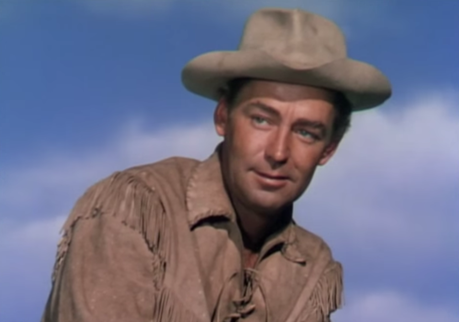
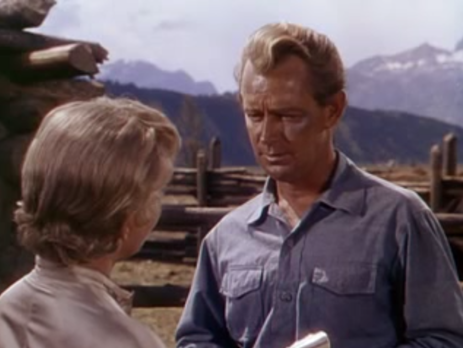
shane1Jackson Hole, Wyoming and the looming Tetons lend the same iconic majesty to this western that Monument Valley does for many of Ford’s best pictures. But then again, George Stevens was another master and he too was changed by the war, coming back with a different tone and an “American Trilogy” that included some of his best work. Shot in Technicolor, this picture boasts more than wide open spaces and raw Midwestern imagery. Stevens has some wonderfully constructed sequences and there are a number of great characters to inhabit them.

Shane is the eponymous gunman who is content to linger in the background while others become the focal point. Namely, Joe Starrett (Van Heflin), a man who came to the untamed land due to the Homestead Act and won’t let the rancher Stryker muscle them off the land that he believes is rightfully theirs. Despite this being her final film — and a favor to her previous collaborator Stevens — Jean Arthur is as wonderful as ever. The character Marian is brimming with goodness and a sensitivity that is hard to discount. It’s a part very different than her earlier work and yet she plays it so wonderfully. As for newcomer Brandon De Wilde, he’s an astute little actor and we really see this world through his eyes, so he does wonders to hold the story together.

Grafton’s general store and saloon become a wonderful arena of conflict within the film because it is rather like Ryker’s stomping ground since he and his men can always be found lounging around there when they aren’t terrorizing some poor sodbuster. After he agrees to work for Starrett, Shane goes into town for new duds, leaving his gun behind, and he quickly learns what he’s in for. It’s in such a scene that we learn who this man really is. He’s not a hot-head and he initially takes the abuse of Stryker’s guns, who call him out for purchasing soda pop. It’s for the boy Joey, but he doesn’t have to say that, because he needs not prove himself, at least not yet. Also, the relationship between Shane and Marian might be troubling to some — will they fall for each other — but when Ryker makes insinuations about Starrett’s wife, Shane is quick to shut him up. He’s not that kind of man. When Shane does return to the store, he’s prepared this time for retaliation and although it might not have been the smartest thing, it sure is gratifying for him and for the audience. He and Starrett make a killer team, after all, beaten and bruised as they end up.

shane2What follows is retribution from Stryker as he tries to buy out, threaten, and continually lean on the sodbusters, but Starrett remains resolute in keeping his friends together. In fact, there’s still time to share a wonderful Fourth of July dance with all the neighbors and it shows signs of a brighter, happier time that could be possible. With neighbors joining together in simple community and sharing life together. Shane feels somewhat out of place in this type of environment, and maybe deep down he knows it too, but he seems oddly content.

This happy time is juxtaposed with the funeral of ornery “Stonewall” (Elisha Cook Jr.), who was gunned down near the saloon by hired gun Jack Wilson (Jack Palance). His death is making some of the others jumpy, but once again Starrett keeps his group together, by first giving their former friend a proper burial and banding together once more. But by this point, they’re barely hanging on. Stryker’s got them on the run and Joe knows he needs to have it out with his arch-nemesis once and for all if things are ever going to return to the status quo. His dreams of ending this whole thing are ludicrous because there is no way he can get out alive. His wife knows it. He knows it, but it doesn’t stop him and his American Dream.

shane3It’s interesting how Shane at first does not try to stop him, but then he gets tipped off to what awaits Joe, and he decides to go in his place. This is his arena after all. The gun we all fawn over is finally getting put to use as Shane rides into town for the final showdown to have it out with the men in the saloon. However, although the shootout is intense it ends very quickly. Thus, what is really interesting are the moments beforehand where friend is literally fighting friend. Both doing what they think is right. However, since Joey only thinks in absolutes, when he sees Shane hit his father over the back of the head, he initially reacts with hatred towards his fallen hero. He doesn’t understand why all this is necessary. But as time goes on and he sees events unfold, he gets it.

As Shane rides off into the night, Joey yells after him to come back, he cannot bear for this idolized man to ride off. It makes me wonder if young Joey grew up with the image of Shane, the hero of his childhood. The doer of good and the ultimate champion of the oppressed.

The cast was rounded out nicely by some solid supporting players like Palance, Ben Johnson, Edgar Buchanan, Elisha Cook Jr., and down to Ellen Corby and even Nancy Kulp. It’s astounding to think that this film could have starred Monty Clift and William Holden potentially with Katharine Hepburn as well. Because, after all, the casting of Shane feels just right. Clift would have brought depth and emotional chops to the role, as a wonderfully impassioned actor. Just look at George Stevens’ A Place in the Sun (1951) for proof of that. However, what Alan Ladd has is a serenity and simple goodness that still somehow suggests something under the surface. It begs the question, how can someone so upright make a living packing a six-shooter? No doubt I like Holden better as an actor, but Heflin has the scruffy outdoors-man look, while still reflecting high ideals. Hepburn just does not seem to fit a western. This is one of the instances when all the pieces seemed to fit into place and we were blessed by a western classic that never seems to lose its luster. In a sense, we become boys again like Joey, completely in awe of Shane. Let us revel in that feeling, that moment of innocence once more.

5/5 Stars

Review: High Noon (1952)

highnoon1Drums softly beating. A voice mournfully bellowing,”Do not forsake me, oh, my darlin‘.” It can only mean one thing, the beginning of High Noon, a western that has grown near and dear to my heart in the recent years. And yet how can a western of under 90 minutes mesmerize and cause goose bumps to form time after time? That opening ballad sung so wonderfully and folksy by Tex Ritter is one great reason. It’s a mournful dirge of a song which nevertheless draws us into this film, and personally, I cannot help but belt out a few lines now and then (I’m unashamed to say I know the whole song). After all, it’s this song that reflects the story of our main character Marshall Will Kane (Gary Cooper) and reiterations of the tune can be heard throughout for the following hour as we all wait for the noon train.

The song makes it clear that Ben Miller is coming after Kane for sending him to prison. He’s got revenge on the mind and three of his buddies, including his brother, are waiting for his arrival, along with everybody else in town. Meanwhile, the Marshall is about to hang up his badge as it were, because he’s gotten hitched to a pretty young quaker (the estimable Grace Kelly), and they look to settle down with a store in some sleepy town. He’s well-deserving of it after all he’s done and the town stands behind him.

But the news of Miller’s return is no way to start the honeymoon. Still, the couple sets off, but Kane turns around realizing he cannot run (I do not know what fate awaits me. I only know I must be brave. For I must face a man who hates me, Or lie a coward, a craven coward; Or lie a coward in my grave).

highnoon4

This is the backdrop that he’s trying to scrounge up a posse with. Others getting out of town, some telling him he should get out of town too, and a general commotion about what they should do about the whole mess. There are numerous cross-sections and enclaves all with different motives and most importantly excuses. They all turn down a chance to help Kane for one reason or another (even his closest friends). It seems so easy to pass judgment, but then again what would we do in such a situation? In fact, it brings to mind the Hollywood Blacklist which this story was supposed to be an allegory for. This is not just some fictionalized parable, it was mirroring real life to some extent.

What really resonates about this film is the resolve of one man, because when it comes down to it, Kane did not need to stay, he did not need to do what he did, but he stood by his guns, literally, when no one else would stand with him. It’s easy to conform, easy to go with the crowd. It takes real courage to walk out on your own — although the Marshall did have a little help. So whether or not John Wayne thought this film was wholly “Un-American” or not, I think I would have to disagree with him on this one. Maybe what Kane has is reluctant courage, and I could see how the Duke would be disgusted by such a “spineless” individual. But for me, he’s all the more relatable played so aptly by Gary Cooper.

highnoon7It continues to amaze me that a film of this length can have so many wonderful characters who leave an indelible mark on the story. Certainly, you have the hero and the villains, but then we have character actors such as Thomas Mitchell, Harry Morgan, and Lon Chaney Jr. playing some of Kane’s buddies. There’s the gang at the bar and the hotel clerk, who are no friends of the Marshall. There’s his former flame Helen Ramirez (Katy Jurado) and his hot-headed deputy (Beau Bridges). The rest are filled out by men, woman, children, town drunks, and churchgoers. Zinnemann does a wonderful thing aside from just using the clock as a plot device and tension builder. He also calls back all these many characters as the noon train comes in with smoke billowing black. The audience and all these people know what that shrill whistle means. Things are going down, and Kane is going to face it all alone.highnoon2The isolation is so wonderfully conveyed by an aerial shot where the camera moves up to show the stoic Marshall standing in the middle of a ghost town. No people around and no one showing their faces. Then of course, when it’s all over, the floodgates open and all the folks rush into the center of town. Fittingly,  Kane drops his tin star in the dirt in disgust as the refrains of Tex Ritter’s ballad continue.

Put High Noon up against other films and it could be criticized as nothing more than a western, but perhaps that’s why I like it. I cannot help but gravitate towards it. In some ways, it reminds me of growing up and it allows me to forget about any sort of deeper meaning for an instant so I can be fully enraptured with this story, this song, and these characters. It’s a worthy incarnation of the mythic west, that also leaves a little space for some humanity.

People gotta talk themselves into law and order before they do anything about it. Maybe because down deep they don’t care. They just don’t care.” – Martin Howe (Lon Chaney Jr.)

5/5 Stars

The Professionals (1966)

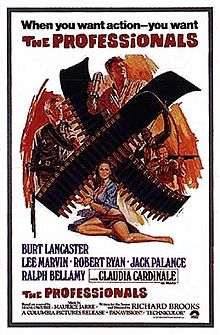
220px-Movie_poster_for_-The_Professionals-Who wouldn’t be enticed by a film entitled The Professionals? It feels a little like an amalgamation of The Magnificent Seven, The Dirty Dozen, with a  little sprinkling of Mission Impossible, and dare I say The Wild Bunch? We have a band of four big-time pros who are brought together to rescue the wife of a man named Grant (Ralph Bellamy). She is being held at ransom in the heart of Mexico. That’s no small task in the wake of Pancho Villa and the Mexican-American conflict, but these men are the best of the best.

The leader is none other than Lee Marvin (of The Dirty Dozen) with his prematurely white hair, leading the band as Rico Fardan, a skilled tactician, and former U.S. Army Officer. He is joined by Jake Sharp (Woody Strode), who is the best tracker around and also a crack shot with a bow and arrow. Next, comes skilled horseman and pack master Hans Ehrengard (Robert Ryan), who keeps mainly to himself. The most dynamic part is that of Bill Dolworth (Burt Lancaster), an unscrupulous scrounger who nevertheless is a good shot and an artist when it comes to using explosives. He’s not what you call a trustworthy type, but Rico would trust this man with his life and that says a lot.

Richard Brooks story is straightforward enough. This dream team goes in with their mission clear: The man who stands in there way is revolutionary turned outlaw Jesus Raza (Jack Palance), who is the one keeping Maria (Claudia Cardinale) captive.

As they push forward, they witness the brutality of Raza and his men as they raid a passing train and execute many of the occupants. Soon Fardan and his crew move in on Raza’s compound and wreak havoc one night so they can pull Maria out and take her to safety. But she seems like a very reluctant damsel in distress. She also seems very intimate with Raza. That’s the first sign that something’s up, but still, they follow the parameters of the assignment and pull her out.

Retribution follows and after a gunfight The Professionals flee through the mountains with Raza in hot pursuit. They use explosives to try and impede the progress of the rebels, and then Dolworth resolves to stay back to bide his partners time so they can get across the border. It’s at this point that he fights like one of the magnificent seven, in an impressive rearguard action that has his foes befuddled.

It’s when he actually comes face to face with his enemy that things become interesting. They know him and he knows them. Once upon a time, he fought with Raza and he was also acquainted with the lively female marksman Chiquita. When they finally get back to good ol’ Mr. Grant they find he’s not as straight-laced as they once thought, so they make a costly decision. They lose out on their big payoff but do the honorable thing by setting Maria free.

The Professionals gives us want we want. Honestly, we want cool characters and fun action sequences and that’s essentially what we get. There’s quite a bit of fairly graphic violence too for a ’60s western signaling a slow change in the genre. Lee Marvin is impeccable as the self-assured, tough as nails commanding type. Lancaster is, of course, the most interesting, and I can only imagine he had the most fun because playing a scoundrel would undoubtedly be a treat. Strode, Palance, and Cardinale were enjoyable to watch in their own rights as well since we did not necessarily need a whole lot of depth from them. It was only Robert Ryan’s role that felt rather like a throwaway part that did not have much to it. No matter, the Professionals was still an enjoyable all-star western.

J.W. Grant: You bastard.

Rico: Yes, sir. In my case an accident of birth. But you, sir, you’re a self-made man.

4/5 Stars

Review: Once Upon a Time in the West (1968)

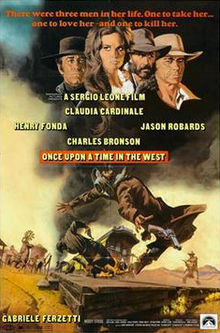
Once_upon_a_Time_in_the_West 2I’m not well versed in Spaghetti Westerns, but I certainly do not need someone to tell me that Sergio Leone’s film is a sprawling epic. That’s an understatement if there ever was one. The cast, the score, the visuals. Everything about it fits together so marvelously. All the moving parts succeed in developing a majestic piece of cinema that really is awesome. I try not to use that word lightly.

Recently I saw Tarantino’s Django Unchained which of course pays homage to the Spaghetti Western, and it undoubtedly exhibits the Tarantino style. However, Leone’s film lingers as well, but with Once Upon a Time in the West, I didn’t mind. The film, after all, has a cold open that lasts 13 minutes and most of it is spent staring at Jack Elam and Woody Strode. Except the way Leone captures it all, I don’t really mind. In fact, I thoroughly enjoy it. Whereas Tarantino’s film felt like it was dawdling, Leone’s film didn’t seem to dawdle. It was just stylish in its makeup.  The pacing at times feels like a lazy Sunday afternoon underlined by dread for something to come. Then for a brief blip, the trouble comes violently and then just like that it’s gone. Everything’s back to the status quo except this structure makes every killing and gunfight seem all the more dynamic.

The main players are Claudia Cardinale, James Bronson, Jason Robards, and Henry Fonda. Cardinale, of course, is one of the icons of cinema, and here she feels like a wonderful embodiment of this woman who helps bring civility to this land. Whether it’s simply her immense beauty or some emotion behind her eyes, it’s hard not to watch her every movement. First, as she learns she is a widow, next when she is introduced to the other main players, and finally when she sees her dead’s husband’s dreams forming all around her.

James Bronson as the aloof, but deadly “Harmonica” has to be at his coolest. He hardly has to say anything because that ominous harmonica music is his calling card. Every time we hear it we know he’s around and also his eyes are so expressive. Sergio Leone is never squeamish about lingering on his star’s faces. In fact, that paired with landscapes is one of his signatures that helps define his iconic style. The contrasts stand out and the interludes often lacking dialogue somehow help make his characters even cooler. They take on an air of mystery and in the case of “Harmonica”, we only understand his vendetta near the very end. It all starts to make sense.

Robards is the outlaw Cheyenne, who is pinned with the murder of McBain’s wife and children. A posse is after him and his gang, but he was actually pinned for the rap. He is cast in the light of a scruffy anti-hero and Robards plays him rough around the edges, but most importantly with a heart. He’s one of the few characters who seems to get Jill. He knows enough that none of the men around her are worthy of her, because she is a special class of woman, in spite of what her past may say.

Perhaps the most striking of casting choices was Henry Fonda because by now he was well along in his career and most certainly best known for his plain-speaking heroes. That’s what makes Frank such a great character because dressed in all black and armed with a revolver, he guns someone down the first moment we see him. It’s a shock and it sets the tone for the rest of the film. He goes on to backstab his sickly employer and continues to put pressure on Mrs. McBain to give up her land. It goes so far as taking advantage of her at her home. He’s a monster, but the part is such the antithesis of the Henry Fonda we know, making it a pure stroke of genius.

At least for me, you soon forget about the dubbing of certain characters and just allow yourself to become fully engaged in the dynamic West as envisioned by Leone. After all, since there isn’t a whole lot a dialogue, in some scenes it loses its importance. It’s often about the desolately depicted visuals. The wry smile on a face. The buzz of a pestering fly or the squeaking of a windmill. That’s another thing. This film puts sound to use so wonderfully. Whether it’s the harmonica, Morricone’s engaging score, or diegetic sounds. In fact, the score evolves and reprises in concordance with the pacing of the film. It can be ominous. It can be playful. And sometimes it’s nonexistent.

When it all comes down to it, we get the final showdown between “Harmonica” and Frank, but the film is a lot larger than that. After all, we have been following multiple characters. Jill finally sees the world around here coming to life, and she has weathered the Wild West as an independent woman. As for Cheyenne, he ends as a tragic hero of sorts. There’s no question, Leone’s film, arguably his greatest alongside The Good, The Bad, and The Ugly, helps define a version of the West, with iconic characterizations placed up against striking pictorials. It’s one of those film’s that despite the length, never feels like a labor. A smile is constantly forming on my face, to mirror the visage of James Bronson. I really wish I could play the harmonica now. It’s so ridiculously cool! That’s what I really took away from this film.

5/5 Stars

3:10 to Yuma (2007)

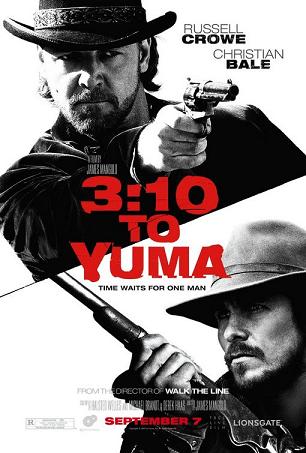
310_to_Yuma_(2007_film)I must preface this by saying I still have yet to see the original film starring Glen Ford and Van Heflin, but I must say I was just as intrigued by the pairing of Christian Bale and Russell Crowe. Bale plays against type as a one-legged war vet and rancher trying to make a living for his family.

Then there’s Crowe who takes a turn as notorious outlaw Ben Wade who has committed his fair share of crimes and bank jobs with his gang. It would appear they have very little in common, that is until Wade is captured by some local authorities and Dan Evans signs on to help take him to the train station since he’s in desperate need of money. So begins the dangerous undertaking, with Wade’s men looking for blood, Apaches waiting for them, and numerous other pitfalls. They are mistaken if Wade is going down without a fight, but he slowly bides his time getting under their skin.  Their plan to set a decoy also buys them little time after the bandits interrogate the stand in and let him burn.

Second in command Charlie Prince is not going to stop until he gets his boss back, and he proves that he will use any measures he deems necessary. Evans and the rest are held up in a town on the second story waiting for their assailants, but the odds get bad real quick. On a matter of principle, Evans decides to finish what he started while telling his son to leave the premises. The finale begins as Evans and Wade head to the train station with a barrage of bullets aimed in their direction. The old reliable 3:10 to Yuma is late, but in one final moment Wade willingly gets aboard the train probably knowing full well that he can escape a third time. There stands Dan Evans a man who did something extraordinary and will get the money he so desperately needs. But Wade and young William watch as Dan gets riddled with bullets from behind. But Wade and William are far from done.

Since the western is all but a dead genre nowadays, it’s always wonderful when a modern film is able to do justice to the lineage, and even as a remake this version can certainly stand alone. It fills a gritty, grimy, sweaty reality that in some instances feels a lot more realistic than early Hollywood westerns. In other words, it’s not bad, just different and aside from Bale and Crowe, Ben Foster, Peter Fonda, and Alan Tudyk all are memorable. However, I lost Fonda under all that beard. Was that really him?

4/5 Stars

Comanche Station (1960)

Comanche_Station_FilmPosterComanche Station opens with a man who willfully goes into Comanche territory. We don’t quite know why at first, but through haggling and bartering he’s able to save a captured white woman. It doesn’t come out until much later but it turns out that Jefferson Cody’s (Randolph Scott) own wife was captured by Comanche well nigh 10 years ago and he has never stopped looking.

The saved damsel Nancy Lowe gets the wrong impression about Cody believing the gruff figure was only in it for the money and that is far from the truth, as he intends to take her back to her husband out of harms way. That’s until they’re joined out on the trail by Ben Lane (Claude Atkins) and his two hired guns. Akins in fact takes on a role almost identical to Lee Marvin a few years before and he’s not quite as memorable. However, his two stooge sidekicks are more interesting, because although they are “outlaws” in a sense, we cannot help but like them for their buffoonery and conflicted morals.

Lane looks to ambush Cody and Mrs. Lowe so he can snag the reward, but Dobie will not take part. The shootout ensues between Cody and Lane. Afterwards the searcher leads the lady back to the arms of her husband. This final installment of Budd Boetticher’s Ranown Cycle shares some similarities to Seven Men From Now, but there is a totally different feel because the visuals are very different.

3.5/5 Stars