
 In his noted Crisis of Confidence Speech, incumbent president Jimmy Carter urged America that they were at a turning point in history: The path that leads to fragmentation and self-interest, down that road lies a mistaken idea of freedom. It is a certain route to failure.
This also serves as a viable entry point into Mike Mills’ intimate, pensive eulogy, 20th Century Women. This is a film on the verge of so many things. It frames its story in the context of the time and the people that existed in one particular moment. Mills floods his canvas with natural light but also paints it with bold colors and plants us in this world that’s somehow tangible and present while still only being a memory to look back on.
It’s 1979. Nixon is slowly fading. Reagan is coming with his conservative boon. You have the Talking Heads. You have hardcore punk. Feminist novels and the woman’s movement. Skateboarding down the empty Santa Barbara roadways. It feels less like a time of change and more of a moment on the brink of something new.
But this very self-awareness in the era is provided by the characters who live within that context because this is their life, these are their memories, and they connect them together delving into the past and soaring forward to all that is yet to come. They recount the world they know through matter-of-fact voice-over to match the images that undoubtedly play in their own heads. This is for them. Namely a son and his mom, Dorthea and Jamie. There’s is a generational difference but not so much a divide.
Dorthea (Annette Bening) is an eccentric, dynamic, empathetic woman who cares deeply about life and others. She believes in each individual person’s rights and volition–you might even say she’s progressive in some ways. But she’s also a mom and a woman bred in a different age. Her son Jamie (Lucas Jade Zumann) makes a point of the fact that she’s from the Depression.
Giveaways include her chain smoking habit, a penchant for Bogart, and a predilection for show tunes. She was an aviator and draftswoman in a male-dominated world. But She came out of a time where the community was expected to look after everyone and she searches out the same framework for her son because he’s of a certain age.
If you were pressed to pick out the story’s inciting incident it might be the moment where Dorothea gathers the instrumental women in Jamie’s life around her kitchen table to enlist their help. Because the men around him either don’t resonate (Billy Crudup as William) or they only make their presence known on birthdays (namely Jamie’s father).
She takes a near death experience to mean he’s going through his adolescent phase and she doesn’t believe she can be all things for him anymore. As she notes later, they are better suited for the role because they get to see him in the world as a person. She will never get that. Oh, the heartaches of parenthood–being so invested–while simultaneously trying to be hands-off.
And so in some sense, her tenant Abbie (Greta Gerwig) and their teenage neighbor Julie (Elle Fanning) make a concerted effort to press into his life. Julie is the one who sneaks up through his window sometimes, not to sleep with him, though they often share the same bed, for mere companionship, someone to feel safe around and to talk to. Because he’s someone she knows can be trusted amid the fray of highschoolers.
In one particular sequence, Elle sits on the bed her eyes looking sullenly at Jamie as she tries to talk through their relationship. She concludes, “I think I’m too close to you to have sex with you.” In one sense, it’s touching because it shows that their connection goes beyond this physical act that all the kids are doing, she holds too much respect for him, but it also points to the sorry state of affairs when something like sex is seen as dirty and degraded. That’s part of what she is wrestling with. That and the fact that her therapist mother tries to conveniently label her every action.
Elle Fanning leaves a startling impression casting herself in this film in a light that in one sense is the prototypical edgy, angsty teenager but there is also an undeniable vulnerability and genuine caring quality there that steeps her in unknown depth. That top layer is nothing new but that latter aspect is a testament to Mills’ characters.
Meanwhile, Gerwig provides her exorbitant supply of charismatic energy and panache that allows her to hold some of the most memorable scenes in the film in comedic terms and yet she also proves that there still is a certain tenderness in the red-haired, photography-loving, punk listening, new age modern woman, Abbie.
At the behest of Dorthea she tries to invest some of her artistic spirit into Jamie’s life, showing off the punk scene, introducing him to seminal feminist texts, and helping him to be comfortable around women but, of course, he’s more comfortable than most which is a sign of a certain amount of maturity. In fact, he impacts these women as much as they speak to him and that’s a testament to everyone involved, all flaws aside.
Even if Jamie is, in truth, our main character, perhaps a stand- in for Mills or for us, this film succeeds in crafting stalwart female characters with actual contours that are worth dissecting and with inherent worth denoted by their actions and what they care about.
I don’t know a great deal about Mike Mills but watching a film like 20th Century Women I feel like I know him better–not all of him certainly–but there are pieces here that are no doubt personal and give us a slight view into his experiences.
It’s intimate and there’s an unquestionable amount of vulnerability in his story that must be admired for its sheer honesty. It comes off as purely genuine and real. Because the bottom line is the fact that it never runs on agenda. It never tries to overtly get us to think something or feel something else. If it comes to any overarching conclusions at all it’s that life can be hard and confusing and the same goes for people.
Each one of us can come off as a complex enigma. Even the ones we know and love. It’s possible that we will never know and love them as much as we wish we could. It’s possible we cannot help them or guide them as much as we would like. Still, that’s okay.
For some, this will be a maddening, rudderless picture but to each his own. However, if I may be so bold, 20th Century Women is the kind of film I would want to make–a film wrapped up in its cultural moment in a way that feels so authentic–where the events playing out even if they’ve been made cinematic have real resonance for me as a human being.
Yes, it’s the kind of effort that won’t be received by everyone but a film so very personal rarely is. A film like this you don’t necessarily make for other people anyway. You make it for yourself and the ones you love and leave it at that. This is a love letter.
3.5/5 Stars
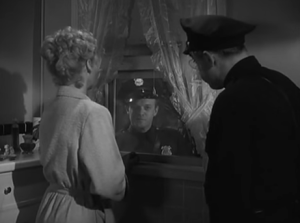 The whole thing turned on a freak accident. You’ve got to believe that Susan.
 If you know what you want in life be sure of it and you can’t miss. I found that out early. ~ Lawrence Tierney as Sam Wilde
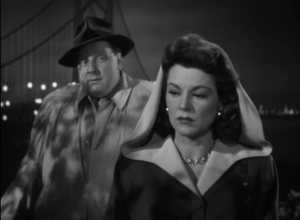 However, evil always looks to catch up with the guilty party and a private investigator is poking around in all the places he can to find the culprit behind an egregious crime. Walter Slezak’s Albert Arnett is a witty sleazeball with the lowest scruples imaginable when money is concerned. But he also happens to be decent at his occupation bringing him to San Francisco in pursuit of answers.
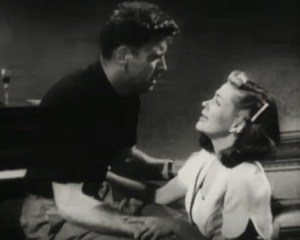 Aesthetically, Robert Siodmak’s roots in German Expressionism are crucial to the formation of the film-noir world as we know it today and Criss Cross has to be one of the most diverting additions to his repertoire. Once more he’s paired with his star from The Killers (1946) Burt Lancaster with another raging score from Miklos Rozsa and yet again there is a heist involved. However, whereas the film inspired by Hemingway’s original story was a story about a washed-up boxer — a humble Citizen Kane if you will — with some criminal elements mixed in, Criss Cross is all thriller. It represents the subset of film-noir that is the heist film, but it would hardly be film-noir without something going terribly wrong. This event is integral to the plotting as is the love triangle that becomes the main axis of the ensuing action.
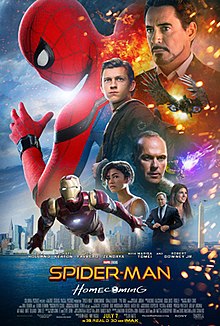 This was yet another pleasant surprise. Just when I think I’ve finally washed by hands of superhero movies the cineplexes are blessed by two pictures like Wonder Woman and then Spiderman: Homecoming. And they couldn’t be more different. Still, as much as Wonder Woman was invested in its heroine, you get the sense that the crew behind this film care some about Peter Parker too.
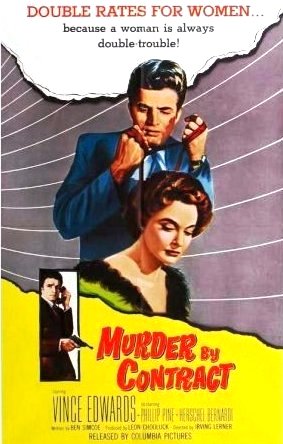 Every once and awhile when you dig through the treasure trove of cinema which includes the B film you can wade through the refuse and come upon something truly special — elevating itself from all the lesser offerings of the past decades. Murder by Contract is such a film.
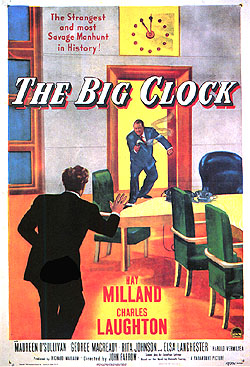 With its rather dreary title aside, The Big Clock is actually an enjoyable thriller that works like well-oiled clockwork. It’s true that oftentimes the most relatable noir heroes are not the hardboiled detectives, although they might be tougher and grittier, it’s the hapless everymen who we can more easily empathize with. Bogart, Powell, and Mitchum are great but sometimes it’s equally enjoyable to have someone who doesn’t quite fit the elusive parameters that we unwittingly draw up for film-noir. Ray Milland is a handsome actor and he was at home in both screwball comedies (Easy Living) and biting drama (The Lost Weekend). He’s not quite what you would describe as a prototypical noir hero.
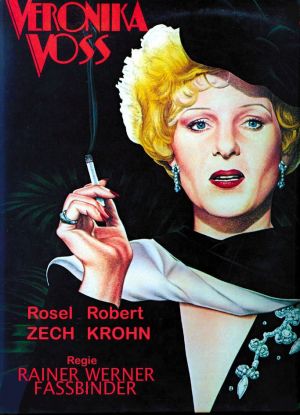 You get a sense that if they had ever met, Norma Desmond and Veronika Voss might have been good friends. Either that or they would have hated each other’s guts. And the reason for that is quite clear. They share so many similarities. Both are fading stars, prima donnas, who used to be big shots and now not so much and that seems to scare them so much so that they try and cover their insecurities with delusions of grandeur. Having to look at your near reflection would be utterly unnerving.
 Edgar Wright has a reverence for movies, he knows his movies, and when he makes his own movies there’s always an inherent understanding of the cinematic landscape–taking what’s already been done and proceeding to add his own affectionate spin on it.
 As one of the greatest B-films of its day, D.O.A. is framed by a crackerjack gimmick that actually pays heavy dividends. We watch a man making his way down a long corridor as the typically stringent score of Dimitri Tiomkin pounds away behind the credits. In this initial moment, our protagonist Frank Bigelow (Edmond O’Brien) rushes into police headquarters to report a murder: His own.
 4 Star Films