
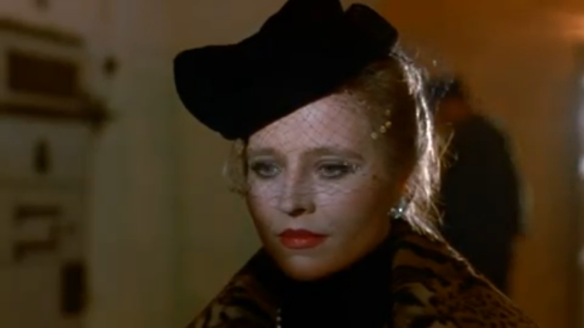
 The Marriage of Maria Braun opens with a bang and a thud, literally, as bombs rain down on Germany in the waning hours of WWII. It’s perhaps the most chaotic wedding ceremony ever put to celluloid. And the story ends in an equally theatrical fashion.
But although the beginning and the end do speak volumes, it’s the in between that we must , try and piece together if we ever want to make sense of the eponymous Maria Braun. In all honesty, it’s extremely difficult to know quite what to do with her.
However, to understand her a little context is in order. Germany is in ruins. The allies have swept in victoriously and now the German people must learn how to survive with the new order. Husbands who are as good as dead, black market goods, and scrounging around just to make ends meet.
Maria Braun carries on such an existence to watch over her widowed mother and grandfather who depend greatly on her. She begins working at a bar often frequented by American soldiers and there she meets her first conquest Mr. Bill dancing the night away to “Moonlight Serenade.” Aside from being big and strong, Mr. Bill has resources to support her and there’s a happily symbiotic relationship of romance. Except Hermann returns and he catches the two lovers together. But the strangest thing occurs. In a moment Maria drops all prior activities and rushes to her husband. It seems she still truly loves him, but then what was she doing with this other man?
What follows is the next stage of her life as Maria must play the waiting game as Hermann is relegated to a life in prison. But he is still her husband so she agrees to faithfully wait for him. On a train one afternoon, she bumps into an industrialist named Mr. Oswald. He becomes her next conquest as she first gives him industry advice and then gains a position in his company slowly becoming more affluent. Her spell as Oswald’s mistress begins simultaneously and yet she seems willing enough to be with him, if not for the financial capital to be gained. It’s followed by a strikingly familiar moment of intimacy that looks almost identical to a previous sequence if it were not for the varying skin tones. Maria continues basking in her success.
The fateful day that Hermann returns comes and goes as he informs Maria that he will take a leave to Canada to get his life in order. What she doesn’t know are all the workings behind the scene, not until a major dramatic reveal. Whether you view Maria’s life as success is purely based on point of view. In the audience’s eyes, her story feels quite sad, but we have a feeling Maria never felt that way. She was too strong and self-assured for such a thought.
To its credit, Fassbinder’s drama utilizes language well between German, English, French, and so on with characters dancing between all with a rudimentary skill that helps to paint the post-war canvas with all sorts of dialects. But amidst all the white noise Hanna Schygulla is most obviously the main attraction. What are the words to describe Maria Braun? Provocative, icy, sneering, vindictive, a cynical terror of a woman?
Except, in the beginning, she’s not like this, at least not yet. There are some indications, but they’re only slight signs of what is to come. She uses and abuses but in such a way that her male conquests want to be manipulated. She’s so tantalizing that they don’t mind it in the least.
Could we call Maria a female counterpart to Charles Foster Kane? Yes, except it’s not simply that she’s accrued wealth, power, and influence without love by the end of the film. She has all the love she could ever want. All the attention, all the eyes of any red-blooded man, but she doesn’t seem to know what to do with that love. She compartmentalized her life in such a way where she holds onto her matrimonial bond to Hermann an entire lifetime. When Hermann’s left for dead, when Hermann’s in prison when Hermann takes leave in Canada.
Still, Maria holds onto the fact that she is married to this man she loves, while simultaneously freely being involved with other men. Does she really love him? I think it’s all too probable, and yet she doesn’t know how to function in that singular capacity. These other men hold a purpose in her life. Is it a coincidence that Hermann and Maria barely share any screen time together? It doesn’t seem like it. Not with someone as engaged as Fassbinder. He, like Maria Braun, knew what it was to be loved, but perhaps he did not know what it was to love others in a normal, healthy way without undermining it with his own inner demons. He died back in 1982 of a drug overdose at the ripe young age of 37. His genius was realized, but in the wake of such genius lay innumerable tragedies.
4.5/5 Stars
 It’s hardly Charles Dickens, but still, Hard Times is a real tooth and claw street brawler. We have Charles Bronson as our token taciturn drifter, tough and down on his luck during the Depression. James Coburn is Speed, a fast-talking promoter looking for a quick buck. Walter Hill’s film may not be pretty to look at, but boy is it a lot of fun! Everyone’s favorite supporting scene stealer Strother Martin makes an appearance as a sometime doctor who dropped out of med school. These three men are at the center of an evolving partnership that comes into being on the streets of New Orleans, that hopping town of jazz, juke joints, and bare-knuckle boxing. The latter is the most important for the men aforementioned because, with Speed as his manager and Poe as his ringside doc, Chaney looks to rule the ocean front with his grit and tenacity.
 Andrzej Wajda’s Man of Marble holds a meta quality that still somehow feels radically different than Godard or Truffaut’s turns in Contempt and Day for Night. It attempts to channel a younger point of view — that of an ambitious student — with an overtly political agenda. Agnieszka is an independent, fiery individual intent on making her thesis the way she sees fit. She’s prepared to go digging around in uncharted territory or at least in territory that has been off limits for a long time. That understandably unnerves her adviser and still, she forges on.
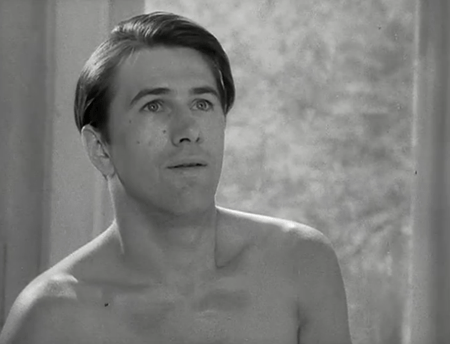 Everywhere she goes Agnieszka drags along her crew who utilize handheld cameras and wide-angle lenses, at her behest, just like American films. It becomes obvious that Birkut was hardly a political figure, instead contenting himself by using his hands to lay breaks and lay them well. He takes pleasure in his work with a big sloppy grin almost always plastered on his face. It was people like him who made Nowa Huta into the great city of industry that it was, and he became an emblem of that. The party monumentalized him and he became the man of marble to be lauded by all.
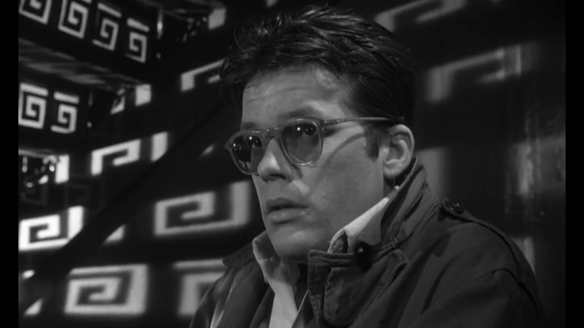 We’re used to getting our hands dirty in the thick of World War II, whether it is in the European theater or the Pacific, but very rarely do we consider the consequences that come in the wake of such an earth-shattering event. Things do not end just like that. There must be periods of rebuilding and rehabilitation. There is unrest and upheaval as the world continues to groan in response.
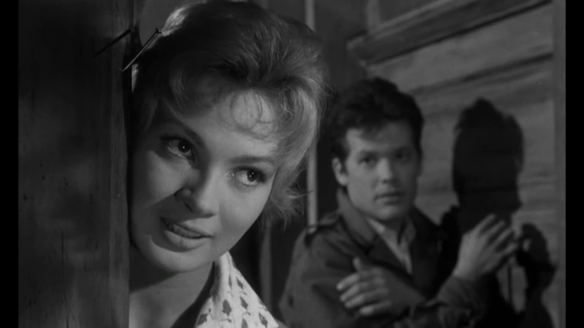 There are love scenes that are quiet, subdued, and truly intimate. In fact, it feels rather like Hiroshima Mon Amour where the camera lingers so closely on two figures in such close proximity. There does not have to be great movement or dramatic interludes because having two people next to each other should be enough. The historical context in itself seems to be enough. For that film, it meant Japan post-1945. For this one, it’s Poland after the clouds of war have lifted.
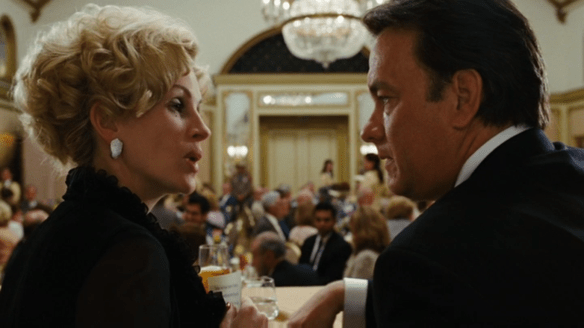 With Aaron Sorkin’s script as a road map, Charlie Wilson is a character that Mike Nichols can truly have fun with. You can easily see him getting an undue amount of delight in this man who was able to do such a momentous thing while simultaneously walking on the wild side. It had to be a good story to warrant the director’s cinematic swan song.
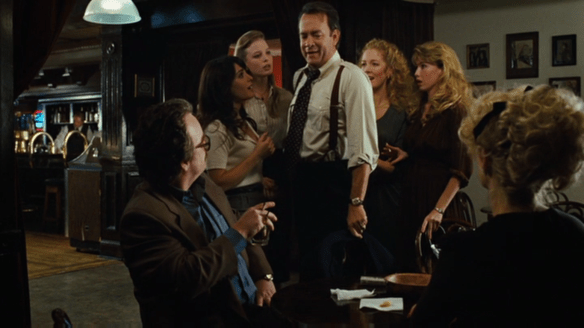 In the opening moments, it becomes obvious that Charlie Wilson is not so much an easily corruptible representative as he is a sexed-up man who enjoys charming female company. He’s “Good Time Charlie” for good reason. He surrounds himself with pretty young things, doesn’t mind playing around a bit, and even has a cocaine charge hanging over him after a potentially objectionable night in Vegas. In fact, the attorney looking into his case is, interestingly enough, one Rudy Giuliani.
 Peter Lorre has a face that will forever live in cinematic infamy, and it started with M. In truth, Fritz Lang’s drama involving a serial killer feels fresh and engaging even after all these years, maybe because humanity hasn’t changed all that much. We still murder, we still kill, we still seek justice, we still give into our base desires, and there’s not a perfect person among of us. Each one of us has our faults — our own personal downfalls.
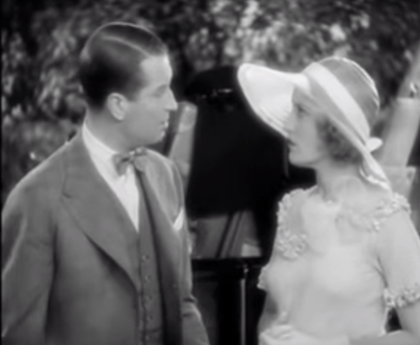 This is unequivocally the age of sound! That’s what this film proclaims from the rooftops with its symphony of syncopation as the world of Paris awakens from its slumber. Its opening rhythms are pure ingenuity and the glorious unfoldings never cease for the rest of the cheery production.
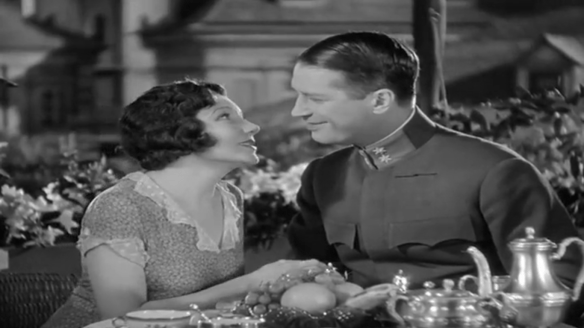 One would never think that one well-placed wink would change the course of an entire life or be the basis for an entire film, but on both accounts it is true. Ernst Lubitsch’s The Smiling Lieutenant represents all that is good and right about one of his films. It’s light and airy with a dash of charm and a tune in its heart. It’s light on its feet with humor and somehow maintains its self-respect, much like the man at the center of this one (Maurice Chevalier).
 But Lubitsch’s final twist is completely out of left field and a completely comic inversion of what’s supposed to happen — capping off his oeuvre of song, suavity, and sensuality in high fashion.
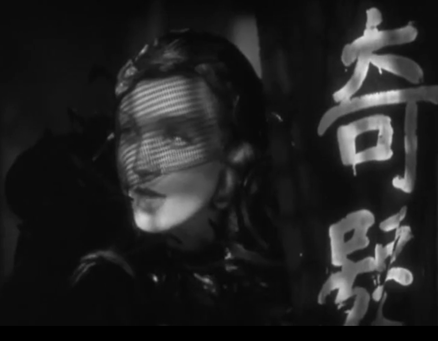 The same year as Grand Hotel there came another film, that while still boasting an ensemble cast felt far more intimate. In its day it was christened “Grand Hotel on wheels” and its narrative does unravel aboard a train. However, Josef von Sternberg’s film opens with a faceless atmosphere spilling over with the bustling commotion of a railway station. It takes a few moments to lock onto the characters we will be making the journey with, but we won’t soon forget them.
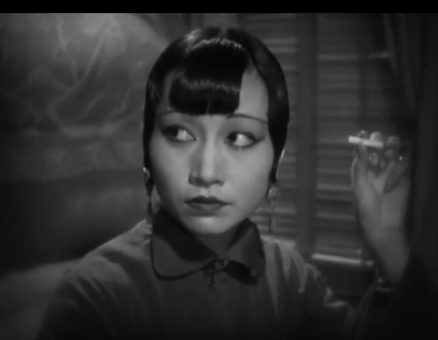 It is in these moments that are two female heroines must act. Hui Fei (Anna May Wong) so that she might defend the honor of herself and her country. Lilly so that she might express the great, expansive depths of the love she still holds for “Doc.”
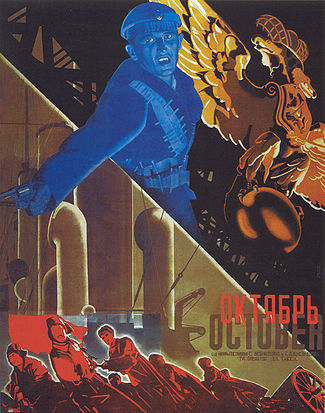 It’s curious that the first image October conjures up is a biblical nightmare from the book of Daniel. In that instance, the Babylonian king is frightened in his dream by a giant statue that comes tumbling to the ground. Of course, in that context, it had a lot of the same connotations, that his kingdom would come crashing to the ground with a resounding thud.
 4 Star Films