4 Great Movies Set in a Single Location

Lifeboat_(1944)_1

Great directors can take a restriction like a single, confined location and turn into something especially extraordinary. Because the likes of Alfred Hitchcock, Sidney Lumet and Louis Malle prove that these are not limits at all, but sources of cinematic inspiration. It what you do with that space that is of the utmost importance.

1. Rear Window (1954)
The ultimate thriller, utilizing one Greenwich Village apartment complex to the nth degree. Jimmy Stewart being confined to a wheelchair has never been so compelling as he begins to suspect that his neighbor across courtyard is a wife murderer. Hitchcock builds up the tension by not allowing his character to escape, and he becomes embroiled in intrigue as well as romance. It all leads to a crackerjack ending.

2.12 Angry Men (1957)

There have been many courtroom dramas, but the beauty of this character study is its new perspective. Sidney Lumet’s debut is a thing of beauty, because he lets his characters work and there are 12 wonderful actors all playing off each other. The story is simple. These men must decide if a young boy should be sent to the electric chair. Put them together in a room for an hour and a half and we learn more about mankind than we could possibly imagine. There’s nothing to make the temperature rise like 12 angry men in a room together.

3.Lifeboat (1944)

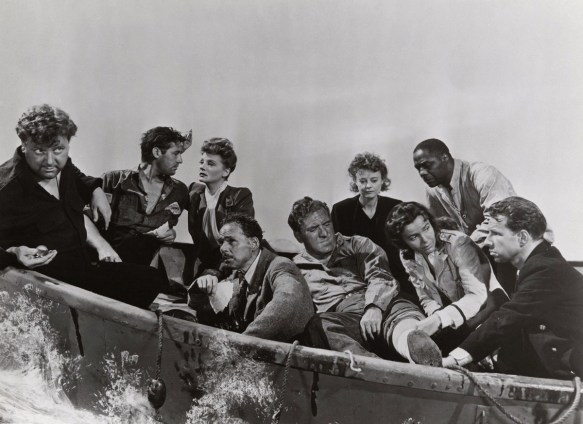
Hitchcock was always one for technical challenges and Lifeboat is a film that reflects his penchant for cinematic experiments. After an ocean liner is sunk numerous passengers are forced to board a raft together, including friends and foes. Perhaps the most surprising thing about the war drama is how Hitch is able to keep the story from being stagnant. It’s surprisingly compelling  for how simple it looks at first glance.

4.My Dinner with Andre (1981)

This film is less about dramatic tension and more about a concept. Two men sit together and share a conversation over dinner, full of all sorts of philosophical musings. Once again a simple premise gives way to interesting discussion led by Wallace Shawn and Andre Gregory playing fictional versions of themselves.

Kid Brother (1927)

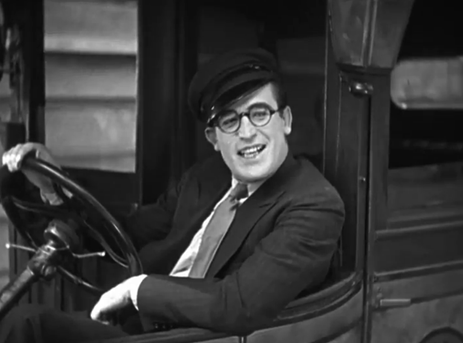
kid brother 1Kid Brother is a departure for Lloyd from the general hubbub of urban life as he finds himself on a ranch, living with his two older brothers and his father, who is the local sheriff. His surname this time around is Hickory an aptly brawny moniker for a frontiersman, except he’s hardly the physical specimen of his father and brothers. They spend their days chopping down timber and hoisting logs on their broad shoulders. Harold does his daily work collecting the laundry and ultimately chasing after it when it blows away.

He unwittingly gets himself into a jam when he puts on his father’s sheriff garb and is approached by a traveling medicine show looking for a permit to perform in the local town. Not wanting to lose face he plays the role and lets them have their show. When father catches wind he’s not very happy and sends young Harold to end the show, but he’s not much at laying down the law. Instead, they make a mockery of him, and he is truly a pitiful figure hanging helplessly by his arms at the road show.

kidbrother2But there is one person who likes him a lot. Mary, who is part of the traveling show. And Harold does a seemingly unheard of thing of inviting her to spend the night at his family residence. She does something even more unthinkable and accepts. It’s probably the happiest Harold has been in a long time, and it spells a turning point for him. Mary winds up staying somewhere else as not to cause a scandal, but nevertheless, Harold’s ego is boosted.

After his father is accused of stealing a large sum of money, the town is in an uproar. All three sons go out to try and clear his name by bringing back the culprits. Of course, it is brother # 3 who is on the right path and finds the shady members of the traveling show hiding out on a boat. This ending set piece in some ways hearkens back to Keaton’s The Navigator and Lloyd rather ingeniously subdues his foe, although he seems woefully outmatched.

He regains the family honor and earns the commendation of his family. Most importantly Harold Hickory walks off into the sunset, love in arm, rather like Chaplin, but there’s no doubt Lloyd is his own man. He wears glasses, and he’s most certainly his own creation.

In fact, it brought to mind Woody Allen’s Love and Death. Harold Lloyd makes as good a pioneer as Woody Allen makes a Russian, but then there is a great deal of comedy from appearances alone. Their personas are at odds with the worlds that they place themselves in. However, while Woody Allen is always weighed down by cynicism and fatalistic thoughts, Lloyd’s glasses character has not been besmirched by the ways of the world. He maintains his sense of innocence and hope throughout his journey. That’s what allows him to get the girl and conquer all obstacles, winning his audience over in the process. His outlook is summed up by the intertitle, “no matter what anybody else thinks, have confidence in yourself and you can’t lose.” Perhaps it’s idealistic stuff of the past, but then again 90 years ago is in the past. Maybe even today there’s at least a bit of truth we can glean from it.

4/5 Stars

After The Wedding (2006)

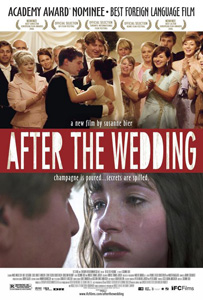
After_the_WeddingThere is a scene in After the Wedding where the new bride Anna gets up and announces that it’s not usually customary for a bride to give a toast, but something is bound to go wrong at some point, so she might as well get it over with. It’s like she’s unknowingly cushioning the blow. She does not know, and the audience certainly doesn’t know, the gravity of what she says next. There are two people in the room who do. Anna voices how much she loves her parents even though she realizes Jorgen is not her real father, she cherishes him all the same.

I try and not use the label “tearjerker” lightly, but with this Danish film from director Susanne Bier, I mean it wholeheartedly. It cuts so deeply because there’s a bitter-sweetness to it that lingers, and that only occurs when you’re actually invested in characters. We meet Jacob first (Mads Mikkelsen), a middle-aged man, who seems to have built a rewarding life teaching in India. But on a trip back to his homeland, to hopefully acquire some funding, he comes across a familial secret that impacts him greatly. It all happens because the friendly businessman Jorgen invites his new acquaintance to his daughter’s wedding the following night. We get the film’s main jolt during the wedding and the whole story is never the same afterward because it flips everyone’s life upside down.

The next big revelation comes out when loving wife Helene presses Jorgen about his heath. Anna has her own problems when she walks in on her new husband with another woman. These up the drama, but it’s important to make it clear that this story doesn’t rely on soppy drama to maintain the stakes. The peaks are powerful, but even in the valleys, it keeps our interest. Certainly the melodrama is deeply jarring, however, it only delivers such an impact, because the people involved are far from one-dimensional cardboard cutouts. This could have easily becomes some Danish attempt at a telenovela and yet it does not. Far from it, Jacob, Jorgen, Helene, and their daughter Anna are figures, who we can almost feel the contours of. They bring to mind glimpses of friends or family perhaps. Generally good folks, who have made mistakes along the road.

In his past, Jacob acknowledges a drinking problem and sleeping with other women. Now he runs an orphanage in India and he’s matured greatly. Helene admits to not knowing all the answers for the decisions she made as a young woman. She probably should have done things differently, but the bottom line is that she loves her daughter deeply and is completely devoted to her husband. Jorgen might be a mogul and a powerful man, but he also has a deep devotion to his family. Seeing him with his kids you know he is a good father because he loves and provides for them in all possible ways. He actually makes time for them and it shows.

Hellene voices the audiences concern that all this drama is too great of a coincidence, but overshadowing that detail is something very heartfelt that Jorgen says. When he knows he probably doesn’t have too much more life ahead of him, he voices the sentiment that time is so utterly important. Furthermore, every relationship, every acquaintance we make, is important to life. Without those, life is meaningless. That’s the core of this film. It’s people parsing through the mess and finding what’s important. That’s what keeps Jorgen and Hellene together. That’s what makes Anne cherish her parents so deeply. That’s what makes it so difficult for Jacob as he weighs whether to stay in Denmark or go back to India.

4/5 Stars

Finding Nemo (2003)

Finding_NemoI don’t usually do this because it dates me, but I still remember buying Finding Nemo on DVD, because it was one of the first films I ever bought. It was one of the first films I ever felt was worthy enough to spend my hard-earned birthday money on or whatever the case was.
Certainly, I jest, but I also say this to note just how impactful Nemo was for kids of my generation. Pixar, in general, has left an indelible mark on many folks, but Finding Nemo had it all, garnering inspiration from the vast underwater worlds of the great ocean blue. And as they always do Pixar is able to wholly animate, literally bring to life and attribute human characteristics to non-human subjects, whether they be toys, fish, monsters, cars and so on. But Nemo was near the top of the creative spectrum, and a lot of that sits squarely on the shoulders of its characters. It was the brainchild of Andrew Stanton and with the subject matter of a young clownfish and his overprotective father he found true narrative gold.

However, it was really the supporting characters that color all portions of the frame. First and foremost in\s Dory (Ellen Degeneres), the insanely positively and joyously scatterbrained blue tang who joins Marlin (Albert Brooks) in his quest to find his son. She is the perfect foil to bounce off his dour sensibilities. In time connecting him to a band of recovering sharks with a heavy fish addiction, a band of ultra chill sea turtles, and a silently charitable Blue Whale who propels our two heroes toward their final destination: P Sherman 42 Wallaby Way.

But of course, there are always two sides to every story and Finding Nemo does well to work from both angles. There’s the father who goes on this epic hero’s journey and the lore of the mighty clownfish searching for his lost son begins to take the ocean depths by storm. Meanwhile, Nemo has been placed in captivity against his will in the fish tank of an idiotic orthodontist but spurred on by news of his father, he gains a new resilience. He resolves to make his way back to his dad because he realizes just how much his father cares. It’s a galvanizing experience and he proves just how much he is capable of. Because he disregards any hint of inferiority and realizes his potential–the kind of potential that is not reserved for certain types of individuals, but really anyone who is willing to step out in courage. And that’s how Nemo concludes, by suggesting the importance of family and really pushing ever onward. Just keep swimming. Just keep persevering.

As we wait in exuberant expectation for Finding Dory, it’s nice to reevaluate this modern classic and be rewarded by the pleasant surprise that it truly does hold up even after all these years. The animation is still wonderfully immersive, the characters compelling and the script boasts not only master storytelling from Andrew Stanton but a remarkable melding of both humor and heart. In the modern generations, that’s an extraordinary precious combination and not something that we see all that often. That’s what makes Finding Nemo enduring, and it endures not only for children, but any demographic or audience really. Because Pixar never talks down to their audience or marginalizes certain groups with their humor or a very particular brand of storytelling. In fact, their storytelling is almost classical like the films of old, which were meant for the masses no matter age, beliefs or inclinations. It’s for everyone and it’s a wonderful gift in a century that so often is restrictive and exclusive, even despite its best efforts.

5/5 Stars

Please Give (2010)

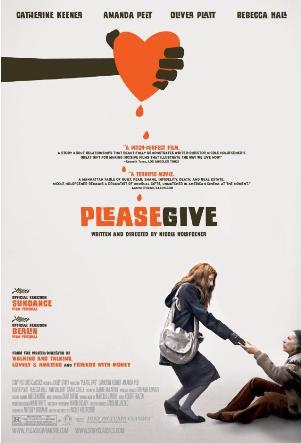
Please_Give_FilmWhat is Please Give about? The most succinct answer I can muster up is that it is about the simple rhythms of life. It’s about people rubbing up against each other, the neighbors you try and be nice too, but speak about behind closed doors. In writer-director Nicole Holofcener’s fifth collaboration with Catherine Keener, the latter is Kate, a woman who lives a life of uncomfortable dichotomy with her husband and teenage daughter.

Next door is the cranky grandma Andra, who is quite along in age, and she gets assistance from her granddaughters, who are both young professionals. Rebecca (Rebecca Hall) works as a radiology technician often spending her days giving mammograms, while her fashionable sister Mary (Amanda Peet) works as a cosmetologist. Their grandmother is not exactly the most agreeable person, and her acerbic nature earns the disdain of Mary and the quiet industriousness of Rebecca. They both have different ways of dealing with other people just as they have different ways of approaching love. Rebecca is quiet and looks for love in a nice young man. Mary constantly checks out the woman who stole her old boyfriend and embroils herself in an affair.

Meanwhile, Kate feels uncomfortable for buying Andra’s flat and waiting for her passing to start renovations. Likewise, in her joint venture with husband Alex, they buy people’s old possessions at estate sales and make major profits on their furniture. These issues along with a rebellious streak in her daughter, make Kate noticeably agitated, and she tries to overcompensate. She gives money to every homeless person she ever sees and tries to volunteer at numerous spots across town without much success.

The film suggests that we can tread a thin line on the margin of what is honest and what is termed “the ways of the world.” After all, if we balance it out with enough good deeds it ends up okay in the end, right? On her part, Kate has an odd way of dealing with her own sense of morality when it comes to her family business and the homeless on the street corner. Her husband is a generally agreeable man, who has no trouble with what they do, but he at least admits it, just like admitting when he flirts with other women.

Above all, I think Please Give boasts interesting female characters, in fact, they are the focal point of Holocener’s story, and it makes for a worthy character study in an industry that is often male-centric. Within these women is hypocrisy, pettiness, and a lot of insecurity, but it manages to be invariably funny as well as perturbing at times.

3.5/5 Stars

Catherine Deneuve as Geneviève Emery

umbrellas10.png

I still maintain Audrey Hepburn and Grace Kelly are my two favorite actresses respectively. That started early on thanks to films like Roman Holiday and Rear Window and quickly blossomed even more following subsequent film viewings. But it’s important to note that both of these actresses came out of Hollywood’s Golden Age. Both actresses were English language stars. And both are, sadly, no longer with us.

In all honesty, I cannot quite remember the first time I ever saw Catherine Deneuve, whether it was Belle De Jour, The Young Girls of Rochefort, Repulsion or somewhere else. However, seeing this 19 year old girl, so serenely and quietly beautiful in Umbrellas of Cherbourg, certainly left an impression on me during my own teen years.

umbrellas12.png

While Jacques Demy’s whimsical operatic love story of fate charmed me, it was Deneuve who was an emblem of this film. The fact that Geneviève was herself wrapped in a glorious love affair that slowly became tragic, only made her more beautiful in her solemnity. Her piercing eyes. The loneliness that dwells deep within her. The tears slowly trickling down her cheeks. It only enhances her eternal grace — seeing her so melancholy and distant.

Also, it probably helped, ironically, that I don’t speak French. It is yet another barrier between me and this character of Geneviève. I cannot fully understand her plight, because I cannot even completely comprehend the language that she speaks, as melodic as it may be. The heart-wrenching melodies of Michel Legrand as well as Umbrella’s vibrant palette of colors are equally evocative. It’s no fluke that Deneuve bursts onto the scene right here. Everything is going for her with Jacques Demy at the epoch of his creative powers.

And the fun of this particular story is that Catherine Deneuve is still with us and still making a good many movies. Admittedly, I haven’t seen many of her newer roles after The Last Metro (1980), but I’ll get around to them someday. It was fun to find a star of a bygone era, who did not die 20 years before I was even born and for that Deneuve was a welcomed discovery. She continues to fascinate audiences, not least among them me.

I still am partial to Audrey and Grace, but I would say unequivocally that Catherine Deneuve comes in a close third. How can you not be won over by Umbrellas of Cherbourg, an extraordinary debut from a phenomenal body of work?

umbrellas5.png

Teresa Wright in The Best Years of Our Lives

teresawright.jpg

I was born and bred a California boy, but there’s a certain something about the girl-next-door. Maybe it’s my midwestern roots, because after all, my mom was born in Iowa before making the move westward.

Anyways, the first time I saw Teresa Wright onscreen I was immediately smitten. She is the complete antithesis of the blatant sexuality of a Marilyn Monroe, a Sophia Loren or Elizabeth Taylor. Granted, all very beautiful women of Hollywood’s Golden Age, but as their predecessor, a very different sort of actress, Wright exudes a certain sweet charm that epitomizes the ideal American girl. Before Donna Reed or Doris Day.

In The Best Years of Our Lives she plays Peggy, the thoughtful, funny and mature daughter of Al and Milly Stephenson. Right from the get go, it’s hard not to love this girl from the quintessential post-war family. She knows how to cook, drives well, has all the skills that are desirable of a lady circa 1946. But the bottom line is her utter sincerity. She seems real.

When she first meets Fred Derry then, there’s no agenda or master plan to seduce him or make him fall in love with her. It just happens. She doesn’t quite want it to happen and she tries to resist the urges. She’s not prone to drama. She’s above that kind of behavior. In other words, she’s a real winner.

Thus, the moment when she begins to fall for a married man, unhappily married, our heart aches for her–at least that’s what I felt, because she deserves to be happy. How could Teresa Wright not be happy? And in the end she gets the ending that she deserves–the one we want for her and Fred.

The legendary critic James Agee wrote this of her performance:

“This new performance of hers, entirely lacking in big scenes, tricks, or obstreperousness—one can hardly think of it as acting—seems to me one of the wisest and most beautiful pieces of work I have seen in years. If the picture had none of the hundreds of other things it has to recommend it, I could watch it a dozen times over for that personality and its mastery alone.”

Took the words right out of my mouth J.A.

And beyond simply this film, there was a string of equally amiable performances that came before and after. She’s the sweet innocent ingenue in The Little Foxes and Mrs. Miniver. In The Pride of the Yankees she was the perfect incarnation of Lou Gehrig’s faithful wife, while also playing the intrepid “Charlie” in Hitchcock’s home thriller Shadow of a Doubt. Later on in her career she would star in the psychological western Pursued and opposite Marlon Brando in The Men.

Perhaps the roles share a degree of similarity, but it should not go unnoticed that Teresa Wright had a string of three academy award nominations, that suggest that she was a pretty big deal in her day. To this day, no one has equaled that feat of hers.

But why had I never heard of this wonderful, pure actress until so much later in my cinematic odyssey? She had slipped through the cracks and crevices of my film education. And that might best be explained by Teresa Wright’s own words:

“I’m just not the glamour type. Glamour girls are born, not made. And the real ones can be glamorous even if they don’t wear magnificent clothes. I’ll bet Lana Turner would look glamorous in anything.” 

“The type of contract between players and producers is, I feel, antiquated in form and abstract in concept. We have no privacies which producers cannot invade, they trade us like cattle, boss us like children.”  – (Wright would not allow herself to be shot in certain manners for publicity photos and ultimately lost her contract with Samuel Goldwyn)

“I only ever wanted to be an actress, not a star.”

So certainly this girl was not your typical Hollywood movie star. She lacks flamboyance and your typical glamour, but she makes up with it by being a deeply heartfelt and sincere individual onscreen. She feels real and in her earliest roles, completely innocent. It’s hard not to fall head over heals for a girl like that.

Speedy (1928)

speedy1It’s hard not to appreciate Harold Lloyd. His life was less tumultuous than Buster Keaton and during the 1920s he was more prolific than Charlie Chaplin. So if you look back at his career you can easily argue that he was not playing third fiddle to the other silent titans. He was their equal in many respects, and it’s only over the years that he’s fallen behind the others. But he deserves acknowledgment at the very least and his comedies such as Speedy make his case with rousing gimmicks and gags aplenty.

The film opens with Pop Dillon, the last of the horse-drawn streetcar drivers. He’s a kindly old man who lives with his radiant granddaughter Jane, who is faithfully by his side. But a corrupt railroad magnate is trying to buy him out, and he’s ready to go to great lengths to get what he wants. It’s about what we expect to happen, so the real entertainment factor comes with how we get there.

Enter Speedy (Harold Lloyd) a baseball-loving soda-jerk turned crazy cab driver and the sweetheart of Jane. It’s true that he starts out working the coffee counter with great dexterity while keeping up to date with the latest box scores of Murder’s Row. However, after a major blunder, he knows he won’t have a job when he gets back. Rather than stew in his misfortune, Speedy heads out on a Sunday afternoon in Coney Island with Jane. This proves to be a wonderful aside rather like in Sunrise: A Song of Two Humans, and there are a lot of great little gags being pulled by Lloyd, and others occur unwittingly. He tricks a myriad of folks with a dollar bill on a string and a crab in the pocket causes a lot of chaos. He even picks up a new unwanted friend in a hungry dog. But perhaps most of all the sequence is a fun nostalgia trip to the fair, showing off all the attractions circa 1928. It’s an eye-opening experience, and it still looks like quite a lot of fun.

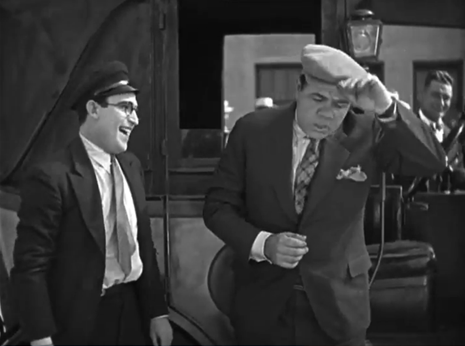
speedy3The other section of the story begins with Speedy garnering a job as a cab driver, but he has an unfortunate aptness for picking up tickets. He does, however, pick up some precious cargo in Babe Ruth (playing himself) and it leads to a wonderfully raucous ride to Yankee Stadium courtesy of Speedy’s crazy maneuvering through the streets of New York. Even Lou Gehrig sneaks in on the fun with a wry grin.

As the last order of business Speedy must save Pop’s cart from utter extinction and what follows is a rip-roaring brawl in the streets between the young thugs and the old-timers. Instead of being suspended from a clock, Lloyd must race against it to get Pop’s stolen livelihood back to its track in time. Once more he puts his madcap driving to good use.

Speedy lives up to its name and certainly justifies the popularity of Harold Lloyd. Its strengths include a plethora of sight gags that play off the audience’s sense of dramatic irony. Put them in the hands of such a nerdish icon and it spells true comedic gold. It’s Lou Gehrig approved no less.

4/5 Stars

Greed (1924)

Greed3With some cinematic endeavors, there is simply an aura that surrounds them which informs how we look at them. Erich von Stroheim’s ambitious silent film Greed is such a picture. To this day, a full cut of the film has never been found and perhaps never will be, but it has survived in two versions. A four-hour cut which attempted to maintain the original continuity through stills and then a 2 and a half hour cut which I saw. So you could question whether I got the full experience of Greed or not, but that is almost beside the point because the essence of this film is summed up in the title. True, it could just as easily be called sin, avarice, grudge, humanity, or all of the above. But allow me to explain more fully what I mean.

The narrative follows a slow-witted man named McTeague (Gibson Gowland), who picks up the dentistry trade from a traveling doctor. He moves to San Francisco and soon becomes smitten with the cousin of his boisterous pal Marcus (Jean Hersholt). Trina (Zasu Pitts) is quiet and a bit timid around a man as intimidating as McTeague, but they make it work. Soon enough they’re engaged and a lottery ticket Trina picked up on a whim pays off handsomely. $5,000 to be exact and this is the 1920s! They’re getting on alright because McTeague is still working and his wife is very, very frugal. But Marcus feels entitled and a grudge over the money ensues. He wants part of the cut because he thinks he deserves some good fortune too. Things between him and John finally reach the boiling point and there’s no turning back. Rather than try and patch things up, Marcus decides to get into ranching and says goodbye to his formerly close friend, but not before serving up a little revenge. He sets the dentistry board on McTeague and since he doesn’t have a true credential, his right to practice is terminated.

The loss of John’s job is aggravated by the fact that Trina is increasingly stingy, never wanting to dip into her big payoff, even when they really need it. Gold in many ways has become her master, and it leads to marital turmoil. McTeague was always a big man, but usually quite gentle. But his inner fury is finally uncorked and in one angry outburst, he goes so far as to bite his wife.

Mac leaves only to come back again and the results are not pretty. Soon he has a price on his head and he makes his way as a fugitive into the desert. And thus, the finale is shot on location in Death Valley, the perfect place for a climactic showdown between McTeague and his old pal Marcus. Of course, money doesn’t help much when you’re trapped in the desert, or when you’re dead for that matter.

Obviously, greed doesn’t bode well, but this story is an interesting inversion of the typical plot line, because in this case it is the woman who has the money, and she’s the one that the greed eats away at. She becomes obsessive and even bitter about every last piece of change. But her money also has a ripple effect that reveals the pettiness, avarice, and begrudging nature that plagues both her husband and cousin.

So in order to enjoy this film, you need to have an appreciation for the spectacle that von Stroheim has developed and the commentary he has weaved through his narrative about greed. That in itself makes this film one to truly ruminate over because it suggests so much about the ugly side of human nature, and that has hardly changed in the past century.

The Sessions (2012)

220px-The_Sessions_posterI was a bit skeptical of this film at first, but I can say unreservedly that it boasts true heart and sensitivity. In many respects, it reminds me of another film about a man with a so-called disability, The Diving Bell and the Butterfly. In both, a highly creative individual is able to defy their physical barriers and truly impact the world around them.

In the case of Mark O’Brien (John Hawkes), he graduated from Berkeley destined to become a journalist and poet, the only difference with him is that for most of his life he has been confined to an iron lung that keeps him alive. It seems like an obvious roadblock to success in life, and yet not so for Mark because he faces each day with a sense of humor and even a spirituality that is impressive. He relies on his caretakers for so much and yet they enjoy helping him because he is a generally kind spirit. First, it’s the beautiful Amanda (Annika Marks), who he sincerely professes his love to and then there’s Vera (Moon Bloodgood), who while frank, is still deeply concerned with his well-being. Furthermore, the local priest (William H. Macy) is equally willing to listen to Mark’s confessions, not simply about sins, but more importantly his life on a whole.

Mark’s a very transparent individual, who attacks life with a positivity and tenacity that goes beyond the physical. Wit becomes his precious ally in facing every day, and he also takes great care in the relationships around him. He wants to live his life to the fullest, and he won’t let an iron lung impede him. Thus, he decides that he would like to try and have sex since he is still a virgin and feels that he might not have long left to live. And so, after consulting with his priest and acknowledging the sensitive nature of the decision, he tentatively decides to go for it. Cheryl Cohen-Greene (Helen Hunt) becomes his sex surrogate, and yet she is more of a therapist than anything else. She helps Mark become more and more comfortable in his own body and there is a beautiful vulnerability and openness to their time together.

The Sessions proves that there can be depictions of sex that can be as tender and sensitive as the characters involved. It’s not some vulgar act or a simple gratification of desire. It has more significance than that, just as these characters carry more significance. Father Brendan is not a perfect character just as Mark is not perfect, but we appreciate them for their geniality and light touches of humor. As for Cheryl, she does a great favor for Mark, and yet in the process she herself is deeply moved by this man in front of her. He’s seemingly so weak, so unassuming, and yet there is so much vibrancy to him.

The day Mark dies is sad for all of us and gathered at his funeral are all the people we expect to be there. The Father gives a heartfelt eulogy as all the women he touched sit in the pews looking on. The beauty of this story is that Mark finally did find love quite by accident, and he touched so many lives in the process. Though not a perfect film, The Sessions is heartfelt and that covers a multitude of faults.

4/5 Stars