That Thing You Do! (1996)

thatthing6Recently I’ve seen a lot of films about music, musicians, and the like. There’s Llewyn Davis, who seems to have talent and yet gets little recognition for what he does. There’s the street musician in Once, who also has a lot of talent and we like to think that he makes the big-time, although the film leaves his fate open-ended. One is steeped in melancholy and the other has a raw beauty. Tom Hanks directorial and screenwriting debut That Thing You Do! seems to have very little in common with those films except in that features music. But that deserves some explanation.

Hanks’ film is a nostalgic trip for anyone wanting to get sent back to the 1960s via the 1990s. It’s a thoroughly enjoyable little romp that revolves around a group of typical teens in Pennsylvania, who go from a small-time talent show to one-hit wonders touring the state. But that’s exactly it. They’re one-hit wonders, who lack the talent of older more experienced musicians. In reality, they’re just a group of kids, still wet behind the ears, and just excited for the ride they are about to embark on. Even over the course of the film, their one smash hit, the eponymous “That Thing You Do!” can feel repetitive, and it is easy to realize that this is not the type of music that real connoisseurs want. It’s for the masses. The shrieking girls and the guys who want to dance with the shrieking girls. It’s certainly superficial, and yet there’s something quaint and at the same time infectious about it.

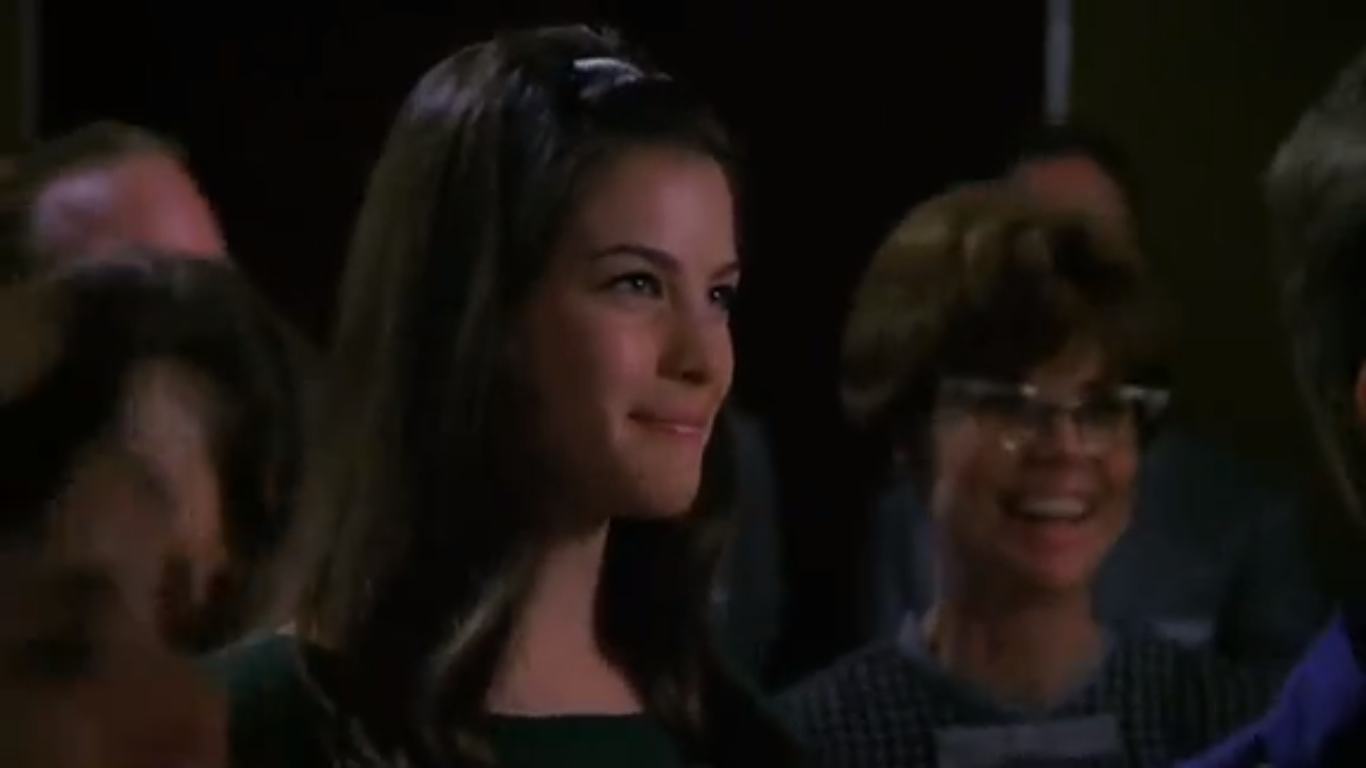
thatthing2We can readily get behind this little band christened The Oneders and modified to The Wonders for easier pronunciation because they’re a lovable bunch. Their members include appliance seller-turned flashy drummer Guy (Tom Everett Scott), lead singer and serious-minded Jimmy (Jonathon Schaech), the jokester Lenny (Steve Zahn), the “other guy,” and, of course, the ever-present Faye (Liv Tyler).

In many ways, they shadow The Beatles. They ditched one drummer for a better one. They both lost their first bass player. Their first hit took a ballad and sped it up to great effect. The little similarities are undoubtedly put there by Hanks, but with all the similarities it only serves to point how different these boys are. They’re not going to end up music royalty like the lads from Liverpool. And that’s okay.

thatthing3We can get satisfaction out of their first airplay on the radio or the genesis of a romance that we were always expecting. In a way, this film is like a lesser American Graffiti even going so far as giving its characters an epilogue. It takes us back to that time and place, makes us feel good, and gets a few of us nostalgic for the olden days. Although, the old televisions and dishwashers don’t exactly look like fun now.

But let’s get back to that romance. The film Starter for 10 had a similar enigma when it came to the blond or the brunette. I suppose you could call it a trope, but on one side you have the primped and provocative Charlize Theron and on the opposite side of the spectrum is Liv Tyler, who acts as the honorary fifth member of the Wonders. She is constantly faithful and encouraging in the boys rise to the top, and they are better because of her. That’s the kind of girl you’re supposed to get and the right guy gets her.

3.5/5 Stars

Note: I watched the version of the film with 39 minutes of added footage and what it really did was develop these characters a little further so you grow to appreciate them even more. Otherwise, I’m sure the original cut gives you the same narrative so either version is probably fine.
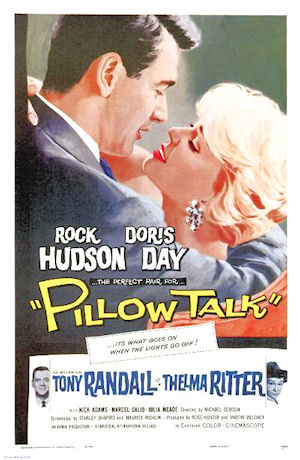
Pillow Talk (1959)

Pillowtalk_posterIt’s the original Rock Hudson Doris Day Rom-Com, with the seemingly perpetual split screen, to match the party line that constantly weaves its way through the story. It’s technicolor, it has an infectious title track, and it’s absurd wackiness somehow adds up to a boy-gets-girl happy ending.

The imposing and dashing Hudson plays songwriter and major playboy Brad Allen, before masquerading as tenderhearted Texan Rex Stetson. But how does he get there? What causes him to play such a ludicrous part? It comes in the form of Jan Morrow, our peppy platinum-haired interior decorator who has had just about enough of her party-line partner, the estimable Mr. Allen.

Her often swanked housekeeper Alma (Thelma Ritter) doesn’t mind eavesdropping and swooning along with all the other impressionable women he romances over the telephone. Jan, on the other, thinks it’s sickening behavior for a man. She would never allow herself to be taken in by such a cad.

Of course, there’s more to the story since one of Jan’s clients, the neurotic millionaire Johnathan Forbes (Tony Randall), is madly in love with her. There’s another wrinkle though, that’s far more important. He knows Allen from his college days. When Brad gets his first view of Jan, she’s an absolute knockout and he wants to win her over, but she hates his guts, at least over the phone. Enter a sweetly sincere Texan and she is swept off her feet surreptitiously.

Brad manages the charade for some time, but for the comedy to work, it must all come crumbling down. In this case, as expected, Ms. Morrow and Mr. Forbes figure things out at almost the same precise moment. It looks like Brad is sunk for good. There’s no hope for such a louse. But then again, if Pillow Talk ended there, it’s audience would be left muttering despairingly and crying inconsolably. The exclamation point comes when Hudson pulls his bride-to-be out of her bed and forcibly carries her through the streets of New York. It sets the stage for some quips perfectly at home in a quaint bedroom comedy plucked out of the 1950s.

Day and Hudson were stupendously popular with the populous and this film would begin their string of pictures together. Although they never reached the excellence, or more aptly, the above-averageness of Pillow Talk, they have remained relatively popular even to this day. Ms. Day was always a fan favorite and rightly so with her impeccably powerful voice, raucous comedic performances, and self-assured charm. And she’s still with us bless her heart! It will undoubtedly be antiquated and overly saccharine to many, but if you have a soft spot for either  Rock or Doris, then enjoy it without reservations. It’s a rather entertaining guilty pleasure.

3.5/5 Stars

Brad: Look, I don’t know what’s bothering you, but don’t take your bedroom problems out on me.

Jan: I have no bedroom problems. There’s nothing in my bedroom that bothers me.

Brad: Oh-h-h-h. That’s too bad.

The Sixth Sense (1999)

The_sixth_senseAll I knew going into The Sixth Sense was that it featured Bruce Willis and there was a twist at the end. That was about it. Thus, it was an interesting opening to have our main character already be shot within the first few minutes. But it’s not much of a spoiler per se because we quickly flash-forward to a year later.

That first case came back to haunt him in the form of a very distraught patient, with a major grudge, however, Dr. Malcolm Crowe has seemingly gotten past it and continued with his life. It doesn’t mean that his marriage is not still difficult and his work still taxing, but he gets by. Finally, he gets a case that might help him resolve his previous failures, at least that’s how he sees it. Of course, the intelligent, but aloof boy Cole Seer (Haley Joel Osment) sees the world in a whole different way. He literally sees dead people, but let’s take a step back for a moment. He has trouble connecting with his loving but nevertheless troubled mother (Toni Colette) and Dr. Crowe seems like his only friend. None of the kids at school like him, because they think he’s a creep.

What Crowe does is help him work through everything that it is unique about Cole and also help him see that there may be some purpose behind these ghosts that he can see. They want him to do things for him so maybe this is Cole’s chance to help them. And so he begins the process and despite it being terrifying and disconcerting at times, he is able to lay to rest these specters. Finally giving them peace and in the wake of a traffic accident that results in a death, Cole finally opens up to his mother. She has trouble believing him at first, but she never discounts her son, which leads to a tearful scene between mother and son.

M. Night Shyamalan is obviously well-known for his great interest in supernatural stories with twist and turns, but to his credit, he firmly plants his films in a reality, like Philadelphia, that we can grasp onto. That’s our base and he can go from there with psychological thrills and even a touch of horror. However, his film actually has characters that are far from throwaway, even if we just look at Malcolm, Cole, and his mother. They are individuals that we can grow to care for over the course of the movie even with the supernatural plot devices and of course, the final surprise ending.

Honestly, I had an unfair advantage knowing that something was coming, so I caught onto some of the peculiarities leading to the final disclosure, but I was still relatively surprised when it came. Despite the rather contrived plot and purposefully cryptic opening, followed by a long wait, the final payoff of The Sixth Sense is certainly worth it.

4/5 Stars

Punch-Drunk Love (2002)

punchdrunk1When Paul Thomas Anderson said he was making a comedy with Adam Sandler, people undoubtedly scoffed at him. I know I would have if I had known about this film back then. However, he proved that you should never question him as a director. Much like a Kubrick or a few other auteurs, I’m not necessarily the biggest fan of Anderson, but you have to admit his films are interesting and very much their own entity.

Punch-Drunk Love is a comedy certainly, but not in your typical sense. It’s a romance, but it’s not quite like any romance I’ve ever seen. Thanks to the bolstering performance of Adam Sandler, it’s whimsical and odd. He plays Barry, a rather passive and antisocial type, who seems constantly quelled by the dominating personalities of his many sisters.

He’s obsessed with buying up pudding for a chance at frequent flyer miles, he picks up a harmonium tossed on the road-side, and most of all he’s lonely, but he’s not comfortable going on dates. His sister tries to set him up with a nice friend of hers who happens to be British (Emily Watson). Barry rejects an offer to go out to breakfast with them and out of loneliness calls a phone sex line. Out of stupidity, he hands over his credit card info, and the rest becomes a big scam that he can’t escape.

Thus, his work phone at the office is ringing off the hook from a girl trying to steal his money. His sister is continually trying to set him up, and Barry seems to live in his own little weird world at times, overflowing with his own personal odd ticks and quirks. He also has an anger problem, meaning he’s bad news if you give him a hammer.

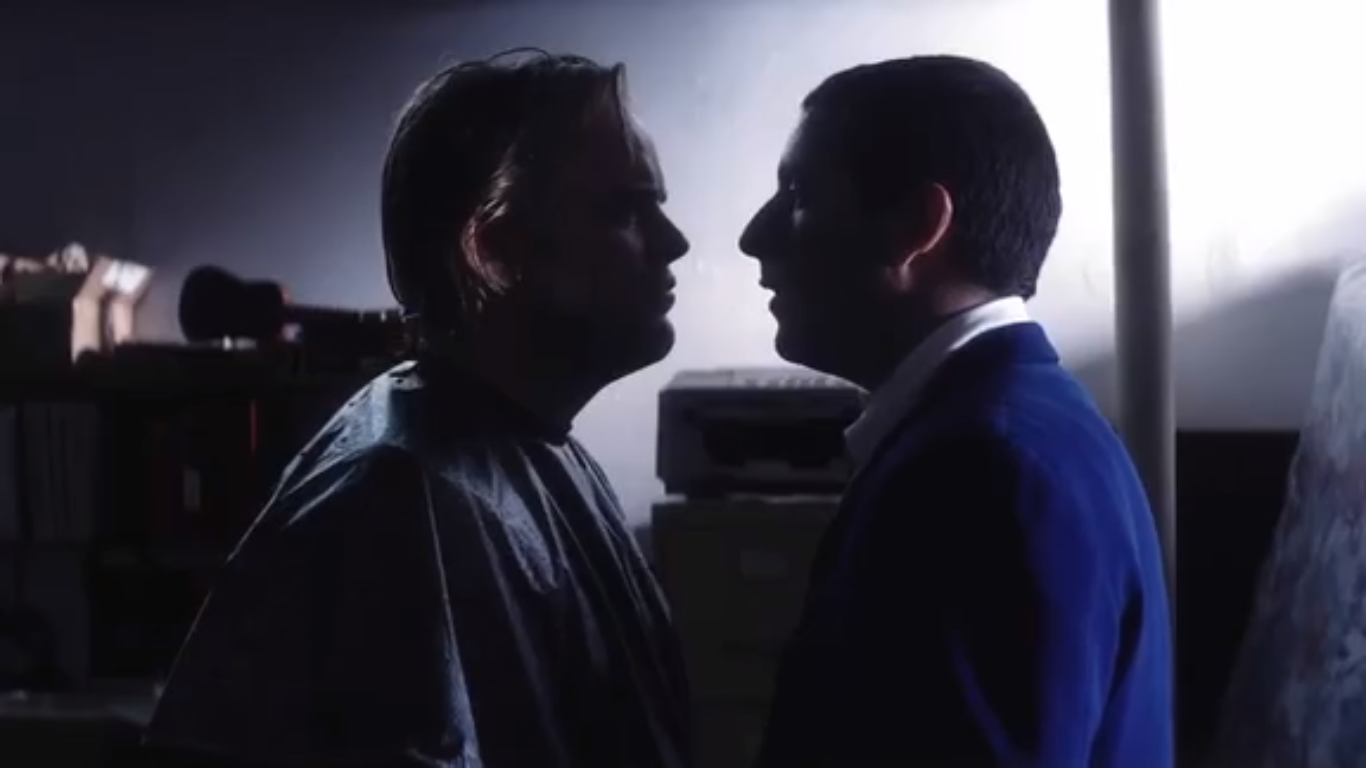
punchdrunk2At times the film is thoroughly unsettling and nervously, uncomfortably funny, thanks in part to Sandler, but also the pervasively weird sound design that utilizes the harmonium. At his core, Barry is a lonely and confused man, aren’t we all, and it reveals a depth to Sandler that many probably have not seen before. It helps that the sweet Emma Watson makes us believe he is likable and in truth, he is somewhat endearing in how he can get lost in an apartment building or always wears the same blue suit. He even follows her to Hawaii for the sake of love. But don’t get any wrong ideas. This is nowhere near the realm of 50 First Dates.

3.5/5 Stars

Grand Illusion (1937)

GrandeIllusionI’m not sure if it’s because I’ve been bred on a certain brand of war movie, but I naively went into Grand Illusion expecting a typical P.O.W. drama. In the back of my mind, I was even ready to compare this title to later works like Stalag 17 (1953) or The Great Escape (1963). Honestly, what was I thinking? With a Jean Renoir film no less.

But that’s the marvelous quality of this film. On the surface level, it looks like an archetype that we are used to. War is being waged. Soldiers are captured. Soldiers are trying to escape. In this case, the particulars are a group of French P.O.W.s in a German camp during WWI. You have the basic idea certainly, but you will not understand the power of this film with such a description. With such a set-up you expect Germans to be the craven villains and the French to be the courageous boys making their nation proud. But that’s not quite the case. It’s more complicated than that.

It’s no surprise that this film was banned by Mussolini, confiscated by Goebbels after the invasion of France, and shown in a private screening to FDR. Certainly, WWII had not started yet, but in 1937 Hitler was on the rise and a wave of fascism mixed with patriotism was flooding Europe. In the midst of such a climate, Jean Renoir, a master of so-called poetic realism, lays down a film like this. It has war, it has patriotism, and it even has enemy factions, but the difference is that Renoir gives them humanity. He casts even his “enemy” in a sympathetic light and suggests that there is a humanity that lies inside of human beings of all different classes, creeds, and nationalities (but he also acknowledges racial discrimination still exists).

Early on in the film von Rauffenstein (Erich von Stroheim) shoots down two enemy flyers in Captain de Boeldieu (Pierre Fresnay) and Marechal (Jean Gabin). However, instead of sending them away to the prisoner of war camp, he shows them the ultimate form of hospitality by inviting them to dine at his table. The cynic inside of me thought, “this must be a trap, a gimmick of some kind because he is a German after all, and they’re supposed to be the villains.” Pretty narrow-minded of me, and of course nothing happens. They share a meal and even find some common ground before going off to the camp.

This next part of the film reminds me the most of a film like Stalag 17 because there is the camaraderie, the mixing of all sorts of different people, but they are all fighting against a common enemy so there is a solidarity between them. For instance, Rosenthal (Marcel Dalio) shares his lavish care packages from back home, Cartier keeps things lively as a former vaudeville performer who is constantly cracking jokes, and even Boledieu, who is of an aristocratic background is generally well liked by everyone. Together they undertake the project of escaping the camp.

Of course, there’s still time for musical performances with song and drag and impromptu renditions of “La Marseillaise.” For such a disturbance Marechal (Gabin) gets solitary confinement, but there never seems to be any malice behind it. It feels more like the protocol of war, and he is let out soon enough. The way things work out the gang is transferred all to different camps and their tunnel is utterly wasted.

De Boldieu and Marechal’s final stop is literally a fortress that is run by their old acquaintance, the now badly maimed Von Rauffenstein. He is as civil as he has ever was but still advises them not to try escape. All the same, he regrets his reassignment and seems generally wistful about the whole situation. Meanwhile, the two officers once again come in contact with Rosenthal. The trio puts together a planned diversion led by De Boldieu which will let the other two escape. It puts von Rauffenstein in another regrettable position, but Rosenthal and Marechal do get away.

As fugitives, their dispositions fluctuate from positivity to loathing, and finally a contented state of comfort when they stay at the farmhouse of a young German woman named Elsa (Dita Parlo from L’Atalante). This is another section of the film that highlights human relationships in an extraordinary way. We expect her to be totally poisoned against “the enemy” and yet she is not. Elsa seems to see the human beings behind the French uniforms and comes to trust and almost rely on their companionship. As Rosenthal recovers from a leg injury, Marechal and Elsa get closer and closer. The time comes for the two men to leave and it is an absolutely heart-wrenching goodbye. It’s so different than our initial preconceptions.

And soon after the film ends, not with some dramatic capturing or even really a chase. But the two men get across the border to snowy Switzerland and that’s where we leave them. Except not with the usual jadedness or even the adrenaline rush of a run-of-the-mill war thriller. Grand Illusion is more piercing than that, speaking to the relationships that can cross war zones if we are only willing to see them.

Jean Gabin is a wonderfully honest-faced actor and the closest description I can give is a man with a Spencer Tracy-like visage except more imposing. Marcell Dalio did some wonderful work with Renoir, and it is unfortunate that he was relegated to such small roles in films like Casablanca, but he is nevertheless even memorable in that. Erich von Stroheim was a titan in his own right as a director and actor, but he was somewhat of a fading star by this point. However, he plays his character with a civility and sense of honor which I have never quite seen equaled before. It was a special performance that reflects a dying breed. The aristocratic soldier of the highest order in all circumstances.

Renoir himself summed up the film years later as being about human relationships and fittingly said the following: “I am confident that such a question is so important today that if we don’t solve it, we will just have to say ‘goodbye’ to our beautiful world.” Here is a master recognizing such a vital key to our very humanity — our personal interactions with one another.

5/5 Stars

Review: Chinatown (1974)

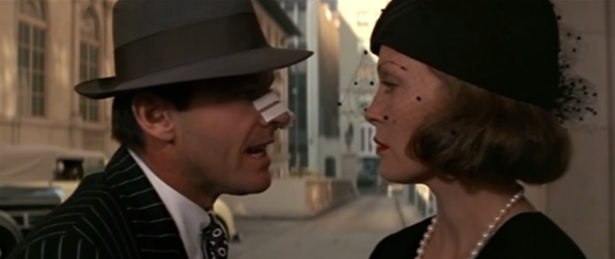
chinatown1Forget it, Jake, it’s Chinatown

The more you watch movies like Chinatown, the more you realize how much you’re still learning. I saw it the first time and I naively thought I knew everything about it. After all, it seemed fairly cut and dry. But the beauty of this film is a labyrinth-like story that can still keep me engaged after multiple viewings. There are things that I missed, things that I have to piece together once more, and more often than not details I simply forgot.

Robert Towne’s script has an intricacy to its constantly spiraling mystery plot that remains powerful and Roman Polanski — with cameo included — directs the film with a sure hand as well as a cynically bitter ending worthy of his work. At that point, he was returning to the same city where a few years prior his wife Sharon Tate had been brutally murdered and that certainly had to still be heavy on his mind.

Throughout, Chinatown has elegant visuals of a desert-dry Los Angeles circa 1930s, and it is aided by a smooth Jerry Goldsmith score made for such a period crime film as this. Jake Gittes (Jack Nicholson), is the smooth-talking, smart-aleck P.I. with a penchant for trouble, but that goes with the business. In the tradition of all his heirs like Spade and Marlowe, the whole story is told from his point of view and we get the details at the same pace as him. That means a lot of the time we are just as confused as him, trying to pick up all the pieces.

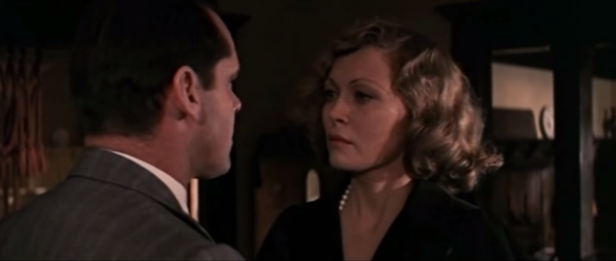
Aside from Nicholson, Faye Dunaway’s performance is an interesting reworking of the archetypal femme fatale, because she has a different side to her. Also, John Huston’s performance is wonderfully nefarious, because he plays Noah Cross with a top layer of geniality that is ultimately undermined by his base nature. It’s wonderfully wicked.

In the story’s first few moments of being in his office, we begin to learn a little about the means Gittes uses to appease his clients. Then, his newest client walks through the door, a Mrs. Mulwray, who wishes for him to tail her husband. And so he does, just like that, and he’s pretty good at it too. Hollis Mulwray (an anagram for Mullholland) happens to be an integral part of the L.A. Department of Water and Power as the chief engineer. From what Gittes sees, the bespectacled Mulwray seems to have his scruples, but he also has a secret girl, who the P.I. is able to snap some incriminating photos of.chinatown2 Back at the office, another woman shows up, a Mrs. Mulwray, but this time the real one. She wants to slam J.J. with a lawsuit, but he realizes he got framed, and in the end, she quickly drops her case. Pretty soon Gittes former colleague Lt. Escobar digs up Mulwray’s body and the cause of death is the height of irony. He drowned during a drought, a cruel demise, and his body is joined by that of a drunk, who also was wandering around the local reservoir. It’s time for our nosy P.I. to do a little more snooping, but he is scared off by two security guards from Water and Power who give him a deadly nose job.

None worse for wear aside from a small cast, J.J. knows the department is diverting water. It’s more than a little runoff like they contend. He gets lunch with Noah Cross (The great John Huston), who is the father of Mrs. Mulwray and the former business partner of the deceased. Like J.J., he’s curious about finding the mysterious girl, and he sweetens the pot for the P.I.

A bit of detective work takes Gittes to the hall of records and then a vast acreage of orange groves where he is mistaken for a member of the Department of Water and Power. They aren’t too happy to see him, but Mrs. Mulwray is able to bail him out. They check up on an assisted living home and tie it into the whole conspiracy. Someone is buying up land under the names of the unknowing residents.

chinatown3But as it turns out, Mrs. Mulwray is hiding a major secret of her own that she’s been keeping. Another girl is murdered and since he’s found at the crime scene, Gittes is in a tight spot with the police and so he wants to get things straightened out. But he doesn’t quite understand what he’s gotten himself caught up in. At the last minute, he decides to take the hero’s path, but it’s to no avail. The good is snuffed out, the bad walk away free, and corruption still runs the streets of L.A. There’s not much the cops can do about it either.

chinatown4So many people remember the film’s final words, which epitomize this place of confusion, corruption, and helplessness. The final words of Jake are just as illuminating, however, because he repeats the words he spoke to Mrs. Mulwray earlier when she asked what he did when he worked a beat in Chinatown, “As little as possible.” It’s so pessimistic and yet it’s the truth that everybody knows. He must resign himself to doing nothing because there is no way he can win, no way to overcome the forces that be. It’s a haunting conclusion, but ultimately the most powerful one we could hope for.

Earlier I alluded to the fact that every time I watch this film I pick on things that I missed before. For instance, within Robert Towne’s script are some interesting instances of foreshadowing. The first comes in the form of a pun uttered by the Chinese gardener who is constantly muttering, “It’s bad for the glass/grass.”

Then, while they are in the car Mrs. Mulwray dejectedly drops her head on the steering wheel and it lets out a short honk. This acts as an important portent to the end of the film along with the blemish in her left eye. If you have not seen the film yet, this might sound very cryptic, but if you keep your eyes open these little details are rewarding. Chinatown is a fascinating place to return to again and again after all.

5/5 Stars

Inside Llewyn Davis (2013)

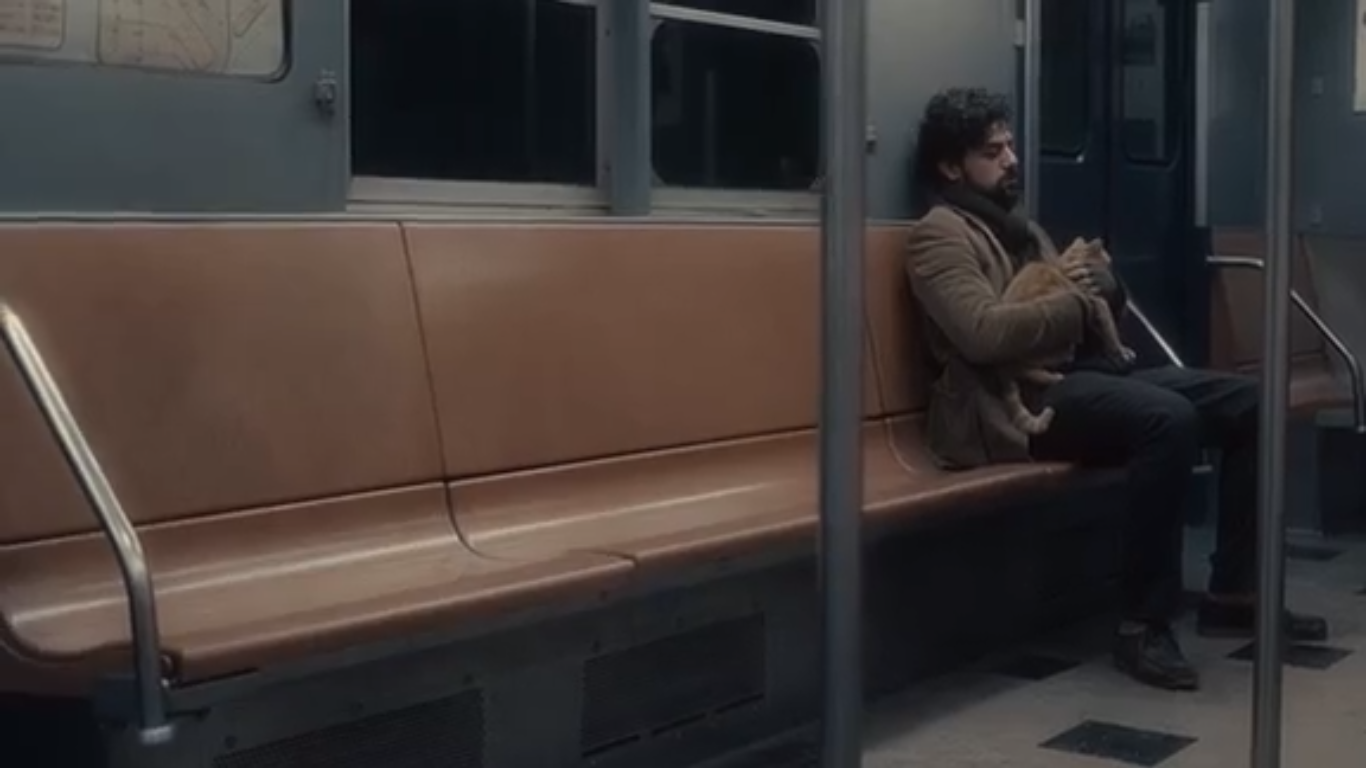
insidel2More often than not Llewyn Davis turns out to be a worthy character and I mean that in the sense that he is readily watchable. This probably isn’t the real folk scene of the 1960s, but it is the time and place seen through the Coen Brothers’ somber lens. Inspired by musician Dave Von Ronk, Llewyn is his own unique entity entirely. The film itself has a dreary look of washed out tones mimicking the days that most of us now know from black and white imagery. There are folk tunes wall to wall, befitting such a melancholy film, adding layers of melody and ambiance to this austere world of isolation.

In fact, we first meet Llewyn in a low lit bar singing the ode “Hang me, Oh hang me.” He’s not some budding talent or has-been. He had a partner once, who committed suicide by jumping off a bridge. They had a record that came and went out almost as fast. The unsold copies sit in a warehouse somewhere rotting away with the rats. That’s really Llewyn’s life. He’s couch hopping his way through Greenwich Village, a pitiful wanderer with the cat he was entrusted with in one hand and his guitar in the other. In the frigid winter air, he doesn’t even have a real overcoat. He can barely afford it.

insidel4The film goes so many places only to return to where it was. So much goes on without anything happening and so on. Llewyn has it out with Jean, a transformed and caustic Carey Mulligan, who doesn’t know who the father of her baby is. How it could ever be Llewyn’s doesn’t make much sense, since she seems to despise his guts. Why would she sleep with him?

Llewyn alienates his sister with his misanthropic outlook and foul mouth. He loses and tries to recover the cat of his folk-loving friends the Gorffeins. How they ever became friends we’ll never know. A spur of the moment trip to Chicago comes up and with it, there’s the token John Goodman performance that feels like an absurd aside to the entire plot. Then again, the film’s only plot is the wanderings of Davis, so if meeting passengers while hitchhiker marks his journey it seems pertinent.  A trip to the Gate of Horn for an impromptu audition turns out to be unfruitful and it is the film’s most difficult scene. Davis lays all his heart and soul out there in a poignant performance and all he gets from the producer Bud Grossman (F. Murray Abraham) is that he should join a trio. He’s not solo material.

insidel5Llewyn returns to Greenwich dejected and things continue going poorly for him. So we end up leaving him about where we started. Bob Dylan, Joni Mitchell, Joan Baez would come in time, but it’s the musicians like Davis that are a sadder tale. Those who faded away over the years. Who lay beat up in an alley for heckling a performance in a hole-in-the-wall bar. It’s the circle of life of a folk singer and you wonder if he would ever have it any other way. Undoubtedly this folk oasis was a more hopping, more welcoming place than the Coen’s painted it, but it does suggest something powerful.

Why would somebody subject themselves to this type of lifestyle? Unless they’re insane and like to suffer, it must be that they really believe in the music. They believe in bearing their heart and soul because the music makes them feel alive. Obviously, there is more to life than music, some would argue that point, but it is a brilliant starting point. We can respect someone who sticks by their convictions and their passions. Even if it means chasing through the streets of Greenwich Village looking for a cat. You would never see me doing that. Maybe if it were a dog. Maybe.

4/5 Stars

Royal Wedding (1951)

royalwedding1The Wedding of Queen Elizabeth and Prince Phillip was a once in a lifetime experience. They’re still together to this day and yet when they got married she was not even queen yet. It’s hard to believe. It’s only fitting that a momentous occasion like that would get a film, and Stanley Donen‘s musical is a bouncy little dance fest that uses the wedding as its backdrop, hence the title.

The story follows the brother-sister dance team extraordinaire of Tom (Fred Astaire) and Ellen Bowden (Jane Powell), who after a smashing opening weekend of their show Every Night on Sunday, get a call to perform in London in the wake of the big occasion. So they get aboard the first ocean liner available and head abroad. Tom is more interested in work than love, and Ellen leaves behind a string of beaus behind, but none of them meant much to her. She finds a budding romance with Lord Brindale (Peter Lawford), and it looks like it might actually amount to something. Quite by chance, Tom finds out a woman he meets on the street happens to be part of their production, the dancer Anne Ashmond (none other than Winston Churchill’s daughter Sarah). So of course, we have these two budding romances forming as the show gets into high gear and siblings must balance their obligations with love. It’s not always easy or without heartache, but it ends up just as glorious as the Royal Wedding.

Fred Astaire is an ageless wonder looking as spry as he ever did, and his individual numbers are probably the film’s best. His coat rack dance in the gym seemingly pays homage to his friend Gene Kelly and shows his brilliance at breathing life and vitality into inanimate objects. They become his partners in the dance. His inspiration for expression.

royalwedding2Furthermore, his dance on the ceiling looks as remarkable now and feels just as magical as it probably was back then. It’s a marvel because we look for any sign of a trick, but everything looks so fluid. Thus, it’s so easy to quickly forget the technical aspect and simply be blown away by the inventiveness of Astaire.

Jane Powell is a wonderfully bright young beauty and a lovely co-star for Astaire in both song and dance. It was refreshing not to have them playing romantic leads opposite one another and the brother-sister dynamic fittingly mirrored Astaire’s own longtime real-life partnership with his sister Adele. All in all, it’s a light and elegant bit of fun that’s an exuberant delight. It does what it sets out to do and that’s about all you can ask for.

3.5/5 Stars

Review: West Side Story (1961)

westside1Look at West Side Story through a simple lens and you might see a Shakespearian classic given a 1950s facelift and set to music. It might seem antiquated, perhaps not as politically correct as we have come to expect, and maybe a bit regressive. However, this musical based off of the bard’s famed Romeo and Juliet is most definitely a thematic spectacle pulsing with song and dance. It’s full of romance, full of angst, all expressed through the motions of the human body. In an age where we often feel like we have come so far and know so much, maybe a film like this is good for us if we take a step back for a moment.

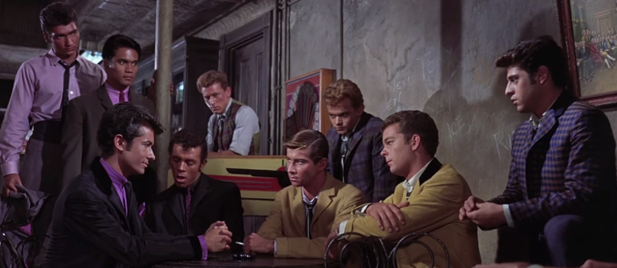
Robert Wise’s film opens over the skies of New York and we are quickly introduced to the two competing forces that rule the streets with a “snappy” opening number. You have the local street gang, the Jets made up of delinquents of New York and the Sharks consisting of young immigrant Puerto Ricans. They hate each other for different reasons, but the bottom line is that they hate each other, and there’s no other way to slice it. A tiny scuffle broken up by Lt. Schrank and Officer Krupke is only a small tremor of what is to come, but it sets the tone.

The Jet’s leader Riff (Russ Tamblyn) is looking to have a rumble with their bitter rivals and the neutral territory at the local dance is the perfect opportunity to set things up. Although people are having fun and it’s a grand ol’ time you can tell there’s unrest between the factions bubbling under the surface. The indubitably funny John Astin makes a valiant effort to get them all to be friends, but it doesn’t work so well. Bernardo (George Chakiris) the leader of the Sharks accepts the offer to have a war council because he wouldn’t mind getting a piece of one of the Jets.

The glue that holds the narrative altogether, of course, is the romance that buds on the dance floor when our star-crossed lovers Tony (Richard Beymer) and Maria (Natalie Wood) first meet. This is important because Tony use to be a Jet and is still the best friend of Riff. Meanwhile, Maria happens to be the younger sister of head Shark Bernardo. This is a relationship that’s not supposed to happen and yet their inhibited, naive passion disregards all else. He’s obsessed with a girl named “Maria.” That’s all he has, a name to go with a face and yet he’s infatuated. The singing of “Tonight” reflects how caught up in this dream they really are. And finally “I Feel Pretty” is Maria’s own exuberant reaction to the turn of events.

As an aside, Richard Beymer supposedly wanted play Tony rougher around the edges instead of a hopeless romantic, but ultimately it seems alright that he did not. Only because this film is not simply a drama where a nuanced performance would be suitable, but it is also a musical and a romance. In many ways, we need his character to be as love-struck and idealistic as he is. Because his song and his love story are a striking contrast with the world he and Maria live in.

westside2With the rumble afoot the following night, it can only spell trouble for all involved. The moment that Tony promises Maria that he will try to stop the fighting, he is part of it. Things turn out as he could never have imagined. In fact, no one wanted things this way, revealing how big a difference one single day makes. Tragedy hits with a vengeance, making this a marvelous piece of cinematic expression, but also a jarring indictment of this broken world we live in.

All the choreography in the film is directed by Jerome Robbins, and it is beautiful to see the melding of something so graceful like ballet crossed with the street gangs of New York. There’s something inherently contradictory about it and yet the culture, as well as the angst, is revealed so beautifully. It can be smooth and slick with a group of buddies or violent with arms flailing, heads contorting, and bodies all over the place. But it’s never vulgar, the people might be, but the dance never is. It is always enjoyable to see George Chakiris dance, and he’s not the only one, from Rita Moreno to a whole host of others. They move with such grace but it is never dull because it has feeling. And that extends to their entire performances. In fact, Chakiris and Moreno are probably the most enjoyable, because they are far removed from the dreamy-eyed couple of Tony and Maria.

The composition by Leonard Bernstein is obviously outstanding and this is one of the famous soundtracks in musical history including the “Jet Song”, “Maria”, “Tonight”, and “I Feel Pretty.” However, I think I was especially interested in “America” and “Gee Officer Krupke.” The first puts to song the two conflicting perspectives that lead to civil unrest. There’s the idea that America is this land of opportunity and yet there’s also a negative flip side to this ideal. Also, the second song in a comical way, comments on the treatment of the youth of America. From a film that might seem outdated, it has some pretty frank analysis of the never-ending cycle that goes on.

westside3In fact, if we give our society a good hard stare, have things really changed? Are our discrimination and racism better than that of Lt. Schrank or just veiled behind greater open-mindedness? Are people still hating one another, even when they might be more similar than they realize? Is our society working towards collective good or are we slowly “killing” it through our acts of hate? Even a likable fellow like the drugstore owner Pop (Ned Glass) brings into question those who are against the violence but don’t really seem to do much about it. Words don’t act unless the people behind them do. That can go both ways.

All this pops into my mind because of a musical from over 50 years ago where, yes, Natalie Wood was, unfortunately, playing a Puerto Rican. But hopefully, we can look past that for a moment and see the artistic merit here and then think for a moment what themes we might glean from this West Side Story.

4.5/5 Stars

Review: The French Connection (1971)

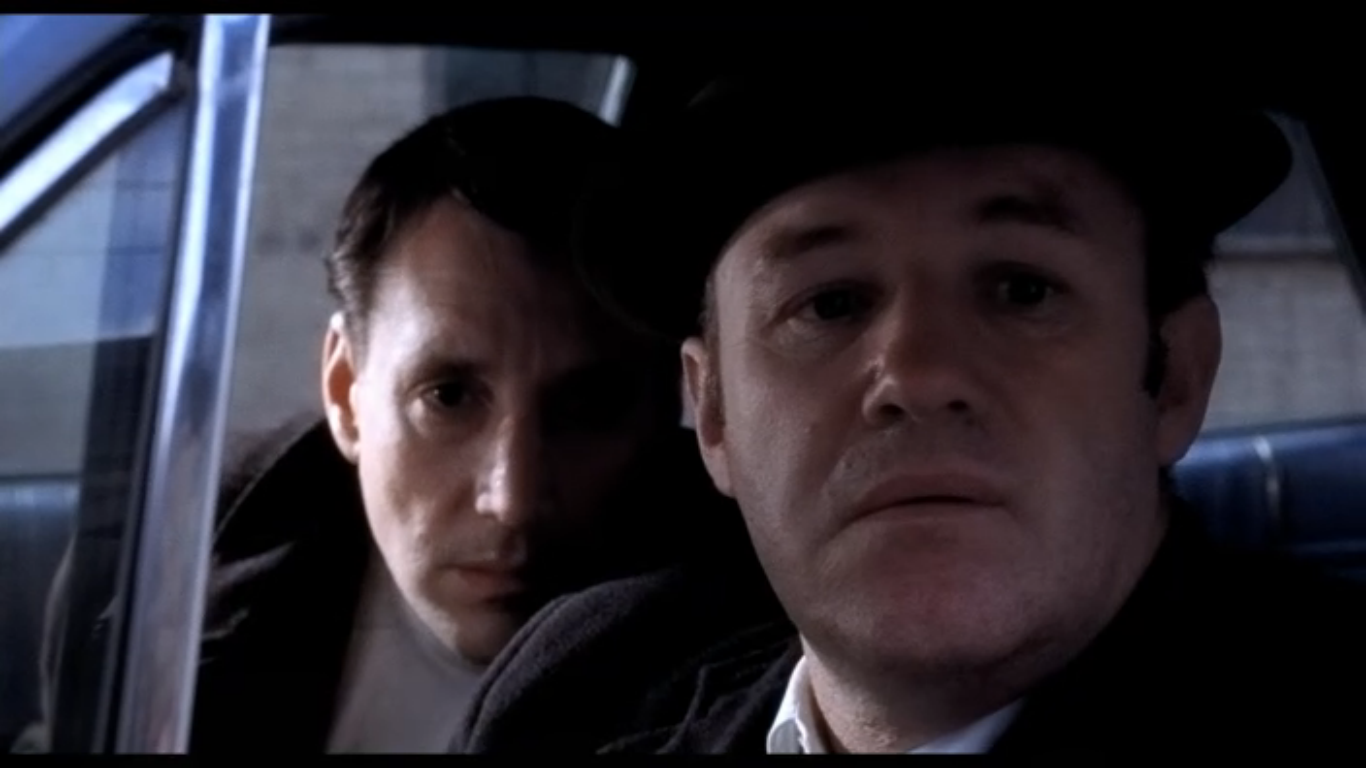
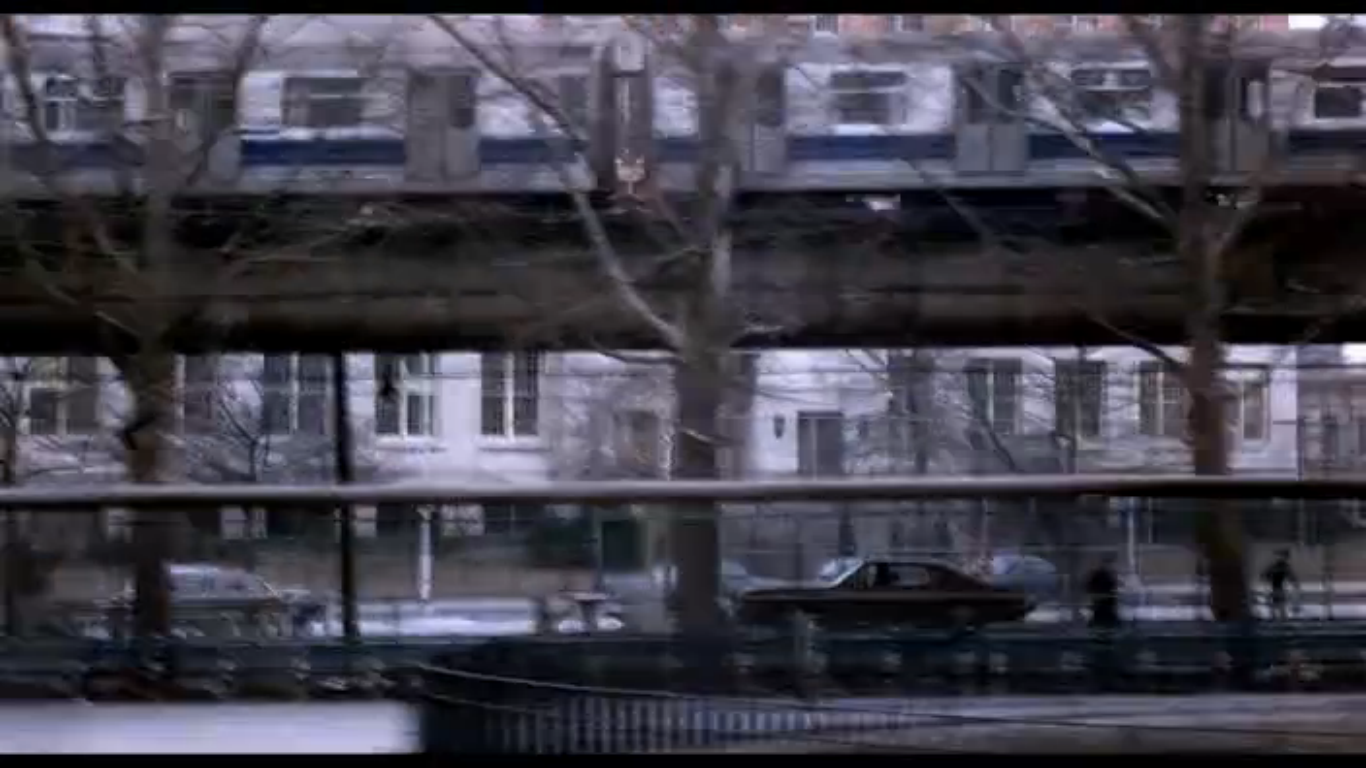
frenchcon5There is a pervading gritty realism to William Friedkin’s French Connection that undoubtedly took some cues from the French New Wave and the Neorealist movements. Hand-held cameras are taken to the streets of New York and to the train terminals. There is literally trash piling up in the gutters, old dilapidated bathroom stalls, and worn out facades all over the city. It’s urban, depressed, and a place of crime. In many ways this film is like Bullitt for New York, in fact, Steve McQueen was even offered the lead.

However, this time around our main cop is Popeye Doyle (played by Gene Hackman) and his partner Cloudy Russo (Roy Scheider). Both play a key role, but Popeye (the man with the hat) is of the greater interest. He’s a wise guy, belligerent, barking, loud-mouthed hot head, often driven by obsession in his job. He also happens to be an undercover cop in the narcotics division. He’s used to getting dirty and using the rough stuff when necessary. After all, it’s a jungle out there and there’s no room for pushovers.

From the get-go, we come to understand that this story has a French Connection, in Marseilles to be exact, and we know who is involved (Fernando Rey). We just cannot quite pick out all the details. Simultaneously, on a hunch, Doyle and Russo start running surveillance on a guy they happen upon in a club. Things don’t quite add up since he runs a deli called Sal and Angie’s by day and lives it up at night. An undercover informant also tips Popeye off to a big shipment of heroin that’s coming in.

frenchcon9Sal Boca has to be into something and so a game of tailing begins on the streets after he and his French contacts are spotted together. Frog 1 named Charnier (Rey) has Popeye on his tail only to shake him adeptly. That’s only the beginning, however, after a sniper comes after Popeye and yet another chase ensues. The fugitive boards a train and Doyle commandeers a car to follow close behind. Thus, was born one of the greatest car chases of all time and it doesn’t even involve two cars. After the adrenaline of that moment has worn off Doyle and Russo are on another stakeout and this time impound a car belonging to frog # 2 Henri Devereaux. Popeye has a gut feeling that the vehicle’s dirty and they literally tear it apart end to end, with little luck. But he’s a force of nature and very little will get in the way of his obstinate drive.

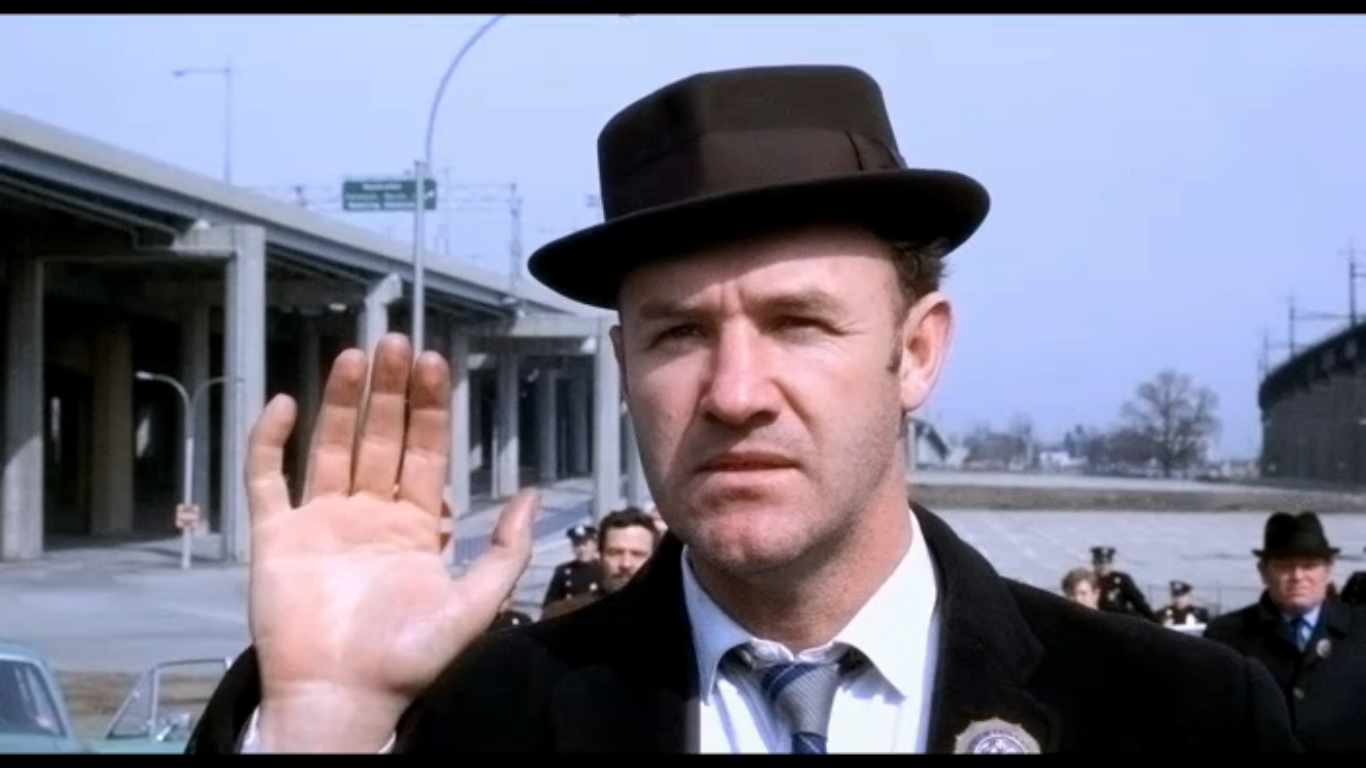
frenchcon11When the drop finally takes place everything goes off smoothly enough, but there’s a roadblock, and Popeye is waiting for them with a playful wave. He’s got them now. The final roundup leads him into an old warehouse as the hunt continues, but The French Connection finishes open-ended. Sal was gunned down, the meeting was busted, but not everyone was caught, and Charnier seems to have vanished into thin air. To top it off, Doyle shoots the wrong man and without flinching continues his obsessive hunt.

Friedkin’s film was partially based on true events from the 1960s and the two men the story was patterned after actually are featured as the boys’ superior Walt Simonson (Eddie Egan) and federal agent Bill Mulderig (Bill Hickman), who has a longstanding dislike for Doyle. Their presence in the production of this film helps to lend to the realism and nuances that the film is able to take on. The score isn’t all that noticeable, but it’s a tense arrangement that adds some underlining anxiety to some scenes. Stakeouts get more interesting than you would ever give them credit for. Really on the simplest level, this film is about one man’s hunt, his obsessive chase, which at times no longer seems about justice at all, but personal vindication.

4.5/5 Stars