
Begin Again (2013)

beginagain1Unfortunately, John Carney’s Begin Again loses the unassuming charm of his earlier musical effort Once, with higher production values, bigger names, and a more crafted sound. However, it still rides easily on the charisma of its big-name stars Keira Knightley and Mark Ruffalo. They are two individuals who have their lives wrecked and this crazy, fractured mess of a city becomes the perfect backdrop for two equally broken lives.

The film opens with differing perspectives on one point in time at a bar in New York. Dan Mulligan used to be a big recorder label exec maybe 10 or 15 years ago, but now his partner has pushed him out because he hasn’t acquired any new clients in ages. He’s all washed up and his family life isn’t much better. He’s estranged from his wife (Catherine Keener) and hardly sees his teenage daughter (Hailee Steinfeld). Given the situation, he heads to the bar to drown his sorrows after an awful day in and out of the office.
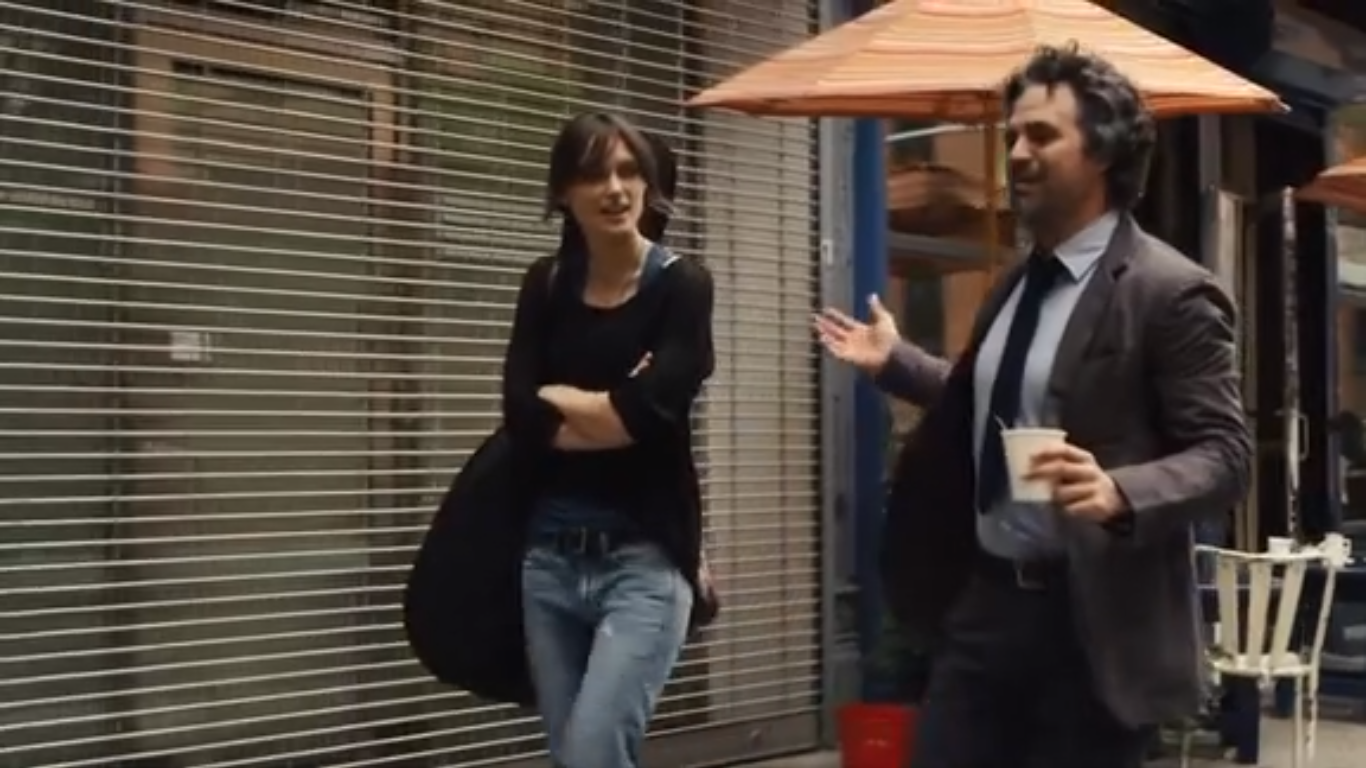
beginagain4Meanwhile, Gretta James (Keira Knightley) arrived at that same nightclub by very different circumstances. She is the girlfriend of up-and-coming pop singer Dave Kohl (Adam Levine), but she has a penchant for songwriting on the side. It’s nothing major and yet she certainly has a passion for it. However, with increasing busyness and the fame going to his head, Kohl and Gretta have a falling out. The first place she can turn is her old friend (James Corden) and he invites her to a night of music which she reluctantly agrees to.

That’s how she ends up in front of the microphone playing one of her personal tunes for the mildly interested audience. And yet one man is very interested. Dan is almost pulled out of his stupor by the song’s beauty and he immediately goes over to sign her. She thinks it’s a joke or at least she’s not at all interested in the fame. She independent and she wants to keep her work her own.

But he’s eventually able to cajole her into a unique musical endeavor. They won’t record her songs in your typical studio, but instead, all of New York will be theirs for the using. Thus, the joy of music brings a ragtag group of musicians and aficionados together to make something special and ultimately beautiful.
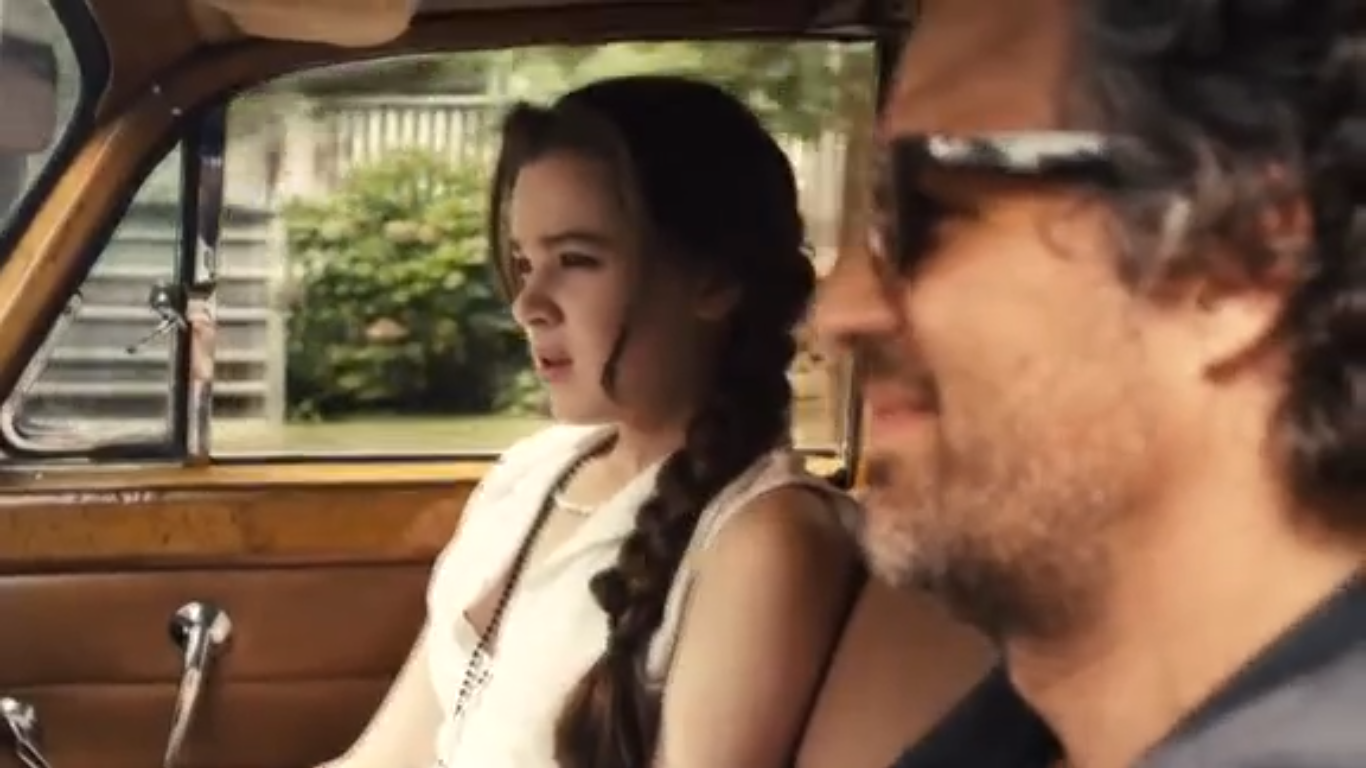
beginagain5Gretta is able to straighten things out with her boyfriend content with where she leaves them. As for Dave, he gets back with his wife and there is a newfound connection forming with his daughter thanks in part to his new friend’s undue influence. In some sense, this film has a Lost in Translation type friendship. Two very different people in two very different life stages, but they have one important connection. In this case music, and it could be made into something romantic, but it doesn’t force its characters into that.

I’m a bit doubtful that they had splitters back when Ruffalo was first with his wife, but what do I know? No matter, it makes for a fun jaunt through New York listening to the tunes of Sinatra, Wonder, and Casablanca. If you are a lover of music, Begin Again is a thoroughly enjoyable film. It begs the question, what do you do the music for? What’s at the heart of it? Is it about the money, the fame, or the pure joy that comes with creating and sharing your craft with those who you hold most dear?

3.5/5 Stars

Review: Top Hat (1935)

tophat1Perhaps Astaire and Rogers most famous film together, Top Hat has them in top form once more, seemingly defying gravity at the full peak of their powers. The beauty of their partnership is that they’re able to tell the progression of a love story through dance, but they do it with such ease and grace it looks like so much fun. For a brief moment, you almost forget what the plot line of the movie is even about. It doesn’t seem to matter. All that matters is these two harmonious beings in perfect unison with each other.

But for those who take some interest in the plot, it is once more a simple screwball story of mistaken identity and romantic entanglements. Jerry Travers is supposed to perform in the show of one Horace Hardwicke, played impeccably by the stuttering Edward Everett Horton. However, Jerry gets smitten with the girl downstairs, but she gets the wrong idea. After all, he is staying in Horace’s suite. They rendezvous in Italy at a lavish gondola getaway where they meet up with Horace’s wife Madge, the always entertaining Helen Broderick. She’s playing matchmaker for Jerry because he has a girl named Dale Tremont (Rogers), who she wants him to meet. Of course, they already know each other, but again she mistakenly believes he’s Horace.

It’s all very awkward, however, all Travers knows is that he’s infatuated with this girl so he goes headlong after her. She’s aloof with him and eventually tries to marry the overly-honorable Alberto Beddini as a defense. Horace over the entire course of the film is bickering with his butler Bates (Eric Blore) and it seems like he’s constantly getting thrown under the bus. But this time Bates does something that makes everyone happy. All that matter is that Astaire and Rogers are back together because in their universe anything else would be unthinkable.

Astaire’s opening number “Fancy Free” is especially lively setting the tone of the story, while “Isn’t a Lovely Day” taking place under the gazebo in the rain is an important starting point for the love story. “Top Hat, White Tie, and Tails” honestly is not one of my favorite numbers, but it is worth it alone to see Astaire twirl around with his stick using it to develop rhythm and act as almost a third leg.

An American classic from Irving Berlin, “Cheek to Cheek” is undoubtedly the apex of this film, because by now our stars are in love and in this dance they have entered almost a suspended state of bliss personified by their floating forms. All the other players fade away and the dynamic dancing duo gracefully glides into heaven together.

The final number “The Piccolino” is rather decadently extravagant to match the flamboyant set, but again when all else fades away and we are left with only Astaire and Rogers, that’s when the scene truly feels magical. It’s as if within all the noise there is once again a moment of beautiful intimacy. But intimate in the sense of two wonderful performers being seemingly so connected in their art form. They hold the sinews of the screwball romance together if only through their exquisite dances.

Most opinion on film is essentially subjective, and in my opinion Swing Time (1936) from the following year is a stronger picture. It has a few more memorable numbers and it is perhaps a little more well balanced all around. Although you do lose Edward Everett Horton for Victor Moore, a lot of the other players remain the same. Also, Top Hat‘s script feels a little weaker, not that it’s of great importance. Because after all, most people don’t go into a film like this ready to analyze the script. We want to be dazzled by two of the great icons of Hollywood, as much now as during the Depression years, and they certainly do that to perfection.

4.5/5 Stars

Review: Swing Time (1936)

swingtime1I wondered to myself, after watching Swing Time once again, if anyone else might have easily taken Fred Astaire and Ginger Rogers’ places as films greatest dancing couple, and then I quickly discarded this heretical idea. They appeared in 10 films together with this film directed by George Stevens being there six pairing. By now they’re a well-oiled, beautifully elegant dancing machine.

As with many of their films the genre is a hybrid of a screwball comedy and a musical which of course most importantly showcases their legendary dancing prowess.

Astaire is the carefree gambler and hoofer “Lucky” Garnett who gets duped out of his marriage by his buddies and must head to New York to prove himself to his fiancees’ father. He goes off with his faithful friend “Pop” (Victor Moore), who also has a penchant for card tricks. They have nary a penny in their pockets and he meets a pretty young dance teacher (Ginger Rogers) over a stolen quarter.

From her point of view, he just won’t stop leaving her alone and he just wants to get the chance to dance with her. Astaire and Rogers’ first number together, “Pick Yourself Up,” is a peppy piece that sets the bar for the rest of the film. They swivel, glide, and sway, perfectly in sync, orbiting one another. And for the rest of the film whenever they dance together they never seem to lose that innate connection.

As far as the screwball aspect goes, Lucky is tight on money resorting to gambling for some new duds, but his chance to dance with Penny is his big break. They just need an orchestra to accompany them. The only problem is someone else owns the orchestra and the orchestra leader Ricardo is also madly in love with Penny. In a shady set-up all across the board they draw cards for the contract and “Lucky” wins. He and Penny have a growing connection, but he still feels guilt based on his attachment to his fiancee Margaret. And of course his life catches up with him and Penny finds out while simultaneously the orchestra is taken away from him.

It must happen this way so they can realize how much they mean to each other and share one final dance together. Out of all the misunderstandings comes a lot of big laughs and in the end, everybody thinks it’s funny. Since Ricardo loses his pants, Penny decides to marry Lucky after all and everything is right in the world of Astaire and Rogers.

You don’t necessarily watch a film like this for the acting, but thanks undoubtedly to the studio system we have a colorful supporting cast including the two-timing but lovable Pop, Mabel is a wisecracking riot in her own right, and although his screen time is short, Eric Blore is enjoyable as the hissy dance studio boss Mr. Gordon.

“The Way You Look Tonight” is an absolute crooner classic and aside from the initial number it can be heard throughout the film in refrains. The same goes for “A Fine Romance” which feels antiquated, but it still manages to be thoroughly enjoyable in all of its reprises. But the main attraction is, of course, the dancing, from the personified joy of “Waltz in Swing Time” to the graceful gliding of “Never Gonna Dance.” If you set aside the unfortunate blackface for a moment the Bojangles shadow dance is a stroke of creative genius that gives off an amazing result while showcasing Astaire’s individual skill.

From someone with two left feet, this film makes me want to at least attempt to dance because Fred Astaire and Ginger Rogers turn dancing into an almost mystical experience. How does he prance and twirl so effortless on the floor? How does she do it equally as beautifully and in heels no less? It looks like they’re having so much fun and yet, in reality, they practiced for hours upon hours to get it right.  Amazing stuff.

4.5/5 Stars

Review: Shop Around the Corner (1940)

Shop-Around-the-CornerA quaint, unassuming film, especially up against other more lavish Ernst Lubitsch works like Trouble in Paradise and Heaven can WaitShop Around the Corner still manages to be in the upper crust of romantic comedies — even to this day.

The story revolves around a little shop in Budapest run by the often curmudgeon and excitable owner Mr. Matuchek (Frank Morgan). Every morning he comes to open up shop and nearly every day he has something to complain about whether it’s his workers or the lack of business. His right-hand man is Alfred Kralik (James Stewart) who has been a diligent clerk in the store for well nigh nine years now.

He confides in his older colleague and friend Mr. Pirovich (Felix Bressart) that he has begun correspondence with a mysterious lady friend who was looking for a partner with whom to discuss culture and all the higher forms of art. Kralik is intrigued as he wants to expand his mind and he seems to have found his perfect match.

Meanwhile, the status quo gets shook up a bit when a Ms. Novak comes into the shop. At first, she gives off the sense of a flustered shopper, but in a matter of moments, she proves herself as a shop girl, acquiring a position even without a vacancy.

Over time, his relationship with Ms. Novak becomes increasingly more antagonistic, to begin with, because she wears a blouse unsuitable for the workplace. The prospect of his first meeting with his secret correspondent has Kralik on edge in expectation, but when he cannot sneak a peak, Pirovich looks for him and delivers a stunning revelation. It is, of course, Ms. Novak.

In such a way the dramatic irony begins as Kralik understands just who this girl is, and she continues to brush him off as the stiff, bowlegged man from the shop around the corner. Mr. Matuchek has unspoken problems of his own that cause him to abruptly fire Kralik, his most faithful counterpart. But their relationship is patched up and the crackerjack clerk gets his position back and then some.

There’s still the matter of Ms. Novak because he truly does feel something for her, even showing up at her home to see how she is getting on after calling in sick. It’s in this moment that she reads one of the letters in front of him. One of his letters.

Then, right before Christmas everything his bustling and busy in the little shop. All seems right as Mr. Matuchek is in good spirits with a Scrooge-like transformation for the holidays. He even winds up with someone to share a festive holiday meal with. It seems that Kralik has a fiancee and so does Ms. Novak. As it is Christmas they both try to leave the other on a positive note, and Klara goes so far as to mention her initial crush on her colleague. This then becomes the critical moment for Kralik as he still knows something she doesn’t. He frightens her stiff about her mystery man and then reveals him to be her pen pal. All it takes is a carnation in the lapel. She gets it right then. They embrace and share a kiss.

Although Stewart is far from a Hungarian clerk, he does exude a pleasant commonness, better than any other actor of his era. As such, he has the perfect demeanor and presence to portray Kralik, a man who seems altogether ordinary, although he certainly is more than meets the eye. Margaret Sullavan seems a generally forgotten leading lady, but there is an airy, almost ethereal quality to her. In real life, she proved to be difficult at times, but here she somehow fits rather remarkably with Stewart. The two leads prove to be adept sparring partners in Lubitsch’s altogether effortless romantic comedy.  It truly reconciles the lines between ideals and reality which allow two people, such as these, to fall in love for real.

4.5/5 Stars

Klara Novak: All my knowledge came from books, and I’d just finished a novel about a glamorous French actress from the Comedie Francaise. That’s the theater in France. When she wanted to arouse a man’s interest, she treated him like a dog.

Kralik: Yes, well, you treated me like a dog.

Klara Novak: Yes, but intead of licking my hand you barked.


Man in the Moon (1991)

maninthe1Robert Mulligan is an unassuming film director. Man in the Moon would be his last film in a career that was not so much illustrious as it was respectable. In truth, I’ve only had the pleasure of seeing one of his other films — his crowning achievement To Kill a Mockingbird.

There are in fact some similar threads running through these two films, starting with the Deep South nostalgia and close analysis of adolescence. Both these films take the point of view of a young girl. Their narratives hope to shed at least a little bit of light on that intricate stage of life. This time a 14-year-old Reese Witherspoon is our lead, playing the Elvis-loving, gum-chewing, spunky dynamo named Dani. She and Scout share a lot in common because as young people there’s an inherent tendency to mope, question, and disregard. They have not quite grabbed a hold of the mature world of their parents. After all, they still have a great deal to experience. That’s what makes these film arcs necessary.

Man in the Moon starts with Dani, but there’s a whole family unit around her. A father (Sam Waterson) who is a decent, down-to-earth-man, and he would rather commune with nature in his fishing boat than go to typical church. A mother (Tess Harper) who loves her husband and daughters dearly, knowing when to trade tough love for hugs. Maureen (Emily Warfield) is Dani’s oldest sister and her idol, along with the object of every local boy’s desire. She’s beautiful and yet what’s more extraordinary is her good nature. She doesn’t deserve the creepy father and son duo eyeing her in the local town.

maninthe2Arguably, the next most important character in Dani’s story is Court (Jason London). They have your typical terse meet-cute that signifies only one thing. They must fall in love. It turns out he’s the eldest son of an old friend of Mrs. Trant. Soon things change for young Dani because she’s never known someone like Court, much less liked a boy.

Their relationship is one of those complicated entanglements. He’s a few years older and is the man of the house. He has to grow up quickly and views Dani as a child. But their friendship blossoms with frolicking afternoon swims. Dani is ready for something more. She thinks she’s in love. Now if Court was one of the other boys, he could easily take advantage of the situation — this fawning girl who is madly in love with him. But he’s not like that. Dani can’t quite get that through her head. It just doesn’t make sense. They enter friend territory and Dani’s heart is still aflutter, but she’s happy again.

maninthe3The second half of the film enters melodramatic territory that first hits the Trant’s with familial turmoil, and then Court. Dani for the first time in her life is faced with the full brunt of tribulation. What makes matter worse is her feelings are all mixed up. She loves her sister. She hates her sister. She cannot bear to see Court. She cannot bear the suffering. It’s in these moments that uncomfortable feeling well up in the pit of your stomach.
Man in the Moon like many of the great coming-of-age movies is really about adolescents coming out of their innocence and being inundated with the often frightening realities of life. It reminds even the youngest of us that more often than not life is unmerciful. It’s how we pick ourselves up out of that fatality that matters. It’s hard but that pain is often how we grow and mature — learning how to cope with the way things are. That’s what makes the people around us so integral to existence. They can be our lifeline that keeps us afloat. Thus, Dani’s friendship with Court matters so much. That’s why Dani’s relationship with Marie matters too.

Perhaps the drama is laid on rather thick, but nevertheless, it’s difficult not to get behind this film. Reese Witherspoon’s perkiness is wonderfully disarming, and Jason London plays a decent young man. These are characters I want to watch and emulate. Not quite Scout and Atticus, but they are still definitely worth the time.

4/5 Stars

You’ve got a right to grieve, Dani. You got a right to be hurt. But if you get so wrapped up in your own pain that you can’t see anyone else’s, then you might just as well dig yourself a hole and pull the dirt in on top of you, because you’re never going to be much use to yourself or anyone else. ~ Mr. Trant 

Note: This review previously said Marie (Gail Strickland) instead of Maureen (Emily Warfield)

Once (2007)

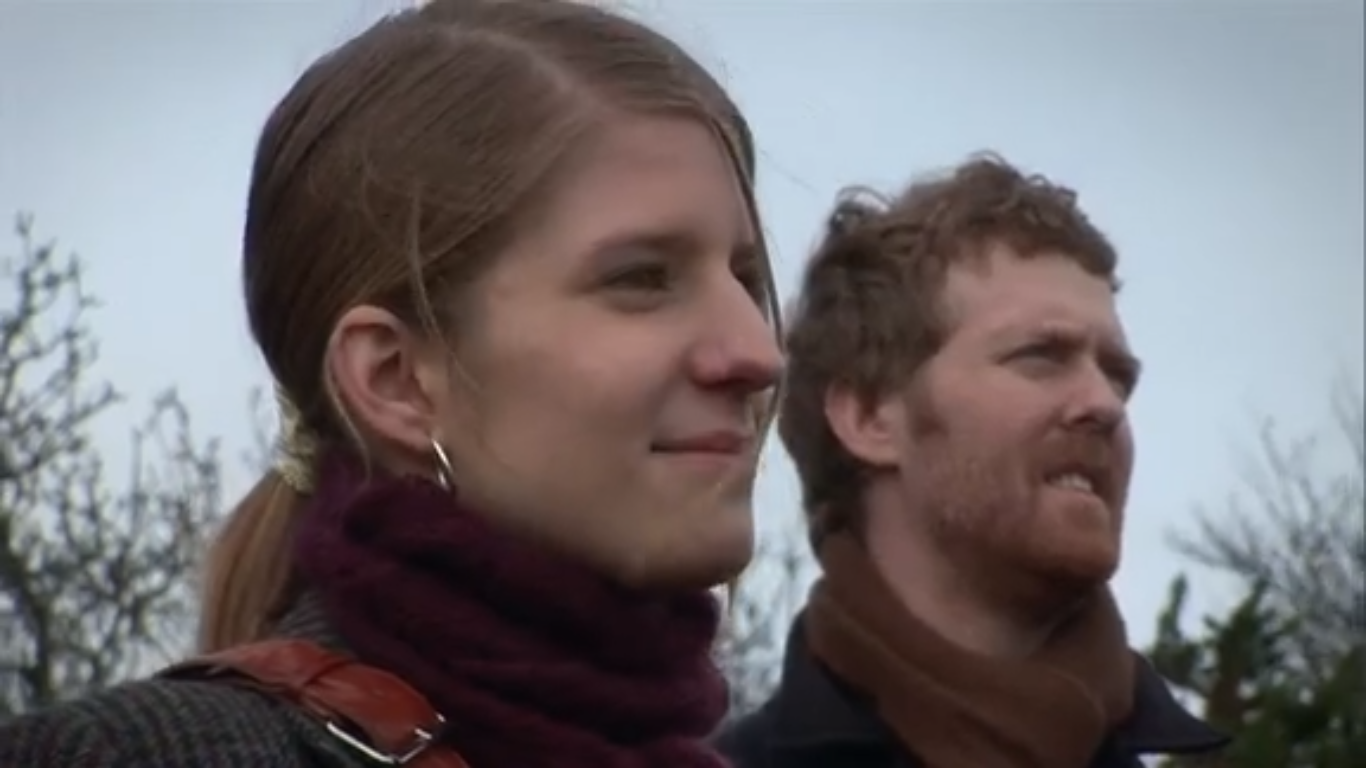
once1Only sometime after the film ended did I come to the realization that we never learn the names of our two protagonists. And yet we build such a connection with them through music, through their bits of humanity, and from being a part of their lives for a short time. Because Once really does feel like a documentary. It feels like we’re meeting these people and peering into their lives for an hour an a half of sheer delight.

The guy (Glen Hansard) is an Irish street performer who can be found on the street corners, guitar case open, strumming away, hoping to get a buck or two. He’s good but nobody much seems to notice him. It’s as if people see you doing such a gig and think you must not be very important. I must admit I’m guilty of such a fallacy myself many a time.

But there is one person who does come up to him. It’s a girl (Marketa Irglova), very straightforward and direct, and we learn she is Czech. What could two such people have in common? Music. Of course. The universal language even more so than English. Because she obviously has an accent and he does too, to my American ears, but their music transcends cultures.

It’s easy to forget Once technically functions as a modern-day musical because more often than not the genre seems like a dying breed. The songs in this film are beautifully melodic, with wonderfully earnest lyrics, and equally well-wrought instrumentation. But it fits into the narrative and nothing feels like a forced plug to get our respect.

They’re laying it out there. Letting us into their homes and keeping all their feelings out in the open. Really they both have a humble existence, and each has had their own romantic pasts. He has memories of a love who now lives in London and despite her young age, the girl has a husband she left behind in her home country. It’s a surprise to him and the audience both.

once2Their ride on a motorcycle, for a brief instant, brought to mind the Vespa ride in Roman Holiday, although their excursion is a little less chaotic. There’s still an innate playfulness of people with wonderful chemistry and whether they are acting or not is anyone’s guess.

Everything goes back to the music though since that acts as the heart and soul of this story. When the pair of them are able to get a recording studio it looks like he might get his big chance. He invites her to sing because he really wants her to be a part of it. He rounds up a few more street musicians and they’re set. When they get to the recording studio and the tape starts rolling what follows is a performance bursting with passion and energy. You can feel the electricity.

It feels as if we’re on the ground floor of something special, unwinding right before our eyes and yet we don’t know exactly what is going to happen. He’s about to head off to London to show off his sample and perhaps catch up with an old flame. She is preparing to make amends with her husband. But before leaving the guy drops a very big present on her doorstep to thank her for all she’s done for him.

Their tune “Falling Slowly” plays in refrain summing up this music-infused love story. The question is, is this an actual love story? I would answer in the affirmative. There is no sex in the contemporary sense, but this film does most certainly have love, whether or not it becomes physical. And it acknowledges the clear distinction between sex and love. These are two people who deeply care about each other and share a connection more intimate than most people can manage.

4/5 Stars


Sherlock Jr. (1924)

sherlockjr1When I was just learning about silent comedy I would have said that it started and ended with Charlie Chaplin no questions asked. And it’s true that he most certainly is a starting point, but if you want to get even a small understanding of comedy you have to look at Buster Keaton (as well as Harold Lloyd). I’m not claiming a great deal of knowledge about silent films (I still have much to see and learn), but Keaton astounded me with his prolific output during the 1920s and his physical prowess. I did not appreciate The General (1926) that much the first time around, however, by the time I got to Our Hospitality (1923), Seven Chances (1925), Steamboat Bill Jr. (1928), The Cameraman (1928), The Navigator (1924), and of course this film, I completely changed my initial evaluation.

Since Sherlock Jr. is shorter than most of his other features it’s almost like Keaton cut out all the dross and what we are left with are sequences of cinematic gold. In this story about a projectionist obsessed with being a detective, there is surprising depth and inventiveness that is still magical today. The plot really is a film within a film, starting with Sherlock Jr. trying to win over the affections of his love (Kathryn McGuire) with a box of chocolates. But his rival (Ward Crane) does the same by more shady means and pins his dastardly deed on Jr. Now our hero is banished from the house and resigns himself to his projection room where he enters into a dream-filled sleep. It mirrors the film that is playing on the screen as he enters this world as a detective and fills it with all his real-life acquaintances. The fact that the girl comes back to him at the end feels rather superfluous because we automatically assume that is the case. It’s how Keaton gets there that’s ingenious

sherlockjr2It easy to marvel at some of the visuals as Buster Keaton literally leaves his body and walks onto the screen, shifting between an array of backdrops in a thoroughly entertaining sequence. He’s pulling crazy stunts without CGI mind you, and many of them put his life and welfare on the line. He tries his hand at pool with impressive skill and pulls off some amazing parlor tricks including a disappearing act that not only stumps the thugs pursuing him but the audience as well.

Even after reading a full breakdown of how he was able to literally vanish into thin air I’m still utterly baffled. Every time it causes me do a double take. Then, of course, there’s his wild ride on the handlebars of the motorcycle, which has some beautifully comic stunt work. It’s stuff you certainly would not want to try at home and it would be unthinkable today, but that was the brilliance of “The Great Stone Face.” He was literally willing to put his life on the line, and whereas Chaplin was adept at pulling at our heartstrings, the often emotionless Keaton does not try that. He wins us over with his resilience. In him, I find a figure of a very relatable temperament although he was more of a daredevil than I could hope (or want) to be. That just makes me respect and marvel at what he can do. If you want to see slapstick and sight gags at their zenith then take a look at Buster Keaton. Sherlock Jr. is always a good starting point.

5/5 Stars

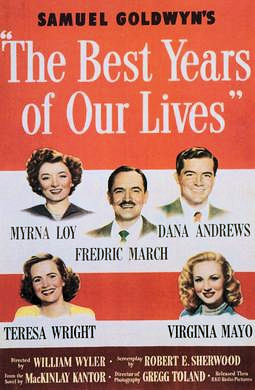
The Best Years of Our Lives (1946): The Forgotten Counterpart to George Bailey’s Story

The_Best_Years_of_Our_Lives_film_Inherent in a film with this title, much like It’s a Wonderful Life, is the assumption that it is a generally joyous tale full of family, life, liberty, and the general pursuit of happiness. With both films you would be partially correct with such an unsolicited presumption, except for all those things to be true, there must be a counterpoint to that.
Upon watching both these films on subsequent days, that became markedly evident. George Bailey (James Stewart), of course, must go through a perturbing alternate reality where he never existed, and the consequences are catastrophic to all those he knows and loves in his community. But such a paradigm shift or new perspective, does truly revitalize his entire existence. It’s as if he sees the whole world through an unfaltering lens of hopefulness thereafter.

Although it lacks the dark fantasy that engulfs the latter half of It’s a Wonderful Life, Best Years has its own heavy dose of foreboding, that while more realistic, is no less disconcerting. All the boys have returned from the theaters of Europe and the Pacific, including our three protagonists Fred (Dana Andrews), Homer (Harold Russell), and Al (Fredric March). Upon getting back to their old abode of Boone City, sons talk about nuclear fallout in Hiroshima and men at drug store counters warn of the imminent threat of “The Reds.” Some soldiers like Fred have trouble landing work. Others struggle with getting the necessary loans from banks like the one Al works at,  or they come back to far less glamorous lifestyles. Homer copes with being a double amputee and simultaneously closes himself off to all those who love him, including his longtime sweetheart Velma (Cathy O’Donnell). He must learn not so much how to love, but the equally difficult life skill of allowing others to love him.

Derry also struggles in a loveless marriage with his superficial wife Marie (Virginia Mayo), while also battling with PTSD symptoms like recurrent nightmares. Even the subtle reality that the only African-Americans in the film work behind soda fountain counters or in nightclub jazz bands has greater implications. Theirs is a relegated status, even in a country of liberty like America. Unlike the former film, we do not see any ghoulish human cemeteries, but we do see plane graveyards like ghost towns where metal is slowly rusting just waiting to get demolished and re-purposed. At this point, it is only a sobering reminder of all those who fought and died in the war years.

Many of these topics are only mentioned for a brief moment or we can only infer them from visual cues, but still, they lurk there under the surface or better yet, right in plain view. These real-life unsettling concerns are worse than It’s a Wonderful Life because they fall so close to home even today.

Wounded veterans are still coming home to a country that doesn’t know what to do with them, or a country that seems ungrateful for their service. Married folks still struggle through marriage and divorce. Single people still struggle with figuring out if they should get married and so on.

I think part of the reason I admire The Best Years of Our Lives so much, despite its nearly 3 hour running time, is its ability to captivate my attention rather like a day in the life of someone I would meet on the street. Although Virginia Mayo and Mryna Loy seem the most Hollywood, most everyone feels rather ordinary. Certainly, Dana Andrews is handsome and Teresa Wright, as well as Cathy O’Donnell, are wonderful as multidimensional girls-next-door, but I feel like I could potentially know people like them. And of course, Harold Russell was unusual since he wasn’t a trained actor. That casting choice pays off beautifully in moments such as the final wedding scenes where in a dyslexic moment he switches up his vows. But it works wonderfully as an authentic addition.

Although Gregg Toland worked on revolutionary fare like Citizen Kane, and William Wyler dabbled in all sorts of genres from westerns to period dramas, they have all the necessary sensibilities for a perfect presentation given the subject matter. The visuals are crisp and beautiful, but never flashy or overly conspicuous. The use of deep focus concerns itself with the overall composition of the frame -never attempting to focus our attention on any singular action.  It all becomes equally important. Meanwhile, Wyler directs with a sure hand that makes the actions flow organically and at the same time his ensemble is given the space and the time to grow and evolve before our very eyes.

It’s a timeless film for what it brings to the forefront and also because of what it evokes out of the audience members themselves. There is an underlying somberness to it at times, but most importantly it rings loudly with the high unequivocal notes of hope. In the post-war years, it was a pertinent film, and it still has something to offer even now. More people need to know about The Best Years of our Lives.

5/5 Stars

While We’re Young (2015)

whilewereyoung2“It’s the Goonies and Citizen Kane. They don’t distinguish between high and low.” ~ Ben Stiller as Jamie
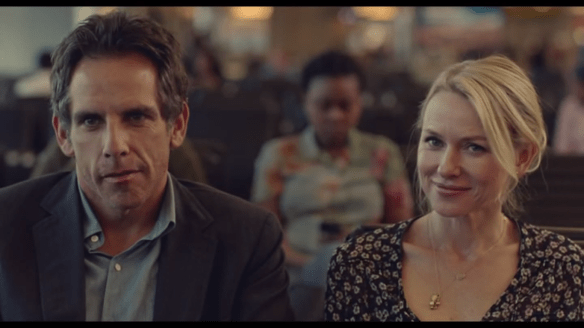
Although not nearly as prolific, in some respects Noah Baumbach feels like a lesser heir apparent to Woody Allen, if in fact the veteran filmmaker ever stops making films. Nevertheless, Baumbach seems to have a knack for a similar cross-section of New York. Frances Ha is his Annie Hall with the cinematography of an updated Manhattan. Also, his characters are more often than not middle-class intellectuals. People who think, have deep conversations, and yet there still manages to be something funny or different about what they have to say.

While We’re Young begins something like this. There’s a middle-aged couple stuck in neutral scared out of their minds about kids, and at the same time scared of growing older all alone with just the two of them. They have some good friends, who now have a child, and now Josh (Ben Stiller) and Cornelia (Naomi Watts) feel lonely. Then, they meet Darby (Amanda Seyfried) and Jamie (Adam Driver) and phase two begins.

Baumbach proves he really is a different creature entirely, and While We’re Young embodies that with its progression. It’s not quite what we expect. It’s refreshing, lithe, and friendly. Hold that thought. Maybe that’s actually exactly what we wanted and expected — at least for now.

Very quickly these two couples connect on so many levels despite their vast age difference. The old ones feel young and the young ones are really old souls guided by free spirits. They live life as they please without the drudgery that Josh and Cornelia feel weighed down by.

He’s been working on the same documentary for eight years now with the same talking head (Peter Yarrow), and he and Cornelia have hardly been out of the house, much less the country, in the last several years. To make matters worst he feels like he’s living in the shadow of his highly-successful father-in-law (Charles Grodin). In utter contrast, Jamie imbues so much passion it’s hard for Josh to not to latch onto that.

Their friendship blossoms in such a way that Josh and Cornelia almost seem unrecognizable with their hip-hop and fedoras. It’s not obvious quite yet whether that’s a good or a bad sign. But of course, the story doesn’t end that way. Because that’s not life, or at least not the way of real life outside of the world of filmmakers and documentarians.

Darby and Jamie aren’t the perfect young couple they seem to be. Their mish-mash of culture and public domain mentality has a downside. It gets worse than just the Goonies and Citizen Kane. After all, what are we supposed to expect? Two people who build their own furniture, make ice cream for a living, and live off old records and VHS cassettes have faults too.

Something happens that shakes Josh and the audience out of their reverie. In fact, everyone is brought back to earth. The world is often full of lies or worse yet half-truths. Unfortunately, we have to learn to accept them even when it feels so unjust. Joshie learns a valuable lesson about humanity and the younger generations. They aren’t evil and they are far from perfect.

In its finality, While We’re Young wasn’t the pretty picture that we half-expected. In fact, it got downright weird, dark, and deceptive, before giving way to apathy.  But that’s okay. Life doesn’t always end there. There’s often a hopeful epilogue and so it goes with Josh and Cornelia.

3.5/5 Stars


Review: North By Northwest (1959)

1024px-North_by_Northwest_movie_trailer_screenshot_(6)Wedged between two landmark Hitchcock films in Vertigo (1958) and Psycho (1960), North by Northwest is iconic in its own right, but it boasts sprawling adventure and a bit of a lighter tone. It’s rather like Teddy Roosevelt wedged in between Jefferson and Lincoln on Mt. Rushmore but that comes later.

Supposedly the film was once to be called In Lincoln’s Nose, but when the now famous slanted North by Northwest logo hits the screen you instantly know you’re in for something extraordinary. The title sequence is wonderfully exciting given a boost by yet another impeccable score from Bernard Hermann.

This film is once again beautifully shot in color (VistaVision), but it covers more ground than Vertigo and has far more elaborate set pieces. The action begins ordinarily enough at an office building where advertising man Roger O. Thornhill (Cary Grant) makes his way out of the office. It’s a busy day at the office, but Roger has a dinner engagement and an evening at the theater to look forward to. His plans and his whole life are put on hold after he fatefully flags down a waiter.

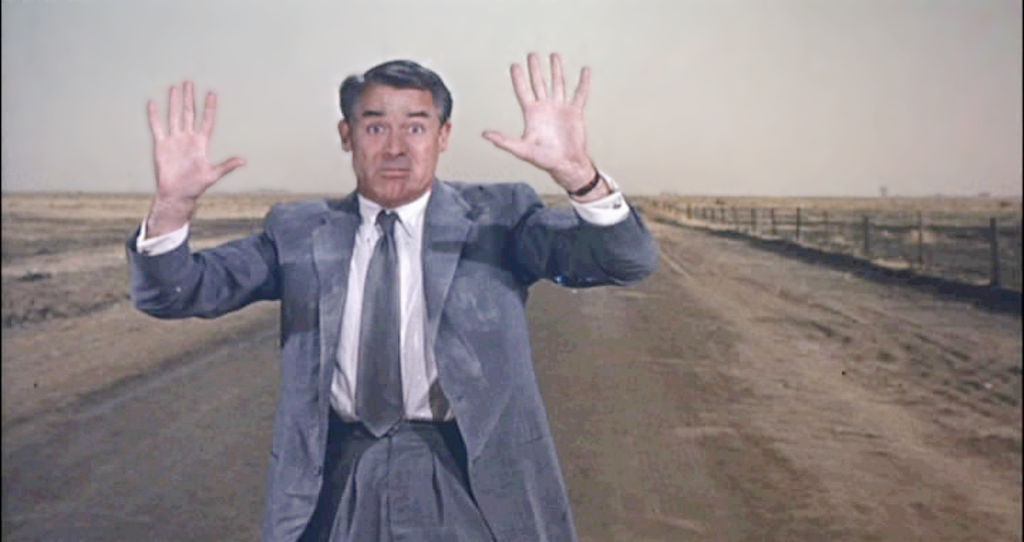
His actions don’t go unnoticed and two menacing men lead him off at gunpoint as he tries to head to a phone. He is utterly confused, but we know it has something to do with the name George Caplan. These men think that’s who he is, and not to be persuaded otherwise, they take him to their leader (James Mason), who is very interested to meet him. Over the course of a harrowing evening, Thornhill is left on the edge of the road in a completely drunken state to die. But instead he gets brought in on a drunk driving charge and of course, no one will believe his cockamamie story, even his skeptical mother (Jesse Royce Landis).

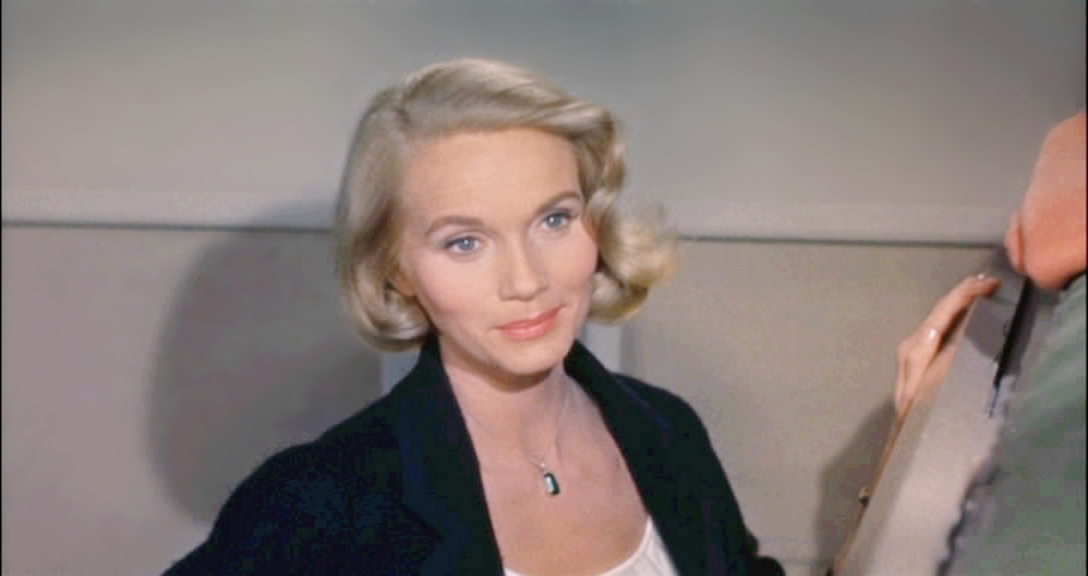
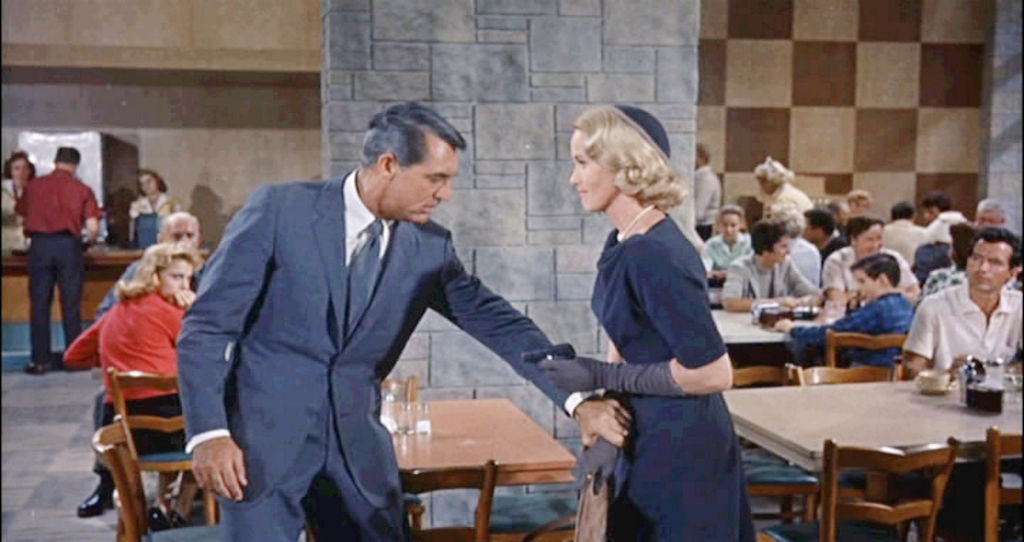
North_by_Northwest_movie_trailer_screenshot_(21)Next, it’s onto the U.N. Building to find out who Lester Townsend is, but of course, his captors are on his trail and just like that Thornhill is framed for murder and a fugitive on the run from the thugs and the cops. He tries to get away train ticket out of town, but in order to evade the law he ducks onto a train and meets the pretty blonde Eve Kendall (Eva Marie Sainte), who extends a favor. Little does he know what her angle is. Right now all he cares about is a little tete a tete and perhaps an amorous evening.

Kendall wistfully sends her new lover off to meet Caplan. Instead, he is met by a bi-plane and once again running for his life. But the build-up of this now iconic scene is wonderful. Hitchcock utilizes his background in silents to allow the scene to progress without hardly any dialogue and it unfolds ominously. However, he proves that even on an isolated roadside stop danger can still be present. Thornhill has new opinions of Kendall now and continues following the trail of Caplan which leads him to his old nemesis (Mason) and wouldn’t you know, Eve is by his side.

North_by_Northwest_movie_trailer_screenshot_(31)Roger feels like he has everything figured out, but he gets a visit from the mysterious Professor (Leo G. Carroll), who helps straighten him out with all the business surrounding the elusive George Caplan. With this new insight, Roger goes to the Professor to Rapid City and the one and only Mount Rushmore. It’s the perfect spot for a Hitchcockian finale to satisfy the director’s flair for the thematic.

North By Northwest is fun because we get to be right alongside Grant when he gets caught up in the whole mess. Although we see the picture a little more clearly than him, all the details are not handed over to us. So in a sense Hitch lets us in on a few secrets without showing us his entire hand. The staging is also wonderful whether it is the U.N. Building (with that marvelous aerial shot), or desolate Bakersfield, and even the soundstage set up to look like the surrounding area of Mt. Rushmore. It’s such a contrast to Rear Window and it uses the scenery very effectively similar to Vertigo.

Ernest Lehman’s script simply put is a lot of fun, because we have our villains, we have our romantic leads having a lot of great scenes together, and the pacing is surprisingly good. I am amazed how spry Cary Grant looks for his age (especially compared to aging Jimmy Stewart). Eva Marie Saint is great and in my estimation, she is the second-best Hitchcock Blonde following Grace Kelly, but you can easily disagree. James Mason plays yet another debonair villain and there are a handful of fun appearances by the likes of Martin Landau and Edward Platt.

One reason I’m constantly drawn to this film is that it feels rather like a road trip as we slowly cross the continental United States with Cary Grant. Furthermore, it’s simply good, unadulterated fun. There’s not a ton of analysis or commentary to mull over or to think deeply about (maybe some implications to the Cold War). But I’m content to sit back and watch with glee as a crop duster nearly clotheslines Cary Grant. Movies don’t get much better than this, seriously.

5/5 Stars