Strangers on a Train (1951) – Alfred Hitchcock

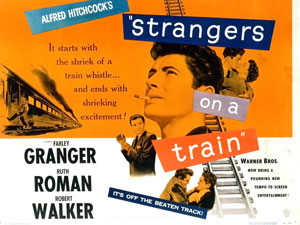
a7d8f-strangers_on_a_train_28film29In one of Hitchcock’s most intriguing thrillers, we watch events unfold as two distinctly different men meet each other. One is an unassuming tennis player and the other a wild-living rich kid. They both have the same desire though, to have someone out of their lives. With this in mind, Bruno proposes swapping murders. He will kill the tennis player’s unfaithful wife and Guy in turn will murder Bruno’s domineering father. Bruno goes ahead with the plan while Guy brushes it off and soon forgets it. Only too late does Guy find out what has happened and he is suddenly faced with a great dilemma . He does not want to commit murder but Bruno relentlessly shadows him expecting it to be done. In the final showdown the two men face off and Bruno is still adamant that he and Guy were always in it together. This film is great for many reasons, including the often unconventional cinematography, the intriguing characters who blur the line between good and evil, and of course the carousel scene at the end is always memorable. Farley Granger and Robert Walker both deliver very good performances that are probably the best of their careers.

5/5 Stars
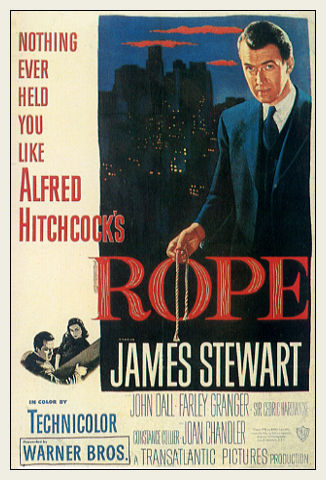
Rope (1948) – Alfred Hitchcock

eeca4-rope2What is the perfect murder? Hitchcock seemingly toys with this question in Rope . Starring Jimmy Stewart, Farley Granger, and John Dall, the latter two are students who murder their peer from university. Their only reason for doing it however is to see if they can get away with the crime. To complete their little experiment, they invite the boy’s family, his girlfriend, and other guests over to dinner, right in the room where they committed the murder. As an after though they invite their former professor (Stewart) who is the only one who would be able to catch them. At first Stewart does not suspect anything but eventually he becomes suspicious without letting on. Finally, the students lose their cool and Stewart catches them red-handed. This quickly puts an end to the perfect crime. This film is interesting because it was made to look like it was shot on one reel. Hitchcock’s movies are often known for the editing and yet this film was shot almost like a play in very long takes.

4/5 Stars

Spellbound (1945) – Alfred Hitchcock

Directed by Alfred Hitchcock and starring Gregory Peck and Ingrid Bergman, the film follows the complicated story of an intelligent lady doctor skilled in psychoanalysis. Bergman’s character is very focused on her work and often withdrawn. That soon changes when she meets the new doctor (Peck) whom she falls for. However, soon Bergman realizes he is not the real doctor and further uncovers his state of amnesia used to forget his past. Trying to keep him out of the hands of the police, she takes Peck to her former colleague and they try to delve into his dreams. When Bergman finally seems to have all the answers unexpected complications arise. Now she must save her patient and lover before it is too late. Hitchcock’s directing, a great score, collaboration with Salvidor Dali, and good acting make this film worth seeing. Michael Chekhov is certainly good for a laugh or two as well.

4/5 Stars

Lifeboat (1944) – Alfred Hitchcock

Directed by Alfred Hitchcock and starring Tallulah Bankhead, the film follows the passengers of a liner who escape in a lifeboat after the ship is sunk. Together they try and survive in order to make it back to civilization. Along the way they must make many difficult decisions. This includes saving the life of a German who sank their boat as well as amputating a man’s leg. Through it all there is ongoing conflict among the people who would normally be genial. However, their circumstances are by no means ordinary. By the end they are so desperate and crazed they seemingly turn against some and fall in love with others. This technical challenge of such a small setting did not disable Hitchcock’s storytelling ability. Written by John Steinbeck, the film’s story is an interesting view of humanity during World War II. This movie also includes Hitchcock’s most ingenious cameo of any of his films.

4/5 Stars

Shadow of a Doubt (1943) – Alfred Hitchcock

08054-original_movie_poster_for_the_film_shadow_of_a_doubtIn one of Hitchcock’s earlier American films starring Joseph Cotten and Teresa Wright, Uncle Charlie comes to visit his niece namesake “Charlie” and the rest of the family. Initially the whole family seems to be in a funk until they find Charlie (Cotten) is coming to visit them in Santa Rosa. However, what they do not know is that he is a wanted murderer. Over time “Charlie” (Wright) becomes suspicious of her uncle and finally comes across the truth. Her uncle figures out what she knows and decides he must get rid of her. Living in constant peril, “Charlie” finally is forced to face him. In the ensuing struggle she fights madly for her life. With the constant discomfort and suspense, Hitchcock proves how powerful thrillers can be even in the home. Cotten and Wright both do a very good job in this film. Supposedly this was Hitchcock’s favorite among his own films. I think it certainly one of the best of his lesser known movies.

5/5 Stars

Rebecca (1940) – Alfred Hitchcock

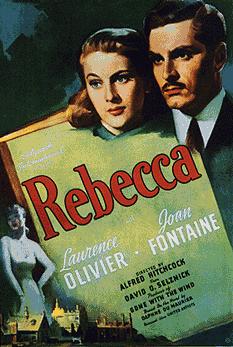
This film directed by Alfred Hitchcock and starring Laurence Olivier with Joan Fontaine, was adapted from the Daphne du Maurier novel of the same name. The story begins in Monte Carlo where Max De Winter (Olivier) and a young woman (Fontaine) have a chance meeting as she is working for an older lady. Soon she learns that his previous wife died the year before. Fairly soon the two of them are attracted to each other and Max has plans of marriage and returning to his Manderley. However, back home the fairy tale is over and the new Mrs. De Winter is constantly tormented by the housekeeper Mrs. Danvers. Pretty soon Max himself seems to have changed. Confused Mrs. De Winter must learn what happened to Rebecca, the lady who was so enchanting. When she actually finds out the truth it is almost too much to bear. Like many Hitchcock films this one is certainly worth watching and it was actually his first American film. Olivier, Fontaine, George Sanders, and Judith Anderson all have very good performances.

4.5/5 Stars

Foreign Correspondent (1940) – Alfred Hitchcock

Directed by Alfred Hitchcock, this film stars a cast including Joel McCrea, Laraine Day, Herbert Marshall, and George Sanders. Wanting a good scoop about events in Europe a newspaper editor sends a reporter off to dig something up. Joel McCrea’s character finds himself entangled in a complicated kidnapping scheme and assassination. On top of that he falls in love while on the job. With no one believing him at first, he must try and gather the facts that ultimately might lead to a war. Dodging two attempts on his own life, he knows he is getting close. However, little does he know how near he actually is. After more twists and turns McCrea finally gets his story and the girl but at a cost. From the scenes in the windmill until the tense moments on the plane, this movie does much to intrigue. It serves a double purpose, a decent piece of propaganda and a good thriller.

4/5 Stars

The Lady Vanishes (1938) – Alfred Hitchcock

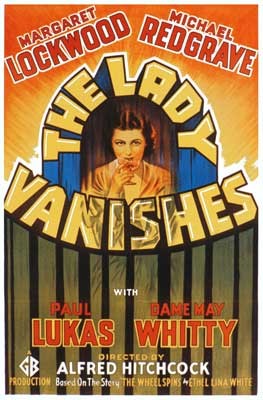
Margaret Lockwood plays an American socialite in Europe in this Hitchcock mystery-thriller. The night before she is to leave, Lockwood meets a kindly middle-aged lady who is fascinated with European music. The next day the two ladies sit together on the train to talk. Being a bit disoriented, Lockwood takes a short nap however when she wakes up Ms. Froy is mysteriously gone. Seemingly no one remembers seeing the woman and no one will believe Lockwood. Finally, she teams up with a man who she had a run in with the night before (Michael Redgrave). Together they try to figure out what has happened to the lady. Finally discovering the truth, they come under great danger and must fight for their lives and those of the other passengers. Hitchcock does it again, bewildering the mind and making us intrigued at the same time.

4.5/5 Stars

39 Steps (1935) – Alfred Hitchcock

In one of Hitchcock’s great English films, he plays with the idea of a man on the run. Robert Donat is just an ordinary Englishman until a strangle woman tells him a deadly secret. Upon finding her murdered by a dangerous foe he flees. However, that puts him under suspicion and the hunt is on. He makes his way up to Scotland and gets some assistance however soon trouble brews. Somehow he finds himself cuffed to a woman he detests and he drags her away with him in order to escape. Due to their predicament, the unlikely pair soften to each other and try to discover the truth. After running for so long the answer finally comes to Donat  in the theater. He finally discovers what the 39 Steps are.

4.5/5 Stars

Director of the Month: Alfred Hitchcock

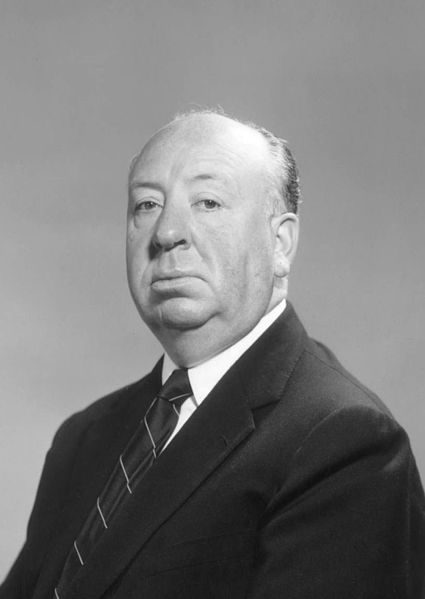
With no shame whatsoever I would have to say Alfred Hitchcock is my favorite film director because he had so many great movies. His films are entertaining from one standpoint but also skillfully crafted with many unique touches and techniques. His career spanned from the silent era to modern films into the 1970s making the breadth of his work expansive. Furthermore, he made the transition from England to the United States and his style changed as a result. He is now an icon for the quirky persona he created promoting his films and narrating his TV shows. Whether it be by his choice of lead actors and actresses, locations, subjects, plot devices, or cameos, he left an indelible mark on his work. I have watched over 20 of Hitchcock’s best films and I have some of his other most famous ones listed. I will let you make your own opinion but hopefully you can enjoy his films as much as I have. In the following days I hope to release reviews of some of the films I have watched and really enjoyed.


Greatest Hitchcock Movies:
Rear Window
North by Northwest
Psycho
Vertigo
Notorious
Strangers on a Train
Shadow of a Doubt
Rebecca
The Lady Vanishes
39 Steps 

The Birds
To Catch a Thief 

Dial M for Murder
Foreign Correspondent
Lifeboat
The Man who Knew to Much

The Wrong Man
Spellbound
Rope
Suspicion
Frenzy

The Lodger: The Story of London Fog 
The Girl Was Young
Secret Agent
Sabotage
The Trouble with Harry
Marnie

Saboteur 
I Confess
Blackmail

*Bold I have seen