
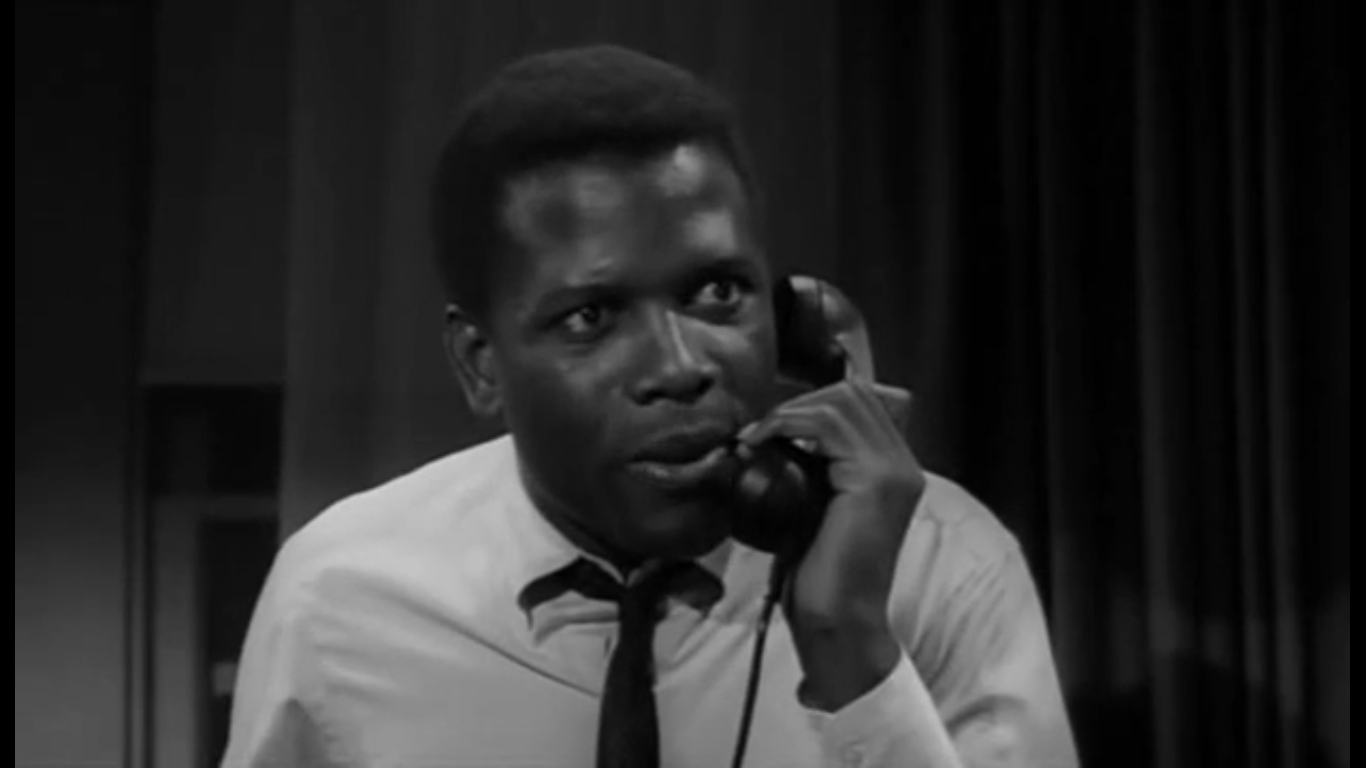
 The Slender Thread feels a bit reminiscent of one of those self-contained film noir from a previous decade like 14 Hours or Dial 1119. It’s not a very ambitious scale, still, within its confines, it’s a rather enjoyable film. But, of course, the main attractions are Sidney Poitier and Anne Bancroft.
Like its predecessors, the film has a bit of a hook — a gimmick that everything else in the movie works through. He’s a university student, named Alan, who volunteers at the local suicide clinic. She’s a checked-out housewife. They never share the screen together, but they are marginally connected through the cord of the phone lines. He’s her last lifeline to the outside world and life. Under such duress in such a vulnerable space, an unmistakable bond is formed between two human beings. It’s also a convenient chance to show off some newfangled technology in Seattle’s crisis hotline, which still seemed to be a fairly new concept in the U.S.
The Slender Thread falters when it hews too close to melodrama thereby discounting a lot of the genuine work Poitier and Bancroft do to build real believable chemistry. I’m thinking of the moment where the housewife’s secret is found out by her husband (Steven Hill), instantly decimating their marriage and sending them into freefall.
His solutions are to show up at church on Sunday morning and then take a fishing trip to get away. She resorts to a state of catatonic fugue. Walking the streets of Seattle, along the seaside, and then ultimately looking to end her life.
And while the film does hearken back to earlier procedurals, it does suggest the movie is a bit of a relic, out of step with the times even as it tries to show off some cutting-edge resources. Ed Asner is part of the police force looking to track the housewife down and Telly Savalas is a respected doctor at the clinic who trusts Poitier with the night shift. Neither has much to do though if you’re familiar with the TV landscape of the ’60s and ’70s, it’s easy enough to divvy out some goodwill toward them.
Aside from a few scenes at a disco tech, the rest of the scenario and the black and white pictorials seem to denote an earlier era. It’s as if Hollywood, as is, is still in the past and has yet to fully comprehend the magnitude of the youth movements and counterculture percolating up through society.
The dancing sequences allow debut director Sydney Pollack to break out of the humdrum and come onto the stage into the emerging decade. Later, the film’s Hyatt finale evokes a bubbly gaiety of the time-honored work convention of the old world as the authorities frantically search for Inga with time running out.
There’s something traditional about all of this connective tissue even if in a year or two the whole industry would be flipped on its head. If you take stock of our primary players, you have Poitier’s ascension with arguably the greatest single year for an actor in film history during 1967. He starred in To Sir, With Love, Guess Who’s Coming to Dinner, and In The Heat of The Night! Anne Bancroft would become fiercely identified with the role of Mrs. Robinson, helping to define the generational malaise whether she liked it or not.
Pollack, for his part, would continue to rise up the ranks with pictures like They Shoot Horses, Don’t They effectively leading to more high profile projects in the ’70s and ’80s. Everyone seems to be on the cusp of something more, something dynamic.
But for what it is, in this moment and time, The Slender Thread is easy to appreciate now that it’s unstuck from that particular cultural juncture. Bancroft shows her capability for encapsulating human frailty and the despondency of the nuclear family with the raspy whisper of her voice.
Poitier is totally invested and makes us care just as dearly, with every syllable, every droplet of sweat on his brow, and every iota of his being engaged with Inga. When he lets out a boyish scream at the end of the picture, it almost feels out of place and yet after everything he does, he rightly deserves it.
The final bit of poeticism is the ending. He has the chance to meet this lady — a woman he went through hell and high water with, forever bonded together — and yet he declines. It’s not an anticlimax but something that feels right. She needed him for a time, and he reciprocated. Now they can return to their lives. Anything else might feel forced and disingenuous. In this manner, they carry the picture. It would feel empty and lacking without them.
3.5/5 Stars
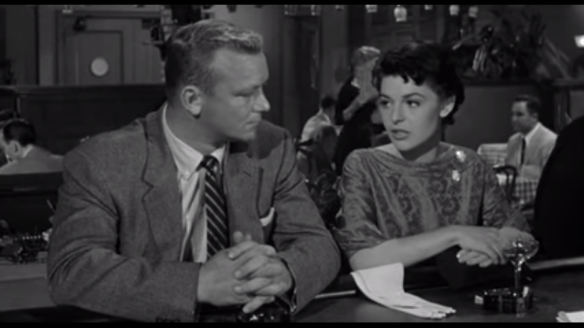
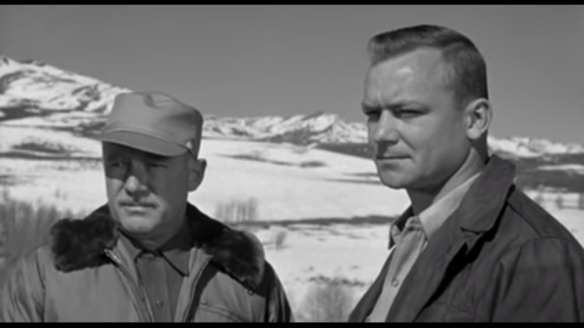
 “You’re silk on one side and sandpaper on the other.” – Richard Widmark as Jed Powers
 “You’re living at home. Is that right?
 Then Mrs. Robinson coolly enters his life. It’s perhaps best signified when she tosses him the keys. They end up in the fish tank almost as if on purpose and after that she has him reeling for good. Soon he’s walking into the lion’s den (or lioness’s) as she expertly manipulates and elicits the precise response from him. In these moments the film is elevated by the awkward, huffing and puffing, and nervous chattering of Hoffman. We often forget the second part of his famed line, “Mrs. Robinson you’re trying to seduce me. Aren’t you?” His general naivete and hesitancy say it all.
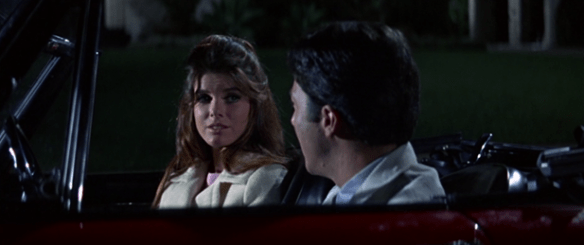 But when he meets Elaine Robinson and finally begins to connect with her on a peer-to-peer level, it’s something so profound to him. Having someone his own age that he can relate to, who feels the same unnamed apprehension and angst that strains on him. It’s what makes Ben become so mixed up. He has true feelings for her, while his affair with Mrs. Robinson only serves to poison all that could be good. And his illogical, unhealthy pursuit of Elaine continues to Berkeley where she is attending school. Still, Mrs. Robinson and her now estranged husband look to send their precious daughter far away from Benjamin Braddock.
 That’s what makes his final Herculean effort all the more climactic. He bursts in on her marriage to another man and whisks her off to another life altogether. A life that seems exciting at first, because, oh how great it is to be young and in love. But once they climb aboard that bus in their tattered garments, have a chance to sit down and really think about what they are embarking on, you see something else in their eyes. The laughter slowly dissipates and as they look around nervously, they begin to somber up. True, Ben is no longer alone in an airport terminal, he has a fellow traveler, but that does not make the future any less unpredictable or scary for that matter.
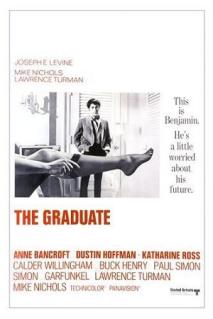 may see this film as a comedy drama that is not in the category of great movies. However I feel if nothing else, The Graduate is culturally significant because it ushered in an age in the late 1960s where films focused on trying to attract younger audiences. Along with its good writing this film was one of the forerunners in using popular music in its soundtrack.
 4 Star Films