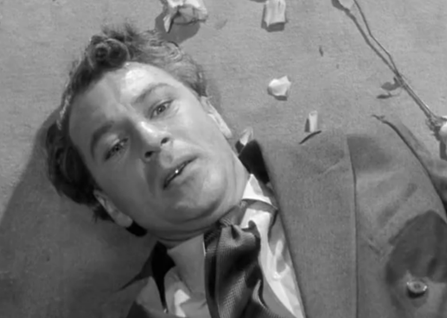
Too Late for Tears (1949)

Too_Late_for_Tears_DVDA couple is driving along a desert highway when a bag loaded full of cash is tossed into the back of their convertible by a passing motorist. They’re a pair of everyday nobodies and yet this single act of fate throws their entire existence into chaos. Of course, it gets a little leg up thanks to Jane Palmer (Lizabeth Scott) as she takes the wheel to get away with the cash, convincing her husband Alan (Arthur Kennedy) that they hold onto the payload for awhile. Finally, he relents and leaves the briefcase in a Union Station locker.

It’s a tad of an unbelievable scenario but that’s what makes it so exhilarating as Lizabeth Scott plays all parties involved using her doe eyes and feminine wiles to great effect like the foremost of femme fatatles that she is. And the fact that she does it both unwittingly and with willful intent is crucial to her turn for the very fact that it creates the seesaw of emotions.

There’s a certain sense of ambiguity because we begin to invest in her story and like her in one sense, while simultaneously distrusting her motives that seem mostly driven by avarice more than anything else. There’s also this extraordinary quality about her where she somehow manages to look young and feel old all at the same time thanks to her memorable baritone. It’s a bit unsettling.

The next important figure is Danny Fuller, Dan Duryea donning one of his sleazeball roles as a drunk who nevertheless has a bit of a sympathetic side at least put up against the acerbic poison of Lizabeth Scott. She’s the epitome of that long-held expression that greed is the root of all evil. If she didn’t write the book on it, she at least tore through its pages voraciously. Initially badgered by Danny for swiping the payoff he believes is rightfully his, she soon has him roped into her plan. It’s almost too much for the cad to bear. He calls her “Tiger” sardonically at first but he doesn’t realize how right he is.

But the most interesting setup in the narrative are the contrasting couples and they might not pair up the way you first expect with Arthur Kennedy getting the short end of the stick. He starts out happily married and winds up out of the picture.

There’s the rapacious Jane matched with Danny boy as they both feed into each other with their distrust and vices. Then you have the ever-present “Good Girl” or guardian angel,  Alan’s sister, Kathy (Kristine Miller), a sensible,  prepossessing young woman who only begins to distrust Jane as circumstances become more and more strained.

Meanwhile, Alan’s old war buddy (Don DeFore) comes a calling on his old pal and finds himself spending time with the man’s sister instead. But they become our necessary counterpoints to balance out the film’s more corrupt characters.

The final reveal that we’ve been waiting for arrives and it spells the end of Jane’s charade as she’s brought tumbling down. But as noir has a habit of doing, it manages to paint a bit of a happy ending against this dark backdrop with Kathy and Don winding up with each other and a shoulder to lean on. Still, that final image cannot quite downplay all the deceit and murder that has gone down up until now.

Too Late for Tears resonates thanks to a pair of incomparable sordid performances by Scott and Duryea. Miller and DeFore make a lovely couple but it’s the moneygrubbing ones who make this a true noir delight because they represent the incorrigible vices often found in humanity. That’s a lot more fun in the movies.

3.5/5 Stars
Criss Cross (1949)

criss_cross_1949_trailer_2Aesthetically, Robert Siodmak’s roots in German Expressionism are crucial to the formation of the film-noir world as we know it today and Criss Cross has to be one of the most diverting additions to his repertoire. Once more he’s paired with his star from The Killers (1946) Burt Lancaster with another raging score from Miklos Rozsa and yet again there is a heist involved. However, whereas the film inspired by Hemingway’s original story was a story about a washed-up boxer — a humble Citizen Kane if you will — with some criminal elements mixed in, Criss Cross is all thriller. It represents the subset of film-noir that is the heist film, but it would hardly be film-noir without something going terribly wrong. This event is integral to the plotting as is the love triangle that becomes the main axis of the ensuing action.
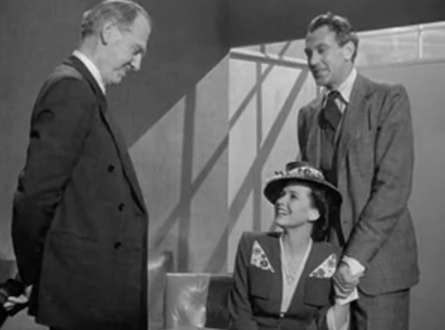
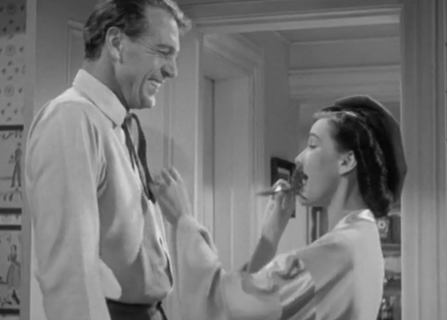
The location shooting throughout L.A. is put on display in the opening shot when the camera swoops down on a parking lot right outside a lively nighttime watering hole known as the Round Up. In these early stages, Siodmak reels his viewers in with a seductive close-up of Yvonne De Carlo looking straight at Burt Lancaster, her lover, except in looking at her man she’s also staring directly at the audience as well with those earnest eyes of hers. And from that point on her role as a femme fatale is cemented for good.

We know she’s undoubtedly nothing but trouble and yet we cannot help but be strung along with Lancaster. After all, someone that beautiful cannot be all bad, right? They never are, right? And we spend the rest of the film grappling with these questions, although the worst is always inevitable. So it goes with Criss Cross.

However, for the audience to try and understand the stakes of the story, most of the great film noirs develop the character’s pre-existing life as much as they magnify the moments of immense conflict. Criss Cross begins in the middle but soon flashes back to when Steve Thompson (Lancaster) first returns to Los Angeles, the sparkling city where his family lives as well as his former wife Anna (De Carlo). And despite the sirens going off and the chiding of friends and family including his mother and his concerned cop friend (Stephen McNally), he finds himself attracted to her once again like a moth to a flame.

He’s soon infatuated once more, embroiled in passion and at the same time petty bickering, tied up in complicated knots as Anna is also seeing the gangster Slim Dundee (Dan Duryea) who doesn’t take kindly to having another man around. In immaculate fatale fashion, Anna plays everyone off with a certain degree of vivacity and at the same time deadly innocence. One moment lively and carefree, the next biting and selfish. You can never pin her down and Steve never does. Still, he’s devoted to her. He goes half-way on a heist with his bitter rival just to save face and subsequently finds himself knee-deep in corruption that he never dreamed of, all because of a girl.

But aside from dealing with a guilty conscience, he still must survive a vengeful gangster.  The number of crisscrosses isn’t all that important, only the fact that they happen and on numerous occasions. The film finishes up with a gloriously fatalistic ending that while abrupt, in typical Classic Hollywood fashion, still delivers a satisfying final conclusion, going out just as it came in, with a rewarding dose of noirish intrigue.

Echoing the words of Proverbs, “The lips of an adulterous woman drip honey, and her speech is smoother than oil; but in the end, she is bitter as gall. Her feet go down to death.” That about sums up Criss Cross: an exhilarating and altogether deadly exercise from Robert Siodmak. Those questions still burrow into the back of our mind to the very end. Was Anna really insidious or just misunderstood? We’ll never know exactly. But perhaps the results speak for themselves. Anyways, that’s for each individual to judge on their own.

4/5 Stars

Review: The Pride of the Yankees (1942)

b9d42-prideofthe3Before superheroes headlined any Marvel or DC blockbuster, it was real life heroes that audiences wanted to see. No pastime was quite as popular as baseball and in that era Lou Gehrig was one of the titans along with Babe Ruth and the rest of the Yankees. You see this film is less of a biography (It certainly is not completely accurate), and more of a visual eulogy to a contemporary hero. The prologue explains as much:

“This is the story of a hero of the peaceful paths of everyday life. It is the story of a gentle young man who, in the full flower of his great fame, was a lesson in simplicity and modesty to the youth of America. He faced death with that same valor and fortitude that has been displayed by thousands of young Americans on the far-flung fields of battle. He left behind him a memory of courage and devotion that will ever be an inspiration to all men. This is the story of Lou Gehrig” ~ Damon Runyon

As a modern viewer, I am just happy I can recognize baseball names like Miller Huggins, Joe McCarthy, Bill Dickey, Tony Lazzeri, and of course, Babe Ruth. When audiences went out to see this film starring Gary Cooper and Teresa Wright back in the day, they were practically living it. World War II had already heated up and one of the great American heroes had died the previous year. Lou Gehrig was all those things in the prologue and more making it hard to get it all into a film.
Like any other superhero, he has an origin story beginning with his childhood in Manhattan, living with his poor German immigrant parents. His domineering mother convinces him to go to Columbia for engineering, but he soon ends up in the big leagues because of his tremendous skill with a bat. He is often a shy and even awkward young man, but he loves his parents and he can sure play ball. It’s that last point that gains him a lot of respect after a less than graceful start as “Tanglefoot.”
He soon becomes a lethal one-two punch with Babe Ruth, after initially being dismissed as the rookie and a boob. Journalist Sam Blake (Walter Brennan) has a major influence in Gehrig’s life and never loses faith in the young man’s abilities. He also does Lou a favor by introducing him to an attractive young Chicago socialite named Eleanor Twitchell (Teresa Wright), who finds Gehrig quite ridiculous at first. Soon, however, a budding romance begins with the often reserved Gehrig falling for the vibrant and vivacious young Eleanor. He gets engaged, married, hits two home runs for a little boy, and wins a world series. A lot of his other exploits are laid out for us too and the trophies and accolades start stacking up. All of this happens during the happy times when Gehrig is on top of the world, first with Murder Row and then The Bronx Bombers.
But all fairy tales must come to an end, and Lou Gehrig’s is especially tragic. He plays an, at that time, unheard of 2,000 consecutive games, but he also falls into a rapid decline. Eleanor looks on helplessly as her husband begins to deteriorate in front of her eyes, and the fans know something is not right. Gehrig gets examined and learns he has ALS, but very little is known about it. Much less can be done to treat it.
His final appearance at Yankee Stadium came on Lou Gehrig Day in 1939. That day he gave his “Luckiest Man Speech,” and he walked off the field for good. Gary Cooper delivers the partially revised dialogue with a calm and clear delivery that seems to truly epitomize Gehrig. Although he is playing the man, it is almost as if he is giving a eulogy.
That’s a fitting ending because we do not need to see the suffering or the death. What we remember is the wonderfully full life he led. Perhaps this film had more cultural relevance back in 1942, but I would argue that it is still a stirring, heart-wrenching film. You have a small heart if you cannot find a place in it for this one.
Although he was not too good at baseball, in the other sequences Cooper seems like the perfect man to embody Gehrig. He is distinctly American, strong, quiet and he also has a pleasant charm with a comical streak in him. The look on his face when he realizes his weakness tears the heart. Teresa Wright had many fine performances early on in her career, but I will step out on a limb and say that this is probably the best one. She has so much spirit and at the same time, she is funny with a noticeable tenderness. She is the perfect wife and a wonderful actress to embody Eleanor Gehrig.
In a society that places so much interest in make-believe superheroes, I don’t mind taking some time to acknowledge a real one. We were the lucky ones Lou, thanks. Let anyone and everyone who does the Ice Bucket Challenge know who you are. You deserve to be remembered. Always.
4.5/5 Stars

Scarlet Street (1945) – Film-Noir

Similar to Woman in the Window, this film-noir was directed by Fritz Lang and it stars Edward G. Robinson, Joan Bennett, and Dan Duryea. Chris Cross is a shy employee who has been working for the same man 25 years. While walking home Chris rescues a beautiful woman from an assailant, not knowing it is her brutish boyfriend. Amused Kitty agrees to have coffee and Chris who is an amateur artist, begins talking art, but Kitty gets the idea he is a wealthy painter. Because Chris is stuck in a hopeless marriage he becomes infatuated with kitty and she takes full advantage. Chris scrounges for money to pay Kitty’s rent and unbeknownst to him, Kitty’s boyfriend tries to sell the artist’s work. A critic is impressed and so Kitty masquerades as the artist. Chris finds out eventually and confronts her but the conniving femme fatale manipulates him again. Chris is delighted his work is appreciated and he is content with Kitty continuing to take the credit. An unexpected turn of events mean he can leave his wife and marry Kitty finally. However, he finds her with Johnny and after his genuine proposal she belittles him.An enraged Chris commits murder but it is pinned on Johnny. A miserable wanders the streets without a job or recognition for his art. Furthermore, he must live with his guilty conscience tormenting him until the end of his days. Woman in the Window is good but this film is more biting and powerful when it is all said and done.

4/5 Stars