Review: Mr. Deeds Goes to Town (1936)

Gary_Cooper_in_Mr._Deeds_Goes_to_Town_trailer“He could never fit in with our distorted viewpoint, because he’s honest, and sincere, and good. If that man’s crazy, Your Honor, the rest of us belong in straitjackets!” ~ Jean Arthur as Babe Bennett

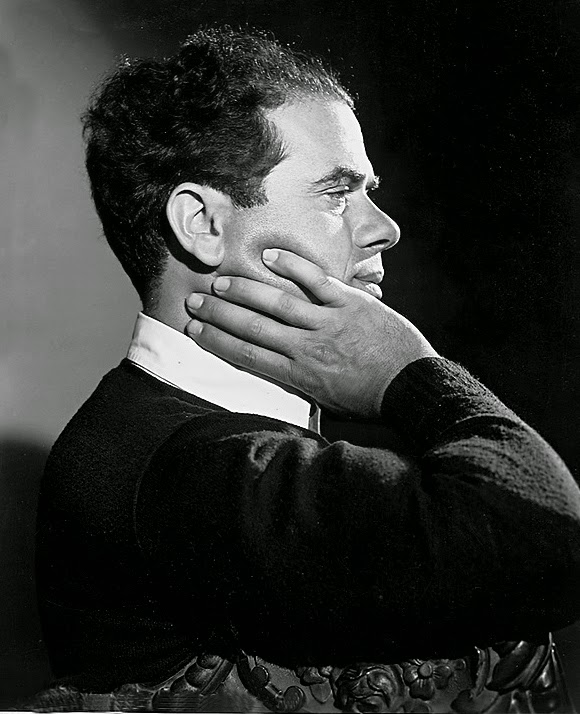
Mr. Deeds Goes to Town is a true treasure of idealism and Americana. People, especially now, may have many quibbles with the films of Frank Capra because he was the undisputed champion of feel good cinema that revelled in happy endings, stalwart honesty, and the little guy being permitted a fighting chance.

It’s no wonder that he made such good use of the likes of Gary Cooper and James Stewart because they embodied common, everyday American decency like few other actors could ever claim. Admittedly it’s easy to belittle his pictures as saccharine and sentimental to the nth degree but beyond that Capra always seemed to have an inherent sense of what America stood for or at least what he believed it could and still can stand for.

Every man deserves a certain amount of respect. You might call them inalienable rights like life, liberty, and the pursuit of happiness. And any force that tries to impede that is in simple terms an affront to all humanity. Because though we might all think we’re different, we share a lot more similarities than we often want to concede. It’s easy for us to forget that and that’s what happens here.

Longfellow Deeds (Cooper) becomes the overnight talk of the town because his rich uncle dies in a horrible car crash and bequeaths his wealth to his unsuspecting nephew. It’s the kind of good fortune that others drool over but in Deeds’ hands, he takes it in stride. He comes off as a real Yokum from the one horse town of Mandrake Falls but if anything Deeds is incredibly smart. He realizes he can have contentment out of the limelight and with very little. He enjoys quiet days oftentimes filling idle hours with his prized tuba and poetry that he writes for postcards.

But his new status as a millionaire forces him into the life that he doesn’t much want. Mansions and butlers, folks looking for handouts, ravenous newspapermen (and women) and conniving lawyers. Front and center is Mr. Cedar (Douglass Dumbrille). It’s these very individuals who see Deeds as a ridiculous outsider to be belittled and taken advantage of.

The brilliance of Capra’s movie is that he makes his hero, while simple and practical, still very astute. He may have his many quirks but there’s a surprising amount of business acumen and common sense flowing through his veins that consequently sends everyone else for a loop. He spies phonies from a mile of away and he looks to reform the local opera while finding ways to spend his newfound fortune sagaciously.

The only thing he’s not watching out for is a pretty girl, journalist Louise “Babe” Bennett (Jean Arthur) is ready to nab him, capturing his heart and simultaneously giving the whole city a front row seat to his exploits about town from quarrels with a snooty circle of poets to an evening jaunt ending on a fire engine. She’s a pro at spinning the tale into one of a first class boob, christening him the “Cinderella Man” that the whole world laughs at. They eat it up and they want to see him fall–this idiotic nobody suddenly being scrutinized by society for his good fortune. It’s all rather unfair but oftentimes that’s the way the world turns. It’s a cruel and sometimes curious place.

Because while Deeds grows fed up with this whole lifestyle, ready to leave it all behind him, Babe finds herself truly falling for her project since he models something she rarely sees in a man — real honest to goodness integrity that guides his every action. There’s never a false pretense or a veiled intention. What you see is what you get. Ironically enough, in this land of fakes, she’s the only “real” person he thinks he’s met. And she knows what’s been going on, going so far as to tell her editor that she’s quitting. There’s no way she can keep up the charade only injuring the character of the one she loves more and more.

But of course, everything dives into the depths of despair when Deeds is sent to trial calling into question his sanity after he resolves to use $18,000,000 to portion off acres of land to destitute farmers to work for him. It’s utter lunacy, isn’t it? The workers line up around the block leading into his home as he offers them a chance at a real life without starving children and food lines every day. This is what Cedar, Cedar, Cedar, and Blumenfeld are bringing him to court for or is it the fact that they want a portion of his fortune? Yes, that just might be it.

Anyways, far worse than that fate is the fact that he thinks his girl has betrayed him and she has in a sense, but she’s also devoted to him by now. She watches helplessly as her man gets railroaded. She began as the one to crucify him in the tabloids and now she prepares to watch him get crucified in the courtroom. In these moments, he does take on a Christ-like post watching all the proceedings without a word. He never makes any effort to defend himself after accusation after accusation is thrown his direction.

But the bottom line is that he does not have to let himself be destroyed. Being the martyr, in this case, is not his job and Capra lifts him out of the pit and resurrects him. The fact that Louise fights for him and numerous others including his cynical right-hand man Cornelius Cobb (Lionel Stander) and the local newspaper editor (George Bancroft), not to mention a legion of grateful farmers. So Mr. Deeds ends with a tumultuous courtroom finale befitting one of Capra’s finest pictures. It brims with goodness and bubbles over with humor that constantly underlines this feel good classic.

Though Gary Cooper represents Capra’s love of the every man with common decency and common sense, Jean Arthur remains equally crucial to the worlds that he creates. It has to do with her quality as an actor that allows her to play the snappy, witty, world-wearied types. Because she represents all the many people with that very same cynical streak and yet the very fact that her heart can be melted and her whole mindset can be changed suggests that there might be hope for all of us. That hope burgeons up from Mr. Deeds and leaves us with a warm feeling indeed.

4.5/5 Stars

Lost Horizon (1937)

LostHorizonPosterCertainly this is not the most well known or the best film of Capra. It is, in fact, quite different from a lot of his filmography. That is not to say that it is not an enjoyable film about a man who finds a little piece of Utopia called Shangri-La. Ronald Colman was certainly a likable fellow in the lead role and Jane Wyatt was pleasant during the time she was on screen.

What I really enjoyed in this film was the quibbling and bickering of Thomas Mitchell and Edward Everett Horton’s characters. These are two tremendous character actors who represent all that was great about the stock characters of Hollywood’s Golden Age. They are so recognizable and though not the stars they seemingly steal their scenes.

Because some of this film was lost, parts were understandably choppy since there was no visual aside from photos to go with the dialogue during certain moments. Despite this, the film is an enjoyable, albeit dated, 1930s fantasy.

4/5 Stars

Review: It’s a Wonderful Life (1946)

5632c-wonderfullife4Every time I go through the emotional, romantic, heart-warming and at times uncomfortable roller coaster that is It’s a Wonderful Life, something new always seems to stick out to me.

It is always impressive for a film of this length that so much is packed into it. Within minutes we are fully enveloped in this story, and every sequence gives further insight into these characters. There is hardly ever a wasted moment because there is significance in each scene. Pointing us to the nature of George Bailey.

Furthermore, it is easy to forget the darkness that this film submerges itself in because it reaches such a jubilant crescendo. However, this is a story that covers the years including The Great Depression and World War II. Its protagonist sinks into a state of wretchedness complete with angry outbursts, negative feelings, and drunkenness. George Bailey loses all hope and his perspective is so completely distorted. For all intent and purposes, his life looks like it’s over, and it takes a frightening alternate reality to shake him out of his disillusionment. Put in this framework, it makes sense why it was a commercial flop when you juxtapose it with the big winner that year The Best Years of Our Lives. They both deal with post-war reality, but with very different lenses.

That’s the benefit of hindsight and a new context since we do not usually see It’s a Wonderful Life as a gloomy post-war tale, but a more positive parable that is universal in its impact. The first part of this story feels a bit like a Job story of hardship, and the second act is reminiscent to Dickens’ A Christmas Carol, but that’s the simplest of observations. There is a lot more to be parsed through.

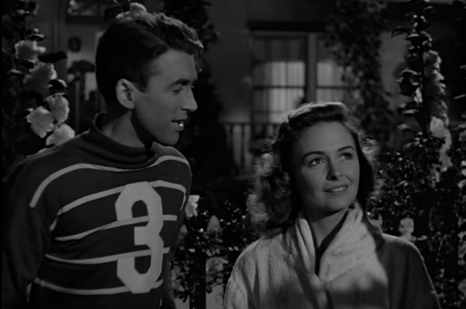
The romance of George and Mary is what many of us aspire to and it causes us to really empathize with their young love that weathers the good and bad breaks they receive. It’s the fairy tale love story we want, with the rock hard reality we are used to in our own lives. Some favorite moments in their life together would be the splash they make during the Charleston dance off, singing Buffalo Gals together, smooching on the telephone together, sharing a makeshift honeymoon together, and embracing after George gets his new perspective on life.

There are a fair number of close-ups utilized in this film, but they are usually used at crucial points in the narrative, and they tell us a great deal about both George and Mary.

The first key moment comes during a freeze frame of grown up George with hands outstretched giving us our first look at the man we will be following from there on out. The next big moment occurs when George learns that Potter will gain control and the Building and Loan will be disbanded if he leaves. He realizes in an instant that he must give up his plans. Then, he waits excitedly for Harry with Uncle Billy and it is a happy moment, but George learns his younger brother might have another job. The camera follows his worried face as he goes to follow his new sister-in-law. Never thinking of himself, he realizes that Harry has a chance for better things and that leaves George still working the Building and Loan.

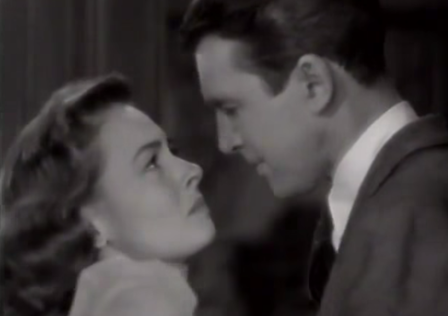
After their tiff, the scene where George and Mary are talking on the phone with Sam Wainwright is a solidifying moment in their relationship. There are so many underlying emotions and unspoken feelings that they are having trouble figuring out and reconciling. And yet there is that violent epiphany when their eyes link. The tears and anger are quickly traded for passionate kisses reflecting the often complicated facts of romance.

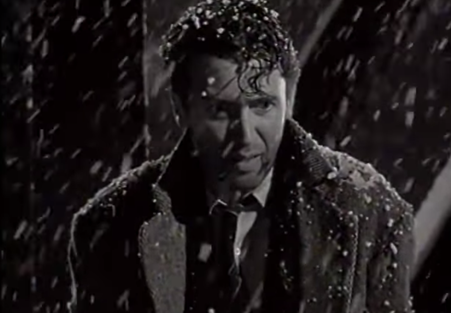
One of the final close-ups that hits home occurs when the now non-existent George stumbles away from the front door of his mother, who now has no concept of him. There is sweat on his brow (maybe from the 90 degree summer heatwave) and desperate bewilderment in his eyes. This is the lowest point he could have imagined. His own mother does not know who he is. His wife has grown old and lonely in an existence of exile. Stewart’s face is so expressive and earnest suggesting that George knows just how important human companionship is. Humanity was made to be in fellowship with each other. Lack of money means very little in comparison to our friendships and family ties. This is essentially what George finally comprehends and what Clarence reminds him. George understandably lost sight of his wife and his children and his friends. They were a gift not to be taken lightly.

Aside from these close-ups, it is also evident that a great deal of  effort was put into creating this world from the characters and their back stories to the town itself which was constructed on the RKO lot. Everything from the building facades, to stray dogs, and snow make the drama more atmospheric. It’s one of those films that reveals the beauty of using real props inhabited by seemingly real people. That’s why I sometimes am disillusioned by CGI. Although it can allow us to create amazing spectacles, oftentimes it creates a world that feels altogether fake and alien. It’s not relatable and it lacks the humanity that makes up our existence each and every day. In other words, it has very little of what makes It’s a Wonderful Life so compelling to me.

Perhaps there are more impressive or greater films, but there are few with greater heart and there is something to be said for that.

5/5 Stars

It Happened One Night (1934) – Updated

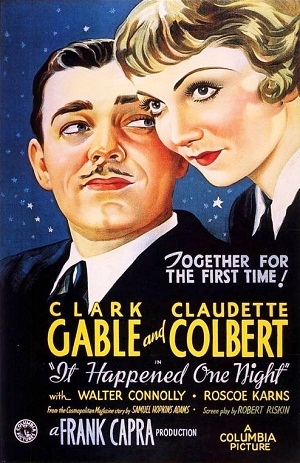
Hopefully no one holds this against me, but I have never been a big fan of Claudette Colbert. However, I will say that I am a Capra aficionado and Clark Gable is certainly a classic Hollywood star who is dynamic in this film. Thus, despite my hangups with Colbert, I can still thoroughly enjoy this romantic comedy, the so-called original screwball. It helps to have such comedic fellows as Roscoe Karns, Alan Hale Sr. (father of The Skipper) and Walter Connolly.

Peter Warne is the down on his luck newspaper man and Ellen Andrews is a socialite who feels trapped between her suffocating father and an upcoming marriage. Does this formula sound familiar? It undoubtedly is, but this was the original, all those following were impostors.

The unlikely pair begin a cross country trek towards the destination of New York. It includes uncomfortable bus rides, awkward overnight stays, a bit of hitchhiking, and eating carrots to survive.

Only in the movies could such a scenario play out and yet that is the fun because anything can happen one night or another. In this case all the caterwauling and antics lead to a happy ending. To think many people thought this film would not be very good! That was obviously proved wrong by numerous accolades. Just think this film came out 80 years ago and we are still watching it today! That is amazing. That is the power of the movies.

Peter Warne: A normal human being couldn’t live under the same roof with her without going nutty! She’s my idea of nothing!
Alexander Andrews: I asked you a simple question! Do you love her?
Peter Warne: Yes! But don’t hold that against me, I’m a little screwy myself!

5/5 Stars

The Best Films of Frank Capra

1. It’s a Wonderful Life
2. Mr. Smith Goes to Washington
3. It Happened One Night
4. Mr. Deeds Goes to Town
5. You Can’t Take it With You
6. Lost Horizon
7. Meet John Doe
8. Arsenic and Old Lace
9. The Bitter Tea of General Yen
10. Lady for a Day
11. American Madness
12. Platinum Blonde
13. The Miracle Woman

It Happened One Night (1934)

Gable_ithapponepm_posterStarring Clark Gable and Claudette Colbert with director Frank Capra, this light romance pits a sunk newspaper man with a dissatisfied socialite. Colbert feels stuck in her life with a domineering father who does not approve of her marriage, and so she runs off to get away. While on a bus she meets the recently fired Peter (Gable) and there is immediate friction between them. However, realizing she is inexperienced, Peter watches out for her and they travel together. Finding out who she is, he is even more driven to get a story and stay with her. Along the way Colbert begins to fall in love but he does not immediately react. When he finally realizes his true feelings, the situation becomes complicated when Colbert returns to her father and fiancee. In the midst of the wedding she hears of Peter’s true love and runs off to him. By that evening they are married and the “walls of Jericho” come tumbling down. Gable and Colbert both do well in this film and Capra gives us another light classic.

5/5 Stars

You Can’t Take it With You (1938)

Starring a cast boasting Lionel Barrymore, Jean Arthur, James Stewart, and Ed Arnold, this is another comical Capra film. Arnold is a wealthy banker bent on acquiring a block of land for business purposes. Stewart is his son who has fallen over heels for his secretary. Things are complicated by her peculiar family household partly because her grandfather will not give up his land to the banker. Fireworks go off literally and figuratively when the two families meet. It leads to prison, and a chaotic court appearance which causes a further rift. Because his grand daughter is sad, Grandpa decides to sell the family home. Arnold seems to have won, but his son leaves him for his love and so Arnold changes his way. Thanks to a harmonica duet and some dancing a friendship is made and everyone is happy in the end. Every Capra films comes with a message and this one preaches the importance of friends and family compared to money because after all “You Can’t Take it With You.”

4/5 Stars

It’s a Wonderful Life (1946)

This is not only a Christmas classic but a classic in any sense of the word. It is the best of Stewart and Capra adding up to one of the most heartwarming stories of all time.  This may exhibit Stewart is his everyman role once again, but it breaks away from Mr. Smith in many ways making it another uniquely great film. A film like this that makes you know and feel for characters so profoundly is certainly worth watching.
Starring Jimmy Stewart and Donna Reed with a fantastic supporting cast,  the film tells the life story of George Bailey. We watch with the angel Clarence as he sees George’s life unfold. George saves his brother Harry as a boy and as a result, loses hearing in his ear. He works in the Bedford Falls drugstore and keeps the proprietor Mr. Gower from making a deadly mistake. Later on, he plans to travel the world and go to college so he can escape his hometown and do bigger and better things. But once more he sacrifices. One fateful day, he doesn’t know it yet, but he meets the love of his life Mary, and the same day his kindly father has a stroke. Soon after,  Harry goes off to college and George is left holding down the fort at their father’s old building and loan. He builds up all those around him with selfless kindness, while simultaneously standing up to the grumpy millionaire Mr. Potter. Eventually, he marries Mary and has children. First, during the Depression George gives up his honeymoon to keep the building and loan open. Then, during WWII while his brother and others become heroes, George stays in Bedford Falls because of his poor hearing. In this post-war period, the story picks up in the present.

Although, by unfortunate circumstances George Bailey finds himself contemplating suicide after the absent-minded Uncle Billy misplaces $8,000. That’s when Clarence comes into his life to show George just how important he really is. George sees a world where Harry is dead, Mr. Gower is a disgrace, Martini does not own the bar, his mother has no sons, Uncle Billy is insane, Violet is disgraced, Bert and Ernie do not know him, Mary is an old maid, and Mr. Potter has monopolized Bedford Falls.

Once he gets his life back George finds immediate joy and gains so much because of his friends and family. He runs through the streets of Bedford Falls yelling out “Merry Christmas,” because he is simply grateful to live again. Miraculously, the whole town rallies around him, and George reaps the reward for all he has sowed over the years. Clarence is finally awarded his wings and George Bailey is the richest man in town. There is nothing much to do after this film but simply be happy and sing “Auld Lang Syne.” It is a Wonderful film in many ways, with a wonderful cast, and a wonderful message. It has some of the greatest character development of any film ever because you do not simply become attached to one man but an entire community. That’s what makes the scene where Uncle Billy loses the money one of the most difficult for me to watch. Each and every time I’m so attached to these people. Even if I already know the resolution, I cannot bear for anything bad to happen to them. In fact, it is interesting to focus on just one of the supporting characters and see how they are affected by the life of George Bailey. It makes me ask myself if I were to die tomorrow would anyone care? We know in the case of George they certainly would.

I am further reminded of the phrase that is written on the wall of the building and loan, “You can only take with you, that which you give away.” This is what George Bailey did, and I believe it is something that each and every one of us should be mindful of. He is a great character not only because James Stewart played him genuinely and with such magnetism and heart, but because he was such a sacrificial figure. True, this is a sentimental film given the title and the director, but it is paramount to realize the progression this film follows. George must sink into the depths of his despair and disillusionment before he can truly realize that It’s a Wonderful Life. I would challenge you the next time you watch this film, to not simply acknowledge it as perennial Christmas fare, but look a bit deeper because there is so much more here. As always, Attaboy Clarence! You did it again.

5/5 Stars

Arsenic and Old Lace (1944)

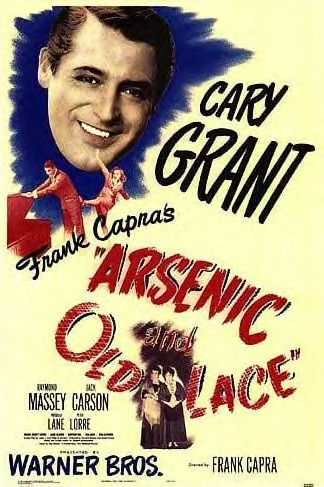
Directed by Frank Capra and starring Cary Grant with a zany and strange supporting cast, this film adapted from a play is a farcical  black comedy. Grant is a drama critic who is just recently married and he is about to go on his honeymoon. However, he is horrified to learn that his two unassuming aunts have killed hopeless, old men with arsenic-laced tea. He must also deal with one brother who believes he is Teddy Roosevelt and a recently returned brother who is wanted for murder. Add these crazy characters, a peculiar German doctor, some policemen, and you are in for a wild ride of wacky antics and mock terror. All the while Grant tries to balance his many problems which nearly go awry. Everything gets figured out in the end and Grant carries his bride away. To say the least this film is very odd and perhaps not Capra’s best. It does culminate nicely in the end however, closing the story on a high note. The cast includes Priscilla Lane, Raymond Massey, Josephine Hull, Peter Lorre, Jean Adair, Jack Carson, and John Alexander

3.5/5 Stars

Mr. Smith Goes to Washington (1939)

84a24-mrsmithgoestowashingtonposterAs both a political drama and feel good movie, this film cemented James Stewart as an acting powerhouse. Furthermore, despite its age, it acts as a timeless reminder of the evils of political machines. It makes us root for the underdog, and it is distinctively American. Here is a cast and a story that seemingly could never be equaled, but what this film really had going for it was an idealistic outlook. I can, myself, often be a cynical person, and still Mr. Smith never fails to make me acknowledge the numerous attributes that make our country great, whether it is through montage, monuments, music, and of course Jefferson Smith himself. 

In one of his best performances, Jimmy Stewart is an idealistic, naive boy’s troop leader named Jefferson Smith. The starry-eyed Smith trusts that our nation is founded on some very noble principles that should be fought for tirelessly in government and in society. Above all, he is a likable fellow, who earnestly believes in the merits of this country, and he is beloved by boys all across the state. Now, this all sounds fine and dandy, but it would never have come across on the screen if it had not been for Stewart. He emanates this awkward and innocent energy that puts life into the idealistic creation of Jefferson Smith. 

When the film opens, everything is in turmoil when a senator suddenly dies and a replacement is needed fast. Believing Smith will be a pawn, a powerful man named Taylor (Ed Arnold) gets Smith a seat in the nation’s Senate. There he joins the respected Senator and old family acquaintance, Joe Paine (Claude Rains), who is also a cog in Taylor’s machine. However, although he is out of place in Washington, the patriotic Smith does his best to be worthy of his position. He realizes that the press will not give him a break, and the other Senators do not take him seriously.

So, on the urging of Paine, he decides to come up with a bill for a boys camp back in his home state. He requires the help of the world-weary secretary Saunders (Jean Arthur) to get his bill done. Initially, she is disgusted by his naivete, but as she grows to know him, she realizes he is only going to get himself hurt. His action to propose a bill soon find him face to face with the political machine that elected him. Taylor also has stakes on the piece of land where the boy’s camp would be, and he wants it for a dam. 

Smith finds himself being accused of using his position for his personal gain, and pretty soon he is before a committee with false evidence piling up against him. With all odds and seemingly everyone else against him as well, Smith makes one last monumental effort. Thanks to the help and guidance of Saunders, Smith fights to plead his case through a filibuster.

Fatigued by many hours of giving impassioned speeches and reciting the Constitution, Smith finally collapses, but not before effectively succeeding at his task. I doubt this would ever happen in real life, but in the film, it is fantastic watching the Senate break out into complete and utter mayhem. Ultimately, a young man with “a little bit of plain, ordinary, everyday kindness and a little looking out for the other fella,” was able to win. True, it may be overly sentimental, but it is a wonderful piece of sentiment all the same.

Frank Capra was wonderful at these type of cheering tales and his stars were in top form. There is an absolutely wonderful supporting cast here including Claude Rains, Edward Arnold, Eugene Pallette Thomas Mitchell, Charles Lane, Harry Carey, William Demarest, Beulah Bondi, and numerous other familiar faces I don’t even know the names of. That’s the beauty of the studio system I guess. It may have the same director, same leading man, and some of the same general themes, but Mr. Smith Goes to Washington covers completely different territory from Capra’s later classic It’s a Wonderful Life. Mr. Smith should be seen as a unique, and very much American film.


5/5 Stars