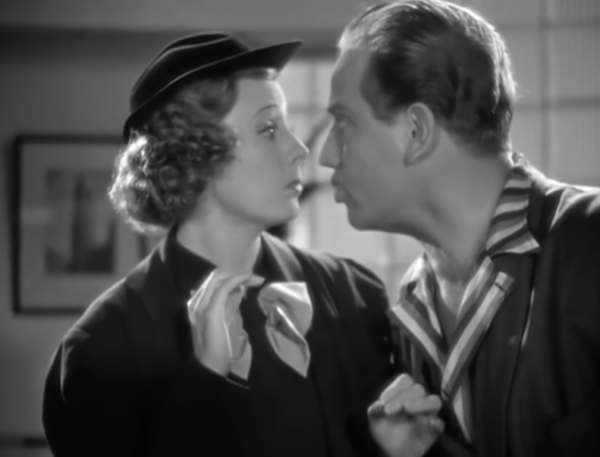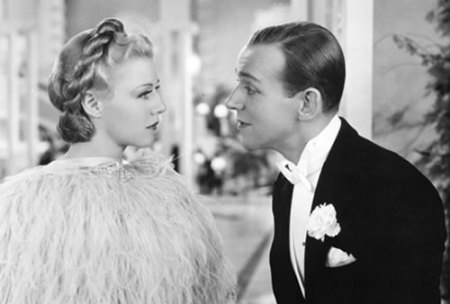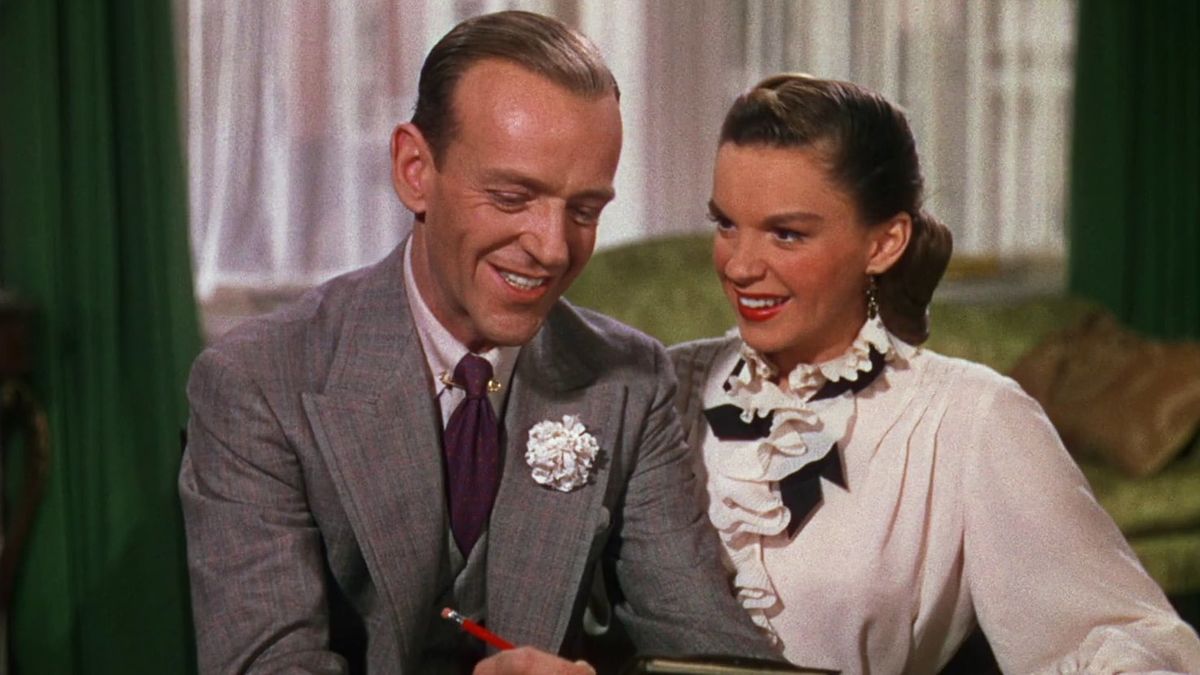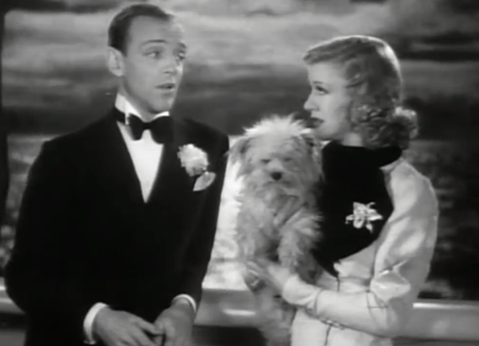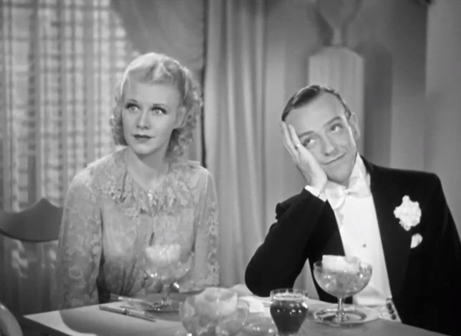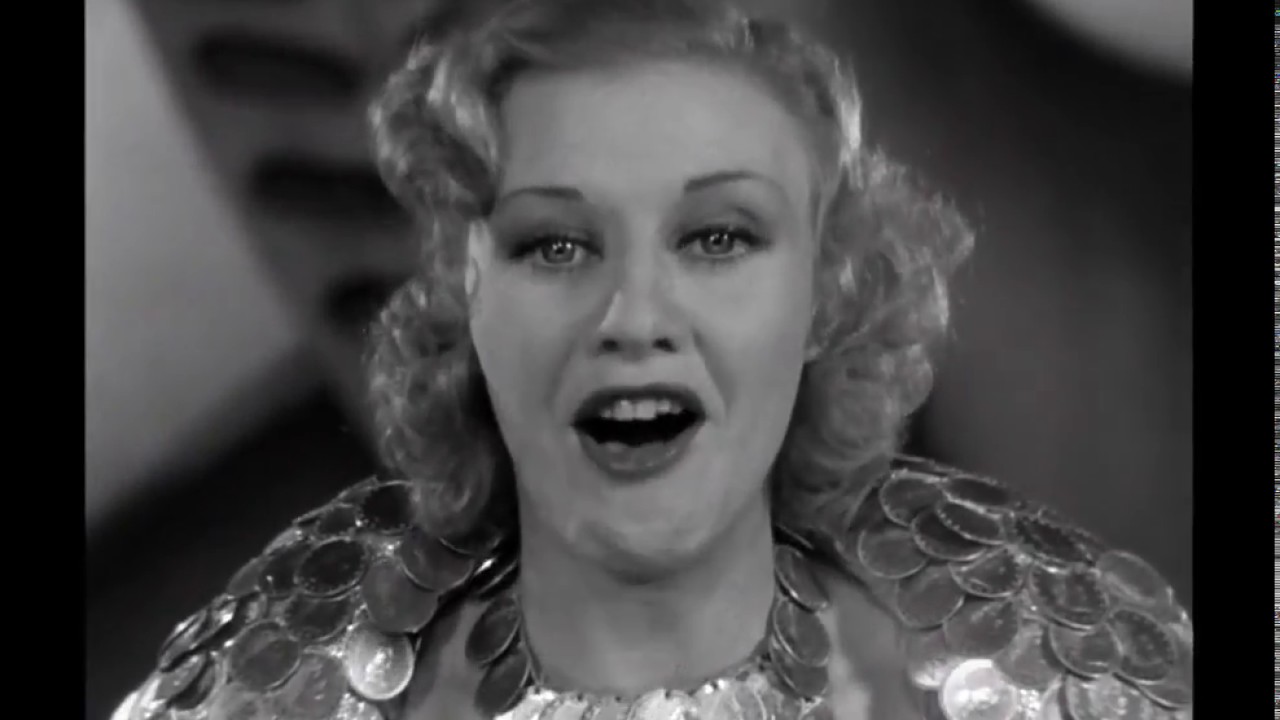
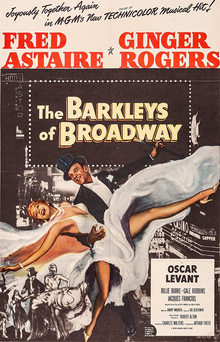
The Barkleys of Broadway (1949)

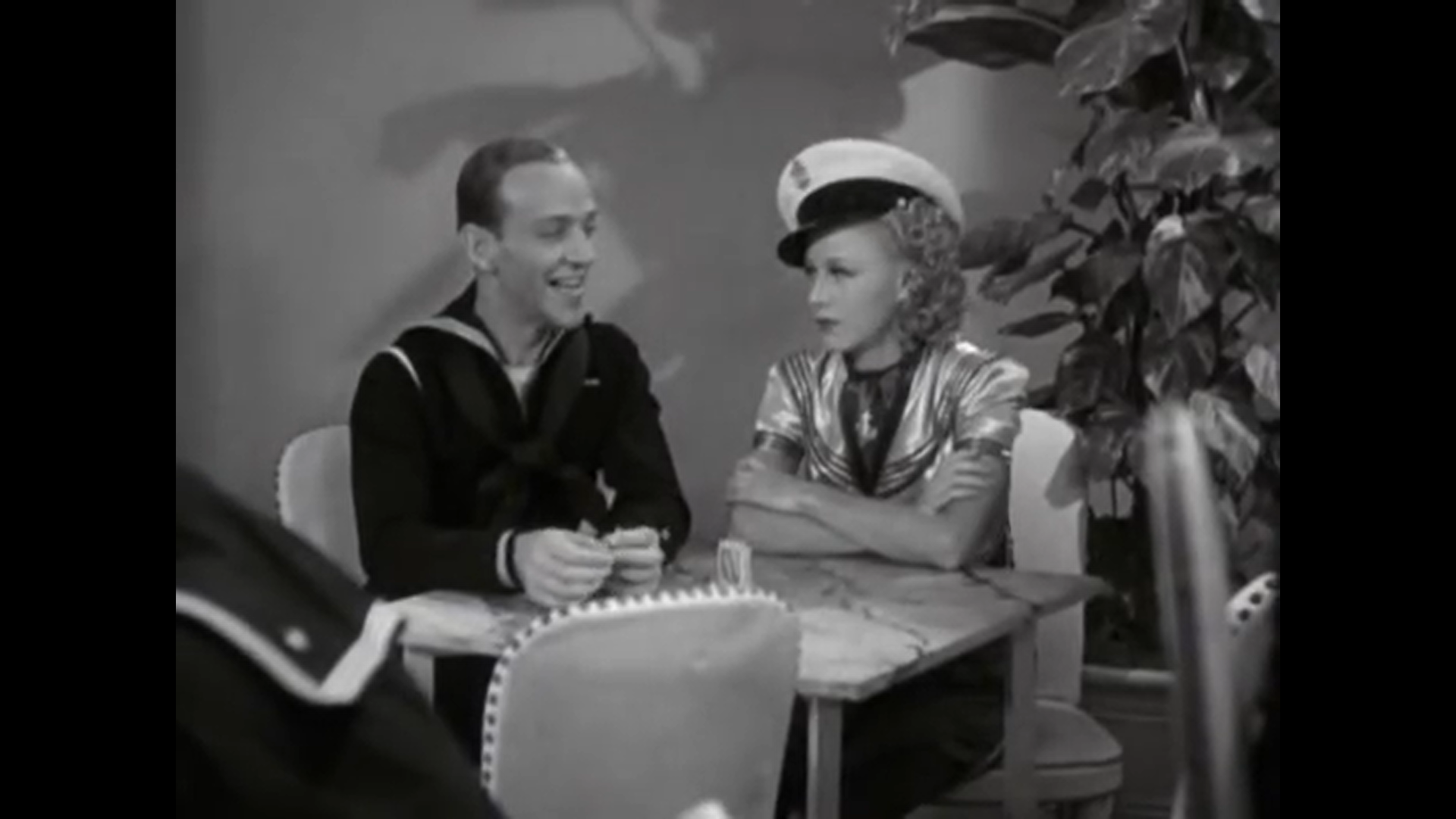
The Barkleys of Broadway was initially conceived as a reunion. It was meant to star Fred Astaire and Judy Garland, capitalizing on their successful partnership with Easter Parade.

Taking nothing away from Judy, it does feel like there’s something propitious about Astaire and Rogers getting back together one last time. Because Easter Parade is such a delight, it also makes what we missed out on a little less painful, and what we got in its place all the more enjoyable.

It’s been a decade, the studio changed, and the aesthetics are different in Technicolor, but it’s still an immeasurable pleasure seeing one of the movies’ most transcendent screen couples in yet another picture together. She was always a supernal star in black & white, but Ginger Rogers is a great beauty in Technicolor, too.

The movie opens with the credits as our stars stand on stage doing their routine as it should be. It’s just like old times. Josh and Dinah Barkley sing each other’s praises awkwardly, and their friend Ezra Millar pries them offstage before they compliment each other to death.

When the performance is over, they walk the gauntlet of all their well-wishers and admirers, signing autographs. I imagine I’ve seen this sequence countless times from All About Eve, Opening Night, and The King of Comedy. It’s like a rite of passage for the entertainment superstar.

They cuddle up in the cab full of lovey-dovey affection and effusive praise until a note of criticism creeps in and all sides blow up; it’s nothing if not a mercurial relationship. Oscar Levant is the peacekeeper and his usual mix of goofball and piano man extraordinaire, with an endless array of wry wisecracks.

His persona on film is such that it almost obfuscates the heights of his talents. The rapid-fire runs of “Saber Dance” are a tour de force compressed into a few minutes. A personal pet peeve involves actors who sit with their hands hidden behind the piano, and everyone knows they aren’t actually playing. It breaks the illusion. However, Levant, like Astaire, is so prodigious that the camera sits close by, unbroken as it admires the mastery of two artists.

Whether planned or partially happenstance, it’s difficult not to read into the meta qualities of the story, both real and imagined. The movie has a laugh playing up the tiffs between Astaire and Rogers as portrayed by the contemporary media. Whereas in reality, they seemed like two very driven people with a singular focus to do their work to the best of their abilities. They were generally well-liked and had nothing but high praise for one another. It’s gratifying to hear, though it hardly sells newspapers.

Billie Burke appears as a tittering patron of the arts who throws them a party, though they try to avoid their congenial hostess like the plague, sneaking out to the patio. Dinah meets a French playwright and admirer, Jacques Pierre Barredout (Jacques François), on her way out.

The young man strokes her ego, telling Dinah she’s wasted in musical comedy. ” You could be a great tragic actress,” he says. Her husband is distrustful of his fawning, and besides, he sees his wife as a “song and dance girl.”

He’s like the Svengali who molded her, and that image doesn’t go over well with her. She’s ready to get out from under her husband’s influence; she’s no Pygmalion creation or shrinking violet. The rest of the movie is built out of this seemingly trivial tension in the rom-com mode.

Of course, none of this conforms to reality, as Rogers had won adulation and an Oscar for her work in Kitty Foyle at the beginning of the decade, and she was largely the bigger star before they were ever teamed up. She maintained a fairly impressive film career throughout the ’40s and early ’50s. Reading into these tenuous parallels too much becomes laughable, but it is also part of the enjoyment.

The behind-the-scenes rehearsal environs do yeoman’s work in making this feel like the quintessential MGM: the studio of Freed, Gene Kelly, writers Adolph Green & Betty Comden, and all those wonderful collaborations like Singin’ in the Rain and The Band Wagon.

It highlights the love of performance and the sensation of catching this brand of tap dancing like lightning in a bottle, as if we’re on the ground floor and privy to something only a select few get to see. That’s part of the magic of how they created these worlds for their characters to inhabit, where the backstage and everything in between is blurred, and the camera’s right in the thick of it to capture it all.

The couple agrees to go out for some fresh air in the country, much to Ezra’s chagrin. While Josh plays golf, Dinah agrees to become Jacques’s muse. Thereafter, the Barkleys have a photoshoot with Look magazine right at the precise moment Josh realizes his wife has the script for the Frenchman’s play.

It becomes a send-up of the perfectly quaint and manicured All-American Person to Person fireside chat as the married couple go ballistic once again, this time tearing through their house in a rage in between camera setups. These are mostly vapid bits of fun.

The true high points come when the stars are given these incubated moments to flash their inspiration in front of the camera. “Shoes With Wings On” conjures up a storefront milieu reminiscent of the toy shop in Easter Parade. Astaire puts on a pair of possessed dancing shoes and lets them carry him away. It leads into a magical interlude where he’s joined with an army of ghost taps all stepping in time, almost ready to run him off the stage until he takes arms in a surrealist defense involving a broom and toy guns.

Ezra tries to trick his friends into a reunion, and they stand backstage at a benefit while he conducts a performance of Tchaikovsky. The man really has range, but then again, he was a compatriot of the Gershwins who famously cut so lithely between popular, classical, and jazz composition. From my understanding, they made them one and the same with no delineation between high and low art.

The Barkleys, or rather Fred and Ginger, are paired one last time with the Gershwin tune “They Can’t Take That Away From Me.” If it’s not immediately apparent, there’s actually a bit of poeticism to its inclusion. So many years ago — in 1937, in fact — Astaire sang the song to his costar in Shall We Dance.

This time around, they turned it into a dance with their typical elegance and joie de vivre. The Barkleys of Broadway is unreserved proof that they’re back, and they never lost it.

It’s so good to see them together; it’s also exactly what our hearts yearn for, especially those who have lived vicariously through them for many years. Somehow, they embodied us and still reached for heights we could only dream of, and they did it with pure class.

3.5/5 Stars
Carefree (1938)

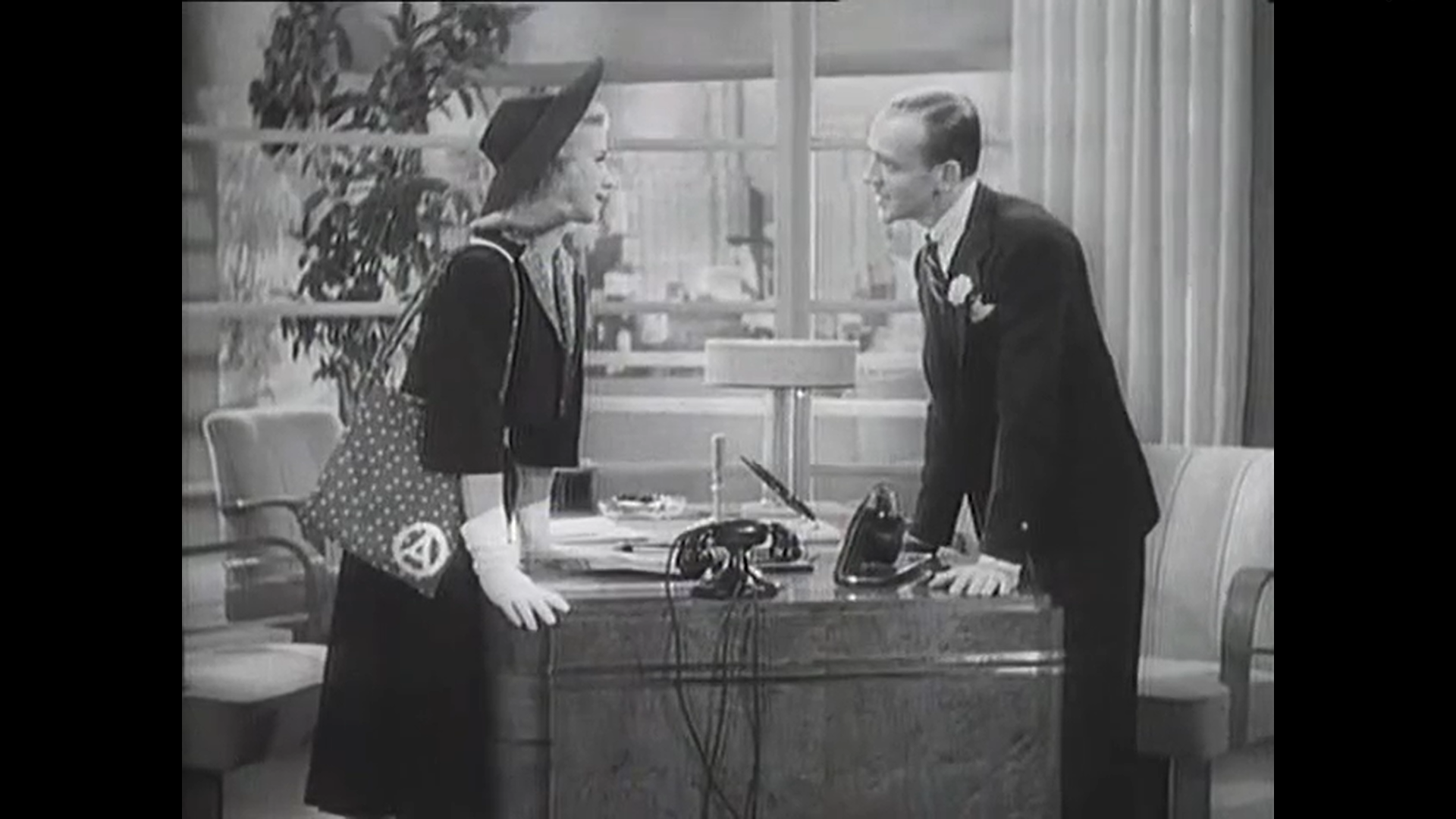
Ralph Bellamy, Jack Carson, and Fred Astaire sounds like a stellar triumvirate for a movie, and Carefree does us a favor by getting the three men together. Bellamy takes up his usual post as the other man and jilted lover, Stephen Arden. Amanda Cooper (Ginger Rogers) can’t seem to make a decision to marry him, and so she agrees to visit his buddy, who just happens to be a psychiatrist.

Fred Astaire as Dr. Tony Flagg is quite the piece of casting, and the situation gets more outlandish when she happens to overhear some of his condescending dictation about the female psyche.

By the time he calls her in for psychoanalysis with perfect candor, she’s already wise to him becoming the most wearisome patient he can possibly imagine. No one takes kindly to disparaging remarks.

With old pros like Clarence Kolb and Franklin Pangborn rounding out the cast at the local country club, you know exactly what you’re going to get. Luella Gear isn’t quite Helen Broderick as far as the wisecracks go, but she has a kind of warm, bright-eyed gameliness in her own right. Behind a certain level of propriety, as Amanda’s Aunt Cora, there’s also a dry sense of humor.

Although it feels like Rogers’s picture for the most part, a high point for Astaire is watching him make dance out of golf, looking quite competent with both as he hits balls off the tee with a rapid fire cadence perfectly in step.

There’s also a dreamscape Astaire and Rogers number within Amanda’s mind, giving license to their longest and most luxuriant kiss to date on celluloid. “I Used to Be Color Blind” would have been more spectacular and made more thematic sense if it had been filmed in Technicolor, but the slow-motion action has a novelty to it. It’s also a secret she must keep to herself: She must subconsciously love Tony, not Stephen.

Not much stock should be put into Astaire’s therapy techniques because they only serve to aggravate the situation, though this is very much on purpose. Ginger under anesthesia allows the story to play up its best screwball antics, and she was always game for a laugh and a few shenanigans.

She proved time and time again in movies of the era like Vivacious Lady and Bachelor Mother, that she was an unmatched comedienne, even when there was little to no dancing for her to partake in. Carefree ventures into the arena of near-surreal silent comedy as she effectively plays a “drunk” character bumbling nearby traffic, giving the stink eye to truck drivers and the like.

“The Yam” is a quirky piece of puff, but it’s exhilarating to watch Astaire and Rogers in one of their most wide-ranging immersive dances. Usually, we get these specified incubated perimeters in which to enjoy their dancing and marvel at their prowess.

Here, it feels like giddy performance art where everyone is drawn into the far more fluid frame with them as they pick up onlookers like an ever-growing amoeba. They move their way through the country club, strutting through the dining rooms past tables as Rogers bounces in and out of the seats with a sweep of her partner’s arms. It’s an utterly delightful outpouring from the consummate professionals.

In a subsequent scene, Astaire talks to his subconscious in the mirror. He knows he’s falling in love with Amanda, and he tries one final desperate act to salvage her relationship with his friend. He hypnotizes her and implants the idea that “men like him should be shot down like dogs.” It’s definitely not a recommended method, but it sets Rogers up for the final act.

Watching the actress skeet shooting Tyrolian hats under the spell of hypnosis is one of the more hilarious things in the picture. It’s good ol’ fashioned fun playing off Kolb’s ornery judge character. One doesn’t work as well without the other.

But there’s also a real menace, even if it’s screwy watching her tromp around the club as the men flee every which way to stay out of the line of fire of her shotgun. Astaire’s ploy worked a little too well.

He realizes he still loves her and expresses his feelings with the crooning classic “Change Partners” imbued with a kind of melancholic yearning out on the dance floor. He waits until the eleventh hour, but with Jack Carson’s help, they try to get into Amanda to thwart Stephen and make sure the right people get married on the wedding day.

There’s a subtle shift in this film within the Astaire and Rogers canon in that it leads with the screwball elements, with the musical aspects playing almost a secondary role. In other words, it breaks with their typical formula and relies on a more compact screwball structure and the capacity of its stars. But the movie also feels like a supreme showcase for what Rogers was capable of on her own.

3.5/5 Stars

Follow The Fleet (1936)

Taken in the lineage of movie musicals, Follow The Fleet feels like a prototype for On The Town, or maybe there were just more movies focusing on sailors on leave back in the day. It’s like romances set on ocean liners. With the proliferation of commercial air travel, it’s possible a whole subgenre went kaput. For now, it’s safe, and the boys descend on Frisco.

Fred Astaire stars as a gum-smacking sailor, Blake Baker. He wears the abrasiveness lightly because he was always an appealing personality beyond his graceful taps. Randolph Scott takes on the role of the best bud, Bilge Smith, as they continue their pairing from Roberta. Astaire similarly has a girl he wants to check in on…They had a falling out, and you can just about imagine who might be playing her.

As the sailors roll into the city, it has the distinct stench of a pile of pesky high schoolers infecting the place. They sneak into a local joint on one ticket, and Bilge hooks them up with a couple of paper bags of beer from the outside. All they require is the establishment’s table, and they do the rest themselves.

Connie Martin (Harriet Hilliard) plays a homely, bespectacled brunette girl who makes Randolph’s acquaintance; she needs a man to get inside, and he obliges, though he’s quick to brush her off and forget about it. Connie also just happens to be the sister of Sherry (Ginger Rogers), who’s the floor show at Paradise.

It’s the old trope we’ve known since the dawn of time. Ginger Rogers hails from the Gentlemen Prefer Blondes school. As she points out, men like blondes because they look dumb. The operative word is “look” since you would never believe someone pulling one over on Ginger Rogers.  “It takes a lot of brains to be dumb.”

Lucille Ball enlisted to make Connie look presentable. The ugly duckling arc feels dead on arrival. This movie just needed another plot to bide its time. Her new look makes a startling impression on Bilge, and we know she has feelings for him already. His problem is living a transient life; he’s also easily swayed by shinier, more affluent objects in the form of divorced socialites.

Rather like Roberta, the sluggish romance all but writes itself, making Astaire and Rogers the primary reason to stay with the picture and see it through. There’s the fun pretense of a dance-off with another couple, and then Astaire and Rogers go nuclear into another stratosphere. The scene becomes there’s, and there’s alone. The movie almost seems to forget there were ever any other dances spliced into the scene, and we do too. 

The sailors are whisked away on a moment’s notice, and the women — as the title implies — must take up pursuit! The movie requires it. Connie vows to get a boat so the man that she loves can captain it.

It’s rather hypnotic seeing Astaire tapping on deck with a whole host of sailors keeping time behind him; there’s a military cadence to it with a certain added level of artfulness. It’s like the maritime context creates a playground for him to then work within and offer us some novel hoofing.

There’s also a cruel comic irony watching him return to town trying to nab his girl an audition and derailing a “sure thing’s” chances by spiking her drink with bicarbonate of soda. His wires get horribly crossed. You can fill in the rest because Ginger’s the poor woman who suffers at his hands. Being pretty plucky herself, she’s more than equipped for some brutal payback.

These moments of “plot” are the movie’s saving grace because at least A & R’s romantic entanglements are mostly comedic. Rogers has the feistiness to make them a joy, and Astaire doesn’t have a malicious bone in his body, so the comedy comes off mostly affable and light.

The final act is comprised of putting on a show to keep Connie from losing the refurbished ship she sunk her savings into — she did it for Scott, but you hardly need to know this. Nor the fact that Blake has to go AWOL to get to the benefit in time. It doesn’t matter.

All that matters is that Fred is there to dance with Ginger, and everything else falls away. The apex of the movie is “Let’s Face The Music and Dance,” which feels like a quintessential American Songbook number that I’ve been sleeping on. My sincerest apologies to Irving Berlin.

It’s classic  Astaire and Rogers at their classy best, dancing on the deck of the ship and making us forget the sitcom fluff for something transcendent like they gave us so often. It’s a worthy place to end.

I said my apologies to Berlin, and now I owe one to Ms. Hiliard. I didn’t realize she was thee Harriet of Ozzie and Harriet fame until I was practically finished with this review. The longevity of her career in itself is quite remarkable.

3.5/5 Stars

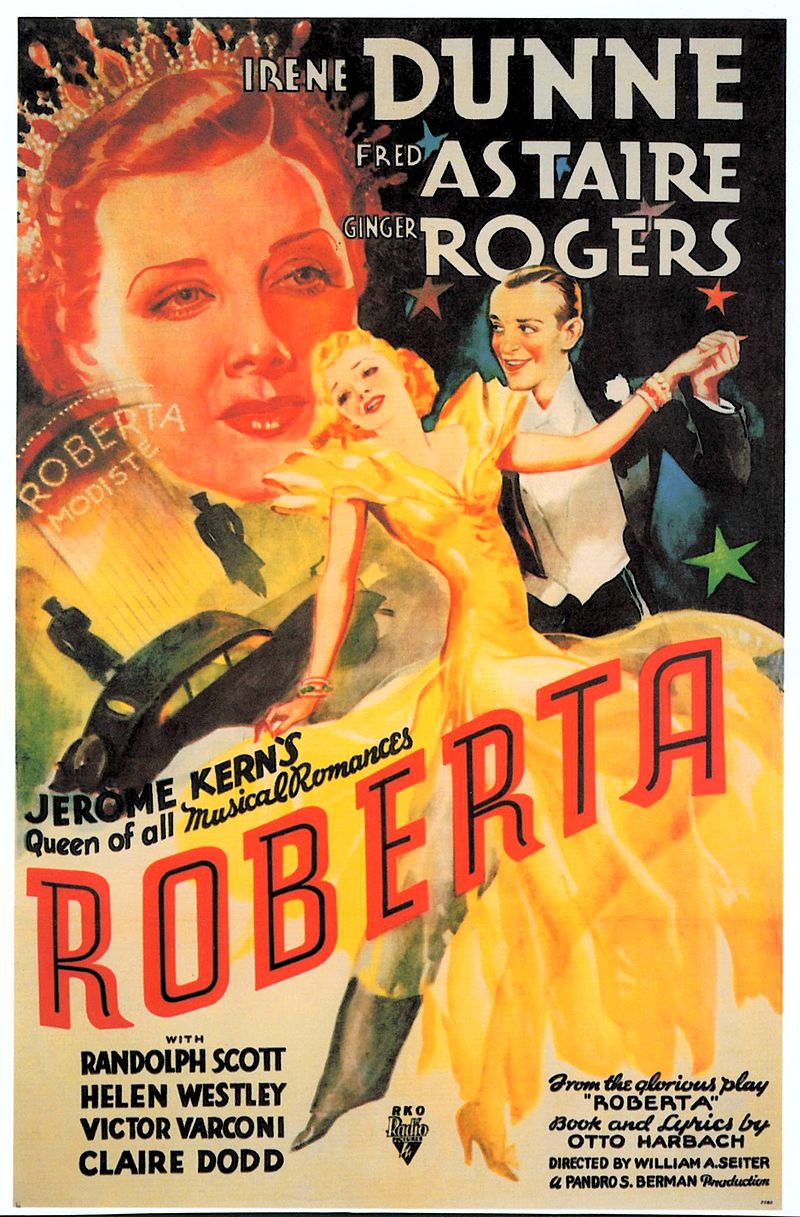
Roberta (1935)

Roberta opens with a troupe of musicians known as the Wabash Indianans who perform a wonderfully kooky organ routine in the middle of a train depot. It’s so inventive in fact, including the verbal gymnastics of Candy Candido, that they get sacked before they can even begin their gig in France. The proprietor was looking for some more exotic entertainment.

The boys need a fallback plan fast. Huck Haines (Fred Astaire) vaguely knows a girl named Lizzie, and John Kent (Randolph Scott), well, his aunt just happens to be the most famous dressmaker in the city. Only in the movies…

Time is of the essence, and so he pays the famed monoymous Roberta (Helen Westley) a visit. Scott gets stuck in the gilded elevator and has his meet-cute with Irene Dunne. It took a moment to recognize her because she addressed him in French. Stephanie (Dunne) is Roberta’s designer and most faithful staff member.

Scott is instantly smitten and goes leaping up and racing across the room just to have the chance to open the door for her. He rumbles around with the giddy energy of a colt; his aunt likens him to her favorite Newfoundland puppy.

If you’re keeping score, there’s one name that hasn’t cropped up yet. Ginger Rogers shows up as a feisty countess; her accent is worse than Dunne’s, but it doesn’t matter. She’s got the spunk to make it count. She stands at the balcony listening to the band do their performance, and when she actually gets face-to-face with Astaire, there’s really some fun to be had.

Flying Down to Rio found them coming into their own; they were sidekicks who caught the eyes of the audience with their craze-creating “Carioca” routine. With Roberta, they had already hit it big with The Gay Divorcee, and now they get to have a good time with the material without the onus of the story being on them.

They seem to relish this kind of sidekick role; it’s almost like they’re playing a level of meta comedy here because they know all the beats of the story and what it takes to have the commensurate repartee. After all, outside the film, they’ve already built up a cache of goodwill.

We really begin to understand it when they both drop the act. Because she’s not a countess but the same fast-talking dame named Lizzie he knew in a former life. Now their familiarity makes sense for the sake of the story.

In “I’ll Be Hard to Handle,” they get reacquainted with some flirtatious dancing as they reminisce about old times. This devolves into a dance-off with a slap for good measure, all captured in a rush of an unbroken take between two consummate performers loving what they do in front of us.

It feels like things are humming along. The demonstrative nightclub owner Alexander Petrovich Moskovitch Voyda, who communicates only in raised octaves, is coaxed by Lizzie into offering the boys a job this time around. Things are looking up.

There’s even a French lesson with Randolph Scott and Fred Astaire, which so obviously lays the groundwork for “Moses Supposes” in Singin in the Rain. It’s impossible to see it any other way.

Admittedly, Scott and Dunne have a rapport I like, though I’m equally tempted to say I want to see the movie with Astaire and Rogers at the reins. They almost need two separate movies because the story’s not big enough for all they have to offer. The script goes tugging and seesawing good-naturedly enough between the players, but the story almost doesn’t know how to handle it all.

It’s an embarrassment of riches, and it’s not even named for any of them. This distinction goes to Helen Westley. Then, Auntie Auntie dies peacefully — Scott and Dunne have a pact to run her fashion empire together, and John’s old flame Sophie comes from America for the obligatory complication.

She and Astaire don’t mask their mutual disdain for each other, and her entrance is great for the sake of comedy if little else. The fact that they have a bet over how her dress will be received by John pays dividends simply with the opportunity of watching Astaire’s smug face as he struts off and palms her dough.

Roberta could be a stolid affair straight through, and it is from time to time. No disservice to the lovely Irene, but her style of singing went out about 80 years ago, and I will always be enraptured by the Platters’ cut of “Smoke Gets In Your Eyes.”

I realized what made the Astaire and Rogers formula work was that they cut out the middle man: they were the floor show, the romance, and comedy all wrapped up into one. Roberta almost has too many parts.

Irene Dunne’s a star deserving top billing to be sure, but it’s easy to say the same about her costars even if it’s in retrospect. Still, there are enough delights in this one to look kindly on it.

3.5/5 Stars

The Major and The Minor (1942) and The Taking of Sudan

the major and the minor.png

Billy Wilder obviously got his start in screenwriting but much like Preston Sturges before him, he desperately wanted creative control to sculpt the vision of the meticulous scripts he helped forge with writing partner (and producer) Charles Brackett.

He got his breakout chance with The Major and The Minor and hardly squandered the opportunity. This might sound silly and high-minded given the plot of the picture:  a young woman posing as a child to claim half-fare on the train to her home state with ensuing complications…

However, the film flows not only out of the script but the execution and total commitment to the gag by Ginger Rogers. At first, it seems like a curious decision. She went from lavish musicals and heady drama to something so zany. Even today her legacy is first and foremost galvanized out of the magic she created on taps with her legendary partner Fred Astaire.

And yet, she took a chance on the neophyte because he had charisma and a gentlemanly manner, and she wholeheartedly believed in his talents. If you take a look at his trajectory after The Major and The Minor, her observations were very well-founded. From these promising albeit still humble beginnings, Billy Wilder shot to the top of Hollywood remaining one of its premier storytellers for decades.

It comes down to his almost holistic approach to comedy and drama. Somehow they become one and the same, tackled with the same gleeful, frequently trenchant wit no matter the subject matter.

This one begins with a typically pointed tagline: “The Dutch bought New York from The Indians in 1626 and by May 1941 there wasn’t an Indian left who regretted it.”

To put the statement in context, we get to know jaded and long-suffering Susan Applegate (Rogers) as she pays a visit to her latest client for a reinvigorating scalp treatment. Everyone including the bellboy gives her a whistle or a fresh word. It’s little better meeting Albert Osborne (Robert Benchley) as he offers her a martini, and she retaliates with an egg shampoo. While she maintains her business-like demeanor, he begins to flirt, mix martinis, and tell a string of increasingly lame cracks, making her fume.

It’s the final straw. She’s had it with the Big Apple and is now prepared to catch the first train back to the welcoming cornfields of her native Iowa. Here’s the catch. They’ve upped the fare, and she doesn’t have the funds to cut it. This calls for a creative solution.

All these types of screwy comedies have to involve some harebrained scheme, the type of fodder made to order for some of the best I Love Lucy episodes. In a similar manner, what is a screwball comedy without a train?

Since she can’t swing a ticket back to her hometown, she dreams up the wackiest solution. Pose as a child… It’s just about as outlandish as it sounds and looks just as strange.

Ginger goes into the Women’s Lounge and comes out a certified bobby soxer no doubt ready to swoon over Frank Sinatra. It becomes increasingly evident we are witnessing a forerunner to Some Like it Hot, as she pulls off the shenanigan with the help of a purloined balloon, a willing accomplice, and an extra high-pitched tone.

As an added alibi for the conductors, she fibs being of Scandinavian stock even speaking Swedish like the great Garbo (“I Want to Be Alone”). Wouldn’t you know, they catch her smoking underage, setting up the obligatory chase scene giving way to the ever-necessary meet-cute.

Enter Ginger Rogers into Ray Milland’s compartment. In a film crammed with cringe-worthy awkwardness, it has to be one of the definitive moments. To his credit, Milland does the storyline a service by committing to the setup in all earnestness. It’s possible to accept his candor, in various moments, chiding her for using her spare change to buy sweets or stumbling through “The Facts of Life.”

He legitimately believes this is a young girl he’s happened upon and treats her accordingly, even as the irony sets in. His one footfall is failing to defend her better against the ravenous boys under his tutelage.

Because he is a military man with a sterling record who, nevertheless, feels stuck in his current post at the military academy. His fiancee’s daddy is his commanding officer and Pamela (Rita Johnson) is used to having everything her way. So when she comes aboard the train to welcome her man home, boy, is she surprised to see another “woman” in his room (unbeknownst to him, of course). In jealous retribution, she sends a tray full of breakfast clattering into his face, which is more worthy of a few hearty chortles. The game is afoot now.

“Susu” as she’s now called is able to smooth things over while maintaining her cover and keeping the good major from public disgrace. As a reward, she gets to experience all the pleasures and perils of Wallace Military Institute, including Rita’s baby sister. However, the aspiring Madame Curie named Lucy, though initially skeptical becomes a willing accomplice in the other “girl’s” ever-evolving plans.

the major and the minor 2

What begins as a fundamental story of escape morphs into a mission of mercy to salvage the life of Phillip Kirby from soul-crushing mediocrity. On his behalf, “Susu” weathers an army of handsy young Cadette Adjutants, who have been trained in, among other things, “The Taking of Sudan,” a handy piece of history if you want to kanoodle.

Using her beguiling feminine wiles to her advantage, Applegate tries to snag the switchboard to send an outbound phone call to get Uncle Phillip’s orders altered. Not only does her ineptitude throw the camp into an uproar; she also raises suspicions.

It only makes sense that the academy’s ball is a space for everything to implode. But first, we must take a moment to acknowledge what a peculiar pairing it is having all the kiddos dancing with Ginger Rogers. Again, she takes it like a sport sans feathery boa or suave dance partner.

Although this is the least of her worries. Something is fated to go awry. It comes in the form of a ticking time bomb of a man who finds little Susu very familiar indeed. The final act falls heavily on the shoulders of the leads’ charismatic powers to rescue it from utter triteness.

Since I’ve been in the habit of mentioning Wilder in the same breath with Preston Sturges as of late, it’s fitting enough to note how The Major and The Minor steals liberally from The Lady Eve‘s playbook. In the end, the after-hours military maneuvers and “The Taking of Sudan” are its own contributions to the screwball genre courtesy of Brackett and Wilder.

3.5/5 Stars

8 Underrated Screwball Comedies

theodora goes wild

Screwball comedies, like film noir, have a fairly devoted following and although they were very much of their time, they still have descendants and influences on the movies coming out today.

Many of the heavy hitters from the 30s and 40s are household names, but I thought it would be fun to highlight a few titles that fewer people might think about in conversations surrounding screwball comedies. Let me know what you think!

Theodora Goes Wild (1936)

Irene Dunne is a great person to start this list off with because I always enjoy her films and yet she oftentimes feels woefully forgotten. In this zany vehicle, she is the eponymous title character who, while living a life of propriety in a small town, actually moonlights as quite the titillating author. Her life gets flipped upside down when one of the city slickers (Mervyn Douglas) finds out her secret.

Easy Living (1937)

It’s true a whole movie can be born out of a fur coat dropping from the sky, and it builds into a wonderfully raucous narrative thanks to the wonky scripting of Preston Sturges. Jean Arthur and Edward Arnold make a fine pair and send the town into a tizzy when rumors start circulating about the extent of their relationship. Ray Milland also proves why he was a much sought after rom-com lead.

It’s Love I’m After (1937)

It’s a dream cast with Leslie Howard, Bette Davis, and Olivia de Havilland in a dream scenario: a love triangle dressed up with Shakespearean theatricality. What better bedfellow for screwball comedy as Howard puts on a performance to rebuff a starstruck fan girl and earn back his jealous co-star. Eric Blore is stupendous as per usual.

True Confession (1937)

It’s courtroom drama meets screwball romance with Carole Lombard giving one of her most frenzied performances as a serial fibber who pleads guilty to an egregious crime so she can drum up some publicity for her husband (Fred MacMurray), a struggling lawyer in need of a big case. Una Merkel and John Barrymore show up to supply some added character.

Merrily We Live (1938)

Here is a movie that’s good-naturedly built out of the mode of My Man Godfrey. It’s about a family of idle rich: Constance Bennett, Billie Burke, Clarence Kolb, and Bonita Granville, of all people! They’re a constant whirlwind of ditzy entertainment around the breakfast table, and they quite unwittingly pull a passerby (Brian Aherne) into their comic vortex. Chaos ensues.

Vivacious Lady (1938)

Ginger Rogers and Jimmy Stewart have a glowing chemistry. However, their recent marriage has a wrench thrown into it when they head home to meet the parents. The word never got to them, and Charles Coburn, in one of his most obstinate performances, will never approve. Ginger uses all her tricks to woo her husband’s family over and fight off any rivals with her unparalleled catfighting skills. It’s as delightful as it sounds.

The Rage of Paris (1938)

Spunky Danielle Darrieux and Douglas Fairbanks Jr. spar across social lines with your typical screwball romance riddled with conflict transplanted to Paris and the French countryside. What Henry Koster brings is his usual heart-warming tone, and with support from the likes of Helen Broderick and Misca Auer, the material receives a dose of extra comedic oomph.

The Devil and Miss Jones (1941)

Here is the original undercover boss with the always cantankerous Charles Coburn slinking around his own department store. Not only does he come to understand his employees’ dissatisfaction with their work, through the eyes of Jean Arthur and Robert Cummings, he also learns what real friendship is. The movie is blessed with that wonderful one-two combo of uproarious antics and genuine heart.

Let me know what screwball comedies you would include!

Classic Movie Beginner’s Guide: Fred Astaire

In our ongoing series of Classic Movie Beginner’s Guides, we focus on a single person from Classic Hollywood for those who want an overview.

This week let’s look at one of the preeminent film dancers of all-time: Fred Astaire! After starting out on the stage with his sister Adele, during the 1930s Astaire tapped his way toward cinematic immortality thanks to his coruscating partnership with Ginger Rogers.

They were paired in a number of screwball-infused musicals that still rank among the best pictures the Hollywood dream factory put out during the 1940s. What set Astaire apart was his tireless choreography, the graceful elegance of his figure, and his often underrated singing voice introducing the world to a bevy of classics.

Top Hat (1935)

The Movie Projector: Top Hat (1935)

The romantic rebuttals are only a pretense for this glorious extravaganza replete with Art Deco stylings and a stupendous screwball cast loaded with the likes of Edward Everett Horton and Eric Blore. Astaire introduced a pair of Irving Berlin classics in “Cheek-to-Cheek” and “Top Hat, White Tie, and Tails” as he and Ginger dance away off toward perfection.

Swing Time (1936)

Swing Time (1936) directed by George Stevens • Reviews, film + ...

A worthy successor to Top Hat, Swing Time assembled the talents of George Stevens and Jerome Kerns offering Astaire yet another immortal classic, “The Way You Look Tonight.” However, the splendor of Fred & Ginger together is magic with number after number feeling like an absolute knockout including the likes of “Pick Yourself Up” and “Waltz in Swing Time.” They balance charm with elegance divinely.

Easter Parade (1948)

Easter Parade (1948) directed by Charles Walters • Reviews, film + ...

Fred Astaire finally got paired with Judy Garland in this Holiday-themed looker blooming with glorious Springtime Technicolor and luscious costuming. “Happy Easter” and “Drum Crazy” start him off on a particularly jovial note, and he never looks back. The compositions of Irving Berlin are swell as is the easy-going rapport of Astaire and Garland carrying the picture away into loveliness.

The Band Wagon (1953)

Howard Hampton on Vincente Minnelli's The Band Wagon (1953 ...

As his finest late-period work and an impeccable companion to Singin’ in The Rain, Fred is partnered with the always elegant Cyd Charisse as they dance their way through the sartorial splendor of Vincent Minnelli’s picture. Astaire gets one of his peppiest numbers with “A Shine on Your Shoes.” The real showstoppers are “That’s Entertainment as well as an epic film noir finale.

Worth Watching

Flying Down to Rio, The Gay Divorcee, Roberta, Follow The Fleet, Shall We Dance, Broadway Melody of 1940, You’ll Never Get Rich, You Were Never Lovelier, Three Little Words,  Royal Wedding, Funny Face, Silk Stockings, On The Beach, Santa Claus is Coming to Town, etc.

Shall We Dance (1937): Fred, Ginger, and The Gershwins

shall we dance 1937.png

The name Gershwin is synonymous with “The American Songbook” and part of the draw of Shall We Dance is how it included two of them: both the brothers, George and Ira Gershwin. Ira would tragically pass away that same year. However, together they provided the compositions and lyrics for the film which, in some sense, feels like an atypical Astaire and Rogers vehicle.

While Mark Sandrich is in the director’s chair once more following The Gay Divorcee (1934), Top Hat (1935), and Follow The Fleet (1936), there are some unprecedented deviations from the normal foolproof formula. Namely, Astaire plays Peter P. Peters, an American who trades in his taps for a Russian ballet company. He’s certainly will always be a hoofer in most people’s eyes, and it does feel oddly out of character.

What hasn’t changed is his instant infatuation with Rogers, a famous tap dancer in her own right, named Linda Keane. But he must contrive some sort of gimmick and thusly takes up the persona of the touchy Russian dancer “Petrov” to antagonize her on the road toward love. Meanwhile, he tries his very best to evade the flirtations of his former dance partner Denise (Ketti Gallian) who looks to snatch him up.

Of the earliest offerings, Astaire gives us the treat of his cane dancing like he did in Top Hat and then there’s a fine boiler room number, “Slap that Bass” supported by a host of African-American performers thrumming with a healthy dose of character.

The film’s most catastrophic mix-up comes when the newspapers begin promoting a secret marriage between our two stars, thanks to a cockamamie story Peters cooked up on the spot to keep his former suitor at bay as he leaves on an ocean liner.

Petrov and Keane develop some chemistry dog walking together on the deck of the ship only for the gossip swirling about to reach a fever pitch. Astaire’s bumbling boss, Mr. Beard (Edward Everett Horton) uses it as the perfect chance to get rid of her for good. Meanwhile, Eric Blore as his ever-huffy hotel clerk tries his best to figure out the marital status of Petrov and Ms. Keane when preparing their rooms. They leave him ceaselessly befuddled.

Then, a second nefarious scandal is cooked up by Keane’s road manager (Jerome Cowan feeling out of place with the screwball elements), who does his best to kill the upcoming marriage his star has embarked on.  Thanks to some late-night photography and a mannequin bearing a striking resemblance to Linda, the news spreads like wildfire. What are his motives, you ask? He’s got his own reasons.

shall we dance 2

Not surprisingly, the closest thing we get to the Astaire and Rogers numbers of old are also the film’s finest entries, including the comic tune “They Laughed at Me” sung by Rogers before being joined in a routine by Astaire. After they sneak out to get away from the publicity hounds, “Let’s Call The Whole Thing Off” proves a handy follow-up number.

The extended sequence purportedly took a plethora of takes, upwards of 100, while the final fall into the grass left Fred and Ginger with black and blue backsides. They suffered and yet as the audience, we no doubt reap the benefits, especially because Shall We Dance hardly has their traditional big numbers like a Top Hat (1935) or Swing Time (1936) so seeing them on skates together is nearly consolation enough.

They show everyone by getting married, making it easy enough to get divorced so Linda can marry the man she’s meant to. Since their movies always took a page out of screwball comedies anyway, it makes sense this picture is another riff on the comedy of remarriage, which could be a sub-genre all its own.

Ultimately, two shows are merged in an instance of inspiration and yet that doesn’t mean that Petrov’s got the girl. An oddly disconcerting final number follows as Astaire dances with a host of gals all donning Ginger Roger’s face, disrupted by a shushing war instigated by our favorite misfits Blore and Horton. Though the picture could have used a feisty female like a Helen Broderick or Alice Brady, there’s also never enough of Blore and Horton to suit their faithful fans. They make every film a little more colorful, and it would hardly be an Astaire-Rogers picture without a stellar supporting cast of veteran jokesmiths.

Surveying Shall We Dance, it’s certainly not at the top of the pantheon of the movie musicals that these two icons made together, but it’s ripe with some of the usual delights in spite of a laborious plot and a different brand of dancing than we’re used to. It’s hard to complain too much about the results. There’s no doubt the entertainment value for true aficionados still remains.

3.5/5 Stars

The Gay Divorcee (1934): The Astaire & Rogers Foolproof Formula

the gay divorcee.png

The plots to the Astaire and Rogers musicals are usually deceptively simple. Thus, thanks be to their dancing transcending it all. The affair opens in some posh corner of Europe where the always dithering Edward Everett Horton is sitting with Fred Astaire who has to prove his identity to get out of paying a check. They’ve both conveniently misplaced their wallets. After a routine complete with pretty girls and dancing fingers, he gives an impromptu performance of his own bringing down the house and proving he really is world-renowned performer Guy Holden.

Later on, at the docks, a fellow American, arriving in England (Ginger Rogers), is meeting her lovably fatuous aunt (Alice Brady) only to have her dress accidentally caught in a travel trunk. The man who comes to her aid and subsequently rips her garment is, of course, Astaire. Being a gentleman and genuinely taken with her, he gives her his coat to cover up, but the damage has already been done. She finds him a bit bothersome. You can tell it instantly by every look of disdain she throws him. Meanwhile, he eats up any pretense to talk with her, though she dismisses his advances. It’s how the story always goes.

He turns his resolve to find the girl, matched with the everyday occurrence of getting dressed to go out on the town, into the number “Needle in a Haystack,” which has Astaire exuding his typical elan on taps. Of the millions of women around, he’s looking for one very particular needle, and he’s not above canvassing the streets, even if it’s an insurmountable task, made increasingly apparent through montage. It goes to all this trouble only to very coincidentally rear-end her as he’s rubbernecking (adding yet another reason for her not to like him much).

Meanwhile, Egbert (Horton) is looking to make his father proud of him in the family law firm, though he’s never seemed to have much gumption or stomach for the trade. His worst nightmare, Hortense (the same Alice Brady) comes back into his life also bringing with her the proposition of a case that just might be his opportunity to assert himself. Mimi, the same woman constantly harried by Holden, is looking to get out of a loveless marriage and so the inept lawyer suggests setting up a rendezvous with a professional gigolo to end the union for good.

He invites Guy along for the ride knowing the sunshine, gaiety, and girls might do him good as a distraction for his lovesickness. He needs to forget this girl he’s so taken with. However, they’ve failed to compare notes. It doesn’t take extra-sensory perception to read where the picture will go from here, in fact, there’s hardly a need to continue. The human mind might do a finer job in its vivid imagination to derive what complications will arise from such a premise.

It’s a pleasant surprise to see Edward Horton doing a little saucy jig, “K-nock K-nees,” which also proves an early showcase for 40s wartime superstar Betty Grable if you’re able to recognize her. Likewise, in the subsequent scenes, Eric Blore is delightful as ever, this time as a waiter with his typical crisp & snooty delivery, ably sparring with the comic foibles of Horton.

Fortuitously, he turns up in several more instances to serve up the tea things along with idle chatter to anyone who will lend an ear. Astaire and Rogers’s first number together is the Cole Porter standard “Night and Day,” only to birth further misunderstands thanks to one ironic code phrase, “Chance is the fool’s name for fate.” Don’t ask for an explanation.

“The Continental” is an impressively glossy number that until Gene Kelly conjured up his American in Paris (1951) dream sequence, clocked in as the industry’s longest continuous dance number. Some of it involves our leads, but not the whole thing. It feels much more like a Busby Berkeley extravaganza.

And yet right there you understand the exquisite nature of Astaire and Rogers because they made dancing into something intimate and personal. It was between two people as much as it was a lavish production number, and that’s what resonates with us even after the curtain falls and we’ve been wowed by the expansive nature of the staging.

Yes, the geologist husband finally makes his token appearance as expected and the hired romancer Tonetti (Erik Rhodes) continues to bumble along in an effort to play his raffish role. Of course, Astaire proves far more convincing in the part of the lover finally getting the girl as expected.

Does any of this matter? Hardly. But it’s one final opportunity to get Astaire, Rogers, Blore, Horton, and everyone else in a room together. That’s surely enough to recommend this frolicking trifle of gaiety starring everyone’s favorite couple on taps. There’s nothing better to lift your spirits than Astaire and Rogers.

4/5 Stars

Classic Movie Beginner’s Guide: Ginger Rogers

As we continue to look at musicals our recent beginner’s guides have been focusing on stars at the center of some of the best films of the era. Today let’s focus on Ginger Rogers.

Aside from being part of the incomparable dance partnership with Fred Astaire, Ginger Rogers was also an accomplished comedienne and a tested dramatic actress who showed surprising elasticity throughout her varied career. Here are just a handful of her best movies.

Gold Diggers of 1933

Image result for gold diggers of 1933 ginger rogers

Some might forget Busby Berkeley started to choreograph a new syntax for the movie musical and crucial to one of the industry’s most successful Depression_era backstage dramas was Ginger Rogers. Joining forces with Joan Blondell and Aline Macmahon, among others, they build on the success of 42nd Street.

Top Hat (1935)

Image result for top hat 1935

For some people, this is the ultimate Astaire and Rogers movie featuring some of the most extravagant sets and career-defining numbers together. The cast is rounded out by old favorites like Edward Everett Horton and Eric Blore. However, of course, the main attraction amid the screwball foibles are our shimmering leads, Rogers sporting her iconic feathery ensemble.

Swing Time (1936)

Image result for swing time 1936

Others will say this George Stevens-directed feature is actually the greatest Astaire-Rogers pairing and who would blame them? The dancing is phenomenal and the songs equally amicable including standards like “The Way You Look Tonight.” Surprise, surprise, Ginger and Fred are magical together yet again.

Vivacious Lady (1938)

Image result for vivacious lady 1938

So many films could earn this spot but Vivacious Lady is buoyed by the real-life chemistry and friendship of Ginger Rogers and James Stewart. The material is fairly light, but they handle it with ease. In a turning of the tables, Stewart was yet to be a big star and Ginger Rogers vouched for him. Greater things were yet to come for both of them.

Worth Watching

Flying Down to Rio, The Gay Divorcee, Roberta, Follow The Fleet, Shall We Dance, Stage Door, Bachelor Mother, Kitty Foyle, Major and The Minor, I’ll Be Seeing You, Monkey Business, etc.