Review: Strangers on the Train (1951)

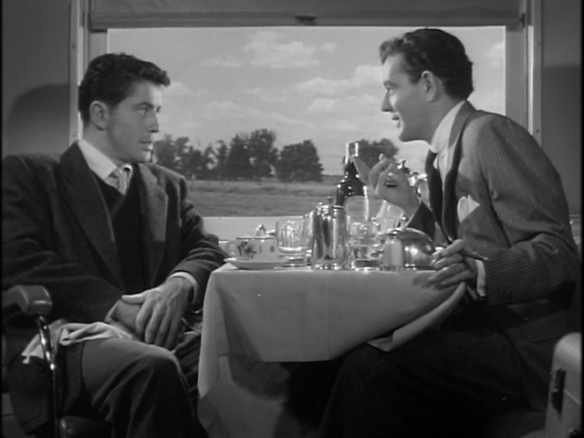
Strangers_on_a_Train_-_In_the_dining_car.png

Strangers on the Train is conceived in its first few minutes of dialogue when the charismatic bon vivant Bruno (Robert Walker) ingratiates himself on tennis player Guy Haines (Farley Granger). Bruno is a big idea-man, constantly talking and thinking and wheedling his way into other people’s lives because he does have a way about him. He makes it easy for others to like him and then they let their guard down after a row of trivial jokes and he’s got them. That is until they begin to see something else entirely in him.

In this particular instance, he schmoozes Guy’s ego. He’s a big tennis star. Bruno has read up on him and knows all about him. At first, it’s mere flattery but as the conversation continues it gets more and more unnerving. Bruno seems to know a little too much almost to the point of obsession.

Still, he manages to keep the other man’s attention just long enough to share his greatest idea — imagine for a second that two men who meet quite by chance (on a train for instance) were to trade murders — leaving no motives or connections for the authorities to trace back to the culprit. Of course, the whole idea soon falls apart if not everyone is equally invested. It doesn’t work if only one individual takes such a ludicrous idea seriously.  That’s where uneasiness begins to set in.

Robert Walker’s performance might rightly be one of the greatest performances in a Hitchcock film in terms of the sheer chill factor. He’s a psychopath, somehow misguided and tortured by issues that never truly get resolved. A great talent with so much promise was lost far too young when he died tragically the same year this film was released.

But equally important is Farley Granger’s more subdued performance, that quiet sensibility that makes him an easy target for someone as magnetic as Bruno. With another actor such as William Holden (initially considered for the part), the dynamic falls apart for sheer implausibility and as a result, the film would not function so effectively. We soon believe that a relationship such as Guy’s and Bruno’s could actually exist and that shred of reality makes the tension all the more unnerving.

Due to its foreboding cinematography courtesy of longtime Hitchcock collaborator Robert Burks and Bruno hanging over Guy constantly like an expectant specter, it`s easy to trace the line of film noir sensibilities here as the darkness seeps into Guy’s picture-perfect life.

But what’s fascinating is that Bruno initially aids his newfound friend — he assists him in getting the life that he’s wanted for a long time, an existence that is respectable, complete with a beautiful woman. Anne Morton (Ruth Roman) is the daughter of a respected Senator (Leo G. Carroll) and her upbringing and general concern reflects a stark improvement in Guy’s social standing.

Is it safe to say that it’s fairly easy to harbor a crush for Roman who exudes a refined decency, even if she’s not quite Hitchcock’s icy blonde? Place her up against Guy’s opportunistic and cavorting wife and Bruno’s action could almost be considered a service. Almost… Still, Bruno spins his charisma into a deadly threat, ultimately evolving into Guy’s worst nightmare.

Meanwhile, Patricia Hitchcock sometimes feels like she is used as a plot device but nevertheless even in that aspect alone she is crucial to this story. She also doesn’t quite fit into the Morton family but her very characterization reinforces many of the themes her father is playing with often using visual language.

The most acclaimed shot for its sheer stylized perspective is the scene of Bruno’s act of murder. It’s done in only a moment, silently, and without much fanfare. The woman’s glasses fall to the ground cracked and we see the reflection of the events at hand. It’s pure Hitchcock but the entire sequence is a masterstroke in buildup.

Bruno is tracking his unsuspecting prey. He follows her into a carnival. Past the booths and the rides, by popcorn vendors, into the tunnel love and finally to a darkly lit meadow where the deed is done. But without the buildup, this continuous cutting between the man and the woman, the scene has little impact. Hitchcock gave it increased stakes bolstered by true suspense.

But what he does equally well is cross-cutting not only his two main characters but their very actions. The opening introduction showcases this contrast of personalities with Bruno and Guy. It never ceases. They’re constantly placed opposite each other intersecting and crossing each other. Yet Hitch emphasizes these conflicts visually on multiple occasions which completely justifies why his main hero was written as a tennis player.

The fact that Guy is in the thick of a match during one of the tensest segments is magnified in how the camera cuts between Guy and his opponent back and forth with the audience, line judges, and everyone else spliced in for good measure. It mirrors the very same conflict he’s still tied up in with Bruno just as the gradation of black and white reflects the good and evil that separates and at the same time connects the two men.

You can always count on Hitch to bring the goods and yet again Strangers on the Train ends with a whirling, whizzing, shrieking bit of pandemonium — a real slam-bang finish courtesy of the Master of Suspense. Over 65 years later it hasn’t lost much of its impact blending a sense of real-life spectacle with genuine thrills. And like Hitchcock’s greatest films this one works on multiple planes visually, psychologically, metaphorically, narratively, and that frees us up to enjoy it in whatever way we please. That’s the sign of a quality movie from the foremost of creators.

5/5 Stars

A Matter of Life and Death (1946)


Matter_Life_Death_Hunter_Niven

Matter of Life and Death is planted in its era. It carries the vague notions of a war film, it’s certainly a romance, and it revels in the throes of fantasy. But on the whole Michael Powell and Emeric Pressburger’s film functions outside the typical confines that are put on film as a medium. The scope it dares to take on is far more expansive.

The plot is made in the first few minutes when a pilot looks to eject amid the fog engulfing his failing bomber. It’s in that single moment where he picks up the signal of a radio dispatcher down below and their lives are never the same. Believable or not they fall instantly in love — in that moment of heightened emotion — they find a connection. She, never to see his face and he, never to make it out alive.

The Conductor (Marius Goring) from the other side is already looking to pick him up. Except something goes terribly wrong, or terribly right for the pilot, depending on your perspective. In other words, he doesn’t die. He escapes death. It causes a bit of a stir and Conductor 71 must try and rectify the situation.

But of course, Peter David Carter (David Niven) quite by chance is reunited with the woman from the other side of the wire, the American named June (Kim Hunter) and they are allowed a happy life together. Except with his reservation with the afterlife still up for contention, Peter finds himself being visited by the Conductor who coaxes him to accept his death. Instead, Peter calls for an appeal and his case is set to be brought before the highest authorities to decide once and for all if he must accept his death as ordained or have it postponed so that he might continue to cement his love for June.

It evolves into a wonderfully fantastical courtroom drama, wrapped up in romance, with a bit of time travel, purgatory, special effects, and color all mixed together in a tirelessly imaginative arc.  It’s true that the ambitions of the conceptual narrative are really unlike any other cinematic creature as it cycles so lithely through time and space. Freezing images, moving characters about this way and that, and cutting back and forth between worlds most easily differentiated by their color schemes.

Still, in some way, I was gripped more with the furious emotion of The Red Shoes (1948) and yet with its phenomenal conception and immaculate staging, A Matter of Life and Death manages to be an extraordinary picture by most accounts. If its waves of romance did not seize me instantly, its sheer inventiveness was nevertheless breathtaking.  And if the concept enthralls me even more than the narrative does then so be it. It shares a world akin to Seventh Heaven (1927) or Wings of Desire (1988) and that alone is worthy of praise — carving out a place in the pantheon of transcendent films — featured on the conveyor belt that makes its way through the years.

Fantasy films were made to be like this, arguably functioning in a realm that only films could facilitate and Powell and Pressburger examined near unfathomable realms. Not only with scripting but the selection of shots, and developing fascinating spectacles out of the Other World from the stairway to heaven to the infinite courtroom where Peter’s case is debated. Jack Cardiff’s photography takes on the monumental task of balancing two worlds with equal import — the world we know and the complete other realm that has yet to be revealed to us who are still among the living. It leaves us feeling enamored with both. Not simply because of beauty but sheer size and scale.

The storyline comes down to the final moments where Peter and June are asked to make the kind of choices we have been expecting. Right about now we can hear the words ringing in our ears, there’s no greater love than to lay down one’s life for the ones you love. Their actions say as much. But as we might just come to find, give and it will be given back to you more abundantly than you could ever imagine. Sacrifice all that you have and you will find yourself gaining so much more.

It brings to mind a dialogue that emerged from the courtroom when the prosecutor (Raymond Massey) notes that “nothing is more important than the law. The whole universe was built on it.” But his learned opposition (Roger Livesey) ascertains that “this is a court of justice not of law.” The implications being that the law is good and must still be fulfilled but justice is the key here, where right is done by all men and love reigns supreme.

There are a plethora of interesting topics that arise from The Archers’ film but one of the foremost is the sentiment of not only the post-war but of an entire millennium. It’s a belief that could arise from many marginalized points of views suggesting that there is a great deal of prejudice and ill-will that could be exacted against the English (and certainly Americans too), anyone who has been a major world power.

The jurors put up against the defendant all have grievances they could hold against the English people, but then again, we are not our fathers’ fathers and we cannot necessarily turn back the clock on their past sins. But what this film does suggest more powerfully still, relevant in a post-war era or any age really, is the idea that people can reach out across the sea and really across the world to be united by something. We’ll give it a name to it and call it love in its many forms — more specifically as the Greeks might call them, storge, philia, eros, and greatest of all agape.

4.5/5 Stars

Note: My entry in the Time Travel Blogathon


Review: Giant (1956)

giant 1.png

People might come to Giant for James Dean. They might come seeking out the final film in George Stevens unofficial American Trilogy (including A Place in the Sun and Shane).  Maybe it’s even the promise of a sprawling epic of monumental length and scope that turns out to be both a blessing and a curse by most accounts.

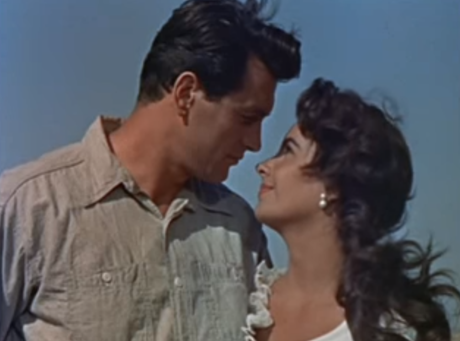
But this adaptation of Edna Ferber’s novel, despite all of this, is really a film about marriage and family in a world that’s constantly changing. Rock Hudson is a towering giant in his own right turning in a performance that works as quintessential Texan Jordan “Bic” Benedict. Elizabeth Taylor proves that far from a one-dimensional classical beauty, she has acting prowess as well delivering a spirited showing that gels with Hudson for the very fact that it often chafes against his characterization. Meaning they’re believable as husband and wife.

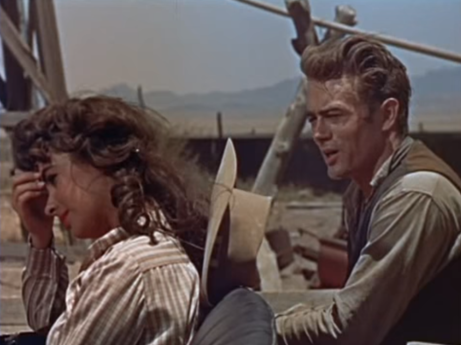
James Dean plays their marginalized ranch hand Jett Rink who is nevertheless treated well by Bic’s  hardy sister Luz (Mercedes McCambridge) as well as Leslie while harboring a life long feud with Bic over the ensuing years.

Time turns this story into a battleground of two dueling giants. One a life long rancher of great stature. The other a modern figure blessed with a meteoric rise as an oil magnate. Their resentment carries through the generations as much as their differing fields reflect the sign of the times. The tectonics shift as the old guard of the Texas plains is replaced with a new breed of powerful men.

Of course, Dean’s performance is the stuff of legend and there’s an idiosyncratic, grumbling magnetism about it as only he could do. This isn’t Brando and it’s not even Monty Clift who previously played opposite Elizabeth Taylor in Stevens’ earlier picture. It’s James Dean showcasing his personal flare.

The final moments of his “Last Supper,” after his subsequent rise to glory, are devastatingly pathetic. The mighty oil tycoon of Jetexas falls into utter disgrace crashing to the floor of the empty banquet hall with a clatter. Rolling around in a drunken stupor, making a shambles of his grand exhibition of wealth, and simultaneously concluding Dean’s last scene in front of an audience.

His life would be taken even before Giant finished filming, some of his last scenes of dialogue being reread by close friend Nick Adams, his temperamental nature and habit of mumbling lines impacting the production even after his passing. Still, George Stevens himself, despite the insurmountable hell he was put through, and the hits his shooting schedule took, even admitted that Dean was something special.

You might not like him but all of us seem to gravitate to him for some inexplicable reason. He carries our gaze with his ticks and his delivery. It’s as if he forces us to take heed even out of a necessity to understand him, his head downcast, his hands fidgeting and such, all a ploy to carry our attention. It generally works.

giant 2.png

Yes, we lost him so young but the beauty of Giant’s epic stature is that in cinematic terms Dean was blessed with a full life. We saw him as a fiery youth in East of Eden (1954) and Rebel Without a Cause (1955) and in Giant he evolved into an equally tortured man who grew old before our eyes. That’s the magic of the movies. But sometimes it’s so easy to have his legend overshadow all others.

The latter half of the film is really about the Benedict family evolving with the maturation of their children. Dean is worth a closer look certainly, but I’m inclined to enjoy the performances of Carroll Baker and Dennis Hopper nearly as much if only for the simple fact that they’re less heralded.

Baker is the daughter caught in the throes of romance and decadence who finds Jett Rink more fun partly for the very fact that her stuffy parents abhor what he has become. Meanwhile, Hopper brings a surprisingly earnest candor as the Benedict’s eldest son with aspirations to be a doctor instead of a rancher, pushing against family tradition, subsequently marrying a Mexican-American bride, and facing the unfortunate ostracization that comes with such a life.

Some of the most evocative scenes are actually held between Hudson and Taylor. To most, their careers were known for personal lives exploited by tabloids. They don’t get the same adulation as Dean as actors. Still, in this film, they do something quite spectacular in a more unassuming way. They quite authentically reflect the life of a married couple as their romance and life together waxes and wanes over the years. That includes Jett Rink’s onslaught and the trials with kids but, at the core it’s just the two of them, grappling with it together.

Because this is a film that unfolds over decades we come to appreciate the changes that come over the characters and not so much the makeup or touches of gray. More important are the strides they make in their lives or even how they remain the same.

They model what it is to be young and in love, to quarrel and bicker and to make up and to be diplomatic and to have dreams and aspirations and to want the best for your children and at the same time hold grudges and feel like the ones you love are purposely trying to undermine you.

To begin with, this is a fairy tale romance of opposites. Hudson is the formidable Texan bred as a rancher and he comes to the upper echelons of eastern society looking for a stallion and he comes back with a bride instead.

She comes to his country initially welcomed and then feeling like an outsider in a land that is so set in its ways. Men and woman are expected to exist in certain spheres. White folks don’t fraternize with Mexicans. And cattle barons tame their land and breed their stock like their fathers before them. It’s tradition and they stick to it. Bic Benedict is raised in that Texas tradition dating all the way back to the Alamo, his stock proud, fiery, and tough.

Still, his wife Leslie is just as audacious but in different ways, testing his sensibilities and testing the matrimonial bonds of their marriage. She rather comically proposes her own marriage, looks to break up the boy’s club mentality that dictates the culture, and tramples over the de facto laws of the land in favor of goodwill to all. That means if a baby is sick, she fetches a doctor. The color of its skin makes no difference. In that atmosphere, it’s radical that she extends kindness to everyone, not simply her own “kind” as it were, whether divided by class or racial barriers. Ultimately, it’s a testament to the sorry state of affairs but also of her personal convictions and they bleed into the rest of her family.

The final showcase comes not in his front and center bout with Jett Rink because although we’ve been expecting it for decades, as such it never comes. Jett’s not worth it anymore. Instead, Bic’s shining moment comes in, of all places, a roadside diner. He’s not as strapping as he used to be and he gets wailed on something awful. But in this moment as he’s duking it out with a local bigot, the platform that he stands on is not simply about his family name or his own personal honor as a Benedict but along the planes of what is morally right and wrong.

Rejecting service to people based on the color of their skin is inherently wrong. Disrespecting people of other races can and never should be accepted. Years before he would have never taken a stand on such touchy issues but he’s matured in that regard and his wife falls in love with him all over again. She sees first hand why she grew to love this man.

He lies there on the floor heaving and bloodied with food flung all around him the oddly upbeat throngs of “Yellow Rose of Texas” still whirring on the jukebox but ironically Leslie has never been more proud of her man. It’s that paradoxical maxim written about many times. Blessed are those who are persecuted for doing good.

Most modern viewers will honestly thank their lucky stars that they don’t make epics like this. But there’s something fleetingly enchanting about these old-time vehicles that managed to encompass so much space with grandiose ambitions and awesome imagery full of million dollar skies and fluffy clouds as far as the eye can see.

The West is dead as is the American genre. The stars as we knew them are no more. We are still a nation struggling with issues of race and class. Love and marriage. That mixture of nostalgia and timelessness still makes Giant a draw.  George Stevens is one of The Great American Directors and though Shane (1953) will remain his unassuming masterpiece, Giant deserves at the very least a modicum amount of respect as a dying breed of American epic.

4.5/5 Stars

Note: Entry in The Elizabeth Taylor Blogathon!

Review: Gilda (1946)

Gilda_trailer_hayworth1If you’re worried about Johnny Farrell, don’t be. I hate him~Gilda
And he hates you. That’s very apparent. But hate can be a very exciting emotion. Very exciting. Haven’t you noticed that?…There’s a heat in it that one can feel. Didn’t you feel it tonight? ~Ballin

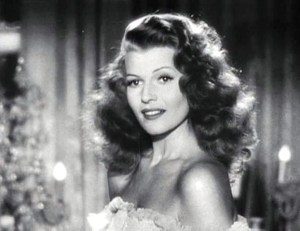
Gilda became synonymous with Rita Hayworth and for good reason. She was the embodiment of so many of the things found desirable by many men from a certain age. Frisky. Sultry. Beguiling. Teasing men, leading them on, and leaving them. Hating them as much as she loves them. That’s where the passion derives from — very volatile beginnings.

It’s true that Hayworth’s playfully ravishing seductress was forever immortalized in Shawshank Redemption and really in the mind’s eye of anyone who ever has seen her singing “Put the Blame on Mame” even once. She’s also, consequently, the epitome of the deadly lineage of femme fatales at times both tragic and destructive, alluring and lively. It’s difficult not to get drawn in like a moth to the flame.

But underlying such a performance is something a little more disheartening as this is only a cinematic depiction. It is not reality and yet it brings to mind a paraphrased quote that I will attribute to Hayworth, perhaps recalling her turbulent union with Orson Welles or maybe all the men who found their way into her life. “They go to bed with Gilda and wake up with me.”

The implications, of course, are far-reaching suggesting just how much this fawned over female ideal was a pure fabrication. It’s not real. Rita Hayworth could never measure up to that fantasy nor should she have to. Because while Gilda’s tantalizing as a cinematic siren, in real life she could never exist. Her passions impinge on her entire existence where she sees hatred, lust, and love all in synonymous terms. She hates Johnny and she loves him. She doesn’t want him and she does for those very reasons.

While not to downplay the negative impact the role may have had for Hayworth’s personal life, there’s no doubt of its cultural clout even today and it helps make this film-noir directed by Charles Vidor a high water mark of the dark genre for the very reasons mentioned before. Jo Eisinger’s script is also a strikingly perverse number as it begins to draw up the relationships between Gilda and her men.

Because it doesn’t end with her. Gilda needs others to play with and she’s given the perfect counterparts in Johnny Farrell (Glenn Ford) a man who willfully counters anything she offers up in the areas of sexual tension, embittered ridicule, or psychological warfare. It’s like they enjoy to torture each other — they enjoy to be able to make each other reel and fume. It’s all part of the twisted game they play of love and hate. He seethes with a vindictive coiled anger just waiting to be unleashed and he lets it go time after time. Sometimes upon provocation and other times out of sheer malice.

It all finds roots in a past we can only presume about and it’s true that all three of our leads are shrouded in some mystery when we’re introduced to them. First, Johnny Farrell a smart aleck gambler who gets himself a job as the right-hand crony for Ballin Mundson (George Macready) a man who is far more than a simple casino magnate. His business dealings run a little broader and more clandestine than he initially lets on.

Farrell’s a quick learner and ambitious so he moves up the ranks and soon he’s got the most prized position by Ballin’s side as his closest confidante and most importantly of all he’s there to watch over the other man’s wife — his favorite treasure to flaunt — the one and only Gilda.

It’s in that unspoken past that Gilda and Johnny learned to disdain each other and it stokes the flames of their relationship. It’s brutality mixed with sensuality which is at one time disconcerting but at the same time hard to pull away from. Again, moths to the flame.  It’s so wickedly twisted with rage and passion and all those human emotions that make us despise one another one moment only to make us no be able to live without each other in the next.

At a certain point, there’s no longer any sense in trying to draw up sides whether it’s feeling sorry for Gilda or empathetic toward Farrell and the thoroughly uncomfortable position he has been placed in as keeper of the bosses wife. Both of them have the makeup of true noir protagonists.

Otherwise, Rudolph Mate’s gorgeous imagery is absolutely fantastic and is certainly worthy of simply being marveled at on multiple occasions for its delicious compositions and use of shadow. Hayworth is rendered even more beguiling and Macready becomes an even more perplexing figure masked in darkness. Meanwhile, the Carnival celebrations are cast as stunning spectacle and over the top extravagance that’s also rudely disrupted by murder.

One could take it as a metaphor suggesting that the post-war era had commenced with a flourish but that cannot completely get rid of the sour taste left over from the war. A veil of darkness still remains.  Along similar lines, there’s a bit of Casablanca’s tension running through this film, and its atmosphere, while not quite on par with its predecessor, still rings with a lot of character.

The roulette wheels are in fine form and the establishment is full of its own rogue gallery of humorous and foreboding figures alike. The always lovable Uncle Pio provides a dose of good humor but there are also treacherous Germans, numerous rich boy toys, and a surprisingly civil government agent who all make a habit of frequenting the most popular casino in Buenos Aires.

It might be true what Johnny says about gambling and women not mixing but then again with the lens of film-noir they prove to be a high octane combination, representing vice and sensuality, two of its most readily available commodities.

4.5/5 Stars

The Thin Man (1934)

The_Thin_Man_Publicity_Photo

“What were you doing on the night of October fifth, nineteen-hundred-and-two?” ~ William Powell as Nick Charles

“I was just a gleam in my father’s eye.” ~ Myrna Loy as Nora Charles

With The Thin Man, Dashiell Hammet successfully crafted several archetypes that go beyond the basic pulpy film noir standards that he also helped to define. Nick and Nora Charles were a cinematic power couple even before the word was in vogue and as their real life counterparts, William Powell and Myrna Loy were quite the pair in their own right being matched in a mind-boggling 14 films together.

The Thin Man became one of the most beloved pairings, helmed by W.S. Van Dyke and spawning a wildly popular series of sequels that continued throughout the 30s and 40s. At the very least it suggested that it was not so much the story lines but more so the characters that resonated with the general public.

It’s true that casting William Powell as Nick Charles was one of the hand in glove situations. He had a certain dashing even debonair quality with his pencil mustache perfectly thrown askew by the scenarios he gets himself into. Above all, he has a witticism or lithe quip handy for any given situation. He’s a real riot at dinner parties. One of those men who has a perpetual smirk on his face.

But Myrna Loy is just as impeccably cast as his fun-loving wife who is as game as he is to have a rip-roaring good time. She’s constantly keeping up with his droll wit while continually chiding him good-naturedly to get back into the amateur detective game.

For the time, with no children to speak of, their beloved wire terrier Asta (the famed Skippy who was also featured in other such classics as The Awful Truth and Bringing up Baby) rounds out their happy clan.

It really is a strategic depiction of marriage and family circa 1934. The Great Depression still had a fresh imprint on the nation and yet in Nick and Nora you see no indication of any such malaise.  Their days are spent drinking martinis and gallivanting around town while their nights are filled with fancy dinner parties and the occasional crime caper.

These forms have been so often parodied to this day but at the time it seems obvious that The Thin Man whether subconsciously or not was an escapist fantasy that indulged the desires of those less fortunate. Because if nothing else, they could at least spend some fun taking a load off and joining the Charles for an enjoyable evening. Everyone laughs. Cops and citizens have close knit connections. Excessive drinking is only a delightful diversion. The only ones who were in need were the slothful and the greedy.

Although The Thin Man employs admittedly incomprehensible plotting at times it’s hardly a knock. So many characters get thrown in and chatted about it becomes difficult to keep them all straight much less figure out what their bearing on the plot is. And it is the oddest cross section of individuals to be sure.

Much like The Third Man, this precursor, The Thin Man acts as a nifty MacGuffin in a pinch, driving the plot forward with his spectral presence. The fact he’s hardly on screen does not detract from his overall importance in this film. Meanwhile, his invested daughter (Maureen O’Sullivan), wife, mistress, and various other involved parties all get tossed around as culprits and accomplices including Porter Hall and Cesar Romero.

While not noir in the typical sense James Wong Howe’s photography does give the film certain dark sensibilities at times to contrast with the plethora of more comic moments in drawing rooms and the like. It also shares in the tradition of Agatha Christie and other such detective fiction narratives with bits of amateur sleuthing and all the subjects rounded up for a dinner party so the culprit might be revealed.

But what The Thin Man truly explored was the capabilities of crime when paired with comedy. In some sense here is a film where you have certain screwball aspects but I hesitate to call this film a true screwball just as I hesitate to call this a gangster picture though there are cops and thugs.

It’s that immaculate blending of comedy and crime that makes The Thin Man go down like a perfectly mixed martini. It was the charisma of Powell and Loy that allowed the series to exist well beyond the parameters of a one hit wonder.

4.5/5 Stars

Review: Mr. Smith Goes to Washington (1939)

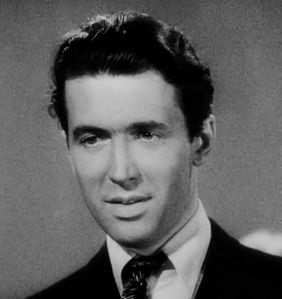
James_Stewart_in_Mr._Smith_Goes_to_Washington_trailer_cropThe opening credits roll and recognition comes with each name that pops on the screen. Jean Arthur, James Stewart, Claude Rains, Edward Arnold, Guy Kibbee, Thomas Mitchell, Eugene Palette, Beulah Bondi, H.B. Warner, Harry Carey, Porter Hall, Charles Lane, William Demarest, Jack Carson, and of course, Frank Capra himself.

We are met with the ubiquitous visage of Charles Lane calling in a big scoop on the telephone. A senator has died suddenly. The likes of Porter Hall and H.B. Warner fill the Senate Chamber presided over by a wryly comic VP, Harry Carey. Corruption is personified by the flabby pair of Edward Arnold and Eugene Palette while Claude Rains embodies the tortured political journeyman. The eminent members of the press include not only Lane but the often swacked Thomas Mitchell and a particularly cheeky Jack Carson.

To some people, these are just names much like any other but to others of us, linked together and placed in one film, these figures elicit immense significance and simultaneously help to make Mr. Smith Goes to Washington one of the most satisfying creations of Hollywood’s Golden Age from arguably “The Greatest Year in Cinematic History.”  The acting from the biggest to the smallest role is a sheer joy to observe as is Capra’s candid approach to the material.

As someone with a deep affection for film’s continued impact, it gives me great pleasure that stories such as Mr. Smith exist on the silver screen if only for the simple fact that they continually renew my belief in humanity, whatever that means. Because it’s an admittedly broad, sweeping statement to make but then again that’s what Frank Capra was always phenomenally skilled at doing. He could take feelings, emotions, beliefs, and ideals synthesizing them into the perfect cultural concoctions commonly known as moving pictures.

But his pictures always maintained an unfaltering optimism notably in the face of all sorts of trials and tribulations. He never disregarded the corruption dwelling in his stories–it was always there–in this case personified by the stifling political machine of Jim Taylor gorging itself off the lives of the weak and stupid.

The key is that his narratives always rise above the graft and corruption. They latch onto the common everyday decency, looking out for the other guy, and in some small way uphold the great commandment to love thy neighbor.

Politics have never been my forte. Like many others, I’m easily disillusioned by “politics” as this becomes a dirty word full of arrogance, partisanship, and scandal among other issues. It seems like the founding principles that laid the groundwork for this entire democracy often get buried under pomp & circumstance or even worse personal ambitions.

Although this film was shot over 75 years ago everyone who’s been around the block lives as if that’s the case then too and so they’re not all that different from today at least where it matters. Cynicism is a hard thing to crack when it runs through the fabric of society from the politicians, to the newspapers, all the way down to the general public. It’s not hard to understand why. Still, the genuine qualities of a man like Jefferson Smith can act as a bit of an antidote. He as a character himself might be a bit of an ideal, yes, but I’d like to have enough faith to believe that people with a little bit of Jefferson Smith might still live today.

Common, everyday people who nevertheless are capable of extraordinary things like standing up for what’s right when they know that no one else will or when they know all that waits for them at the end of the tunnel is disgrace. But the promise of what is beyond the tunnel is enough. That is true integrity to be able to do that and those are the causes worth cheering for when David must fight Goliath and still he somehow manages to overcome. That’s the chord Mr. Smith strikes with me. thanks in part to Capra’s vision but also Stewart’s impassioned embodiment of those same ideals.  He has a knack for compelling performances to be sure.

Time and time again James Stewart pulls me in. His career is one of the most iconic in any decade, any era no questions asked. There are so many extraordinary films within that context perhaps many that are technically or artistically superior to Mr. Smith by some  estimations, but he was never more candid or disarming than those final moments in the senate chambers as he fights for his life — clinging to the ideals that he’s been such a stalwart proponent for even as his naivete has been mercilessly stripped away from him.

In the opening moments, his eyes carried that glow of honest to goodness optimism, his posture gangly and unsure represented all that is genuine in man. Now watching those same ideals and heroes come back to perniciously attack him, he presides with almost reckless abandon. Is he out of his mind? At times, it seems so, but as he wearies, his hair becomes more disheveled, and his vocal chords have only a few rasps left he still fights the good fight. There’s an earnest zeal to him that’s positively palpable.

As our stand-in, Saunders (Jean Arthur) first writes him off as a first class phony or at the very least a political stooge ready to do another man’s bidding but she does not know Jefferson Smith though she does grow to love him. And Arthur’s performance truly is a masterful one because without her Smith would hardly be the same figure. She brings out his naivete by sheer juxtaposition but she also puts the fight back into him because he brought a change over her that in turn rallies him to keep on pushing. They’ve got a bit of a mutually symbiotic relationship going on in the best way possible. You might call it love.

Capra repeatedly underlines Smith’s honesty and genuine nature not only through numerous rather simplistic montages of Capitol Hill and the surrounding national monuments but in the very way his character carries himself around others. He never assumes a position of superiority. He’s always humble. He sees the inherent need to raise up young people well so that they might progress to become the leaders of tomorrow with a great deal to offer our world. He fumbles with his hat in the presence of pretty girls and holds his idols in the highest esteem. It’s all there on Stewart’s face and in his actions. We too comprehend the solemnity and the gravity that he senses in the office of the Senate.

While this was not Jimmy Stewart’s debut and it was only at the beginning of a shining career as has already been noted, it was in these moments that the cinematic world fell in love with him. He can’t be licked and for good reason. He was never one to give up on lost causes just like his father before him.

I guess this is just another lost cause, Mr. Paine. All you people don’t know about lost causes. Mr. Paine does. He said once they were the only causes worth fighting for, and he fought for them once, for the only reason any man ever fights for them: Because of one plain simple rule: Love thy neighbor. ~ James Stewart as Jefferson Smith

5/5 Stars

Review: Mr. Deeds Goes to Town (1936)

Gary_Cooper_in_Mr._Deeds_Goes_to_Town_trailer“He could never fit in with our distorted viewpoint, because he’s honest, and sincere, and good. If that man’s crazy, Your Honor, the rest of us belong in straitjackets!” ~ Jean Arthur as Babe Bennett
Mr. Deeds Goes to Town is a true treasure of idealism and Americana. People, especially now, may have many quibbles with the films of Frank Capra because he was the undisputed champion of feel good cinema that revelled in happy endings, stalwart honesty, and the little guy being permitted a fighting chance.

It’s no wonder that he made such good use of the likes of Gary Cooper and James Stewart because they embodied common, everyday American decency like few other actors could ever claim. Admittedly it’s easy to belittle his pictures as saccharine and sentimental to the nth degree but beyond that Capra always seemed to have an inherent sense of what America stood for or at least what he believed it could and still can stand for.

Every man deserves a certain amount of respect. You might call them inalienable rights like life, liberty, and the pursuit of happiness. And any force that tries to impede that is in simple terms an affront to all humanity. Because though we might all think we’re different, we share a lot more similarities than we often want to concede. It’s easy for us to forget that and that’s what happens here.

Longfellow Deeds (Cooper) becomes the overnight talk of the town because his rich uncle dies in a horrible car crash and bequeaths his wealth to his unsuspecting nephew. It’s the kind of good fortune that others drool over but in Deeds’ hands, he takes it in stride. He comes off as a real Yokum from the one horse town of Mandrake Falls but if anything Deeds is incredibly smart. He realizes he can have contentment out of the limelight and with very little. He enjoys quiet days oftentimes filling idle hours with his prized tuba and poetry that he writes for postcards.

But his new status as a millionaire forces him into the life that he doesn’t much want. Mansions and butlers, folks looking for handouts, ravenous newspapermen (and women) and conniving lawyers. Front and center is Mr. Cedar (Douglass Dumbrille). It’s these very individuals who see Deeds as a ridiculous outsider to be belittled and taken advantage of.

The brilliance of Capra’s movie is that he makes his hero, while simple and practical, still very astute. He may have his many quirks but there’s a surprising amount of business acumen and common sense flowing through his veins that consequently sends everyone else for a loop. He spies phonies from a mile of away and he looks to reform the local opera while finding ways to spend his newfound fortune sagaciously.

The only thing he’s not watching out for is a pretty girl, journalist Louise “Babe” Bennett (Jean Arthur) is ready to nab him, capturing his heart and simultaneously giving the whole city a front row seat to his exploits about town from quarrels with a snooty circle of poets to an evening jaunt ending on a fire engine. She’s a pro at spinning the tale into one of a first class boob, christening him the “Cinderella Man” that the whole world laughs at. They eat it up and they want to see him fall–this idiotic nobody suddenly being scrutinized by society for his good fortune. It’s all rather unfair but oftentimes that’s the way the world turns. It’s a cruel and sometimes curious place.

Because while Deeds grows fed up with this whole lifestyle, ready to leave it all behind him, Babe finds herself truly falling for her project since he models something she rarely sees in a man — real honest to goodness integrity that guides his every action. There’s never a false pretense or a veiled intention. What you see is what you get. Ironically enough, in this land of fakes, she’s the only “real” person he thinks he’s met. And she knows what’s been going on, going so far as to tell her editor that she’s quitting. There’s no way she can keep up the charade only injuring the character of the one she loves more and more.

But of course, everything dives into the depths of despair when Deeds is sent to trial calling into question his sanity after he resolves to use $18,000,000 to portion off acres of land to destitute farmers to work for him. It’s utter lunacy, isn’t it? The workers line up around the block leading into his home as he offers them a chance at a real life without starving children and food lines every day. This is what Cedar, Cedar, Cedar, and Blumenfeld are bringing him to court for or is it the fact that they want a portion of his fortune? Yes, that just might be it.

Anyways, far worse than that fate is the fact that he thinks his girl has betrayed him and she has in a sense, but she’s also devoted to him by now. She watches helplessly as her man gets railroaded. She began as the one to crucify him in the tabloids and now she prepares to watch him get crucified in the courtroom. In these moments, he does take on a Christ-like post watching all the proceedings without a word. He never makes any effort to defend himself after accusation after accusation is thrown his direction.

But the bottom line is that he does not have to let himself be destroyed. Being the martyr, in this case, is not his job and Capra lifts him out of the pit and resurrects him. The fact that Louise fights for him and numerous others including his cynical right-hand man Cornelius Cobb (Lionel Stander) and the local newspaper editor (George Bancroft), not to mention a legion of grateful farmers. So Mr. Deeds ends with a tumultuous courtroom finale befitting one of Capra’s finest pictures. It brims with goodness and bubbles over with humor that constantly underlines this feel good classic.

Though Gary Cooper represents Capra’s love of the every man with common decency and common sense, Jean Arthur remains equally crucial to the worlds that he creates. It has to do with her quality as an actor that allows her to play the snappy, witty, world-wearied types. Because she represents all the many people with that very same cynical streak and yet the very fact that her heart can be melted and her whole mindset can be changed suggests that there might be hope for all of us. That hope burgeons up from Mr. Deeds and leaves us with a warm feeling indeed.

4.5/5 Stars

The Circus (1928)

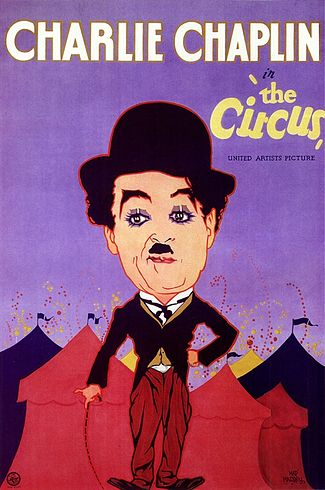
Chalincircus2b.jpgCharlie Chaplin always puts his Tramp in very simple situations that also happen to reap marvelous results both in the realms of humor and heartfelt drama. He follows up The Kid and The Gold Rush with the next iteration in the Little Man’s adventures which find him unwittingly joining the circus.

Initially, he gets caught up with a pickpocket and policemen which provides him an opportunity to go flying through funhouses with halls of mirrors and the like, the perfect fodder for a string of his best gags. Most notably giving an impeccable imitation of a mechanical man to fool the police. But his last sprint to get away from the clutches of the law takes him to the center stage where he becomes a welcomed bit of life to a rather droll piece of entertainment after he bursts onto the scene as a fugitive from justice, crashing into the stands. An unenthused audience is instantly crippled with laughter by every one of his accidental foibles. If only they had seen what he had been up to previously.

His accidental knack as a real-life clown gets him a gig in the main ring of the circus under the tyrannical showrunner (Al Ernest Garcia) who’s constantly bossing around his workers and abusing his meek daughter Merna who is also a part of the act as a tutu-wearing barebacked rider. This is where the film comes to its main storyline with Chaplin looking to do a few unassuming deeds for this girl in her horrible predicament while he himself begins to train as a show clown. But he proves to be terribly unfunny when he tries to be and it looks like he’ll back out on the street.

The major discovery is that he’s only funny unconsciously and so the opportunistic Ring Master looks to channel his innate comedy by hiring him on as a mere stagehand who nevertheless becomes the show’s main attraction. When the Tramp finally figures out what a sensation he is things are better–life is bright and cheery. But when a new man comes into the picture, a handsome tightrope walker, the vagabond’s demeanor begins to sour.  Still, he willingly gives up his own little bit of happiness for the girl whom he still truthfully adores.

Though the ending has a touch of the bittersweet, Chaplin does a masterful job of drawing up a straightforward yet rivetingly poetic tale involving his greatest incarnation. The Tramp has us fully involved in his story because he really is a marvel. Even when we’re not in stitches, it’s difficult not to smile at his very image.

In front of the camera, in many ways, it feels like business as usual. The story has euphoric moments of energy and charm underlined by dips into the dejectedness of lost love and destitution. This was always the rhythm of Chaplin’s work, But outside of his on-camera perfectionism, Chaplin’s world was thrown into turmoil to put it lightly.

He had a recent run-in with the IRS, acrimonious divorce proceedings from his co-star in The Gold Rush Lita Grey, along with the death of his mother, and a vicious fire throwing yet another wrench into the film’s production schedule. All told, it was delayed about 8 months in production purgatory, his hair grayed even more and he suffered a bit of a nervous breakdown.

Still, the final product perfectly personifies the humor that Chaplin always tried to capture rather like lightning in a jar. It’s those moments of organic, unconscious humor that can be found in a simple action. What makes The Tramp such a hilarious character is the very fact that he never for an instant seems to actually be trying to be funny.

Certainly, he’s light-hearted and mischievous but there’s a general import to his demeanor. He takes himself seriously, tips his hat, and tries to hold himself to a certain respectability. But despite his best efforts he can’t help but let out little hiccups and belches of chaos. He gives someone who deserves it a swift kick in the behind, scrambles every which way to evade a bucking donkey or gets trapped in a cage with lions and tigers, oh my! He vies for the affection of a girl the best way he knows how topping the competition on the tightrope and simultaneously tries to please each boss he has to the best of his abilities. They are very human responses even if he does it in a way uniquely attributed to him.

It’s the serious being made silly — the tragedy that is imbued with a silver lining — that is what The Circus gets to the heart and soul of. Because this hardly feels like a happy ending but the Tramp has done his good deed and walks away from center stage ready for a new adventure. As it turned out, we’d find him in the big city a few years later and he proved to never lose his sensibility for helping the burdened and downtrodden–namely a blind girl.

That is yet another reason to love that little man. His heart is large. Others give out of their abundance, but he gives out of his poverty, often offering everything he has–all he has to live on–and he does it happily so. Especially if it’s a pretty girl.

4.5/5 Stars

The African Queen (1951)

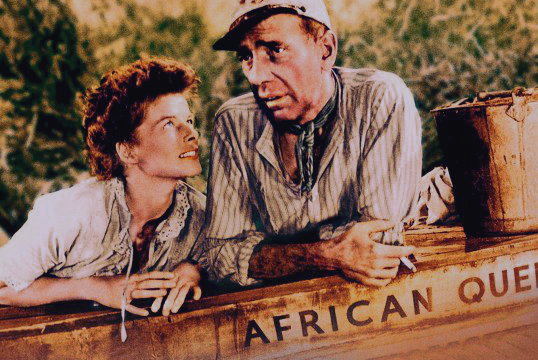
Hepburn_bogart_african_queen.png

And you call yourself a Christian! Do you hear me? Don’t ya? Don’t ya? Huh? What ya being so mean for, Miss? A man takes a drop too much once and a while, it’s only human nature. ~ Charlie
Nature, Mr. Allnut, is what we are put in this world to rise above. ~ Rose

Sometimes when great talent comes together we see the result and question where it all went wrong.  Sometimes it just works pure and simple. The African Queen is such a picture and it’s true that the greatest films function on multiple levels finding ways to exceed our expectations, enrapturing us with storylines and developments that are a far cry from what we first considered. Far from not disappointing, they join the pantheon of classics we would gladly watch over and over again. That is probably the highest praise you can give a picture and The African Queen is such a film.

It’s christened The African Queen because she is the vessel that Charlie Allnut calls his own and she is the very vehicle for this entire adventure. Emblematic of their own grit, ingenuity, and indestructibility. Because the narrative begins with missionaries and the hint of colonialism as Rosie (Katharine Hepburn) and her Reverend brother look to bring the Gospel to the peoples of the Congo.

But due to the outbreak of World War I, Africa too is thrown into the fray as the Germans look to overrun the countryside and sweep it into their clutches. Rosie’s whole peaceful existence of Sunday services and afternoon tea are brutally disrupted. The village is burned, her brother’s physical and mental well-being suffers, and in the end, she has no recourse but to leave her little slice of home behind.

Ironically, her savior is the uncouth, uneducated Mr. Allnut (Humphrey Bogart), a jack of all trades who formerly worked at a mine before it was commandeered by the Germans. He too is an inbetweener in this war, caught on the fringes and simply trying to survive. It’s in these very circumstances that these two diverging personalities are thrown together. And in an act of defiance and pure survival tactics, they do rise above their present circumstances.

Aside from mere plot points, the very fact that the film was shot prominently on location like John Huston’s previous classic Treasure of Siera Madre benefits the film greatly because there’s an authenticity to the entire undertaking that could never be fabricated. You see the waters and the jungles. You’re almost suffocated by the sheer humidity and apprehensiveness of every successive rapid they must ford because this feels like more than a movie. The dividing line between fact and fiction in many ways feels paper thin.

Huston had some wonderful black and white films including The Maltese Falcon, Key Largo, and Sierra Madre but it seems rather fortuitous that The African Queen was made in color given the pedigree of cinematographer Jack Cardiff on such earlier vibrant classics as Black Narcissus and The Red Shoes. He brings a certain colorful exoticism to the frames that feels foreign to the eyes and yet still strangely beautiful. It all works so exquisitely.

Likewise, this is not simply a script penned by film critic, author extraordinaire James Agee with direction by Huston and the talents of legendary screen icons like Humphrey Bogart and Katharine Hepburn. Yes, those are the separate entities that are joined together in this endeavor but they become far more than the sum of their parts.

Agee’s script which Huston also got partial credit for sings with life because of the two individuals it draws up and the world it dares to place them in. Rosie Sayer is a prim and proper missionary in Africa who nevertheless has a fearless streak brought to life so spiritedly by Hepburn as only she could play it. There’s a wonderful stubbornness that’s undeniable but remove the layers and you have the same giddy passion that crept into some of her earlier screwball performances. Mr. Charlie Allnut, as such, is perhaps the most lovable Humphrey Bogart has ever been. Allnut is content just getting by and surviving and he’s good at it — trying to find little bits of comfort in this world medicating himself when gin and a nice cigar every now and again.

But while he pushes Ms. Sayer’s to be practical and lose some of her stuffier tendencies, she, in turn, prods him to step out and do something worthwhile with his life. And it’s not simply about their romance which begins as a small feud, becomes a friendship, and evolves into a frenzied relationship full of affection. Their romance is being forged as they hang onto the faint objective of driving The African Queen into the ominous German gunboat the Louisa. It feels like a small battleground amidst the chaos of World War I but it all depends on your perspective because for Rosie and Charlie this is really is the very pinnacle of their existence. It involves their very will to survive.

They cling to this purpose and the joy of their adventure is the very fact that they are able to see it to the end, in the name of their country but also for their own vindication. And the telling aspect is that they both have been transformed by their experience. They are not so much forged by fire as the jungles that engulf them and the wildlife, foes, and raging falls that all look to be their undoing. And yet this unlikely pair, these polar opposites, prove to be the most formidable allies you could draw together.

The African Queen also has its own forays into spirituality and although they do not remain front and center for the entire film, there is a certain import to them. In a particularly formative scene, Mr. Allnut calls into question the other’s Christian faith which seems at the very least unfeeling if not hypocritical. But you could say the main conflict of this film is voiced by Charlie. It’s human nature.

Charlie has grown passive towards it while Ms. Sayers affirms that humanity is meant to “rise above” and this statement can be taken spiritually or maybe even with a tinge of imperialism (as man must tame the vast wastelands of his environment and such).

But there could also be a more universal ring in her words, suggesting that humanity must rise above every trial and tribulation whether personal, environmental, or social. Any number of these interpretations have stock. The question to ask is where does that will come from? It seems ludicrous to say it comes from within, closer still to say it comes from others, and maybe there’s still something broader going on in the background. No matter your opinion on such matters, The African Queen is still without question, one of the grandest, most rewarding romantic adventures hewn out of 1950s Hollywood.

5/5 Stars

The Princess Bride (1987)

the princess bride 1.png

Few films can please the restless masses that inevitably gather at some unfortunate souls home for a movie night. Because as varied and diverse individuals of a myriad of backgrounds we very rarely agree on anything especially given the proliferation of content that is available to us at any given time. But most can agree on one thing. The Princess Bride is one of the great crowd pleasers of its generation and for good reason.

If quotability was the sole parameter for a great movie then The Princess Bride has few equals and it also happens to be the most fun you’ll have in a single sitting because all that it does, it does with an unquenchable zeal. There’s a spirit to the film full of romance and humor and adventure, even playing to those who will forever be skeptical.

Adapted from his own novel, the venerable William Goldman carries over his framing device of a grandfather reading to his sick grandson and it works marvels to bring us into this tale. Especially when the two actors in question are a precocious Fred Savage (Pre-Wonder Years) and the inimitable Peter Falk (Post-Columbo) slipping seamlessly into the role of a grandpa with a twinkle in his eye.

The story unravels like many great fables with a love story torn asunder by circumstance. A young man who goes off to seek his fortune only to die (or more likely take on the identity of the Dread Pirate Roberts) and a young maiden who is made a princess and remains unhappy all the same without her true love. Of course, she does not understand the nefarious intentions of her soon to be husband Humperdinck nor that her love is going to great lengths to find her. And amidst the fantasy, swordplay, trickery, and rampant humor, love conquers all as it has a habit of doing in fairy tales with everyone of note living happily ever after.

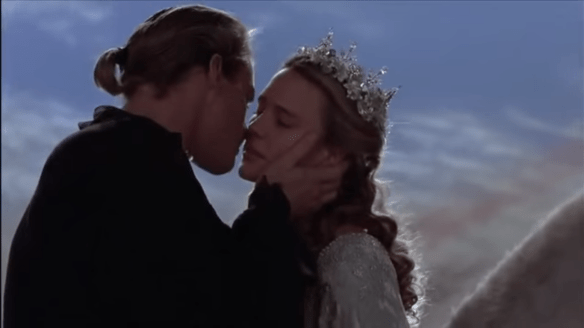
This unabashed tale also boasts near pitch-perfect casting. Cary Elwes as Westley does embody a certain quietly confident charm that while not quite Flynn or Fairbanks still manages to guide the film with similar charisma. He can be the hero, handsome and witty, made to play perfectly off all the intriguing figures who inhabit this fairy tale.

In her debut, Robin Wright glows with a radiant beauty and stubborn defiance that’ s enduring and which in many ways has remained a defining moment in her career and it’s certainly not a bad film to be forever remembered for. Meanwhile, Mandy Patinkin plays the vengeful Spaniard Inigo Montoya with the perfect amount of bravado, honor, and charm in his lifelong search for the six-fingered man who killed his beloved father. He’s the perfect accompaniment for Andre the Giant’s lovable brand of brawn and Wallace Shawn’s hilariously irritating turn as their cackling leader.

But what makes the film even better or the odd sorts who pop up here and there including Miracle Max (Billy Crystal) a curmudgeon wisecracker like no other and The Impressive Clergyman (played by the oft-underrated Peter Cook) who single-handedly ruined the solemnity of wedding vows for all eternity.

Rob Reiner is rarely considered a masterful director but if anything it’s easy to make the case that The Princess Bride remains years later his greatest achievement because it has so much life provided indubitably by Goldman’s superlative script and the very figures who dare to fill his world. And Reiner captures it all with a clarity that comprehends the humor but very rarely goes for that at the expense of characters or story (unless they are villains or Billy Crystal). After all, this isn’t a Mel Brooks film.

By this point, it’s a disservice to call The Princess Bride a parody or mere homage– simply a cult classic that’s garnered widespread affection. The reason people love this film is connected to those aspects but also the very fact it stands on its own.

As Falk sings the praises of the story early on, so we can affirm, it has “Fencing, fighting, torture, revenge, giants, monsters, chases, escapes, true love, miracles…” If that’s not exciting nothing is and it’s quite easy to forget that the film is continuously hilarious but there’s something remarkably moving about its story.  It plays the comedy well but simultaneously builds its own road through the mythology and fantasy of fairy tales that have captivated all people for eons.

In The Princess Bride, there’s not simply roots in comedies like The Court Jester but swashbucklers like The Adventures of Robin Hood or the magical journeying of the Wizard of Oz. It covers the spectrum of entertainment which is part of the reason it’s so satisfying.

It has scenes, moments, lines, those little idiosyncrasies and quirks that have left an indelible mark on viewers and as a result our culture as a whole. Lines like “As you wish,” “INCONCEIVABLE,” or best yet, “My Name is Inigo Montoya, you killed my father. Prepare to die.” Each has its special place within the context of the film and is still imbued with that same meaning hours after.

If I write about this film more from my heart than my head you’ll have to forgive but it truly is a weakness. I can envision being little Fred Savage enchanted by the sheer magic of fairy tales. I wouldn’t begin to care about romance until years later but swashbuckling and humor always had me enthralled and they continue to capture my imagination to this day–no more powerfully than in The Princess Bride.  It’s sheer magic in all the best ways.

5/5 Stars