Pandora’s Box (1929)

pandoras_box_filmThe Greek gods created a woman – Pandora. She was beautiful and charming and versed in the art of flattery. But the gods also gave her a box containing all the evils of the world. The heedless woman opened the box, and all evil was loosed upon us.

It’s often extraordinary the international platform that silent films afforded their stars. Pandora’s Box is one of the now lauded pinnacles of Weimar cinema and yet its main starlet — its acclaimed cover girl — was an American. With her bob hairstyle and vivacious sensuality, Lousie Brooks became synonymous with the Lulu character she portrayed in this film. It was this persona that caused her to rival other noteworthy contemporaries including Marlene Dietrich and Greta Garbo.

Except she differed in that Hollywood was not her first choice. Hollywood was not what made her a star. In fact, she shied away from that route, instead opting for other avenues altogether. That’s how she wound up partnering with director G.W. Pabst in not only Pandora’s Box but another classic, Diary of a Lost Girl. Then when she had enough she retired from the trade allowing her legacy to be championed by film aficionados years later.

The film in itself is really a bit of a parable taking inspiration from Greek mythology and sectioned off into Acts like a stage play. Pandora’s Box, is of course, the titular object that released all the evils into the world leaving only hope behind. The parallels are planted early on as Lulu lives life with a flirtatious vitality but that’s precisely what leaves a wake of destruction in her path. She woos every man who comes her way, a dancer and performer for all who will lend an eye. As of right now, she is the mistress of a well-to-do businessman named Schlon but he realizes that he needs to protect his image.

He plans to marry another woman but Lulu finds a way to unwittingly needle her way back into his life forcing his hand and ultimately winning him over again. But the conquests that come her way never last and she truly is a destructive temptress — a landmark femme fatale — she cannot help but flaunt her sexuality. She’s energetic, pernicious, meretricious.

The turning point of the film comes at Lulu’s trial sequence for the deed that she unwittingly perpetrated. The prosecutor stands over her wagging his finger as she’s veiled in somber shades of black. Her journey could end there but instead, she is granted another reprieve and escapes with two companions to London.

Not being bogged down by Production Codes of any kind, Pandora’s Box plays with some surprisingly frank themes most obvious of those being Lulu’s overt sexuality as well as adultery, prostitution, scandal, and so many other taboos. However, what makes the film quake with emotion is the very fact that Lulu is hardly an evil individual. Misled, immoral, and destructive yes, but it’s easy to feel sorry for her. Hers is the ultimate tragic narrative because while she assuredly ruins other people, she’s only injuring herself even more so. She dredges up so much hurt and elicits so much violence. All her attempts at love are only met with brutality.

Through it all, we follow faithfully even though we know from the outset it’s all for naught. And that’s a credit to Louise Brooks’s portrayal because there’s no doubt that she has that special something that makes you turn an eye and look. Her performance runs the gamut of emotions so uninhibited, lively, and free. There’s a universal vim and vigor to her that still feels fresh to this day in an otherwise archaic mode of filmmaking.

The amazing thing is that she probably could have been a bigger star than she actually was. She never really realized the potential that she had like a Dietrich or a Garbo but that’s not what she wanted. Still, the notability came her way anyways. Sadly, real life and the cinematic seem closer than you might expect. Her life was hardly as tragic as a film but you wonder if she ever found love chasing after men as she did.

4.5/5 Stars
Review: 8 1/2 (1963)

8.5 1.png

Is the subject of this film a religious one? – A Religious Leader 

Yes, well, in a manner of speaking. – Guido

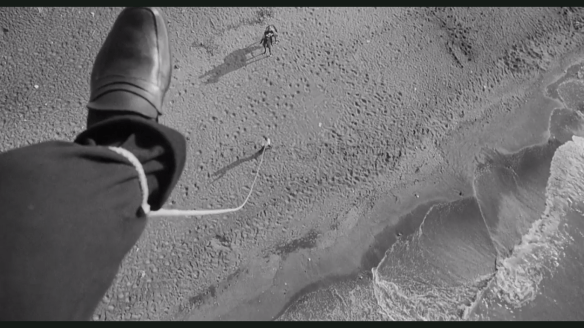
It famously opens with a dream. Our main character stuck in a silent traffic jam, completely disillusioned by the scene around him until he’s able to escape everything inhibiting him and soar into the upper echelons of the atmosphere. But it hardly lasts. Soon he finds himself tethered, being brought back down to earth.

8.5 2.png

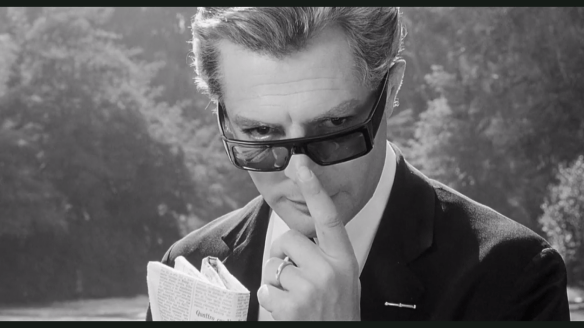
Our protagonist of sorts turns out to be Guido (the famed Italian icon Marcello Mastroianni), a film director who is going through a spell of director’s block. His most recent activities include an extended stay at a luxury spa at the behest of his doctors. It’s also early on in the film that someone asks him if his next film is also going to be one devoid of hope. It’s a very quick statement but in some sense, it sets the groundwork for Fellini’s entire film.

And it is a very personal film and a fascinating exploration of the art of filmmaking — the thing making it the most compelling is the strange suspicion that parts of Fellini himself dwell inside of Guido. Perhaps Guido shares a bit of his philosophy and stance or more precisely Fellini is like his main character.

The film within a film soon becomes evident and in that sense, it’s also a personal picture. Its title being derived from the number of pictures the Maestro had directed thus far. And numerous meta qualities come to the fore, most obviously when Guido is going through the screen tests his producer (Guido Alberti) and wife Luisa (Anouk Aimee) among those viewing the proceedings.

But going back to that issue of hope, the film’s finale has always been striking to me but I realized that it takes on new meaning put in the context of higher issues altogether. In some respects, Guido or Fellini, whichever you prefer, is trying to derive some sort of higher meaning, whatever that means to him.

8.5 4.png

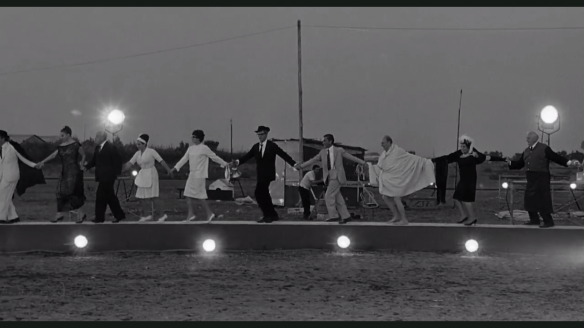
That’s in part why he has his legions of characters join hands in an almost communal dance of absurdity. Simultaneously, a journalist can be heard throwing his questions out, “Are you for or against eroticism?” and in the same breath, “Do you believe in God?” Because this is Fellini’s answer — the solution he has drawn up for himself. There is a sense of grandiose absurdity that is full of dreamscapes — where the distinction between reality and fantasy hardly means anything. Because in the eye of the beholder they are hardly different.

On purely a level of spectacle, it’s indubitably a fascinating set-up. Fellini is known for his quintessential style. To be Felliniesque is to be wrapped up in the surreal and the fantastic. But the philosophical conclusions that go hand in hand with such a provocative approach to film are rather disheartening. If this is part of what Fellini is trying to grapple with as it pertains to love and ultimate truth then 8 1/2 does fall back on a rather dismal ending.

As Guido explains to the man of the cloth, he is looking for some flash of understanding, some obvious moment of truth, like Saul at Damascus. He, like all his peers, carries the foundations of a Catholic upbringing. The religious authorities tell them that there is no salvation outside the church. His strict Catholic school told him what was wrong. Likewise, Guido plans to have a spaceship in his next film — humanities “new Noah’s Ark.” And it’s true that space exploration has been the final frontier, a beacon of potential hopes and truths. You see that in later works like 2001 and Solaris.  However, Noah’s Ark was also a vessel to escape destruction as much as it was a ship of exploration.

In drawing other cinematic comparisons, Fellini’s film revolves around a pointless MacGuffin (the phrase Asa Nisi Masa) rather like Welles famed Rosebud. Truthfully, this is a comedy in the same way perhaps Citizen Kane is a comedy. In a similar way, Guido seems isolated, but his mind, in particular, is twisted up with fantasies.

The most divisive scene in the film is yet another fantasy conjured up by Guido that is either extraordinary humorous or sadly indicative of his state of being depending on how you view it. He dreams himself in the stead of all the women he has crossed paths with thus far, all ready and waiting on his whim — his personal harem of sorts — totally and completely objectified for his pleasure. Again, it’s played for truly comic effect but what are the implications?

8.5 3.png

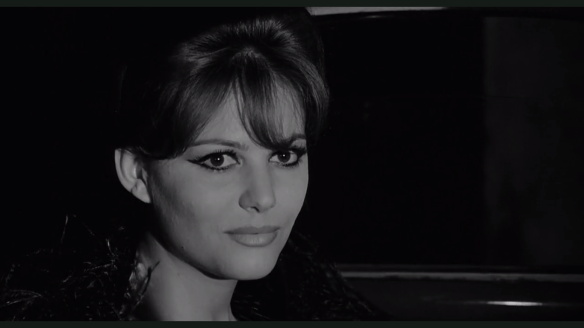
As the eternal beauty Claudia (Claudia Cardinale) notes, “He doesn’t know how to love.” She speaks of Guido’s protagonist but as the meta-ness suggests, this protagonist is Guido himself and going down even a layer further maybe even Fellini too. It’s precisely these problems that tie back into Guido’s disillusionment. “There’s no part in the film. And there’s no film. There’s nothing anywhere,” he says to Claudia.

Chaos and nothingness. True perfection is nothingness. His final conclusion? Life is a celebration. Let’s live it together. In essence, it’s true but the carnival showmanship and parlor tricks cannot obscure the bottom line here. As Francis Schaeffer once noted someone like Fellini “has no way to distinguish between right and wrong, or even between what is objectively true as opposed to illusion or fantasy.” That’s a terrifying world to come to terms with. During filming, Fellini supposedly kept a note on his camera to remind himself that this was a comedy film. But much like Citizen Kane, perhaps there’s a need to label it a tragicomedy. You cannot deal with such issues without elation being matched with some amount of melancholy.

5/5 Stars

Review: The 400 Blows (1959)

400 blows 1.png

Being a great believer in context,  it was a wonderful thing watching 400 Blows once more because I felt like I knew this man behind the camera so much better and I knew this character Antoine (Jean-Pierre Leaud) even better than he knew himself. After all, he was just coming into his own in this initial film.  I was also aware of some cameos including Francois Truffaut himself, Jean-Pierre Brialy and of course Jeanne Moreau, all important forces in the French New Wave movement.

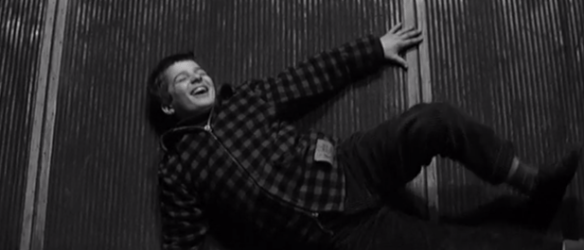
However, one the most powerful things is the degree of foresight we gain about Antoine Doinel. All the things that make up his life at this juncture in time have repercussions later on that Truffaut continued to examine as he matured. We can see the gears turning as the boy develops as an adolescent. He skips out on class to go to the cinema and the carnival. He purloins a bottle of milk out of thirst, steals little trinkets from the ladies room and finally a typewriter from his father’s work. He receives the ire of his teacher and goes home to the cramped conditions and turbulence of his home life. His mother and step-father are constantly bickering. His mother is having an affair. It’s not a very happy life or a firm foundation for a boy to grow up in. And it shows.

In many of these moments, the autobiographical aspects come to the fore. Before Antoine’s story was simply a depiction of realism but as time goes on it becomes more obvious that Truffaut is being very transparent in showing bits and pieces of his own experiences. What’s striking is that this is hardly a bitter film. Somber and melancholy, yes, but it hardly ever seems to cast blame. It shows the brief moments of reverie along with the pain and that’s why I am a great admirer of Truffaut. He’s a deeply heartfelt and personal filmmaker, no more evident than in The 400 Blows.

400 blows 4.png

Antoine Doinel is a vagrant and pretty dismal kid, getting in all sorts of trouble and yet Truffaut makes us sympathize with him and to an extent we see the director’s point of view too. He’s the one trying to fall asleep while his parents bicker about what to do with him. He runs away from home and relies on the charity of a friend. He’s being locked up in a jail cell on his way to juvenile detention. He talks to a psychologist candidly about his parents never trusting him. All those moments have the power to move.

And the film is so easy to watch, so simple and wonderful and honest and unassuming, it’s almost hard to remember how influential this film was for not only jump-starting the French New Wave but for rejuvenating cinema in general. Hollywood didn’t make movies like this. That’s all I had ever seen for the longest time. But the likes of Truffaut, Godard and even Renoir, De Sica and Rossellini revealed to me that there are numerous ways to make an impassioned cinematic experience.

400 blows 3.png

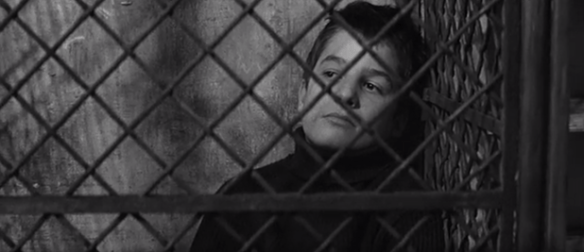
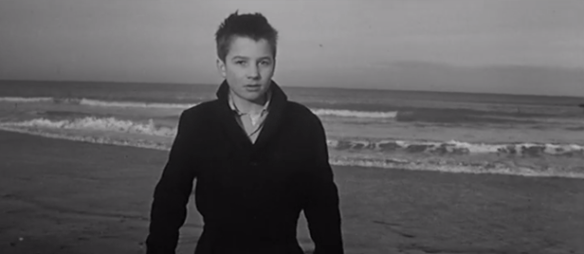
As always, my mind returns to the climatic freeze frame of The 400 Blows. It remains with me and part of its iconic status is undoubtedly due to how it sums up this boy so perfectly. There’s a sadness in the eyes that without saying anything denotes all that we have already seen. It’s the perfect summation of his story thus far and with that look, it’s difficult to forget his hardships–his flaws too. Perhaps it allows us to extend grace to him because we can see firsthand that he’s in dire need of some. He has not been offered much his entire life with true love and affection being traded for punishment and biting remarks. True, his story does not end here but it’s a telling chapter of his life. Arguably the most formative years for the rest of his existence.

Within the storyline, Truffaut includes passing references for his love of the cinema and even suggests his promise with his writing composition though his teacher accuses him of plagiarism. But from these troubled roots came a man who loved movies to an extent that few others could claim. He was passionate both as a critic, champion, and creator.

Thus, it makes perfect sense that this film was dedicated to the memory of Andre Bazin, the noted founder of Cahiers du Cinema. Truffaut undoubtedly owed a tremendous debt to the magazine and its editor but he also elevated it with his own amount of passion. That same passion comes out in The 400 Blows and really all the subsequent films he made before his death. His movies are wonderful because each one shows that he genuinely cares about the material on its own individual merit. That is the kind of director that I want to watch.

5/5 Stars

Divorce Italian Style (1961)

Divorceitalian.jpgI never thought I’d get so fed up with hearing the name “Fefe.” But it’s true. There’s a first time for everything. In fact, Fefe is the name of our main character played so magnificently by Italian icon Marcello Mastroianni. In my very narrow view, he still very much epitomizes Italian cinema for me.

As for the film, a Sicilian Baron Ferdinando finds himself in rather an unfortunate conundrum — at least from his point of view. He relates through voice-over his family dynamic, with his parents, his soon to be engaged sister, his doting wife (Daniela Rocca), and of course his beautiful ingenue cousin Angela (Stefania Sandrelli). Aside from not being particularly enthralled with married life, the bigger problem is that Ferdinando is infatuated with Angela. He can’t take his eyes off her.

For those who are paying attention this comedy from director Pietro Germi, at times feels strikingly similar to the screwball comedies of Classic Hollywood where men such as Preston Sturges made light work of society by skirting censorship and building a barrage of gags almost to the point of being incomprehensible. But they might also conjure up comparisons with the darkly funny Ealing comedies out of England. And it’s true that films like Divorce Italian Style also carry a very particular name, “Commedia all’italiana” or comedy in the Italian way.

What becomes evident in a film such as Divorce Italian Style is the pointed attack on Italian social mores — the very framework that the culture is built on — and all involved are poking fun. Morality, class distinction, even the institution of marriage, are all dissected satirically as our protagonist goes through his life dreaming of knocking his wife off and living happily ever after with Angela — a girl that shares his affection — if only society didn’t say otherwise (she gets whisked to a life in a convent to maintain her purity).  Not to be deterred, the Baron attempts to hitch his wife up with a suitable suitor and as the shameful scandal finally breaks over his wife, he secretly jumps for joy. He’s getting a step closer to what he wants.

Meanwhile, the men about town all ogle at every girl that happens to walk by. Fefe’s old man is constantly harassing the maid, and more than once he walks in on his sister and her beau making out passionately.  There’s even a theatrical screening of Fellini’s La Dolce Vita (also starring Mastroianni) which literally seems to break any form of censorship in the town. The crowds flock to it joyously — men and women alike — because they want to see the lavish romance projected up onto the screen.

Mastroianni is not surprisingly a long way off from his debonair lovers taken the likes of La Dolce Vita, La Notte or 8 and 1/2. He goes through the film with a certain comedic despondency. He’s hardly a real figure. Comic and dismal with overblown ideas of how to make his existence invariably better. It’s quite a display because while it’s easy to laugh it’s also rather pitiful.

So Divorce Italian Style is perhaps even more audacious than the screwball comedies of the 30s and 40s. Because it gives the plotting Fefe the “happy” ending he was hoping for. It actually gives it to him, but the comic (or sad) thing, in the end, is that his girl is already playing footsies with another man. You see if we look at what is going on here,  he’s never going to find contentment. The ultimate irony, if there was a sequel, is that it would probably show Fefe actually trying to kill his wife because she’s cheating on him. Then it wouldn’t be so funny.

Yes, the strict societal pressures put on the members of this Sicilian community undoubtedly deserve to be questioned. There is so much obvious hypocrisy bubbling up through the layers of society and it makes for provocative comedy. But also there’s something to be said for living life under some sort of moral framework. Otherwise, life is purely about our pleasures, what makes us feel good, what our desires are and oftentimes those fail to regard what is beneficial for others. Needless to say, I’m partial to “Marriage,” not “Divorce” Italian Style — or any other way for that matter. However, I won’t even try to tackle the whole marrying your cousin thing. This is a comedy after all and Stefania Sandrelli is quite pretty. I don’t blame “Fefe” too much. He’s only human.

4/5 Stars

Solaris (1972)

solaris 1.png

Now I can finally say that I have entered the cinematic world of Andrei Tarkovsky and I am better for it. Solaris somehow traces the lines of a paradox rather remarkably. It’s a sprawling epic of nearly 3 hours and yet hardly ever feels overlong. It moves through its rhythms contemplatively but never feels too slow. And though it’s a sci-fi story, it never loses sight of its human components which remain its guiding light to the end.

To Tarkovsky’s credit, he’s able to retain the film’s continual ability to mesmerize again and again and he never lets up. I know for certain viewers this will be dull monotony–even for me at times–but for others, it’s pure magic. Repeatably fascinating for both its enigmatic mysteries and revelations. Because it delivers both up willingly to the engaged viewer.

Like any master painter, Tarkovsky begins the film by laying down his base coats. We’re introduced to enigmatic psychologist Kris Kelvin while simultaneously accustoming ourselves to the director’s naturalistic imagery — glossy and distinct. It’s in these opening moments at the home of his father back on earth where the audience gains more insight and Kris prepares himself to mount a journey to the space station orbiting the planet Solaris. Only three crew members still survive there and the psychologist is being sent to check in on them and continue to expand the reaches of human knowledge. That’s the idea at least.

However, when Kris gets to the space station it’s far from welcoming, austere and dilapidated thanks to poor upkeep. Now only two crew members remain, the curiously odd Dr. Snaut and the cold cynic Dr. Sartorious. Both men will give Kris very little information about the general state of affairs. And he only learns later that his colleague Gibarian committed suicide for some inexplicable reason.

But the film enters its most perplexing stages when Kris receives a visit from a mysterious woman — her name is Hari and for reasons unknown to us, Kris is very close to her. And his emotional state from that time forth is constantly being manipulated by the presence of this special visitor. He’s frightened of her. Then in love and completely devoted to her well-being. And despite the adamant insistence of his colleagues, he will not believe her to be an apparition. He holds onto the fact that this woman in front of him who is constantly self-destructive and in the same instance totally devoted to him, is the woman he knows and loves. But the question is not so much whether or not that is true, but what Kelvin will do with all that has been thrust upon him as a result.

On the whole, Solaris is a visual treat but not due to grandiose visions of space.  Instead, Tarkovsky blends color and sepia footage into a patchwork while juxtaposing the environmental beauty of underwater vegetation with the dour interiors of the space station. And the suspension of disbelief is maintained through the use of simple special effects and the underlying fact that this film is not really reliant on pyrotechnics of any kind. It’s about people. An equally remarkable observation is the fact that Tarkovsky seems to be self-assured enough to have his characters play their roles with relative restraint. Numerous times they face away from the camera. In other films, directors would be afraid of such a tactic, but here it only works to heighten the amount of intrigue.

It’s a philosophical and psychological study that happens to take place on a space station. And that’s really like any of the great sci-fi movies of our times. They’re not really about science-fiction or technology or robots or any of that. They’re only another mode to tell the most human of narratives even in the outer reaches of the galaxy or in futuristic worlds.

It’s also highly reductive to call this Tarkovsky’s 2001. In deference to both films really. In fact, the director did not see Kubrick’s film until well afterward and I think I too would side with his conclusion that 2001 is a little bit too “sterile.” While 2001 is a decidedly grand narrative of exploration and technological advancement, you can easily make the case that Solaris is a film most precisely about the incredibly human emotion of love. Although it’s also about the human search for some kind of truth much in the same way as its predecessor, it’s also far more personal. Solaris feels more intimate and true — perhaps even more closely tied to some of Ridley Scott’s themes in Blade Runner. Particularly his examination on what exactly separates man and machine when they share striking similarities.

As far as sound goes, there is a score to Solaris, but Tarkovsky only utilizes it at the precise moments, more often than not foregoing typical music for either electronic distortions or perhaps even more boldly complete silence. He also gives nods to the great Flemish master Pieter Bruegel using his work in the set designs inside the space station.

Truthfully, it’s easy to peg Solaris as a pessimistic movie but it’s as preoccupied with morality as it is with the pursuit of knowledge. It’s as much about the innate human desire for love as it is psychological torment. And its ending strikes a note of poignancy and bitter despair in the same instance.  But if you want profound cinema that stays with you and marinates in your mind then look no further. I will certainly be returning to Tarkovsky sooner rather than later.

5/5 Stars

Tokyo Drifter (1966)

tokyo-drifter-1

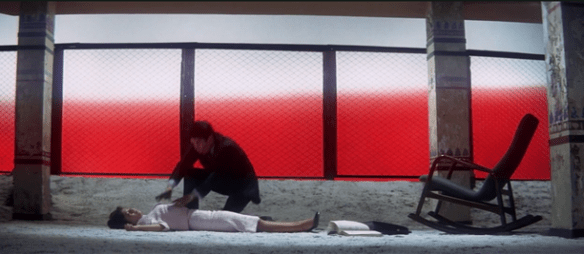
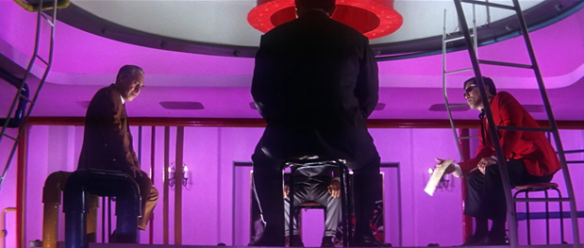
Seijun Suzuki’s Tokyo Drifter is a paramount attraction of 60s camp packaged in a yakuza   B-film. It opens with highly stylized black and white imagery injected with almost psychedelic shades of color that never again leave the film’s palette. Its setting is Tokyo, Japan — but far different than any Tokyo humanity has actually seen in recent history. As such it does not exist and never has. Only in the mind of the director. It’s a swinging place of ultra-cool yakuza, jazzy vibes, and a fantastical atmosphere. Oddly indicative of the shoestring budget it was hewn from and still somehow invariably engaging.

tokyo drifter 2.png

We spend much of the film following in the footsteps of our eponymous lead Phoenix Tetsu (Tetsuya Watari), a yakuza hitman whose every effort to go straight is being challenged and impeded on all sides. He cannot escape the life that defines him and finds himself continually caught in a web of yakuza gang wars that will not give him a moment’s peace. There are gunfights, brawls, even a bit of swordplay. He has a romantic flame, a sullen nightclub singer who serenades the world with her melancholy tunes, but even she cannot redeem his existence. There are always hitmen either after his life or looking to drag him back into the fray that he threw off.

But going into plot points and character arcs already strays too far from what makes this film enjoyable. There’s often the heightened tension found in many of Sergio Leone’s greatest Spaghetti Westerns here, employing many of the same stylized characterizations. The fact that our main protagonist announces himself through song and whistling strangely feels reminiscent to “Harmonica” (Charles Bronson) in Once Upon a Time in the West. But this is a different beast. Rambunctious, chaotic and vibrant as it is.

tokyo drifter 3.png

Once more Suzuki is gifted in taking the mediocre — a narrative with very little to it — then instilling it with all sorts of energy similar to other inspired mavericks like Sam Fuller. But by the end, he’s transformed the narrative into an incomprehensible bedlam blessed with his own wickedly stylish aesthetic. There are sweet suits and shiny wheels. Nothing feels the least bit realistic. And it’s filled to the gills with surrealist situations conceived out of Suzuki’s own whimsical vision. Still, all the while it’s influenced by pop art and to some degree Technicolor musicals of the 1950s. It’s a sight to be sure, leaving its indelible mark on the b film niche. If anyone says low budget gangster flicks are the dregs of cinema, they’ve obviously never been acquainted with Seijun Suzuki

3.5/5 Stars

La Ronde (1950)

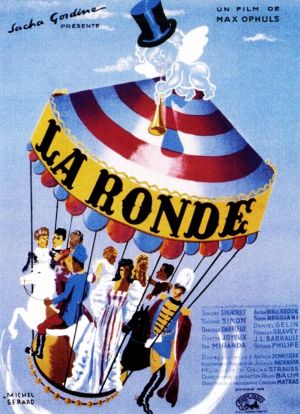
LarondeposterIf you know anything about director Max Ophuls you might realize his preoccupation with the cycling of time and storyline, even in visual terms. He initiates La Ronde with a lengthy opening shot that, of course, involves stairs (one of his trademarks), and the introduction of our narrative by a man who sees the world “in the round.” He brings our story to its proceedings, introducing us to the Vienna of 1900. It’s the age of the waltz and love is in the air — making its rounds. It’s meta in nature and a bit pretentious but do we mind this jaunt? Hardly.

It’s many vignettes of love and romance take us through drawing rooms and bedrooms, past bacchanalian gardens and statues involving a menagerie of figures from prostitutes and soldiers to poets and actresses. By the standards of the 1950s, it’s a highly overt and provocative film — even cheeky. And despite being set in Austria, it undoubtedly brings to mind the Rococo work of the likes of Fragonard or even Watteau’s “Embarkation for Cythera.”

Ophuls seems fascinated with the metaphor of carousels because, in a way, everything turns. Life is constantly of a cyclical nature just as film and the stories it tells always fluctuate from high to low and so on.

When I began my fledgling investigation of world cinema Simone Signoret and Simone Simon were two names that I egregiously intertwined. Now, forced to confront my confusion, I can say definitely that there is a clear distinction in my mind. They stand alone and really this is a film with some of France’s greatest female icons with Danielle Darreiux being another name of note.

However, this is hardly a story about a certain character, but more the themes running through the story and it gives Ophuls the means to exert his artistic mores. His shot lengths indicate just how assured he was in his work — commanding every detail.

When you think he’s going to fall back on a cut and move on, he finds yet another way to keep the shot going. It really is remarkable and it becomes noticeable just how continuous this film is at times. He’s also very much in his element with figures pirouetting on the dance floor. It’s only matched by the elegantly whimsical refrains of the score.

La Ronde actually brought to mind the biblical allusion from Ecclesiastes sung about so iconically by the Byrds. There is a season turn, turn, turn. Except in Ophuls’ case, he seems only interested in the idea of this carousel of romantic encounters. He never actually looks at the inverse of these fluffy tete-a-tetes — what happens when people are alone or their hearts are broken.

It’s very convenient actually, and it allows the film to maintain it’s light, airy quality. For instance, it never looks at the underlining issues that become apparent in a film like A Brief Encounter (1945). Still, I suppose its exquisite elegance and manners are meant to cover up the more base qualities of mankind. In the end, everything goes round and round. Whether or not there is a purpose to it all is for the viewer to decide.

4/5 Stars

The Bicycle Thief (1948)

Enzo_Staiola_in_Bicycle_ThievesThe original title in Italian is Ladri di biclette and I’ve seen it translated different ways namely Bicycle Thieves or The Bicycle Thief. Personally, the latter seems more powerful because it develops the ambiguity of the film right in the title. It’s only until later when all the implications truly sink in.
Vittorio De Sica’s film is unequivocally emblematic of the neorealist movement.The most notable traits are the images taken straight off the streets of Rome, depressed and forlorn as they are. The setting truly does act as another character, adding a depth to the film that cannot be fabricated. You can’t fake some of these scenes either whether it’s Antonio scavenging for his bike in the pouring rain or the sheer mass of humanity that is found in places like the Piazza Vittorio.

It’s all there out in the open, with an apparent authenticity. In its simplicity, it feels like a real story with real people. This too is aided by De Sica casting non-actors in the main roles. In fact, Lamberto Maggiorani’s gaunt face is somewhat unremarkable (sharing some resemblance to Robert Duvall). Put him next to a poster of Rita Hayworth and it becomes even more evident. Still, he too feels human in a way that Hollywood stars just cannot quite pull off. It’s easy to believe him and invest in his story.

The same goes for his young son Bruno. He’s one of the cutest precocious kids you’ve ever seen, reminiscent of Jackie Coogan in Chaplin’s The Kid. But it’s also his point of view that makes this film even more tragic later on. This father-son relationship has weight to it.

And that makes Antonio’s dilemma that much more perturbing and ultimately so traumatic for the audience. De Sica’s film is so humble and yet its depths are ripe with so many universal truths and moments of sincerity.

Here is a man trying to provide for his family. His wife, his son, and his baby. Work is hard to come by in the post-war years. Any opportunity is a good one and Antonio gets that. But he needs a bike. His wife sacrifices her sheets so he can get his bike — so he can maintain their whole livelihood as a family.

That’s why it’s so crushing. Everything hangs in the balance of this unfortunate but seemingly mundane event. When Antonio’s bike is stolen it truly means tragedy because there is no lifeline, no direction to turn.

And he does his best to recover his stolen property. Going to the authorities, rounding up his friends to search for it, even tracking down the boy who undoubtedly nicked his bike, but none of it leads to a successful conclusion.

Another day finished with no hope for tomorrow, no money to bring home to his family so they can eat and live. He’s got nothing — a reality that’s made painfully obvious when he and Bruno sit down for dinner at a restaurant. They eat a meager meal as those just behind them gorge on a full buffet of courses. Bruno eyes them longingly and his father tries to lift his spirits, secretly knowing that he can never offer that to his boy.

It puts his lot into a jarring perspective, suggesting the state of the affairs in Italy. But what makes the Bicycle Thief truly timeless is not its scope or what it says on a grand, majestic scale. It’s an intimate film and perhaps the most personal story ever put to film. In a matter of a few moments, it says more with the moral dilemma of Antonio than many lesser films conjure up in a couple hours.

And because this is not a Classical Hollywood film, it does not sell out to its audience. There is no obligation to the viewer to keep them from being downtrodden — because that might rub them the wrong way and actually evoke a searing response. But there can be beauty in that and De Sica’s film is certainly beautiful for precisely those reasons.

It feels real, it feels honest, and rather than sugar coating the world, it draws up a reality that is almost as old as the world itself. So yes, this film is so-called “Neorealist” and yes, it most certainly makes good use of its contemporary setting of Rome in the 1940s. But if any film can claim timelessness Bicycle Thief might just be the best bet because at its core are the type of issues that are not unique to time, space, language, or any other man-made barrier. Every person knows what it means to steal — to battle with their conscience — upending the moral framework that guides their lives. That hasn’t changed even if the context has and that makes The Bicycle Thief continually relevant.

It ambushes us with the same emotional wallop each and every time. I mentioned Chaplin before briefly, but it didn’t occur to me until some time later that we leave our characters walking off into the sunset rather like Chaplin’s Little Tramp, except it’s a very sad sunset indeed.

5/5 Stars

Trafic (1971)

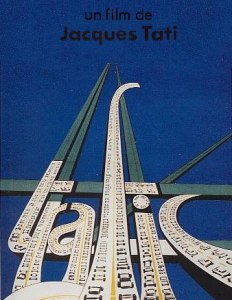
TraficWatching films with French treasure Mr. Hulot (Jacques Tati) is a wonderful experience because, in some respects, it feels like he brings out the child in me. And if history is any indication — I’m not the only one — others feel this sensation too.

It’s not sophisticated humor. The laughs are not dependent on any amount wit or mature understanding, but it’s universal. Everyone, whatever age, language or temperament, can laugh along with Monsieur Hulot.

Once more it’s easy to see his debt to the great silent stars and his use of sound is always impeccable yet still outrageous in the same breath. It accentuates anything on the screen with auditory hyperbole that is absolutely brilliant. Any sound imaginable is amplified in Tati’s memorable everyday comedic symphony of noise.

If you wanted a plot Trafic, as expected, has very little. Mr. Hulot, for a reason not explained to us, is now working for an automobile company named Altra that is preparing for a big car show in Amsterdam. He along with a truck driver named Marcel and Ms. “Public Relations” (American model Maria Kimberly) must weather the roads and every hiccup imaginable to make it to the show on time. She streaking in her bright yellow convertible and they riding in their truck cursed with flat tires and an empty gas tank among other ailments. It’s hardly a spoiler to say that they don’t quite make it there on schedule.

Jacques Tati was always one to playfully nudge at our modern culture obsessed with technology, expedience and, of course, automobiles. However, there’s nothing terribly vindictive about the way he goes about it. In contrast to the images of hustle and bustle and “progress,” there are also a great many that take comfort in the tranquility of farm life or quaint cottages. Everyday people and their mundane lives that, while idiosyncratic, are in no way inconsequential. He is a director who makes us appreciate people more. Mechanics, old couples, even cats, and dogs.

Many viewers undoubtedly will remember the crazy traffic jam with cars careening everywhere, hubcaps and tires rolling every which way and so on. It’s comedic madness. In fact, for numerous reasons, it’s easy to juxtapose Trafic with an earlier French film of a very different sort, Jean-Luc Godard’s political satire Weekend, which has some massive traffic of its own. And Tati creates comparable chaos, mischief and so on but I prefer his method of execution. Because he finds the charm and humor in every situation — even a car accident (with the multitudes simultaneously relieving the cricks in their joints). There’s no spite, cynicism or anything of that sort. He doesn’t feign pretentiousness, choosing instead to remain comically genuine right to the end.

That’s why there’s something so endearing and satisfying about Mr. Hulot. He remains unchanged and unmarred by the world around him. We can count on him to be the same as he ever was — the same hat, the same coat, the same pipe and the same hesitant gate. Maybe his adventures are not the most titillating. Some people admittedly will not like Trafic. It’s either too meandering like Monsieur Hulot’s Holiday or too jumbled compared to the exquisite patchwork ballet that makes up Tati’s earlier masterwork Playtime.

But, no matter, Tati is still a joy for what he brings to the screen, for those who are acquainted with his work and those who are willing to join an ambling adventure full of small nuggets of humor. Here is a film that through inconspicuous nose picking, windshield wipers, and road rage tells us more about humanity than many other more ostentatious films are able to manage. Trafic is certainly worthwhile.

4/5 Stars

Love on the Run (1979)

love on the run 2You can’t just do anything at all and then say ‘forgive me!’ You haven’t changed a bit.” ~ Colette

The prospect of watching Love on the Run saddened me and not for the reasons you might expect. Not because it’s noted as the weakest film in Truffaut’s famed Antoine Doinel series, although that it is. Not because it utilizes a clip show rather like a lazy sitcom as some will undoubtedly note (although this does actually give way to some rather entertaining reminisces as Antoine crosses paths with two old acquaintances). And it’s not even because this is the last film in the series and Truffaut never got around to any more installments before his death in 1983. Though that is sad.

The truly heartbreaking thing about this film is not even the fact that Antoine and Christine (Claude Jade) are getting a divorce although that is at the core of it. It’s that Antoine, who has long been the focal point of these films with his certain brand of charming charisma, really has not changed a great deal.

Time and time again, his superficial relationships with women are explored and time and time again his self-destructive habits hardly seem playfully entertaining but if you want the most honest answer, it’s all rather disheartening.

He has a new girl who we meet in the opening credits. Her name is Sabine. She’s young, radiant, very pretty and works in the local record shop. If we didn’t know any better we could easily make comparisons between her and Christine.

We see that little boy from 400 Blows and even that same young man looking to win the affection of a cute brunette named Collete. However, now a few years down the road, none of that panned out. He’s terribly selfish, undeniably a cad and always trying to say he’s sorry to save face. Sabine says it well when she calls him a pickup artist (You sure have a strange idea about relationships. You seem to only care about the first encounter. Once they’re together it’s all downhill).  

However, if we look again we remember that Doinel’s home life was hardly a prize, schoolmasters were unfeeling and his mother passed away — the only real family he had in the world.
Maybe, love on the run 1Antoine Doinel is a character who thinks only in the cinematic and it is true that he often functions in a bit of a faux-reality. He seems normal but never quite is. He seems charismatic but we are never won over by him completely. Still, we watch the unfoldings of his story rather attentively.

Like all the women who he tiptoed around with, as an audience, we have liked him but never truly loved him — an important distinction to make. And coincidentally, we also see right through him. Perhaps because he’s often too much like us or other times not enough like us. It’s hard to put a finger on which one it is exactly.

We leave the film essentially where it began. Antoine has once more been scolded by his girl and made up. It’s difficult to know quite precisely how to feel about that. Love on the Run is worth its nostalgia, woven in between the most recent moments of Doinel’s life. While his character is trying, he is still strangely compelling. But at this point, it’s hard to know what to do with him. Nevertheless, Francois Truffaut was unparalleled in the continuous narrative he was able to craft — flawed, personal and most certainly memorable.

3.5/5 Stars