
 Peter Lorre has a face that will forever live in cinematic infamy, and it started with M. In truth, Fritz Lang’s drama involving a serial killer feels fresh and engaging even after all these years, maybe because humanity hasn’t changed all that much. We still murder, we still kill, we still seek justice, we still give into our base desires, and there’s not a perfect person among of us. Each one of us has our faults — our own personal downfalls.
The film begins with a rash of disappearances across the city and the boulevards are plastered with Wanted posters for the mysterious culprit. The day that Elsie Beckmann disappears sets the community off, especially when the perpetrator sends a handwritten letter to the local newspaper. The media frenzy begins as every man, woman, and child begins to suspect their neighbor of being a child murderer. The mob mentality looks to overrun the scales of justice. Meanwhile, the police force looks to use empirical methods as well as frequent raids to drudge up answers. They’re far from popular in the underworld and the force is being run ragged in an effort to get to the bottom of the case. Everyone expects a resolution quickly, but real solutions are hard to come by.
Things have gotten so dire for the local mob bosses that they call a meeting, resolving to do the dirty work on their own. They begin their own search for the man who is single-handedly ruining their rackets because he’s no good. Now the chase is really on for Hans Beckert, because everyone is on high alert, in all spheres of society. The question becomes not if he will be caught, but when, because it is only a matter of time.
It’s in these latter moments that the longstanding mystery behind the film’s title finally is revealed and it is a fitting twist. Everything begins to fall into place, but the strangest thing is that Lang actually begins to make us empathize with his killer. True, we want him to receive justice, but the men on the other side of the law seem little better than he — in fact, many of them are criminals themselves.
M has a fascinating juxtaposition of silence and sound, acting as a bridge between both. Beckert’s whistling of “In the Hall of the Mountain King” is certainly integral to the plot. It’s those exact notes that trigger the memories of a blind beggar selling balloons. However, it is these hollow sounds of the whistling that feel strange ominous and distant in vast areas of open space There’s as much tension in the lulls of silence as there is in the most tumultuous notes.
Although Lorre doesn’t say much, we get enough clues just dwelling for long spells on his face. Those big eyes full of crazed fear and psychological torment. His mind plagued by paranoia and torn apart by schizophrenic bouts of conscience. It suggests the perverse nature of man given that this story was taken from real life accounts of a German child murderer. But also the tragic nature of mankind that we are often drawn to do evil in a sense. Our flesh is too weak and we give into our animalistic urges. Of course, Lang reveals the flip side of the indiscriminate as well, that seems just as questionable including mob rule and a sort of vigilante justice that functions outside of the accepted modes of law enforcement.
It brings up questions on the cycle of crime and the rehabilitation of the criminal. Questions that still get hotly debated and thrown about even to this day. M became the measuring stick for all of the subsequent crime thrillers Lang would churn out so efficiently following his move to the United States. You could argue that although he came close numerous times, he never quite topped this crowning jewel of a crime drama.
5/5 Star
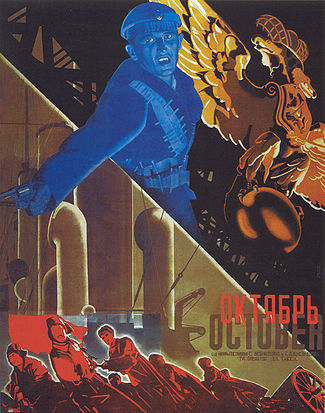 It’s curious that the first image October conjures up is a biblical nightmare from the book of Daniel. In that instance, the Babylonian king is frightened in his dream by a giant statue that comes tumbling to the ground. Of course, in that context, it had a lot of the same connotations, that his kingdom would come crashing to the ground with a resounding thud.
 I still remember driving through the hills and dales of the English countryside listening to Hard Day’s Night in the family rental car. Back then I had a haircut that could best be described as a mop top. And then during my one visit to Liverpool, I was beyond ecstatic. I’m a fairly reserved person and yet standing in Paul McCartney’s kitchen at 20 Forthlin Road (his childhood residence) what else could I do but bend down and kiss the floor?

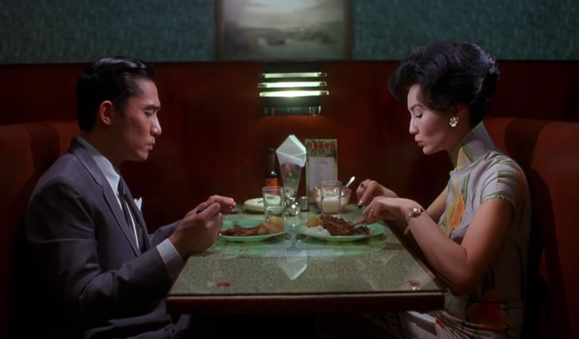


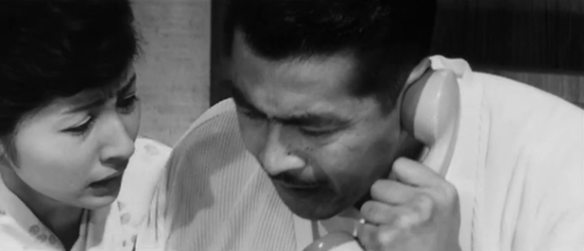 High and Low (or Heaven and Hell in the original Japanese) is a yin and yang film about the polarity of man in many ways. Gondo (Toshiro Mifune) is an affluent executive in the National Shoe Company. He worked his way up the corporate ladder from the age 16, because of his determination and commitment to a quality product. Now his colleagues want his help in forcing the company’s czar out. They come to his modernistic hilltop abode to get his support. Instead, they receive his ire, splitting in a huff. What follows is a risky plan of action from Gondo that is both fearless and shrewd. He takes all his capital to buy stock in the company so he can take over, but his whole financial stability hangs in the balance. He knows exactly what it means, but he wasn’t suspecting certain unforeseen developments.
 At this point, the police are called and they arrive incognito, ready to stake out the joint and do the best they can to get the boy back safe and sound. This section of the film almost in its entirety takes place within the confines of Gondo’s house and namely the front room overlooking the city. It’s the perfect set up for Akira Kurosawa to situate his actors. He uses full use of the widescreen and his fluid camera movements keep them perfectly arranged within the frame.
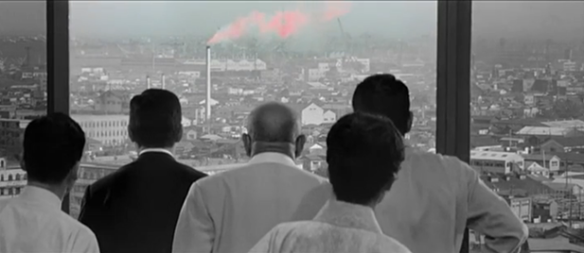 Finally, with the help of Shinichi, they make a startling discovery that ties back to the kidnapper. And the boy’s drawings along with a colorful stream of smoke help them move in ever closer. What follows is an elaborate web of trails through the streets as they work to catch the culprit in his crime, to put him away for good. And it works.
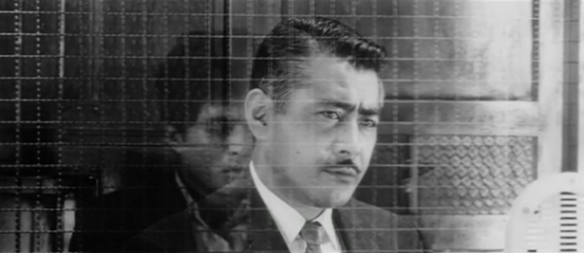 But High and Low cannot end there without a consideration of the consequences. Gondo has been brought low. He’s losing his mansion and must start a new job on the bottom of the food chain once more. His enemy requests a final meeting as he prepares for his imminent fate, and this is perhaps the most grippingly painful scene. Gondo’s face-to-face with the man who made him suffer so much. Toshiro Mifune’s violent acting style serves him well as he wrestles so intensely with his own conscience. And yet at this junction, he is past that. What is he to do but listen? In this way, it’s difficult to know who to feel sorrier for — the man who is resigned to a certain fate passively or the one who goes out proud and arrogantly against death. Both have entered some dark territory and it’s no longer about high or low or even heaven and hell. They’re stuck in some middle ground. An equally frightening purgatory.
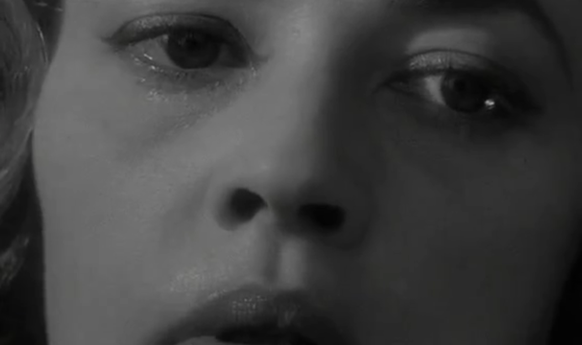
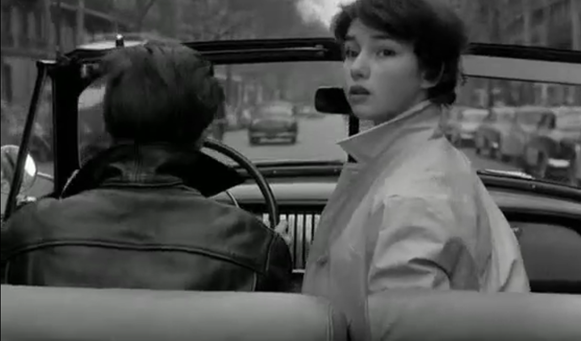
 an anxious Mrs. Carala begins to listlessly comb the streets trying to gather what happened to her lover. Where did he go? Julien




 4 Star Films