
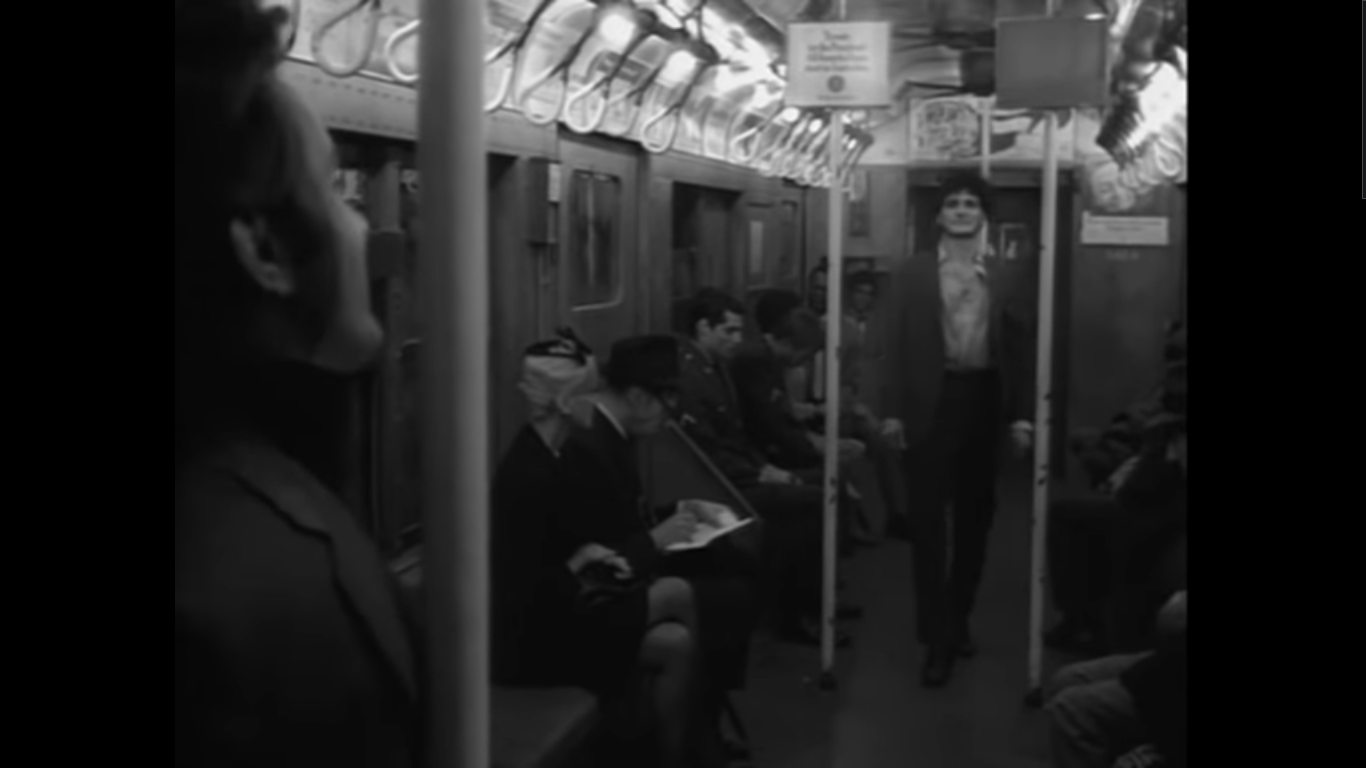
 Before there ever is an incident to speak of in Larry Peerce’s film, we open on the lowest scum of the streets, played by Martin Sheen and Tony Musante, shooting pool and kicking up any trouble they can manage. Between catcalling after women and ambushing pedestrians for 8 lousy bucks, they’re still starved for more action.
It’s all a game to them, an adrenaline rush to get their Sunday night fix before the week sets in. What’s most telling are the perspective shots that can best be described as sociopathic POVs. Even momentarily they get us inside their heads, and we realize just how debased they are.
The opening display shows us who we are dealing with and what we are getting ourselves into. Because they all but evaporate from the movie for a time. But in the back of our minds, we know they will not be gone forever. It’s inevitable that they will return to wreak some kind of havoc.
The rest of the movie is an act of building out from here. We meet other supporting players from other cross-sections of society. There’s the husband and wife (Ed MacMahon and Diana Van der Vlis) who stayed out late with their daughter and quibble about hailing a taxi or not.
Another elderly couple (Jack Gilford and Thelma Ritter) bickers about their grown son who seems to have a perfectly situated life with a wife and kids and still seems ungrateful. Then, there the young lovers — the guy’s quite the Romeo (Victor Arnold), and he’s only interested in a girl if she puts out. His tentative girlfriend (Donna Mills) feels pressured but also anxious to win his aggressive affections.
If it’s not evident already, almost all of the characters come in couplets because there is something poetic and practical about it. Everyone has a talking partner, someone to nag and gripe with over the course of the movie. They all have their petty problems and individual relational dynamics.
These are the seeds of conflict, ready to combust under the right circumstances, and they do. One of the more light-hearted pairings includes two soldiers (Beau Bridges and Robert Bannard) who are currently on leave visiting some of their parents. Just wait…
We can see what the screenwriters are working towards already. All these stories are slowly interwoven together, crosscutting between each individual pair as they make their way to their respective train stops. Each group has its bit of business to take up as they file aboard all but oblivious of everyone else.
Although the black and white does wonders in making the film feel older than even its release year of 1967, there’s probably one thread that signifies the cultural moment better than most. Brock Peters and Ruby Dee play opposite one another, not as a groveling black couple but as a husband seething with militant desires and his high-minded social working wife who evidently listened more to Dr. King than Malcolm X. Even here we see the tension stretched out taut between them.
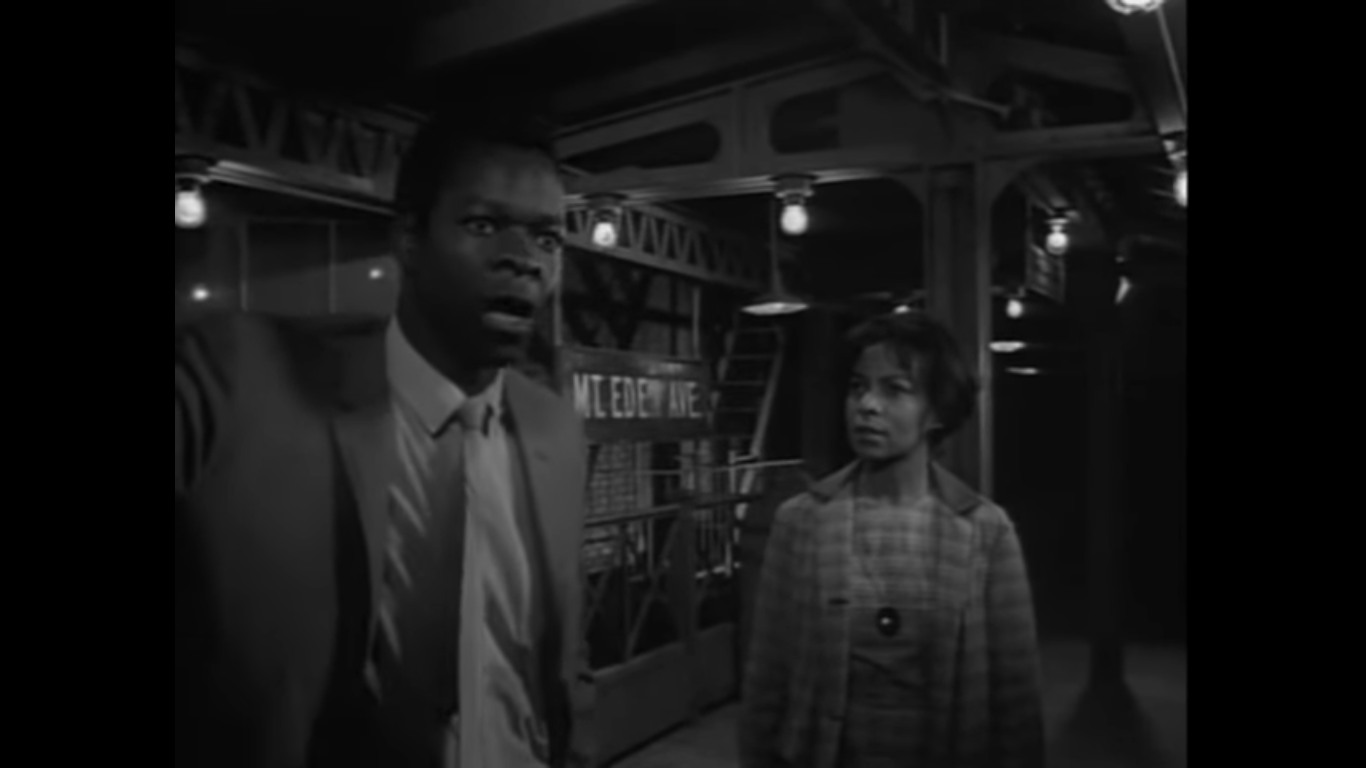 What coalesces almost feels like a psychological experiment put to film. Sure enough, Joe (Musante) and Artie (Sheen) come on the scene cackling and drinking like they have all night — going crazy and swinging their way through the train car like a pair of monkeys. For anyone who’s ridden the subway, you can witness some weird things to be sure, but there’s an immediate knee-jerk reaction to mind your own business.
This movie tests these principles whether it’s Good Samaritan syndrome or the diffusion of responsibility. The crux of our story is triggered when the two malcontents accost a homeless man snoozing on the train, prepared to light his boot on fire. Only one bystander (Gary Merrill) tries to casually get them to stop their antagonism, and it’s the first time where the invisible bubble is broached. When he encroaches on their anarchic freedoms, they look to intimidate him.
What’s made plain throughout the movie is the horrifying indifference as the thugs have free rein to perpetrate infractions and humiliations on the people around them. Sheen now is the big name of the two thugs, but Musante is arguably the most chilling, giving a performance that makes the insides crawl with its cruel manipulation. He literally walks through the camera, lumbering around and ruling the car like a vindictive prison warden where the prisoners are now running things.
Although all these moments of duress feel compartmentalized; no one is let out of their incisive games, and each group is hustled and harried with all sorts of mind games laced with the threat of menace. Old men, old women, children, pretty girls, soldiers. Each one has a weakness and some pressure point to be prodded.
Oddly enough, this is the black man’s paradise watching white people degrade and torment each other for his personal pleasure. Little does he know, he can’t be an impartial observer forever. He too is thrown headlong into the fiery inferno. He too comes face to face with a mortifying breaking point.
By the end, Sheen and Musante aren’t human anymore, and not just because they are movie characters. They feel like evil demons looking to undermine everyone and bring their victims faced to face with their greatest fears and humiliations as they systematically make their way through the car triggering just about everyone.
There’s no conceivable end to this movie other than Beau Bridges taking on Martin Sheen as they look to beat each other to a pulp. It seems almost prescient because these men would become fairly big names in future generations, but for now, they represent the youth movement and where it could take us in the ’70s.
The aftermath of the picture feels equally indicative of the times. When the police rush on the scene, they are quick to apprehend the one black man and pin him down, only to realize their mistake and amend it in the heat of the moment.
There’s something poignant about the final coda: The drunk remains sprawled out on the floor and each and every bystander steps over him. It’s like one final symbol to show the threshold they’ve bypassed. There’s no turning back and whether they realize it or not, The Incident might embody an event that will haunt them for the rest of their lives. They managed to live another day but at what cost? It’s the kind of trauma causing heroes to come out of the woodwork and others to totally capitulate.
It feels like a film perfectly caught between two decades. It’s grittier and more audacious than I was expecting. But then again, this is a low-budget film and the year is 1967. We’re already getting Virginia Wolf, The Graduate, Cool Hand Luke, and Bonnie and Clyde, the forerunners to a generation of New Hollywood films that would blow the cover off what was permissible in the Hollywood scene. The Incident has some of that, but it also has a wealth of players and a premise that feels planted in a different era.
I recently watched The Silver Thread and it has the same distinction. Although it’s far less graphic, these are films totally suspended in time, hearkening back to the ’50s and still somehow forewarning the films of the future. The Incident, in particular, feels like an antecedent to Mean Streets, Badlands, The French Connection, and even Taking of Pelham 1, 2, 3. It’s fascinating to see glimpses of this emerging generation, especially in a film that, while rarely being discussed in a broader context, is still full of genuine heart-stopping drama.
4/5 Stars


 4 Star Films