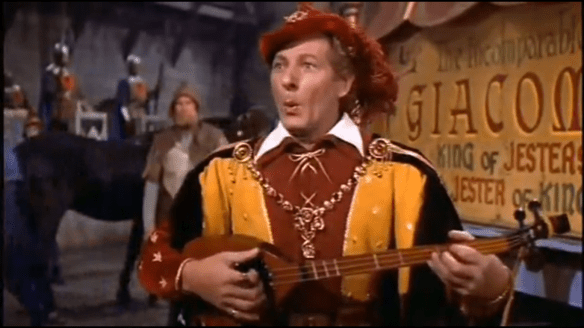
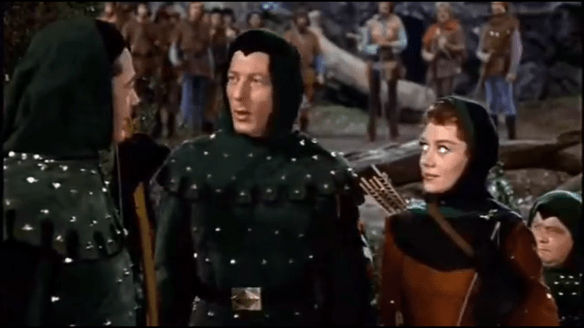
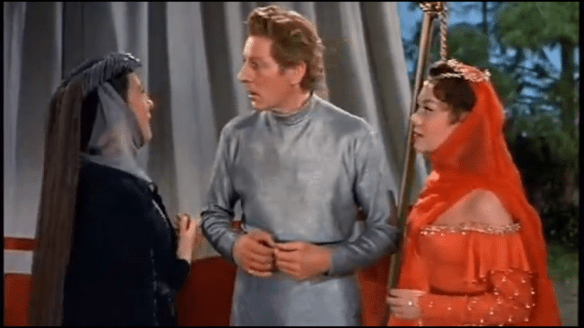
The Ladies Man (1961): Herbert H. Heebert

ladies man 1.png

The French (and Europe in general) have unparalleled esteem for Jerry Lewis.  It no doubt allows them to put him in conversations with their own beloved Jacques Tati as the true heirs to the Chaplins and the Keatons of comedy.

It’s no major revelation most Americans, flagged from the general populous, might scoff at such pronouncements. Because Jerry Lewis was just the comic with that obnoxious voice doing bits with Dean Martin and screwing around. This is my own bias acting out. He’s undoubtedly wildly popular with many.

Still, his type of comedies and routines feel like a dime a dozen. His most renowned picture, after all, is The Nutty Professor, and then his string of comedies with Martin, while successful, were never critically reputed.

What our friends across the pond take into account is how Lewis made himself into a holistic artist capable of many things — not simply performing. We saw this goofball. Whereas they rightfully recognized a visionary director, a prolific writer of material, who simultaneously helped to expand the language of film. It hardly seems like we’re talking about the same person, and yet we are.
the ladies man 2.png

What he manages to accomplish starts with taking comedy back to its purest roots, making it into a totally visual experience. There’s no better example than his stark departure with Frank Tashlin: The Bellboy. The Ladies Man builds off these ideas further, nevertheless, developing them with the same persona some adored since childhood and many, like me, will grow weary of after a couple of minutes.

However, this reaction easily clouds what Lewis is actually doing. He effectively turns the American Dream into a satirical, at times, surrealist fantasy playing upon his already solidified persona and allowing himself greater verisimilitude to explore ideas around the slapstick. At its core, The Ladies Man (with no apostrophe s) is an absurd tale of emasculation.

The inciting incident occurs in a small town where Herbert H. Heebert sees his best girl kissing a mostly unseen suitor following their junior college graduation. It’s a devastating blow. He takes this as a sign he must shrug off girls forever and try and find an occupation as far away from them as possible.

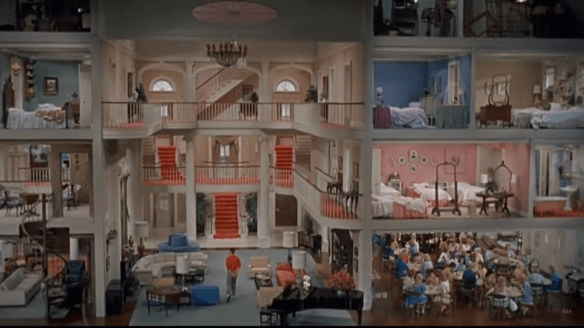
Of course, there’s then nowhere else for him to end up but a giant dollhouse full to the brim with attractive, young women of all shapes and sizes. It’s inevitable. Sure enough, Herbert is hired on by a housekeeper named Katie (Kathleen Freeman) who takes all his foibles in stride. Freeman is also one of the few characters who can stand up to the antics of her leading man. The indelible image occurs when he jumps into her arms out of fright. She’s there to be a foil emblematic of all things maternal and sunshiny.

Meanwhile, the introduction of the female tenants, unbeknownst to the slumbering Herbert, plays out as an intricate morning ritual complete with a jazzy accompaniment and of course, a whole host of alluring women.

This is our first taste of the film’s obvious choreography, and it is executed on a grand scale. The dizzying set made up of rooms upon rooms, multiple stories, and spiral staircases is a veritable jungle gym for Lewis to play with. This pertains both to the actor and the director, realizing elaborate crane shots as his hapless hero is put up against this colorful, campy backdrop.

The glut of the film, by one means or another, follows his daily duties. Of course, they’re only an excuse for a range of gags. They involve a butterfly collection,  passing out the mail, and being the in-house doorman. His most daunting task is taking care of “Baby.” One minute he’s sloshing milk through the living room in a bucket, the next minute dragging a huge slab of meat to feed the beast his breakfast.

Herbert has his own breakfast sloppily fed to him in a high chair by Katie. Yes, it’s strange. It is soon overshadowed by the film’s finest cameo by George Raft, who proves his authenticity to Herbert by showing off his dancing prowess — cheek-to-cheek.

The next extended aside is the picture’s most surreal moment when Herbert enters a “forbidden room” only to encounter a willowy woman suspended from the ceiling. He starts fleeing the slinking woman in black only for Harry James’s Orchestra and a dance floor to appear, facilitating their game of cat and mouse. Any meaning is oblique at best, but that makes it no less of a mesmerizing diversion. Afterward, things slip back into the status quo like nothing at all.

In the last act, the house gets invaded by a television crew and even more madness commences for Herbert as he is all but forgotten amid the tumult. Everyone is just happy he’s stayed around so long to keep up on their chores. It’s one girl named Fay (Pat Stanley) who actually has concerns for him as a fellow human being. This is rare.

In the dining room one morning, she decries her housemates’ manipulative behavior because they’re selfishly thinking about what they can say to keep him constantly doing their bidding. They have no concept of his thoughts or feelings, only his usefulness to them.

However, this indictment has telling implications. If this is a film about emasculation, what do we call the underappreciated place of traditional womanhood? How is this a critique of husbands and boyfriends who spend their evenings thinking of their significant others as nothing more than objects to cater to their whims?

It’s a toxic and quite damning scenario. While the ideal might be well-meaning it only stands up to scrutiny if both partners have symbiotic, multi-faceted roles meant to support one another. In other words, there needs to be some give-and-take, some form of interpersonal connection, and autonomy.

These observations alone make it necessary for me to eat my own words and my dismissal of Jerry Lewis. Because it’s initially difficult to acknowledge Lewis as an artisan and yet watching something like The Ladies Man, it’s impossible not to acknowledge its visual strengths. Yes, a lot of it’s not altogether funny, the gags are at times downright awful, and if you don’t relish Lewis’s own persona, you’re not going to be bucking for him to do his usual shtick.

But as a social commentary, there’s a surprisingly large pool of insights. Likewise, for its visual and physical feats, Ladies Man is a minor marvel even an extraordinary one, though it loses some weight thanks to all the mediocre elements.

Still, there are a handful of scenes with visual expressions and choreographies of a truly unique caliber. It’s as if in another life with a little touch-up, this might be the Marx Brothers mixed with Tati. Likewise, Tashlin’s own cartoon-like, visual wackiness has already been nodded to out of necessity.

Admittedly, my own greatest flaw is being an American. My impressions are already unflinching. When I look at Jerry Lewis I see a multi-talented performer who nevertheless, is more of a tiresome icon than a comic delight. To paraphrase a famous axiom, a comic is never appreciated in his own country. Thankfully, Jerry has the French (and everyone else). It’s the intellectual with the absurd: a match made in heaven.

3/5 Stars
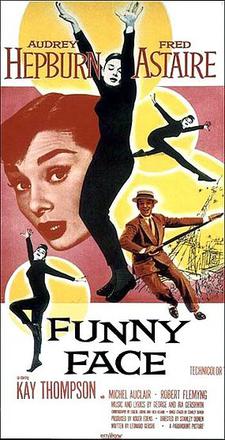
Funny Face (1957) Shows Audrey Hepburn’s Enduring Beauty

Funny_Face_1957.jpgI’m not an expert on fashion photographers, but with only a passing interest in the industry, two of the most luminous names I know are probably Richard Avedon and Bob Willougby. Their names seem to crop up more than almost anyone when you consider film stills. It’s no coincidence that they both famously did shoots of Audrey Hepburn: one of the most widely photographed women of all time.

I never realized it before, but it also seems little coincidence that Richard Avedon is fairly close in name to Richard “Dick” Avery, a fashion photographer, played by Fred Astaire in this picture. Avedon himself was an advisor on the musical even providing the now-iconic headshot of Hepburn, capturing her iconic eyes and the contours of her face.

That’s the first level of reality being reworked for a bit of frothy fantasy. We’re met in the opening minutes by a histrionic tastemaker, Magazine matriarch Maggie Prescott (an uproariously assertive Kay Thompson) who comes off a bit strong but slowly sinks into our affections. Ruta Lee is constantly scampering about with the rest of her staff, getting whisked around by Prescott’s every whim.

She champions a change in direction for Quality magazine as they’ve gotten a bit lax and set in the status quo, and so she catalyzes a pink extravaganza to shake up the fashion world. It just might work.

Astaire is as affable as ever, remaining mellow with age and yet the models he has to deal with, in his line of work, are shown to be ditzy and a dime a dozen. He proposes an even bolder deviation from the norm than Prescott. The idea: Taking a bookkeeper, frumpy and austere at first glance, and turning her into a starlet.

Hepburn makes for the sweetest intellectual, running a bookshop that gets overrun by a magazine syndicate in Greenwich Village. She’s all but lost in the fray while simultaneously giving Avery the touch of inspiration. It’s right there in her face.

As she flees from the editor’s frenzied staff of ladies, intent on finding her and making her over, it’s in the darkroom where she seeks refuge and comes face-to-face again with Avery, who lightens her spirits and makes her feel at ease. Now I can check another thing off my list, as Hepburn and Astaire share a lovely darkroom dance together, which I hardly remembered from before.

In the end, she takes a minor liking in the idea of traveling to Paris for a photo shoot, even if it’s only a means to get her closer to the philosopher that shes always deeply admired for his work with empathicalism. Apparently, it’s all the rage in some circles.

At any rate, a new kind of fashion icon is born. She’s denoted by “Character, Spirit, and Intelligence.” Imagine that. Of course, the bookish Jo Stockton doesn’t see it either. She confesses, “I have no illusions about my looks. I think my face is funny.” Upon closer observation, the near autobiographical aspects seep out again.

Because, if memory serves me right, Hepburn never considered herself attractive or glamorous, even if she was seen as such the world over. Her figure was too slight or her nose too this, and her eyes not enough that. It’s the typical human fallacy to only see the blemishes and imperfections. We either have too big a view of ourselves or too little. It takes other people to straighten us out. We see a funny face, and they see the character that dwells therein — the adorableness and glamour Audrey Hepburn personfied.

In Funny Face Hepburn also gets to relive some of her training as she initially had an extensive background in ballet and dance as a teenager. Her most visible number comprises a beatnik hangout teaming with new and peculiar forms of artistic expression. There she is right in the midst of them whipping around with a peppy hand-clapping verve that sees her arms and springy ponytail flying too.

Back on the fashion circuit, she’s turned into a stunning pink bird of paradise with the spotlight beaming down on her and everyone entranced by her pure exquisiteness. Meanwhile, Astaire gives his cane dances of old a facelift with an umbrella and overcoat, including a brief interlude as a whimsical matador.

“He Loves and She Loves” has them at their most euphoric, acting outt a wedding scene that can never be. They are co-workers and nothing more. But when the fashion gala is made a shambles of, and they have a major tiff over a certain French philosopher named Emile Flostre (Michel Auclair), it looks to be the end of the story. However, we’ve seen enough movies to know not to get up and leave in the seventh inning. There’s a comeback in the ninth.

Hepburn’s voice makes an appearance in all of its demure glory. While not spectacular in nature, I’m a proponent of hearing people’s actual voices when they’re given the task of trebling through a tune. I’m of the sentiment that I would rather hear an unadorned, even “warts and all” performance opposed to the airbrushed “dubbed” showings that were so prevalent. Hepburn was a particular casualty of this phenomenon in My Fair Lady (1964), even as her quivering rendition of “Moon River” goes down as one of the most intimate performances on film. I rest my case.

While not the most cohesive musical out there, we have enough glimmers of fun and frivolous entertainment to more than satiate our wants. Of course, our stars are two of the most sunshiny personalities the movies ever bore, and together there’s the expected amount of good-natured amiability. At least, in the end.

Likewise, Cole Porter and the rich imagery courtesy of Stanley Donen, Richard Avedon, Technicolor, et. al. make the balloons brighter and the wardrobes all the more luxuriant. A true feast for the eyes, as they say, even if the plot could be tipped over with a feather.

3.5/5 Stars

Holiday Inn (1942): White Christmas and Blackface

holiday inn 1.png

Let me put this out in the open. Christmas movies are some of the most difficult films to regard subjectively because the majority of them are either tied to our childhood and fond memories, which are as much a part of the experience, or the alternative; they were not a part of our traditions at all. White Christmas (1954) is a personal movie for me — one that I have known intimately for years — where all the lines and songs play like old friends.

Holiday Inn, not so much. It plays well on paper and I am usually a subscriber to the original always being the best. However, even in a highly subjective, not-so impartial way, it’s hard for me to go out on a limb for it. The one glistening asset it does maintain — fluffy and welcoming as Christmas itself — is the introduction of Irving Berlin’s “White Christmas” for the first time.

It’s slipped inauspiciously into the film within a quiet interlude, not a huge stage extravaganza, as Bing croons with Marjorie Reynolds sitting by his side. The little ditty, of course, would go from being just another Irving Berlin tune to the highest-grossing Christmas single of all-time.

It’s staying power never ceases to amaze because the yearning, the vocals, everything about it taps into something deep and resonant as the season itself. There’s one word for it: hope. It’s an expectancy in what is coming.

In music terms, it meant gold or rather platinum. Either way, it’s still with us today. If this was the only reason to see Holiday Inn, it would probably be worth it just to get a glimpse at history. So there we have it.

The picture sets would actually be reused 12 years later with White Christmas and we have a similar dynamic between Bing Crosby and his costar. There’s even an eerily similar dressing room scene in both. However, as much as I love Danny Kaye, a man of many talents, comedic and otherwise, he was still the second banana. He was really good at his role, but he’s the number two man.

Fred Astaire’s no supporting act. Because Bing Crosby might have been a hot commodity in the 1940s, but even if Astaire wasn’t quite as big as he had been even a couple years before with Ginger Rogers, he was still Fred Astaire. You do not lose his past histories and former glories in the blink of an eye. So the dynamic, if anything, is that of equal footing. It becomes a duel between the crooner and the virtuoso man on taps. It’s fitting their very personas are built into the plot.

holiday inn 2.png

Bing wins out with “White Christmas” while Astaire gets a few jabs in himself. The drunk dance is the film’s best and the height of jocularity. According to legend, Astaire had some bourbon to get into the scene. It’s the age-old maxim, you have to be really good at what you do to make it look so bad — Astaire obliges by stumbling and bumbling his way around with perfectly choreographed precision.

Unfortunately, Holiday Inn, in all its seasonal gaiety, stops stone-cold with blackface. I knew it was coming, and it still repulsed me, effectively souring everything that comes in its stead. It isn’t made any better by the fact it functions as part of the plot — used as a disguise. It happens because Fred Astaire always ends up stealing his buddy Bing’s woman — leaving him heartbroken.

He already lost Lila (Virginia Dale), who wound up running off with a millionaire, so he’s not about to lose the effulgent starlet (Marjorie Reynolds) who found herself at his humble countryside establishment. Jim (Crosby)  even finds a very sneaky way to make sure she doesn’t make it to a floor show with Ted (Astaire)  in front of some Hollywood agents. She one-ups him when she gets wind of it and so Fred is forced into an “impromptu” firecracker solo.

The ending has a ball poking fun at the meta elements in this storyline. Linda is now a rising Hollywood starlet harboring hurt from a lost love — the usual hokum — as her director describes to her on set. This is the part she’s meant to play. Of course, we know she’s living it; there’s no need to act.

However, what better place for a refrain of “White Christmas” than a movie set. Because someone is waiting in the wings. Bing Crosby with his pipe, his tinkling of the bells, his whistling, and of course, his velvety voice. He ruins the take for the imaginary movie, but he makes the real movie that much better.

Holiday Inn is passable if only as a showcase for two of the greatest talents of the generation in Astaire and Crosby. They carry it valiantly with their song, dance, and ladlefuls of charisma. Thank goodness, as the plot and just about everything else, is thin.

3/5 Stars

Beau Geste (1939): Brotherly Love in The French Legion

beau geste 1.png

“The love of a man for a woman waxes and wanes like the moon…but the love of brother for brother is steadfast as the stars, and endures like the word of the prophet.” ~ Arabian Proverb

No matter what Joseph Von Sternberg thought of such a proclamation, we can concede his Morrocco was a film concerned with the former. Von Sternberg’s dalliances with Marlene Dietrich behind the scenes and then Dietrich and Cooper in front of the camera are a living testament.

Beau Geste stakes its claim early to being a film of undying brotherly love. It brings to mind the words of scholar and author C.S. Lewis when talking about philia as a “side by side, shoulder to shoulder” appreciative love. It comes not by looking at each other but having a vision of something in front of us.

“Every step of the common journey tests his metal; and the tests are tests we fully understand because we are undergoing them ourselves. Hence, as rings true time after time, our reliance, our respect and our admiration blossom into an Appreciative love of a singularly robust and well-informed kind.”

I think this is a perfect illustration to begin to understand why Beau Geste is an initially compelling hero’s journey because it relies on a joint adventure to bring out expressions of deep-rooted love.

Admittedly, William A Wellman’s film is a close remake of the 1926 silent Ronald Colman vehicle. One element this film borrows from its predecessor are intertitles, and they’re too many of them for a talking picture.

But soon enough a cold open places us within the ranks of some French Legionnaires who come upon a fortress only to find the stronghold littered with the bodies of their comrades propped up against the walls. Something dreadful must have happened to them. For now, we get no more explanation as the story quickly fades back into the past, 15 years prior.

There we meet five children, three of them named Geste, one of them named Isobel, and the fifth a bespectacled killjoy named Augustus. You see, the others are still enraptured with adolescent imaginations that find them gallivanting around on the most glorious adventures as soldiers or possibly members of King Arthur’s court.

Their exploits are to be remembered with a Viking’s funeral with a dog lying at their feet. The beauty of their temperaments is the fact they hold on to a bit of their youthful exuberance when they grow into young men.

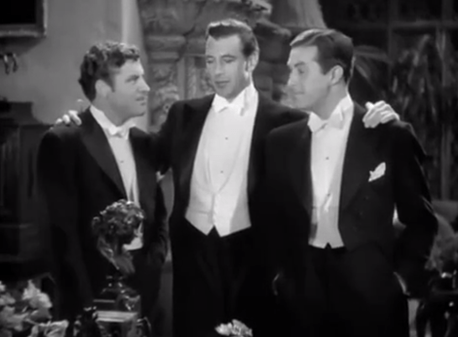
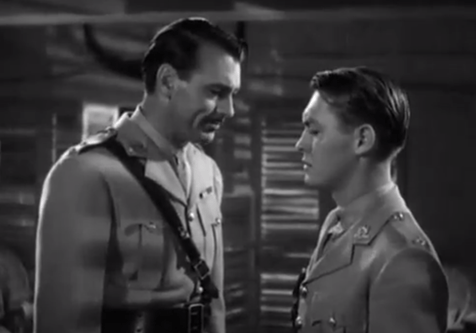
It always is a bit of a start when you jump from child actors to their corresponding adult selves. In the picture, I couldn’t quite make the jump seamlessly but no matter. All I know is I do have an appreciation for our leads — that is the three Geste brothers. They really are rather like the three Musketeers with Gary Cooper, Ray Milland, and Robert Preston making a jocund company.

Also, on a side note, this is too perturbing for me not to mention. I double-checked records multiple times and our three stars were born in 1901, 1907, and 1918 respectively. I’m still trying to figure out why Robert Preston hardly looks any younger than his costars or at least Milland. Maybe it’s his mustache. At any rate, age differences aside, the chemistry is present.

What is not present is the priceless jewel “The Blue Water” that was stolen one evening from the home of their adopted aunt Lady Patricia. The same evening Beau runs off to the Foreign Legion followed soon thereafter by Digby (Preston) and finally John (Milland) who gives one parting embrace to Isobel (Susan Hayward) before leaving on the grand adventure. Hayward is exquisitely beautiful and though her ingenue role is in no way groundbreaking, we have the solace of many meaty performances to come.

The film’s true standout is Brian Donlevy as an unscrupulous tyrant in charge of new recruits. He eventually finds himself commanding the entire outpost with the whole outfit threatening insubordination. His hunger for power verges on the deranged.

My expectations were more of the rip-roaring adventure variety but as the previous commander’s remarks on his deathbed, “Soldiers die as much from fevers as they do battles.” Meanwhile, Digby is unceremoniously pulled away from his brothers on a work detail and subsequently, misses out on most of the final act.

beau geste 2.png

I would say wholeheartedly the film is salvaged in its last push as we are granted the spectacle we have been waiting for as the remaining men hold down the fort against incoming marauders. It makes one nearly cry out “Remember The Alamo!” The sentiment is there anyway.

It seems a horrible thing to say, but Cooper affected me more when he was on the verge of death than when he was alive. The all but wordless finale plays particularly cryptically as Digby sneaks around the compound to carry out his oldest brother’s wishes.

I must admit to dismissing Beau Geste‘s storytelling prematurely as it evoked greater complexities than I would have expected. The mechanisms of the opening and overlapping moments are more intricate than I might have given them credit for. The mysterious words spoken once upon a time, while Beau was hiding in the suit of armor, come to fruition as do the opening moments, neatly folding back into the tale.

The reunion of John with Isobel and his Aunt arrives in the nick of time to satiate audience wish-fulfillment. It almost elevates the film wholeheartedly, but the pacing and where the story chooses to focus its efforts feel scattered. Had they come together more succinctly we might be hailing Beau Geste one of the great actioners.

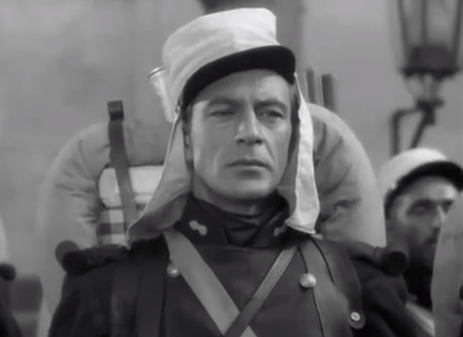
While Gary Cooper in a foreign legion kepi is nonetheless iconic, I am apt to remember him more so for Morocco (even if that picture belonged to Dietrich). Although if one is sentimental enough to forgive the faults, it’s painless enough to say Beau Geste belongs to three devoted brothers. Coop, Milland, and Preston maintain a spirited solidarity throughout.

3.5/5 Stars

The Lives of Bengal Lancers (1935): Colonial Camaraderie Sullied by Hitler

the lives of a bengal lancer 1.png

In the imperialist traditions of the likes of Tarzan The Ape Man (1932), Gunga Din (1939) and even Lawrence of Arabia (1962) comes The Lives of Bengal Lancers. We cannot take the era or the colonial sentiments for granted like the contemporary viewer did since we must reconcile with the complicated filter hindsight lends.

It’s a bit like an old Cowboy and Indians picture except instead we have lancers and Indians. In theory, our allegiances lie solely with the dominant sides, and the rebels have our ire because revisionist filmmaking had yet to be created. This is the victor’s myth.

Director Henry Hathaway in later years would be remembered as a veteran of both crime pictures and classic John Wayne westerns including True Grit. The Lives of Bengal Lancers was his first formidable success, and the action and adventure itself are frankly quite thrilling.

Gary Cooper, as one of American’s dashing action heroes of the day, plays our protagonist MacGregor, a rough-edged soldier who nevertheless conceals the age-old heart of gold. A prime example comes when he makes up some excuse to send a new recruit to call on his father so they can talk in confidence. The boy has yet to see his flesh and blood face-to-face without constant rules and regulations getting between them.

Actually, we have two new recruits who come aboard: Forsythe (Franchot Tone) a glib sportsman who finds great relish in crossing wills with MacGregor and then dashing Lieutenant Stone (Richard Cromwell) still wet behind the ears. His father is the commander of the entire outpost. A journeyman soldier, “Old Ramrod” Stone (Guy Stander) is an incorrigible stickler for duty and discipline.

the lives of a bengal lancer 2

But the task at hand is the apprehending of a charismatic gunrunner and local outlaw Ahmad Khan (Douglass Dumbrille), who subsequently holds great power over the territory. The favored sport of “Pig Sticking” provides a handy cover for snooping around.

Most delightful of all is the one-upmanship fostered between our two manly specimens played by Cooper and Tone. The constant friendly competition between the blunt Canadian straight-arrow and the more polished and tempered “Blues Man” brought up in Britain is one of the film’s finer assets.

But of course, the inevitable happens and our heroes get captured by Khan. The famed line misstated on numerous occasions is actually, “We have ways to make men talk.” However, it feels anticlimactic considering.

It’s also difficult to decide if it’s to the film’s credit or not, but the villain, played by the white actor Douglas Dumbrille, is not trying to hide it. He is educated and resists playing up some savage image. He leaves that to all his underlings who do his every bidding.

While imprisoned, our heroes spend their idle time, outside of being tortured, playing at cockroach races and letting their stubble grow out. Once again, it represents the very best of the film instilled by the performances of Cooper and Tone opposite one other. Because everyone else we can easily see in any of these old adventure epics. It feels like standard stuff. They are not.

Certainly, the story teases out this issue between the duties of a soldier and the scruples of a man with inbred common decency. Should the family be sacrificed for the sake of the outfit? Is a man who has poured everything into his military career because he believes in regulation fit to be praised and venerated? The commander’s appreciative colleague (C. Aubrey Smith) lauds his actions acknowledging, “Love or death won’t get in the way of his duty.” Whether that is an entirely good thing remains to be seen.

Of course, we see analogous themes in even some of John Ford’s pictures like Fort Apache and specifically Rio Grande. The latter film has the same father-son dynamic playing out, except inside of conveniently killing off the spouse to streamline the conflict, that film actually digs into the themes more definitively. Anyone who has seen the film will agree Wayne and Maureen O’Hara’s relationship is the most interesting dynamic. A close second is the camaraderie of the soldiers.

In The Lives of Bengal Lancers, again, we have no such relationship, so the film is at its best with the soldiers sharing their lives together. One must note while the western might be dead, these old adventure yarns feel even more archaic. This brings up a host of other issues to parse through.

Watching the film unfold we cannot know for sure if we are on the right side of a righteous or unjust war; the underlying problem is the film does not leave it open. It’s already accepted who the conquers and heroes will be. I have nothing against the likes of Gary Cooper and Franchot Tone. I rather like them. But I can’t help but feel their team is playing a bit unfairly. The deck is stacked in their favor.

This ties into another notable caveat to make the viewer wary because Lives of a Bengal Lancer was purportedly a favorite of Hitler. In its digressions, he saw agreeable conclusions to inspire his own empire — the Third Reich — namely an unswerving duty to country along with elements of racial superiority.

Because it is these Brits with their bravery and know-how who are able to hold off the hordes of enemies. Their valor in itself is not an issue but placed up against their enemy, it is slightly troubling. The fact Hitler made it compulsory viewing to members of the SS is another level of bone-chilling. It’s hard to look at the picture in the same light after such a revelation.

3.5/5 Stars

Design For Living (1933): An Atypical Lubitsch Comedy

design for living 2.png

“Immorality may be fun but it’s not fun enough to take the place of virtue and three square meals a day.” 

All director Ernst Lubitsch has at his disposal is a train compartment and three actors. Yet the opening scene of Design for Living positions itself as one of the most delightful moments in this entire picture. It’s a pure testament to bold visual filmmaking with nary a word spoken for at least 4 or 5 minutes. Few modern filmmakers would have the gumption to attempt it.

Lubitsch knows exactly what to do with such situations, and he was bred not only in sophistication but silent comedy. Because you see, the ultimate joke is when they actually start conversing with one another these three very familiar faces open their mouths and French comes out (Gary Cooper apparently was fluent).

Simultaneously, the director has also set up the relational dynamic of the film without a peep of dialogue. It really is a superb opener. However, this opening scene is almost too delectable for its own good. The film cannot possibly sustain such a  level of perfection. But more on that later.

When the three expatriates finally switch over to their native tongue, we have an uproarious discussion on art versus commercialism, Napoleon wearing a coat, and Lady Godiva riding a bicycle. Don’t ask for any explanation. In the parry and thrust of their conversation, we find out one is a painter (Cooper), the other is a playwright (Fredric March), and both are failures for the time being.

We are instantly reminded by a certain level of sauciness this is the Pre-Code era, though we are on the cusp of harsher censoring to come. For now, the picture is able to nonchalantly hang its hat on a central plot point involving our leading lady (Miriam Hopkins) and her two men embroiled in a menage a trois — a so-called “Gentlemen’s Agreement.” Her conundrum is very male and libertine in nature. She has different men to try and she likens them to hats she wants to put on.

Yes, there is innuendo and some contemporary audiences might have shuddered at the admission they mention the word “sex” out loud on multiple occasions. And yet none of this titillating attraction speaks to much of the underlying allure of this picture.

design for living 3.png

Look at who we have assembled on top of the acting talent. It sounds too good to be true. If the name Noel Coward doesn’t carry emphatic weight in your life, you might as well cross it out and consider this a Ben Hecht picture. He was, of course, one of the great purveyors of Americana through aphorisms and pervasive wit.

He famously scrapped all of Coward’s play aside from a single line of dialogue. Leaving a mark on the material in a way that was far more suitable to not only Lubitsch but an American audience.

All the gloriously tantalizing pieces are in place but the question remains, Is comedic cohesion possible? Understandably, Hopkins and Edward Everett Horton take up their allotted positions with ease invariably suiting them. Though their own personas aren’t on par with Chevalier or Herbert Marshall, the two American lads do their darnedest. The fact Cooper always feels so awkward in comedy somehow even plays a bit to his favor.

Unfortunately, it just doesn’t take. Again, we are putting it up rather unfairly against the likes of Trouble in Paradise or even The Smiling Lieutenant. Those are high benchmarks indeed. Put simply, the buoyancy is not there frequently enough.

Instead, we have a residual wistful melancholy that feels atypical for your usual Lubitsch drawing-room comedy. Cooper and March become a pair of “Gloomy Gusses” as Hopkins winds up marrying Horton to save them all grief. Even before that, the trio has their share of disagreements simply sorting out their inevitably complicated relationship.

If anything, it suggests in more rational terms that such an existence, as bohemian and open-minded as it may be, also becomes one of the most emotionally taxing. Not to mention relationally murky. In real life that is.

But when you expect something effervescent and gay, Design for Living is a bit of a letdown as a movie. After such a strong charge out of the starting gates, the storyline feels wanting in the middle, sluggishly rolling into the final act. One could wager whether or not plucking more out of Coward’s play might have been the most prudent choice. It’s possible it might have made the setup even droller. I can’t say.

Then again, maybe my own comic proclivities range toward screwball and the overtly visual far too much. It is true it often takes finer sensibilities to appreciate ironies and an astute sense of perception to read between the lines. An appreciation for wit and not solely physical comedy is key.

At least in my estimation, the movie is aided by a final party crashing in an attempt to get their girl. These bookends at the front and back half of the picture are vitalized by our stars being brought together. In such close quarters, there’s this inherent possibility for inspiration.

Lubitsch or not, if you have Gary Cooper, Miriam Hopkins, Fredric March, and Edward Everett Horton together in a room, it’s infinitely better than watching grass grow. The same might be said of Design for Living because if it speaks to anything, the final notes impart a lightness of camaraderie and lithe romance rather than any morose confusions. As it should be. Though it winds up being too little too late.

3/5 Stars

Ministry of Fear (1944): Nazis & Noir

ministry of fear 1.png

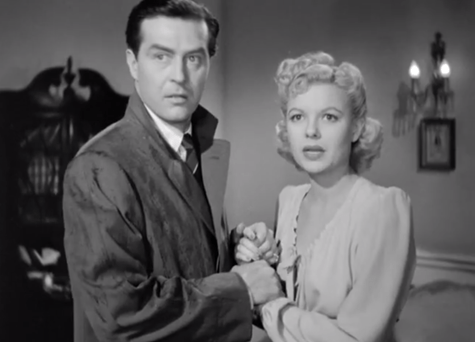
In screenwriting 101 they always say engaging movies employ ticking clocks from start to finish. Ministry of Fear takes this quite literally, opening with the tick-tock of a clock face as Stephen Neale (Ray Milland) sits in rapt attention, waiting for the bells to chime.

At first, we’re not sure where we’ve found ourselves. What’s going on? Why is he so on edge? Then, he makes his way through some stone gates and the word “asylum” is emblazoned on the front entrance. We instantly know more about him. He has a past but it seems, at least for the time being, this man has a clean slate to work with.

His first adventure upon purchasing a ticket to London is popping over to a local carnival put on by all the nice ladies of the town. But this British-set noir, directed by Fritz Lang, and based on a Graham Greene work, also begins employing a time bomb…in the form of a cake.

After an enigmatic tip from a lady psychic, Mr. Neale unwittingly acquires said confection and soon gathers he’s gotten involved in something way over his head. The MacGuffin has been brought into circulation.

It proves to be an eventful trip to London, to say the least, and not just because of the Nazis raining down bombs overheard. There’s some homegrown drama as well. As Neale starts dropping cake all over the train compartment, he subsequently welcomes in a bland bloke, only to have the mystery man run off with his dessert.

For the time being, there is nothing to do. In London he calls on a stodgy old investigator (Erskine Sandford) to back him up; he obliges only when money is waved in front of his nose. Then there’s the giggly introduction of an amiable brother and sister duo (Marjorie Reynolds and Carl Esmond) who escaped from Austria.

Mr. Neale is led to believe their business is unwittingly being used as a front for some clandestine activities involving The Mothers of Free Nations. They always were shifty characters.

Meanwhile, Reynolds dips in and out of her accent; she probably would have been served better without it. Though she is winsome enough, I’m inclined to believe the film could have been more twisted if she was, in fact, a more duplicitous dame. Admittedly, the rogue gallery is still quite busy without suspecting her.

The imposing, austere beauty, Mrs. Belaine, leads a seance joined by the foreboding Dr. Forrester (Alan Napier) and dropped in upon by a Mr. Cost (Dan Duryea), who has a very familiar face. The good doctor holds a particularly high position in the ministry of propaganda.

The unearthly environment is textbook high contrast cinematography with visages almost incandescent while otherwise shrouded in darkness. Unfortunately, there’s a shot in the dark (no Clouseau available here) and our hero must be on the run again. We have yet another tip-off that an international conspiracy akin to Foreign Correspondent is afoot.

We are treated to a Hollywood version of a wartime Underground bomb shelter as Neale looks to evade capture with Carla. We get another visual tip on Dr. Forrester thanks to ominous swastikas projected on the wall. His newest analysis “Psychology of Nazidom” is the culprit. One gathers he might have a closer relationship with the Third Reich than he’s letting on. Unless it’s someone else…

Given these details, it’s difficult not to also consider Lang’s harrowing Hangman Also Die! which tackled the Nazi menace right from the interior. The fact that the enemy might have infiltrated and live all but undetected among us is even more frightening (though these themes are not considered in length here).

Because, like Hitchcock’s best British films, Ministry of Fear is all thriller, and its main allegiance is to entertainment rather than pure propaganda. I think the years are kinder to it for those very reasons. It does not give us a completely false sense of the piety found in the world — especially in the midst of something so troubling as WWII.

There are further bomb explosions and the involvement of Scotland Yard leading to a very familiar face turning up once more. The emblematic shot of the whole picture comes when a door is closed behind a fleeing fugitive and a shot rings out, with one solitary beam of light emanating through the bullet hole. It explains the whole scene, and what has happened, in the most dramatic way possible.

A chase up to the roof ensues, where, upon being pinned down, Neale and his gal shoot it out with the enemy, the rain pouring down in torrents overhead. It looks like dire straights if not for some fortuitous help. In literary terms, I believe the accepted phrase is a deus ex machina. Because closure, as such, is hardly arrived upon so easily, we conveniently edit through the climax to explain it away.

Instead, there is a hastily cut-together ending with one obligatory mention of a forthcoming church wedding and of course, a wedding cake…It is a glib reminder noir can often bleed into the most mundane environments.

As forced as it may feel, this happy ending leaves us with nervous laughter. Otherwise, we might still be trembling considering what might have happened. I can only imagine the reactions of a wartime audience — no matter how farfetched the plot — they were living through this very real fear.

3.5/5 Stars

To Each His Own (1946): Olivia de Havilland Does Melodrama Well

To Each His Own 1.png

Ginger Rogers purportedly passed over the script for To Each His Own because, at first glance, it’s hardly a glamorous role; but for the right person, it could be something unquestionably special. That actor was Olivia de Havilland.

Certainly, the production is bolstered by Mitchell Leisen, a mostly forgotten director who made a string of highly memorable comedies and romantic pictures during the 30s and 40s. It’s no different here. And then you have Charles Brackett, formerly half of the lucrative writing partnership with Billy Wilder before alighting on his own as a producer. None of that can be discounted nor a handily-played dual debut by John Lund. But we must return to Olivia de Havilland.

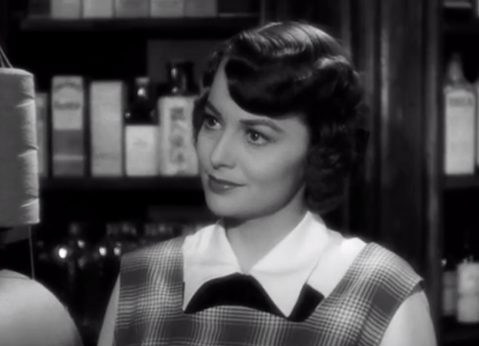
In the opening interludes, she comes off as acerbic and curt, a forlorn type of person. No relationships or community or people to worry about or to worry about her. She’s joined by another middle-aged man named Desham (Roland Culver) and they make quite the pairing, taking on the night watch duty over the holidays so others might celebrate.

He coolly makes the observation that people like themselves are alone for one of two reasons — not caring enough for other people or caring far too much. Though Ms. Norris divulges little, we instantly gather she fits into the latter category. This is what starts us on the journey through her past, which led her to a man named Bart Cosgrove (John Lund).

But before their fateful meeting, the flashback sets up the world of Pierson Falls, familiar to anyone who has glimpsed It’s a Wonderful Life with its parochial atmosphere and local drugstore. Match that with the jingoism out of Hail the Conquering Hero and you have a slice of life in this little town during WWI.

John Lund is sour and far harsher than I recall in say The Mating Season and it serves him quite well. He and his co-pilot (the always reliable Frank Faylen) are the two jaded flyers who get the hardiest of welcomes from the townsfolk. However, this is their umpteenth stop on an endless bond tour. They’ve become overly familiar with people like Bernadock Clinton (Arthur Loft) the asinine town cryer making a continual bother of himself ushering the flyers around like prized sideshow attractions. And it would be more of the same if not for the meeting of the flyer with the town’s most eligible gal.

To Each His Own 2.png

The heightened emotion of wartime uncertainty swirls around them and they share a rapturous, if whirlwind, romance that Captain Cosgrove was never expecting. All too soon, he’s off again leaving his newfound love behind and to use euphemistic vernacular, they’ve created a ticking time bomb.

Here To Each His Own enters its scandalous phase where Jody must confess to her father that she’s had a child out of wedlock. The old man (Griff Barnett), with the steady voice, sounds uncannily like Will Geer and spouts unassuming wisdom, “We don’t judge each other. We love each other.” But small towns are not usually as forgiving and so lest people talk, Jody decides to leave her child on a doorstep. Hoping to pick her child up later and “adopt him.”

Instead, a couple who’ve been tragically hit with a miscarriage are thankful for this second chance at cultivating life and they take the child. Of course, the couple is one of Jody’s old beaus and another peer. They got married because Jody rejected him. The dramatic situation is clear enough.

When the mechanizations of the plot become clear, it also becomes clear just how awful the circumstances are — just horrible. They’re apt to tear your guts out. After the passing of her father, Jody, who needs a job, proposes coming on as a nursemaid, but there is no compassion there. She gets pushed out of the scenario thanks to a jealous wife and a husband who still holds a boyhood crush.

She has no choice to move on and, being a go-getter, she takes charge of a bootlegging business and turns its front, Lady Windemere’s, into a legitimate international operation proving highly successful. Whenever she has a free moment, Jody does her best to manufacture chance encounters just so she can glimpse a few minutes with her son who is growing in knowledge and stature. But she knows deep down, with each passing year, little Gregory is less and less her son.

Melodramas or so-called “women’s pictures” can be hit or miss depending on how thick they lay it on and how much the music swells at the exact moments of deepest impact. But in full consideration, To Each His Own might be one of the finest such pictures to come out of the 1940s, and it’s no small coincidence that it shares that distinction with the thematically similar Stella Dallas.

When it’s all said in done, it’s about heartwrenching relationships between mothers and their children and when the mothers are portrayed by such stalwart titans as Barabra Stanwyck and, in this case, Olivia de Havilland; the drama enters territory that can easily pierce the heart to the core.

To Each His Own is also somehow akin to Random Harvest with dramatic irony being integral to the plot — one character knowing something that deeply affects how they live their life — except the person they care about knows nothing about it. This is by no means a criticism either but simply an acknowledgment that these stories can tug at the heartstrings with great fervor.

Again, it comes down to the players as much as the scenario. They must be people that we are capable of feeling great pathos for. Certainly Stanwyck, Greer Garson, and Ronald Colman and even Olivia de Havilland. Maybe she’s known for being difficult or a perfectionist or what have you, but that has nothing or maybe everything to do with her as an actress.

She makes us care about her as she moves from every stage of her life. And I say life because it feels less and less like a performance and more like real life. She, like Stanwyck before her, is able to carry the weight of youthful exuberance and maternal toil equally well.

Far from being unglamorous for winding up being mother to a grown son, I think a film like To Each His Own makes you appreciate the beauty of de Havilland even more. Because there’s a realness and a depth there that you would have never gotten in a career of roles opposite Errol Flynn. You just wouldn’t.

That’s part of what makes it special. And like the other previously mentioned titles, it goes out with a few tears but also espousing dreams. We can question the final moment — the rationality; the catering to the audience — or we can just enjoy it like a wedding feast with the ones we love.

4/5 Stars

The Desperate Hours (1955) Bogart Vs. March

desperate hours 1.png

As the credits roll, the camera zooms its way down a residential street but doesn’t feel natural. It’s like a peering gaze casing the scene as music hammers away in the background. What makes the imagery more disconcerting is that this tranquil picture-perfect suburbia could be plucked right out of Leave it to Beaver. In fact, coincidentally, the house is the very same!

In this film, it belongs to your typical everyday family circa 1955. The man of the house, Fredric March, sits around the breakfast table, preparing for his job at local bank, bemoaning the fact his kids are growing up.

Little Junior is already showing signs. Not wanting to kiss his pops goodbye. His daughter is lovestruck and intent on marrying her beau, which he can’t stand to think about. His wife is perfect. Pretty, maternal, and a fabulous homemaker. Its all a bit insipid on the whole but that’s very purposeful. Currently, we might call his daily struggles “first world problems.”

It is a bit of the lifestyle that can be easily plucked out of any of the old family sitcoms from Fathers Knows Best to The Donna Reed Show. And yet what those portraits of the nuclear family never did have was the threat of three convicts at-large…

Their hardened leader is Glenn Griffin (Humphrey Bogart) joined by the boisterous slob Kobish (Robert Middleton), and Griffin’s kid brother Hal (Dewey Martin).  Come to think of it, there was an episode of The Andy Griffith Show with striking parallels, albeit with more comical resolutions. As is, William Wyler’s piece falls more in line with The Detective Story (1951) from a few years prior pushing the stage elements out a bit but still centering its action on the family domicile.

Arthur Kennedy at the Police Precinct is brought on the case but he really feels like a wasted opportunity and a dead-end at best. The real meat of the story is within that house between the two men vying for control.

Bogart, who got his break in Petrified Forest (1936) as a crazed heavy, is essentially book-ending his career with tough guy roles. Even if he’s over the hill for such roles, he still makes a good snarling approximation of his former self. One could argue that time has only made him more disgruntled and worn. His convict is a much more sorry figure with 20 years sagging under his dour eyes.

He plans to lay low in the residential neighborhood until the money they’re expecting gets sent their way. So we expect the plot to be a waiting game. Except the subsequent tension comes with criminals existing in such close proximity to this family, a theme running through other contemporary dramas like He Ran All The Way (1951) and Suddenly (1954).

To be ousted by the authorities means that everyone gets it. And yet the Hilliards are commanded to stick to their daily rhythms as closely as possible, even as the fugitives take over the home and turn it into a shambles. The conflict that goes through Mr. Hilliard’s head is between doing as the convicts say to protect his family and trying to get in contact with the police. He’s faced with the most nervewracking proposition of his life as the hours tick excruciatingly by.

desperate hours 2.png

When March finally gets to his office, frazzled by the turn of events, it feels like a Wyler touch of perfectionism to have three portraits prominently sitting in his office. The way they’re arranged perfectly toward the camera feels blatantly artificial. No one would have them set up that way and yet they’re implicitly reminding him (and us) that the lives of the people he holds most dear are still in constant jeopardy. The worst part: he’s all but powerless to do anything about it.

Meanwhile, the police are shacked up in Al’s Dining Room kitchen as their command center itches for a decent lead. Cindy tries to head off her beau (a far too old Gig Young) so he doesn’t find out about the fugitives and get the family in more trouble. A garbage man gets it for seeing too much. Mr. Hilliard sweats it out waiting for a letter loaded with cash destined for his office.

One can easily surmise Wyler had great relish filming along the staircase because it all but visually summarizes the tension of the film. Stairs are all about space and the relationship of people to one another. It’s shorthand to explain an unbalance or shift in power. For Mr. Hilliard, this is about his family. That’s all that matters. For the policeman who’s just thinking about his reelection, it’s an entirely different scenario.

And what the picture does tease out is the idea that extreme duress often causes people to show their true colors, whether empowered by integrity or saddled by cowardice. In the end, a businessman living a so-called cushy life shows a fiercely defiant fortitude that ultimately holds his family together. It has less to do with the police or even the criminals that stakeout in his home.

In the end, it’s his own grit, determination, and will to protect his family that wins out. If the film is an exercise in suburban melodrama, it’s also a resounding testament to the human spirit as well. The scary part is that like The Hitchhiker before it, the story was partially based on real-life events. Why is that frightening, you ask? It means real people were faced with these dire consequences. We saw what they did? Implicitly we must also beg the question, what would we do when the desperate hours hit us?

3.5/5 Stars

The Court Jester (1955): The Brew That Is True

the court jester 3.png

Maybe I’m simply partial to Medieval forms of entertainment but it’s hard to imagine a finer vehicle for Danny Kaye than The Court Jester. It needs to be lithe enough to accommodate his goofy even acrobatic brand of song-and-dance buffoonery. What better arena for Kaye than the king’s courts, that laughable domain of a man in a dunce cap and tights?

However, equally important is some form of plot for the actor to hang his routine on. The production is complemented exquisitely by a lavish setting replete with fine costuming, bejeweled individuals, and everything from knights and sword fights to magic incantations, backroom treachery, and romantic entanglements.

The humorous tongue-in-cheek opening diddy “Life Could Not Better Be” sets the tone nicely. We are inserted into a storyline that is a decidedly genial Robin Hood knockoff. In his place is our righteous outlaw The Black Fox who is looking to install the rightful king to the throne, the infant with the royal birthmark — the purple pimpernel.

The malevolent, power-hungry King Roderick has usurped the domain and set himself up as the supreme leader of the land, surrounding himself with an array of equally loutish characters, namely Lord Ravenhurst (Basil Rathbone). The King is hopeful an alliance with a knight named Griswold will help him to vanquish his mortal foe, the Fox, promising to betroth his reluctant daughter (Angela Lansbury) as a sign of goodwill.

Ravenhurst, fearful that his place of prominence might be undercut, calls on the services of a Court Jester named Giacomo (John Carradine) to do away with the king’s other consorts. However, on the surface, it seems the perfect disguise for the minstrel Hubert Hawkins (Kaye) to aid the Black Fox in his raid on the castle.

the court jester 1.png

If Kaye is for all intent in purposes our Allan a Dale thrust into our Robin Hoodish role, then Glynnis John is his fair companion Maid Jean (aka Maid Marian) who also happens to be a trusted captain of the Foxes men (aka his capable Little John).

After they overtake the real Giacomo, the carnival showman dons the robes of a jester for the masquerade. He thinks there is only one agenda. To meet a contact within the castle on behalf of The Black Fox. Little does he know, he’s also got to look after the well-being of a precious baby in a basket while unwittingly making a connection with Ravenhurst who assumes him to be an assassin (“Get it?” “Got it.” “Good!”).

Meanwhile, the princess receives an oracle from her personal maid — a witch named Griselda (Mildred Natwick) — that a gallant man will soon arrive at the castle to have her hand. Little does the new Giacomo know he’s now caught up in a third complication as Griselda casts a spell on him turning him into a strapping and virtuous lover with the snap of her fingers — another one of the film’s recurring gags.

After his new entertainment arrives from Italy, the king also sends out an edict that all the fair wenches of the land be brought into his courts and, of course, the lovely countenance of Maid Jean gains the favor of the king, earning her a prestigious place in his company.

As he does his best not to bungle (by purposefully bungling) his floor show to earn the approbation of his master, Kaye must try and resolve the three plans of action put forward, though he’s conveniently forgotten them all.

the court jester 5.png

Soon our hero is ousted as an imposter and a cunning plan is enacted to red light him for knighthood so he will be eligible to face off against Griswold at the following day’s tournament for the hand of the princess. It’s all but inevitable. He’s a dead man without a chance at survival unless the Black Fox can come in time to take his place! Alas, it is not to be.

Their last-ditch effort is to try and poison Kaye’s formidable foe before they enter into combat. What it sets up is the film’s most beloved gag and one of the most heavily quoted routines there ever was: The Vessel with the Pestle and The Chalice from the Palace. In typical Kaye fashion, he struggles to remember which one holds the brew that is true or as he says it “the true that is brew.” Add the Flagon with the Dragon to the verbal shell game and he’s done for.

The extended hijinks is pure tongue-twisting, mind-boggling perfection, given an added exclamation point by his suit of armor becoming conveniently magnetized. This causes him to continually clunk into his adversary as they present themselves before the king. It couldn’t be funnier. And as a good belly laugh is often hard to come by these days, I was greatly delighted. The scene plays just as well as the first time I’d seen it.

But the antics in part give way to some genuine thrills as the jester leads a daring uprising against their would-be captors capped off by a counter-offensive by their friends. A merry band of little people sneaks in only to terrorize the courts and form a conveyor belt to fling their adversary away from the castle premises with a catapult. What follows is a storming of the castle by the rest of the rebels and a finale of the best comical homage to Technicolor Robin Hood there ever was.

A final duel with Ravenhurst showcases Kaye’s bipolar “dual” personalities. First, the frantic slap fighting of a craven coward, then the cocksure swordsmanship of a man with endless confidence, though it takes some support from his true love to send Ravehurst to his fitting demise.

There, in a nutshell, you have the impeccable concoction of the film reflected in Kaye. He’s a buffoon as much as he is a hero who nevertheless comes out on top thanks to another’s love. With a fairy tale ending such as this, life could not better be. Of course, The Court Jester is spruced up by the very fact it supplies a wagon-load of laughs to supplement a thoroughly agreeable adventure.

4.5/5 Stars