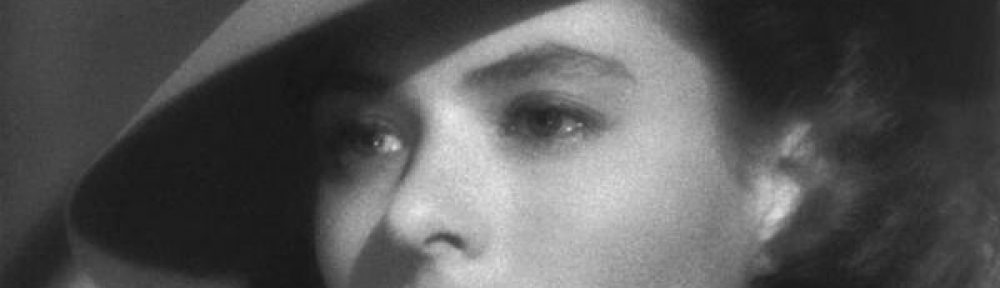
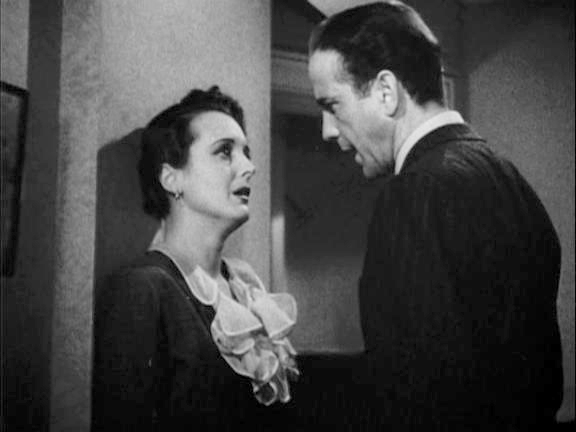
 Dashiell Hammet’s “blonde satan” Sam Spade is an icon of not only 20th-century literature but also 20th-century cinema, thanks in part to Humphrey Bogart and John Huston. He’s the cynical, hard-nosed, unsentimental P.I. whose general unpredictability sometimes leads to angry outbursts and other times gleeful amusement. He’s a straight talker and not about to be pushed around. If this sounds familiar at all, it’s because it lays the prototypical foundation for any film noir gumshoe ever. Except Bogart’s Spade receives the credit as the archetype. All other portrayals whether homage or parody stem from his performance. And it is quite the performance, but he has some worthy adversaries attempting to upstage him.
Brigid O’Shaughnessy (Mary Astor) is the conniving, beguiling, lying little stagy siren who comes into his office in need. She sets a precedent with a string of lies and that never ceases. However, there are half-truths and bits of genuineness backed by her quivering voice and pleading eyes. It took another round to realize what a femme fatale she actually is because she is in fact so good at it. You almost don’t realize how deadly she could be. And in the pantheon of femme fatales, I admittedly forget her in deference to the likes of Phyllis Dietrichson, Gilda, or Kitty Collins. Perhaps Spade’s a little stronger than most protagonists, a little more resilient, not allowing himself to be completely duped. But from the get-go, Brigid has him reeling and guessing. The difference is that he knows it. It’s not until the very end however, that’s he’s finally able to get an actual line on her.
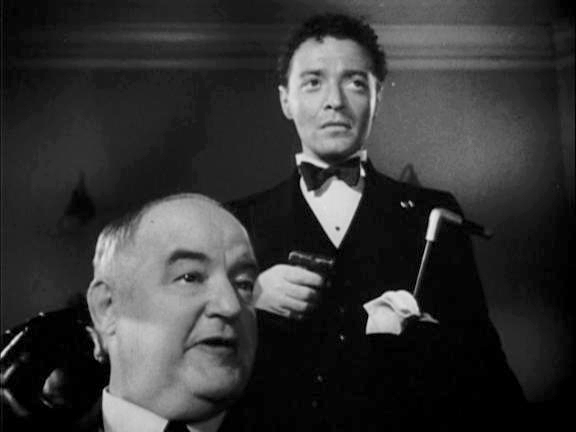 Then there’s Joel Cairo played so cunningly by the always wily and beady-eyed Peter Lorre and Kaspar Gutman portrayed so assertively and pointedly by the perennially memorable Sidney Greenstreet. These two men would come back in Casablanca and numerous other Warner Bros. Pictures, but they are the epitome of iconic characters actors who make any narrative that much more interesting. They have mugs and physiques really made for the dark recesses of the noir world, and when you put these four together it does spell trouble. Add a quietly seething Elisha Cook Jr. as Wilmer, the always personable Ward Bond as a Police Detective, and Lee Patrick as Spade’s doll of a secretary and you have a true winner.
With the eponymous blackbird to drive the plot all you really need are these characters and their inherent greed to pull them along. The beauty is that we do not know the details, but following Spade we slowly have piece after piece revealed, character after character make their entrance until everyone’s together and things get interesting
The story has loads of substance built-in and Huston was absolutely meticulous with his preparation for the film script and otherwise, which paid heavy dividends in the end. Hardly anything seems throw away and all the dialogue and scenes flow in a wonderfully seamless way that continues to carry us along in anticipation. It’s so engaging in fact that it becomes quite easy to disregard the film’s astute cinematography utilizing low-key lighting, which would become a norm for noir and then low angles that are reminiscent of another film that came out that same year, Citizen Kane.
Modern viewers might well accuse this film of being overly talkie, but amidst its iconic characterizations and bewildering plot, there are immeasurable pleasures to be mined. Few people would contest that the Maltese Falcon really is a major benchmark in film, as not only the early beginnings of German-influenced American melodramas (aka film-noir) but also a major career boost for the up and coming Huston, not to mention the veteran character actor Bogart. For film-noir lovers or cinephiles in general, this truly is the stuff that dreams are made of. John Huston and Bogart would both come back with success, after success, after success, but there’s something to be said for where it all began. The Maltese Falcon is a treasure indeed.
5/5 Stars
 As I’ve grown older and, dare I say, more mature, I like to think that I’ve gained a greater appreciation for those moments when I don’t understand, can’t comprehend, and am generally ignorant. Now I am less apt to want to beat myself up and more likely to marvel and try and learn something anew. Thus, Marienbad is not so much maddening as it is fascinating. True, it is a gaudy enigma in form and meaning, but it’s elaborate ornamentation and facades easily elicit awe like a grandiose cathedral or Renaissance painting from one of the masters. It’s a piece of modern art from French director Alain Resnais and it functions rather like a mind palace of memories–a labyrinth of hollowness.
 In fact, although this film was shot on estates in and around Munich, I have been on palace grounds similar to the film. There’s something magnificent about the sprawling wide open spaces and immaculate landscaping. But still, that can so easily give way to this sense of isolation, since it becomes so obvious that you are next to nothing in this vast expanse. Marienbad conveys that beauty so exquisitely, while also paradoxically denoting a certain detachment therein.
 Do we understand this bit of interaction at this stately chateau? Probably not. In fact, I’m not sure if we are meant to know the particulars about last year in Marienbad. That doesn’t mean we still can’t enjoy it for what it is. Because Alain Resnais is perennially a fascinating director and he continued to be for many years. Whether you think this is a masterpiece or a piece of rubbish at least give it the courtesy and respect it is due. Then you can pass judgment on it, whatever it may be.
 It’s the bane of my literary existence, but I must admit that I have never read Joseph Heller’s seminal novel Catch-22. Please refrain from berating me right now, perhaps deservedly so, because at least I have acknowledged my ignorance. True, I can only take Mike Nichol’s adaptation at face value, but given this film, that still seems worthwhile. I’m not condoning my own failures, but this satirical anti-war film does have two feet to stand on.
 The Chaplain (Anthony Perkins) doesn’t feel like a man of the cloth at all, but a nervously subservient trying to carry out his duties. An agitated laundry officer (Bob Newhart) gets arbitrarily promoted to Squadron Commander, and he ducks out whenever duty calls. Finally, the Chief Surgeon (Jack Gilford) has no power to get Yossarian sent home because as he explains, Yossarian “would be crazy to fly more missions and sane if he didn’t, but if he was sane he’d have to fly them. If he flew them he was crazy and didn’t have to; but if he didn’t, he was sane and had to.” This is the mind-bending logic at the core of Catch-22, and it continues to manifest itself over and over again until it is simply too much. It’s a vicious cycle you can never beat.
 But the tonal shift of Catch-22 is important to note because while it can remain absurdly funny for some time, there is a point of no return. Yossarian constantly relives the moments he watched his young comrade die, and Nately (Art Garfunkel) ends up being killed by his own side. It’s a haunting turn and by the second half, the film is almost hollow. But we are left with one giant aerial shot that quickly pulls away from a flailing Yossarian as he tries to feebly escape this insanity in a flimsy lifeboat headed for Sweden. It’s the final exclamation point in this farcical tale.
 We are met with a deluge of drums, explosions, and the unmistakable voice of Bono murmuring over the credits. The year is 1974 in Guilford England, the Irish Republic Army is as belligerent as ever, and right from the beginning director Jim Sheridan’s In the Name of the Father grabs hold of our attention.
 But what follows is something out of some perverse nightmare. Upon a return trip back to Belfast Gerry finds his home raided and he ends up in the interrogation block being grilled by a group of less than sympathetic police attacking him with a barrage of insults and threats. This doesn’t just seem like an Irish-English problem. There’s so much hatred present and Conlon and three of his buddies get roped into signing confessions under duress.
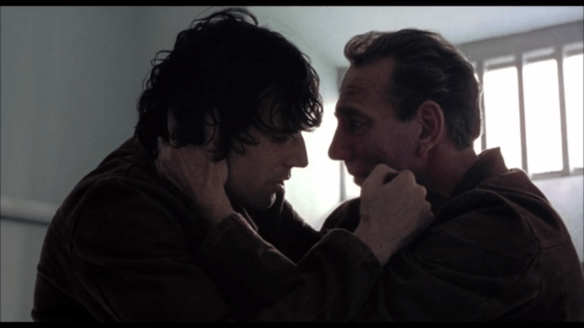 However, as he has the habit of doing Daniel Day-Lewis falls so seamlessly into his role as the Irish lad from Belfast who was wrongly accused. His Irish brogue is second-nature and he jumps between rebelliousness and fear with tremendous skill due to the emotional range demanded by the role.
 This is an Otto Preminger film about politics. That should send off fireworks because such a divisive topic is only going to get more controversial with a man such as Preminger at the helm — a man known for his various run-ins with the Production Code. All that can be said is that he didn’t disappoint this time either.
 As the film opens we watch a foot slowly wiggling its toes. It’s nothing extraordinary because we’ve undoubtedly seen this millions of times. If not on film then at least in our own lives. But it’s what the foot does that piques our interest. Quite dexterously but still straining, it manages to pull a record out of its sheath, set it down on the player, and lay down the needle before music finally emanates out. This simple act gives us some profound insight into the story that we are about to invest ourselves in.
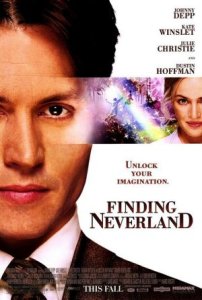 Peter Pan was immortalized by Disney in 1953, but as with many of the great fairy tales that they have adapted, it’s easy to forget that there was an earlier spark. These stories do not begin and end with Disney. They have a far more complex origin story and ensuing history. So it goes with J.M. Barrie’s Peter Pan.
 Coming out of a psychology background I was familiar with Stanley Milgram’s famous social experiment back in high school during Intro to Psych. Even back then it was a striking conclusion on conformity and just how far people will go. It was also ruthlessly contrived and even more methodically executed. Inspiration came from Milgram’s own background working with psychologist Solomon Asch, as well as his own Jewish ancestry, nights watching Candid Camera, and a fascination in the Adolf Eichmann trial.
 “Two people shouldn’t know each other too well if they want to fall in love. But, then, maybe they shouldn’t fall in love at all.” – Vittoria
 The initial scene in the stock exchange is gloriously tumultuous and it never lets up. This is the dashing young Piero’s (Alain Delon) domain that he rushes through with lithe business savvy. What this arena becomes is the quintessential Italian marketplace, a hectic theater of business made up of all kinds, involved parties and observers alike. Vittoria (Vitti) is one of those who looks on with mild interest and really throughout the entire film she is a keen observer as much as she is a person of action.
 And the narrative becomes perhaps even more tantalizing than love because it’s the prospect of romance that keeps it going. But it never seems fully realized. It’s frustrating, unfulfilling in a sense, like most of his films. Whether it’s an unsolved mystery or the most perplexing conundrum mankind has ever faced romantic attraction, he always leaves us an open-ended denouement.
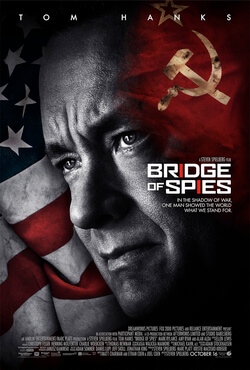 Steven Spielberg is this generation’s
