

Every time I return to Breakfast at Tiffany’s certain things become more and more evident. Mickey Rooney’s characterization as Mr. Yunioshi is certainly an egregious blot on this film, but if you look around the nooks and crannies, it’s full of quirky sorts who can be described as weak caricatures at best. Buddy Ebsen and Patricia Neal are wonderful actors but for some reason, they feel out of place in this one. I love Martin Balsam too but he’s not quite right either.
Still, all those complaints go away when I see those opening shots. If a film is defined purely by its opening sequence, this would be one of the most sublime films of the 20th century. Because watching Audrey Hepburn walk the silent streets of New York right outside of Tiffany’s is as good as it gets. There’s a perfect cadence to the sequence. We learn so much about the character of Holly Golightly in a few short moments and New York has never been a more magical place — as hushed as it is when her solitary taxi pulls up to the curbside.
Moon River lends a beautiful melancholy to the sequence and it’s absolutely marvelous. But then the illusion is broken when Holly gets home chased by a caricature of a man and accosted by her caricature of a landlord. The yellow face is deeply unfortunate but to a lesser extent so are many of the other portrayals.
Because it’s so easy to care for Holly. Audrey Hepburn makes us care for this woman who doesn’t quite understand what it is to need other people, to love other people, and to be okay with that. She’s scatterbrained in all the best ways. By proxy, we like “Fred, Darling” (George Peppard) because he is a stand-in for the audience as we get to know her better. He’s conflicted but also mesmerized by her like we are. She’s truly something special. And all the affection that we hold for her is because she is Audrey Hepburn. We cannot help but love her — unless I’m just speaking for myself — which easily could be the case.
Still, Truman Capote’s source novel was a very different animal and it could have become a very different film altogether with Marilyn Monroe initially slotted to star. But with her sweet smile and demure image, Hepburn brought something of herself to the role. Still sweet but more extroverted and out there.
It’s easy to peg this as her best performance because it does have so much character and her wardrobe by Givenchy becomes a perfect extension of Holly Golightly. In every sequence, she’s impeccably dressed and even when she’s in her pajamas she looks ready for a night out on the town. But of course, with all of those nights on the town, she’s come to her conclusions about men. They’re all either “rats” or “super rats” only looking out for themselves.
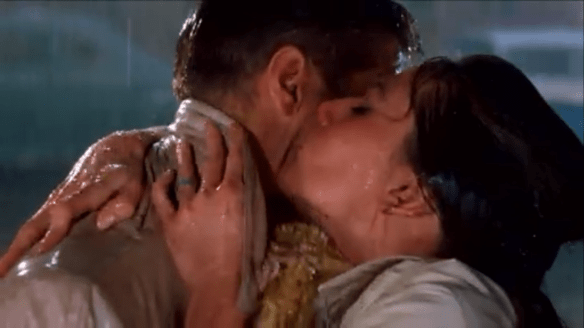
Holly winds up with her cat and the man who wants to love her, perhaps even the man that she deserves. Anyways he’s probably the closest thing she can achieve in the cinematic landscape at hand. However, it is unfortunate that Breakfast at Tiffany’s is not quite the film that Audrey Hepburn deserved. It rightfully so galvanized her iconic status for the ensuing generations. It’s only a shame that the film is not a greater achievement than it is, settling instead to be a generally light and diverting romcom from Blake Edwards.
But do yourself a favor and listen to Moon River again and again on repeat. The version doesn’t matter too much whether Mancini, Andy Williams or Hepburn herself. It’s one of the most remarkably mellifluous tunes of all time and truly worthy of Audrey Hepburn’s performance in this one.
4/5 Stars
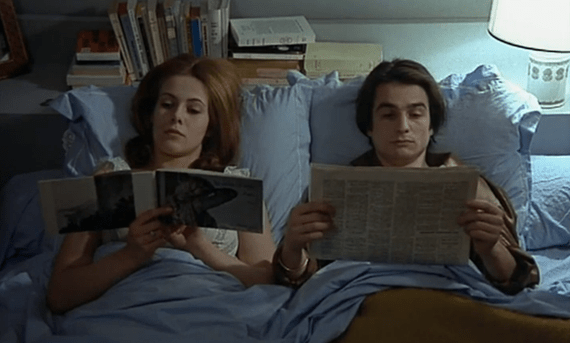 Arguably the greatest French comic was Jacques Tati and like Chaplin or Keaton he seemed to have an impeccable handle on physical comedy, combining the human body with the visual landscape to develop truly wonderful bits of humor. Bed and Board is a hardly a comparable film, but it pays some homage to the likes of Mon Oncle and Playtime. There’s a Hulot doppelganger at the train station, while Antoine also ends up getting hired by an American Hydraulics company led by a loud-mouthed American (Billy Kearns) who closely resembles one of Hulot’s pals from Playtime. Furthermore, there are supporting cast members with a plethora of comic quirks. The man who won’t leave his second story apartment until Petain is dead and buried at Verdun. No one seems to have told him that the old warhorse has been dead nearly 20 years. The couple next door that is constantly running late, the husband pacing in the hallway as his wife rushes to make it to his opera in time. There’s the local strangler who is kept at arm’s length until the locals learn something about him. The rest is a smattering of characters who pop up here and there at no particular moment. Their purpose is anyone’s guess, and yet they certainly do entertain.
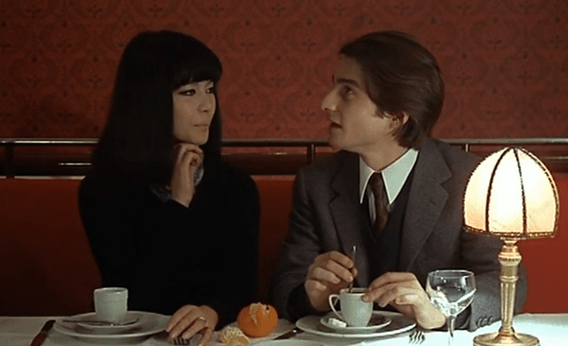 But as Truffaut usually does, he digs into his character’s flaws that suspiciously look like they might be his own. Antoine easily gets swayed by the demure attractiveness of a Japanese beauty (Hiroko Berghauer), and he begins spending more time with her. Thus the marital turbulence sets in thanks in part to Antoine’s needless infidelity –revealed to Christine through a troubling bouquet of flowers. It’s hard to keep up pretenses when the parent’s come over again and Doinel even ends up calling on a prostitute one more. It’s as if he always reverts back to the same self-destructive habits. He never quite learns.
 If you’ve read any of my reviews on the original trilogy, you undoubtedly know that Star Wars had a tremendous impact on my childhood. That’s true for many young boys. It was the film franchise of choice, and it wasn’t just a series of movies. The beauty of Star Wars is that it encompasses an entire galaxy of dreams beyond our own. It’s a world that reflects ours in many ways — the difference is that they have lightsabers. But not just lightsabers. Aliens. Spaceships. Planets. The Force. Characters who for all intent and purposes live like us. Good, that is in constant conflict with the evil in the world. It’s a struggle that is constantly evolving.
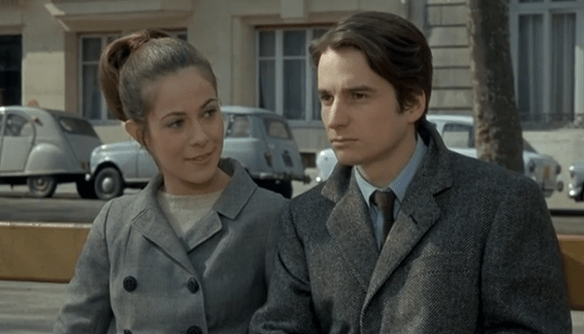 Charles Trenet’s airy melody “I Wish You Love” is our romantic introduction into this comedy-drama. However, amid the constant humorous touches of Truffaut’s film, he makes light of youthful visions of romance, while simultaneously reveling in them. Because there is something about being young that is truly extraordinary. The continued saga of Truffaut’s Antoine Doinel is a perfect place to examine this beautiful conundrum.
 In fact, all in all, if we look at Doinel he doesn’t seem like much. He’s out of the army, obsessed with sex, can’t do anything, and really is a jerk sometimes. Still, he manages to maintain an amicable relationship with the parents of the innocent, wide-eyed beauty Christine (Claude Jade in her spectacular debut). Theirs is an interesting relationship full of turbulence. We don’t know the whole story, but they’ve had a past, and it’s ambiguous whether or not they really are a couple. They’re in the “friend zone” most of the film and really never spend any significant scenes together. Doinel is either busy tailing some arbitrary individual or fleeing pell-mell from the bosses wife who he has a crush on.
 By the time he’s given up the shoe trade and taken up tv repair he’s already visited another hooker, but Christine isn’t done with him yet. She sets up the perfect meet-cute and the two young lovers finally have the type of connection that we have been expecting. When we look at them in this light, sitting at breakfast, or on a bench, or walking in the park they really do seem made for each other. Their height perfectly suited. Her face glowing with joy, his innately serious. Their steps in pleasant cadence with each other. The hesitant gazes of puppy love.
 While
While  Whereas the previous Torn Curtain was generally concerned with life behind the Iron Curtain, Topaz is decidedly more continental moving swiftly between Russia, France, America, Cuba, including a few pitstops at international embassies. However, the film does end up spending a lot of time focused on Cuba which can very easily be juxtaposed with the East German scenes in the former film. Hitchcock once more creates an illusion of reality using the Universal backlot and the adjoining area to craft Cuba, and he makes into a place of sunshine and romantic verandas, but it also runs rampant with totalitarian militia. It’s perhaps more exotic and welcoming than East Germany, but no less repressed. In both cases, they become a perilous locale for our protagonists. Still, rather unlike the previous film, Topaz lacks a truly A-list star like Paul Newman or Julie Andrews.
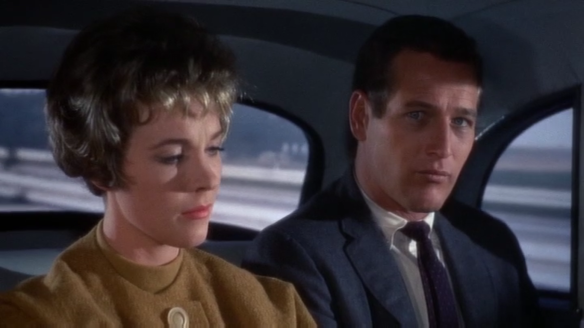 Torn Curtain was
  However, when you watch any Hitchcock film you do wait to be dazzled with some twist or trick because he was always one to bring humor and fascinating aesthetic qualities into his films. Torn Curtain has a few such moments that quickly come to mind. The most prominent has to do with the editing of the sequence in the farmhouse. It is here where Gromek is murdered by Armstrong and the housewife, but it is cut in such a fascinating way. It contrasts with Psycho’s shower sequence quite easily as they try and murder him first by strangling and then anything they can get a hold of whether it’s guns, knives, shovels. There is no score to speak of. Soon it becomes a methodical rhythm of cutting between contorted faces as they slowly but surely move towards the stove. The brutality and length of the ordeal suggest how ugly and laborious it is to kill a man. Hitchcock certainly does not glorify it in any sense.
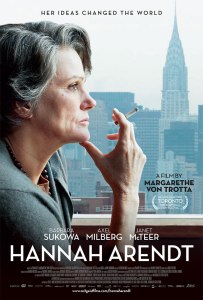 The term “banality of evil” has floated through the lexicon ever since German philosopher and columnist Hannah Arendt coined the phrase during the Eichmann trial back in 1961. In fact, the words gained so much traction that they have undoubtedly lost some impact due to overuse. However, this film takes equal interest in the backlash that she received on her remarks about the Jewish community. Her claim that the Jews were collaborators with the Nazis and privy to their own destruction, undoubtedly would be unpopular now. Back then it was a pure lightning rod for scurrilous criticism and hateful backlash.
 The Awful Truth came out of a trend that was in vogue during the 1930s. It’s called a comedy of “remarriage.” During the Hays Code era, it allowed films to nimbly skirt the whole issue of divorce and extramarital romance. We would see it again in the more remembered screwball His Girl Friday and various other forms as My Favorite Wife and The Lady Eve.
 We are definitely in the age of the well-wrought period piece and Brooklyn has all the trappings you could want. Adapted from Colm Toibin’s novel the film showcases a pure, noble heroine in Eillis Lacy who like many others makes the journey from her homeland of Ireland to the golden-paved streets of New York.
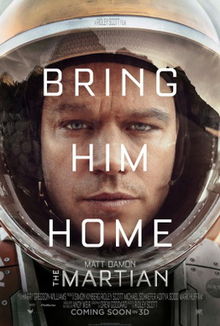 The Martian is not the film you first expect. It’s a space thriller. It has tense moments assuredly, but it also has an astute sense of humor that pulses through the film as its lifeblood. It makes Ridley Scott’s latest endeavor, based on the novel by Andy Weir, all the more palatable because it lends a fresh face to space exploration.
