Review: The Grapes of Wrath (1940)

Grapes_of_Wrath,_The_-_(Original_Trailer)_-_01The Grapes of Wrath is in special company with a number of literary adaptations where film and source material are both so highly regarded and culturally significant. A few other names spring to mind such as Gone with the Wind, A Streetcar Named Desire, and To Kill a Mockingbird.

However, even more so than all of those stories John Steinbeck’s novel of exodus during the Dust Bowl has a universal ring reverberating for the common man. The Joads are a humble, simplistic Oklahoma clan, but they are only one family out of many who are forced to make the migration out to California. The Dust Bowl and big business push them off their homes and their only hope is the distant promise land of California. They cling to that hope which keeps them going resolutely onward toward the Orange Groves.

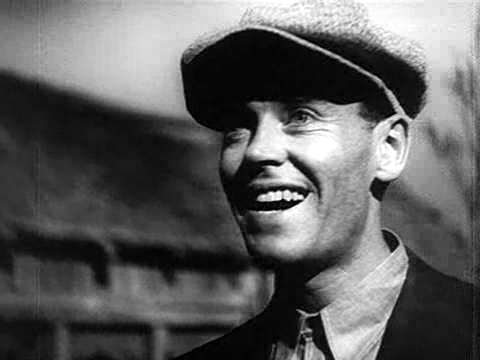
Tom Joad (Henry Fonda) who has just gotten out on parole is the figure from which we see the story through. He’s the focal point certainly, but he is defined by all those around him. Ma Joad (Jane Darwell) is the rock of the family, keeping them together, civil, and spirited even when the worst hardships of life hit.

Grandpa dies on the land that he called home. Grandma dies without the company of her lifelong partner. Rosasharn’s husband cuts out when prospects look bad. The family is slowly drained of money, food, gasoline, and hope when they see that the prospects in California are far from good. The book has so much to say politically and socially, using the Joads as a universal parable to reflect the reality of a great many people.

Obviously, John Ford’s film cannot contain all the exposition and commentary of the novel, but he uses the visual medium brilliantly and the Nunnally Johnson’s script fills the screen with all sorts of folks. There are no true villains and the only heroes are those who maintain their humanity and treat others well on a day to day basis. Ma Joad is one, offering food to starving children because it’s the right thing to do. A roadside waitress comes off brusque at first before extending a true act of kindness. You have the genial caretaker (Grant Mitchell) of the Wheat Patch Camp, who is angelic in comparison to so many of the other gruff people the Joads come in contact with.

There’s the scum of the earth. People just doing what they’re told, men just worried about profit, and crooked cops looking to run Okies out. There are those who just grin and bear it to feed their families. They’re part of the problem too and finally, you have Jim Casy and then Tom following in his footsteps.

Former preacher Jim Casy (John Carradine) is a critical figure because he, like so many of the other characters, has lost himself and yet over the course of the film he finds his purpose again. He’s the film’s Christ-like figure (with the initials JC), and yet he seems counter-intuitive to what we expect. But he has the most important things down. He fights for justice and lays down his life for his friends.

Rather like an extensive Dorothea Lange exhibition, cinematographer Gregg Toland shoots the film in beautifully austere and gritty black and white, which feels like a test run for Citizen Kane. However, it remains iconic in its own right with the ways in which it makes the plain, simple, and ordinary cinematic. It’s truly a visual snapshot of Americana with Henry Fonda as our All-American poster boy.

Speaking of Fonda, how could I have lost sight of his character here? Fonda in many ways synonymous with Tom Joad, and I always equate him being a kindly, true blue American. But that’s only part of him. That’s how he acts around his family, but he’s a young man disillusioned by the world. He speaks his mind and is not opposed to fighting back against the injustice. Because that’s what he sees around him. That’s why he kills the man who beats Casy and that’s why he goes out on the road; to be a champion of justice where there isn’t any. It’s an ending more suited for Hollywood at the time than Steinbeck’s original denouement, but it no less poignant or powerful. It doesn’t just stop with the Depression, but it ends up being a whole lot bigger and more universal than that. This is one of the great tales about the human condition, courtesy of one of America’s greatest directors starring one of America’s most legendary actors.

4.5/5 Stars

“I’ll be all around in the dark. I’ll be everywhere. Wherever you can look, wherever there’s a fight, so hungry people can eat, I’ll be there. Wherever there’s a cop beatin’ up a guy, I’ll be there. I’ll be in the way guys yell when they’re mad. I’ll be in the way kids laugh when they’re hungry and they know supper’s ready, and when the people are eatin’ the stuff they raise and livin’ in the houses they build, I’ll be there, too.” – Tom Joad

Garden State (2004)

gardenstate1Garden State was written and directed by Scrubs star Zach Braff before he made it big, while he was still struggling to get into the business. It’s one of those deep blue funk movies where a person has to find themselves in the giant mass of humanity. Andrew Largeman’s mom just died from drowning in a bathtub. He hasn’t seen his dad (Ian Holm) for about a decade because they haven’t really been on speaking terms. Now he lives in L.A. across the vast expanses from his native New Jersey. He works in a very zen Vietnamese restaurant and surreal daydreams clutter his apathetic mind.

The question is what will shake him out of his despondency because the death of his mom is only the inciting incident. As it is with a small town community, he’s constantly meeting all the old acquaintances from his high school days. Most are impressed by his foray in acting even though he hasn’t made much a career of it yet. The people he reconnects with include his old friend Mark (Peter Sarsgaard), who works at the cemetery and doesn’t have much of a life except smoking weed. Then there’s Jesse who made a killing off Silent Velcro and now has all the time in the world for parties in his huge mansion.

That’s not what does it though. It’s when Andrew is sitting in the doctor’s office, hoping to get checked, because he’s been having headaches after being off the meds he’s been prescribed all his life. There he meets Sam (Natalie Portman) for the first time, and he’s never the same. She’s a scatterbrained, off-the-wall personality with a lot of energetic pizzazz. That about covers it except she also has epilepsy and is a compulsive white-lier. But in her Andrew finds a genuine spirit, who can revitalize his life, by giving him sympathy in his pain, while also brightening up his everyday reality.

gardenstate2On his last day in New Jersey, Andrew obviously wants to spend the time with Sam, but it ends up turning into a daylong treasure hunt as Mark tries to track something down. It isn’t much, however, it’s the thought that counts, and on their odyssey, Andrew is finally able to let go of a lot of the hurt and pain he’s been harboring. He’s ready and willing to forgive his father.

Then, there he is in the airport terminal getting ready to leave Sam for L.A. He has to get back and he promises to call her, but he seems to remember he’s a different person now. It’s a delightfully sweet ending to the film and we absolutely want it.

gardenstate3Braff’s wistfully apathetic demeanor is so wonderfully personified by a memorable soundtrack including alternative rock groups like Coldplay and especially The Shins. His brand of acting is really just playing a wet noodle, but he does it well. Those beady eyes of his constantly scanning back and forth nervously around the space he inhabits. And the film certainly has some dirtiness around the edges, but our main couple is so endearingly sweet. I respect a film that respects its characters such as not needing to show them having sex all the time, but it can paint their romance in more playful, soft, even intimate shades. Andrew takes drugs and curses, but only to dull the pain or express his bitter frustrations. Sam’s the kind of girl who states that she’s not innocent, confirming our suspicions of just the opposite. We appreciate both of them exactly for those reasons. He rides an army issued motorcycle with a sidecar for goodness sakes, and she gets teary-eyed over a deceased hamster. They’re quite the pair.

3.5/5 Stars

Cry of the City (1947)

cryofthe1Cry of the City is a lesser noir from director Robert Siodmak with an often arbitrary plot, but since he is a mainstay of the genre it’s still an interesting foray on a number of fronts. It’s visually striking and features a number of interesting characters, especially female characters of all sorts of ranges.

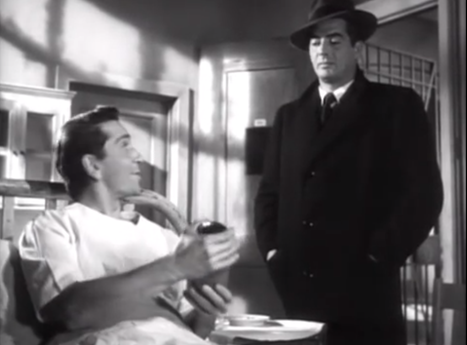
The film opens with thug Martin Rome (Conte) laid up in the hospital after shooting a policeman dead and receiving some crossfire. The police, including Lt. Candella (Mature), wait around uneasily wanting to make sure that the perpetrator will make it out alive, so he can pay for his crimes. He gets a visit from a specter of a woman (Debra Paget), who disappears as quickly as she arrived. Then a crooked lawyer tries to get him to take the rap for a robbery he didn’t commit. It would take the heat off one of his other clients.

The cops begin to canvas the streets for the mysterious girl since Rome will give them nothing. And then he escapes the prison ward, fearful that he and his girlfriend will be framed. But he’s still feverish and weak from his wounds so he calls upon the assistance of his family and an old girlfriend (Shelley Winters).

He then leads the coppers to the crooked masseuse (played by the imposing Rose Givens), but time is running out for Rome, and he is finally receiving retribution for the killings he committed and all the people he has used. It’s a chilling ending worthy of the noir world.

There’s something about Victor Mature that I don’t really care for. Maybe he just feels a tad plastic as an actor. However, it is a great deal of fun watching Richard Conte, because he can play meek fellows and baddies. In Cry of the City he plays someone in between who is wholly corrupt, but his family gives him a sliver of humanity.

The film has a Godfather-like Italian culture, and it draws a fine line between the good and bad guys since in many cases they come from the same background. In this case, Rome chose the road of excess and corruption while Candella took the so-called straight path that’s a lot less glamorous. The plot, on the whole, has uneven patches, unexplained jumps, and unanswered questions. Shelley Winters felt like a rather random addition to the storyline. And Debra Paget mysteriously shows up, disappears, and comes back again. Although the film doesn’t have much of a score, Alfred Newman’s music sounds vaguely familiar — could it be from another film? I think so.

3.5/5 Stars

I Wake up Screaming (1941)

iwakeup1So the title doesn’t have a bearing on much of anything, but who cares? It sets the tone brilliantly for this wickedly twisted noir. The film opens like other films, after the death of a beautiful young woman. Two people are getting grilled in adjoining rooms. Frankie Christopher (Victor Mature) is a promoter and the former love interest of the girl, so he also happens to be high on the suspect list. He lays out how he first met the pretty young waitress Vicky Lynn (Carole Landis). With the help of two conniving friends, he made her into the next big thing. The has-been actor Robin Ray (Alan Mowbray) helps her reach the higher echelon of society. Mustachioed gossip columnist Larry Evans (Allyn Joslyn) plasters her name and picture all over his paper until the world is bound to notice. They make quite the trifecta, all too happy to give this unassuming girl a break.

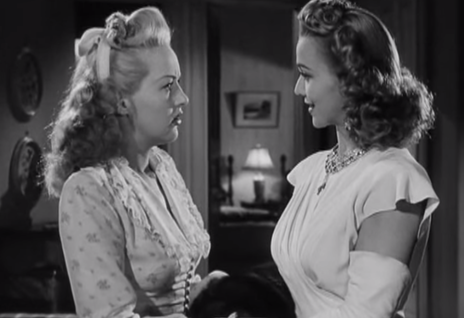
In the next room, Vicky’s sister Jill (Betty Grable) tells her side of the story: She saw how Vicky was beginning to change. She stopped working as a waitress, became entitled, and began to look down at all those around her. Now a real prima donna, she ditches her benefactors ready to head off to Hollywood for a screen test, and Christophers is understandably ticked. It doesn’t help that both Ray and Evans fell in love with Vicky. There’s also something going on between Jill and Frankie, because in the wake of the murder they turn to each other.

iwakeup2For a time the murder gets pinned on the switchboard operator — the always wide-eyed and nervous Elisha Cook Jr. But the menacing police officer Cornell (Laird Cregar), has an almost obsessive drive to find Frankie guilty of the murder. There’s something else going on here. Like so many films of this period, this story is full of men desiring women. Some of it is understandable, some of it is casual, and some of it is downright twisted.

Although she is out of the film early on, Carole Landis has the key role as the rising starlet and she is the closest thing to a femme fatale in this film. But there are a lot of characters of interest aside from our main couple of Betty Grable and Victor Mature. His two opportunistic friends are no-goods but thoroughly entertaining, and Laird Cregar is downright spooky. The film takes on another level of significance due to the tragic suicide of Carole Landis which occurred in 1948. There is most definitely an allure to her just like the women in prominent film-noir like The Woman in the Window or Laura (1944). Throughout some haunting refrains of “Somewhere Over the Rainbow” can be heard, helping to make I Wake up Screaming disconcerting from beginning to end.

3.5/5 Stars

Review: Bringing up Baby (1938)


bringingup2“Our relationship has been a series of misadventures from beginning to end, so if you don’t mind, I’ll see Mr. Peabody alone and unarmed.” –
David Huxley

Bringing up Baby is really and truly one of a kind, almost headache-inducing with its sure energy and dizzying with its scatterbrained tracks, but nonetheless it is a screwball masterpiece. From Hollywood master Howard Hawks comes arguably one of his greatest films, boasting the rat-ta-tat-tat of some killer dialogue, some fantastic comedic sequences, and a number of memorable performances.  Honestly, if I learned anything from this film, you can’t watch it just once, because you’re bound to get bowled over, and afterward you probably won’t realize half of what you saw. For instance, there’s so much talking you hardly realize that there’s not much of a score.

Young Katharine Hepburn is at her most radiant and almost smothering with her constant barrage of words. You either love her or hate her. There’s no way to ignore her performance here because it’s completely out there. It’s hard to believe she was a novice when she came into comedy. There’s no inhibition whatsoever. Not in the least.

Cary Grant is the bookish paleontologist who is content with constructing the skeleton of his prized Brontosaurus and then marrying his admiring, no-nonsense sweetheart Ms. Swallow. It sounds like a pleasant albeit mundane lot in life. In an effort to gather a $1 million in funding, he goes out to the golf course ready to do a little business on the side with Mr. Peabody. That’s when hell strikes in the form of one scatterbrained lady extraordinaire Susan Vance (Katharine Hepburn). First, she swipes his golf ball (quite certain it is her’s), then she batters up his car (sure it is her’s again), and to top it all off she causes him to sit on his hat when they cross paths again at a club. Poor Dr. Huxley doesn’t know what’s hit him. He just wants to get away from her and all the fury that comes in her wake.

Good luck with that Cary, because she’s a force of nature! She misunderstands everything, and he gets endlessly caught in her web of miscommunication.  Susan initially roped him into coming along with her, thinking he was a zoologist who could help her take care of “Baby.” Of course, it turns out to be a tame leopard that they must get to her aunt’s home out in Connecticut (Only in a screwball comedy). By now he’s bothered. She’s falling in love.

So she does what any resourceful girl would. She keeps him occupied. First, she swipes his clothes. Then the dog George runs off with his prized possession, the intercostal clavicle. Initially, they want to get rid of the leopard. Then they want to keep it. Auntie comes home along with her gentleman friend Major Horace Applegate. A not so friendly leopard escapes from a carnival. The police get involved led by their bumbling leader Constable Slocum.

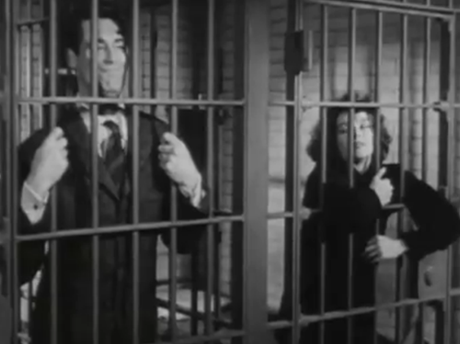
bringingup1It’s a doozy of a masquerade and most everything and everyone is utterly confused. It’s as if everything that enters the world of Susan Vance is further complicated. To her, it’s simply a day in the life and Huxley begins as an outsider, but despite all the madness, he becomes accustomed to it.  Running after the dog, getting soaking wet, tripping, falling, fending off a leopard, getting thrown into the clink. Dr. Huxley realizes that he’s never been happier and it ends pretty much as it began. Never a dull moment.

This has to be one of Hepburn’s greatest performances earlier in her career because she has everyone in a tizzy. Although he’s literally getting the run around from Hepburn, Grant is her perfect comedic foil. He dons the glasses at first and carries the sensibility that goes with them. However, he is equally equipped to go without them as a scatterbrained gentleman ready for all the pratfalls, quips, and escapades that ensue. And they are surrounded by a solid set of character actors including a drunken Barry Fitzgerald, the easily distracted Walter Catlett, the big game aficionado Charles Ruggles, and the peppy dog Asta (of Thin Man fame) among others.

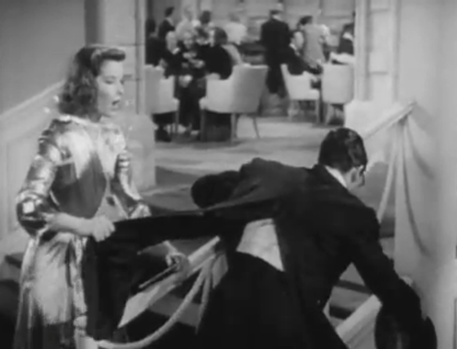
Howard Hawks once said that “a good movie is three good scenes and no bad scenes.” In Bringing up Baby some of the memorable moments include the fateful meet cute at the golf course, the chuckle-worthy encounter at the club, and of course the sequence leading up to jail. But it’s also the little comedic moments wedged in between. Maybe Hepburn’s parked in front of a fire hydrant and trying to pull the wool over the policeman’s eyes. Or perhaps Grant dons the only piece of clothing, a frilly bathrobe, and is forced to answer the front door. It’s utterly absurd. It’s become classic and it shows the ability of Hawks behind the camera to make the action flow so organically.

It’s amazing that this film was a flop, Hepburn was labeled “Box Office Poison” by this point, and Cary Grant had yet to become an established star. Oh, how things changed. Because this film, in a sense, was the beginning of something truly wonderful. When two of the greatest stars aligned with one of the great directors.

5/5 Stars

Like Crazy (2011)

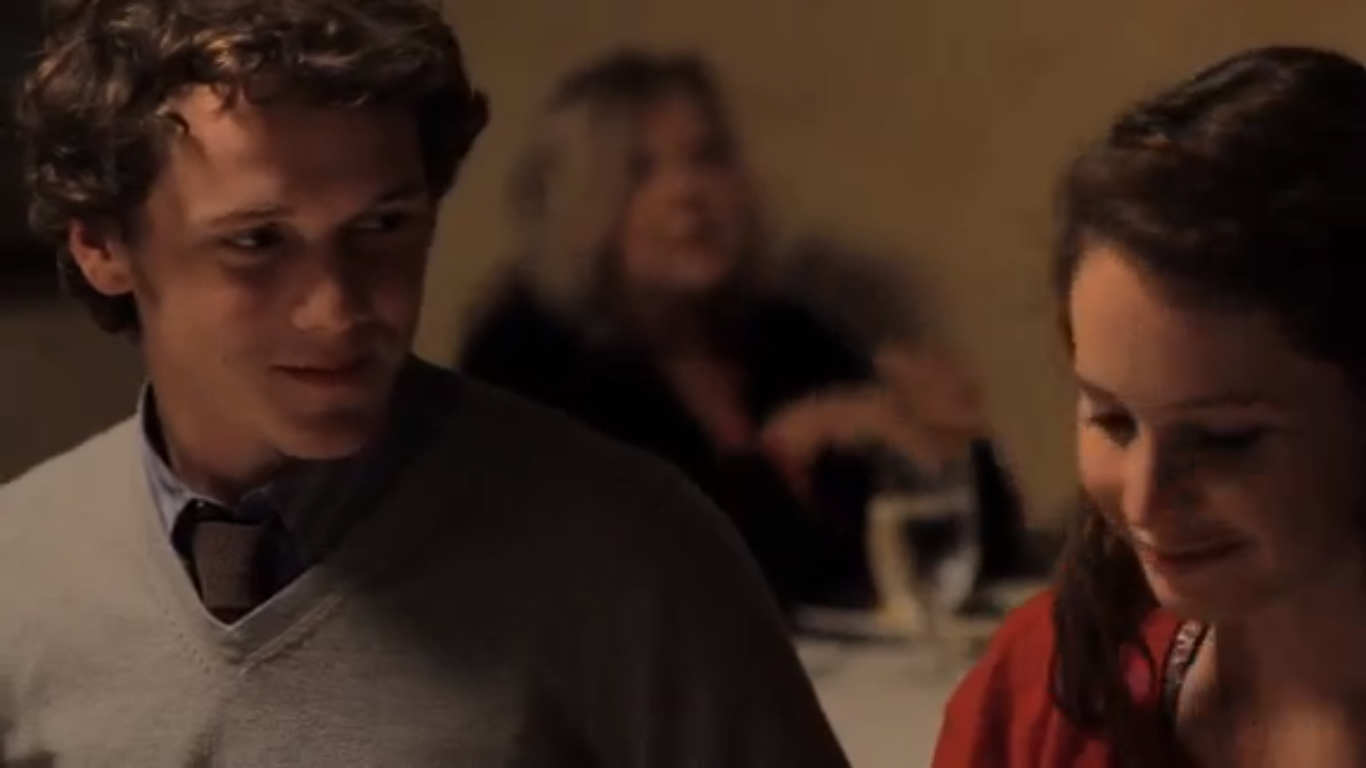
likecrazy7Like Crazy is the genesis, the passion, and the heartache of a romance all wrapped into 90 minutes of film. Our two subjects are filmed as individuals at first and the cinematographer opts for a handheld camera approach to capture their moments together. The loosely woven narrative is based on director Drake Doremus’s own experiences with a transatlantic romance. In the film Jacob (Anton Yelchin) is an American college student living and going to school in L.A. After her heartfelt confession of affection, Jacob begins a relationship with the British-born Anna (Felicity Jones), who is in country on a student visa.

The film slowly evolves into a montage of their time together as they grow closer and closer. It’s a beautiful picture of tentative and affectionate love coming into bloom. And with her visa about to expire Anna decides to forgo it all and stay with Jacob. But the Visa issues come back to bite her and continue to give the couple problems. Soon they are separated by an entire ocean dealing with the many challenges of long distance relationships.

For Jacob, there’s another girl (Jennifer Lawrence). For Anna a guy down the hall who asks to borrow her appliances. It’s so much easier having these people in close proximity, and it challenges their wills. Because airfare is expensive and talking through text message just simply isn’t the same. It works at first but it seemingly is not sustainable.

Marriage seems like the best option for them to hold what they have together as Anna’s Visa problems still loom overhead. But it’s hardly a quick fix and over time there’s a breakdown in what they have. Even when they are together they have trouble connecting, not shouting, and not getting annoyed. Because, more often than not, they are apart now. The best they can do is wistfully remember the intimacy they had before and try and go forward from there.

Likelikecrazy4 Crazy generally stays away from the constricting effects and inflexibility of your typical plot line. The script was more of an outline and the dialogue was essentially the two leads ad-libbing most of their interactions. But this lends an organic quality to this, dare I say, trendy indie love story. There’s vast distance juxtaposed with intimate close-ups. Emotions embodied by images become paramount over words. In a sense, we see their nakedness and not literally, but we see that vulnerability in those most intimate times in a relationship, sharing bits of bliss together. Whether they are in Santa Monica or London, the scenery is only a place in which the two of them are having moments. The type of times they remember in the shower or while they sit in the bar with their friends, or when they sit doodling at their desk. It’s those times that make them want to make this thing work despite the distance. It’s a difficult trade-off and I’m doubtful anyone has found the precise answer for it. Because all the countless advances in technology cannot give us intimacy only imperfect substitutes that will never fully replace the real thing.

likecrazy6It is a great joy watching Felicity Jones and Anton Yelchin play off of each other because aside from one occasion, their performances are quite subtle and refreshing. We even get an appearance from Jennifer Lawrence. For this reason, it’s fun to watch a film like this and see where the talents have gone in only a couple of years. The Theory of Everything, Star Trek, The Hunger Games. But there’s always a necessary niche for smaller films like this. I look forward to more takes on love from Drake Doremus and Felicity Jones has gained one new fan today.

3.5/5 Stars

Starter for 10 (2006)

215px-Starter_for_tenOftentimes I get my greatest excitement not simply from the masterpieces I get to discover, but also hidden gems that get unearthed along the way. This one just happens to have some of Britain’s best talent. Starter for 10 is a coming-of-age film which immediately sets off a number of ideas in one’s head, and it has most of what you expect in that department. However, it also has an astounding plethora of young British talent. The list of names is as follows: James McAvoy, Alice Eve, Rebecca Hall, Benedict Cumberbatch, Dominic Cooper, and even James Corden.

The heart of this film is Brian Jackson a college-aged kid, who grows up wanting to be clever and he has a passion for trivia because he always wants to learn more and he spent some formative moments in front of the telly with his now deceased dad. Now in 1985, he gets ready to leave his mother (Catherine Tate) and head off for new experiences at Bristol University. But she’s not the only one he leaves behind. His friends Tone and Spencer are not as ambitious as him, but he promises not to forget them.

Still, when he gets to college, he’s excited for the new challenges ahead and although his first acquaintances are rather odd, he does meet the winsome girl Rebecca Epstein (Rebecca Hall), who has an affinity for political protests. Soon he’s quick to join the University Challenge quiz team anchored by a very stuffy post-grad (Benedict Cumberbatch) but that’s not all. He also gets his first encounter with the posh girl with a gorgeous figure (Alice Eve). He’s immediately smitten with this new quiz kid and for good reason.

But what follows is all the drama that one would expect. The pitter-patter of his beating fragile heart as he dreams of days with the beautiful Alice. It even manifests itself in a dinner date and a rather awkward New Years with her parents. But then there’s Rebecca too. She’s brilliant as well and he has to figure out what he’s doing. Mixing up names on New Year’s Eve is not the best plan, but of course, that’s what happens.

His best friend Spencer (Dominic Cooper) comes to visit and that fosters more turmoil than Bri would like with the old world intersecting with the new. He’s confused and apathetic about the University Challenge by now. Everything goes wrong before the big day of the final competition and to top it all off Brian messes things up in a big way that leaves him dejected. He cannot even face his team now. Early on Brian latched onto the idea that knowledge is the key to being happy, not a job that you might hate. Although that can be true, it seems he slowly realizes that there’s even more to happiness than knowledge. If that’s all you have, you’re probably not going to be all that content. You see, he’s certainly clever, but that doesn’t mean he doesn’t do some stupid things and make some big mistakes. Don’t we all, and otherwise, this could not be a coming-of-age story full of discovery, confusion, and love.

It’s a bad metaphor, I know, but do you want the Marilyn Monroe blond bombshell or the sweet Audrey Hepburn brunette? Everyone has their proclivity, but Brian seems to make the right choice because he doesn’t go with the outward appearance, he goes with the one with a depth of character and the ability to forgive. That’s big.

There’s a formula being followed certainly, but it’s easy to look past that and enjoy Starters for 10 for its heartfelt performances and simply the good fun it brings to the table. The names attached to the picture were slowly on the rise and it’s impressive to see how far their careers have taken them.

3.5/5 Stars

Easy Living (1937)

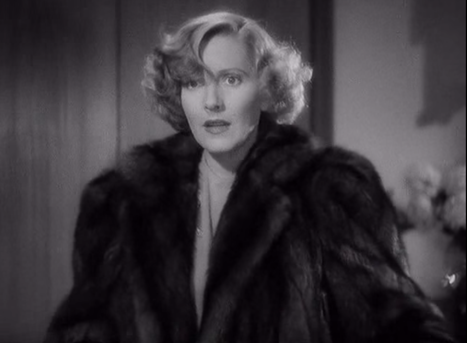
easyliving1Easy Living is a sizzling screwball comedy propelled by a Preston Sturges script and the direction of Mitchel Leisen (a former costume designer). It finds humor in the stratified 1930s society and the so-called easy livings of the affluent. But it also has it’s fair share of rip-roaring slapstick. Really the whole plot revolves around a rogue fur coat.

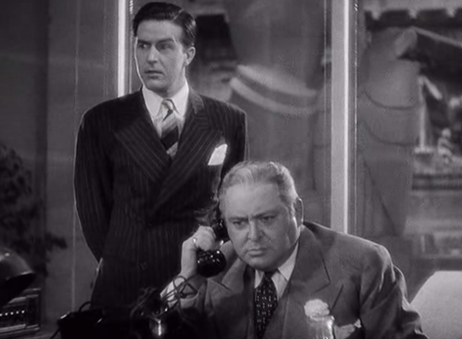
J.B. Ball (Edward Arnold) is the third most prominent banker in New York. His wife has a penchant for fur coats and his son John Jr. (Ray Milland) is fed up with his father’s constant criticism. He’s ready to leave the luxury and make a go of it on his own. Fed up with his wife and not all that pleased with his son, Mr. Ball tosses one of his wife’s sables off their balcony. Mary Smith (Jean Arthur) is the unsuspecting recipient of the coat as she rides by on a passing bus. By chance, she and Mr. Ball strike up a conversation and they hit it off after he resolves to buy her a new hat, in lieu of the one that was ruined. Of course, the clerk gets the wrong idea about their little friendship and it has major repercussions.

Many folks want to get on her good side since they’ve heard through the grapevine that she’s connected to Mr. Ball. This includes the befuddled hotel owner Louis Louis, who offers Mary one of his finest suites and she has no idea what she ever did to deserve it. Of course, Mary crosses paths with John Jr. who is smitten with her right off the bat. But she has no idea who his father is.

A joke from him, relayed by Mary, ends up having overwhelming consequences on the stock market and it ends up spelling major trouble for Mr. Ball. But of course, father and son and Mary all wind up in J.B.’s office together as the comedy of errors finally synchronizes. Son finally proves his acumen to father and gets the job he desperately needs.  Mary has her guy now and Mr. Ball’s marriage is all intact.

easyliving3Edward Arnold is an absolute riot and at his pushy best as the affluent banker. Jean Arthur has always been one of my favorite comediennes. She has such a great voice for delivering quips; there’s a certain lilt to it that is always invariably funny. She’s also the perfect independent working woman like a Barbara Stanwyck or Rosalind Russell. She’s no pushover. I knew Ray Milland for later films like The Lost Weekend or Dial M for Murder, but I saw here firsthand that he has some comedic chops. I also learned what an automat was and at the same time got treated with some top-notch slapstick. Thank you, Preston Sturges.

4/5 Stars

5 Fingers (1952)

5fingersHonestly, this doesn’t feel like a typical Joseph L. Mankiewicz film. It was written by someone else and because he was nearing the end of his contract with 20th Century, he didn’t end up editing the project. Supposedly the overseeing of Daryl Zanuck led to several scenes being scrapped which Mankiewicz thought were good. Also, as a director, his name does not usually scream spy thriller like an Alfred Hitchcock. He’s more in his element with cultured dramas about relationships. However, 5 Fingers is still an engaging tale based on the historical wartime events surrounding the informant code-named Cicero.

In real life, Elyesa Bazna was an Albanian born valet who worked under the British ambassador to Turkey. He played both sides, first ingratiating himself as a gentleman among the Brits and then taking pictures of top secret information and passing it off to the Germans in the period between 1943-44. Cicero, as he was called, could easily come off as an abhorrent traitor and yet James Mason plays his character Diello with an adeptness that is underlined with an air of civility. We don’t particularly care for the man, but he’s not a monster, just a bit crooked and concerned with personal gain. Mason certainly did have a knack for playing the criminal type and I must admit I’m curious to watch more films with him because his performances have not quite won me over yet. There’s still time for that.

The film altogether is not that tense, but it does set the groundwork for some interesting interactions which all seem to stem from Cicero. He is subservient and aloof when it comes to serving the ambassador. He’s quite open with the Countess Anna Staviska (Danielle Darreux), who turns into a confident, romantic partner, and in some ways an accomplice — just wait. Meanwhile, he deals with the Germans self-assuredly knowing what he wants and how he’s going to get it. He’s no slouch and he seems devilishly good at the spy game.

Throw in some double-crossing from the countess and a dynamite word like “Overlord” (aka D-Day) and Dellio finds himself on the run with the Brit’s counterintelligence operative (Michael Rennie) hot on his tail. Thanks to his assistance, the Germans are trying to protect him as he gets ready to hightail it to South America. There’s one small thing he didn’t account for. He’s been duped. He and the countess both. All he can do is break out in a fit of laughter. I’m not sure if that’s how the real story ended — probably not, but it makes for a fitting conclusion of this tale as his money slowly drifts away in the wind.

3.5/5 Stars

Crazy, Stupid, Love. (2011)

crazystupid1Here is a film from screenwriter Dan Fogelman where Ryan Gosling acts as wingman for an estranged Steve Carell; seems like a basic enough pitch for a movie, and yet thankfully it’s not quite that simple. Early on Jacob (Gosling) implores the washed-up Cal (Carell) to lose the New Balance sneakers and drop the Gap for good. What follows is a lesson in how to be a “man again.” Also known as picking up women with new clothing, a better hairstyle, and a whole different strategy. Cal’s a man trying to step out and try new things after he found that his estranged wife of 20 years Emily (Julianne Moore) slept with another man. His understandable reaction at the time he heard the news was to jump out of a moving car. It hurt him both figuratively and literally.

So Jacob is the beginning of something new for Cal as he steps out to meet women. Some of the scenes make me want to crawl up into a ball out of the sheer awkwardness and that’s often the type of humor that Steve Carell revels in. He likes to make us squirm, and it happens on numerous occasions. He says all the wrong things at all the right times. You get the idea. But behind all this, he still has feelings for Emily, and he’s wistful in the presence of his kids. Everyone wants them to get back together. However, he’s not the only one facing romantic issues as his son Robbie and wing man Jacob soon have their own problems. Emily must figure out what she wants and up and coming lawyer Hannah (Emma Stone) must figure what is the best for her.

crazystupid2As for Cal, he attends a Parent Teacher Night to end all Parent Teachers Nights and it has to be the worst circumstances you could ever imagine. It gets uncomfortable quick as he learns who his son’s teacher is. I’ll spare you the details. Then there’s a  greatly hilarious twist that hits after all the primary cast find themselves in Emily’s backyard having a few unpleasant revelations. But the film doesn’t end there since the journeys of these characters have a little farther to go yet. They have to find themselves, navigating this crazy, and yes, maybe even a little stupid thing we know as love.

I must admit I like these guys in spite of those pick up lines (Lets get out of here) and attempts at romancing, because that stuff makes funny material for a film and we get some genuine laughs out of it, but it’s when we tear that down for a moment and look underneath all of that. That’s where we find true heart.crazystupid3Most of these characters are well-meaning and likable and with those who aren’t, it’s forgivable, because they are necessary for the film’s humor initially. Namely Ryan Gosling and Liza Lapira, who always seem ready with a quip or maybe a one night stand with an obliging member of the opposite sex. The movie needs these characters I suppose since for starters it’s Jacob who helps Cal find a different side of himself. Liz who goads her friend Hannah to take a chance which she finally capitalizes on. But in truth, most all of these main players have a sense of humanity about them, mixed in with their faults and failures. Cal was once a good father and now he’s made a lot of mistakes. Jacob is a total womanizer, but when he cares about people he really does. He loses all the false pretense about him. Ironically, Cal changes Jacob as much or perhaps more so than Jacob changes him, which is important in the evolution of this film. They teach each other and in turn help each other move forward.

Even the teenagers Robbie (Jonah Bobo) and Jessica (Analeigh Tipton) may have misguided affections in a sense, but we cannot help to empathize with them in their innocence. They’re young and in love and they don’t really know what that means. Very few of us probably do. Whether it’s finding “The One” or discovering your soulmate or not, it’s easy to forgive Crazy, Stupid, Love for its conclusions which might feel a tad cliche and bright. Just this one time, because these are characters who we don’t mind giving a happy ending to.

3.5/5 Stars