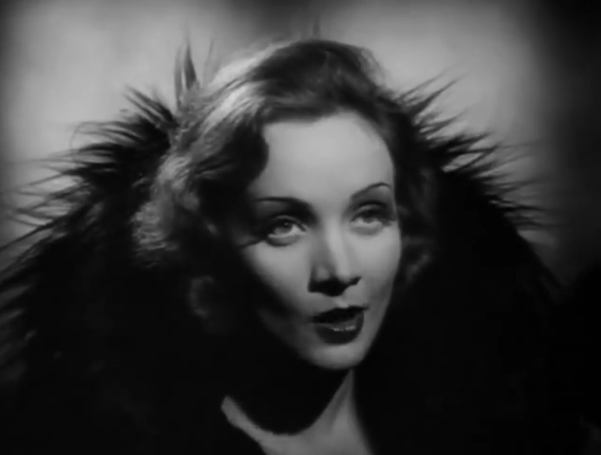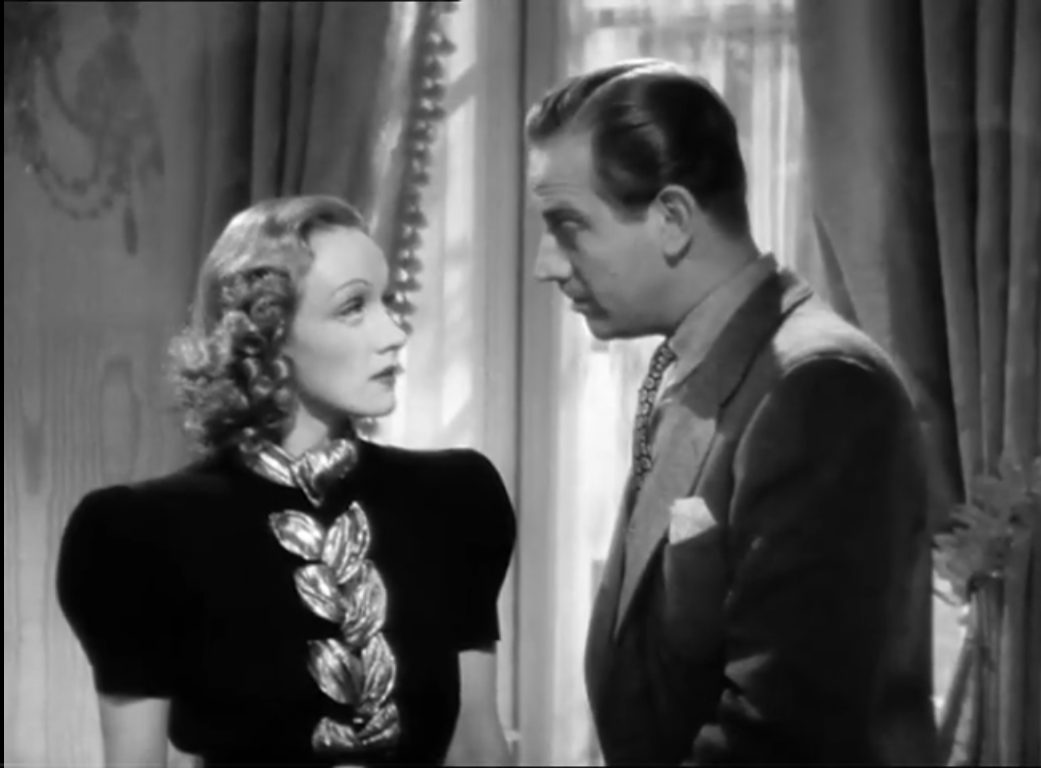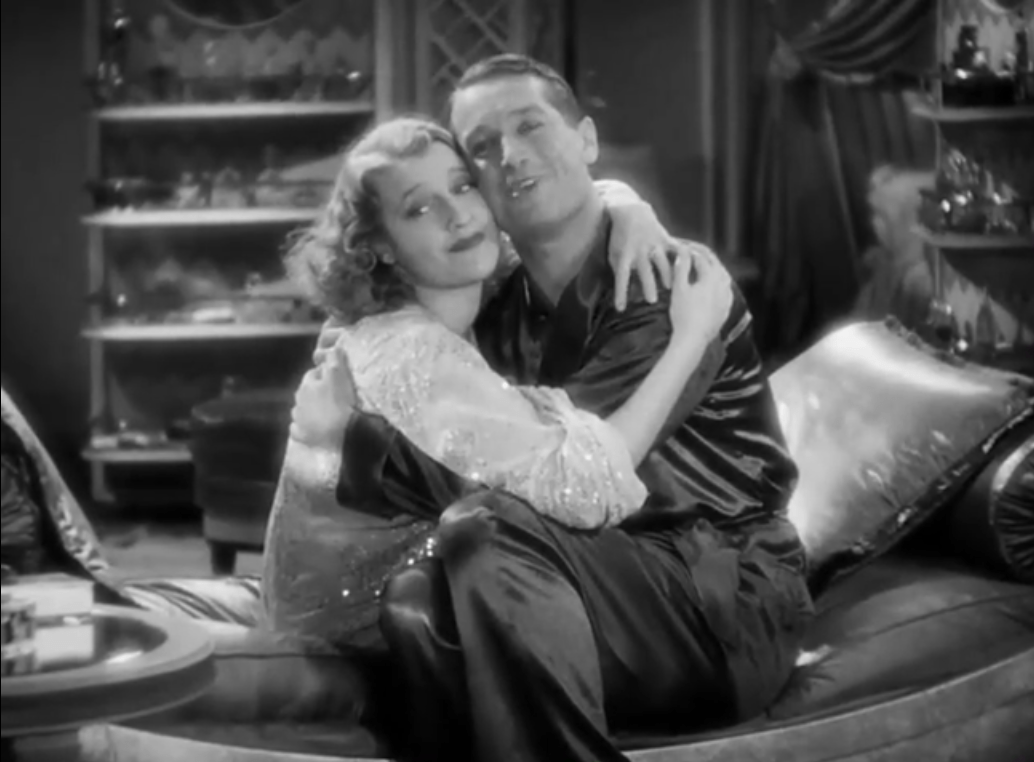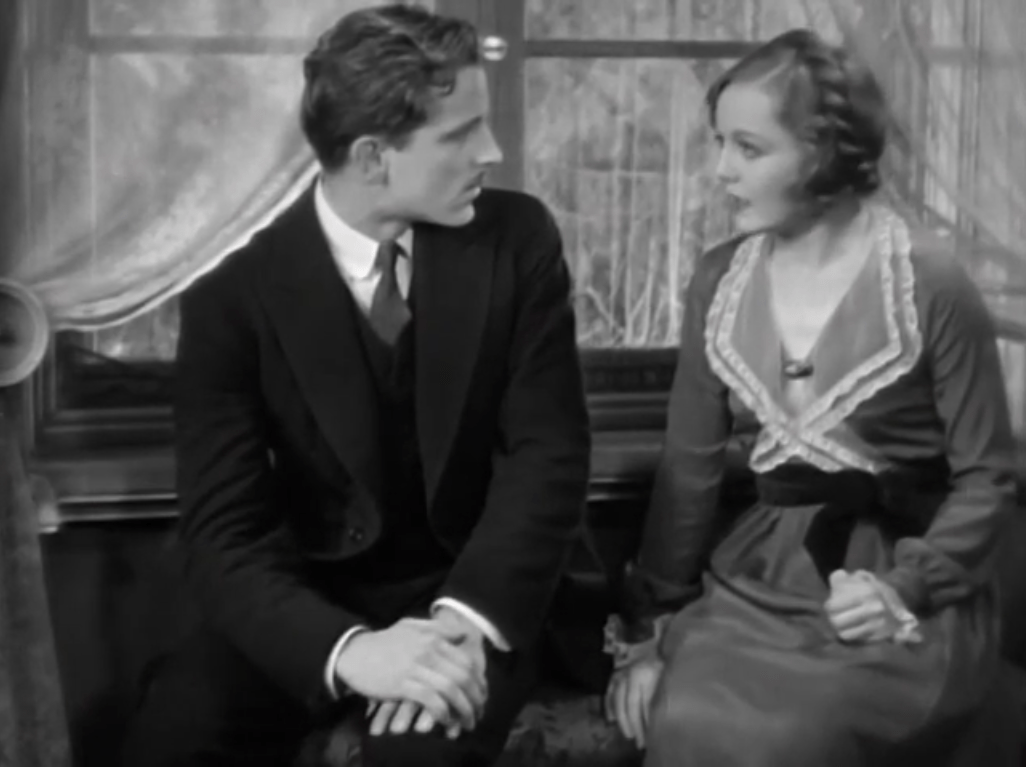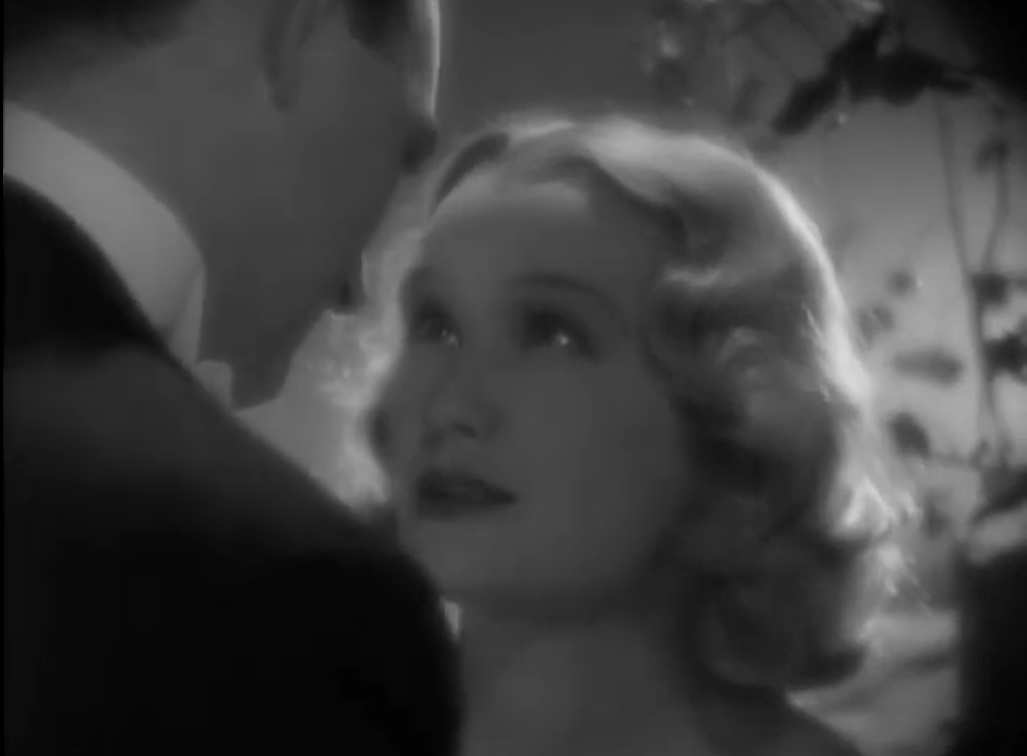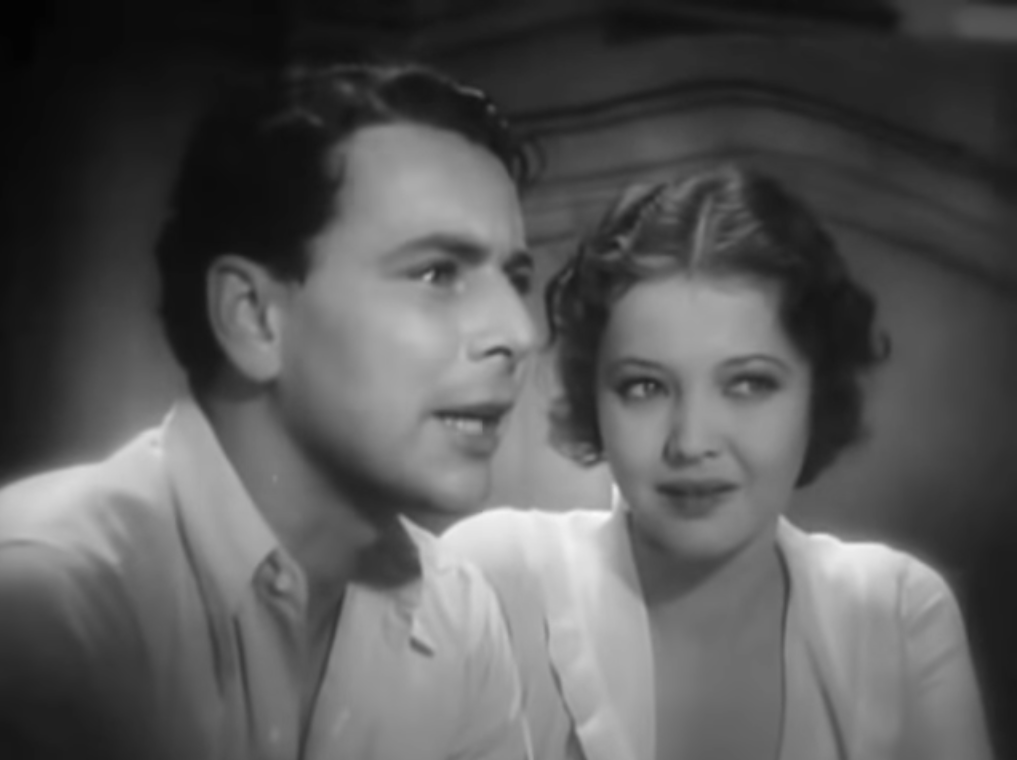
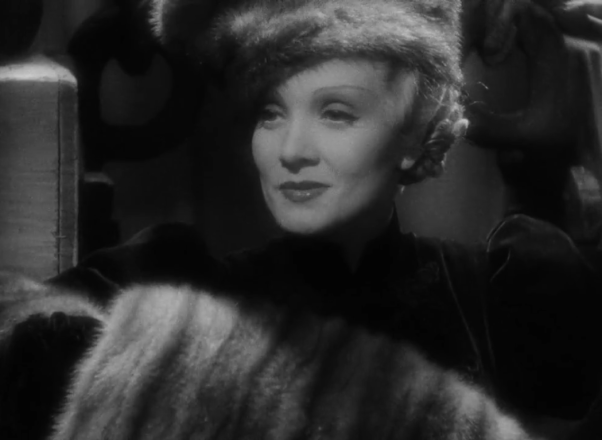
The Story of Temple Drake (1933) with Miriam Hopkins

The Story of Temple Drake was adapted from a contemporary William Faulkner novel called Sanctuary. It’s putting it lightly to say it was the subject of controversy — even in the Pre-Code film era — but part of what the film version gives us is this instant sense of Southern Gothic environs.

It’s as much about atmosphere and the salacious nature of the material — leaning into what we might easily term Pre-Code sensibilities. But with such a film like Temple Drake where its reputation precedes it, it behooves audiences to consider what it is actually putting across.

Some studios might have been keen on peddling titillating smut or at least just enough sensuality to get a rise out of the paying public — to make it worth their while so to speak. But even a story like this, which might seem to have such a cut-and-dry trajectory, actually offers up something a bit more involving when we consider the evolution of our heroine and what she must come to terms with.

Temple Drake (Miriam Hopkins) is a girl about town, and she really does get around. She’s the sought-after debutante at the ball with her pick of all the eligible young bachelors. She can dance with them, toy with them, and there’s no consequence to it. It’s merely a game and seeing as her grandfather is a prominent Judge (Guy Standing), he does his utmost to make sure she is sheltered and well-taken care of. She’s never had to worry about anything in her life.

Aside from her come-hither reputation, playful romance is often denoted visually through the hands. If you’ll pardon the unforgivable phrasing, they become a kind of shorthand for the broader passion. They can be playful, alive, yet elusive. It’s put succinctly by how Temple can fire a man up. Then poof! She’s gone.

On one such evening, her late-night companion is a soused playboy. They leave the party behind and go blazing down the roadways at madcap rates only to have a dramatic spill and tumble out of their car. The crash itself is hardly a drop in the bucket to them. It’s what happens thereafter that rattles them both.

There’s something uneasy about where the story is going. Unrest is in the air. Lightning shakes the foundations of the film. They get taken in by some shady characters holding out in a rundown house. The thugs lurking about are a lecherous breed, the most menacing of the bunch is a man named Trigger (Jack La Rue).

Suddenly, life is no longer a lark. They’ve run into a harrowing life or death reality as Temple is subjected to a prison of terror and ruination, hopelessly trapped and vulnerable. So quickly she goes from the frisky huntress to the victimized prey. It’s true she’s entered an entirely different world where all the harmless frivolity is quickly replaced with the kind of contentiousness and fear she’s never experienced in her life. This is how real people live: rough and hard.

The barn where she seeks refuge for an uneasy night away from the prying eyes of men is a bit like the lion’s den, but there is no one to deliver her when the beast comes prowling around. After she is roughed up and attacked, she enters into an almost catatonic state of trauma and survivor’s guilt.

Her Grandpa can’t protect her anymore and the only man who is willing to fight for her is the one admirer, who’s not disappeared: Stephen Benbow (William Gargan) is an up-and-coming lawyer who once had aspirations to marry Temple. She always rebuffed him as a kindness. She thinks he’s too good for her.

But in a crucial moment, she protects him. In fact, she does something almost decent, sacrificial even, making herself look all the more the tramp. Pretending to scorn her good friend for the thick-headed thug, she even sells it by planting a kiss on the man’s lips. Even he’s got himself believing it. After all he’s done to her, in some sick demented way, she must actually want him.

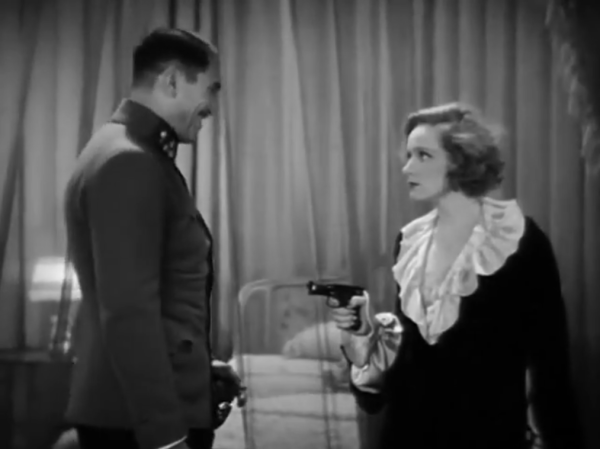
It couldn’t be further from the truth. In a single moment, she finds his gun deposited on the bed and lashes out to defend herself. It’s carried out with some crucial closeups punctuating one of the film’s most emphatic developments. It’s also empathetic as we grow to sympathize all the more with our heroine’s terrifying position.

But her work is not done. Stephen, always the honorable one, beseeches her to testify on behalf of the man he is defending from murder. Only they know what really happened. However, this is such a deep wound. She must come clean with her deepest, darkest shame in a public forum all but prepared to ostracize her for a scandal that she wanted no part of. The movie’s pitting the life of a man against the sullied reputation of Temple. It’s her “duty before God.”

As the story goes out with this kind of optimistic glimmer of redemption, resurging against all the darkness we have already witnessed, it’s hard not to consider the significance of the name Temple. With the evocation of God, it feels like a kind of spiritual allegory is in order. Each of us with the desires of our hearts — with our wants, time, resources, and actions, create alters to something.

We always hear it told that our bodies are temples, and it’s no different here. We all worship something. However, when our lives get shaken up, it makes us take stock of our priorities and consider what we look venerate and celebrate in our lives.

Fluttering behind her eyes Miriam Hopkins does her best to dance between jovial gaiety, subsequent terror, and this kind of resting despondency flooding over her when she is finally taken advantage of. It changes her. In an earlier scene, she makes a passing comment about how “It’s like there are two of me.”

How right this proves to be, and it’s not so much like Jekyll and Hyde. It evolves into this schism between her personage before and after this event. Temple can never be the same again. Of course, that doesn’t mean she’s irredeemable or totally befouled. Far from it. Restoration is available to all even someone traumatized in the worst manner possible like Temple Drake. Because each one of us can be a Temple.

3.5/5 Stars

The Stranger’s Return (1933): Lionel Barrymore and His Granddaughter

Strangersreturn

Establishing shots often get a bad name for their bland or token quality, but it’s true when done well, they can set the tone and create an instant impression on the audience. King Vidor’s The Stranger’s Return instantly accentuates this rural milieu. It feels like a stable and equestrian existence, a supremely serene safe haven.

As the movie progresses, we are privy to marvelous pictorials feeling akin to Jean Renoir or John Ford. There is a bit of that pastoral sense of space where the landscapes feel untarnished and beautiful down to their very compositions. Regardless, the land is nothing if not punctuated by human beings meant to till the soil and cultivate it.

Inside a farmhouse, we meet a family of grown-ups sitting around the breakfast table with their patriarch. Beulah Bondi is among them, and they aren’t mean-spirited folks by any means, but they’re generally dutiful and reserved.

I am reminded of the moral tale in the Book of Virtues from my childhood where the adult children care for their dying mother and the chest under her table — just waiting to swoop in and get their due. They can only imagine what treasures she will bequeath them upon her death. It’s the same unspoken undercurrent in this film because Grandpa Storr isn’t oblivious. He knows what’s going on. The difference is, that he’s not ready to go down without a fight.

Lionel Barrymore is bearded like you’ve rarely seen him before. He plays Storr as an ornery man of the old world — giving his healthy cereal to the chickens and proceeding to cook himself up some steak and eggs. He grumbles about how he would rather do something he likes for a few minutes than have to live a hundred years hogtied. We understand him and appreciate his convictions in minutes.

He’s rich with recollections of the Civil War and his childhood exploits on the farm he still maintains. There’s this curmudgeonly bluster about him that is the perfect façade for an obvious heart of gold. As he’s advanced in years, he’s aided by his trusty cowhand Simon who’s known to take a nip of the corn liquor but also remains steadfast when it comes to working Grandpa’s land. The elder Storr also keeps up a good-natured feud with this closest neighbor (Franchot Tone). He’s built himself quite a life of contentment.

The entire movie develops out of the momentous return of his granddaughter — just recently divorced and living back east — who’s prepared to pay her grandfather a visit and go back to basics. Louise (Miriam Hopkins) becomes quite the talking point in the household seeing as she doesn’t live with her husband. That just isn’t done. Of course, Grandpa operates outside of the typical small-minded hypocrisy. He’s radically individual-minded and stubbornly prodigal himself.

Barrymore and Miriam Hopkins cultivate what feels like an instant rapport. Consider the moment where they sit outside on the hanging bench together — their conversation so easy and amicable. She might come off a bit like the prodigal daughter, but if this is true, then he’s more than generous in spirit to be the father figure who welcomes her back to her roots.

Together they strike up a fine friendship with Guy Crane (Tone) and his sympathetic wife Nettie, who both live just down the road. Crane’s the old story of a charming young man who went off to college and then wound up marrying his childhood sweetheart and returning to farm life.

It happens rather organically but Guy and Louise strike up an instant chemistry — at first, it’s good-natured and innocent. It comes to a head at a local dance where they spend plenty of time in each other’s arms and people will talk. One, because Louise is a divorcee and totally alluring, and, two, because Guy dances divinely and is spoken for. If the relationship between grandfather and granddaughter is the crux of the storyline, Tone and Hopkins do much to augment the film. He’s deeply charismatic and there’s always a wry twinkle of mischief in her eyes bringing them together gaily.

There’s nothing dismissive in the simple observation that Louise doesn’t seem like the churchgoing type, but it’s a delight when Grandpa is concerned. After all, as a faithful parishioner, he hasn’t missed a Sunday in years. It gives him peace being there.

The preacher gives his fitting message on 1 Corinthians (Therefore let him who thinks he stands take heed lest he falls). Far from being an implicit indictment of Louise and Guy, it seems to be aimed all the more at any snooty-nosed hypocrite who feels affirmed in their own preening self-righteousness. Grandpa is hardly one of their ilk even as he nods off perfectly at ease.

In the tradition of communal farm life, the Storrs put on a huge spread in exchange for local labor. The bountiful feast the women whip together makes the eyes bulge in its sheer extravagance. Hopkins does her duty gallantly by going out to the pump for water and passing around the plates and coffee, turning the heads of all the farmhands as she goes about her work. Grandpa couldn’t be prouder of his kin.

In what look to be his waning hours, Grandpa’s mind gets overtaken by fanciful delusions about the Civil War, and his children look to cart him off away from the farm for his own good. Could it signal the end of Grandpa or is it a ruse to divvy up the goats from the sheep? Metaphorically speaking, he knows the ones who love him will take care of his sheep. That person is Louise.

The Stranger’s Return lingers over an illicit theme as the two lovers have their affections grow deeper by the hour. It’s such an obvious outcome, and yet the story never succumbs to anything. This is never its intent. Instead, it finds meaning and sincerity dancing sensitively around all of this. In the end, it slates itself as an archetypal tale of a city girl destined for the farm and the farm boy who chose the city as an act of preservation.

What sets the movie apart is this amiable quality — how it is blessed with both humor and integrity of character. People don’t want to hurt one another because they’ve forged relationships cutting deeper than convenient altruism. As someone familiar with two worlds, it makes me hold a deeper affection for rural and urban lifestyles. They both have pros and cons, but what makes them impactful are the people you forge bonds with.

4/5 Stars

Street Scene (1931): King Vidor and Sylvia Sidney

street scene

Film at its finest is able to use images to leave an indelible impression on an audience. King Vidor’s Street Scene opens with a telling montage. Kids being sprayed by a hose in a street. A slab of ice being carried off by a worker. A man swatting gnats away from his horse. A dog sprawled out on the pavement. There’s more, but we already get the idea: it’s a blisteringly hot day in a New York neighborhood.

The foreknowledge that this is a stage-bound studio street corner makes the “scene” no less engaging. There would be later pictures to channel the same intimacy and sense of a world — some of the Warner Bros. Cagney pictures or Dead End spring to mind. However, here we also get a sense of a myriad of voices — even immigrant stories — and plenty of people chewing the fat all across the city.

While it’s faux reality, it does feel like a wonderful piece of world-building. We get to know the whole row of people for minutes at a time. What Vidor has done is pluck out a moment in time for us to just sit in and relish. People shuffle by in and out of frame, down the sidewalk, poking heads out of second-story windows, or lounging on the front steps.

Beulah Bondi, in her debut (God bless her soul), is one of the first we get to know. When she’s not out walking her dog or bemoaning the weather, she’s gossipin’ about other folks. Namely, Mrs. Marraunt (Estelle Taylor), who is rumored to have a male suitor. She’s married of course. The busybodies love to titter on about this juicy piece of scandal. They fail to recognize how lonely she is with a husband (David Landau) who is totally absent from her life.

Sylvia Sidney doesn’t show up until 20 minutes into the movie although she could be considered the star of the picture. Recently, she’s been accompanying a local boss (Walter Miller) who has the hots for her. It’s possible he can get her out of her humble community. It’s not the nicest place. Her father is the same absent, aloof breadwinner and her mother is constantly agitated and beside herself with nerves. Their home life is hardly stable, and it’s quite public given the close-knit existence with folks window to window in the tenement.

In one of the intermittent visual montages, Vidor captures daily life in the community adding some lovely touches you couldn’t get any other way. With the very focused framework of this individual housing complex, the story builds out from here, layering in the moments on top of one another.

When Sidney asks her Jewish neighbor and childhood friend Sam (William Collier Jr.) how you’re supposed to act in the synagogue — she has a funeral to go to — the very pointed question feels genuine.  She’s hardly interrogating him. Instead, she’s curious and surprised he has no spiritual beliefs.

All his knowledge and truth come out of the many books he consumes. She holds the sentiment “You gotta believe in something to be a little happy.” We hear little more about such matters but the hope might as well color her entire outlook on life even in the midst of tragedy. Their Romeo and Juliet friendship feels like a minor caveat underlying entirely different familial issues.

In one particular scene, Vidor instantly mobilizes what feels like the whole mass of humanity to overwhelm the movie. At its apex, New York comes alive. In fact, a moment must be taken to make a stunning acknowledgment. There’s an uncanny resemblance to Spike Lee’s incisive tour de force Do The Right Thing.

Surely as such a prominent cinephile, Spike Lee has seen the picture or somehow imbibed it. The cursory similarities begin with the heatwave and the cross-section of humanity, and then come down to the same inherent eye for human drama as well as intercultural relationships. Both directors feel fully engaged even immersed in their worlds.

For his part, King Vidor intuitively understands the material coaxing a great deal more depth out of it than what initially meets the eye. Part of what differentiates this picture is its lead. Sidney is the picture of stoic beauty going on bravely in the face of unimaginable tragedy. There’s a strength and assurance present in her being but also a quiet dignity. We watch her actions and responses and each and everyone feels enriched with candor.

It’s the contemporary world distilled into a moment — the street bustling with people of all sorts of backgrounds, beliefs, and fears. The picture is 90 years old, and yet I look at it rather incredulously. Not because of what doesn’t translate, but because so much still resonates within its frames.

There are gossips, lonely people, bullies, and young dreamers trying to figure out what to do with their lives. The world is still made up of all sorts, and when we’re thrown together, we very rarely agree. We have to learn how to live with one another each and every day. Sometimes we fail miserably.

In its closing moments, the world returns to the same shorthand of children playing in the street. Sidney walks off determined to move forward with her life by getting away from the street that has represented her entire existence thus far.

At the same time, it has so many memories attached to it and also instigated the greatest traumas she’s ever had to endure. For such a short, stagy endeavor, Street Scene is deceptively rendered. Vidor somehow makes it chockful of what can only be described as human pathos. From the days of The Crowd, he still gets it and puts it to good use. Sidney does the rest.

Alfred Newman’s theme would take on a life of its own as a motif recurring again and again in numerous of the studio’s movies.  Here it plays almost as ironic counterpoint. A straightforward score would have brimmed with some kind of dramatic crescendo. Newman’s work, which I have heard referred to as Gershwinesque, is far more playful. I would stop short of saying it’s unfitting. More so, it accentuates a different kind of tone altogether.

3.5/5 Stars

The Front Page (1931): His Boy Friday

the front pagde

With The Front Page, Ben Hecht and Charles MacArthur’s ode to the Mythical Kingdom, the world of newshounds was translated to the movies by Bartlett Cormack and Charles Lederer. Given their own experience hammering away at copy, they locked in on the newsroom parlance going so far as to base many of the characters on their associates. Having not seen the play, it’s difficult to know what liberties were taken.

Many might already know it was reworked as His Girl Friday and it’s true The Front Page serves as the fitting prototype for all of these newsroom pictures of the day. Lewis Milestone does an admirable job trying to liven up the stage beats and the camera does move laterally more than I was expecting. When Hildy Johnson (Pat O’Brien) makes his fateful exit from his “office,” it’s hard to forget the host of reactions to his departure with time stretched out by the magic of cinema.

Likewise, the talking picture still feels youthful, learning what it means to move, as Adolphe Menjou huffs around his office looking for his best story scribe Hildy. They provide the central dynamic for the story to rest on as conniving editor Walter Burns tries with all his might to hook his best writer before he quits the business to go off to New York with his fiancée and her mother, never to be seen from again. Burn’s last chance to nab him is the biggest local story: The hanging of a man named Williams. More on that in a moment.

It should be noted that the most immediate alteration Howard Hawks made was to make Hildy Johnson — not an altogether masculine name — into a woman, who in the Hawksian mode, is capably one of the boys. What it did was ratchet up the contentious romantic dynamics between Cary Grant and Rosalind Russell, who elevated the screwball antics to their zenith. It was a stroke of genius.

After oozing so much about their chemistry, it’s hard to fairly evaluate Grant and Russell’s predecessors. To be fair, I’ve nothing against Pat O’Brien but he’s simply not the most intriguing nucleus when placed together with Menjou. O’Brien did his best work opposite a charismatic lead like a Cagney or even Walter Huston.

Also, Menjou hardly has the caddish charm of Cary Grant. In fact, the meat of their performances feels staid and conventional in comparison. I know this is dangerous, but it’s an unavoidable trap.

It is easy to be complimentary of the picture in other areas. The Front Page really sings in the adjoining spaces because even more so than His Girl Friday it thrives on being an ensemble piece carried over from the stage. The majority of its time is spent in the writer’s room with the colorful gallery of working stiffs and this is where all the action is anyway.

Between cards and puffs of smoke, they’re on the telephones nosing around for a story. Walter Catlett, the bespectacled veteran, is at the center of the action, anchoring the community with his quips. Floating on the fringes around a host of wisecrackers are the likes of Frank McHugh and then Edward Everett Horton. The beloved character player is unmistakable as his typical boob, a germaphobe named Benzinger. He writes for The Tribune.

The rest of the plot will be familiar to anyone who is aware of Hawks’ film. Williams is sentenced to be hung for killing a colored man in a city where the colored vote counts. There’s a sense that we are talking about a vague approximation. The fact we never hear more commentary on the crime and that our cast is entirely white is certainly a sign of the times and another potentially worthwhile caveat.

Mae Clarke reached immortality by getting a grapefruit squashed in her face, but she also performs as the first cinematic Molly Malloy — the one person willing to intercede on Williams’s behalf. The other fact worthy of mention is Clarence Wilson, the bald, pipsqueak making the rounds of the newsroom. It took me a moment to figure out that he’s supposed to be the police chief. In his trembling hands, law and order don’t have a prayer.

When it’s all said and done, it’s hard not to see the voluminous shadow cast by His Girl Friday. Sure, it technically came after but its reputation looms large. The Front Page isn’t a bad picture. It’s still in the nascent days of Hollywood. Lewis Milestone does a decent job of visualizing the stage play, and the cast is ripe with all sorts of colorful talents. The dialogue flies. There’s no problem in that department. From hamburger sandwiches to peeping in teepees, to Jack London-style journalism, you get all sorts. This is the beauty of the bustling environment drummed up. We get to be passive observers of the world.

However, if there is one area of critique to hone in on it’s mainly the leads. To be frank, in weighing Cary Grant and Rosalind Russell with Adolphe Menjou and Pat O’Brien as a unit, there’s just no comparison. These feelings are my own — totally subjective as they may be — but their screwball chemistry cannot be topped. The Front Page still remains as an important historical marker, if only partially because of its relation to the later film. It definitely speaks more of His Girl Friday than it proves a critique of Lewis Milestone’s movie. In fact, aside from All Quiet on The Western Front, Milestone probably deserves a lot more respect than he usually garners.

3.5/5 Stars

Five Star Final (1931): Edward G. Robinson and Yellow Journalism

Five_Star_Final_1931_poster

Five Star Final has its place among a bevy of real-world Journalism movies as perpetuated by Hollywood in the Pre-Code era. Probably equally important is director Mervyn Leroy, who at this point in his career was about to be tackling some of his most pointed material including I Am a Fugitive From a Chang Gang and Three on a Match, which if not totally vying for social realism, certainly blended it liberally with melodrama to instill a social message.

It should be noted before the war over Citizen Kane, famed magnate William Randolph Hearst took offense at this movie, whether or not it was outrightly aimed at him or not. Regardless, it hit close to home. I’ll let you be the judge.

This paper happens to be called the Evening Gazette and it’s anchored by editor Joseph Randall (Edward G. Robinson), though he’s not introduced for several minutes, remaining an unseen figure. Instead, we are given a clear sense of the rest of the framework built around him.

One of his story peddlers Ziggie (George E. Stone) has a perfect name to go with his line of work. His latest shenanigan involves taxi races through downtown, a cinch to drum up some surefire news.

Aline MacMahon is Robinson’s world-wearied social conscience. In other words, his secretary, who is secretly devoted to him even as the paper goes to seed. Full disclosure, I’ve always maintained a lingering affinity for MacMahon based on her general affability and her prowess in both comedy and affecting drama. Here she strikes a steady medium.

It’s true the modern newspaper game is all about mass circulation and with it all sorts of gimmicks and salacious material to grab people’s eyes. Sensationalism is the name of the game to go with lady models buried in the back of the papers. It might be vulgar, but it works wonders. Mr. Hearst was probably well-aware of it.

This is what Randall is fighting against. At first, we have the sense he’s trying to run a tight outfit — he’s a grade-A journalist — but the pressure from upstairs makes him cave and play the way they want it.

The top man, Mr. Hinchecliffe, doesn’t want their editorial integrity to suffer in so many words, but he wants to position themselves to capture more readers. It’s the old game. Sensationalism and smut sell. It takes a lot less effort and integrity than honest, human-centered journalism, and it’s more profitable.

In a sense, Robinson is at home wheeling and dealing, bustling around amid the chaos, getting on the horn and chomping on his cigars as people come in and out. He thrives on the energy. We come to understand his favorite words to fill out a story are “blah, blah, blah.”

The world itself is engaging — the characters who inhabit it in the office and walking the beat — but the film strays in its moralizing plotline. They’re looking to drudge up a story now 20 years old by getting people interested in the crucifixion of a woman.

By coincidence, the woman (Frances Starr) — now terribly respectable and married to an affectionate man (H.B. Warner) — watches her vivacious young daughter prepare to wed the man of her dreams. Everyone is deliriously happy though a land mine from the newspapers looks to totally decimate her salvaged life.

It’s Randall who set it off at the behest of his superiors because when he wants to be, he has a wily acumen, stooping to every trick in the book. One of his handy stooges is the marvelously-named Isopod. No man is right for the role but Boris Karloff — a once aspiring minister who was summarily booted out and ended up in the paper racket instead. Now he uses his religious training to get into people’s confidence.

It works much the same for Mr. and Mrs. Townsend. There’s something about his formidable voice where his sinister tone becomes unctuous in the company of his callers. He is ready to wheedle them for information, and they oblige, completely vulnerable in the fangs of such an insidious wolf in minster’s clothing.

When the Five Star Final edition comes out at 11:30 one night, the obvious trajectory of their story is sealed. In a world still reeling in the wake of the stock market, the character assassination they are assailed with seems just as hopeless. It’s not something the paper can redact or recant nor do they plan to. It’s lucrative news even at the expense of human lives.

In the final moments, there’s another meeting of the minds. Mr. Hincheclife is flanked by his Yes Men with Randall behind his desk. They are all complicit. A bitter daughter bursts in on them lambasting them for the irreparable harm they’ve caused. She beseeches the omnipotent cowards — all the cogs in the system — to conduct an act of God, by raising the dead. Of course, they can’t. They can only look on ruefully. Totally implicated and utterly guilty. The indictment is fierce and wind-ranging.

Robinson’s the one man who seems to acknowledge his part in it. While he can’t repair this mess, he vows never to become a slave to circulation again as he and his best girl shake off the dust of the crummy establishment. It’s swelling with this sentiment, but the point has been made. Five Star Final is not always elegant but between the lively characterizations and the mordant subject matter, it’s difficult to ask for more from the movie.

3.5/5 Stars

Blonde Crazy (1931) with Joan Blondell and James Cagney

blonde crazy

From the outset, Blonde Crazy promises to be a midwestern hotel chamber piece. It’s a story of the help: including opportunistic bellboys (James Cagney) and plucky chambermaids (Joan Blondell). He does her a service by nabbing her a job, and in such a world, he probably expects some recompense.

James Cagney is still kicking around and feeling out his persona; Joan Blondell’s on the way up with him. It’s mind-boggling that in the year 1931 alone both of them put in time in over half a dozen pictures each for Warner Bros. They were both building up a body of work quite quickly.

In a movie like this, the people I’m often preoccupied with are the Charles Lanes and Guy Kibbees — the host of able character actors who always show up in a movie like this. Blonde Crazy has quite the assortment. It’s stuffed with the kind of familiar faces, making a small trifle like this worthwhile, playing desk clerks and delinquent jewels salesmen, among other things. You know the types.

If the story remained in the hotel, it would be severely handcuffed because its stars are meant to be out in the world! Thankfully, the movie breaks out of the constraining formula and finds itself allowing Cagney to shine because there was no one who could do charisma like him. However, Blondell’s never one to be discounted, keeping with him tit for tat.

She exhibits plucky defiance ranking up there with any of the top female performers of the 1930s, coping with the social systems while still holding her own in a man’s world teeming with come-ons and everyday misogyny.

Does it matter what it has in the way of plot? Hardly. Instead, Bert (Cagney) and Anne (Blondell) leave the hotel, becoming business associates or better yet, accomplices drumming up clever (and slightly dubious ways) to make a quick buck.

Blondell is never taken in. She sees right through Burt and still stays with him. He has flashes of decency but driven as he is by money and other superficial qualities, he’s a tough guy to try and wrangle in. Still, their prevailing attribute is their loyalty to one another. Cagney likens himself to a modern Robin Hood. He does have that kind of rapacious charm (and this is before the world knew Errol Flynn).

In time, they’ve had an upgrade frequenting the lavish hotel circuit as partners, though their romantic status remains a bit hazy. Bert inserts himself into a fistfight on the dance floor. It seems like the perfect point of intersection for Cagney. He comes to the aid of Louis Calhern a man he’s been eyeing for some time namely, because of his scintillating female company (Noel Francis). She’s been giving him the look. Anne knows it too. She wasn’t born yesterday.

Unfortunately, Bert gets punked. He’s been made a sucker. In the movie world, you don’t make a sucker of Jimmy Cagney and get away with it. With his pride hurt by the big boys, he looks to regain his stripes by pulling a double-sided con of his own, just to break even. He doesn’t bother to tell Anne. It’s preliminary work for greater coming attractions. If you want to try and get a line on Cagney’s character, he’s not quite his usual gangster type; he’s a smaller operator, but still stretching the boundaries of the law. In his own words, he’s “not tough just mercenary.”

For all the names crammed in the picture, I almost forgot to mention Ray Milland. I hardly knew he was in pictures this early in time, and he looks like a babyface, albeit a handsome one. He’s relegated to the secondary role. He’s Anne’s dreamboat. The complete antithesis of Cagney. He has class. So they get married. But he’s fallen into a bit of misfortune. The only man who can probably pull him out is good ol’ Bert.

All these bits and pieces feel conventional. There’s the immediate romantic tension and the story zips along. Milland is nothing aside from the other man. But if you miss out on Cagney and Blondell’s rapport, then you’ve failed to appreciate the merit of the picture. They make it shine.

While it’s not cutting-edge entertainment, Blonde Crazy does simultaneously straddle the lines of genre. It’s not totally gangster — there’s romance and melodramatic flourishes — and there’s a lightness of comedy. This is what lingers.

Because, in the end, Bert’s sent up for a prison sentence and Anne dutifully shows up professing her undying love. They were meant to be together. What I will remember is how Cagney says “Hone-eee,” and how Cagney, donning his most elocutionary voice, spouts off a bit of Elizabeth Barrett Browning. And it’s a violent picture: full of socks, slaps, and spanks, all in a comical vein and totally indiscriminate. Everyone gets in on it. It helps in illustrating the underlying fact that this is not just Cagney’s movie. Blondell more than holds her own, and they make it better together. What’s more, this was just the beginning.

3.5/5 Stars

The Wrong Man (1956): Henry Fonda The Most Sympathetic of Victims

Screenshot 2020-08-03 at 7.40.08 PM

I never grew up watching reruns of Alfred Hitchcock Presents, but there’s kind of a ubiquitous aura about them. The man himself — the entirety of his portly physique — comes out of the shadows into a family’s living room to narrate some ghastly or unseemly crime with a droll sense of humor. The show ran from 1955 to 1965 becoming a wildly popular cultural touchstone, and it’s easy to see how The Wrong Man (1956) might have fit into this lineage.

Hitchcock was normally a walking cameo, providing a wink-wink to the audience as he pulled the strings from behind the camera. Here he is also a spokesperson assuring his audience every word of the following story is true though it plays stranger than fiction.

What becomes immediately apparent is the New York milieu. It’s unadorned and if it’s themes and star bring to mind Sidney Lumet’s 12 Angry Men with Henry Fonda, then the world itself has the kind of simple humanity of Paddy Chayefsky. And this is a Hitchcock movie, mind you, but the cinematography by Robert Burks is gorgeous in its stark black & white tones. It helps to maintain this suggested sense of concrete realism.

We open on the bustling Stork Club — it’s a real place — and there “Manny” Balestero (Fonda) plays bass as part of the house band. He’s not rich by any means, but he makes an honest wage going home to his wife (Vera Miles) after the dancing is done. Their life together is humble but full of love and decency. They raise two rambunctious boys, and he promises to give them music lessons.

His life is preoccupied with the kind of familial responsibilities we all understand. His wife has some dental work that needs to be done — it’s expensive so he needs to check on their insurance policy — and he plans to check in on his mother. It’s rather unextraordinary. But this is what makes it unusual.

While Manny only looks to check on his wife’s insurance policy, Hitchcock frames it like a bank robbery. Except the gun coming out of his pocket is the paper policy. The teller walks away, her face racked with concern as she consorts with her superior. A holdup hasn’t been committed, and yet it sure feels like it. In a stunning shot, the superior peers past her shoulder and catches sight of Manny perfectly oblivious. It’s the beginning of trouble.

Soon Manny is I.D.’d. He’s not trying to hide anything. Some policemen (including Harold J. Stone) show up on his doorstep to take him in for questioning. They assuage any concerns he might have: “It’s nothing for an innocent man to worry about. It’s the fella who’s done something wrong who has something to worry about.” And so he goes along with their line of interrogation because he naively believes in the veracity of justice.

What becomes more apparent is the fallibility of eyewitness testimony and the coincidence found in circumstantial evidence. I am reminded of the work done by the likes of Elizabeth Loftus and of confirmation bias. Of how misleading information often molds responses. Two ladies pick Manny out of a lineup which doesn’t bode well. Then, whether or not it’s uncanny, his handwriting also looks close enough to an incriminating stick-up note.

However, more so than any of the implications on law and the criminal justice system, The Wrong Man is such a powerful exemplification of Hitchcock’s directorial talents. It’s devilishly simple on the exterior, and yet he does so much to make us totally cognizant of Fonda’s condition. It goes beyond mere osmosis. Thanks to Hitchcock, we live Fonda’s point of view.

When he’s first approached, then, again, when he finds himself actually booked and imprisoned, Hitchcock does something deceptively simple — taking on Fonda’s eyes. He looks around the confines of the space — to the sink in the corner, up at the ceiling, and we are there with him. We forget about a camera — that there is visual trickery going on — and we fall into Manny’s predicament sitting right there by his side.

We recognize the shame of being imprisoned — to be robbed of your dignity even if you manage to be exonerated. He’s taken through all the paces of justice in all its drab mundanity. It takes all the sheen out of law and order; this isn’t Elliot Ness or Perry Mason. This is common, everyday people grinding through their daily lives.

Manny watches as they do their jobs around him with a kind of detached efficiency. He has no idea what he’s caught up in nor does he think about trying to speak up on his behalf. The machine is moving too fast, and he’s already reticent. Could it be it’s hopeless? Instead, as he’s handcuffed, he watches the footfalls of his fellow prisoners being led to the van. What’s he supposed to do? Worst of all, he isn’t able to notify his wife, and he always calls her if he’s out late. He’s that kind of man.

the wrong man

The resulting storyline involves a valiant lawyer (Anthony Quayle), who agrees to take his case. However, every possible alibi proves a dead-end. Manny’s wife, once the image of so much jovial warmth, has become delusional in the lead up to his trial. She can’t take the strain.

Finally, we are in the throes of the court proceedings. Manny holds his rosary under his desk and later the cross hangs suspended up above him. It’s hard to take it any other way but that of a symbol: here is a man being falsely accused crucified for something he did not do. Like I Confess, this is not only a tale of a man put on trial unjustly, it’s the tribulations of a devout man of faith.

True to form, The Wrong Man also reflects the most perceptive and honest of courtrooms. As Manny sits there, his fate in the balance, he glances around to see all the various side conversations going on — for other people the proceedings only hold mild curiosity — but again, Hitchcock has made us totally empathize with Manny.

After his mother implores him to pray to God, he prepares for work as per usual, but then takes a moment to heed her advice. Looking at the picture of Jesus on the wall, he begins to whisper his prayers under his breath. The visuals start to superimpose. There is Manny — that is Henry Fonda’s face — and the mug of the wanted man comes into view and meets him in the middle of the screen. All of sudden, he’s got a bit of luck. It’s the fortuitous key to the whole horrid mess. Christians would believe this is Providence.

The ending hardly matters nor does the fact that it is a “true story.” It’s the impression the movie leaves on us casting the greatest shadow. Hank Fonda is the most sympathetic of victims. However, it’s Alfred Hitchcock who intuitively understands how to augment his plight by making it viscerally resonate frame after frame. Without the bells and whistles he grew accustomed to, he shows he’s still capable of making a superior film.

4/5 Stars

I Confess (1953): What Would Hitch Do?

I_confess_poster

Religion doesn’t always play a prominent role in the films of Alfred Hitchock — he could possibly be considered a lapsed Catholic — but I Confess is his most overt exploration of moral and religious convictions. Although one could make the argument that he’s most interested in the mechanisms created by the moral conundrum since his priest becomes another innocent man accused. Nonetheless, the story speaks for itself.

It opens in quintessential Hitchock fashion as signage seems to indicate a route and then moments later a murder is announced with a body sprawled out on the floor. A man walks down the street briskly in the cosset of a priest. If nothing else, it suggests a man of the cloth might soon be implicated.

Father Michael Logan (Montgomery Clift), who will soon become of primary importance, is in the church when he is met by Otto Keller (O.E. Hasse), who works in the local parish with his wife. The Father has always been good to him, his friend even, and now he has a confession.

The confessional becomes such a powerful dramatic element: It’s been used to stirring effect in everything from Leon Morin, Priest to the more recent Calvary. In I Confess it conveniently sets up Hitchcock’s core dilemma. The flustered European immigrant confesses to the murder of a man named Vilette. Priests, of course, take a vow of confidentiality. Thus, the picture is not entirely a mystery. This is laid in the audience’s lap before we know what exactly to do with it.

Everything must become far more complicated. It involves the Father’s past relationship with the now married Ruth Grandfort (Anne Baxter). That was many years ago, although Logan remains above reproach.

Still, the police inspector (Karl Malden) needles him and cannot understand why he will not be more compliant. After all, he was supposed to meet Vilette the morning after his death, and he was seen with the young woman on the street corner, the day after. It’s true enough, but he will not divulge more regardless of how it looks.

Flashbacks clog up the story’s midriff even as it becomes imperative to inform the narrative. Because before he ever took his vows, they were in love. He went off to war and she was left despondent, receiving small comfort from her employer and future husband: Pierre.

Not all the performances feel altogether pristine or polished but as with the environment, this is a bit of added authentic charm. The more readily-remembered Hollywood actors feel mostly like dressing compared to Father Logan — Malden’s obdurateness might be the exception. Still, this is not altogether problematic and while the picture’s not exactly taut, it does feel psychologically distressing. Clift is made to suffer in silence.

We often forget, with the lustrous Technicolor glories of the Paramount years and pictures from Rear Window to Marnie, that Hitchcock was comfortable with smaller scale and black & white. Quebec is a very unique locale, but it effectively serves his plot and the evocation of provincial character quite well.

Although Hitchcock was never one to see eye to eye with so-called “Method actors,” I think of Clift and Paul Newman in particular, there’s no argument that he allows Monty to shine even sets him up for a nuanced but ultimately towering performance. There’s a quiet magnitude imbued by his stoicism in front of the camera.

He literally becomes a Christ figure and it’s no mere coincidence that Hitchcock shoots looking down past a sculpture of a man carrying the cross as Logan himself walks below on the street. Or for that matter, how often do you see a crucifix so prominently featured in a courtroom? It’s because this courtroom drama has a priest on the stand. The whole movie is playing out through what he will and will not do. His convictions dictate what will happen.

It’s the district attorney (Brian Aherne) who has the undesirable job of getting a conviction by doing his job to the best of his abilities. This means cross-examining a mutual friend (Baxter) as well as the man of the cloth. Is he in a sense, Pontius Pilate? Because even if Father Logan comes out of the trial alive, the media attention and the aspersions on his character can never be undone. He will be faced with public ignominy.

He’s also made to walk the gauntlet so many times; Hitchcock blesses Clift with some phenomenal close-ups and allows the camera to take on his protagonist’s point of view multiple times. He’s not the only one, but one can hardly forget the very final scene in the Chateau Frontenac Hotel: The Father goes in to confront the man who was going to let him take the rap for a murder he did not commit.

The man has a gun. He’s holding himself up and by now he’s desperate already, having killed at least one other person. The room couldn’t seem larger and still, with a kind of peerless conviction, Clift’s hero makes the long walk prepared to sacrifice himself yet again.

Ultimately, he is vindicated; there is a sense of justice, but what a terrifying portrait it is. For those without major religious convictions, it might feel absurd. I must admit it seems almost inconceivable a priest cannot alert the police about a murderer. Surely, even the Bible talks about there being a season for everything, and a time for every purpose under Heaven. Still, Hitchcock even made a point in an interview:

“We Catholics know that a priest cannot disclose the secret of the confessional, but the Protestants, the atheists, and the agnostics all say, ‘Ridiculous! No man would remain silent and sacrifice his life for such a thing.”

It should be noted, in a Hitchcock film, it usually seems like a time to kill and a time for hate because what better way to explore our moral makeup and the forums of human justice? In the end, Father Logan holds fast and is exculpated. If not only by earthly powers, then higher powers too. I’m still left to wonder what Hitchcock would have said in the confessional if he was faced with it.

You can tell a lot about a man from his fears as well as his vices. What stands out about the picture is how it never feels undermined by jokes. It feels as sincere as the man at its core. For some, it might be a turnoff. For others, it will make you appreciate the director even more. He willingly enters into the realm of the pious, albeit through the lens of murder.

3.5/5 Stars

Family Plot (1976): Hitch’s Swan Song

Screenshot 2020-07-26 at 3.48.36 PM

You rarely hear mention of Alfred Hitchcock’s last cinematic foray, Family Plot, and you would assume that means a throwaway title — a fall from his illustrious heights. Not so! In fact, it’s rather a shame more folks haven’t turned the movie on because it proves the Master still has it. There’s still a twinkle in his directorial eye as he leads us on one final merry jaunt of murder, crime, and passion.

I was always under the illusion family plot was about some kind of conspiracy. The first inkling is from a cemetery plot even as it evolves into a broader conspiracy unraveling in front of us. It never registered as a pun until the story began to run its course. Allow me to explain.

Our story opens with a quack psychic (Barabara Harris) drumming up business with rich old spinsters ready to fork out money to get their fortunes told. She’s running the ongoing con with her boyfriend George Lumley (Bruce Dern). They’re purely small-time operators.

Soon he is on the beat poking around about a man named Shoebridge. What he’s doing at first isn’t exactly clear — he’s a taxi cabbie by day — however, soon we realize he’s digging up tidbits for future seance fodder.

Their latest coup involves a wealthy widow, if only they can locate her long-lost nephew who was given up for adoption years before. She looks to bequeath him some of her vast fortunes on behalf of her guilt-ridden dear departed sister. They too have a stake in finding him: $10,000 to be exact, which is a fortune to them.

Meanwhile, the headlines are taken with a crime of a different sort: The Constantine Ransom for a priceless gem. It really is the perfect crime. The police are befuddled and there hasn’t been a single false step. Their hands are tied as a mysterious lady in black — a twist on the Hitchcock blonde — shows up to make the trade. She leaves with her gem and orders a helicopter to aid in her getaway, all planned so she can drift back into anonymity.

It turns out she also has an accomplice: her lover, who works as a local jeweler (William Devane). By sheer coincidence, he is the very same man Dern is hunting for. Instantly we have the glorious joke at the center of the drama.

Because these circumstances have nothing to do with his dubious extracurricular activities and still, this uncanny connection becomes a lovely fulcrum for the movie to balance on with comic underpinnings. In one defining moment, the stolen diamond is kept in a very visible hiding spot established by a telling Hitchcock closeup. He looks to be having a gleeful good time of it.

Ernest Lehman’s script (remember he collaborated with Hitch on North by Northwest) is more liberal with the profanities, but it readily amuses itself with the quandary at its core exploring the relationships of these two couples and how these separate scenarios are tied together. In some strange way, it’s all things police procedural, murder mystery, and a bit like a vintage drawing-room comedy. They’re both after two very different pots!

The ransomers’ latest plans involve the brazen kidnapping of a local bishop taking full advantage of the congregation’s shock. Diagnosing the situation later, as they tear off their disguises and zoom away he notes smugly, “they’re all too religiously polite.”

Lumley’s travails take him to a religious setting of his own, in his case, the funeral of a balding gas station attendant named Maloney (Ed Lautner). There’s no need to get into his death although it involved some winding roads and a car chase of sorts…

In the most captivating shot, Hitchcock captures the overgrown cemetery from a birdseye perspective. Maloney’s reticent wife (Katherine Helmond) scurries away and Dern scampers along until he corners her. It’s the same old story. She wants to be left alone, and he just wants information.

The search for A.A. Adamson leads to all sorts of people and visual gags placed in front of us with a wry wink. But this is hardly the grandest joke as Hitchcock allows us to watch the stories converge as we are caught right in the middle. Again, it’s wonderful bits of coincidence getting in the way or more precisely bringing the story to an impeccable climax.

I’ve been mulling over the assertion that the great directors have a distinct point of view. With Hitch, he used the shot-reverse-shot paradigm certainly, but there was always a cadence to it. If he needed to break out of the rhythm he would.

My mind flashes to a scene with Dern as he’s hiding on the stairwell. The couple has returned from their latest crime totally unaware of their guest. Their feet wander around the kitchen as they talk. We’re paying partial attention to that but like Dern, Hitch makes us crane our necks and feel uncomfortable as the audience. In that individual moment, we don’t have the whole picture, and we are forced to be in his shoes for even an instant. There’s definitely a profound level of audience identification and inherent tension. This is all Hitchcock’s doing.

The ending is more than satisfactory, but Barbara Harris’s wink to the camera is like a final curtain call for Hitch. This last gesture sums up his career for me. It was built on suspense and an intuitive understanding of visual cinema and audience manipulation. However, his very own persona and the connection he created with the masses wouldn’t be anything without his sense of humor.

Due to his deteriorating health, he would never complete another film, dying 4 years later in 1980. He was planning on a film called The Short Night, a project that obviously was never realized. With his death, the film world lost one of its most consummate craftsmen and storytellers.

In a Hitchcock movie, you feel well taken care of because the director knows what he’s doing, oftentimes even when we don’t. He scares us when we want to be scared. Thrills us. Gives us romance. And even deigns to allow us to be in on the joke.

Under the circumstances, I can’t think of a more appreciative place to leave the Master. His powers haven’t atrophied. On the contrary, he still knows how to play the game and how to have fun doing it. This might be the most pleasant surprise of Family Plot. Alfred Hitchcock never lost his wonderfully grim sense of humor.

3.5/5 Stars

Frenzy (1972): Cleaning Up The Streets

Screenshot 2020-07-28 at 5.28.11 PM

There we are gliding across the River Thames making our way toward the regal facade of Tower Bridge. Where’s one apt to find a more picturesque view of London? It’s definitely an auspicious return to his native land for the Master of Suspense.

Frenzy is without question a singular Hitchcock movie taking him back to his roots in the ’20s and ’30s — not just the days of Stage Fright (1950) or The Man Who Knew Too Much (1956) — something like The Lodger (1927) or Sabotage (1936) springs to mind.

Of course, it’s a different England. It’s gotten bitten by the bug. Certainly one of them was Swinging London and The Beatles, but even as the old world, the small-town world continues to pass away, there’s a sense this same progression is being documented in Frenzy.

The characters knock around town at all the pubs, street corner grocers, and everywhere else in Convent Gardens — what’s left is a remnant of Hitchcock’s boyhood world. The director’s father was a grocer, and thus, it’s a return to his roots in the most Hitchcockian way possible: replete with murder.

A charismatic civil servant stands atop his soapbox with a rapt audience rallying the people they’ll soon clear the rivers and canals of society’s refuse — pollution will be banished — and right on cue, there’s an interruption from the masses. He gets preempted when an onlooker realizes something bobbing in the river: A woman’s body with a tie twisted around her neck.

Irony notwithstanding, it causes a surge through the crowds as gossip about the rash of necktie murders throughout town. In this way, the traditions of Jack the Ripper have been modernized and remain alive and well in contemporary London.

It’s not only these onlookers but acquaintances in pubs and any other random passerby who all have a callous, morbid curiosity about them — their conversations are overwhelmingly about the killer — and they come off darkly cynical.

The men from New Scotland Yard for their part are on the lookout for a sexual psychopath and a social misfit who might be easily categorized. Because what better way than to put criminals in a box to understand them?

Right about now we must introduce our protagonist, who also becomes the obvious target of all this foreshadowing. We are led to believe Richard Blaney (Jon Finch) an acerbic ex-RAF man who is the obvious culprit, although, for the time being, he’s unsuspected.

Still, after his ex-wife, who runs a new-fangled matrimonial agency is brutally murdered, unbeknownst to him, the forces of the plot are already out of his control. It’s as if the film is cruelly conspiring to ensnare him like all the most crippling of Hitchcock’s man-on-the-run thrillers.

The police are looking for a fugitive with a tweed jacket with patches on the shoulders and elbows. It’s true all pieces of circumstantial evidence, motive, and eyewitness accounts point to Blaney. At every turn, he looks to be guilty and he does very little to help his case. A hotel bellman tips off the law, and then the testy bar owner (Bernard Cribbins) he used to work under accuses him further.

He does have several allies in the generally morose landscape. One is the local barmaid Babs (Barbara Massey), who stands by him in his innocence. Another is Johnny Porter, a buddy who gives Richard asylum, despite the chastisement of his suspicious wife.

Although Johnny feels like a far too convenient character — he implicates himself in a potential crime quite readily — but let’s not allow this to detract from the story. Dick does have one other friend: a local grocery worker named Bob Rusk (Barry Foster), who gives him free handouts and tips at the races, among other things.

Frenzy is the most visually grisly and unnerving Hitchcock picture with a kind of in-your-face depiction of the murders. In this regard, it seems uncharacteristic of the man who often seemed the king of simulated gore and suggested horror.

The Shower Scene in Psycho is the unadulterated pinnacle of this. Where the intensity comes in the layering and total manipulation of all the formalistic elements. Frenzy is on the complete opposite end of the spectrum showing everything far more explicitly. It almost seems to lack the elegance of a Hitchcock picture — Blaney and Bob are earthier types than we’re used to.

Still, in one of Frenzy’s most telling shots, Hitch literally pulls the camera down the stairs out into the street just as we recognize that the dastardly deed is being done. It’s a second murder, and he makes us painfully aware of it without ever putting us inside the room. The same cannot be said in the other instances.

However, what truly sets the picture apart is how Hitchcock scrapes the dividing line between psychotic killer and despicable human being so close that nobody wins. Because Dick’s yet another man on the run framed by fate. The only difference is he’s a wholesale cad. Whether he’s innocent or not is immaterial here. He might be The Wrong Man, but he’s no Henry Fonda and he’s certainly not Cary Grant.

The movie wraps up briskly and abruptly. There’s hardly time to catch our breath though Hitch does put us out of our misery. Our “hero” is exonerated, and the police apprehend the criminal, all in a matter of seconds. All this might be true, but it doesn’t make the world any more livable. There’s still refuse in the waterways and rubbish in the streets. Not only is the nostalgic world Hitchcock knew disappearing — this is sad in itself — it does feel like the world itself is a tawdry, cynical place.

To be fair, this might not be the director’s perspective — he holds a far more perverse sense of humor than mine — but when I look at this world it’s far from comforting. I’m a bit of an anglophile so there’s an appreciation in seeing familiar faces like Clive Swift (Keeping up Appearances) or Bernard Cribbins (Doctor Who), but maybe I’ve been watching the wrong things.

Then again, Hitchcock always did suggest the dark desires and inclinations of society conveyed through this lens of macabre amusement. Now his depictions are simply sharper and more direct.

In other words, the legacies of Jack the Ripper or Jekyll & Hyde aren’t dead. Over time, we just got better at trying to dissect them, and we’ve become increasingly more numb to their depravity. Could it be presumed innocence no longer matters? We’re all on the run. We all go a little mad sometimes. We’re all guilty of something.

3.5/5 Stars