Review: Dial M for Murder (1954)

Dial_M_for_Murder1

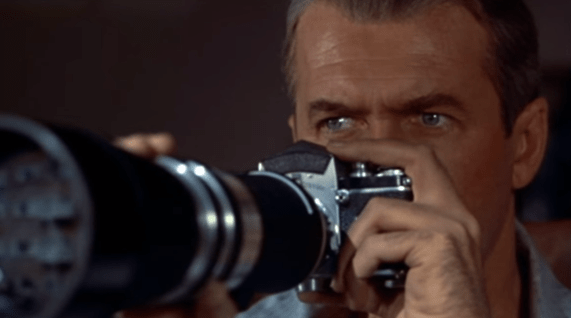
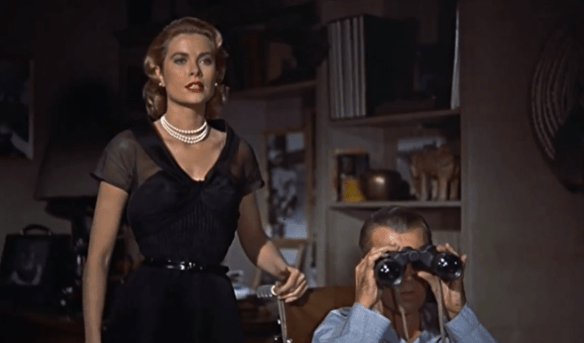
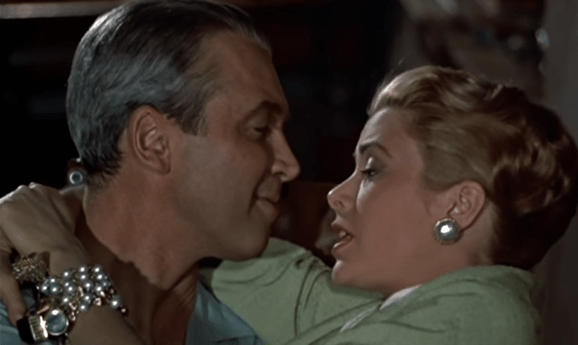
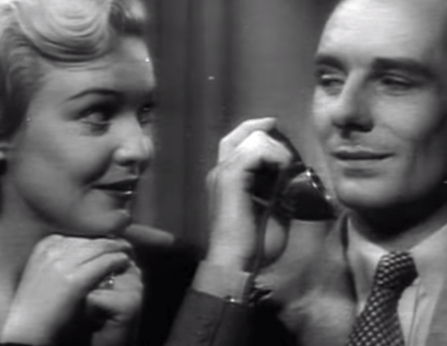
Dial M for Murder is talky and more dialogue-driven than a great many Hitchcock films but that’s partly because the environment is more conducive to that kind of storytelling as much as the fact that this murder story is adapted from a popular British stage production.

Like Rope (1948) or even Lifeboat (1944) before it, Dial M for Murder is for all intent and purposes a chamber piece that essentially takes place on one set: the drawing room of Tony and Margo Wendice.

But quite similar to its predecessors you also get the sense that Hitch approached this picture with a certain perspective and turned it into a technical puzzle to be solved. In typical Hitchcock fashion, he underlies even scenes that are seemingly stagnant with interesting accents. His frame is constantly filled in the foreground lending a certain depth to the picture that we can easily imagine as utilizing cutting-edge 3D technology.

Aside from his work with his frequent director of photography Robert Burks, he also put some obvious restrictions on himself in terms of location. Several of his decisions are fairly daring. Instead of having a whole courtroom sequence he elects to shoot it in a highly stylized fashion that while far from realism, still gets the essence of the story across in a matter of a few minutes.

However, he also has a sequence where two men are talking and the frame is broken up by a lamp and it takes the typical shot-reverse-shot paradigm and makes it more interesting. The same goes for the disconcerting high angles that he uses in multiple instances to depict the action unfolding as first the two accomplices plan out the ensuing events and then the police come onto the scene to investigate.

His preoccupation with the “Perfect Murder” crops up once more as a retired tennis player living off the fortunes of his beautiful young wife decides to murder her to maintain his lavish lifestyle. Her infidelities with an American mystery novelist and minor acquaintance are the pretenses for his actions — a perfect way to get all her money for himself.

But this isn’t a picture working on a moral level. As is often the case, Hitchcock seems far more invested in the mechanics of the actual murder and whether or not it can actually be pulled off and what it would all look like.

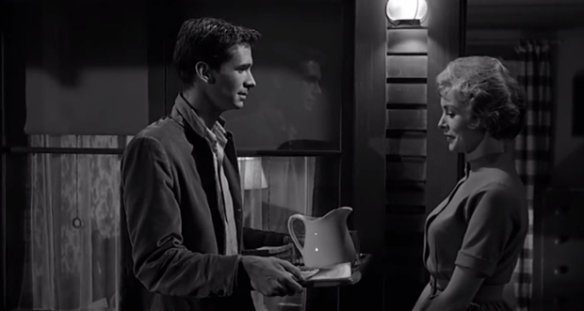
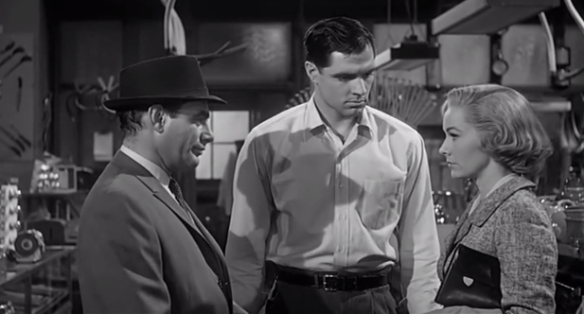
Tony (Ray Milland) soon has an old college chum embroiled in his plot with a healthy bit of blackmail and he has everything set up perfectly to get Margot (Grace Kelly) to stay at home while this phantom man will sneak into their flat and murder her. But it will come off as a freak accident and that will be the end of it. However, being a fighter, Grace Kelly doesn’t give up without a struggle and her husband now must cover all his tracks and events unfold much differently than he was expecting.

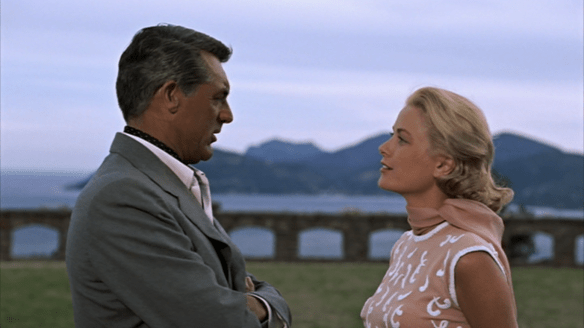
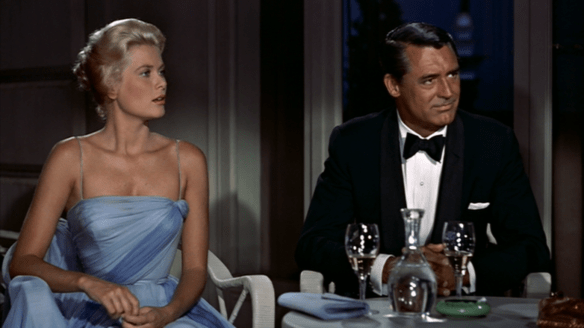
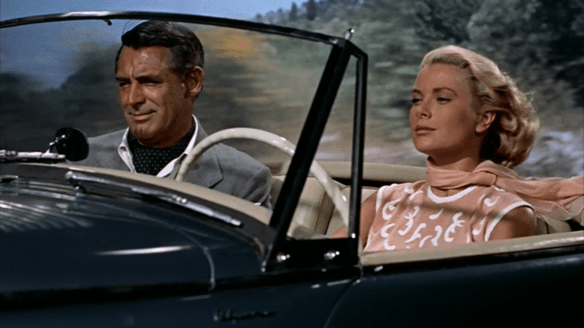
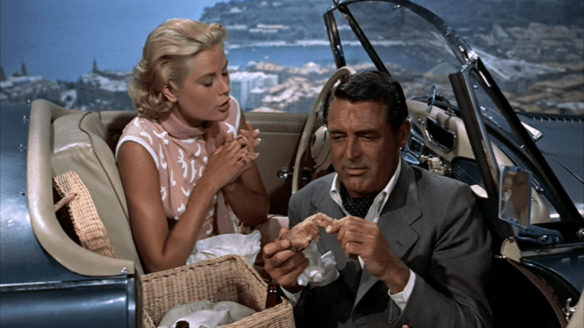
Milland plays the typically witty and rather sophisticated Hitchcock villain who is in one sense charming and extremely prone to moral turpitude. Grace Kelly is stunning as always and a sympathetic figure as the wife who finds herself the victim of a grisly attack and subsequently accused of a murder no thanks to her husband helping to dig her grave. Though it’s not her best performance next to such startling revelations as Rear Window (1954) and To Catch a Thief (1955), there’s no question that it helps to solidify her incomparable partnership with Alfred Hitchcock.

Robert Cummings role as a crime author is a necessity because it makes his spot-on guesswork certainly not plausible but more interesting. Because he’s simultaneously dreaming up a scenario and ironically convicting Milland with his cockamamie stories which are surprisingly close to the truth.

John Williams reprises his stage role and turns Dial M for Murder into a bit of a Columbo episode of ‘how is he going to catch him’ because this works best to Hitchcock’s advantage since he’s not necessarily interested in the shock but introducing the audience into the entire plot so they become invested and stringing them along with all the proceedings. In such a way, the suspense and the subsequent payoff can be as memorable as possible.

When Milland walks through the door at the end of the picture, it’s an unextraordinary, even everyday action, but Hitchcock has imbued that single event with so much meaning. As an audience, we are sitting with baited breath waiting to see if the key will turn in the lock. This is a film that ultimately is indebted to the rotary phone if only for its title. But it’s hard to beat Hitchcock and the future Princess Grace of Monaco.

4/5 Stars

Secret Agent (1936)

secret agent 1.png

It’s so easy to quickly brush off early works of Hitchcock with admittedly bland titles like Blackmail (1929), Murder (1930), Secret Agent (1936), Sabotage (1936), etc. But if you actually dare to dust one of these films off for a viewing, you do see Hitchcock spinning his wizardry even if the edges are a bit worn, the stories barely developed, and the production values humble.

Among the ranks of Hitch’s thriller sextet, Secret Agent written by frequent collaborator Charles Bennett is a surprisingly lucid effort with a cast that is stacked quite nicely. John Gielgud is a bit bristly as our leading man and the chief secret agent in our loosely set WWI storyline while Madeleine Carroll (featured earlier in The 39 Steps) is decidedly more fun as the adventure-seeking gal by his side, augmented by a certain amount of ravishing vitality.  They have quite the connubial relationship posing as a married couple. Still, there’s enough chemistry within the film’s running time for some breezy comedic moments that predate later romantic thrillers like To Catch a Thief (1955) and North by Northwest (1959).

In fact, part of the reason Gielgud’s Shakespearian sensibilities come off rather stuffy at times is not so much his fault but a testament to Carroll and Gielgud’s other male counterparts. The future all-knowing television father Robert Young makes his mark as a quipping American wiseguy constantly making passes at his latest acquaintance Mrs. Ashenden.

We meet him for the first time lounging in the lady’s hotel room in an amorous mood and he never ceases flirting, for the majority of the film anyway. Equally memorable is the spastic performance of Peter Lorre though he can’t quite pull off the stereotypical portrayal of General, the Hispanic sidekick supposedly spouting off Spanish in rapid fire and still speaking in a cannibalized English dialect with a German influence. There’s no denying he is colorful given Lorre’s usual aptitude for playing wonderful supporting spots.

Like many of Hitchcock’s films sandwiched together during the 1930s, this one exhibits the same precision plotting that sets out the parameters of the narrative early on including our hero, his background, and his goals, in this case to rendezvous with a double agent so they might weed out an enemy counterspy.

The objectives seem simple enough as our man Broden alias Ashenden must masquerade with his “Wife” and the eccentric “General” in the deceptively glamorous world of spies, secrets, and international intrigue. Hitchcock does make it a riveting world at that. A foreboding church with pounding organs and clanging bells is the scene of a murder. There’s a lively setup at a casino beckoning the future delights of films like Casablanca (1942) and Gilda (1946).

But there’s always bedlam waiting somewhere and in this case, it’s staged in a German chocolate factory as our English spies try to evade capture ratted out by a faceless snitch. The final act rumbles along on a hurtling train still behind enemy lines with the British air force raining down a hail of bullets. It’s the prototypical spectacle for a Hitchcockian showdown with unconventional results.

One of the most impressive aspects of Secret Agent is how many people Hitchcock is able to crowd in the frame balancing medium shots with close-ups and maneuvering his camera this way and that around his character’s many interactions. It evokes that not so famous adage that film is both what is in the frame and what is left out. Here we have a film that makes us very aware of what we are looking at and that is a hallmark of this man. He very rarely allows his camera to be a passive observer unless he chooses for it to be.

4/5 Stars

Note: It’s only a small aside but I only realized moments after the movie ended that even a young Lilli Palmer made an appearance as General’s beau.


Review: The 39 Steps (1935)

39 steps 1.png

With The 39 Steps, it’s possible to witness Alfred Hitchcock coming into his own and one of the most obvious markers are numerous motifs, character archetypes, and techniques that would crop up in his work again and again. But it’s also conceivable to trace the influences of this film in most every spy-thriller-comedy-romance that has ever come in its stead.

Like The Man Who Knew Too Much the year before, this picture takes little time to get going and Hitchcock strings scenes together in such a way that the narrative is constantly on the move. Our modern sensibilities might tell us that his picture is rushed but it’s unquestionably interesting. It’s equally likely that we might believe other scenes are too slow. And yet he really does offer up a wonderful thriller that maintains a driving force of suspense. The key is balancing the more complacent moments with great jumps and leaps in story that both work to keep us simultaneously engaged and off balance.

He rather brilliantly cuts from scene to scene giving us just enough information to grow invested in his man-on-the-run spy thriller that looks vaguely familiar. In fact, it’s easy to see the groundwork for Cary Grant’s Roger Thornhill from North by Northwest (1959) in Robert Donat’s own credible characterization. In many ways, it’s a humbler version of the later cross-country epic trading the vast expanses of North America for the quaint and still majestic United Kingdom. We even are treated to one of Hitchcock’s original blondes in Madeleine Carroll and like all his greatest stories, he uses the seemingly useless plotting device, the so-called MacGuffin, as the motor to his narrative.

The action opens in a music hall where a lively performance is going on in front of a rowdy crowd and the festivities showcase the rather unbelievable phenomenon of Mr. Memory, among other acts. But in typical Hitchcock fashion a gunshot goes off and pandemonium breaks loose.

In a moment, we’re shown the outside of the venue and our hero Richard Hannay finds his hand being held by a frightened woman. Hitch moves the action forward on this coincidental meeting and never ceases from that point on. You see, this woman is connected with the international spy world. She gives a vague notion of her business but what isn’t vague are the men who are looking to kill her or the subsequent knife found in her back.

It’s yet another thrust forward in the film that sends Donat hurtling toward Scotland, the location where his female visitor noted her contact was located in. But equally telling is her warning to watch out for a man missing the tip of his finger. So, of course, in perfect Hitchcock fashion, in a completely ludicrous turn of events, the double chase is on. Both the authorities and the bad guys are after this innocent man. One for the murder attributed to him and the others for the knowledge that he now has.

From this point onward the almost picaresque plot is continuously streamlined and functions on a subsequent row of fascinating scenes and locales that all could work as separate entities entirely. First, he’s riding aboard the Flying Scotsman jumping free of the train to evade capture. Then, Hannay is holed up in the home of a gruff farmer and his sympathetic wife in the Scottish Highland. He meets the big man face to face and gets away with his life only through sheer coincidence. Next, he unwittingly ends up giving a stirring speech to the local electorate about their obligation to live a life of brotherly love before getting whisked away by the authorities.

Subsequently, he finds himself handcuffed with one of his earlier acquaintances from aboard the train (Madeleine Carroll). The fact that they despise each other perfectly highlights the best comedic elements of The 39 Steps as they bicker and struggle to keep their cuffs inconspicuous moonlighting as newlyweds.  This section of the film hearkens to some similar moments in the screwball comedy of the prior year It Happened One Night and it doesn’t hurt that Donat has a mild resemblance to Clark Gable. He happens to whistle a lot too.

Still, this is a Hitchcock thriller and it takes them through the moors of Scotland, their fleeing feet masked by bleating sheep and their mutual distaste finally traded for a general amount of concern. You might say they grow on each other. Yet that does not take away from the bottom line.

Government secrets of the utmost importance are about to be smuggled out of the country and they haven’t the faintest idea how it is to be done. Surprise, surprise, we end up in a packed London Palladium where everything must come to fruition. By this point, we hardly know how we got where we are as an audience and when it’s all over there’s more than a few questions — maybe even a few objections — but there’s no doubt that the 39 Steps is a clinical exhibition in the art of the spy thriller.

Although his actors would arguably become more prestigious (though Donat and Carroll are no slouches) and his whole productions more impressive, it’s decidedly difficult to deny the sublime vision that courses through the film. It could really function as several films all in under an hour and a half and yet ultimately it comes off unequivocally as one picture. It’s not simply one of Hitchcock’s finest British efforts, it’s a high watermark in any conversation of his oeuvre.

If you desire even a single moment of pure ingenuity look no further than the interlude when the maid comes into the murdered woman’s flat. We expect to hear her bloodcurdling screams as she turns toward the camera but instead, we are met with the high-pitched screeching of the train as Donat idly sits now miles away. In the hands of another director, this whole sequence might have slogged on. Hitchcock makes it positively gleam with possibility and that’s indicative of the whole picture.

4.5/5 Stars


Review: Strangers on the Train (1951)

Strangers_on_a_Train_-_In_the_dining_car.png

Strangers on the Train is conceived in its first few minutes of dialogue when the charismatic bon vivant Bruno (Robert Walker) ingratiates himself on tennis player Guy Haines (Farley Granger). Bruno is a big idea-man, constantly talking and thinking and wheedling his way into other people’s lives because he does have a way about him. He makes it easy for others to like him and then they let their guard down after a row of trivial jokes and he’s got them. That is until they begin to see something else entirely in him.

In this particular instance, he schmoozes Guy’s ego. He’s a big tennis star. Bruno has read up on him and knows all about him. At first, it’s mere flattery but as the conversation continues it gets more and more unnerving. Bruno seems to know a little too much almost to the point of obsession.

Still, he manages to keep the other man’s attention just long enough to share his greatest idea — imagine for a second that two men who meet quite by chance (on a train for instance) were to trade murders — leaving no motives or connections for the authorities to trace back to the culprit. Of course, the whole idea soon falls apart if not everyone is equally invested. It doesn’t work if only one individual takes such a ludicrous idea seriously.  That’s where uneasiness begins to set in.

Robert Walker’s performance might rightly be one of the greatest performances in a Hitchcock film in terms of the sheer chill factor. He’s a psychopath, somehow misguided and tortured by issues that never truly get resolved. A great talent with so much promise was lost far too young when he died tragically the same year this film was released.

But equally important is Farley Granger’s more subdued performance, that quiet sensibility that makes him an easy target for someone as magnetic as Bruno. With another actor such as William Holden (initially considered for the part), the dynamic falls apart for sheer implausibility and as a result, the film would not function so effectively. We soon believe that a relationship such as Guy’s and Bruno’s could actually exist and that shred of reality makes the tension all the more unnerving.

Due to its foreboding cinematography courtesy of longtime Hitchcock collaborator Robert Burks and Bruno hanging over Guy constantly like an expectant specter, it`s easy to trace the line of film noir sensibilities here as the darkness seeps into Guy’s picture-perfect life.

But what’s fascinating is that Bruno initially aids his newfound friend — he assists him in getting the life that he’s wanted for a long time, an existence that is respectable, complete with a beautiful woman. Anne Morton (Ruth Roman) is the daughter of a respected Senator (Leo G. Carroll) and her upbringing and general concern reflects a stark improvement in Guy’s social standing.

Is it safe to say that it’s fairly easy to harbor a crush for Roman who exudes a refined decency, even if she’s not quite Hitchcock’s icy blonde? Place her up against Guy’s opportunistic and cavorting wife and Bruno’s action could almost be considered a service. Almost… Still, Bruno spins his charisma into a deadly threat, ultimately evolving into Guy’s worst nightmare.

Meanwhile, Patricia Hitchcock sometimes feels like she is used as a plot device but nevertheless even in that aspect alone she is crucial to this story. She also doesn’t quite fit into the Morton family but her very characterization reinforces many of the themes her father is playing with often using visual language.

The most acclaimed shot for its sheer stylized perspective is the scene of Bruno’s act of murder. It’s done in only a moment, silently, and without much fanfare. The woman’s glasses fall to the ground cracked and we see the reflection of the events at hand. It’s pure Hitchcock but the entire sequence is a masterstroke in buildup.

Bruno is tracking his unsuspecting prey. He follows her into a carnival. Past the booths and the rides, by popcorn vendors, into the tunnel love and finally to a darkly lit meadow where the deed is done. But without the buildup, this continuous cutting between the man and the woman, the scene has little impact. Hitchcock gave it increased stakes bolstered by true suspense.

But what he does equally well is cross-cutting not only his two main characters but their very actions. The opening introduction showcases this contrast of personalities with Bruno and Guy. It never ceases. They’re constantly placed opposite each other intersecting and crossing each other. Yet Hitch emphasizes these conflicts visually on multiple occasions which completely justifies why his main hero was written as a tennis player.

The fact that Guy is in the thick of a match during one of the tensest segments is magnified in how the camera cuts between Guy and his opponent back and forth with the audience, line judges, and everyone else spliced in for good measure. It mirrors the very same conflict he’s still tied up in with Bruno just as the gradation of black and white reflects the good and evil that separates and at the same time connects the two men.

You can always count on Hitch to bring the goods and yet again Strangers on the Train ends with a whirling, whizzing, shrieking bit of pandemonium — a real slam-bang finish courtesy of the Master of Suspense. Over 65 years later it hasn’t lost much of its impact blending a sense of real-life spectacle with genuine thrills. And like Hitchcock’s greatest films this one works on multiple planes visually, psychologically, metaphorically, narratively, and that frees us up to enjoy it in whatever way we please. That’s the sign of a quality movie from the foremost of creators.

5/5 Stars

The Man Who Knew Too Much (1934)

The_man_who_knew_too_much_1934_poster.jpgAlthough Hitchcock did many riffs off the same themes, he very rarely tried to do the same film twice over. The Man Who Knew Too Much might be the one exception and even then if you place these two thrillers from 1934 and 1956 up next to each other, they’re similarities are fairly nominal.

The bare-bones plot involving international espionage, a pair of unassuming parents, and the kidnapping of their child remains the same. But most everything else is drastically different.

Thus, it becomes an interesting exercise in juxtaposition. It really depends on what the viewer deems definitive in a quality film mixed with personal preference. Without question, this initial offering from a younger director is grittier and less made up but it’s subsequently a less technical sound achievement with also little score to speak of. We trade out James Stewart and Doris Day’s singing for the less remembered pair of Leslie Banks and Edna Best. But nevertheless, this version of The Man Who Knew Too Much is an enjoyable international adventure crossing the globe from the Swiss Alps to England.

The Lawrences are on a lively vacation complete with skiing and skeet shooting with their precocious daughter (Nova Pilbeam) but after an acquaintance winds up murdered, the family finds themselves embroiled in a treacherous world of espionage. The dead Frenchmen left them a message to pass on to his contact but that knowledge finds them deeply distressed when their daughter is kidnapped. From that point, the intentions of the story are fairly straightforward. It’s simply a matter of watching Hitchcock at work.

Peter Lorre fresh off his emigration from Nazi Germany in the wake of Hitler, ironically plays the quintessential international menace, cigarette curled between his lips. It was so recent in fact that the man who made a name for himself as slimy undesirables learned all his lines phonetically because he still had yet to gain full command of the English language. But thank goodness we had him for this film and many to come. He perennially made movies more interesting by his mere presence. That marvelous face of his is one in a million.

There are some wonderful sequences and typical touches of Hitchcockian style and subversion, namely a sun-worshipping cult hiding out in a cathedral but, overall, it’s not always a cohesive exhibition in suspense. His greatest achievements always seem to fit together seamlessly to the perfect crescendo like a thrilling piece of clockwork. Whereas sometimes it feels as if a few of these scenes are strung together.

But that does not take away from some of the better set pieces namely Hitchcock’s original Royal Albert Hall sequence and a different finale altogether with a final shootout that is still harrowing in its own right. And of course, the foreboding clangs of Peter Lorre’s pocket watch leave their mark on this film just as his eerie whistling became his foretoken in Lang’s M (1931). Hitch would only continue to fine tune his formula but there’s no question that The Man Who Knew Too Much is a diverting thriller and the first in a lineup of six consecutive successes from the director during the 1930s.

3.5/5 Stars

Murder! (1930)

Murder_hitch.jpgAlfred Hitchcock captures the pure bedlam that overtakes a neighborhood when their peaceful dreams are rudely disrupted by an awful din. As is customary everyone is in a foul mood, peers out their windows, bickers with everyone else, and moves into action.

Then in a split second, everything’s beastly still. The reason: The dead body lying on the floor discovered by the policeman making his rounds. The blunt instrument is at the feet of a disoriented young actress who looks to be the obvious culprit. But there has to be more to this story than what meets the eye. This cannot be as simple as we are led to believe. It’s a stellar environment to introduce a murder. Acting as one of Hitch’s few whodunits, Murder! involves itself with the rest of a stage acting troupe full of players.

Still, in the ensuing court hearing, the aspiring starlet, Diana finds her life on the line in the hands of a jury. Their deliberations feel a bit like 12 Angry Men (1957) as Sir John (Herbert Marshall) is hustled and hurried into coming to a guilty verdict by groupthink as the one remaining holdout.

In these sequences, there’s a sense that Hitchcock has a bit of frustration with the state of affairs with the legal system or if nothing else a great interest in its functions much like Fritz Lang did in pictures like M (1931), Fury (1936), and You Only Live Once (1937). But it’s truly a Hitchcock touch to have the pronouncement of death given as the camera continues to focus on a worker cleaning up the juror’s room. But it’s key that the story does not end here, rather like The Phantom Lady (over a decade later) there’s more to the story and only one man is interested in figuring it out. Because of his sheer fortitude, it’s understandable that he becomes our hero.

Sir John finds himself in a bit of a moral dilemma (as denoted with an early example of character voiceover) because he feels partially responsible for the problems assailing young Diana and he resolves to do something about it. Unfortunately, the film’s latter half slogs on a bit as Sir John calls upon the services of Ted Markum and his wife — two witnesses in the opening scene — to help close in on the real killer. The individual they suspect to be the culprit. However, the real trouble is not simply pinning the murder on this perpetrator but also figuring out how they did it.

A woman’s life hangs in the balance as the gallows sit menacingly in her future. Still, Hitchcock uses some cruel poetic justice to tie his story’s loose ends up. A trapeze act gets a lot more morbid than ever before and again Hitchcock returns to human tumult which livens up his picture moderately and makes Murder! truly worthy of its name. In such instances, there are obvious signs of the master at work. Otherwise, this is hardly Hitchcock’s most diverting offering in the genre.

3/5 Stars

Coco (2017)

Coco_(2017_film)_poster.jpgIt only serves to show where my mind goes when I watch a movie. I couldn’t help but think of Harry Chapin’s elegiac and stirringly heart-wrenching tune “Mr. Tanner” as I was ambushed with some of the most revelatory notes of Coco. The most meaningful line out of that song relates how music made our eponymous hero “whole.” I feel the same guttural satisfaction blooming out of this picture.

Coco proves to be a film about many things. This is a film about music melded with family. The wholeness that comes out of music when you do it for sheer love and passion. Because you couldn’t live without picking up a guitar or throwing back your head to sing. Serenading family or penning a love song is just an extension of who you are. If you know anyone like that you can thoroughly appreciate what we have here.

In the best ways, it’s also about when families and our passions and the traditions that we’re taught to live by and that are passed down to us seem to collide — wholly impervious to any type of reconciliation on first glance — yet still somehow capable of fitting together.

Our hero Miguel (voiced by Anthony Gonzalez) is a precocious boy who lives with his family in Mexico as part of a shoe-making matriarchy where they have long been taught to despise music because their no-good great-great-grandfather left his family behind to pursue his dreams as a musician. The conflict is created right there.

Visually it’s another inventive landscape for Pixar to play with under the helmsmanship of Lee Unkrich because though the setting and storyline are planted in the present world of Miguel’s family, it’s infused with rich undertones of Mexican tradition. Not least among those is “Dia De Los Muertos” or “The Day of The Dead.”

Except instead of taking that as a mere tradition or a cultural practice the film translates that into a fully animated reality as Miguel experiences the “afterlife.” There the spirits of his ancestors exist in skeletal form making a yearly pilgrimage to commune with their still-living relatives. Family is still of the utmost importance to their lives and the most tragic reality is to have no one left to champion your legacy.

The hero’s journey laid out before Miguel is direct and compelling so we know what he is up against. He must receive the blessing of one of his blood ancestors before sunrise or else spend his days forever in the land of the dead. Even now he’s slowly losing more of his definition a la Back to the Future (1985). The stakes are obvious and his inner conflict stressed by the very fact that his relatives will only provide their blessing if he gives up his true love: music.

There’s so much else that could be lauded in the film for how it dares to explore its setting much in the way Inside Out (2015) did. It boasts some clever reversals akin to those found in something like Toy Story 3 (2010) and plays on the themes of hero worship in a similar fashion to UP (2009) with Miguel being charmed by mythical singer Ernesto de la Cruz (Benjamin Bratt). It’s also a bit of a Ratatouille (2007) tale of someone pressing against the currents around them to realize their individual gifts. But far from being to the detriment of the film, every one of these similarities is a genuine compliment. Could there be too many themes even? I’m not sure.

However, the idea I was most taken with deserves a bit more explanation. I’ve purposefully refrained from talking about Coco until now. If you were like me you probably assumed that our hero was named Coco or something like that, without giving it much forethought. However, we soon find out that she’s the fairly senile great-grandmother of our main character.

Because a major aspect of this film has to do with this idea that can best be described as transgenerational memory — where we pass down our recollections of the people that came before us to the younger generations. It’s no small coincidence that the lynchpin track is called “Remember Me.” Because in digging into his family’s personal narrative Miguel develops a deeper bond with his great-grandmother. It’s striking how even as we grow forgetful our long-term memory, the entrenched recollections of childhood or even muscle memory, often stay with us. That’s precisely how it is with Coco and Miguel aids in keeping her memories alive.

In these moments I could not help but reminisce about one of my favorite musicians Glen Campbell who passed away just this past year. He was a high profile casualty of Alzheimer’s and yet during his last tour though he could hardly remember the words anymore to his most famous songs, his fingers were just as nimble on the guitar frets as they were as a young man. Amazing. One of his final tunes was the brutally honest admission “I’m Not Gonna Miss You.”

And I mention it in passing only to suggest that if the idea is that you will only be remembered if other human beings remember you then that’s a terrifying world to be subjected to. As a writer that means that I will fade away unless someone actually unearths some of the mindless drivel I penned and shares it. If I’m single it means I better find someone quick and start a family so my children can not only pass on my gene pool but keep my name.

Even the pervasive theme that two people’s love for each other will live on forever, though a nice sentiment, still rings slightly hollow. Not to be a nitpicker but eternity is a long time. Even a blazing meteor burns out at some point. So if you’re like me maybe Coco will get you to think long and hard about your mortality. I’m not sure the answers are that easy to come by but they’re necessary to consider nonetheless.

In the context of this life at present, Coco fittingly rewrites the negative admonition to never play music with a more positive call to never forget family. Taking the restrictive and making it ripe with promise. That’s something most of us can probably get behind and share with our kids and grandkids as the years go by because we won’t be on this earth forever. The question remains, what do we do if we aren’t so lucky?

4/5 Stars


Black Panther (2018)

Black_Panther_film_poster.jpgFor some Black Panther might be a stellar actioner, consequently, brought to us by a visionary director, Ryan Coogler. It’s top-tier as far as Marvel movies come; there’s little doubt. For others, I completely understand if Black Panther rocks their entire paradigm because there’s so much of note here. The box office seems to confirm that just as much as the dialogue that has been created in its wake.

What’s so revolutionary about this addition to the cinematic landscape is that this is not simply a superhero movie created by a predominantly black cast and crew but that their very heritage is so crucial to the roots of the story. The identity and complex history of Africans and African-Americans is wrapped up in the very sinews of the narrative. A whole diverse patchwork of ancestry and generations of culture is meticulously infused into the African nation of Wakanda.

Many may have forgotten that in an earlier Marvel installment the king of the 3rd world nation of Wakanda was killed in an act of terrorism. His son T’Challa proved to be next in line to the throne as long as no challengers arose from any of the five tribes that encompass the country. In such a case the two warriors take part in a ritual combat.

Far from just having intricate primordial traditions, the nation has also long-harbored an immense secret. Under the pretense of an archaic nation, they have built a technologically advanced empire around the versatile metal vibranium. In order to keep its properties protected, they have foregone sharing it with the world at large. Already you begin to see one of the primary themes running through the film. With great power comes great responsibility. How you choose to wield it is of vital importance especially when the world around you is hurting.

I have long been a fan of Ryan Coogler and Michael B. Jordan and the partnership continues to impress. Coogler somehow managed to take a Marvel franchise film (which we’ve had too many of) and turned it into a radically personal picture. It works on both levels — arguably catering to all audiences.

His female characters are imbued with tenacity and still a capacity for great good. Lupita Nyong’go is a perfect example as the lifelong sweetheart of the ascending king T’Challa because she has left her homeland to help the oppressed in less fortunate lands. She jokes that she would make a phenomenal queen one day because she’s stubborn but it’s the truth.

Meanwhile, the king’s mother (Angela Basset) is stately; caring deeply for her children while his sister (Letitia Wright) is feisty and blessed with the ingenuity of an inventor. She’s the Wakandan Q if you will. And there’s Okoye (Danai Gurira) the fearless leader of the all-female royal guard. Far more than an assassin, she is guided by a sense of honor and loyalty that splits her right down the middle.

Many people will be happily surprised by a soundtrack that synthesizes original music by Kendrick Lamar with a score by Ludwig Goranson (Community) infused with distinctly African instrumentation. It makes for a satisfying marriage in music. But no less impressive are the intricate costumes and set designs which develop this appealing aesthetic of the old with the new. Coogler’s team seems to have a very keen awareness of both which is refreshing.

When Black Panther falters at all the problem is simply due to repetition. After 17 other entries, we can hardly blame a film like this for doing something that’s seemingly derivative even momentarily. It’s inevitable. Because if you’ve seen one fight scene between two agile, armored superhumans you’ve seen them all to some extent.

And yet this picture does so much more within that framework that’s moving because there’s a certain ambition and an innate understanding of what movies are capable of. They can help us cull through crises while still maintaining the exhilarating guise of a superhero action flick. It’s true that at times it feels like we are watching a Bond film only rejuvenated with more diverse characterization.

Like the best films in that franchise or any other really, the villains are noticeably tempered in a very particular way that is stimulating. Yes, multiple bad guys, and when I say that I mean that each has unique shading giving us different looks. Andy Serkis is the chortling international arms dealer who seems small scale and yet he’s made dangerous. There’s a distinct edge to him.

Even more important is Erik Warmonger (Michael B. Jordan) because he acts as T’Challa’s character foil. As we find out, they have a lot more in common than they would have been led to believe except Warmonger has more sinister intentions. The joy of Jordan’s performance is that the character is high-functioning, charismatic, and actually poses a threat as we see on multiple occasions. But no matter how twisted or misguided he might seem there’s still some level on which we can understand his lifelong resentment. Also, let me just say it now. From his clothes to his swagger, he just looks cool…and supremely confident.

Meanwhile, fellow tribesmen such as M’Baku (Winston Duke) and W’Kabi (Daniel Kaluuya) do not necessarily have sworn allegiances staked out and so that gives them some agency to shift the tectonics of the story this way or that. Again, they have a certain amount of power that gives them an undeniable presence.

Like The Winter Soldier or Civil War (arguably my favorite Marvel entries thus far), the villains are compelling because they invariably feel planted in the real world or better yet they’re made up of friends and family. There’s nothing more disconcerting than people who aren’t villains at all and yet they still go in opposition of you.

Thus, Ryan Coogler has succeeded in constructing a layered story that might be one of the few Marvel films I would gladly pay a second viewing to. It hinges on so many issues with consequences for our contemporary landscape. Again, with great power comes great responsibility.

It deals with the afterlife as represented by the ancestral hunting grounds where first T`Challa and then Erik commune with their fathers to receive insight. For the former, it means reconciling with his father’s own failures during his lifetime so he might not make the same mistake. For the latter, it means connecting with his own father about their joint Wakandan heritage which Erik never knew first-hand living in America.

Black Panther calls into question themes of isolationism as much as it does a complicated history of colonialism. Look no further than the African artifacts exhibit in the History Museum and you can plainly see that we are still grappling with the same issues planted in the same past. Far from dismissing it, we would do well to continue to entertain a dialogue. The roles that museums, archivists, and archaeologists play in all of this are important too. Suddenly, even for a brief instant, I’m starting to second-guess Indy’s obdurate assertion that artifacts belong in a museum. Where do we draw the lines on such an issue while not unwittingly promoting colonialist traditions? I don’t quite know.

The final words of Warmonger linger in my mind as well:

T`Challa: “We can still heal you…”

Warmonger: “Why, so you can lock me up? Nah. Just bury me in the ocean with my ancestors who jumped from ships, ’cause they knew death was better than bondage.”

His words sting, as they should because so much truth dwells right there. I have always struggled to reconcile those very things because for being a nation made of immigrants the African-Americans are nearly the only ones who did not come to The Promise Land of their own volition. The handprints of such a reality can still be spotted in our world today.

There are deep roots that are set in place. In the History Museum corridors, you see documentation of a muddied past of colonialism. Then, in Oakland (Coogler’s hometown) along with basketball and Public Enemy you see obvious signs of social decay and problematic issues of drugs and gun violence.

The fact this is actually put out there is nearly a relief and a necessity. However, and this is a big however, there seems to be an underlying hopefulness that we can somehow live together. Marcus Garvey once proposed blacks recolonize their native country and that in itself brings up other issues of cultural identity.

Erik Warmonger is right at the center of that with African descent and yet longheld ties to American society. What do we label him? I’m not sure we can. I’m not sure we need to. That’s for the individual. Regardless, it’s a work in progress. Messy no doubt but hope is still present.

Like Fruitvale Station (2013) before it, being rich in black culture by no means suggests that the film is completely exclusive in the same regard. Far from simply being a token white person, Martin Freeman is allowed to be a hero just like his counterparts, and anyways maybe for once, it’s okay for the Caucasian characters to take a momentary back seat if only to allow other voices to speak.

What we are left with as King T’Chala addresses the United Nations is not the sense that one people group is better than another or the new should overthrow those who have long been in power but that we should find those points of intersection — the things that unify us.

“Now, more than ever, the illusions of division threaten our very existence. We all know the truth: more connects us than separates us. But in times of crisis the wise build bridges, while the foolish build barriers. We must find a way to look after one another, as if we were one single tribe.”

It’s a fitting summation because this is a film that draws up different tribes, turns people against each other nearly in an instant, while constantly rearranging factions and who holds the keys to the kingdom. If it’s resolved in the end it’s only a fragile peace at best and if we are to maintain that we need far more than vibranium. We need a heavy dose of human understanding and empathy.

We can acknowledge our past failures as a society but must never allow them to shackle us for good. Mistakes are meant to be learned from. It’s when we’re not willing to learn and to change, that dire straits look inevitable. I hope for our sake that the film’s call-to-action might still stand true.

But the film itself is also an imperative to take deep abiding pride in your heritage and who you are as a human being — unique just as you are. Thus, it seems utterly misguided to desire a future world where we do not see color. Instead, we might yearn for a day when everyone can look at the rich strains of human diversity and proclaim “It is very good.” Where we can survey that same world and see that every color, creed, and tongue is finally one tribe instead of many.

4/5 Stars

Fruitvale Station (2013)

Fruitvale_Station_poster.jpgRyan Coogler is from Oakland, California. He was attending USC Film School in 2009 when Oscar Grant III was shot near the BART station. From those experiences were born his first project. He envisioned Michael B. Jordan in the lead role. Thankfully his vision and the casting came to fruition.

I appreciate smalltime gems like Fruitvale and Short Term 12 (which both came to by attention at the same time). Maybe they are very intentionally crafted into these intensified dramas with heightened bits of reality but there’s also something meaningful in how they are able to tell smaller scale stories in an economical way. That in itself is an art just like making a cohesive blockbuster is an art.

The allure of the picture comes in putting us in the moment. Coogler works in capturing the final hours of Oscar Grant’s life which would seem mundane and unextraordinary if it weren’t for how they were capped off. It’s a film that breeds a certain amount of empathy because the camera is always over the shoulder, at the hip, or in the most intimate spaces putting a lens on what is happening.

But when the picture turns tragic there’s this undeniable sense of immersive drama while still crafting a story that connects to all of us. It feels as if all facets of Oscar’s character are put up to the light.

Because if you put up the magnifying glass to each of us you soon realize that we don’t always act the same way around everyone. When you see Oscar in his different interactions each person brings out something else in him. And he is very much a people pleaser.

What the story offers up are these perfectly manufactured moments (some better than others) to capture the contours of a single individual. None is fake per se — a facade if you will — but oftentimes various interactions bring out a certain side of someone. The lady attempting to have a fish fry and struggling miserably appreciates Oscar’s genial nature to call up his grandma and get her help. There’s the entrepreneur who has created his own web design business who thanks Oscar for finding a bathroom for his pregnant wife. Even the dude who comes to Oscar to pick up his smokes.

They are hardly central characters but each interaction serves the purpose of the story. However, this is not solely a film for the African-American community though it was an important story to tell.

Coogler in the way he purposefully draws up the narrative seems to be suggesting that it is for all of us. It’s not about color as cut and dry as black or white. It’s not even about good versus evil. It’s about issues of race and violence and injustice still clearly visible in our world. But not in a way that makes one party out to be the hero and completely demonizes another.

We connect with Oscar no doubt but we see his flaws as much as his humanity. He’s gone through a long stint in prison. His temper smolders dangerously as much as his spirit is generous to his friends. He rather immaturely covers up his troubles at work. But he’s 22 years old. In fact, maybe its just that. His flaws are his humanity.

And with the law enforcement we see the brutality but what is just as prevalent is fear and confusion. In the heat of that moment I’m not sure what I would do. All I can do at this point is give the benefit of the doubt and mourn the loss of a human being taken from this earth far too quickly in the worst circumstances possible.

Its true the fateful moments — seen in real cell phone footage at the beginning and reenacted later on — are full of chaotic tumult that we can’t quite understand. What’s even more haunting is the fact that Coogler got permission to shoot in the very locations where Grant was fatally injured. In that specific sense, the film couldn’t be more authentic.

One of the sequences that resonated was the communal prayer in the hospital corridors. It’s true you can read someone’s character in the times of pandemonium but also immediately following. It’s in the turbulence where Octavia Spencer takes charge in the best way she knows how and probably in the most effective way. Because there’s a helplessness in the air. This is one way to keep things together.

It’s one of the films most unifying moments for me because amid the torrent of understandable anger and apprehension it establishes a singular instance of calm in the wake of such emotion.

The film ends much as it begins with footage of the real because that’s what this is in a sense. Reconstructed, undoubtedly stylized and put back together with inevitable human biases as it may be, I appreciate its efforts. The intentions seem candid and the results speak in such a way that though calling out this brutality is more concerned with making Oscar into a version of a human being not just another thug or a victim to be pitied in order to rally a cause.

Didactic films get tiresome but Fruitvale Station rarely feels like that. Its platform undoubtedly is a social one and yet the director quite adeptly makes sure his narrative resonates on an individual less austere level.

Of course, to form a truly robust, well-informed opinion of the events more accounts would be necessary but as a film there is definite quality in this production. I still hold that Ryan Coogler and Michael B. Jordan have one of the best collaborations going on in movies right now. Here’s to hoping they don’t let up anytime soon. I’m eager for more stories from them. I think many other people are thirsty for them too.

4/5 Stars

The Fortune Cookie (1966)

The_Fortune_Cookie_(1966)_poster.jpg“You can fool all of the people some of the time, you can even fool some of the people all the time, but you can’t fool all the people all the time.” ~ Inscription in the Fortune Cookie

For some inexplicable reason, I expected The Fortune Cookie to be in color. Maybe in some subliminal way, I assumed it would be like a dry run for the zany Odd Couple (1968), pairing the two stars who would make the most delightful comedic coupling in years. But once you get into the nitty-gritty and The Fortune Cookie is less of an intangible idea floating up in the sky, it’s very obvious that this is more akin to The Apartment (1960) and the obvious reason is Billy Wilder.

Once more he lets Jack Lemmon do his sympathetic role, that guy that we all know who is a bit of a loser but not a bad sort of fellow. From such a characterization Lemmon’s scintillating skill at both physical comedy and verbal jokes come off like they always seem to. You can’t help but smile. But Wilder places that same man — that sorry individual — a simple cameraman named Harry Hinkle, into a very cynical world indeed. It’s Wilder’s version of America.

While he unequivocally loves the country that welcomed him when he was an immigrant, that by no means suggests that Wilder is unwilling to satirize its very flaws. In fact, he relishes doing just that. Sometimes it feels like that was what Billy Wilder was put on this earth to do. Make people laugh and do it with a biting style that forces us to look a little closer at the incongruities around us.

You can easily make the case that the main attraction here are two noteworthy dynamic duos (although it’s slightly dependent on how you want to draw them up). First Billy Wilder paired with his writing partner I.A.L. Diamond yet again after their string of successes with Some Like it Hot (1959), The Apartment (1960), and One, Two, Three (1961) among others.

But perhaps just as importantly we have the genesis of the longstanding comedic collaboration between Lemmon and Walter Matthau. It just works. It’s easy to see why they continued starring together because when they’re in the same room wonderfully hilarious things come into being.

Otherwise, the film takes a wacky premise involving a Cleveland Brown’s punt returner leveling a CBS cameraman and draws them out as far as they can possibly go. It’s actually rather impressive that this single spark of an idea gave way to a fairly substantial picture. Because all kidding aside, and without consideration of its title, the film is not unsurprisingly cut out of Billy Wilder’s cynical worldview as already acknowledged.

Yet again he finds his perspective of America derived from some combination of screwball comedy and a more downbeat, melancholy tone. True, he made some delightfully dark films-noir but this same malaise somehow worked fairly well in his comedies too.

Here it’s perfectly enhanced by world-class shyster Whiplash Willie (Walter Matthau) the conniving ambulance chaser who takes great interest in his brother-in-law’s purported injuries on the football field — even if they wind up being next to nothing. The insurance company doesn’t know that and that’s the key.

The periphery is complicated by a private investigator (Cliff Osmond) staked out across the way who has their room bugged and under surveillance. Harry’s mother is constantly bawling. The wife (Judi West) that he once loved and who ran off with another man is tantalizingly close to returning to him. Meanwhile, the soft-hearted football superstar who bulldozed him, Boom Boom Jackson (Ron Rich), looks for any way to make his little buddy’s life more comfortable and it’s taken a major toll on his success on the field.

It’s these very relationships that have Harry seesawing back and forth as his wily brother-in-law coaxes him to keep working the angle so they can nab their $200,000 in recompense. Watching Lemmon pirouette in his electric wheelchair, stiff-necked in a brace is priceless. Concurrently, Matthau seems to be limbering up for all his greatest roles from The Odd Couple to the Bad News Bears (1976) showing off his own impeccable adroitness with curmudgeon comedy — delivering dialogue in such a tone with such a way about him that’s at the same time devious and terribly hilarious. He even answers the phone like nobody’s business.

Lemmon owns the final scenes, however, as he must try and reconcile this lie he has been made to live — this charade he has been playing for the sake of $200,000. Perhaps even more troubling than Harry’s lie and less funny is what happens to Boom Boom. Because he’s such a kind soul even dangerously subservient in how he follows cinematic precedence. But we can make the case that this is part of what Wilder is poking at.

The one moment his protagonist shows any integrity, the one moment he stands up, literally, is in the face of a supposed bigot. Even if it says little, there’s no denying that it says something. Sometimes we don’t need comedies to win the big battles. A film called The Fortune Cookie is not going to garner a lot of respect (nor should it necessarily) but it can at least get us to stop and think. Maybe the utter absurdity in some ways isn’t all that far away from our own existence. That’s part of its charm. Crack it open if you’re so inclined.

3.5/5 Stars