
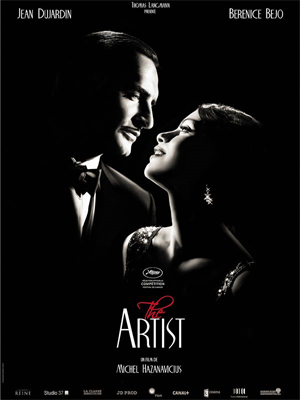
 With a cast of all nationalities and backgrounds, this film is a breath of fresh air for many reasons. Ironically, this freshness comes in a contemporary age thanks to a look back at a former age. In black and white and almost completely silent, the movie begins in 1927. George Valentin (Jean Dujardin) is a Hollywood star of the silent era. Quite by accident he makes an up and coming star out of Peppy Miller (Berenice Bejo). Soon she makes the transition to stardom in talkies as Valentin slowly fades away. However, Peppy never truly forgets him and in different ways she tries to help him. Unfortunately, George is a proud man who loses his wife, sends his loyal chauffeur away, and will not accept the charity of Peppy. Eventually her kindness pays off however and George is no longer forgotten. All the cast including John Goodman and James Cromwell do a wonderful job at expressing emotion since this film is so unique. Because there is hardly any spoken dialogue, the score takes center stage and I think it succeeds wonderfully in setting the scene whether it is playful, dramatic, or simply silent. There are also many devices used by the director Michael Hazanavicius that help convey the story without a need for words whether it is staircases, sinking quicksand, or a trampled film poster. Furthermore, he draws great influence from films like Sunset Boulevard and Singin’ in the Rain to give this new film a touch of nostalgia. In fact, The Artist brings up so many names and films in my mind it’s wonderful. Douglas Fairbanks, Jean Harlow, the dog from The Thin Man and The Awful Truth, The Dueling Cavaliers and Lena Lumont, just to name a few. Perhaps most importantly of all the film causes me to be empathetic towards the forgotten stars like Buster Keaton and Norma Desmond. It makes Chaplin’s ability to make silent pictures during the talkie revolution seem even more impressive as well. In a year that also gave us Midnight in Paris, this film also revels in the past history of the 1920s, but perhaps more importantly it too is able to suggest a certain hopefulness in the future. In a world that is often loud and busy this film was a nice respite.
5/5 Stars


 4 Star Films