
 Fallen Idol is a fascinating film for how it develops inner turmoil. It’s earnestly interested in the point of view of a child and as such, it functions on multiple levels –that of both kids and adults. Philippe’s (Bobby Henrey) home is the embassy as his father is a French ambassador who is always away on the job. So Phil’s a little boy who is perpetually in the care of servants. Namely the authoritarian Mrs. Baines (Sonia Dresdel) and her good-natured husband (Ralph Richardson).
It seems like he has a fairly cushy life, able to have his run of the embassy, play all the time, and eat three square meals a day. He diverts himself with numerous trifles like any good little boy would, including an affinity for his pet snake McGregor. Meanwhile, Mrs. Baines is constantly pestering and prodding him to behave. Simultaneously Mr. Baines continually affirms his boyish nature. It’s no secret which one Philippe likes better.
This triangular relationship is vital to the film but it’s only the beginning. Because Mr. Baines, rather understandably, is unhappy in his marriage. It’s not working out for him and he has met another woman (Michele Morgan) who he dearly loves and who loves him. Of course, the one moment he goes off to meet her in confidence, the mischievous, prying eyes of Phillip find them, but he does not fully comprehend what he is seeing — what they are talking about in hushed voices — as he nibbles away at tea cakes and pastries.
The nuances of the events at hand are earnest between two deeply concerned adults who fear never being able to be together. But again, as a young boy, Philippe doesn’t quite understand the subtext of all that is going on. How could he? And Carol Reed does a wonderful job of conveying this through some simple camerawork throughout the story. It always seems like Philippe’s point of view is either from the distant staircase looking down at the figures below or he is looking up at the adults who stand above him. There’s always a pronounced distance, a gap that must be forged. And all of this suggests just how far removed he is from the events swirling around him.
At this juncture, Mr. Baines asks him to keep their secret and they go on an escapade to the zoo together. Philippe is happy with the reptile house and other animals, while Mr. Baines is soaking up his final moments with Julie before she goes away. She can’t bear to not be with him. Still, Phil is uninterested in the whole business.
But later, when some words slip out, Mrs. Baines puts two and two together. Now she is asking Phillip to keep their own little secret. He’s been asked to hold onto two conflicting secrets now and he doesn’t quite know how to respond. His mind’s convictions about lying and truth-telling are tied up in knots and they remain that way for the entire film.
The final act is even tenser as Baines must cope with the tragic aftermath of his wife’s death. She was confronting him about his love but that’s hardly the most interesting part. At this point, Phil thinks he knows what he saw and he doesn’t want to tell on Baines. In his eyes, Baines killed someone, but he likes Baines. There’s this troubling moral dichotomy that’s created in his little head. When the police inspector comes in digging around for the truth, the boy’s no help and Baines’ story is highly suspect at best.
Everything young Philippe does in an attempt to help only serves a hindrance for the man he idolizes. His allegiances were manipulated and by the end, his cries to be listened to are all but disregarded. When all is done he scampers down to his returning mother joyously. Completely ignorant of the bullet that Baines has dodged. It’s the perfect ending, summing up a film about a child embroiled in something far above what he can even fathom.
He doesn’t quite understand that Julie is not Mr. Baines niece. He doesn’t know what Mr. Baines meant when he was bickering with his wife about his freedom. Or even that the lady that he clings so closely to in the police station is a woman of the street. That’s what makes the performance that Reed teases out of his actor that much more impressive because it gets that obliviousness and confusion across perfectly.
In truth, Reed’s film brings to mind two other classics of the 1940s from British masters. The first is Rebecca with Mrs. Baines asserting her domestic dominance rather like the unnerving Mrs. Danvers played by Judith Anderson. Furthermore, the heartbreaking nature of infidelity in this film also calls to mind David Lean’s heart-wrenching work with Brief Encounter. However, again, what sets Fallen Idol apart is the perspective of a child. It’s an innocent way of trying to make sense of the world. A world that is so often confused, ambiguous, and complex. The beauty of being young is that same naivete. So much has gone on and Phil has seen and done so much. Yet when his mother is home, he cannot help but be happy to see her. All else fades away. That innocence remains to the end.
4.5/5 Stars


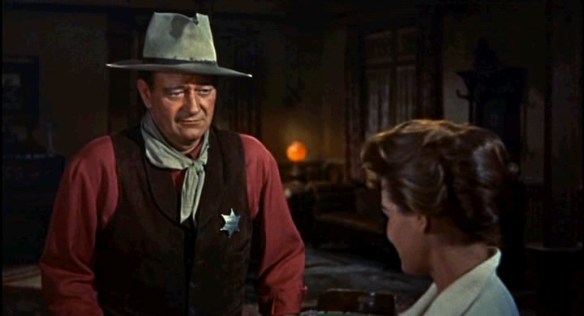
 Body Snatchers works seamlessly and efficiently on multiple fronts, both as science fiction and social commentary. Don Siegel helms this film with his typical dynamic ease putting every minute of running time to good use. The screenwriter, Daniel Manwaring, put together perhaps one of the greatest political allegories ever penned and, on the whole, it’s a taut thriller combining sci-fi and horror to a tee.

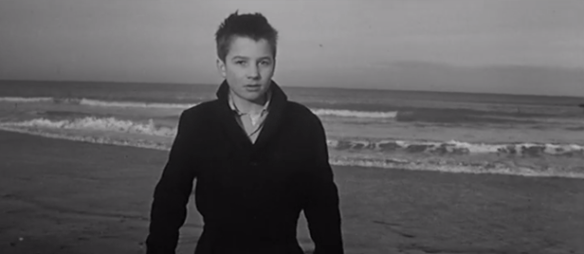
 I never thought I’d get so fed up with hearing the name “Fefe.” But it’s true. There’s a first time for everything. In fact, Fefe is the name of our main character played so magnificently by Italian icon Marcello Mastroianni. In my very narrow view, he still very much epitomizes Italian cinema for me.

 “He will be your true Christian: ready to turn the other cheek, ready to be crucified rather than crucify” ~ Minister of The Interior