Unknown's avatar

About 4 Star Films

I am a film critic and historian preserving a love of good movies. Check out my blog, 4 Star Films, and follow me on Twitter @FourStarFilmFan or Letterboxd. Thank you for reading!

Review: Modern Times (1936)

6b168-chaplin_-_modern_timesModern Times: A story of industry, individual enterprise, humanity crusading in the pursuit of happiness

With those words, Charlie Chaplin’s Modern Times opens with the final installment of The Little Tramp. Clocking in at a little under 90 minutes, Chaplin is still able to do so much, because he does not waste a single segment of film. This is one of the most wonderful pieces of social commentary that Chaplin was able to dream up to reflect the life and times of his audience — to reflect these modern times.

As was his style with The Great Dictator as well, he pokes fun and critiques his targets all under the guise of comedy. He sets the stage at the industrial factory that the Tramp works in. In a precursor to the famed I Love Lucy conveyor belt episode, it is the Tramp who must fight against the constant stream of nuts and bolts. Breaks and lunch become a thing of the past, and the little man suffers a nervous breakdown that leads to mayhem involving a wild ride through the cogs of the machinery as well as some oily madness.

Right off the bat, Chaplin poked fun at this mechanized system that is overseen by a Big Brother-type figure who spends his idle moments at his desk working on puzzles and reading Tarzan serials.

After the Tramp is forced to leave his job following the series of mishaps, he is confronted by numerous issues that Chaplin gleefully exploits. These include communism, the police force, prison, and even drugs (smuggled nose-powder).

Through the Tramp character, Chaplin comments that with the state of the nation during the Depression it was better to be in jail than out in the world. At least you got a bed and food. It was better than unemployment or starving to death with the police constantly on your backs ready to quell any riots.

These sorts of issues are explored through the character of the Gamin (Paulette Goddard). She becomes the Tramp’s love interest for the rest of the film, but the circumstances of their meeting are important. She was attempting to steal a loaf a bread from a bakery truck. It was not out of malice but desperation to feed her family.

The antics are often funny throughout these sequences, but the reality is, she and her sisters lose their father, and they are already motherless. The future is bleak and there is no help to be found with the Depression at its peak.

Here is where possibly my favorite part of the film begins. The two vagrants imagine themselves living in a middle-class household with fruit they can pick from outside their window and a cow that comes up to their door to be milked. They have a fully furnished home with furniture, ottomans, drapes and a fully stocked kitchen. This is their American Dream and that is where their hope lies. One could say that this was the consumerism culture of the post-war 1950s in a nutshell.

Next, the Tramp becomes a night watchman in a department store and for the evening he and the Gamin have the place all to themselves: To roller skate, eat, and use the beds and furs as they please. It is a moment of relaxing diversion from their normally grungy, monotonous lives.

Finally, they find a home as well. It is a real fixer-upper, but it’s home and that’s all that matters. They have each other, and they seem happy enough making do. The Tramp goes back to his 9 to 5 at the factory only to get kicked out once more. The pair of them land work at a local restaurant only to have juvenile officers come after the fugitive Gamin after an uproarious floor show from the Tramp.

Thus, they are once more on the road again. But that never stopped them before, and with his inexhaustible spirit the little man cheers on his love, “Buck up, never say die. We’ll get along!”

They walk off down the highway with new resolve but more importantly they have each other. If they ever do find that elusive lifestyle I am not sure it would be all that it is cracked up to be. The life of a Depression Era vagabond was no picnic, but I think the gift of the Tramp is he is able to make the best of all circumstances. He may look to a better lifestyle in the future with hope, but he does not need it to bring him happiness. Because the reality is, it never could completely satiate. I tip my hat to you for once little man, because for someone so humble you teach us a great deal about ourselves.

Chaplin did it again bringing us a near silent picture in the age of talkies. Although I admit it might seem awkward at times, this film uses sound and the score wonderfully to accentuate the images onscreen. Chaplin did not need the needless babble of dialogue unless it was for comic effect. After all, he and Paulette Goddard had enough chemistry beforehand, they didn’t need words.

5/5 Stars

Review: Harvey (1950)

Why am I so infatuated by Harvey you ask? Let me clarify that. I’m not talking about the title rabbit. Why am I so enamored by this fantastical film from 1950? It all stems from Jimmy Stewart as Elwood P. Dowd, which was undoubtedly one of the most unique and remarkable performances in his storied film career.

Elwood is often quotable (Here, let me give you one of my cards, What did you have in mind, etc.). However, I think his innocence and perpetually pleasant demeanor is what makes him so wonderful to moviegoers, like myself, and to many of the characters in this story. He has his oddities, to be sure, but a little common courtesy and thoughtfulness is something that is often lacking in this world. Elwood is the complete epitome of that kind of individual. He always has an open invitation, he constantly insists that others enter before him, he has a penchant for giving flowers, he is the king of compliments, and he can put a positive spin on most anything (I Plan to leave. You want me to stay. Well, an element of conflict in any discussion’s a very good thing. It means everybody is taking part and nobody is left out).
. 
Sure, his friend is a giant invisible rabbit named Harvey. So what? By the end of this film, I might be a little bit of a lunatic too, but after all, that’s being human for you. What makes us who we are, are those quirks that populate our persons. For Elwood it’s his pal Harvey, for others, it might be something more mundane than a giant invisible pal. 
However, I will undoubtedly keep returning to Harvey, because it is a thoroughly enjoyable film that gives us a little lesson in life, and it certainly does not hurt that it is quite funny, in a whimsical sort of way. 

As I noted already Stewart is wonderful, playing Mr. Dowd straight, but he is surrounded by an eclectic group including Josephine Hull, Cecil Kellaway, and Jesse White. They are necessary foils for his character to bump up against. Although Charles Drake and Peggy Dow are somewhat flat at times, both of them fit the sentimentality of the film just right. It’s a pity Dow was not in more films because she seems like such a lovely person on the screen. But why focus on the negative, because after all Elwood P. Dowd never would.

4/5 Stars

It Happened One Night (1934) – Updated

Hopefully no one holds this against me, but I have never been a big fan of Claudette Colbert. However, I will say that I am a Capra aficionado and Clark Gable is certainly a classic Hollywood star who is dynamic in this film. Thus, despite my hangups with Colbert, I can still thoroughly enjoy this romantic comedy, the so-called original screwball. It helps to have such comedic fellows as Roscoe Karns, Alan Hale Sr. (father of The Skipper) and Walter Connolly.

Peter Warne is the down on his luck newspaper man and Ellen Andrews is a socialite who feels trapped between her suffocating father and an upcoming marriage. Does this formula sound familiar? It undoubtedly is, but this was the original, all those following were impostors.

The unlikely pair begin a cross country trek towards the destination of New York. It includes uncomfortable bus rides, awkward overnight stays, a bit of hitchhiking, and eating carrots to survive.

Only in the movies could such a scenario play out and yet that is the fun because anything can happen one night or another. In this case all the caterwauling and antics lead to a happy ending. To think many people thought this film would not be very good! That was obviously proved wrong by numerous accolades. Just think this film came out 80 years ago and we are still watching it today! That is amazing. That is the power of the movies.

Peter Warne: A normal human being couldn’t live under the same roof with her without going nutty! She’s my idea of nothing!
Alexander Andrews: I asked you a simple question! Do you love her?
Peter Warne: Yes! But don’t hold that against me, I’m a little screwy myself!

5/5 Stars

Frequently Asked Questions (2016)

the princess bride 2.png

Why is the name “4 Star Films?”

I am a film enthusiast but I try and focus on high-quality films. Although any rating system is highly subjective and flawed, I attempt to hone in on those titles commonly rated 4 Stars and above by fans and critics. There is such a thing as a bad film, so I try and focus on ones with historical significance, entertainment value, artistic merit and a lens into humanity (To be perfectly honest, I never loved the name but I also never came up with anything better. It stuck).

What is the purpose of this blog?

The site does have a heavy focus on Classic Hollywood, but that is rather by convenience since I appreciate a lot of the films from that era. However, as 4 Star Films continues to evolve, I would like to increase the focus on continually going deeper when it comes to film. I want to keep asking questions and digging for answers that give us a better understanding of what it means to live life as human beings. 

What is your Favorite Movie of All Time?

Probably something like Rear Window or 12 Angry Men. The first because it’s probably the most fascinating thrillers ever by the Master of the genre. The latter is such a great human drama. By coincidence both take place in confined spaces. 

What is your Favorite Film of the Last Few Years?

Me & Earl and the Dying Girl is an unassuming indie that’s actually really poignant and powerful. It felt very pertinent to places where I’ve been at before and it’s a love letter to movies.

crimsonkimono4

What is your Favorite Underrated Classic?

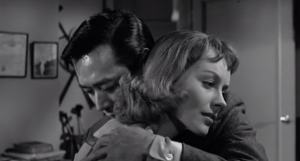
Here are three. Sam Fuller’s The Crimson Kimono has become a favorite, because of its depiction of Asian-Americans. The Young Girls of Rochefort is just a really fun musical romp from Jacques Demy. Also, Carl Theodor Dreyer’s Ordet is a difficult film, but it has fascinating themes of spirituality.

Who is your Favorite Leading Lady other than Audrey Hepburn (or Grace Kelly)?

I am partial to Catherine Deneuve and I think Brie Larson is deservedly on the rise. 

Who is your Favorite Director Right Now?

They’re old school, but I’ve really been appreciating Francois Truffaut and Sam Fuller a lot recently. Also, Howard Hawks and Michelangelo Antonioni are really great for very different reasons.  

Audrey_Hepburn_and_Gregory_Peck_on_Vespa_in_Roman_Holiday_trailer

If You Could Be in Any Movie which One Would it Be?

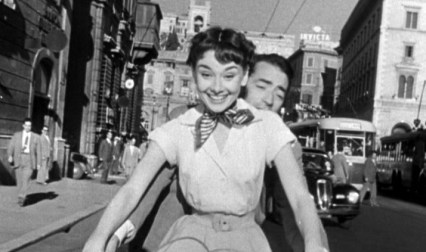
Probably Roman Holiday. Who wouldn’t want to spend a vacation in Rome with Audrey Hepburn no less?

Favorite Song in a Movie?

Moon River hands down. Watching Audrey Hepburn walk the silent streets of New York during the opening moments of Breakfast at Tiffany’s is fantastic. It’s almost difficult to top those first few minutes, because of that wonderful, soft melody of Moon River. 


Guys and Dolls (1955)

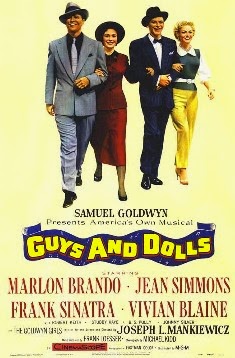
8d99c-guys_and_dolls_movieposterHeadlining this film are Marlon Brando and Frank Sinatra as Sky Masterson and Nathan Detroit respectively. Both men are high stakes gamblers and things have heated up in town because the police are trying to crack down on a floating crap game. That’s not the only thing that turns hot though. Masterson is bet by Detroit that he cannot get a sidewalk missionary (Jean Simmons) to fly with him for an evening in Cuba. Detroit has his own problems brought on by his reluctance to marry the girl he has been going with for 14 years. All along the way money constantly switches hands and “markers” are doled out as IOUs.

Both Masterson and Detroit ultimately show their noble sides and as you would expect the guys get the dolls.

This musical certainly had its moments and it looked lavishly beautiful in color like many of the contemporary musicals. I will say that there were some great personalities here including Vivian Blaine. However, Brando seemed painfully out of his element here and I’m pretty sure Sinatra had better roles. I wonder what this film would have looked with a different cast? We can only speculate now.

Also, the dialogue almost completely lacking in contradictions was quite noticeable, but I’m not sure if that was a bad thing or not. Overall I think this one would be better for the stage than on film. But don’t get me wrong a lot of the numbers like Sit Down You’re Rocking the Boat were catchy. I will say I was surprised that Brando ended up singing Luck Be a Lady and not Sinatra. I had previously only heard the Sinatra version.

3.5/5 Stars

The Nun’s Story (1959)

b2aa8-nun_storyFrom director Fred Zinnemann and starring Audrey Hepburn, here comes a very unique film indeed. Hepburn is Gaby also known as Sister Luke, who makes it her life mission to become a Nun. She leaves behind her loving father (Dean Jagger), young love, and siblings to lead a life of solitude and sacrifice.

She learns and is disciplined at the convent, finding out what it means to “die to self.” However, it is by no means easy, because as with any human being pride and other struggles impede her progress.

Quickly she shows her skill as a nurse, and yet she is challenged to act with more humility. Sister Luke winds up not in her desired location of the Congo, but in Europe to continue to grow spiritually.

Finally, she is rewarded for her patience and goes to the Congo only to fall into her element. There she is beloved by the natives and nuns alike, while also gaining the respect of the local practicing doctor (Peter Finch) who is not a believer.

He however rightly concludes that Sister Luke is not your typical nun, because she has too much self-determination and individuality. As a good sister she tries to block out his words, but after she is sent back to the convent she must face this reality head on. World War II has erupted and the Sisters are called not to intercede on either side, but after personal tragedy Sister Luke realizes she must give up the life of the nun.

After so much loving service to her fellow man while wearing the robes, she is forced to shed them on her own accord. It is a solemn moment as Gaby once again removes her ring of commitment and walks off into the unknown world plagued by war. It is an unsatisfying conclusion but a moving ending nonetheless.

Zinnemann is often interested in the inner struggles of his protagonists and that is on display again in this film. Furthermore, his on location shooting in the Congo adds a sense of authenticity to the story. I am convinced that no actress other than Audrey Hepburn could possibly have done justice to this role, or at least no one else could have played it so wonderfully. She exudes such a sweetness and innocence it is difficult to see how anyone could every get annoyed with her. Her Sister Luke is seemingly spot on, and the lengthy film would have certainly faltered without her.

4/5 Stars

The Best Films of Vitorrio De Sica


1. The Bicycle Thief
2. Two Women
3. Miracle in Milan
4. Shoeshine
5. Marriage Italian Style
6. Yesterday, Today and Tomorrow
7. Umberto D
8. The Garden of the Finzi-Continis
9. The Children Are Watching Us
10. The Gold of Naples
11. A Brief Vacation

WESTERNS

The Searchers (1956)
Once Upon a Time in the West (1968)
High Noon (1952)
Shane (1953)
The Good, The Bad and the Ugly (1966)
Butch Cassidy and the Sundance Kid (1969)
Unforgiven (1992)
Rio Bravo (1959)
The Wild Bunch (1969)
The Man Who Shot Liberty Valance (1962)
The Magnificent Seven (1960)
The Gunfighter (1950)
My Darling Clementine (1946)
McCabe and Mrs. Miller (1971)
Outlaw Josey Wales (1976)
The Naked Spur (1953)
A Fistful of Dollars (1964)
The Professionals (1966)
3:10 to Yuma (2007)
Pat Garrett and Billy The Kid (1973)
3:10 to Yuma (1957)
Will Penny (1968)
Tombstone (1993)
True Grit (1969)
True Grit (2010)
Red River (1948)
Stagecoach (1939)
The Shootist (1976)
She Wore a Yellow Ribbon (1949)
Dances with Wolves (1990)
Winchester ’73 (1950)
Johnny Guitar (1954)
McLintock! (1963)
Fort Apache (1948)
Ride the High Country (1962)
The Ox-Bow Incident (1943)
Seven Men From Now (1956)
Rio Grande (1950)
High Plains Drifter (1973)
How the West Was Won (1962)
The Tall T (1957)
Virginia City (1940)
The Sons of Katie Elder (1965)
Hondo (1953)
Destry Rides Again (1939)
The Misfits (1961)
The Assassination of Jessie James by the Coward John Ford (2007)
The Cowboys (1972)
Dodge City (1939)
The Gunfight at the O.K. Coral (1957)
Man of the West (1958)
The Westerner (1940)
Rio Lobo (1970)
Hombre (1967)
Lonely are the Brave (1962)
A Few Dollars More (1965)
The man From Laramie (1955)
Broken Arrow (1950)
Bend in the River (1952)
The Far Country (1954)
Decision at Sundown (1957)
Yellow Sky (1948)
The Big Country (1958)
Comanche Station (1960)
The Shooting (1966)
The Bravados (1958)
Django Unchained (2012)
Dead Man (1995)
Forty Guns (1957)
Rancho Notorious (1952)
Vera Cruz (1954)
Day of the Outlaw (1959)
El Topo (1970)
The Lusty Men (1952)
Wagon Master (1950)
Blazing Saddles (1974)
The Great Silence (1968)
El Dorado (1966)
The Left Handed Gun (1958)
Django (1966)

FILM NOIR

Sunset Boulevard (1950)
Double Indemnity (1944)
The Third Man (1949)
The Maltese Falcon (1941)
Notorious (1946)
Laura (1944)
Out of the Past (1947)
Shadow of a Doubt (1943)
White Heat (1949)
Strangers on the Train (1951)
Mildred Pierce (1945)
The Killers (1946)
The Postman Always Rings Twice (1946)
The Big Sleep (1946)
Naked City (1948)
The Big Heat (1953)
In A Lonely Place (1950)
Touch of Evil (1958)
The Killing (1956)
Gilda (1946)
Murder, My Sweet (1944)
The Lost Weekend (1945)
Sweet Smell of Success (1957)
Pickup on South Street (1953)
The Narrow Margin (1952)
Where The Sidewalk Ends (1950)
Night and the City (1950)
Ace in The Hole (1951)
The Asphalt Jungle (1950)
Scarlet Street (1945)
Leave Her to Heaven (1946)
The Lady from Shanghai (1948)
Criss Cross (1949)
The Night and the Hunter (1955)
Gaslight (1944)
Gun Crazy (1950)
Key Largo (1948)
Bad Day At Black Rock (1955)
The Woman in the Window (1944)
D.O.A. (1950)
The Wrong Man (1956)
Detour (1945)
Nightmare Alley (1947)
Force of Evil (1948)
Spellbound (1945)
Dark Passage (1947)
The Set-Up (1949)
Act of Violence (1948)
Moonrise (1948)
Phantom Lady (1944)
Kiss Me Deadly (1955)
Christmas Holiday (1944)
Rififi (1955)
Body and Soul (1947)
Thieves’ Highway (1949)
Brute Force (1947)
The Big Clock (1948)
Detective Story (1951)
This Gun for Hire (1942)
High Sierra (1941)
Kiss of Death (1947)
The Stranger (1946)
The Spiral Staircase (1945)
The Dark Corner (1946)
The Blue Dahlia (1946)
The Strange Love of Martha Ivers (1946)
Odd Man Out (1948)
Pursued (1947)
Crossfire (1947)
T-Men (1947)
Call Northside 777 (1948)
Raw Deal (1948)
They Live By Night (1948)
Sorry Wrong Number (1948)
Caught (1949)
Champion (1949)
No Way Out (1950)
While the City Sleeps (1956)
Panic in the Streets (1950)
The Prowler(1951)
On Dangerous Ground (1951)
Scandal Sheet (1952)
Kansas City Confidential (1955)
Angel Face (1952)
The Harder They Fall (1956)
The Big Combo (1955)
Bob Le Flambeur (1956)
Murder by Contract (1958)
Odds Against Tomorrow (1959)
The Phenix City Story (1955)
The Crimson Kimono (1959)