
A comedy romance in pantomime. That’s just exactly what
City Lights is, because, despite the fact that talkies had been around for approximately 4 years, Chaplin was hesitant to transition his Tramp over to sound. In many ways, I can understand why since the universality of his character would be gone and Chaplin’s own voice would give a very different feel to the little man. With his great popularity and artistic control, Chaplin made this film and
Modern Times without dialogue. All he used were synchronized sounds and musical scores. As audiences can attest to, it worked out just fine for him.
This film opens with the Tramp in all his glory sleeping on a statue during its public unveiling. He is rudely awakened and shooed off on his way. He drifts down the boulevards finally meeting a lowly flower girl, showing her kindness before moving on. Although I am partial to Paulette Goddard, Virginia Cherrill plays the blind girl believably and she is a wonderful love interest for Chaplin’s character.
His next acquaintance is a drunken millionaire (Harry Myers) bent on committing suicide. His attempt is unsuccessful partially in thanks to the Tramp. He even gives the man a few positive words as is his custom (Tomorrow the birds will sing, be brave, face life!).
And there you have it. Chaplin introduced his audience to the two people who would be closest to the little man. The two new chums head to a high society hang out where they nearly get in a fight over everything from a bottle of seltzer to a chair, and even the floor show.
The Tramp goes back to the girl, and as another act of kindness he purchases her whole basket of flowers for $10 and continues to masquerade as a high society swinger. As the next title card reads, the sober dawn awakens a different man. Thus, The Tramp is initially rejected by his friend from before, but the drunken millionaire gets reincarnated once again and they begin a wild rager. The next morning the cycle begins again with the Tramp being thrown out.
The Little Man has taken it upon himself to be somewhat of a guardian angel for the blind girl who has become his love. Money is needed if she wants to have a home, and despite getting fired from his job, he resolves to get the funds the next best way. In a boxing match. This is where my favorite sequence, which plays out in the ring, comes to fruition.
The Tramp is seemingly outgunned, but that does not stop him from duking it out. He uses the referee, hugs, and anything else at his disposal to try and not get clobbered. The scene had to be choreographed extensively because at moments it looks just like a dance perfectly synchronized between the three characters. The so-called dance becomes even more uproarious when he begins to tackle his opponent and then unknowingly takes out the ref next. The fight seems even with each man falling down repetitiously as the ref tries to say the count. Unfortunately, the little man cannot hold out and he loses the pot.
One final time he runs into his millionaire friend just back from Europe, and he gets the much-needed money for his girl. Matters are complicated by burglars and a misunderstanding with the police. All works out in the end and the flower girl has her home and enough over to get a surgery to allow her to regain her sight.
Chaplin’s character pays the cost though, winding up in jail because of the “stolen” funds. When he gets on the outside he is more destitute than ever, but the girl’s business is now flourishing.
He runs into her and eyes her happily. Little does she know who this man is. This is not the debonair gentlemen she was expecting. She laughingly proclaims, “I’ve made a conquest.”
Only when she touches his hand by chance, reverting back to her old self, does she comprehend who this really is. This is her savior, the one person who radically changed her entire life. He is dressed in tatters and barely has a penny to his name. But he did have kindness and compassion for her.
A lot has been said about the final moments of the film where she has her “aha” moment, and he responds accordingly. What strikes me is how Chaplin so effectively reveals the nervous charm of his character. His fingers are constantly near his mouth, flower in hand. He states the obvious (You can see now). Then, the film closes with his face lit up with another nervous smile, fingers still in mouth.
It is hard to say where the story goes from this point. That’s not the important part here, though. The important part is that in both of The Tramp’s relationships his two friends cannot see who he truly is. The girl is physically blind and the millionaire is blinded by his stupor. They easily accept him in certain circumstances and yet they truly do not know him.
He, on the other hand, seems to accept them no matter the person they are at that moment. He is faithful and compassionate to them in all circumstances. It seems that perhaps the Tramp truly knows them because he is not blinded like they are. Again, I marvel about how so much can be pondered thanks to the actions of an unassuming vagabond. He is a remarkable little man with a very big heart.
5/5 Stars
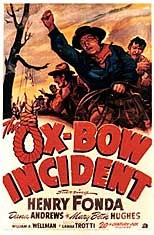 Starring Henry Fonda, Dana Andrews, Harry Morgan, Anthony Quinn, and many more, the film begins with two drifters (Fonda and Morgan) who enter a small western town. Soon it gets around that a man is dead and some of his cattle were also stolen. Hurriedly, a posse is put together and they ride off to find the culprits even though the Sheriff is looking already. They come upon three men and the majority of the posse believes the men are the perpetrators even though the trio profess their innocence. The posse votes on the spot whether to hang them or give them a trial and then they act. Only afterward do they discover the whole truth. Although the plot is simple, this western brings up some interesting and difficult questions. It certainly seems to blur the lines between the good and bad guys.
4/5 Stars
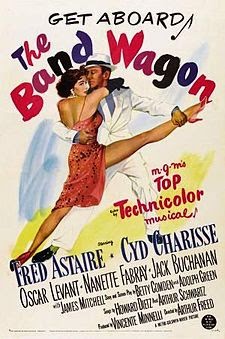
 Going into this film I must admit that despite hearing good things, I had zero expectations. I must say I was pleasantly surprised by this Minnelli musical because it was a deft and often beautiful production. Channeling the same vein as Singin’ in the Rain and The Red Shoes, this film is a spectacle in its own right. You have headliners Fred Astaire and Cyd Charisse matched nicely. Oscar Levant and Nanette Fabray act as wonderful comic relief as the wedded playwrights, who also do some song and dance. Finally, there is Jack Buchanan, as the stereotypical theater maestro Jeffrey Cordova.
It all begins with Tony Hunter (Astaire) a washed up has-been who is headed to New York for some relaxation. There is little fanfare during his arrival except coming from his friends the Martons, who have a new production for him to star in. They get the famed Cordova on board and next comes an up and coming choreographer and his girlfriend, who is none other than the young starlet Gabrielle Gerard (Charisse)
Following an initial misunderstanding, the leads finally clear up their differences and push forward to make The Band Wagon the smash hit it is destined to be. However, Cordova has turned it into a modern-day Faust and when opening night comes the after party is more like a wake.
All the players seem strangely nonchalant and then the idea hits! Make The Band Wagon over again and take it on the road. Everyone in the cast from the bottom up is excited for the second chance with Hunter at the helm. All that is except choreographer Paul Byrd.
Despite Paul’s departure, Gaby is still enthusiastic and they turn the Band Wagon into the production that the Martons had envisioned from the beginning. Tony is a success once again, and he receives a round of rousing cheers from his new family. Gaby speaks for all of them (and herself) when she says they love him and believe that the show will go forever.
I immensely enjoyed many of the numbers including: “Shine Your Shoes,” with the camera following Astaire as he frolics around at an arcade with a shoeshine man. The extras, the exquisite set, and Astaire himself all culminate in an often comical and always upbeat number that is great fun to watch. Then, of course, there is the ever memorable “That’s Entertainment,” which even spawned a series of musical documentaries, and for good reason. The words and melody are quite a catchy ode to the stage. Perhaps the most beautiful sequence in the film involves Astaire and Charisse in “Dancing in the Dark” where they positively glide through Central Park together in perfect cadence. They move not as individuals but as a poetic unit in motion. It is fitting that it was their first dance together in the film.
For never seeing Cyd Charisse in another film (except briefly in Singin’ in the Rain), I must say that I really did enjoy her performance opposite the always likable Fred Astaire. Furthermore, I am in complete agreement with her character, “I don’t think a dancer should smoke,” it’s bad for the lungs.
The cameo of Ava Garner was an odd surprise (especially due to her resemblance to Charisse). Furthermore, I never thought it could exist, but this film proved me wrong. There is such a thing as a film-noir musical! That’s The Band Wagon for you folks! That’s Entertainment!
4.5/5 Stars
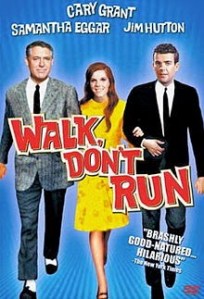 This was the last screen performance of legendary actor Cary Grant and for once he is not the one getting the girl. This time he is the matchmaker in this adaption of the earlier classic The More the Merrier. Grant’s character finds himself in Tokyo during the 1964 Olympics and the only room he can get is from a young English girl. This causes some difficulty but they make it work. It gets even more complicated after Grant meets a young American architect who is competing in a mysterious event in the Games. Sir William Rutland secretly puts the two young people together. It seems doomed from the beginning but through a wacky conclusion somehow it all works out in the end. Not a great film, but a decent swan song for Grant and it is certainly fun to have the film set in Tokyo.
3.5/5 Stars
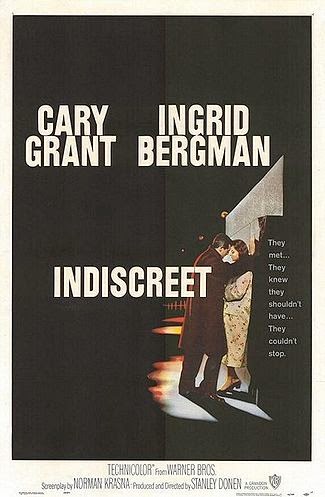
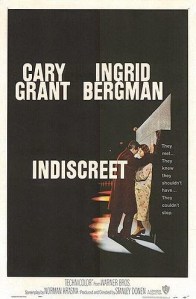 This is a solid romantic comedy which pairs the legendary Cary Grant and Ingrid Bergman one last time. Bergman is a well-known actress who has success, but has never experienced true love. Then she meets Philip Adams, a man who literally walks up to her door since he is a friend of her brother-in-law. They become acquainted and they turn into fast friends. Bergman finally feels she has found the one and their love grows. However, the only problem is that he is married and estranged from his wife. Little does she know what is really going on and yet when she does it throws their whole relationship into jeopardy. She has one final plan to get back at Grant and it really backfires, but in the end the two lovers get back together.
In this film it was nice to see two more middle aged stars paired. I enjoy Cary Grant with Audrey Hepburn or Grace Kelly, but I think Ingrid Bergman is more his contemporary. Some of the best sequences had to be during the ball. Here Grant shows he still has the physical comedy ability because at this time he had fell almost completely into the debonair gentleman persona. This is not a great romantic comedy but still a respectable piece from Stanley Donen.
3.5/5 Stars
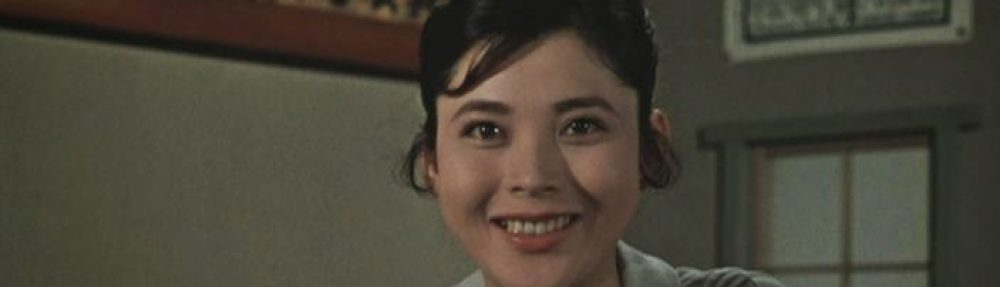

 ck a year later…
 For some reason, this final shot of Aimee reminds me of The Tramp’s final reaction in City Lights. It might be a stretch but in both situations, there is a tinge of hope, but there is still this uncomfortable feeling of the unknown. And yet if we had known the resolution both these films would have lost some of their allure and City Lights is Chaplin’s masterpiece. As of right now The Spectacular Now is a little blimp on the radar in 2013. Shailene Woodley and Miles Teller might change that with the rate they are going. They certainly do not have the weight of the one and only Charlie Chaplin, but I am sure both of them are destined for numerous other great performances.



 4 Star Films